Search This Blog

Friday, January 6, 2023

UCB: Rozanolixizumab BLA for myasthenia gravis filed with FDA, tagged for Priority Review


  • Biologic License Application (BLA) designated Priority Review by FDA and seeks approval for rozanolixizumab for the treatment of adults with generalized myasthenia gravis (gMG) who are anti-acetycholine receptor (AChR) or anti-muscle-specific tyrosine kinase (MuSK) antibody positive
  • Rozanolixizumab FDA Priority Review follows recent European Medicines Agency (EMA) validation of the Marketing Authorization Application (MAA) for rozanolixizumab in adults with gMG
  • FDA and EMA submissions based on pivotal Phase 3 MycarinG study in gMG which demonstrated treatment with rozanolixizumab resulted in clinically meaningful and statistically significant improvements in MG specific outcomes
  • UCB expects to receive feedback from the agencies in Q2 of 2023

New method of donor-lung distribution expected to cut deaths on transplant wait list

 A new method of donor-lung distribution is projected to decrease the number of candidate deaths who are on the waitlist for lung transplant, according to a study by Cleveland Clinic and the U.S. Scientific Registry of Transplant Recipients (SRTR) published in The American Journal of Transplantation.

Under the current system, donor lungs are distributed to candidates waiting for lung transplant using the Lung Allocation Score. However, in early 2023, the LAS will be replaced by a new distribution system called the Composite Allocation Score.

Maryam Valapour, M.D., Director of Lung Transplant Outcomes at Cleveland Clinic, is the primary author of the study. Dr. Valapour also serves as the Senior Investigator for Lung Transplantation for the Scientific Registry of Transplant Recipients, the organization responsible for analyzing U.S. transplant data.

The Lung Allocation Score system measures donor and recipient compatibility, geographical restrictions and prioritizes calculated survival benefit from transplant. It first aligns compatibility for candidates within a 250-mile radius, sometimes resulting in an inefficient distribution of organs based on geographical restriction. Under this current system, sicker patients who live just outside the 250-mile radius may lose out on a life-saving transplant because of where they live.

The new Composite Allocation Score system was developed to improve equity in organ allocation by eliminating geographical boundaries and prioritizing the candidate's medical needs. This system is expected to set a precedent for the Organ Procurement and Transplantation Network and United Network for Organ Sharing (UNOS) for all organs, with lungs being the first organ allocation system to undergo this change.

"The importance of removing the geographical barrier can't be overstated here," said Dr. Valapour. "The Composite Allocation Score system's goal of making access to lung transplant more equitable for all candidates in the United States will help reduce waitlist mortality and we hope will even improve post-transplant survival over time."

To understand the potential effects on lung transplant candidates waiting for organs, the research team tested six alternative scenarios over 10 simulations using data from individuals on the lung transplant waiting list from Jan. 1, 2018, through Dec. 31, 2019. Depending on the scenario tested, waitlist deaths decreased by 36% to 47% in the Composite Allocation Score system as compared to the current system.

Across all simulated Composite Allocation Score scenarios, the system led to improved overall measures of equity compared with the current Lung Allocation Score system, including reduced waitlist deaths, and resulted in similar post-transplant survival.

"With more candidates added to the waitlist every day, access to available lungs is incredibly important," says study co-author, Carli Lehr, M.D., a pulmonary and critical care physician at Cleveland Clinic. "The Composite Allocation Score system will help those on the waitlist overcome challenges associated with their proximity to potential donors."

In 2022, there were over 3,000 candidates added to the lung transplant waitlist with over 2,600 lung transplants performed, according to UNOS. While the numbers of donors and transplants are improving, there is still a shortage of available organs in the United States. For more information on how to become an organ donor, visit UNOS.


Story Source:

Materials provided by Cleveland ClinicNote: Content may be edited for style and length.


Journal Reference:

  1. Maryam Valapour, Carli J. Lehr, Andrew Wey, Melissa A. Skeans, Jonathan Miller, Erika D. Lease. Expected effect of the lung Composite Allocation Score system on US lung transplantationAmerican Journal of Transplantation, 2022; 22 (12): 2971 DOI: 10.1111/ajt.17160

What the return of Chinese tourists means for the global economy

 In the years before Covid, China was the world’s most important source of international travelers. Its 155 million tourists spent more than a quarter of a trillion dollars beyond its borders in 2019.

That largesse fell precipitously over the past three years as the country essentially closed its borders. But, as China prepares to reopen on Sunday, millions of tourists are poised to return to the world stage, raising hopes of a rebound for the global hospitality industry.

Although international travel may not return immediately to pre-pandemic levels, companies, industries and countries that rely on Chinese tourists will get a boost in 2023, according to analysts.

China averaged about 12 million outbound air passengers per month in 2019, but those numbers fell 95% during the Covid years, according to Steve Saxon, a partner in McKinsey’s Shenzhen office. He predicts that figure will recover to about 6 million per month by the summer, driven by the pent-up wanderlust of young, wealthy Chinese like Emmy Lu, who works for an advertising company in Beijing.

“I’m so happy [about the reopening]! ” Lu told CNN. “Because of the pandemic, I could only wander around the country for the past years. It was difficult.”

“It’s just that I’ve been stuck inside the country for a little too long. I’m really looking forward to the lifting of the restrictions, so that I can go somewhere for fun! ” the 30-year-old said, adding that she wanted to visit Japan and Europe the most.

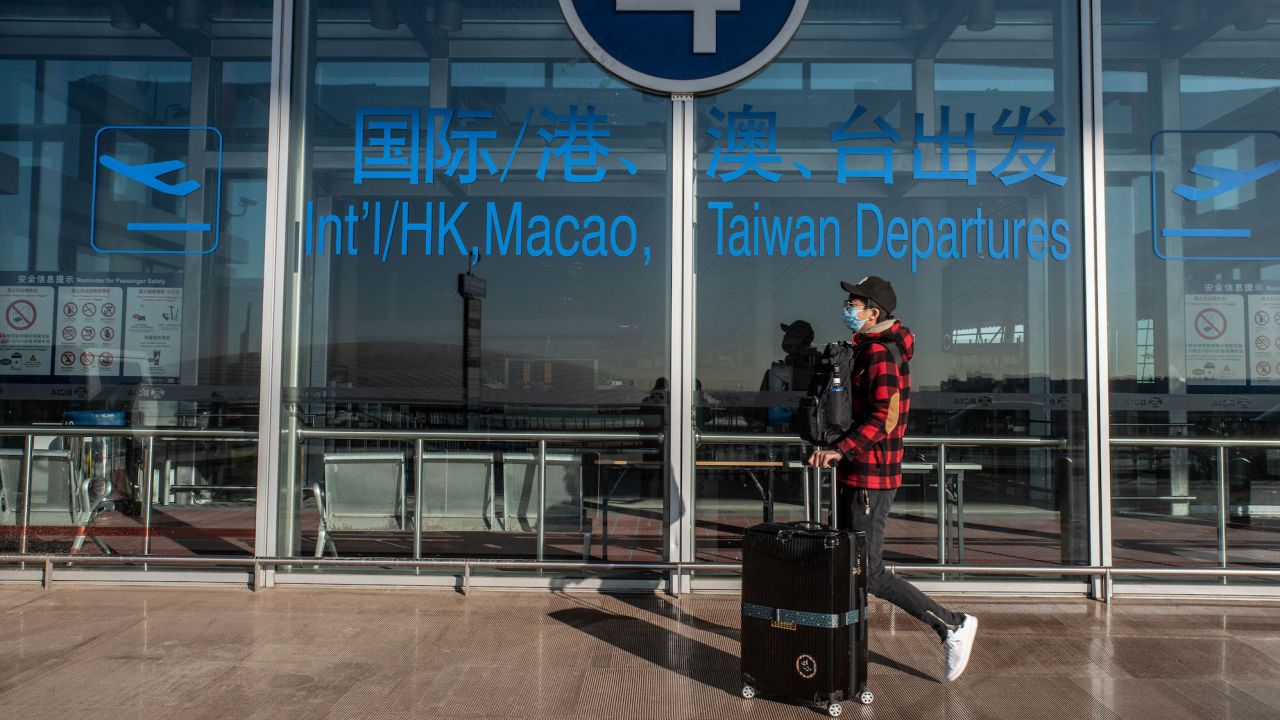
A traveler at the Beijing Capital International Airport on Friday, Dec. 30, 2022.

As China announced last month it would no longer subject inbound travelers to quarantine starting January 8, including residents returning from trips abroad, searches for international flights and accommodations immediately hit a three-year high on Trip.com (TCOM).

Bookings for overseas travel during the upcoming Lunar New Year holiday, which falls between January 21 and January 27 this year, have soared by 540% from a year ago, according to data from the Chinese travel site. Average spending per booking jumped 32%.

The top destinations are in the Asia Pacific region, including Australia, Thailand, Japan and Hong Kong. The United States and the United Kingdom also ranked among the top 10.

“The rapid buildup in … [bank] deposits over the past year suggests that households in China have accumulated significant cash holdings,” said Alex Loo, a macro strategist for TD Securities, adding that frequent lockdowns have likely led to restraints on household spending.

There could be “revenge spending” by Chinese consumers, mirroring what happened in many developed markets when they reopened early last year, he said.

Who benefits?

That’s good news for many economies battered by the pandemic.

“We estimate that Hong Kong, Thailand, Vietnam and Singapore would benefit the most if China’s travel service imports were to return to 2019 levels,” said Goldman Sachs analysts。

Hong Kong — the world’s most visited city with just under 56 million arrivals in 2019, most of them from mainland China — could see an estimated 7.6% boost to its GDP as exports and tourism income increase, they said. Thailand’s GDP may be boosted by 2.9%, while Singapore would get a lift of 1.2%.

Elsewhere in the world, Cambodia, Mauritius, Malaysia, Taiwan, Myanmar, Sri Lanka, South Korea and Philippines are also likely to benefit from the return of Chinese tourists, according to research by Capital Economics.

Hong Kong has suffered particularly acutely from the closure of its border with mainland China. The city’s pillar industries of tourism and real estate have been hit hard. The financial hub expects GDP to have contracted by 3.2% in 2022.

The city government announced Thursday that up to 60,000 people would be allowed to cross the border daily each way, starting Sunday.

Several other Southeast Asian countries reliant on tourism have kept entry rules relatively relaxed for Chinese tourists, despite the record Covid-19 outbreak that has swept through China in recent weeks. They include Thailand, Indonesia, Singapore and the Philippines.

“This is one of the opportunities that we can accelerate economic recovery,” Thailand’s health minister said this week.

New Zealand has also waived testing requirements for Chinese visitors, who were the second largest source of tourist revenue for the country before the pandemic.

Who wants testing?

But other governments are more cautious. So far, nearly a dozen countries, including the United States, Germany, France, Canada, Japan, Australia and South Korea, have mandated testing.

The European Union on Wednesday “strongly encouraged” its members states to require a negative Covid test for visitors from China before arrival.

There is clearly “conflict” between the tourism authorities and the political and health officials in some countries, said Saxon, who leads McKinsey’s travel practice in Asia.

Airlines and airports have already blasted the EU’s recommendations for testing requirements.

The International Air Transport Association, the airline industry’s global lobby group, together with airports represented by ACI Europe as well as Airlines for Europe, issued a joint statement on Thursday, calling the EU move “regrettable” and “a knee-jerk reaction.”

But they welcomed the additional recommendation to test wastewater as a way of identifying new variants of the disease, saying it should be an alternative to testing passengers.

Full recovery?

Besides restrictions, it will take time for international travel to fully rebound because many Chinese must renew their passports and apply for visas again, according to analysts.

Lu from Beijing said she was still considering her travel plans, taking into consideration the various testing requirements and the high price of flying.

“The restrictions are normal, because everyone wants to protect people in their own country,” she said. “I’ll wait and see if some policies will be eased.”

Liu Chaonan, a 24-year-old in Shenzhen, said she had initially wanted to go to the Philippines to celebrate the Chinese New Year, but didn’t have time to apply for the visa. So she switched to Thailand, which offers quick and easy electronic permits.

“Time is short and I need to leave in about 10 days. People may choose some visa-friendly places and countries to travel to,” she said, adding that she plans to learn scuba diving and wants to buy cosmetics. Her total budget for the trip could exceed 10,000 yuan ($1,460).

Saxon said he expected China’s outbound international travel to fully recover by the year end.

“Generally, individuals are pragmatic and countries will welcome Chinese tourists due to their spending power,” he said, adding that countries may remove restrictions quickly when the Covid situation improves in China.

“It will take time for international tourism to get going, but it will come rushing back, when it happens.”

https://www.cnn.com/2023/01/06/economy/china-tourist-boom-post-covid-impact-intl-hnk/index.html

Biden border ‘shell game’ will still let hundreds of thousands of migrants in

 President Biden’s newly announced border policy will allow hundreds of thousands of migrants to apply for asylum in the US whether they deserve it or not — further undermining America’s immigration enforcement structure, a longtime border watcher said Friday.

In a White House speech Thursday, Biden announced the US would let 30,000 Cubans, Nicaraguans, Haitians and Venezuelans into the US each month — provided they apply for asylum via an official cellphone app, pay for their airfare and find a financial sponsor. Anyone who shows up at the frontier would be denied entry.

“Do not, do not just show up at the border,” Biden said. “Stay where you are and apply legally from there.”

However, the apparent tightening of migration restrictions is nothing more than a “shell game,” according to Andrew Arthur of the Center for Immigration Studies.

Migrants must apply for asylum via an official cell phone app, pay for their airfare, and find a financial sponsor.
Biden announced the US would let 30,000 Cubans, Nicaraguans, Haitians and Venezuelans into the US each month.
Getty Images

“The biggest flaw of Biden’s border policies to this point has been his abject refusal to detain aliens entering illegally,” Arthur told The Post in an email Friday, calling such action “the only thing that would stop other migrants from entering illegally.”

Instead, according to US Customs and Border Protection’s own data, the vast majority of those apprehended have been allowed to wait for the outcome of their asylum cases in America.

In November, the most recent month for which statistics are available, 141,140 illegal border-crossers were detained and not summarily expelled under the Trump-era Title 42 health authority. Of that total, Arthur wrote on the Center’s website, fewer than 6,500 were subject to expedited removal, in which migrants without documents are sent back home.

In November, 141,140 illegal border-crossers were detained and not summarily expelled.
The vast majority of those apprehended have been allowed to wait for the outcome of their asylum cases in America.
Getty Images

“Expedited removal should have been the administration’s first recourse in response to the border,” Arthur told The Post. Instead, most migrants have been allowed to claim “credible fear” of persecution in their home countries and released into the US after the Biden administration stopped enforcing the Trump-era “Remain in Mexico” policy.

The end result, according to Arthur, is that “nationals of all countries in the world will likely still be allowed to apply for asylum in the United States—regardless of the strength of their asylum claims.”

In fiscal year 2022, which ended Sept. 30, more than 2.3 million migrants were apprehended attempting to cross the US-Mexico border, a number that doesn’t include those who eluded law enforcement and slipped into America undetected.

Biden made the announcement just days before a planned visit to El Paso, Texas, on Sunday for his first trip to the southern border as president. From there, he will travel on to Mexico City to meet with North American leaders on Monday and Tuesday.

https://nypost.com/2023/01/06/biden-border-shell-game-will-still-let-hundreds-of-thousands-in/

Short dose of intravenous sedative may prevent postoperative delirium after heart surgery

 Postoperative delirium—a behavioral state characterized by confused thinking and a lack of awareness—occurs in 10–30% of older patients who are recovering from heart surgery, and it has been linked with long-term cognitive deficits, prolonged hospitalization and institutionalization, and an increased risk of early death, resulting in total attributable health care costs of approximately $32.9 billion annually.

Results from a recent clinical trial led by scientists at Massachusetts General Hospital (MGH) indicate that nighttime treatment with the sedative  following surgery may help to prevent  in these patients.

The trial, which is published in eClinicalMedicine, included patients older than 60 years of age who were scheduled to undergo a cardiac surgical procedure at MGH with planned postoperative admission to the cardiac surgical intensive care unit (ICU).

A total of 394 patients were randomized in the Minimizing ICU Neurological Dysfunction with Dexmedetomidine induced Sleep (MINDDS) trial to receive a short nighttime dose of intravenous dexmedetomidine (1 μg/kg over 40 minutes) or placebo.

Among patients in whom postoperative delirium status could be assessed, delirium on postoperative day one occurred in 5 of 175 patients (2.9%) in the dexmedetomidine group and 16 of 189 patients (8.5%) in the placebo group, representing a 68% lower odds of delirium in the dexmedetomidine group.

Also, when the cumulative incidence of delirium was studied, a non-significant but higher proportion of participants experienced delirium within three days postoperatively in the  (14.1%) compared with the dexmedetomidine group (8.8%). Long-term cognitive function, quality of life measures, and mortality rates were similar between the groups.

"At present, definitive guidelines or large clinical trials do not support the use of any medication for postoperative delirium prevention," says senior author Seun Johnson-Akeju, MD, Anesthetist-in-Chief and the Henry Isaiah Dorr Associate Professor of Research and Teaching in Anesthetics and Anesthesia at MGH. "However, our data support nighttime dexmedetomidine as a prophylactic treatment to reduce the public health burden of postoperative  and as a possible strategy to improve the ICU patient experience."

When describing their future plans, co-author Ariel Mueller, MA, Administrative Director for Research at MGH, stated that "thanks in large part to the infrastructure established by Dr. Johnson-Akeju and lead author Dr. Jason Qu between the anesthesia and cardiac surgery departments, this innovative study not only answered an important question, but it also set the stage for future research in this arena. With support from MGH's Anesthesia Research Center, we are currently planning a multicenter study that we hope to start next fall."

More information: Jason Z. Qu et al, Nighttime dexmedetomidine for delirium prevention in non-mechanically ventilated patients after cardiac surgery (MINDDS): A single-centre, parallel-arm, randomised, placebo-controlled superiority trial, eClinicalMedicine (2022). DOI: 10.1016/j.eclinm.2022.101796
https://medicalxpress.com/news/2023-01-short-dose-intravenous-sedative-postoperative.html

After 40 years of decline, stroke death rates are rising again

 A Rutgers analysis of U.S. stroke deaths from 1975 to 2019 has found both a dramatic decline and the potential for an important resurgence.

Stroke mortality (per 100,0000) plummeted from 88 to 31 for women and 112 to 39 for men between 1975 and 2019 in the United States.

Total  deaths fell despite the rise in age-adjusted risk because stroke rates skyrocket as people get older. A 10% reduction in the  rate for 75-year-olds would more than offset a doubling of the fatality rate among 35-year-olds because strokes are 100 times more common in 75-year-olds.

However, barring further improvements in  or treatment, the most recent figures demonstrate that total stroke fatalities will rise as millennials age. Age-adjusted stroke deaths per 100,000 people bottomed out in 2014 and climbed again during the last five years of the study period.

"Starting around 1960, the later you were born, the higher your risk of suffering a fatal ischemic stroke at any particular age," said Cande Ananth, chief of the Division of Epidemiology and Biostatistics in the Department of Obstetrics, Gynecology, and Reproductive Sciences Rutgers Robert Wood Johnson Medical School, and lead author of the study. "This study didn't identify a cause for this trend, but other research suggests the main culprits are increasing rates of obesity and diabetes."

The analysis used a comprehensive -certificate database to identify virtually every adult under the age of 85 who died from a stroke during the 44 years—4,332,220 deaths in all.

It was the first stroke-death analysis to divide patients by their year of birth (cohort) and the first to identify the steady rise in age-adjusted ischemic stroke risk from the late 1950s to the early 1990s.

This "age-period-cohort analysis," which further divided patients by their age at death, also allowed the study team to make two other novel insights:

  • Stroke fatality rates have fallen more for ischemic strokes, which occur when blood vessels to the brain are blocked, than hemorrhagic strokes, which occur when  leak or burst. The ischemic stroke fatality rate fell roughly 80% over the study period, while the hemorrhagic stroke  fell roughly 65%.
  • The disparity between male and female stroke fatality rates diminishes as patient age increase. At age 55, men are more than twice as likely as women to suffer a fatal stroke, but the disparity in the rates of fatal stroke is virtually identical at age 85.

According to Ananth, "After nearly four decades of declining stroke-related mortality, the risk appears to be increasing in the United States. Our research underscores the need for novel strategies to combat this alarming trend."

More information: Cande V Ananth et al, Epidemiology and trends in stroke mortality in the USA, 1975–2019, International Journal of Epidemiology (2022). DOI: 10.1093/ije/dyac210
https://medicalxpress.com/news/2023-01-years-decline-death.html

New pathway for preventing cardiac fibrosis

 Researchers at the University of Colorado School of Medicine have discovered a new mechanism for slowing scarring of heart tissue—a process known as cardiac fibrosis.

"Fibrosis of the  occurs in response to a variety of stresses," says the study's corresponding author, Timothy McKinsey, Ph.D., professor of medicine in the Division of Cardiology. "It can be good. For example, if you have a  and a significant amount of your cardiac muscle dies, you need to replace that muscle with something. In that case, the fibrotic scar keeps the heart from rupturing and prevents someone from dying. But we're more interested in pathological fibrosis, which is uncontrolled fibrosis that occurs in someone who has long-standing hypertension or other comorbidities. That can cause stiffening of the heart and lead to something called diastolic dysfunction."

A unique inhibitor

The CU study, published today in the American Heart Association's Circulation Research journal, shows that the compound SW033291 slows fibrosis by inhibiting the action of 15-hydroxyprostaglandin dehydrogenase (15-PGDH), an enzyme that degrades eicosanoids, which are lipid signaling molecules that help to prevent fibrosis.

"Chronic fibrosis is thought to be a major player in the pathogenesis of ," McKinsey says. "Heart failure affects millions of people worldwide, and there aren't any good therapies to prevent or reverse cardiac fibrosis. That's why we initiated these studies."

Showing effectiveness in human samples

McKinsey and his research team started their study by performing phenotypic high throughput screening with a number of compounds, looking to block activation of fibroblasts, the cells responsible for driving fibrosis.

They hit upon nine  that had the common ability to block activation of heart, lung, and kidney fibroblasts. Of those nine, the compound SW033291 seemed the most promising.

In addition to  and animal models, the CU researchers worked with Michael Bristow, MD, Ph.D., professor of cardiology, and Amrut Ambardekar, MD, associate professor of cardiology, and their teams to create a new biobank of failing human cardiac fibroblasts taken from patients receiving heart transplants, as well as nonfailing donor control cardiac fibroblasts. SW033291 exhibited a remarkable ability to reverse the activated state of failing human cardiac fibroblasts, McKinsey says, supporting the notion that 15-PGDH inhibition could be useful for ameliorating existing cardiac fibrosis in patients.

Next steps

As their research continues, McKinsey and his team plan to focus on the roles of 15-PGDH in different cell populations, including fibroblasts, immune cells, and cardiomyocytes. They also want to perform additional efficacy studies with SW033291, testing it in more severe models of cardiac fibrosis and .

McKinsey says the group also plans to look more closely at the functions of different eicosanoids in inhibiting  activation, and how they activate signaling pathways to prevent fibroblasts from causing fibrosis.

"This research has led to the identification of a new pathway that regulates cardiac fibrosis," he says. "No one has studied 15-PGDH in the heart. This opens a whole new avenue of investigation and suggests ways to target  in the heart to treat a plethora of cardiac diseases, including heart failure."

More information: Marcello Rubino et al, Inhibition of Eicosanoid Degradation Mitigates Fibrosis of the Heart, Circulation Research (2022). DOI: 10.1161/CIRCRESAHA.122.321475
https://medicalxpress.com/news/2023-01-pathway-cardiac-fibrosis.html