Search This Blog

Tuesday, January 10, 2023

ProKidney Has Trial Design for Phase 2 CKD Study

 ProKidney Corp. (Nasdaq: PROK) (“ProKidney”), a leading late clinical-stage cellular therapeutics company focused on chronic kidney disease (CKD), today announced the publication of the trial design and early data analysis from REGEN-003, a Phase 2 clinical study of Renal Autologous Cell Therapy (REACT®), in the Journal of Blood Purification. The paper, titled Renal Autologous Cell Therapy (REACT) in Type 2 Diabetes with Late Stage 4 Diabetes-Related Chronic Kidney Disease: Trial Design and Early Analysis, was published online and will appear later this year in the print edition of the Journal (DOI: doi.org/10.1159/000527582).

“In this study, we believe we have demonstrated the potential of REACT to delay the need for dialysis in patients with late CKD Stage 4 diabetic kidney disease (DKD),” said Joseph Stavas, M.D., ProKidney’s SVP, Head of Global Clinical Development, and lead author of the manuscript. “This is a high-risk patient population with seriously reduced kidney function. The patients that took part in this study had an average estimated glomerular filtration rate (eGFR) of approximately 15.5 ml/min/1.73m2 (eGFR CKD-EPI-sCr) These patients would be expected to progress to end stage renal disease (ESRD) requiring dialysis, and due to comorbidities, they do not typically qualify for a kidney transplant.”

https://finance.yahoo.com/news/prokidney-announces-publication-trial-design-210500609.html

Net Zero Will Lead To The End Of Modern Civilisation, Says Top Scientist

 by Chris Morrison via DailySceptic.org,

A damning indictment of the Net Zero political project has been made by one of the world’s leading nuclear physicists.

In a recently published science paper, Dr. Wallace Manheimer said it would be the end of modern civilisation. Writing about wind and solar power he argued it would be especially tragic “when not only will this new infrastructure fail, but will cost trillions, trash large portions of the environment, and be entirely unnecessary”. The stakes, he added, “are enormous”.

Dr. Manheimer holds a physics PhD from MIT and has had a 50-year career in nuclear research, including work at the Plasma Physics Division at the U.S. Naval Research Laboratory. He has published over 150 science papers. In his view, there is “certainly no scientific basis” for expecting a climate crisis from too much carbon dioxide in the atmosphere in the next century or so. He argues that there is no reason why civilisation cannot advance using both fossil fuel power and nuclear power, gradually shifting to more nuclear power.

There is of course a growing body of opinion that points out that the Emperor has no clothes when it comes to all the fashionable green technologies. Electric cars, wind and solar power, hydrogen, battery storage, heat pumps – all have massive disadvantages, and are incapable of replacing existing systems without devastating consequences.

Manheimer points out that before fossil fuel became widely used, energy was provided by people and animals. Because so little energy was produced, “civilisation was a thin veneer atop a vast mountain of human squalor and misery, a veneer maintained by such institutions as slavery, colonialism and tyranny”.

This argument hints at why so many rich, virtue-signalling celebrities argue not just for Net Zero but ‘Real’ Zero, with the banning of all fossil fuel use. King Charles said in 2009 that the age of consumerism and convenience was over, although the multi-mansion owning monarch presumably doesn’t think such desperate restrictions apply to himself. Manheimer notes that fossil fuel has extended the benefits of civilisation to billions, but its job is not yet complete. “To spread the benefits of modern civilisation to the entire human family would require much more energy, as well as newer sources,” he adds.

The author notes that the emphasis on a false climate crisis is becoming a “tragedy for modern civilisation”, which depends on reliable, affordable and environmentally viable energy. “The windmills, solar panels and backup batteries have none of these qualities,” he states. This falsehood has been pushed by what has been termed a climate industrial complex, comprising some scientists, most media, industrialists and legislators. Furthermore, he continues, this grouping has “somehow” managed to convince many that CO2 in the atmosphere, a gas necessary for life on Earth, one which we exhale with every breath, is an environmental poison.

In Manheimer’s view, the partnership among self-interested businesses, grandstanding politicians and alarmist campaigners, “truly is an unholy alliance”. The climate industrial complex does not promote discussion on how to overcome this challenge in a way that will be best for everyone. “We should not be surprised or impressed that those who stand to make a profit are among the loudest calling for politicians to act,” he added.

Perhaps one of the best voices to cast doubt on an approaching climate crisis, suggests the author, is Professor Emeritus Richard Lindzen of MIT, one of the world’s leading authorities on geological fluid motions:

What historians will definitely wonder about in future centuries is how deeply flawed logic, obscured by shrewd and unrelenting propaganda, actually enabled a coalition of powerful special interests to convince nearly everyone in the world that CO2 from human industry was a dangerous planet-destroying toxin. It will be remembered as the greatest mass delusion in the history of the world – that CO2, the life of plants, was considered for a time to be a deadly poison.

Much of Dr. Manheimer’s interesting paper debunks many of the fashionable nostrums surrounding politicised ‘settled’ climate science. It is an excellent read. Discussing some of the contrary opinions that debunk obviously false claims, he says it is “particularly disheartening” to see learned societies make definitive claims when so much contrary information is readily available. He points out that over the last 10,000 years, the Earth has almost certainly been warmer. There have been warmer and colder periods, just like today.

To find the off-narrative information, even Google can be used, Manheimer says – though he does note that the company warns it will not provide information on “claims denying that long-term trends show that the global climate is warming”.

https://www.zerohedge.com/geopolitical/net-zero-will-lead-end-modern-civilisation-says-top-scientist

Fed Chair Warns President Biden "We will not be a climate policymaker"

 Please consider Jerome Powell's speech on "Central Bank Independence and the Mandate—Evolving Views".

Key Quotes (Emphasis Mine)

  • Central Bank Independence: "Price stability is the bedrock of a healthy economy and provides the public with immeasurable benefits over time. But restoring price stability when inflation is high can require measures that are not popular in the short term as we raise interest rates to slow the economy. The absence of direct political control over our decisions allows us to take these necessary measures without considering short-term political factors."
  • New Goals: "Taking on new goals, however worthy, without a clear statutory mandate would undermine the case for our independence."
  • Stick to Mandates: "It is essential that we stick to our statutory goals and authorities, and that we resist the temptation to broaden our scope to address other important social issues of the day."
  • Climate Change: "Without explicit congressional legislation, it would be inappropriate for us to use our monetary policy or supervisory tools to promote a greener economy or to achieve other climate-based goals. We are not, and will not be, a 'climate policymaker.'
Distinct and Welcome Message

Powell's statements are a clear warning to President Biden and the progressive wing of the Democratic Party not to expect the Fed to tackle social memes of the day.

Not that I believe there should be a Fed, but since there is, that's a welcome statement.

Powell and the Fed have their hands full with a deteriorating economy to get distracted with such nonsense. 

Well done, Mr. Powell!

Weakening Economy

The latest  jobs report was anemic and the ISM services PMI was an outright disaster.

With housing in the gutter and the rest of the economy sinking fast, Powell has his hands full and then some. 

https://mishtalk.com/economics/fed-chair-warns-president-biden-we-will-not-be-a-climate-policymaker

Tandem Diabetes Reaffirms 2023 Outlook

 Tandem Diabetes Care, Inc. (NASDAQ: TNDM), a global insulin delivery and diabetes technology company, today reported its preliminary, unaudited sales for the fourth quarter and year ended December 31, 2022 and worldwide sales outlook for the year ending December 31, 2023.

In comparing the fourth quarter of 2022 to the same period of 2021:

  • GAAP sales increased to approximately $221 million from $210 million

  • Non-GAAP sales increased to approximately $224 million

In comparing the year ended December 31, 2022 to the same period of 2021:

  • GAAP sales increased to approximately $802 million from $703 million

  • Non-GAAP sales increased to approximately $805 million

"A record number of Tandem customers renewed in the fourth quarter, which coupled with strong retention rates, is evidence of the high level of satisfaction people experience with our t:slim X2 with Control-IQ technology," said John Sheridan, president and chief executive officer. "We remain focused on driving growth by bringing the benefits of our current and future technology to more people living with diabetes, and through our scaling renewal opportunities, as we work to deliver outstanding service to our 420,000 customers worldwide."

2023 Worldwide Sales Outlook

For 2023, worldwide non-GAAP sales are estimated to be an increase of 11 to 12 percent over 2022. This growth outlook does not include sales from anticipated new product launches, such as the Mobi Insulin Pump, which is currently under review by the United States Food and Drug Administration.

The Company will provide its fourth quarter and full year 2022 financial results, and further details related to its 2023 financial expectations, on Wednesday, February 22, 2023 after the close of market.

https://finance.yahoo.com/news/tandem-diabetes-care-reports-preliminary-210500755.html

China Halts Visas Over 'Unfair' Japan, S.Korea Covid Travel Restrictions

 On Tuesday China moved to hit back at South Korea and Japan over their Covid entry restrictions on Chinese travelers, suspending vias for tourists from both countries. The admittedly tit-for-tat move was described as a necessary measure which is to remain in place until "discriminatory" entry restrictions targeting China are lifted, Beijing's embassy in Seoul said.

Starting last week Japan and South Korea halted the issuing of tourist visas for anyone coming from China, which Beijing slammed as "unacceptable" and "unscientific". The communist-run country has just fully opened up its borders after three years of lockdown.

We firmly oppose discriminatory entry restrictions against China by a few countries, and we will take reciprocal measures," Chinese foreign ministry spokesperson Wang Wenbin announced in a Tuesday briefing.

However, South Korea's foreign ministry described that its earlier measure was "in accordance with scientific and objective evidence" - this also given that South Korea's Disease Control and Prevention Agency has stated that up to one-third of all arrivals from China were testing positive for Covid ahead of the stringent visa restrictions being implemented. 

Other parts of the globe, such as the European Union, have recommended requiring pre-Covid testing for all travelers originating from China. There's even talk of testing wastewater at airports.

But according to the BBC, the most stringent measures remain for Chinese passengers entering South Korea. "At Seoul's Incheon International airport - the only South Korean airport still allowing flights from China - arrivals are met by military personnel in personal protective equipment," the report says.

Nikkei Asia has confirmed that China's retaliatory measures have quickly taken effect

The Chinese Embassy in South Korea earlier in the day said it has stopped issuing short-term visas for family visits, business, tourism, medical and other matters.

Japanese travel agencies, meanwhile, told Nikkei that they can no longer apply for business visas or other visas for China for non-humanitarian purposes.

And the spat is directly influencing how Chinese are planning their first post-Covid travel itineraries, with CNBC relating the following from interviews

"When China said they were opening the borders in January, all my friends said they’re going to Japan and Korea," said Bonnie.

But they couldn’t get visas, she said. "So they are now going to Thailand."

Rein said Chinese travelers are now headed to Singapore and Thailand because "both countries are welcoming us."

And one South African man living in China said, "I know that many patriotic Chinese colleagues and friends will avoid those countries for now because the practice of only testing passengers arriving from China is discriminatory."

Japan was earliest out of the gate in imposing its restrictions on Chinese travelers, with other countries soon following. South Korea is still reportedly admitting a tiny number of business or diplomatic travelers from China, but they must test negative both before departure and upon arrival in the country. 

China has still held out that its visa issuance cancelation targeting Japan and South Korea can be reversed at any moment: "The actions can be adjusted if South Korea cancels its discriminatory entry ban against China," the Chinese embassy in Seoul clarified in a statement.


Ozone Layer Recovers, Limiting Global Warming: UN Report

 A UN-backed scientific panel tasked with assessing the effects of the 1989 Montreal Protocol - an international agreement to phase out Ozone Depleting Substances - has found that the ozone layer continues to strengthen, and as a result, the earth will avoid 0.3 - 0.5°C of global warming by 2100.

Under the 1989 agreement, 99% of ozone-killing chemicals, including chlorofluorocarbons (CFCs) that once kept fridges cool, were banned due to a thinning of the ozone - also known as an ozone hole - above Antarctica.

In around four decades, the thinning of the Antarctic hole will be completely reversed, according to the report. The much smaller hole above the Arctic is expected to repair much sooner, DW reports.

By 2066, the Antarctic ozone hole is expected to reduce to its size in 1980, while the Arctic hole will do the same around 2045. Thinning around other areas of the globe should recover around 2040.

Beyond CFCs, ozone-eating chemicals including halons, methyl chloroform, carbon tetrachloride, hydrochlorofluorocarbons (HCFCs) and methyl bromide were once abundant in refrigerators, air conditioners, aerosols, solvents and pesticides. 

These compounds attack ozone by releasing chlorine and bromine atoms that degrade ozone molecules in the stratosphere.

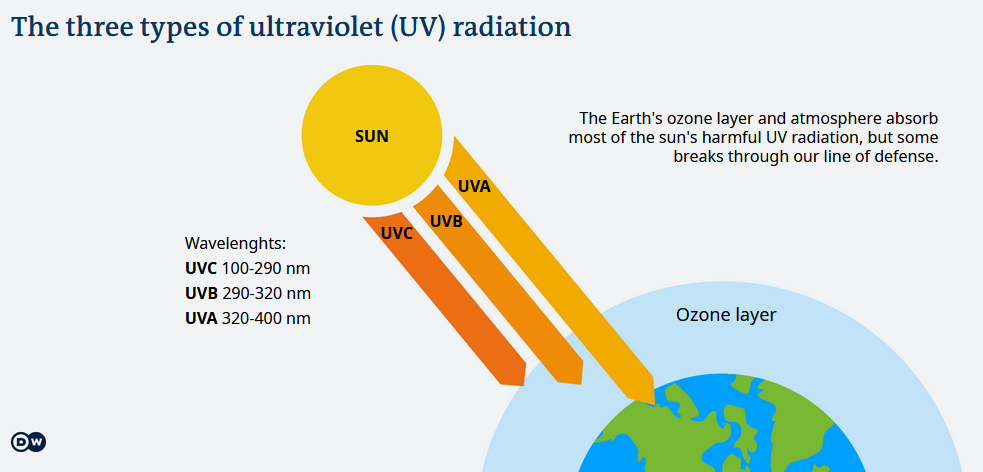
Since the substances were banned, declining concentrations of chlorine and bromine have helped to limit human exposure to harmful UV rays from the sun that can cause skin cancer, cataracts and suppress the immune system. -DW

"Thanks to a global agreement, humanity has averted a major health catastrophe due to ultraviolet radiation pouring through a massive hole in the ozone layer," said UN Secretary-General Antonio Guterres last September 16, World Ozone Day. 

Impacts on climate change?

Meanwhile, in a fringe benefit that won't likely silence environmentalists, the panel affirmed the treaty's positive impact on the climate.

"By protecting plants from ultraviolet radiation, allowing them to live and store carbon, it has avoided up to an extra 1°C of global warming," said UN head Antonio Guterres, who praised the protocol's impact on the ozone and the climate, adding that it was a "universally ratified and decisively implemented" model for global action.

"Only by mirroring the cooperation and speedy action of the Montreal Protocol elsewhere can we stop the carbon pollution that is dangerously heating our world," Guiterres continued. "The Montreal Protocol is a success because, when science discovered the threat we all faced, Governments and their partners acted."

https://www.zerohedge.com/weather/ozone-layer-recovers-limiting-global-warming-un-report

Blockbusters in waiting: Clarivate’s drugs to watch in 2023

 New drugs for immunological and inflammatory diseases feature prominently among new product launches this year that could top $1 billion in annual sales by 2027 or be clinical “game changers,” according to Clarivate.

This year’s list reflects pharma’s increasing focus on treatments that are targeted to a specific biomarker, a strategy that aims to ensure greater efficacy and less time lost searching for a drug or biologic that will arrest or reverse the progress of disease, according to the report.

1) Bimekizumab: UCB’s first-in-class dual IL-17 A/F inhibitor was approved in the EU last year as Bimzelx but turned down by the FDA only to be refiled last month. It is expected to make rapid inroads into the market for moderate to severe plaque psoriasis therapies thanks to superior skin clearance and infrequent dosing compared to current drugs, despite entering a crowded market;

2) Capivasertib: AstraZeneca’s pan-AKT kinase inhibitor for breast cancer, which has shown efficacy in patients with hormone receptor positive, HER2-negative advanced breast cancer – regardless of their PIK3CA/AKT1/PTEN mutational status – and is now in phase 3 testing;

3) Daprodustat: GSK is vying to become the first drug in the HIF-PHI inhibitor class to reach the US market with daprodustat, which is already approved in Japan as Duvroq where uptake has been impressive. The drug offers an oral alternative to injectable therapies for anaemia associated with chronic kidney disease;

4) Deucravacitinib: Bristol-Myers Squibb looks set for a winner with this first-in-class oral TYK2 inhibitor, which according to Clarivate has the potential to fill a gap in the treatment armamentarium for moderate to severe psoriasis. It was approved by the FDA as Sotyktu last September;

5) Foscarbidopa/foslevodopa (ABBV-951): Developed by AbbVie, the drug is a reformulation of a standard Parkinson’s treatment (carbidopa/levodopa) delivered by subcutaneous pump for hard-to-treat patients with advanced disease, and is in the latter stages of FDA review. It offers better efficacy than orally administered carbidopa-levodopa, dosing flexibility and a more convenient pump than existing and upcoming competitors;

6) Lecanemab: Clarivate delivers a vote of confidence in Eisai and Biogen’s anti-amyloid antibody lecanemab for Alzheimer’s disease – just approved by the FDA as Leqembi – after the debacle of their first effort Aduhelm (aducanumab). The report also says late-stage rivals from Eli Lilly (donanemab) and possibly Roche (gantenerumab) may follow suit pending the results of ongoing trials;

7) Lenacapavir: Gilead Sciences’ first-in-class capsid inhibitor makes the grade for its potential to transform the treatment of HIV thanks to a twice-yearly dosing regimen. It is approved in Europe as Sunlenca and under evaluation by the FDA as a therapy for people with HIV whose therapy is starting to lose effectiveness, and also has significant potential for pre-exposure prophylaxis (PrEP);

8) Mirikizumab: Eli Lilly’s second candidate on the blockbuster list is a monoclonal antibody targeting the p19 subunit of IL-23, heading for a first-in-class approval in ulcerative colitis and third place for IL-23-targeting drugs in Crohn’s disease after Johnson & Johnson’s Stelara (ustekinumab) and AbbVie’s Skyrizi (risankizumab);

9) Pegcetacoplan: Sold as Empaveli/Aspaveli by developer Apellis Pharma, pegcetacoplan has launched already in the US and Europe for rare blood disorder paroxysmal nocturnal hemoglobinuria (PNH) but the big payoff is expected to follow an anticipated approval and launch for geographic atrophy (GA) or ‘dry’ age-related macular degeneration (AMD), which has no approved drug treatment;

10) Ritlecitinib: Pfizer’s JAK3 inhibitor makes it onto Clarivate’s list thanks to its first-in-class status as a therapy for alopecia areata, an autoimmune form of hair loss, coupled with a rapid onset of action and expected label for both adults and adolescents. At the moment the only approved therapy – for adults only – is Lilly’s JAK 1/2 drug Olumiant (baricitinib);

11) Sparsentan: Travere Therapeutics’ first-in-class, orally active, drug is an antagonist of both endothelin type A (ETA) and angiotensin II subtype 1 (AT1) receptors, which are associated with progression of kidney disease. It’s in late-stage development for IgA nephropathy and focal segmental glomerulosclerosis (FSGS) with initial data suggesting it may halt disease progression;

12) Teclistamab: Another drug already approved for marketing in the EU, J&J’s Tecvayli is the first bispecific antibody targeted to BCMA for multiple myeloma, with ongoing phase 3 trials expected to provide confirmation of its benefit as later-line treatment setting and support use earlier in the treatment pathway both alone and in combination with other therapies;

13) Teplizumab: Provention Bio’s anti-CD3 monoclonal antibody teplizumab – partnered with Sanofi – became the first immunotherapy to launch for type 1 diabetes after it was approved by the FDA as Tzield last November. It has been highlighted by Clarivate for its potential ability to preserve the function of insulin-producing beta cells in the pancreas and delay the need for insulin treatment;

14) Valoctocogene roxaparvovec: BioMarin’s gene therapy for haemophilia A was approved in the EU as Roctavian last summer and is poised to become the first gene therapy for the bleeding disorder in the US. The one-shot therapy is expected to provide long-lasting effects, reduce the number of bleeds experienced by patients, and reduce the need Factor VIII replacement therapy.

https://pharmaphorum.com/news/blockbusters-in-waiting-clarivates-drugs-to-watch-in-2023/