Search This Blog

Tuesday, February 7, 2023

Roche Announces Positive Results From Phase III Study Of Crovalimab

 Roche (RHHBY) announced positive results from the global phase III COMMODORE 2 study, evaluating the efficacy and safety of crovalimab in people with paroxysmal nocturnal haemoglobinuria or PNH who have not been previously treated with complement inhibitors.

Paroxysmal nocturnal haemoglobinuria is a rare and life-threatening blood condition in which red blood cells are destroyed by the complement system. This causes symptoms such as anaemia, fatigue, blood clots and kidney disease. C5 inhibitors can be effective in treating the condition.

The phase III COMMODORE 2 study met its co-primary efficacy endpoints of transfusion avoidance and control of haemolysis. Results showed that crovalimab, a novel, investigational anti-C5 recycling monoclonal antibody, given as a subcutaneous injection every four weeks, achieved disease control and was non-inferior to eculizumab, a current standard of care, which is given intravenously every two weeks.

The results of the phase III COMMODORE 1 study in people with paroxysmal nocturnal haemoglobinuria switching from currently approved C5 inhibitors, supported the favourable benefit-risk profile of crovalimab, as seen in the pivotal COMMODORE 2 study.


Data from both studies will be submitted to regulatory authorities around the world and presented at an upcoming medical meeting, Roche said in a statement.


https://www.nasdaq.com/articles/roche-announces-positive-results-from-phase-iii-study-of-crovalimab-in-pnh

Ukraine's Defense Minister On Chopping Block Over Army Contract Scandal

 The fate of Ukraine's Defense Minister Oleksii Reznikov continues to be unclear, with Kiev sending mixed signals about his role in corruption scandals which in recent weeks has resulted in several top resignations. 

President Volodymyr Zelensky indicated Monday that no major personnel changes in the defense sector will take place this week, despite the country's ruling political party, Servant of the People, on Sunday issuing a statement saying Reznikov is being replaced as defense minister.

However, the statement indicated Reznikov will still remain in the Zelensky government after removal from the defense ministry. 

The Washington Post on Monday detailed the confusion and conflicting signals over Reznikov's fate in the following

Ukraine’s current military intelligence chief, Maj. Gen. Kyrylo Budanov, is slated to replace Oleksii Reznikov as defense minister, David Arakhamia, leader of Zelensky’s party in parliament and a close ally to the president, said on his Telegram channel.

On Monday morning, however, Arakhamia posted another message on Telegram saying no change would take place this week.

“We are waiting for the appointment of the heads of the Ministry of Internal Affairs and the Security Service of Ukraine,” he wrote. “Personnel changes in the field of defense will not take place this week.”

The defense ministry's number two, deputy minister Vyacheslav Shapovalov, was forced to resign his post in late January. Crucially, he had been in charge of the army's logistical support, and in that role was caught signing food contracts at inflated prices. 

Shapovalov also had no small part in overseeing the billions of dollars flowing from the pockets of US and European taxpayers as authorized defense aid. He purchased military rations at inflated prices in what appears a scheme to line the pockets of contractors, and potentially involving kickbacks to himself. But Reznikov had tried to explain away the scandal by calling it a mere "technical mistake"

Reznikov throughout the war has been favored in Western capitals, and has also made himself very friendly to Western defense companies, at one point even calling his country a "testing ground" for weapons manufacturers. Most recently, he's led the Zelensky government's push for fighter jets, after securing main battle tanks upon the approval of Washington and Berlin. It could be his allies in the West don't want to see him go, despite the embarrassment of him as defense minister having overseen the army food contract scandal.

https://www.zerohedge.com/geopolitical/ukraines-defense-minister-next-go-after-army-food-contract-corruption-scandal

Monday, February 6, 2023

Time to De-Sovietize Health Care

 My good friend professor Yuri Maltsev died last week and I’ve spent several mourning days recalling our conversations.

He was a leading economist in the old Soviet Union, as the top adviser to Mikhail Gorbachev’s chief economist. He defected in 1989 before the Soviet Union fell apart. We became fast friends just after he landed in D.C., and we spent a year or more together collaborating on many projects.

He was a font of amazing stories about how things really worked in the Soviet Union. Contrary to what U.S. economists were claiming until the very end, it was not a rich country with mighty industrial achievements. It was a poor country where nothing worked.

There were no replacement parts for most machines including tractors. He doubted that there would ever be a nuclear exchange simply because most Soviet workers knew that the bombs were all for show. If they ever dared press the button, they would most likely blow themselves up.

Business as Usual

As the systems of command and control in those states (Russia, East Germany, Romania, Poland, Czechia and so on) fell apart, Yuri was in a position to advise the reforms. To his sadness and contrary to his advice, even though the parties and leaderships collapsed, there was almost no attempt to reform the health care sectors of these countries.

They left them all in place while focusing on things like heavy industry and technology sectors (and here banditry took over).

Yuri saw this as tragic because, to his mind, the corruption of health care in the Soviet Union was central to the disastrous quality of life that the people experienced there. Though doctors were everywhere and minted daily, people who were sick could hardly get effective treatment at all.

Most of the best therapeutics were homegrown. People would only go to the doctor much less the hospital if they had no other options. This is because the instant you entered the system, your personhood was left behind and you became part of the modeling target.

The Soviet Key to Reducing Death

All health care was driven by statistical goals, just as with economic production. Hospitals were under strict orders to minimize death or at least not to go over target. That led to a perverse situation. Hospitals would take in the mildly sick but refuse to admit anyone likely to die.

If patients in critical care declined too rapidly, the first priority of the hospital was to get them out before they died so as to reduce the amount of death on the premises.

All of this was done in the hope of gaming the vital statistics to make it look like the centralized and socialized health care systems worked when they clearly did not.

None of this could ultimately hide the vital statistics, which, Yuri explained, truly do tell the story. From 1920–1960, life expectancy did increase dramatically though never quite reaching as high as in the U.S.

But after 1960, it began to decline even as it was rising more and more in the U.S. and in non-communist countries around the world. This continued until the regime finally collapsed, at which point life expectancy began to rise again.

Now life expectancy in both countries has begun to fall again, and dramatically, following pandemic lockdowns and mass vaccination, which is a tragedy that cries out for explanation.

We’re From the Government and We’re Here to Help

Back to Yuri’s point, however: The health care system and its statistical goals served as a major source of brutality and corruption in Russia. When government gets hold of medical systems, they use them for their own propaganda ends and purposes. That’s true whether the real goals are medical or not.

This happened in both countries following lockdowns, and many others as well. Maybe it is only a short blip or maybe it is the beginning of a long trend of decivilization. Either way, the central plan is not working.

In the U.S., in nearly every state, regardless of whether the virus was spreading rapidly with significant medical consequences, hospitals were forcibly reserved only for emergencies and COVID patients.

Elective surgeries were out of the question, as were cancer screenings or other routine checkups. This left most hospitals in the country with very few patients and a gutting of their profitability models, leading to furloughs of thousands of nurses during a pandemic.

You Didn’t Die From a Car Crash, But From COVID

It also created a situation in which hospitals were desperate for a revenue source. By government legislation, a subsidy was provided to them for COVID patients and COVID deaths, thus incentivizing medical institutions to classify everyone with a positive PCR test as a COVID case, regardless of what else was wrong with the patient.

This began almost immediately.

This practice continued for two years, leading to a massive confusion about how many people actually died of COVID and skewing all existing data on the case fatality rate. Leana Wen of CNN argued in a Washington Postarticle that now perhaps only 30% percent of the people labeled as a COVID hospitalization really are that.

As Leslie Bienen and Margery Smelkinson note in The Wall Street Journal:

Under the federal public-health emergency, which begins its fourth year on Friday, hospitals get a 20% bonus for treating Medicare patients diagnosed with COVID-19…

Another incentive to overcount comes from the American Rescue Plan of 2021, which authorizes the Federal Emergency Management Agency to pay COVID-19 death benefits for funeral services, cremation, caskets, travel and a host of other expenses. The benefit is worth as much as $9,000 a person or $35,000 a family if multiple members die. By the end of 2022, FEMA had paid nearly $2.9 billion in COVID-19 death expenses.

Further, doctors all over the country are facing massive pressure to list as many deaths as possible as COVID deaths.

These programs create a vicious circle. They establish incentives to overstate the danger of COVID. The overstatement provides a justification to continue the state of emergency, which keeps the perverse incentives going. With effective vaccines and treatments widely available, and an infection fatality rate on par with flu, it’s past time to recognize that COVID is no longer an emergency requiring special policies.

Time to De-Sovietize Health Care

Maltsev was right about this as with so much else. The further we move away from health care as essentially a doctor/patient relationship, with freedom of choice on all sides, and the more we allow central plans to replace on-the-ground clinical wisdom, the less it looks like quality health care and the less it contributes to public health.

The Soviets already tried this path. It did not work. Health care by modeling and data targeting: We tried it over the last three years with horrible results.

As Maltsev would put it, the need to de-Sovietize medical care applies in every country, then and now.

Jeffrey Tucker is the Chief Liberty Officer of Liberty.me. He's also the author of Bourbon for Breakfast and the recently released Bit By Bit: How P2P is Freeing the World. 

https://dailyreckoning.com/author/jeffreytucker/

West 'Blocked' Russia-Ukraine Peace Process, Says Former Israeli PM

 by Dave DeCamp via AntiWar.com,

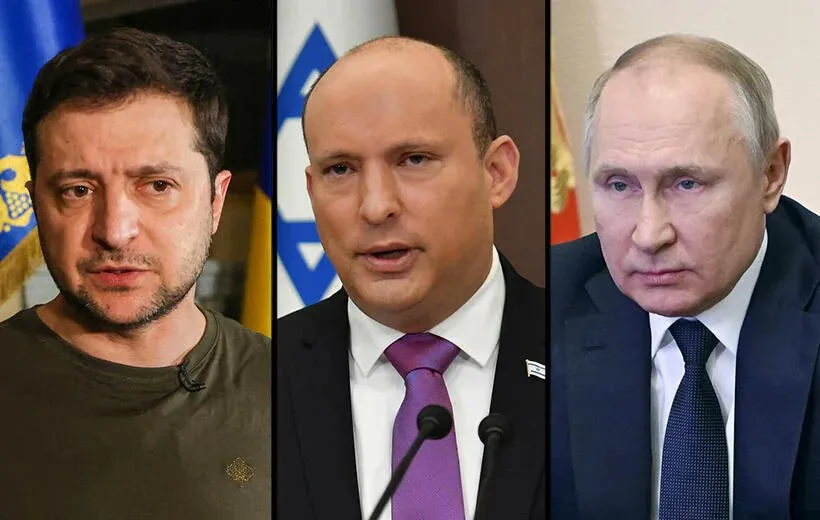
Former Israeli Prime Minister Naftali Bennett said in an interview posted to his YouTube channel on Saturday that the US and its Western allies “blocked” his efforts of mediating between Russia and Ukraine to bring an end to the war in its early days.

On March 4, 2022, Bennett traveled to Russia to meet with President Vladimir Putin. In the interview, he detailed his mediation at the time between Putin and Ukrainian President Volodymyr Zelensky, which he said he coordinated with the US, France, Germany, and the UK.

Bennett said that both sides agreed to major concessions during his mediation effort. For the Russian side, he said they dropped “denazification” as a requirement for a ceasefire. Bennett defined “denazification” as the removal of Zelensky. During his meeting in Moscow with Putin, Bennett said the Russian leader guaranteed that he wouldn’t try to kill Zelensky.

The other concession Russia made, according to Bennett, is that it wouldn’t seek the disarmament of Ukraine. For the Ukrainian side, Zelensky “renounced” that he would seek NATO membership, which Bennett said was the “reason” for Russia’s invasion.

Reports at the time reflect Bennet’s comments and said Russia and Ukraine were softening their positions. Citing Israeli officials, Axios reported on March 8 that Putin’s “proposal is difficult for Zelensky to accept but not as extreme as they anticipated. They said the proposal doesn’t include regime change in Kyiv and allows Ukraine to keep its sovereignty.”

Discussing how Western leaders felt about his mediation efforts, Bennett said then-British Prime Minister Boris Johnson took an “aggressive line” while French President Emmanuel Macron and German Chancellor Olaf Scholz were more “pragmatic.” Bennett said President Biden adopted “both” positions.

But ultimately, the Western leaders opposed Bennet’s efforts. “I’ll say this in the broad sense. I think there was a legitimate decision by the West to keep striking Putin and not [negotiate],” Bennett said.

When asked if the Western powers “blocked” the mediation efforts, Bennet said, “Basically, yes. They blocked it, and I thought they were wrong.”

Explaining his decision to mediate, Bennett said that it was in Israel’s national interest not to pick a side in the war, citing Israel’s frequent airstrikes in Syria. Bennett said Russia has S-300 air defenses in Syria and that if “they press the button, Israeli pilots will fall.”

Negotiations between Russia and Ukraine didn’t stop with Bennett’s efforts. Later in March, Russian and Ukrainian officials met in Istanbul, Turkey, and followed up with virtual consultations. According to the account of former US officials speaking to Foreign Affairs, the two sides agreed on the framework for a tentative deal. Russian officials, including Putin, have said publicly that a deal was close following the Istanbul talks.

But the negotiations ultimately failed after more Western pressure. Boris Johnson visited Kyiv in April 2022, urging Zelensky not to negotiate with Russia. According to a report from Ukrainska Pravda, he said even if Ukraine was ready to sign a deal with Russia, Kyiv’s Western backers were not.

Later in April, Turkish Foreign Minister Mevlut Cavusoglu said there were some NATO countries that wanted to prolong the war in Ukraine. “After the talks in Istanbul, we did not think that the war would take this long … But, following the NATO foreign ministers’ meeting, it was the impression that… there are those within the NATO member states that want the war to continue, let the war continue and Russia gets weaker. They don’t care much about the situation in Ukraine,” Cavusoglu said.

A few days after Cavusoglu’s comments, Secretary of Defense Lloyd Austin admitted that one of the US’s goals in supporting Ukraine is to see Russia “weakened.”


Feds say cyberattack caused suicide helpline’s outage

  A cyberattack caused a nearly daylong outage of the nation’s new 988 mental health helpline late last year, federal officials told The Associated Press Friday. Lawmakers are now calling for the federal agency that oversees the program to prevent future attacks.

“On December 1, the voice calling functionality of the 988 Lifeline was rendered unavailable as a result of a cybersecurity incident,” Danielle Bennett, a spokeswoman for the Substance Abuse and Mental Health Services Administration, said in an email.

The attack occurred on the network for Intrado, the company that provides telecommunications services for the helpline. The agency did not disclose details about who it believes launched the attack or what kind of cyberattack occurred. Intrado is working with a third-party assessor to investigate the incident and law enforcement agencies have been notified of the breach, SAMHSA said.

The national 988 phone number, which can be reached by text, chat or voice calling, has become a lifeline for millions of Americans seeking help during a mental crisis, with millions of calls pouring in during the first six months since its launch in July. The system is designed to work similarly to 911 — it’s a universal, easy-to-remember number that people can call in an emergency to reach a human who is working around the clock in a local call center.

Those who tried on Dec. 1 to reach the line for help with suicidal or depressive thoughts were instead greeted with a message that said the line is “experiencing a service outage.” Text and chat services, however, remained available to those who needed help.

The Federal Communications Commission said in December it was investigating the outage. Intrado said at the time that the company was “experiencing an incident that is impacting production across numerous systems” and is “working diligently to restore service.” Intrado could not immediately be reached for comment Friday.

Last week, Democrat Rep. Tony Cárdenas and Republican Rep. Jay Obernolte, both of California, introduced a bill calling for better coordination and reporting around cyberattacks on the 988 system.

“Even a few hours’ outage of the national suicide hotline can cost American lives,” Obernolte said in a press release introducing the bill. “It’s critical that we mitigate the risks of future disruptions to the service and take steps to resolve cybersecurity vulnerabilities that could put the hotline at risk.”

https://apnews.com/article/technology-health-mental-76f75061bdc4ff3c4ec024f337e9a426

New rules would limit sugar in school meals for first time

 U.S. agriculture officials on Friday proposed new nutrition standards for school meals, including the first limits on added sugars, with a focus on sweetened foods such as cereals, yogurt, flavored milk and breakfast pastries.

The plan announced by Agriculture Secretary Tom Vilsack also seeks to significantly decrease sodium in the meals served to the nation’s schoolkids by 2029, while making the rules for foods made with whole grains more flexible.

The goal is to improve nutrition and align with U.S. dietary guidelines in the program that serves breakfast to more than 15 million children and lunch to nearly 30 million children every day, Vilsack said.

“School meals happen to be the meals with the highest nutritional value of any meal that children can get outside the home,” Vilsack said in an interview.

The first limits on added sugars would be required in the 2025-2026 school year, starting with high-sugar foods such as sweetened cereals, yogurts and flavored milks.

Under the plan, for instance, an 8-ounce container of chocolate milk could contain no more than 10 grams of sugar. Some popular flavored milks now contain twice that amount. The plan also limits sugary grain desserts, such as muffins or doughnuts, to no more than twice a week at breakfast.

By the fall of 2027, added sugars in school meals would be limited to less than 10% of the total calories per week for breakfasts and lunches.

The proposal also would reduce sodium in school meals by 30% by the fall of 2029. They would gradually be reduced to align with federal guidelines, which recommend Americans aged 14 and older limit sodium to about 2,300 milligrams a day, with less for younger children.

Levels would drop, for instance, from an average of about 1,280 milligrams of sodium allowed now per lunch for kids in grades 9 to 12 to about 935 milligrams. For comparison, a typical turkey sandwich with mustard and cheese might contain 1,500 milligrams of sodium.

Health experts say cutting back on sugar and salt can help decrease the risk of disease in kids, including obesity, diabetes, high blood pressure and other problems that often continue into adulthood.

The plan, detailed in a 280-page document, drew mixed reactions. Katie Wilson, executive director of the Urban School Food Alliance, said the changes are “necessary to help America’s children lead healthier lives.”

But Diane Pratt-Heavner, spokeswoman for the School Nutrition Association, a trade group, said school meals are already healthier than they were a decade ago and that increased regulations are a burden, especially for small and rural school districts.

“School meal programs are at a breaking point,” she said. “These programs are simply not equipped to meet additional rules.”

Vilsack emphasized that the plan phases changes in over the next six years to allow schools and food manufacturers time to adjust to the new standards. He said in a press conference Friday that the USDA will also fund grants of up to $150,000 to help small and rural schools make the changes.

“Our hope is that many school districts and food providers accelerate the timeline on their own,” he said.

Courtney Gaine, president of the Sugar Association, said the proposal ignores the “many functional roles” sugar plays in food beyond sweetness and encourages the use of sugar substitutes, which have not been fully studied in children. Sugar substitutes are allowed under the new standards, Vilsack said.

As part of the plan, agriculture officials are seeking feedback about a proposal that would continue to require that 80% of all grains offered in a week must be whole grains. But it would allow schools to serve non-whole grain foods, such as white-flour tortillas, one day a week to vary their menus.

Another option suggests serving unflavored nonfat and lowfat milk to the youngest children and reserving chocolate and other flavored milks for high school kids.

A 60-day public comment period on the plan opens Feb. 7.

Shiriki Kumanyika, a community health expert at Drexel University’s Dornsife School of Public Health said if they’re done right some of the changes will be hard for kids to notice: “They’ll see things that they like to eat, but those foods will be healthier,” she said.

https://apnews.com/article/new-school-meal-nutrition-standards-30963aeb9f56aae0ee743c26f1117f19

New Alzheimer’s drug having slow US debut

 The first drug to show that it slows Alzheimer’s is on sale, but treatment for most patients is still several months away.

Two big factors behind the slow debut, experts say, are scant insurance coverage and a long setup time needed by many health systems.

Patients who surmount those challenges will step to the head of the line for a drug that delivers an uncertain benefit. Here’s a closer look.

THE SITUATION

The U.S. Food and Drug Administration approved Leqembi, from Japanese drugmaker Eisai, in early January. It’s for patients with mild or early cases of dementia tied to Alzheimer’s disease.

Regulators used the FDA’s accelerated pathway, which allows drugs to launch before they’re confirmed to benefit patients. In studies, Leqembi modestly slowed the fatal disease, but doctors aren’t sure yet how that translates into things like greater independence for patients.

Patients get the drug by IV every two weeks. Eisai says the company has shipped Leqembi to U.S. specialty drug distribution centers. From there, it can be delivered overnight to hospitals or medical centers.

Eisai spokeswoman Libby Holman said prescriptions for the drug have been written, and they expect patients to start receiving it “very soon.”

COST AND COVERAGE

A year’s treatment will run about $26,500. Patients who can afford that without insurance will be able to start the treatment if they are deemed a candidate for Leqembi and they find a doctor and health care system prepared to help them.

There are currently few options outside self-pay. Most of the patients who may be candidates for this drug are on Medicare, and the federal program’s coverage is narrow so far. It has said it will cover treatments like Leqembi only for patients enrolled in certain research trials designed to test the drug.

There are no such studies currently accepting new patients.

“There’s a theoretical door (to coverage) that’s completely slammed shut,” said Robert Egge, chief public policy officer for the nonprofit Alzheimer’s Association.

Medicare made that coverage decision last year when another Alzheimer’s drug, Biogen’s Aduhelm, hit the market.

Health insurers, which run Medicare Advantage coverage, have been sticking to that decision, said a spokesman for the trade group America’s Health Insurance Plans.

The Centers for Medicare and Medicaid Services, which oversees Medicare, said after Leqembi’s approval that it may reconsider its coverage stance, something the Alzheimer’s Association has urged it to do.

Coverage also is likely to change if the drug receives full approval from the FDA. That could happen later this year.

In the meantime, Eisai has an assistance program that provides Leqembi for free to some patients, including those on Medicare. It’s based partly on financial need.

DIAGNOSING

It can take anywhere from several months to more than a year for doctors to diagnose a patient and then figure out if that person is a candidate for Leqembi, according to Dr. Sarah Kremen, a neurologist with the Cedars-Sinai health system in Los Angeles.

That can depend on where a patient lives and the physician’s expertise.

First, a doctor must determine whether a patient has mild dementia.

Then the doctor has to decide what caused the condition. It could stem from Alzheimer’s, Parkinson’s disease, a stroke or a brain injury.

If it’s related to Alzheimer’s disease, doctors must determine whether the patient’s brain has an amyloid protein. The new drug aims to slow the progression of Alzheimer’s by removing that protein.

After all that, some doctors may hesitate to prescribe Leqembi because they don’t have a good idea yet for how the drug will help the patient or affect their everyday life, Kremen said. They have to consider that uncertainty against the brain swelling and bleeding that can develop in patients taking it.

“I think this benefit versus harm issue is going to weigh heavily,” she said.

DELIVERING TREATMENT

Health systems must first develop plans for delivering drugs like Leqembi before they start offering it. That can take months, although some may have started before regulators approved the drug.

This planning might include training nurses on how to give the drug and making sure prescribing doctors know how to recognize candidates for it. Care providers also need a plan for how patients will be monitored once they start taking it.

Patients need repeated brain scans to check for side effects.

Doctors may want to know that such a plan is in place before they feel comfortable writing a prescription, Kremen noted.

Hospital systems also will have to figure out how many patients might come to them for this drug and be able to cover all the costs tied to it. Those might include clinic, nursing, radiologist and pharmacy fees.

“Frankly, the hospital systems are going to have to decide if they want to offer it,” Kremen said. “Is it worth the cost?”

Eisai estimates that about 100,000 people will be diagnosed and eligible to receive Leqembi in the United States by 2026. Representatives of the drugmaker declined to estimate how many people might receive it this year.

https://apnews.com/article/health-care-costs-us-food-and-drug-administration-business-dementia-aa65c9f4640765358bf0dbb68e4bdde9