Search This Blog

Thursday, April 6, 2023

COVID-19 in Pregnancy Affects Growth in Child's First Year of Life

 Compared with infants who were not exposed to COVID-19 in the womb, those who were exposed had a lower weight and body mass index (BMI) at birth, but greater weight gain, during the first year of life, in a new analysis.

This "exaggerated growth pattern observed among infants with COVID-19 exposure may in some cases be a catch-up response to a prenatal growth deficit," Mollie W. Ockene and colleagues write in a report published recently in the Journal of Clinical Endocrinology & Metabolism.

But given that lower birth weight and accelerated post-natal weight gain are risk factors for cardiometabolic disease, the findings "raise concern" about whether children born to mothers with prenatal COVID-19 go on to develop obesity, diabetes, or cardiovascular disease, senior co-authors Andrea G. Edlow, MD, and Lindsay T. Fourman, MD, of Massachusetts General Hospital, Boston, told Medscape Medical News in an email.

Further studies in larger numbers of patients with longer follow-up and detailed assessments are needed, the researchers say, but this points to "a potentially increased cardiometabolic disease risk for the large global population of children with in utero COVID-19 exposure."

It will be "important for clinicians caring for children with in utero exposure to maternal COVID-19 to be aware of this history," Edlow and Fourman add, "and to view the child's growth trajectory and metabolic risk factors in a holistic context that includes this prenatal infection exposure."

COVID-19 Vaccination Important During and Prior to Pregnancy

The study also underscores the importance of primary prevention of COVID-19 among women who are contemplating pregnancy or who are already pregnant, the researchers note, "including the need for widespread implementation of protective measures such as indoor masking and COVID-19 vaccination and boosting during or prior to pregnancy."

"Given the disproportionate impact that COVID-19 has had on historically marginalized populations, adverse health outcomes following in utero exposure to maternal COVID-19 may threaten to widen existing disparities in child health," Edlow and Fourman add.

On the other hand, although "COVID-19 vaccination rates lagged behind in minority populations following the initial vaccine rollout," they note, "these differences have fortunately narrowed over time, particularly for Hispanic individuals, though they do still persist in the Black population," according to a recent report.

BMI Trajectories During First Year of Life

In utero exposure to COVID-19 has been linked to fetal/neonatal morbidity and mortality, including stillbirth, preterm birth, preeclampsia, and gestational hypertension, but less is known about infant outcomes during the first year of life.

The researchers aimed to compare weight, length, and BMI trajectories over the first year of life in infants with, versus without, in utero exposure to COVID-19.

They identified 149 infants with in utero exposure to COVID-19 and 127 unexposed infants; all were born between March 30, 2020, and May 30, 2021, to mothers who participated in the Mass General Brigham COVID-19 Perinatal Biorepository.

The study excluded infants whose mothers received the vaccine (n = 5) or who had unclear vaccination status during pregnancy (n = 4) to reduce sample heterogeneity.

At the time of the study, few women had received the COVID-19 vaccine because vaccines were approved by the US Food and Drug Administration for emergency use in December 2020 and the CDC recommended them for all pregnant women much later, in August 2021.

The researchers examined the weight, length, and BMI of the infants at birth, and at 2, 6, and 12 months, standardized using World Health Organization (WHO) growth charts.

Compared with mothers who did not have COVID-19 during pregnancy, those who had COVID-19 were younger (mean age, 32 vs 34 years) and had a higher earliest BMI during pregnancy (29 vs 26 kg/m2) and greater parity (previous births, excluding the index pregnancy, 1.2 vs 0.9), and they were more likely to be Hispanic or Black and less likely to have private insurance.

Compared with infants exposed to COVID-19 in utero, infants who were not exposed were more likely to be male (47% vs 55%).

Both infant groups were equally likely to be breastfed (90%).

Compared with the unexposed infants, infants born to mothers with prenatal COVID-19 had lower BMI z-scores at birth (effect size, −0.35; P = .03) and greater gain in BMI z-scores from birth to 12 months (effect size, 0.53; P = .03), but they had similar length at birth and over 12 months, after adjusting for maternal age at delivery, ethnicity, parity, insurance status, and earliest BMI during pregnancy, as well as infant sex, date of birth, and if applicable, history of breastfeeding.

The study received funding from the National Institutes of Health, Harvard Nutrition Obesity Research Center, Boston Area Diabetes Endocrinology Research Centers, American Heart Association, and Simons Foundation. Ockene has reported no relevant financial relationships. Edlow has reported being a consultant for Mirvie and receiving research funding from Merck outside the study. Fourman has reported serving as a consultant and receiving grant funding to her institution from Amryt outside the study. Disclosures for the other authors are listed with the article.

J Clin Endocrinol Metab. Published online March 20, 2023. Full text

https://www.medscape.com/viewarticle/990500

New Insight Into the Growing Problem of Gaming Disorder

 Three studies provide new insight into the growing problem of gaming disorder (GD), including the condition's genesis, effective treatments, and the need for a greater focus on recovery.

A team of international researchers led by Orsolya Király, PhD, of the Institute of Psychology, Eötvös Loránd University, Budapest, Hungary, reviewed the characteristics and etiology of GD. They concluded that its genesis arises from the interaction of environmental factors, game-specific factors and individual factors, including personality traits, comorbid psychopathology, and genetic predisposition.

"The development of GD is a complex process and we identified three major factors involved," study coauthor Mark Griffiths, PhD, distinguished professor of behavioral addiction and director of the International Gaming Research Unit, Psychology Department, Nottingham Trent University, UK, told Medscape Medical News. Because of this complexity, "prevention and intervention in GD require multiprofessional action."

The review was published in the April issue of Comprehensive Psychiatry.

In a second paper, Chinese investigators reviewing randomized controlled trials (RCTs) presented "compelling evidence" to support four effective interventions for GD: group counseling, acceptance and cognitive restructuring intervention program (ACRIP), short-term cognitive behavioral therapy (CBT), and craving behavioral intervention (CBI).

The review was published online February 6 in Frontiers in Psychiatry.

A third paper, in which researchers analyzed close to 50 studies of GD, found that the concept of "recovery" is rarely mentioned in GD research. Lead author Belle Gavriel-Fried, PhD, senior professor, Bob Shapell School of Social Work, Tel Aviv University, Israel, told Medscape Medical News that recovery is a "holistic concept that taps into many aspects of life."

Understanding the "differences in the impact and availability" of negative and positive human resources and their effect on recovery "can help clinicians to customize treatment," she said.

That review was published online March 14 in the Journal of Behavioral Addictions.

Complex Interplay

GD is garnering increasing attention in the clinical community, especially since 2019, when the World Health Organization included it in the International Classification of Diseases 11th Revision (ICD-11).

"Although for most individuals, gaming is a recreational activity or even a passion, a small group of gamers experiences negative symptoms which impact their mental and physical health and cause functional impairment," write Király and colleagues.

Griffith explained that his team wanted to provide an "up-to-date primer — a 'one-stop shop' — on all things etiologic concerning gaming disorder for academics and practitioners" as well as others, such as health policymakers, teachers, and individuals in the gaming industry.

The researchers identified three factors that increase the risk of developing GD, the first being gaming-related factors, which make video games "addictive in a way that vulnerable individuals may develop GD."

For example, GD is more prevalent among online versus offline game players, possibly because online multiplayer games "provide safe environments in which players can fulfill their social needs while remaining invisible and anonymous."

Game genre also matters, with massively multiplayer online role-playing games, first-person/third-person shooter games, real-time strategy games, and multiplayer online battle arena games most implicated in problematic gaming. Moreover, the "monetization techniques" of certain games also increase their addictive potential.

The researchers point to individual factors that increase the risk of developing GD, including male sex and younger age, personality traits like impulsivity and sensation-seeking, and comorbidities including attention-deficit/hyperactivity disorder, anxiety, and depression.

Poor self-esteem and lack of social competencies make gaming "an easy and efficient way to compensate for these deficiencies, which in turn, heightens the risk for developing GD," they add. Neurobiological processes and genetic predisposition also play a role.

Lastly, the authors mention environmental factors, including family and peer-group issues, problems at work or school, and cultural factors.

"The take-home messages are that problematic gaming has had a long history of empirical research; that the psychiatric community now views GD as a legitimate mental health issue; and that the reasons for GD are complex, with many different factors involved in the acquisition, development, and maintenance of GD," said Griffiths.

Beneficial Behavioral Therapies

Yuzhou Chen and colleagues, Southwest University, Chongqing, China, conducted a systematic review of RCTs investigating interventions for treating GD. Despite the "large number of intervention approaches developed over the past decade, as yet, there are no authoritative guidelines for what makes an effective GD intervention," they write.

Few studies have focused specifically on GD but instead have focused on a combination of internet addiction and GD. But the interventions used to treat internet addiction may not apply to GD. And few studies have utilized an RCT design. The researchers therefore set out to review studies that specifically used an RCT design to investigate interventions for GD.

They searched six databases to identify RCTs that tested GD interventions from the inception of each database until the end of 2021. To be included, participants had to be diagnosed with GD and receive either a "complete and systematic intervention" or be in a comparator control group receiving no intervention or placebo.

Seven studies met the inclusion criteria (N = 322 participants). The studies tested five interventions:

  • Group counseling with three different themes (interpersonal interaction, acceptance and commitment, cognition and behavior)

  • CBI, which addresses cravings

  • Transcranial direct current stimulation (tDCS)

  • ACRIP with the main objectives of reducing GD symptoms and improving psychological well-being

  • Short-term CBT, which addresses maladaptive cognitions

The mean duration of the interventions ranged from 3 to 15 weeks.

The primary outcome was GD severity, with secondary outcomes including depression, anxiety, cognition, game time, self-esteem, self-compassion, shyness, impulsivity, and psychological well-being.

Group counseling, CBI, ACRIP, and short-term CBT interventions had "a significant effect on decreasing the severity of GD," while tDCS had "no significant effect."

Results for secondary outcomes are listed in Table 1.

Behavioral therapy "exerts its effect on the behavioral mechanism of GD; for example, by reducing the association between game-related stimuli and the game player's response to them," the authors suggest.

Table 1. Results for Secondary Outcomes in Systematic Review of RCTs

InterventionReductionIncrease
Group counselingDepression
Maladaptive cognition
Number of hours spent gaming
Anxiety
 
Short-term CBTDepression 
ACTMaladaptive cognitionSelf-compassion
CBINumber of hours spent gaming 
CBTShyness 
ACRIP Psychological well-being


Behavioral therapy "exerts its effect on the behavioral mechanism of GD; for example, by reducing the association between game-related stimuli and the game-player's response to them," the authors suggest.

Recovery vs Pathology

Recovery "traditionally represents the transition from trauma and illness to health," Gavriel-Fried and colleagues note.

Two paradigms of recovery are "deficit-based" and "strength-based." The first assesses recovery in terms of abstinence, sobriety, and symptom reduction; and the second focuses on "growth, rather than a reduction in pathology."

But although recovery is "embedded within mental health addiction policies and practice," the concept has received "scant attention" in GD research.

The researchers therefore aimed to "map and summarize the state of the art on recovery from GD," defining "recovery" as the "ability to handle conflicting feelings and emotions without external mediation."

They conducted a scoping review of all literature regarding GD or internet GD published before February 2022 (47 studies, 2924 participants with GD, mean age range 13-26 years).

Most studies (n = 32) consisted of exclusively male subjects. Only 10 included both sexes, and female participants were in the minority.

Most studies (n = 42) did not address the concept of recovery, although all studies did report significant improvements in gaming-related pathology. Typical terminology used to describe changes in participants' GD were "reduction" and/or "decrease" in symptom severity.

Although 18 studies mentioned the word "recovery," only five actually discussed issues related to the notion of recovery, and only five used the term "abstinence."

In addition, only 13 studies examined positive components of life in patients with GD, such as increased psychological well-being, life satisfaction, quality of life, improved emotional state, relational skills, and executive control, as well as improved self-care, hygiene, sleep, and interest in school studies.

"As a person and researcher who believes that words shape the way we perceive things, I think we should use the word 'recovery' rather than 'pathology' much more in research, therapy, and policy," said Gavriel-Fried.

She noted that because GD is a "relatively new behavioral addictive disorder, theories are still being developed and definitions of the symptoms are still being fine-tuned."

"The field as a whole will benefit from future theoretical work that will lead to practical solutions for treating GD and ways to identify the risk factors," Gavriel-Fried said.

Filling a Research Gap

Commenting for Medscape Medical News, David Greenfield, MD, founder and medical director of the Connecticut-based Center for Internet and Technology Addiction, noted that three decades ago, there was almost no research into this area.

"The fact that we have these reviews and studies is good because all of the research adds to the science providing more data about an area we still don't know that much about, where research is still in its infancy," said Greenfield, who was not involved with the present study.

"Although we have definitions, there's no complete agreement about the definitions of GD, and we do not yet have a unified approach," continued Greenfield, who wrote the books Overcoming Internet Addiction for Dummies and Virtual Addiction.

He suggested that "recovery" is rarely used as a concept in GD research perhaps because there's a "bifurcation in the field of addiction medicine in which behavioral addictions are not seen as equivalent to substance addictions," and, particularly with GD, the principles of "recovery" have not yet matured.

"Recovery means meaningful life away from the screen, not just abstinence from the screen," said Greenfield.

The study by Chen and colleagues was supported by grants from the National Social Science Foundation of China, the Chongqing Research Program of Basic Research and Frontier Technology, and the Fundamental Research Funds for the Central Universities. The authors have reported no relevant financial relationships. Griffiths has reported receiving research funding from Norsk Tipping (the gambling operator owned by the Norwegian government). The study by Király and colleagues received support from the Hungarian National Research Development and Innovation Office and the Janos Bolyai Research Scholarship Academy of Sciences to individual investigators. A coauthor has received funding for a number of research projects in the area of gambling  from Gamble Aware. The study by Gavriel-Fried and colleagues received support from the Hungarian National Research Development and Innovation Office and the Janos Bolyai Research Scholarship Academy of Sciences to individual investigators. Gavriel-Fried has reported receiving grants from the Israel National Insurance Institute and the Committee for Independent Studies of the Israel Lottery. Disclosures for the other authors are listed with the article. Greenfield has reported no relevant financial relationships.

Compr Psychiatry. 2023;122:152376. Full text

Front Psychiatry. Published online February 6, 2023. Full text

J Behav Addict. 2023;12:26-52. Full text

https://www.medscape.com/viewarticle/990517

How the IRA Will Affect Drug Development

 The Inflation Reduction Act (IRA), signed into law by President Biden on August 2022, also contains provisions regarding drug pricing. Two policies in particular are designed to influence drug prices, and these might in turn affect drug development strategies.

First, the IRA provides that starting in 2026, the federal government will have the authority to negotiate a maximum fair price (MFP) for some drugs among the highest-spending, Medicare-covered drugs. Second, drug manufacturers will be required to pay rebates to Medicare if drug prices rise faster than inflation.

Late last week, in an online panel discussion organized by BioCentury, experts from biopharma and venture capitalist companies shared their views on how these IRA policies may shape drug development, including promoting biologics over small molecules and changing strategies for orphan drugs. Although the panelists noted that the IRA might be repealed, they agreed that drug developers must plan for the future as if it is here to stay.

“I think investors today want to hear from us, with a fair amount of specificity, [on] how we see [the law] affecting our business plan and our allocation of capital,” Richard Pops, chairman and CEO of biopharma Alkermes, said on the call. “If your answer is not much, I think pretty soon that’s not going to be viewed as a very sophisticated answer.”

Biologics Come Out on Top

One likely effect the IRA portends for drug development is that biologics will be favored over small-molecule drugs because they have an extra four years of protection against price negotiations. While small molecule drugs will come up for negation nine years after FDA approval, biologics are protected from negotiations for 13 years.

“To the extent you’re able then to shift the development program toward a biologic embodiment of the biology you’re trying to exploit,” Pops said, “that’s probably worth on the order of twice as much as doing it in a small molecule.”

Uncertainty Surrounding Orphan Drugs

The IRA does include a provision exempting single-indication orphan drugs, plasma-based drugs and low–Medicare spend drugs from price negotiations. For Katie Cumnock, research lead at California-based healthcare investment firm Patient Square Capital, this will reinforce and accelerate existing trends in drug development.

“We’re already thinking about orphan and rare diseases," Cumnock said during the panel discussion." We’re already pursuing some of the more innovative technologies and techniques like cell and gene therapy, which may be subject to some of the exclusions of this act and may, in fact, become more valuable as time goes on." 

However, Meenakshi Datta, a partner at Chicago-based law firm Sidley Austin, argued that the IRA might also adversely affect orphan drug development. These drugs are often later approved for additional therapeutic areas, and if that happens, the IRA will no longer exempt them from price negotiations.

Datta noted that some companies have already abandoned additional orphan indication programs as a result of the IRA. “The nuance of that analysis, I think, is on a company-by-company, drug-by-drug basis.”

A key consideration in this regard, Datta said, is when the clock starts counting down toward price negotiations. In her reading of the statute and the guidance, that starting point would be the initial date of approval for the first approved indication, not approval for the additional indication, “which is completely perverse and absurd,” she said, adding that it could have a “potentially chilling impact on drug development.”

For these reasons, Pops said, the IRA could considerably change how drugs are rolled out across indications.

“There will never be another Keytruda,” he said. “You cannot think about bringing a drug to the market and then building indications over a decade as you expand the potential utility in different cohorts of patients.”

Indirect Effects

Negotiations might also affect second-to-market companies, Datta said, which would be unable to compete with lower-priced drugs that have undergone negotiations.

“It just collapses the market for the drug."

Patient Square Capital’s Cumnock added that because drugs are only subject to price negotiations if there are no biosimilars, entry of biosimilars into the market will now be encouraged by companies producing brand-name products.

Although IRA provisions will likely affect prioritization in drug development, Pops said he is confident that science will continue to be the innovation engine for the industry.

Despite the new rules, he said, scientists will still be motivated to develop important medicines they discover.

“We will just try to figure out what the business model is that supports doing that.”

https://www.biospace.com/article/how-the-ira-will-affect-drug-development/

NanoViricides in License Agreement That Includes Clinical Evaluation of COVID-19 Drug Candidates

 NanoViricides, Inc. (NYSE American:NNVC) (the "Company"), a global leader in nanomedicines against viruses, announced today that it has executed a License Agreement with Karveer Meditech Pvt. Ltd., Kolhapur, India ("Karveer").

Under this Agreement, Karveer has the right to commercialize the Company's COVID drugs NV-CoV-2 and NV-CoV-2-R in India. To enable commercialization, Karveer has undertaken Clinical Development and Evaluation and is sponsoring these two drugs in India for this purpose.

Karveer has represented to NanoViricides that it has successfully obtained required regulatory permissions to conduct clinical evaluation of NV-CoV-2 as a COVID treatment in India.

https://www.accesswire.com/747495/NanoViricides-Signs-a-License-Agreement-That-Includes-Clinical-Evaluation-of-Its-COVID-19-Drug-Candidates

IMF Warns Global Growth Outlook Weakest In Over 30 Years

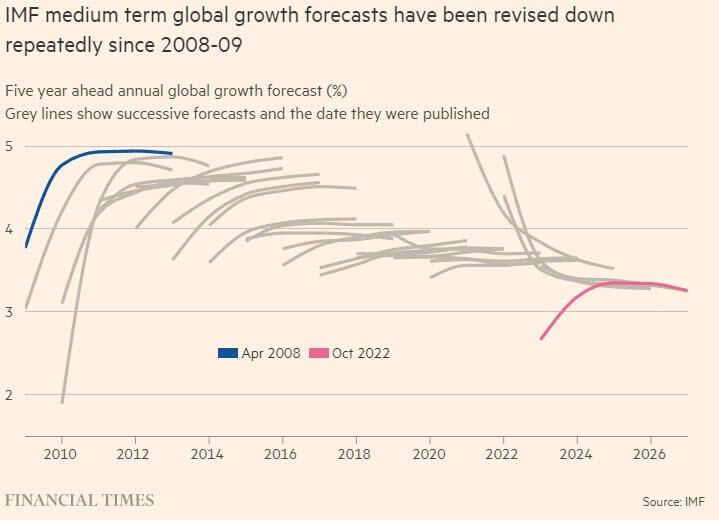
 The IMF's managing director warned this morning that its outlook for global economic growth over the next five years is the weakest in over 30 years.

Speaking in Washington ahead of the spring meetings next week, Kristalina Georgieva said the world economy would expand at an average annual rate of around 3 per cent over the next five years (the lowest medium-term growth forecast since 1990 and less than the five-year average of 3.8% from the past two decades).

About 90% of advanced economies will see growth slow this year as tighter monetary policy weighs on demand and slows economic activity in the US and euro area, the IMF said.

“With rising geopolitical tensions and still-high inflation, a robust recovery remains elusive,” Georgieva said in her prepared remarks.

“This harms the prospects of everyone, especially for the most vulnerable people and countries.”

Georgieva added that despite the bleak growth outlook, high inflation means that central banks must continue to raise interest rates, as long as financial stability pressures remain limited after recent banking industry upheaval in the US and Switzerland

The fund’s managing director said key impediments to growth were increasing economic fragmentation and geopolitical tensions.

“The path back to robust growth is rough and foggy, and the ropes that hold us together may be weaker now than they were just a few years ago,” Georgieva added.

Finally, stating the somewhat obvious, Georgieva warned that if banking system turmoil were to return, central banks would face “difficult trade-offs between their inflation and financial stability objectives, and the use of their respective tools.”

Well, they certainly have lots of 'tools'...

https://www.zerohedge.com/economics/imf-warns-global-growth-outlook-weakest-over-30-years

ChatGPT gave advice on breast cancer screenings in a new study

 As artificial intelligence (A.I.) seeps into every facet of daily life, researchers decided to test how ChatGPT fared in giving medical advice. 

Researchers at the University of Maryland School of Medicine tested how accurately ChatGPT, developed late last year and already reaching 100 million users, advised people on breast cancer screenings. The results, published Tuesday in the journal Radiology, found the bot gave adequate advice nearly 90% of the time. 

“We found ChatGPT answered questions correctly about 88 percent of the time, which is pretty amazing,” Dr. Paul Yi, author on the study and assistant professor of diagnostic radiology and nuclear medicine at the University of Maryland School of Medicine, says in a press release. “It also has the added benefit of summarizing information into an easily digestible form for consumers to easily understand.”  

Nearly 300,000 women will face invasive breast cancer diagnoses this year, according to estimates from the American Cancer Society. As mammograms have reduced breast cancer mortality by roughly 40%, accurate information on screening timelines and breast cancer risk is paramount and can be life-saving. 

The researchers compiled a list of 25 questions, including the recommended age to begin breast cancer screening, certain risk factors and symptoms, and how frequently people should undergo mammograms. After answering each question three times, the bot answered 22 of the 25 responses accurately, according to three radiologists who analyzed the answers. 

When asked “what is my risk for breast cancer,” ChatGPT first gave a disclaimer to discuss personal risk with a health care provider, Yi shows in a tutorial along with the press release. The bot then spoke more generally about risk factors like lifestyle habits, age, and family history, which “checks out from a medical standpoint,” Yi says. 

ChatGPT has potential but does not replace the doctor 

However, the technology isn’t infallible, according to the authors. 

“That 10% that were not appropriate either ChatGPT gave inconsistent responses, meaning if you asked it on any given day you’ll hear different answers that often contradicted each other, or the responses were just flat-out wrong,” Yi says. 

One of the responses studied used outdated information on whether or not someone should postpone a mammogram due to COVID-19 vaccination (updated guidelines recommend not waiting). Another question garnered different responses when posed more than once.

Yi further points to the technology’s biases. 

“Our language unfortunately in society and the internet often has these racial biases with even how we describe patients, so you can imagine you put in the same patient scenario but you take out a different race, or put in a different race, the recommendations may be totally different,” he says.  

And for the responses deemed sufficient, ChatGPT did not crowdsource the credible information. 

“ChatGPT provided only one set of recommendations on breast cancer screening, issued from the American Cancer Society, but did not mention differing recommendations put out by the Centers for Disease Control and Prevention (CDC) or the US Preventive Services Task Force (USPSTF),” Dr. Hana Haver, a radiology resident at University of Maryland Medical Center, who was also an author on the study, says in a statement.

Yi says while the technology has potential, patients should not solely rely on it for health advice. He says further partnerships between computer scientists and doctors can improve this type of health intervention and create “guardrails” for patients who need accurate advice. 

“We’ve seen in our experience that ChatGPT sometimes makes up fake journal articles or health consortiums to support its claims,” says Yi in the statement. “Consumers should be aware that these are new, unproven technologies, and should still rely on their doctor, rather than ChatGPT, for advice.”

A.I. and the future of health

Interest in using A.I. in health care continues to grow. A 2019 study examined ways the technology can work alongside health care workers. 

“It also seems increasingly clear that A.I. systems will not replace human clinicians on a large scale, but rather will augment their efforts to care for patients. Over time, human clinicians may move toward tasks and job designs that draw on uniquely human skills like empathy, persuasion and big-picture integration,” the study reads. “Perhaps the only health care providers who will lose their jobs over time may be those who refuse to work alongside artificial intelligence.”

https://fortune.com/well/2023/04/04/chatgpt-advice-on-breast-cancer-screenings/

Tigger Warning

 By Michael Every of Rabobank

The RBNZ hiked by 50bps not 25bps yesterday, but the slip in the US ISM services survey had the market once again screaming ‘Pivot!” Recall the March data we are now seeing was impacted by the recent banking crisis, which appears to have settled down to some degree. Central banks will likely want to wait and see.

Relatedly, Timiraos at the Wall Street Journal underlines that big short-end Treasury buying is also due to the shift out low-interest US bank current accounts into higher interest Money Market Funds (MMFs). The problem is that 40% of MMFs are going into the Fed’s reverse repo facility. A representative for US banks yesterday said this is resolved with more Fed rate cuts, in the same way two-year olds say this is solved with more chocolate. Far less sweet is a market call that the outlook for commercial real estate is now worse than during the GFC(!)

The geopolitical stage was also far from sugary:

  • The Financial Times op-ed warned, “We are living in a dividing world,” and blamed the US for it, as ‘Just in time’ F-35 supply chain too risky for next war, general says’. So that’s partly why.

  • As President Macron tried to woo Beijing on trade, China said it is considering prohibiting exports of rare-earth magnet technology used in high-tech, motors, and wind turbines.

  • The Federation of German Industry said it’s opposed to the EU’s CAI investment deal with China, because "Much has changed in China and the rest of the world since then…. With its stance in Russia's war of aggression against Ukraine, China has lost a lot of trust in Germany and Europe.”

  • Bloomberg reported on ‘Apple’s Complex, Secretive Gamble to Move Beyond China’, noting, “The company is laying the foundation to make phones elsewhere, from the screws on up,” but, like other firms’, “Apple’s leadership is concerned that China might retaliate if it moves too much capacity to other countries, or transitions too rapidly.”

  • Hank Greenberg placed a full-page ad in The Wall Street Journal to pen an open letter asking Biden and Xi to work together in a “pivotal moment in global history” and an “alarming deterioration in bilateral relations”, concluding: “The world is watching. The stakes could not be higher. We must move forward together with great urgency and purpose.” Which reminds me of ‘The Life of Brian’: “Brothers, brothers! We should be struggling together!” - “We *are*!”

  • The IMF released two worrying reports on deglobalisation.

Fragmenting Foreign Direct Investment Hits Emerging Economies Hardest’ attacks friendshoring and FDI flowing between geopolitical allies. The Fund says this increases the risks of an economic downturn, and models global GDP being cut by 2% if it continues. They are clearly wrong: this hits *China* hardest, while other emerging economies can’t keep up with the potential redirected FDI.

Geopolitics and Fragmentation Emerge as Serious Financial Stability Threats’ says, “Supervisors, regulators, and financial institutions should be aware of the risks to financial stability stemming from a potential rise in geopolitical tensions and commit to identify, quantify, manage, and mitigate these threats…. policymakers should be aware that imposing financial restrictions for national security reasons could have unintended consequences for global macro-financial stability.” It backs strengthening crisis preparedness; global and regional safety nets, currency swaps, and fiscal mechanisms, and precautionary credit lines. But are those proposed regional safety nets and currency swaps in US dollars or other currencies?

That’s as China green lights foreign investors entering its $5 trillion swaps market for CNY debt, initially only for government bonds to try to stem capital outflows due to rate differentials with the US. Recall the echoes between high US rates in the last Cold War and this one, in order to suck capital out of the Eastern bloc and into the West.

Of course, I don’t expect much of the market to pay much attention to any of these trigger warnings. So, in a mid-Ramadan, post-Passover, pre-Easter, pre-Songkran holiday spirit --there will be no Global Daily tomorrow, or on Monday-- here’s a musical ode to what most of the market spends so very much of its time thinking about - not trigger, but Tigger warnings:

Oh, the wonderful thing about pivots; Is pivots are wonderful things

They make market tops look like rubber; They make market bottoms have springs

They’re bouncy, trouncy, flouncy, pouncy; Fun, fun, fun, fun, fun

But the most wonderful thing about pivots is; There’s never only one!

Pivots are cuddly for sellers; Pivots are awfully sweet

Everyone el-us is jealous; That's why I repeat and repeat

The wonderful thing about pivots; Is pivots make us bear traps

They're loaded with vim and with vigour; They finance those dancers near laps

They're jumpy, bumpy, clumpy, thumpy; Fun, fun, fun, fun, fun

But the most wonderful thing about pivots; Is there’s never only one!

Never only —

Ouch!

https://www.zerohedge.com/markets/tigger-warning