Surging U.S. crude exports in 2023 are pushing down oil prices in Europe and Asia, proving a key source of supply as producers cut output and sanctions on Russian crude disrupt trade flows.
The introduction in June of U.S. crude grade WTI Midland to set the price of the dated Brent benchmark assessed by S&P Global Commodity Insights has not only spurred the rising exports but also helped to cap Brent and the European, African, Brazilian and Asian oil that are priced off the benchmark, traders and analysts said. U.S. crude exports are also easing the loss of supply after Saudi Arabia deepened output cuts from July, above what major producers agreed to in June.
The widening exports illustrate the increasing influence of crude from the U.S., the world's biggest oil producer, in the global market. It further cements the role of U.S. supplies in balancing the market, especially as outlets for sanctioned Russian crude are limited.
U.S. crude exports have averaged 4.08 million barrels per day so far in 2023, up from an average of 3.53 million bpd in 2022, according to the Energy Information Administration.
Out of the 61 dated Brent assessments to July 27 that have included WTI Midland, the U.S. grade has been among the most competitive in all but one, while it's been the single most competitive alone on half of those days, said Joel Hanley, global director, crude and fuel oil markets at S&P Global. This means WTI Midland is effectively setting the price for the benchmark.
Other physical crude grades are feeling the pressure as a result of the U.S. supplies. The price difference for Forties crude cargoes loading in the North Sea to dated Brent averaged a discount of 2.9 cents a barrel in July, down from a premium of 12.4 cents in June and 24.5 cents in May, according to data on Refinitiv Eikon.
"As Midland becomes more and more important in the dated Brent assessment, it has a knock on effect on other grades having to price themselves lower to compete with WTI Midland," said Rohit Rathod, market analyst at energy researcher Vortexa.
PRESSURE EXTENDS
The pressure exerted from the WTI Midland exports is even extending to Asian markets for Middle Eastern crude.
Murban crude from the United Arab Emirates is close in density to WTI Midland, but with more sulphur, and is used by traders to compare the economics of shipping WTI to the east.
The premium of Murban futures to Dubai quotes averaged $1.90 a barrel, steady from the previous month, while that for cash Dubai gained 43 cents to $1.57 a barrel during the month, according to Reuters calculations using market trade data.
A near-record volume of WTI Midland is set to be shipped east in August.
"There is more and more WTI production flooding the global markets," said Adi Imsirovic, director at Surrey Clean Energy, who formerly headed global oil trading at Gazprom Marketing and Trading.
Unlike crude from producers in the Organization of the Petroleum Exporting Countries (OPEC), who are currently reducing output to support prices, "WTI is freely traded, without destination and output restrictions, and WTI value has become a key to the global pricing," he said.
The increased WTI flow to Europe has weakened Brent futures relative to Dubai, though Dubai has also strengthened after Saudi Arabia announced in June additional output cuts beyond what OPEC and its allies agreed to, which has reduced the amount of high-sulphur Middle Eastern crude, particularly medium and heavy grades, available to Asian refiners.
Brent's premium to Dubai, or the Exchange of Futures for Swaps (EFS), averaged 78 cents a barrel in July, the narrowest in more than two years.
The effect has been to make low-sulphur Atlantic Basin crude such as those from Europe, Africa and Brazil more affordable for Asian buyers and boosted demand for WTI Midland in the region, with a Singapore-based oil trader saying the grade kept Murban prices in check in July.
Even as crude demand to Asia should be falling as some refiners carry out maintenance ahead of the Northern Hemisphere winter there is great interest in bringing WTI to Asia, said John Evans of brokerage PVM Oil. He notes that the grade's discount to Dubai, expensive Saudi Arabian crude and low freight rates are making WTI attractive.
The flow of WTI into Asia in August is high but not quite at the previous record, and that is "impressive enough to keep the bulls interested," he said.
In a recent note issued to investors on Friday, equities researchers at HC Wainwright reiterated their “buy” rating for Puma Biotechnology (NASDAQ:PBYI). This endorsement comes with a price objective of $8.00 on the biopharmaceutical company’s stock, implying a noteworthy upside potential of 97.04% from its current trading price.
MassDevice’s MedTech 100 Index — which includes stocks of the world’s largest medical device companies — is relatively unchanged today.
The San Deigo–based sleep respiratory technology maker posted profits of $228.7 million. That amounts to $1.56 per share on sales of $1.12 billion for the quarter ended June 30, 2023.
ResMed profits decreased 18% compared to the prior-year quarter but posted sales growth of 23%.
Adjusted to exclude one-time items, earnings per share were $1.60. Wall Street analysts were expecting adjusted EPS of $1.69 on sales of $1.14 billion.
“ResMed’s fourth quarter and full-year 2023 results reflect strong double-digit growth as we continue to produce and deliver cloud-connected flow generator device volume to meet the ongoing strong global demand from patients, accompanied by high growth of our market-leading patient interface and software solutions,” ResMed Chair and CEO Mick Farrell said in a news release. “The combined global supply of our cloud-connected platforms, AirSense10 and AirSense11, have enabled us to support all available customer demand for CPAP and APAP devices across the global market.”
Needham & Co. kept its Hold rating on RMD shares. Senior research analyst Mike Matson said: “It’s unclear how much longer Philips will be out of the flow generator market; we think that it could reenter the market as soon as C2H23 or its FDA consent decree could keep it out of the market for several more years. If Philips does reenter the market in the nearer-term, we think that RMD’s growth could slow as Philips recaptures some of its former market share.”
As we navigate the escalating threat posed by China – a nation guided by communist doctrine, yet peculiarly sustained by the tenets of global capitalism – the urgency to reassess our financial engagement becomes more pressing than ever.
The Chinese Communist Party (CCP), the draconian ruler of the world’s second-largest economy, has accumulated immense wealth from American investments. This wealth manifests itself through dollar-denominated Chinese bonds and a myriad of Chinese companies publicly traded on U.S. exchanges, including their shrewdly named subsidiaries, intricately woven into the fabric of index funds.
In an alarming twist, the Chinese government has weaponized our own capitalist system against us. Through 401(k) retirement accounts and diverse investment vehicles, approximately 100 million Americans are unknowingly bolstering a predatory economic adversary and facilitating a military with global supremacy ambitions.
The recent aftershocks from Russia’s invasion of Ukraine, prompting more than 1,000 corporations to surrender billions of dollars, underscore the potential havoc a Chinese invasion of Taiwan could wreak. The fallout, especially on retirement security and the high-tech sector (considering Taiwan’s supremacy in semiconductor manufacturing), would be dramatically amplified. It’s therefore unsurprising that seasoned board members worldwide are compelling CEOs to formulate a China risk mitigation plan. They realize this is not a drill.
China’s infiltration of global capital markets is anything but incidental. Since the economic liberalization of 1978, the CCP has systematically targeted Western capital markets. Roger Robinson, the global tech security commissioner for Capital Markets, testified before the House Select Committee on the Chinese Communist Party, confirming that the U.S. has inadvertently facilitated thousands of CCP-controlled Chinese companies to infiltrate the investment portfolios of average Americans. Today, around 5,000 Chinese companies (contributing trillions to Beijing’s coffers over the past decade) are traded on U.S. exchanges.
The CCP heavily depends on foreign investors to uphold its reign, particularly as a looming financial crisis threatens, driven by a crumbling real estate market, a mammoth debt burden, low consumer spending and the stringent “zero-Covid” policy. Without the influx of foreign investment, primarily from U.S. sources (accounting for 60 percent of global dollar liquidity), the Chinese government risks a total economic meltdown.
While leading asset managers like BlackRock pay lip service to responsible investing, a stark inconsistency emerges when applying environmental, social and governance (ESG) standards to China — a nation notorious for pollution, genocide and financial fraud. If BlackRock and others applied the ESG standards with integrity, all Chinese companies would be excluded for three reasons — E, S and G. A recent Wharton case study highlighted that BlackRock’s CEO, Larry Fink, funnels more investment capital into China than any other individual worldwide.
Indeed, many investment firms appear to dismiss the perils of investing in an authoritarian regime, as exemplified by a May 15 note from UBS Global Wealth Management downplaying the import declines and social financing data as “not as bad as they appear.”
Chinese corporate misdeeds are far-reaching, with companies associated with concentration camps, forced labor trafficking, genocide and aiding the development of advanced weaponry for the People’s Liberation Army. Disturbingly, more than 100 million Americans are unwittingly invested in these sanctioned Chinese entities, thus inadvertently emboldening a potent adversary.
The world’s democratic economies are awakening to the risks associated with business ventures in China. At the G7 summit in Japan, they committed to “de-risking and diversifying” to offset China’s predatory tactics and reduce dependencies in critical supply chains.
While these initial steps are laudable, much more must be done. Companies under the dominion of the Chinese government must be delisted and deregistered from U.S. exchanges, including over-the-counter markets, and purged from U.S. indices and investment products pegged to these indices.
Further, investment firms should be barred from holding securities of Chinese corporations that support human rights violations, ally with U.S. adversaries, answer to the Chinese military or neglect corporate governance practices including material risk disclosure and minority shareholder rights.
Also, a prohibition on issuing dollar-denominated Chinese sovereign bonds should also be enforced, preventing the CCP from accumulating billions in annual discretionary cash.
As Americans once faced the threat of the Soviet Union with unflinching resolve and wielded economic measures to quell its threats, we must now marshal similar resolve and decisive action against a formidable adversary that brazenly disregards international rules of fair trade and global conduct. Drawing from our history, a solid stance is not just warranted but required.
We have been spectators for far too long. It is high time we harness our capitalist system – the most potent engine for economic mobility and self-determination the world has ever known – into a force for good.
Keith Krach served as U.S. undersecretary of state from 2019-21. He is currently the chairman of the Krach Institute for Tech Diplomacy at Purdue and serves as co-chair of the Global Tech Security Commission. Krach previously served as chairman and CEO of DocuSign and Ariba and chairman of the Purdue Board of Trustees.
Estia Health on Monday signed a deal to be taken over by U.S. investment company Bain Capital for an equity value of A$838 million ($550.82 million), sending shares of the Australian aged care operator almost 10% higher.
The A$3.20 per share proposal represents a 25.5% premium to Estia's stock closing price on June 6, before the offer was first disclosed.
Shares of Estia Health were up 9.9% at A$3.12, as of 0045 GMT, hitting their highest since September 2018.
In June, the company updated the market on its intentions to back Bain Capital's sweetened takeover offer after providing limited access to its books to the suitor in April.
Estia is one of Australia's largest aged care operators, having more than 6,500 places in 70 sites across the country.
"The Board is confident as to the outlook for the business, however, recognises that the scheme allows shareholders to realise certain cash value now at an attractive premium," Estia Chair Gary Weiss said on Monday.
"The improved offer price in June was a good one for Estia shareholders and the effective signing of the scheme shows some private equity deals do go through," said Henry Jennings, senior market analyst at Marcustoday Financial Newsletter.
Bain Capital did not immediately respond to a Reuters request for comment.
Estia's board unanimously recommended its shareholders vote in favor of the proposal, adding that a shareholder vote is set to happen in November.
The company said in a statement that under the deal, it is now permitted to pay fully franked dividends of up to A$0.12 per share.
During two recentFox Newsinterviews, Harvard Law professor (and former Jeffrey Epstein pal, and Trump impeachment attorney) Alan Dershowitz said that the prosecution of former President Donald Trump by the sitting president's DOJ for contesting the 2020 election "looks like banana republic land."
Trump pleaded not guilty on Thursday to a four-count indictment over his efforts to contest the results of the 2020 US election. This comes on the heels of a 37-count indictment in June regarding Trump's handling of classified documents.
"President Biden urged his attorney general to indict the man who he knew was going to be the leading opponent if against him," Dershowitz told "Kudlow" guest host, David Asman. "That begins to look like banana republic land. That’s what happens when people in power are afraid of the democratic process. What they do is they seek the indictment and prosecution of the people who are running against them."
"I have a constitutional right to vote against Donald Trump for the third time," said Dershowitz. "I voted against him twice, I intend to vote against him again, but I want to have that right to vote against him and not have that right taken away from me by prosecutors and by the president, who wants to see him imprisoned. That’s just not the American way."
Dershowitz also slammed the Biden administration over venue, arguing that the District of Columbia was a setup.
"This is a step in that direction, and also placing the case in the District of Columbia, which is 95% anti-Trump, putting it in front of a judge with a history of anti-Trump. If the government thinks they have a strong case, they ought to join the defense and agree to move it to West Virginia or Virginia and put it in front of another judge who doesn’t have a long history of anti-Trump attitudes," he said, adding "So, I don’t believe he can get a fair trial in the District of Columbia."
KKK statute?
In another Fox News interview, this time on Brian Kilmeade's radio show, Dershowitz suggested that Special Counsel Jack Smith could be indicted for denying Trump his "constitutional rights" under a Ku Klux Klan statute.
"The indictment is based on lies, and the indictment itself contains a blatant lie by Jack Smith. He describes the speech of January 6th," he said, adding "But he describes the speech in the indictment and deliberately and willfully leaves out the key words of the speech, namely that the president told his people to protest peacefully and patriotically."
"By leaving out those words. It’s a lie by omission. And under the standards set out in the indictment, you know, Jack Smith could be indicted," he continued. "Theoretically, it’s not going to happen, obviously, under the Ku Klux Klan statute that he says any people who conspire to deny somebody their constitutional rights is guilty of a crime."
According to Dershowitz, "That would mean that Jack Smith tried to deny Trump his constitutional rights in this indictment."
"I make that point not to argue that Jack Smith should be indicted, of course not. To make the point that the indictment is so broad, so wide, so all encompassing, it could include so much political conduct."
Today, some people who identify as transgender expect their doctors to pick up on the unspoken fact that sometimes "men" complaining of stomach pain are actually women who identify as men.
For doctors to be oblivious to—or ignore—basic human biology, such as the differences between male and female, already has caused great harm, including death, said Dr. Jeffrey Barrows, senior vice president of bioethics and public policy for the Christian Medical and Dental Associations (CMDA).
"Fortunately, those very tragic cases are rare; but they're likely to become more common," Dr. Barrows said. "So it gets to the point that we in the health care profession must keep track of the true biologic sex of the patient."
But if in the process of trying to assess and provide life-saving care, a doctor notes the biological sex of a patient—on a chart, for example—he or she can be at risk of being fired, Dr. Barrows said.
The medical field largely has accepted radical gender ideology as science, doctors told The Epoch Times.
Doctors who speak against it risk losing their jobs, Dr. Barrows said.
Differing Health Issues
In 2019, the New England Journal of Medicine described the case of a woman who had undergone procedures to look like a man. She lost her baby because doctors failed to diagnose her as pregnant.
That's just one example that illustrates how knowing and acknowledging a patient's biological sex matters.
Sometimes, the true biological sex of a person who identifies as transgender or nonbinary is not immediately obvious, even to a physician, Dr. Barrows said.
Yet "one of our members was recently fired from his position because he wrote the biologic sex [of a transgender-identifying individual] in the medical record" of the patient.
Some health issues affect men and women differently, and those issues often require very different treatments, Dr. Barrows said.
Heart attack symptoms in men, for example, most often include chest pain. Women, however, might experience nausea or heartburn.
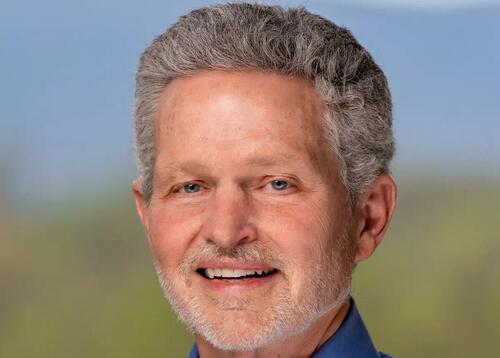
Dr. Jeffrey Barrows, senior vice president of bioethics and public policy for the Christian Medical and Dental Associations. (Courtesy of the Christian Medical and Dental Associations)
In an emergency, a person who convincingly appears as the opposite sex, may cause a doctor to miss symptoms that would lead to a correct diagnosis in time to provide rapid treatment, Dr. Barrows said. And the misunderstanding could prove fatal.
Purely medically speaking, he said, what's "best for that transgender patient ... is for a doctor not to have to guess the sex of the patient."
It makes sense that "there must be some way to keep track of the biological sex of the patient," he said. "The best way to do that is in the medical record."
But now, with the explosion of transgenderism, some medical organizations do not allow that information to be added to a medical record. Some see its notation as disrespectful to a patient who identifies as the opposite sex.
LGBT activist groups, such as the Human Rights Campaign, advise doctors to change patient forms to avoid hurting the feelings of transgender-identifying individuals.
"Revise client forms," the group's website guidance on health care reads.
"Allow options for male/female/transgender and use neutral terms like "partner" or "spouse," rather than "single," "married," or "divorced.'
The organization, which has a powerful voice in policy-making in the United States and around the world, did not respond to a request for comment from The Epoch Times.
Willfully introducing confusion into life-and-death situations is "insanity," Dr. Barrows said.
Guidelines from the Centers for Disease Control and Prevention (CDC) also suggest it's important to collect sexual orientation and gender identity information.
"Without this information, lesbian, gay, bisexual, and transgender (LGBT) patients and their specific health care needs cannot be identified, the health disparities they experience cannot be addressed, and important health care services may not be delivered," the CDC website reads.
'Intense Pressure' on Doctors
Whether or not doctors face punishment for transgender-related issues depends on where they work, Dr. Barrows said.
Currently, a CMDA lawsuit provides a permanent injunction against the federal government firing doctors because they refuse to perform a transgender procedure.
"But outside of that, the vast majority of the pressure and coercion to perform transgender procedures is unfortunately at the local level at the local hospital or hospital system," Dr. Barrows said.
Medical professionals attending the annual Pediatric Endocrine Society conference watch demonstrators in San Diego, Calif., on May 6, 2023. (John Fredricks/The Epoch Times)
Another doctor, who asked to be identified only as Dr. Andrew, formerly worked at Virginia Commonwealth University (VCU). Starting in 2019, he said he began facing "intense pressure" from his employer to follow policies meant to accommodate transgender patients.
The school issued a new general intake form that required patients to answer questions about gender identity and sexual behaviors in detail, he said.
Questions like these normally don't appear on intake forms because they might threaten patient confidentiality or embarrass patients, Dr. Andrew said. Physicians usually ask those questions in private, he added.
Also, for patients from some cultures, questions like this on an intake form can be seen as a grave insult, he noted.
"It was inconceivable to me that some elderly woman from Bangladesh who didn't speak English, who was brought in by her son, would be asked those sorts of questions, often by her children," Dr. Andrew said.
He said VCU's administration pressured students to introduce themselves by announcing preferred gender pronouns and that the school taught students to ask patients for their preferred gender pronouns.
Dr. Andrew was eventually fired for "poor clinic performance," he said, even though patients consistently gave him five-star ratings.
"I think it's coming from the accrediting agencies, as well as within medical education," he said. "So you're seeing it all over the country. You're seeing it on the national level."
The Epoch Times reached out to university officials for comment and was told one would be available by Aug. 3. No further communication was received.
Differing Approaches of States
State laws determine a doctor's right to refuse to perform certain procedures or provide certain treatments, Dr. Barrows said.
Florida doctors are empowered by legislation for medical freedom signed in 2023 by Gov. Ron DeSantis, presently a Republican presidential candidate.
The landmark legislation "safeguards the free speech of doctors" and "provides a path for doctors to protect their license from medical accreditation boards that are attempting to punish them for speaking out against the medical establishment," according to the governor's office.
Other states take a different stance.
New Mexico, California, and Oregon encourage overruling a doctor's conscientious objection, he said.
"I would be quite fearful that I could be put into a position where I am forced to do something against my conscience and not have nearly the legal protection that I would like to have," Dr. Barrows said.
The transgender medicine field affects many medical specialties. Family medicine, pediatrics, obstetrics and gynecology, surgery, dermatology, urology, plastic surgery, and internal medicine all can encounter issues related to transgenderism.
"It's hard to find a field that you could enter and deal with people that would not in some way be touched by the transgender issue," Dr. Barrows said.
Christian doctors in all these specialties must carefully consider local laws before they decide where to work. Doctors of other religious faiths can face the same struggle, he said.
Being forced to perform procedures to further a patient's transgender identity can go against deeply held religious beliefs, causing great distress for these doctors, Dr. Barrows said.
"I had a student that was very frustrated because they had actually been called in to help with hysterectomies on women that were identifying as male," Dr. Barrows said. "Their uteruses were perfectly normal. They had done more of those procedures than they had delivered babies."
The Transhuman Movement
Transgenderism is likely the vanguard of medical movements aiming to change humanity, Dr. Barrows said.
He predicts that medicine and technology to make people "transhuman"—or beyond human—is just around the corner. Experts have expressed similar concerns to The Epoch Times.
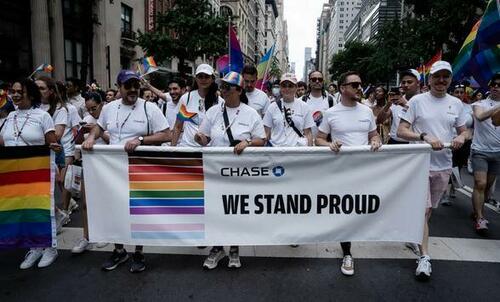
The annual Pride March in New York City on June 25, 2023. (Samira Bouaou/The Epoch Times)
That way of thinking is in opposition to the idea of medicine, Dr. Barrows said. "The goals of medicine should be healing, restoration of health, and palliation, the limitation of suffering within the dying process.
"Medicine is never meant to be involved in the commodification of anybody."
Commodification is the process of treating something as a commodity that can be bought and sold. People concerned about transhumanism say the transgender movement has turned human body parts into a commodity.
Even so, says Dr. Barrows, few doctors have fought back against the transgender movement.
"I think the vast majority are just keeping their heads down, doing what they can to avoid it because they don't want to get too engaged and lose their job," he said.
Many older doctors believe they can dodge the transgender issue until retirement, he said. But young doctors face an ideological obstacle course that may last the next several decades.
Dr. Barrows sympathizes with the struggle they'll have in choosing how to best care for patients while avoiding "cancellation" for not embracing transgenderism.
"My heart really goes out to those that are relatively young and new in the health care profession."