by Andrew Thornebrooke via The Epoch Times (emphasis ours),
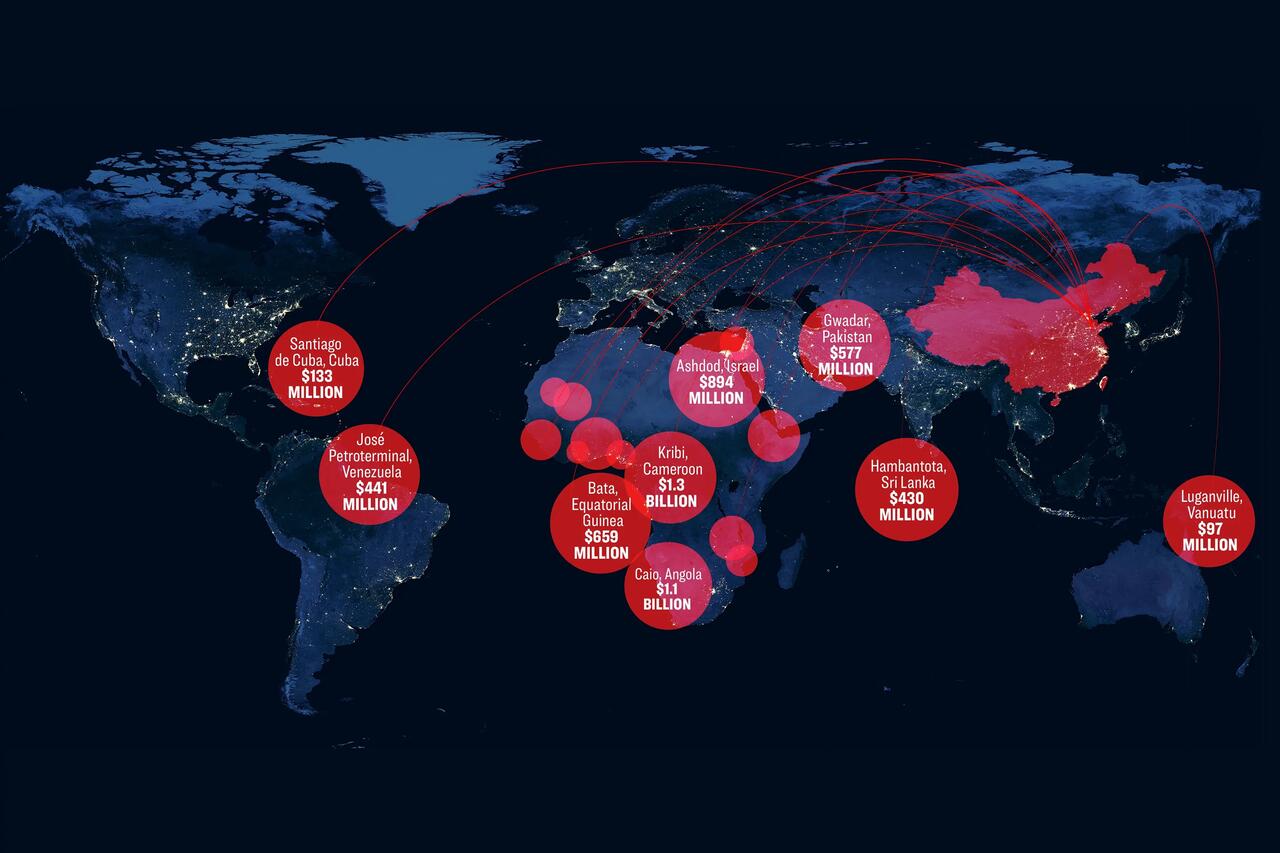
For two decades, China’s communist regime has poured tens of billions of dollars into low- and middle-income nations, funding massive port projects in the name of global development.
by Andrew Thornebrooke via The Epoch Times (emphasis ours),
For two decades, China’s communist regime has poured tens of billions of dollars into low- and middle-income nations, funding massive port projects in the name of global development.
Corresponding with President Joe Biden's weekend visit to Vietnam, The New York Times published the contents of a leaked Vietnamese government document, produced by the Ministry of Finance, revealing a covert plan for the country to procure Russian weapons in contravention of US-led sanctions on Moscow.
Biden met with the country's leader Nguyen Phu Trong on Sunday, and the two formally agreed to upgrade strategic ties between the US and Vietnam. But the NYT report demonstrates that "even as the United States and Vietnam have nurtured their relationship over recent months, Hanoi is making clandestine plans to buy an arsenal of weapons from Russia."
The revelation of the document strongly suggests that any agreements reached in Hanoi which the Biden White House is now celebrating as successful are likely to be fleeting and without much depth in the near and long-term.
According to details of the document's contents:
The Ministry of Finance document, which is dated March 2023 and whose contents have been verified by former and current Vietnamese officials, lays out how Vietnam proposes to modernize its military by secretly paying for defense purchases through transfers at a joint Vietnamese and Russian oil venture in Siberia.
Signed by a Vietnamese deputy finance minister, the document notes that Vietnam is negotiating a new arms deal with Russia that would "strengthen strategic trust" at a time when "Russia is being embargoed by Western countries in all aspects."
So once again, global south and non-aligned countries appear to be sticking with Russia, no matter the West's clearly futile efforts to isolate it on the world stage.
But the report alludes to another trend - that of Western countries threatening those smaller nations that step out of line in pursuing defense or strong trade ties with Russia: "Yet by developing its secret plan to pay for Russian defense equipment, Vietnam is stepping into the center of a larger security contest that is steeped both in Cold War politics and the hot war of the moment, in Ukraine," NYT underscores.
The leaked document at one point reads: "Our party and state still identify Russia as the most important strategic partner in defense and security."
Before Biden's microphone was cut off by his handlers, he called Vietnam a "Third World Country." pic.twitter.com/Nep74Lf7OJ
— Citizen Free Press (@CitizenFreePres) September 11, 2023
Vietnam has of course historically relied heavily on Russia for weapons, and by all appearances will continue to do so, despite the longtime efforts of Washington to sway the southeast Asian country to a more westward trajectory. When it comes in Russian exports in general, more broadly in the geopolitical neighborhood there seems an increasing trend of individual countries like Vietnam saying, "...but everyone's doing it".
Demand is so strong for Novo Nordisk’s obesity drugs that the only limitation on sales—in the short term—seems to be the company’s ability to produce them.
So, what is the potential for these game-changing GLP-1 products now that Novo’s Wegovy is showing it can help boost heart health?
In 2030, Novo will have a chance to reach nearly half the market—a sales opportunity of some $33 billion—according to a recent report from analysts with J.P. Morgan. Analyst Richard Vosser has estimated that the global market will reach $71 billion by 2032, with Novo and Eli Lilly each accounting for 45% of its sales.
That’s a more than doubling of the market size ($34 billion) previously projected by JPM and is sparked by trial results released last month that indicate Wegovy can cut the risk of major cardiovascular events by 20%.
The company also presented evidence of Wegovy benefiting heart failure patients with preserved ejection fraction. Novo will provide more trial results in November at the American Heart Association meeting.
“We believe this data marks the beginning of a paradigm shift in the way that obesity/CV disease is treated, with physicians moving to a weight-centric treatment of multiple co-morbidities associated with obesity, which we expect will lead to substantial demand for obesity products,” Vosser wrote in the report.
Further upgrades to the projection could come next year based on readouts from phase 3 trials evaluating Novo’s GLP-1 treatments against a variety of disorders including chronic kidney disease and nonalcoholic steatohepatitis, the analysts said.
With the demand for obesity drugs growing, JPM sees Novo’s 2023-26 revenue compound annual growth rate increasing from 14% to 22%.
In the second quarter, sales of Novo's GLP-1 diabetes drug Ozempic reached $3.2 billion, up from $2.1 billion in the same quarter a year ago, while Wegovy generated $1.1 billion in sales. Novo reported a sales increase of 30% from the second quarter of 2022.
Meanwhile, Eli Lilly has seen similar success for its GLP-1 diabetes answer Mounjaro, which has reported trial results that indicate it might provide more ability to trigger weight loss. The treatment generated sales of $980 million in the period, helping Lilly to a 28% revenue increase. It was just the fourth full quarter on the market for Mounjaro.
Predictions about the GLP-1 market have been varied. Eight months ago at the J.P. Morgan Healthcare Conference, Pfizer CEO Albert Bourla, Ph.D., estimated that the market could reach $90 billion by 2031. Bourla was discussing his company’s investigational oral treatment danuglipron (PF-07081532), which it acquired from Sosei Heptares.
A medical researcher has asked a court to throw out a lawsuit that Johnson & Johnson filed against her over her 2019 study on the links between cosmetic talc products and cancer, saying that her research is sound and protected by free speech rights.
Dr. Jacqueline Moline, who has served as a plaintiffs' expert in more than 200 cases alleging that J&J talc products caused patients to develop cancer, said in a Friday court filing in federal court in Trenton, New Jersey, that the lawsuit was an effort to "intimidate" scientific experts.
Scientific conclusions based on accurate descriptions of the data and methodology used to develop them are protected by the First Amendment of the U.S. Constitution's protections for free speech and academic freedom, according to Moline's court filing.
J&J faces more than 38,000 lawsuits alleging that its talc products, including Johnson's Baby Powder, can contain asbestos and caused cancers including ovarian cancer and mesothelioma.
The company says that its talc products are safe and do not contain asbestos.
J&J's subsidiary LTL Management, which absorbed the company's talc liability in a controversial 2021 spinoff, sued Moline in May and three other researchers in July, accusing them of publishing fraudulent research that harmed J&J's reputation.
J&J in a statement on Monday reiterated a claim from the May lawsuit that Moline's study was flawed because it claimed to focus on 33 patients who had no asbestos exposure other than their use of cosmetic talc products. But at least one study participant was exposed to an additional source of asbestos, and J&J said it believes that other study participants also have additional asbestos exposure.
An attorney for Moline declined to comment on Monday beyond what was filed in court.
Moline, who works at Northwell Health in Great Neck, New York, said in her court filing that her study properly disclosed that all information about the patients' exposure to asbestos came from testimony that they provided during their lawsuits. The study also disclosed a potential conflict of interest related to her work as a plaintiffs' expert.
The Biden administration is close to approving the shipment of longer-range missiles packed with cluster bombs to Ukraine, giving Kyiv the ability to cause significant damage deeper within Russian-occupied territory, according to four U.S. officials.
After seeing the success of cluster munitions delivered in 155 mm artillery rounds in recent months, the U.S. is considering shipping either or both Army Tactical Missile Systems (ATACMS) that can fly up to 190 miles (306 km), or Guided Multiple Launch Rocket System (GMLRS) missiles with a 45-mile range packed with cluster bombs, three U.S. officials said.
If approved, either option would be available for rapid shipment to Kyiv.
Ukraine is currently equipped with 155 mm artillery with a maximum range of 18 miles carrying up to 48 bomblets. The ATACMS under consideration would propel around 300 or more bomblets. The GMLRS rocket system, a version of which Ukraine has had in its arsenal for months, would be able to disperse up to 404 cluster munitions.
With Ukraine's push against Russian forces showing signs of progress, the administration is keen to boost the Ukrainian military at a vital moment, two of the sources said.
The White House declined to comment on the Reuters report.
The decision to send ATACMS or GMLRS, or both, is not final and could still fall through, the four sources said. The Biden administration has for months struggled with a decision on ATACMS, fearing their shipment would be perceived as an overly aggressive move against Russia.
ATACMS are designed for "deep attack of enemy second-echelon forces," a U.S. Army website says, and could be used to attack command and control centers, air defenses and logistics sites well behind the front line.
Kyiv has repeatedly asked the Biden administration for ATACMS to help attack and disrupt supply lines, air bases, and rail networks in Russian occupied territory.
Last week Ukraine's Foreign Minister Dmytro Kuleba said he and Secretary of State Antony Blinken had discussed the U.S. providing the long-range missiles and he hoped for a positive decision.
"Now is the time," one of the U.S. officials said as Ukraine's forces are attempting to pierce Russian lines just south of the city of Orikhiv in an attempt to divide Russian forces and put its main supply lines under threat. ATACMS or GMLRS with this capability would not only boost Ukrainian morale but deliver a needed tactical punch to the fight, the official said.
The U.S. plan is to include the grenade-packed weapons in an upcoming draw from U.S. stockpiles of munitions, according to the four U.S. officials, who spoke on condition of anonymity because of the sensitive nature of the plan.
At present Ukraine has only one U.S.-furnished cluster munitions, the 155 mm rounds that were announced in July.
The new weapons would augment Ukraine's current 45-mile range GMLRS rounds, a version that blasts out more than 100,000 sharp tungsten fragments, but not bomblets.
Made by Lockheed Martin, ATACMS come in several versions some of which can fly four times GMLRS' range, and their use could reset battlefield calculus.
The Presidential Drawdown Authority (PDA), which allows the administration to take from U.S. stocks and ship to Ukraine has proven to be the fastest way - days or weeks - to get armaments to Ukraine.
In the interim period - ahead of the ATACMS arrival - necessary software upgrades could be performed on launchers including the M270 and High Mobility Artillery Rocket Systems (HIMARS) which Kyiv has been using on the battlefield, two of the officials said.
But because no final decision had been made, it was unclear if the weapons would be included in the next PDA. The weapons could come in a PDA as soon as this week, around a Sept. 19 meeting of the Ukraine Defense Contact Group at the Ramstein Air Base in Germany.
President Joe Biden may ultimately decide against, or delay a decision on the transfer.
Cluster munitions are prohibited by more than 100 countries. Russia, Ukraine and the United States have not signed onto the Convention on Cluster Munitions, which bans production, stockpiling, use and transfer of the weapons.
They typically release large numbers of smaller bomblets that can kill indiscriminately over a wide area. Those that fail to explode pose a danger for decades after a conflict ends.
Washington has committed more than $40 billion in military assistance to Kyiv since Russia launched its full-scale invasion of its neighbor on Feb. 24, 2022.
https://www.yahoo.com/lifestyle/exclusive-us-eyes-long-range-194935414.html
The White House fact sheet issued during President Joe Biden's visit to Vietnam weighed in at over 2,600 words. The section on human rights contained just 112 words, including a sub-heading.
From business and strategic perspectives, Biden's visit to Vietnam on Sunday and Monday, and also to India late last week, will likely be seen as bolstering ties with countries that can help Washington counter China's growing might.
But for rights advocates, Biden's travels were a disappointment, given his administration's vow to prioritize human rights when taking office in 2021.
In Hanoi, Biden said the U.S. was elevating relations to a "Comprehensive Strategic Partnership" and deepening cooperation in cloud computing, semiconductors and artificial intelligence. The White House also unveiled a Vietnam Airlines purchase of 50 Boeing 737 Max jets worth $7.8 billion.
Rights advocates fear a lack of focus on human rights, while not unexpected, will not only fail to improve conditions in Vietnam and India, but risk worsening them elsewhere.
"The Biden administration is clearly sidelining human rights in the interest of advancing partnerships with governments it sees as strategically important – and sending a message that the U.S. is willing to tolerate blatant failures to protect and uphold human rights," said Carolyn Nash, Asia advocacy director at Amnesty International.
Rights groups accuse Indian Prime Minister Narendra Modi's ruling Bharatiya Janata Party of systematic discrimination against minorities, particularly Muslims, and its supporters of violent attacks against targeted groups.
Human Rights Watch (HRW) says the government's Hindu majoritarian ideology is reflected in bias in the justice system, and authorities have intensified efforts to silence activists and journalists through politically motivated charges.
HRW said on Saturday Vietnam was holding at least 159 political prisoners – people imprisoned for peacefully exercising basic civil and political rights - and at least 22 others were in detention pending eventual trial before a court controlled by the ruling Communist Party.
In the first eight months of 2023 alone, HRW said, courts sentenced at least 15 people to long prison terms in violation of their rights to a fair trial.
Reporters asked Biden in Vietnam if he was putting U.S. strategic interests above rights and replied: "I’ve raised it (human rights) with every person I met with."
But Nash and John Sifton at HRW said talking in private was not enough.
"It is tremendously difficult to upgrade relationships with rights-abusing governments while also championing human rights issues effectively," Sifton said.
He said governments needed to know there would be consequences for abuses "if not of sticks, then of squandered carrots."
"This is especially true with Vietnam, where the government does not particularly care about its reputation internationally with respect to rights," Sifton said, while adding that it was vital to criticize Modi's rights record publicly as that was the most effective way to push him to change.
Modi denied that discrimination against minorities existed under his government during a press conference with Biden in June. Vietnam's government also denies committing rights abuses.
ADDRESSING RIGHTS "PRIVATELY"
Biden did not publicly raise human rights issues while he was in India, although he told a Hanoi press conference he raised the importance of respecting human rights and a free press in his talks with Modi.
In India, the White House also avoided any public protest over Indian government restrictions on reporters covering Modi's meeting with Biden, which saw the U.S. press corps sequestered in a van while the leaders conversed.
U.S. Indo-Pacific coordinator Kurt Campbell declined to address the press access issue in a briefing with reporters, saying that Biden preferred to address such topics privately.
Campbell said that while India "continues to be a work in progress" on rights, "The key here is for us to maintain a respectful dialogue and to approach some of the challenges with a degree of humility given some of the challenges that we face in our own country."
The White House Hanoi fact sheet said the sides made an "enhanced commitment to meaningful dialogue" in the U.S.-Vietnam Human Rights Dialogue.
Murray Hiebert at Washington's Center for Strategic and International Studies said some U.S. officials see this annual dialogue as an insubstantial exchange of talking points. He also noted that when Vietnamese Communist Party Chief Nguyen Phu Trong held his key meeting with Biden, the closest Vietnamese official to him on his left was To Lam, the powerful minister for state security responsible for crackdowns on dissidents.
Derek Grossman, a regional expert at the RAND Corp, said Biden's primary aim in wooing India and Vietnam was to get them on board with America’s Indo-Pacific strategy to counter China.
"As such, the Biden administration has tended to downplay or avoid human rights discussions," he said. "Doing so certainly emboldens these nations, and others, like Saudi Arabia, to continue business as usual."
https://news.yahoo.com/biden-accused-sidelining-vietnam-india-001235846.htm
UBS is positive on the stock with a Buy rating. The target price remains set at EUR 90.
