Search This Blog

Friday, September 22, 2023

US says it expects India to work with Canada on murder case

The United States made clear on Friday that it expected the Indian government to work with Canada on efforts to investigate the possible involvement of New Delhi agents in the murder of a Canadian citizen in June.

Prime Minister Justin Trudeau said on Monday that Ottawa had credible intelligence linking Indian agents to the murder of Sikh separatist leader Hardeep Singh Nijjar, prompting an angry reaction from New Delhi, which denies the allegation.

"We are deeply concerned about the allegations that Prime Minister Trudeau has raised," U.S. Secretary of State Antony Blinken told reporters in a press briefing. "It would be important that India work with the Canadians on this investigation. We want to see accountability."

The White House has spoken of its concerns over the allegations, but Blinken is the most senior U.S. official to have commented thus far.

Traditional Canadian allies, including the United States, appeared to take a cautious approach to the matter earlier this week. Political analysts said this was partly because the United States and other major players see India as a counterweight to the growing influence of China.

"We have been consulting throughout very closely with our Canadian colleagues, not just consulting but coordinating with them on this issue," Blinken said.

During a press conference Trudeau was asked about the allegations, and he repeated his call for the Indian government to cooperate.

"We are there to work constructively with India. We hope that they engage with us so that we can get to the bottom of this very serious matter," Trudeau said.

On Friday, Trudeau also said Canada shared its concerns with New Delhi some time ago.

"Canada has shared the credible allegations that I talked about on Monday with India. We did that many weeks ago," Trudeau told reporters.

The Canadian government has amassed both human and signals intelligence in a months-long investigation into the Sikh separatist leader's murder, CBC News reported separately on Thursday citing sources.

https://uk.sports.yahoo.com/news/canada-shared-intelligence-murder-sikh-204851605.html

US employment commission sues UPS, alleging discrimination against deaf driver candidates

  The U.S. Equal Employment Opportunity Commission (EEOC) on Friday said it sued United Parcel Service for disability discrimination, alleging the delivery firm refused to hire deaf or hearing-impaired individuals as drivers.

The agency said the Department of Transportation (DOT) has authorized the practice of employing those individuals to drive vehicles weighing more than 10,000 pounds through a program that exempts them from a hearing test and instead uses alternative criteria to ensure an equivalent level of driver safety.

Atlanta-based UPS said it is modifying driver training for those who are deaf and hard of hearing and would start accepting exemptions to the DOT commercial driver hearing standard for operators of its ubiquitous brown delivery trucks in January 2024.

UPS said training is necessary because "current regulations do not consider best practices for driving larger commercial vehicles that make frequent stops in residential neighborhoods, or other significant factors UPS considers as it works to help keep its drivers and communities safe."

EEOC said it sued the world's largest parcel delivery firm under the Americans with Disabilities Act (ADA) after failing to reach a pre-litigation settlement.

"Just because someone is deaf does not mean they cannot drive safely," said Gregory Gochanour, EEOC's regional attorney in Chicago.

The case, EEOC v. UPS, Civil Action No. 1:23-cv-14021, was filed in U.S. District Court for the Northern District of Illinois.

https://finance.yahoo.com/news/1-us-employment-commission-sues-232325161.html

Uber Eats to accept SNAP benefits for grocery deliveries in 2024

 Uber Eats will accept Supplemental Nutrition Assistance Program (SNAP) benefits beginning in 2024 for grocery delivery, the company recently announced.

Uber made the announcement in a blog post Wednesday, stating that people can use their SNAP benefits on the Uber Eats application.

"We know that online food delivery can have a meaningful impact in reducing barriers to fresh groceries, especially for the most vulnerable–including people living in food deserts, seniors, and those facing disabilities or transportation barriers. Helping to improve access to quality food is incredibly important to our work at Uber and we’re proud to use Uber’s technology and extensive local delivery networks to offer SNAP recipients the ability to use their benefits to access fresh groceries conveniently from our app in 2024," the company said.

The company also said it is working with certain health care plans to broaden payment methods for grocery orders.

"We are working with Managed Medicaid and Medicare Advantage plans to support benefits that help members stay healthy, like accepting FSA Cards, Flex Cards, and relevant waiver payments on Uber. Select payment methods will be ready in 2024. This is yet another way we are simplifying how people can access healthy foods and connect with their local grocers in new ways," according to the company post.

Uber also announced that an "AI assistant" will be available for customers later this year.

"Discover and order anything with ease with the launch of a new AI-powered conversational shopping experience. Later this year, consumers can chat with the AI assistant to explore new dishes and cuisines, find deals on popular restaurants, and easily reorder favorite meals to help save money and time. Soon, AI assistant will also make it easy for consumers to meal plan, find sales on grocery items, and quickly order ingredients for their favorite recipes while sticking to a budget," the blog post states.

https://www.foxbusiness.com/economy/uber-eats-accept-snap-benefits-grocery-deliveries-2024

How DC's 'Reckless And Opportunistic' Pandemic Splurge Jeopardized America's Future

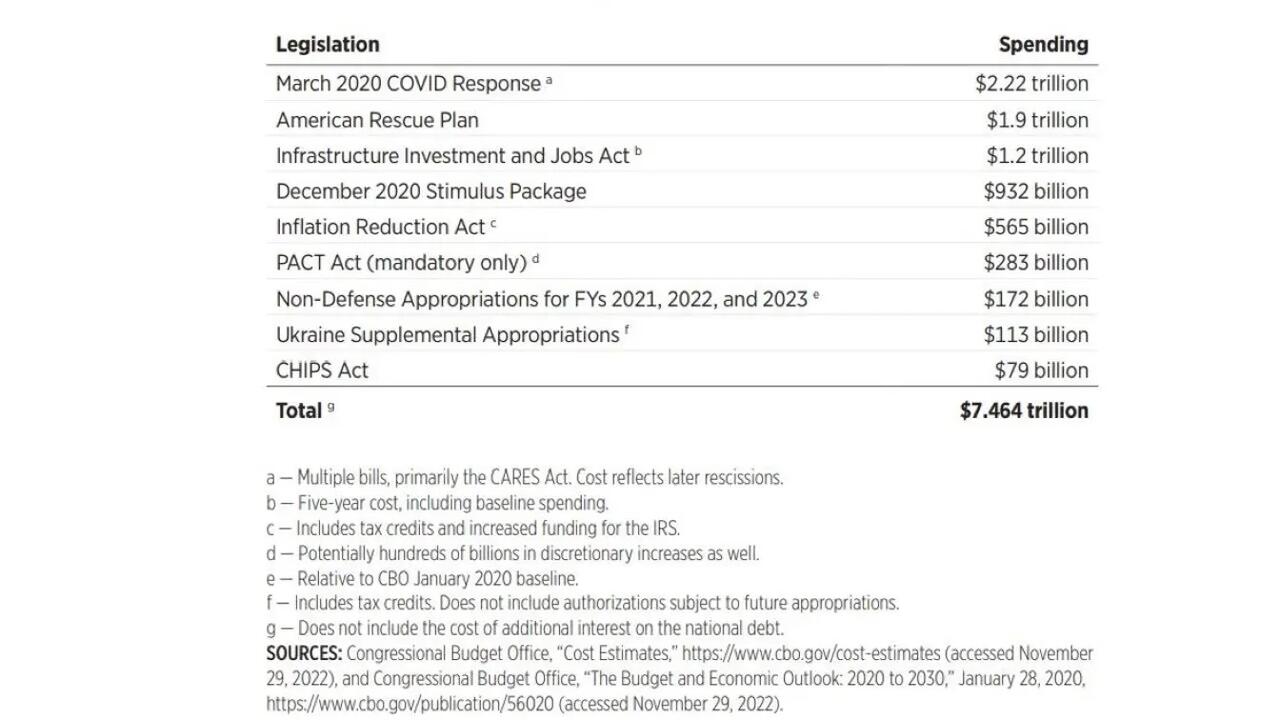
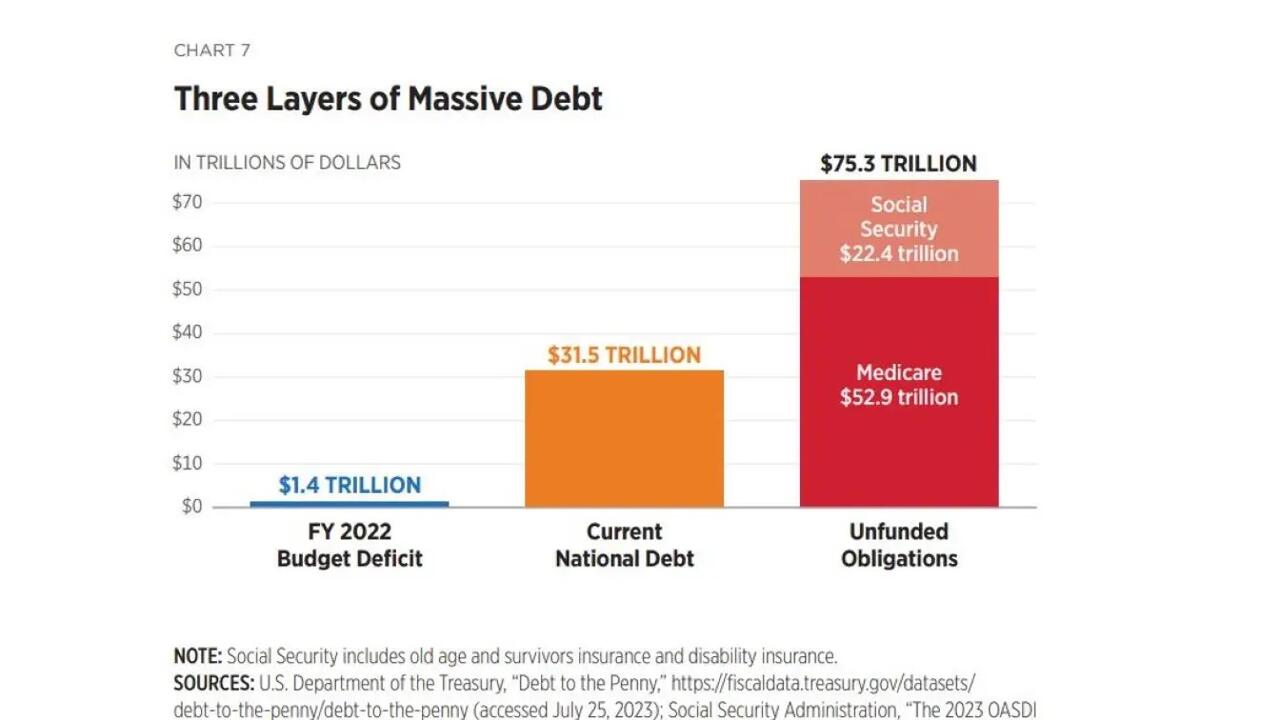
 As the US blows past $33 trillion in national debt for the first time - and adds roughly $1 billion in new debt every hour, a comprehensive new report from the Heritage Foundation reveals that the US government has tacked on $7.5 trillion in new debt over past two years alone, drawing a stark image of America's economic prospects.

The report sheds light on a series of colossal spending packages rolled out between March 2020 and December 2022, amounting to an astronomical $7.464 trillion in debt, or a staggering $57,400 per household.

The Heritage Foundation splits the ordeal into three components: the nature of federal spending, the Federal Reserve's role in this fiasco, and the impending ramifications of this debt accumulation. The conclusions drawn are far from comforting. Much of the pandemic-era expenditure was not only unwarranted but actively detrimental, leaving the country grappling with an inflation surge, labor shortages, and broken supply chains, Fox News reports.

"The COVID-19 pandemic unleashed unprecedented federal fiscal and monetary actions that wasted trillions of dollars," said the Heritage experts.

Indeed, most of this drunken spending was done in the name of a virus that kills less than 1% of those it infects (mostly the elderly and the obese), and employed extreme lockdown measures which were no more effective than countries that refused to do the same.

The authors say that the US Congress failed to couple any justifiable pandemic spending with measure to reduce future deficits.

"A looming fiscal crisis has shifted from a long-term concern to a current event. Congress must return to responsible governance for America to avoid further economic calamity," the report concludes.

"When there's a supply shock, when the economy tumbles off a cliff, all the government can do is make the recovery longer and slower by trying to give you a sugar pill on the front end," said Co-author Richard Stern, Director of the Grover M. Hermann Center for the Federal Budget at The Heritage Foundation. "That's what happened here. We are now suffering worse four years later because the government did things in the moment to make it look a little better."

Breaking it down, $2.22 trillion was spent by the Trump administration's March 2020 COVID response and a December 2020 stimulus package. The rest was spent by the Biden administration via the American Rescue Plan, the Infrastructure Investment and Jobs Act, and other various packages.

According to Heritage President Kevin Roberts, the report's findings "explain how we got here and provide recommendations for extinguishing the fire so that we can change course and reduce the severe economic pain facing everyday Americans across the country."

"Inflation doesn’t just happen; it is a direct result of overbearing, clumsy, dysfunctional government policies," said Roberts. "While everyday Americans suffer under the hidden tax of Biden's crippling inflation – at the gas pump and checkout counters, in utility bills, rents, and car payments – Congress and the President have an unending appetite for more spending, regulation, and subsidies."

The report also notes that the so-called Inflation Reduction Act is "a complete misnomer" that has only done the exact opposite.

"This reckless and politically opportunistic spending spree has left the U.S. with a weakened economy, an inflation crisis, and a looming debt crisis. The volume and nature of the spending spree helped to create skyrocketing inflation and interest rates and created a labor shortage, reducing real household incomes and leaving store shelves bare and supply chains broken."

What does this mean for the future?

According to the authors, "The amount of damage caused by the federal spending spree is immense, and the size and scope of the long-term fiscal problem can be overwhelming," reads the report's final paragraph. "Policymakers must address this reality in a sober fashion, neither pretending that easy fixes exist nor ignoring the problem altogether. This will require controlling spending, returning to meaningful budgeting, and fixing problems at the Federal Reserve."

"There is a genuine opportunity for leadership if elected officials have the courage and foresight to do the right thing, both for America’s near-term battle against inflation and its long term economic prospects."

https://www.zerohedge.com/economics/great-debt-fiasco-how-washingtons-reckless-and-opportunistic-pandemic-splurge-jeopardized

'Biden makes major strategic shift at border'

 The Biden administration rolled out a major strategic shift in border policy Wednesday, granting more than 400,000 Venezuelans work permits while bolstering overstretched border enforcement agencies with military assistance.

The moves respond to pressure from Democrats and immigrant advocates, but also to quickly changing dynamics on the migrant trail toward the U.S.-Mexico border, with hundreds of thousands of migrants already traveling north.

By making all Venezuelans who arrived before July 31 eligible to work and live in the country temporarily, the Biden administration seeks to ease pressure on Democratic-controlled states and cities, whose shelter systems were overwhelmed with new arrivals unable to sustain themselves.

And deploying 800 troops to the border to assist Customs and Border Protection (CBP) and the Border Patrol will free up manpower for those agencies to process migrants at and between ports of entry.

In recent weeks, CBP has at times closed major international bridges and railway crossings and redirected their personnel to help Border Patrol take migrants into custody.

On Wednesday, CBP pulled its staff from an Eagle Pass, Texas, bridge and at the railway crossing there.

“In response to this influx in encounters, we will continue to surge all available resources to expeditiously and safely process migrants. We will maximize consequences against those without a legal basis to remain in the United States,” read a CBP statement on the Eagle Pass closures.

But many Democrats have been pleading with the administration to turn its focus to work permits.

The decision to redesignate Venezuela for Temporary Protected Status (TPS) tripled overnight the population of Venezuelans who are eligible for work permits and are deferred from deportation for at least 18 months.

Under TPS, foreign nationals from a designated country present in the United States as of a set date are allowed to remain and work legally, while their country of origin is undergoing a natural or man-made disaster.

“That is the situation that Venezuelans who arrived here on or before July 31 of this year find themselves in. We are accordingly granting them the protection that the law provides,” said Homeland Security Secretary Alejandro Mayorkas in a statement Wednesday. 

“However, it is critical that Venezuelans understand that those who have arrived here after July 31, 2023 are not eligible for such protection, and instead will be removed when they are found to not have a legal basis to stay.”

The move drew cheers from a wide range of advocacy groups, as well as Democrats who had pushed for work permit expansion, including New York Mayor Eric Adams (D), who has very publicly butted heads with the administration over the issue.

“Our administration and our partners across the city have led the calls to ‘Let Them Work,’ so I want to thank @POTUS for hearing our entire coalition, including our hard-working congressional delegation, and taking this important step that will bring hope to the thousands of Venezuelan asylum seekers currently in our care who will now be immediately eligible for Temporary Protected Status,” wrote Adams on X, formerly Twitter.

The announcement also came a day before Biden addresses the Congressional Hispanic Caucus Institute Annual Awards Gala, an event that brings together the top names in Hispanic politics.

Biden’s address is widely expected to set the tone for his pitch to Hispanics ahead of the 2024 elections; the Venezuelan TPS announcement makes it all but certain that he’ll deliver that pitch to a well-primed audience Thursday night.

But the administration is still facing headwinds on immigration, both from the left and from the right.

With migrant arrivals expected to remain consistently high, Republicans will continue to latch onto border numbers as evidence of failed presidential policies.

Administration officials are looking to weather that storm by doubling down on their carrot-and-stick approach, expanding legal pathways for migrants to enter, while touting deportations.

“I think that our model is the right model. And I think it is a success and that model is to provide expanded, safe, orderly and lawful processes and to disincentivize irregular migration to our border and I believe firmly that that is the successful model,” Mayorkas told reporters earlier this month.

“Migration is a very dynamic phenomenon. And we are going to see ebbs and flows and we’re going to see the numbers increase and decrease,” he said, citing human smuggling as a major factor driving those ups and downs.

Migrant smuggling is a growing business for groups who are either associated or pay dues to cartels.

The business has branched out to create a viable path for migrant stretching from South America to the United States, but the factors pushing migrants out of their home countries remain more or less the same.

“It’s the same boom as before Title 42 ended. When the numbers went down in May-June, many of us said migrants and smugglers were just in ‘wait and see mode.’ Well, they waited and saw — and now the lull is over!” said Adam Isacson, director for defense oversight for the Washington Office on Latin America.

On the homefront, the administration will continue to face pressure to speed up other work permits, improve and expand legal pathways for migrants to enter the country, and suspend deportations to certain countries such as Haiti.

And calls are growing for the administration to pull bureaucratic levers to at least make it easier for undocumented immigrants to regularize their status.

Former Rep. Luis Gutiérrez (D-Ill.), who at times was a thorn in the side of the Obama administration for his immigrant advocacy, is coming out of retirement as a senior adviser to CASA, a progressive immigration advocacy group, and ABIC-Action, a business-driven immigration advocacy group.

Gutiérrez, who celebrated the Venezuelan TPS move, will lead a “work permits for all” mobilization with an estimated 5,000 attendees outside the White House in November.

“I am so delighted and happy and overjoyed that Biden is extending protection for Venezuelans. It won’t get him a single additional vote from Cubans, Nicaraguans, or Venezuelans in Florida, but it’s the right thing to do now,” said Gutiérrez.

“Our task is to get him to expand it to other communities, especially millions of Mexicans who have worked and sweated for our country for decades while we celebrate the victory of Venezuelans.”

https://thehill.com/latino/4216063-biden-doubles-down-on-both-carrot-and-stick-at-the-border/

KKR-Backed BrightSpring Is Said to Revive IPO Seeking $1 B


BrightSpring Health Services Inc., which withdrew its initial public offering plan last year, has confidentially refiled for a listing with a goal of raising $1 billion, according to people familiar with the matter.

A listing by the home and community-based health-care services provider backed by KKR & Co. is slated for the fourth quarter, said the people, who asked not to be identified because the information wasn’t public yet. BrightSpring has re-engaged Goldman Sachs Group Inc. and KKR’s own capital markets division as lead bookrunners for the offering, they said.

https://www.bloomberg.com/news/articles/2023-09-23/kkr-backed-brightspring-is-said-to-revive-ipo-seeking-1-billion

Will "Poor Man's Cocaine" Fuel The Next US Drug Crisis?

 The cheap and highly addictive stimulant Captagon shows signs of following in the opioid fentanyl’s footsteps...

THE OPIOID CRISIS continues to rage across the U.S., but there are some positive, if modest, signs that it may be slowing. Overdose deaths due to opioids are flattening in many places and dropping in others, awareness of the dangers of opioid abuse continues to increase, and more than $50 billion in opioid settlement funds are finally making their way to state and local governments after years of delay. There is still much work to be done, but all public health emergencies eventually subside. Then what?

First, it’s important to realize that synthetic opioids like fentanyl will never fully disappear from the drug supply.

They are too potent, too addictive, and perhaps most importantly, too lucrative. Opioids, like Covid-19, are here to stay, consistently circulating in the community but at more manageable levels.

More alarming is what may take its place. Since 2010, overdoses involving both stimulants and fentanyl have increased 50-fold. Experts suggest this dramatic rise in polysubstance use represents a “fourth wave” in the opioid crisis, but what if it is really the start of a new wave of an emerging stimulant crisis?

Substance abuse tends to move in cycles. Periods with high rates of depressant drug use (like opioids) are almost always followed by ones with high rates of stimulant drug use (like methamphetamine and cocaine), and vice versa. The heroin crisis of the 1960s and 1970s was followed by the crack epidemic of the 1980s and 1990s, which gave way to the current opioid epidemic. As the think tank scholar Charles Fain Lehman quipped, “As with fashion, so with drugs — whatever the last generation did, the next generation tends to abhor.” The difference now is the primacy of synthetic drugs — that is, illicit substances created in a lab that are designed to mimic the effects of naturally occurring drugs.

Today, anyone with a few thousand dollars and internet access can find instructions to build their own little drug empire. Look no further than “Breaking Bad,” the hit television series in which a high school chemistry teacher starts cooking high-quality methamphetamine out of an RV to help provide for his family. “Breaking Bad” is of course a work of fiction, but in the age of synthetic drugs, the plotline is not that far-fetched.

Back in the real world, methamphetamine has already become a significant threat. From 2015 to 2019, overdose deaths attributed to methamphetamine nearly tripled, according to a study by the National Institute on Drug Abuse, a staggering increase driven primarily by its combination with fentanyl. And yet, even with methamphetamine’s use on the rise, it still trails America’s favorite illicit stimulant drug — cocaine — by a significant margin. In the latest National Survey on Drug Use and Health, more than twice as many adults aged 18 or older reported using cocaine over methamphetamine in their lifetime.

Cocaine holds a special place in American pop culture. Long considered a party drug, cocaine has often been associated with celebrities, lawyers, and so-called finance bros, and its sale and use has been romanticized in music, TV, and cinema. The sad reality is that for the year preceding April 2023, more than 27,000 Americans died while using cocaine, according to provisional statistics from the U.S. Centers for Disease Control and Prevention. It is indeed a hell of a drug.

But its days may be numbered.

The vast majority of cocaine is currently produced in three countries in the world — Colombia, Peru, and Bolivia — primarily due to a favorable climate and a cultural affinity for the coca plant from which cocaine is derived. But what if, instead of being produced in the jungles of South America, cocaine — or something like it — could be manufactured anywhere?

This is not a new idea. In the last decade alone, illicit drug chemists have synthesized more than 1,200 new psychoactive substances, or NPS, also known as designer drugs or research chemicals, in search of a better high. So far, none of these lab-made drugs have threatened to unseat cocaine, but with advances in artificial intelligence, synthetic biology, and biotechnology, it is only a matter of time until some enterprising chemist strikes white gold.

Officials in Europe recently sounded the alarm about counterfeit Captagon, an amphetamine-like drug that produces many of the same physiological effects as cocaine. Often referred to as “poor man’s cocaine,” Captagon is already wildly popular in the Middle East where it sells for as little as $3 per pill and fuels the Gulf states’ party scene.

Captagon is the trade name for fenethylline, a chemical compound related to natural neurotransmitters like dopamine and epinephrine. It was first developed in the 1960s to treat attention deficit hyperactivity disorder, narcolepsy, and depression, but was later banned worldwide due to its high potential for abuse. Although still referred to as Captagon, virtually all the pills seized today are counterfeit and comprised of a hodge-podge of dangerous substances, including fenethylline, amphetamine, methamphetamine, and even caffeine.

In this way, Captagon is a lot like the counterfeit oxycodone pills flooding the U.S. drug market: They are advertised as one drug but contain another. And because they come in pill form, they are more approachable to the average drug consumer, who tend to associate pills with legitimate prescription medications.

While most drug overdose deaths are currently attributed to synthetic opioids like fentanyl, cocaine and methamphetamine carry significant risks of their own. Stimulants place extreme strain on the body’s regulatory and cardiovascular system and increase the risk of heart attack, stroke, or death. And unlike opioids, there is no miracle overdose reversal drug like naloxone — which was recently made available over the counter in the U.S. — or medication-assisted treatments for stimulant use disorders.

Interestingly, late last year the U.S. Drug Enforcement Administration did not increase the annual production quotas for several amphetamine-based prescription medications, including Adderall and Ritalin, although drugmakers had raised concerns about ongoing shortages. The agency’s response was due partly to concerns that aggressive marketing of these drugs could spark the next crisis. Recent studies suggest the use of ADHD medication by young adults does not necessarily lead to the use of illicit drugs in the future, but if shortages persist, will users turn to the black market as they did with prescription opioids?

The illicit drug trade is surprisingly regional, and preferences come and go. Just because a substance is popular in one region of the world doesn’t mean it will inevitably become popular in another. But Captagon displays all the hallmarks of the next big thing for the American public. Like fentanyl, it has a natural user base, is cheap and easy to make, and is highly addictive. It also avoids bizarre side effects (such as a notorious case of face-eating and other unusual behaviors) sometimes encountered with NPS.

It is difficult to predict what form the next drug crisis may take, but I believe one thing is certain: There will be another crisis. Early indications and warnings will be essential to identify the next threat and protect health and safety. Public health and law enforcement organizations must improve data collection and monitoring of emerging drug threats through intelligence collection, wastewater analysis, and forensic testing. They must also enhance information sharing and collaboration across the prevention, supply reduction, and treatment continuum. And the U.S. and its partners must act now to avoid repeating the mistakes of the past — before it’s too late.

*  *  *

Jim Crotty is the former Deputy Chief of Staff at the U.S. Drug Enforcement Administration and a member of the Global Initiative against Transnational Organized Crime’s network of experts. He is currently a Supervisory Criminal Research Specialist with the DC Metropolitan Police Department and a Senior Fellow at the Center for Advanced Defense Studies.

https://www.zerohedge.com/medical/will-poor-mans-cocaine-fuel-next-us-drug-crisis