Search This Blog

Friday, November 10, 2023

ICBC ransomware attack triggers global regulator, trader scrutiny

 Global regulators and bond traders were on Friday trying to gauge the impact of a ransomware attack on the Industrial and Commercial Bank of China (ICBC), China's biggest bank, that disrupted trades in the vital U.S. Treasuries market this week.

ICBC's U.S. arm was hit on Thursday in the latest of a string of ransomware attacks this year that have targeted companies around the world.

China's foreign ministry said on Friday that ICBC was trying to minimise the risk impact and losses after the attack, which a number of experts attributed to hacking group Lockbit.

Meanwhile, Britain's Financial Conduct Authority said it was "communicating with the relevant U.S. and UK authorities and firms to identify any impacts to UK financial services".

China's foreign ministry spokesperson Wang Wenbin said that business remained normal at ICBC head office, other branches and subsidiaries across the globe.

"ICBC has been closely monitoring the matter and has done its best in emergency response and supervisory communication," Wang told a regular news conference.

Some market participants said trades going through ICBC were not settled due to the incident and that market liquidity had been affected. It was not clear whether this contributed to the weak outcome of a 30-year bond auction on Thursday.

Traders and portfolio managers in Europe on Friday said bond markets appeared to be functioning normally.

"Some illiquidity can be blamed on the U.S. Treasury inter dealer broker market around the time of the hack and post-auction," said one fixed income manager at an asset management firm in Europe.

But the investor said market moves were hard to disentangle from a bond sell-off after comments from Federal Reserve Chair Jerome Powell and the fallout from the poorly received auction.

ICBC said it had successfully cleared Treasury trades executed on Wednesday and repurchase agreements (repo) financing trades done on Thursday.

Since Lockbit was discovered in 2020, the group has hit 1,700 U.S. organizations, according to the U.S. Cybersecurity and Infrastructure Security Agency.

While market sources said on Thursday the impact of the ICBC hack appeared limited, the attack underlined how vulnerable systems at large organizations continue to be.

The yield on the 10-year U.S. Treasury note, which sets the tone for borrowing costs around the world, was last down 3 basis points at around 4.59%. It rose 11 basis points on Thursday, with yields moving inversely to prices.

ICBC's Hong Kong-listed shares ended Friday down 0.8% compared to a 1.13% drop in a Hong Kong index of mainland Chinese banks. Its Shanghai-listed shares closed flat.


https://www.marketscreener.com/news/latest/ICBC-ransomware-attack-triggers-global-regulator-trader-scrutiny-45299647/

Censorship "Switchboard": New Layer To Biden Administration's "Orwellian Ministry Of Truth"

 by Jonathan Turley,

Free speech is in a free fall as millions embrace censorship as a political cause, including some now running for federal office on a pledge to silence others. 

One of the most alarming aspects of this period has been the emergence of a type of triumvirate of censorship, an alliance of government, academic, and media corporations. Together they have established the most comprehensive censorship system in the history of this country.

That system is being forced out into the public by the investigation of House committees. This week the House Judiciary Committee released a 103-page staff report on the academic prong of the triumvirate. What is most chilling about this report is that it adds yet another layer of government-supported speech controls. It also reflects a conscious and coordinated effort to carry out censorship through allies in a labyrinth of academic and public interest groups.

Earlier this year, I testified at the first hearing by the special committee investigating the censorship system. I warned that there was ample evidence of a system based on “censorship by surrogate” where government agencies used academic and media allies to silence those with opposing views.

The latest report reveals details of the critical role played by government officials in “switchboarding” the censorship system by channeling demands for removal or bans from state and local officials. In addition to the direct targeting of individuals by federal agencies, switchboarding allowed the agencies to operate as a control tower in this sprawling system.

This switchboarding system was confirmed by Brian Scully of the Cybersecurity and Infrastructure Security Agency (CISA) in the Department of Homeland Security. CISA has emerged as one of the critical control centers in this system.

CISA head Jen Easterly declared that her agency’s mandate over critical infrastructure would be extended to include “our cognitive infrastructure.” That includes not just “disinformation” and “misinformation,” but combating “malinformation” – described as information “based on fact, but used out of context to mislead, harm, or manipulate.”

Despite the determined opposition by Democratic members and the Biden Administration, the investigation has revealed a wide array of grants to academic and third party organizations to create blacklists or to pressure advertisers to withdraw support for conservative sites. The subjects for censorship ranged from election fraud to social justice to climate change.

The Election Integrity Partnership (EIP) was created in partnership with Stanford University “at the request of DHS/CISA.” It is described as a “consortium of ‘disinformation’ academics led by Stanford University’s Stanford Internet Observatory (SIO).

EIP supplied a “centralized reporting system” to process what were known as “Jira tickets” targeting unacceptable views. It would include not only politicians but commentators and pundits as well as the satirical site The Babylon Bee.

Some of us have previously criticized Stanford for its effort to systematize and expand censorship. Stanford’s Virality Project pushed to  censor even true facts since “true stories … could fuel hesitancy” over taking the vaccine or other measures.

In newly released emails, the secret coordination with federal agencies was made public, including a July 31, 2020 email from the director at the Atlantic Council’s Digital Forensic Research Lab, an EIP partner.

Graham Brookie, the lab’s senior director, confirmed that her group “just set up an election integrity partnership at the request of DHS/CISA and are in weekly comms to debrief about disinfo.”

During this time many of us in the free speech community were raising the alarm over the evidence of a government-supported censorship system, including the use of surrogates in academia.  As noted in emails in May 2020, government officials were privately saying that they need to avoid any move that would “openly endorse” censorship while funding these groups and switchboarding the system.

As officials served as the conduit, it continued to attach a standard disclaimer that CISA “neither has nor seeks the ability to remove what information is made available on social media platforms.”

Notably, EIP worked not only with CISA, but with the Global Engagement Center, a multi-agency entity housed within the State Department. It was the Global Engagement Center that contracted with the Atlantic Council, which sent suggested blacklists to Twitter. It got to be so reckless that Yoel Roth, then Twitter’s head of trust and safety, responded “omg” and “what a total crock.”

This system rests on grants coming from Homeland Security, the Justice Department, the State Department, and other agencies. That system included scoring groups through a grant from the National Endowment for Democracy (NED) to the British-based Global Disinformation Index (GDI). The index targeted ten conservative and libertarian sites as the most dangerous sources of disinformation, including sites like Reason which publishes conservative legal analysis. Conversely, some of the most liberal sites were ranked as the most trustworthy for advertisers.

The report on switchboarding is most chilling when placed within this larger context. The Biden Administration has funded a global effort to score, target, and ban opposing views through an ever-increasing array of allied groups in academia and corporations. A federal court recently enjoined aspects of that system after finding that it is an unprecedented censorship system that effectively created a type of “Orwellian Ministry of Truth.”

The solution is as obvious as the danger itself. Congress must bar any funding — directly or indirectly — for censorship systems. Calling opposing views “disinformation” does not alter the fact that there is a comprehensive censorship system using groups allied with the government.  Federal agencies are always able to respond to claims that they deem are untrue about their own policies and programs. However, we need to get the government out of the business of speech controls, including shutting down the censorship switchboard.

https://www.zerohedge.com/political/censorship-switchboard-new-layer-biden-administrations-orwellian-ministry-truth

Is the US reporting system for vaccine safety broken?

 A US reporting system designed to detect potential safety issues with vaccines is supposed to be user-friendly, responsive, and transparent. But an investigation published by The BMJ today finds it's not meeting its own standards.

The Vaccine Adverse Event Reporting System (VAERS), co-managed by the US Centers for Disease Control and Prevention (CDC) and the Food and Drug Administration (FDA), collects reports of symptoms, diagnoses, hospitalizations, and deaths following vaccination that might indicate a possible safety concern about a vaccine, explains journalist Jennifer Block.

It relies on a mixture of voluntary adverse event reports from doctors and patients and mandatory reporting from vaccine manufacturers, which are required by law to report all adverse events of which they are aware.

According to VAERS' standard operating procedure for COVID-19, reports must be processed quickly, within days of receipt.

But The BMJ has learned that in the face of an unprecedented 1.7 million reports since the rollout of the COVID-19 vaccines, VAERS staffing was likely not commensurate with the demands of reviewing serious reports submitted, including reports of death.

Freedom of Information Act (FOIA) documents seen by The BMJ suggest that Pfizer has more than 1,000 more full-time employees than the CDC, despite the latter's responsibility for handling adverse event reports for all manufacturers.

What's more, other countries have acknowledged deaths "likely" or "probably" related to mRNA vaccination, whereas the CDC, which says it has reviewed nearly 20,000 reports (far more than other countries) hasn't acknowledged a single death linked to mRNA vaccine.

The BMJ has spoken to more than a dozen people, including a number of physicians and a state medical examiner, who have filed VAERS reports of a serious nature on behalf of themselves or patients and were never contacted by clinical reviewers, or were contacted months later.

Some were told conflicting information about updating their report or discouraged from making a report altogether.

A group of physicians and advocates has met multiple times with representatives of the FDA between 2021 and 2022 to express their concerns that the system is not operating as intended and signals are being missed.

In response to several questions about these meetings and the issues raised therein, the FDA responded by email that the agency "is actively engaged in safety surveillance of these vaccines to identify and address potential safety concerns" and that "physicians and epidemiologists from the FDA and CDC continuously screen and analyze data from VAERS for COVID-19 vaccines to identify potential signals that would indicate the need for further study."

The BMJ has also found that the FDA and CDC essentially maintain two separate VAERS databases—a public-facing database containing only initial reports, and a private, backend system containing all updates and corrections—for example, a formal diagnosis, recovery, or a death.

CDC told The BMJ that this was to protect patient confidentiality. Yet, interestingly, Block notes that the FDA's adverse event reporting system (FAERS), which collects reports on drugs, does maintain a publicly accessible database that undergoes updates, as does the Medical Device Reporting system, raising the question of why VAERS can't do the same.

Neither the CDC nor the FDA provided an explanation. An FDA spokesperson told The BMJ that "patients can submit formal requests under FOIA to obtain the full record of their report."

For serious cases, reporters to VAERS are supposed to receive emails prompting them for updates. It includes a code and upload link, but reporters The BMJ spoke with didn't get confirmation emails, and if they search for their report in the database it will remain unchanged. Similarly, if a reporter successfully treated their diagnoses and improved, or confirmed that the cause for their illness was unrelated to a , that would not be reflected in the public database.

Narayan Nair, the FDA division director who oversees VAERS, acknowledged in a meeting with advocates that people get frustrated when they look for an updated report, find the original untouched, and feel like they're "being ignored."

"They never see it on the front end, because we don't alter that initial report," Nair explained.

More information: Investigation: Is the US's Vaccine Adverse Event Reporting System broken?, The BMJ (2023). DOI: 10.1136/bmj.p2582


https://medicalxpress.com/news/2023-11-vaccine-safety-broken.html

Study identifies countries vulnerable to extensively drug-resistant typhoid

 Using air travel records and data on where local conditions make transmission more likely, Yale School of Public Health (YSPH) researchers have identified countries where outbreaks of an extensively drug-resistant form of typhoid fever are most likely to occur. The research, published in Nature Communications, could help prevent and control additional outbreaks.

Typhoid fever is caused by the bacterium Salmonella Typhi. It sickened 9 million people and killed 110,000 in 2019, according to the World Health Organization. Children are most vulnerable.

An extensively drug-resistant (XDR) strain of S. Typhi emerged in 2016 in Pakistan and has since become the most common strain in the country. XDR S. Typhi is resistant to all antimicrobials except for one orally administered antibiotic and has so far only caused large outbreaks in Pakistan. Intravenous antibiotics are effective, but are expensive and require hospitalization, which can make them unfeasible for some countries' health systems.

Drug resistance in typhoid treatment has been a problem since the early days of antibiotics, said Jo Walker, the paper's first author and a YSPH doctoral student who led the research under guidance from Virginia Pitzer, an associate professor of epidemiology (microbial diseases).

"Multiple rounds of new drugs have been discovered and developed and put into use, but then we see resistance pop up," Walker said. "This has continued repeatedly over time."

Typhoid vaccines exist but until recently had not been available for , required several doses or boosters, and had an efficacy rate as low as 50%, according to Take on Typhoid, a joint project of the Coalition against Typhoid and the Typhoid Vaccine Acceleration Consortium. Typhoid conjugate vaccines solve these problems, and two have been approved for use, but more needs to be done for them to be used broadly, according to the consortium where Pitzer is a member and lead modeler.

Scientists and public health officials are concerned XDR S. Typhi could spread to other countries, making it much harder to treat  globally, Walker said.

"Our impetus for this project was to get out ahead of those possible future outbreaks and try to identify the settings where some preemptive actions could be taken to slow the spread or stop outbreaks before they happen," they said.

To do this, the team studied the volume of air travel from Pakistan to other countries in 2019 and reported cases of XDR typhoid. Countries with XDR cases had a median of 84,507 air travelers from Pakistan, while countries without XDR S. Typhi had a median of only 252. Of the 10 countries that had the most air travelers from Pakistan, seven reported cases of XDR typhoid.

Because typhoid fever is spread through water and food being contaminated with feces containing S. Typhi, it is unlikely to cause outbreaks in countries with high levels of sanitation and clean water.

To better understand where efforts should be concentrated, the researchers cross-referenced the rate of incoming air travel from Pakistan against three sets of estimates of countries' annual typhoid fever cases to find those most likely to have a major  or sustained transmission of XDR S. Typhi.

The top 10 must vulnerable countries identified in the analysis were Afghanistan, Bangladesh, India, Sri Lanka, Indonesia, Malaysia, the Philippines, Thailand, Uganda, and Kenya. Afghanistan could be particularly vulnerable due to its very high typhoid fever burden, high rate of travelers from Pakistan, and health and humanitarian crises, the researchers note.

Pitzer, the paper's senior author, said the findings could be used for more targeted research by international health agencies such as Gavi, the Vaccine Alliance, which has supported typhoid conjugate vaccine development. But they would perhaps be best used by health systems within vulnerable countries, she said.

"The paper's targeted toward people in the ministries of health in these high-risk countries so that they are aware that this is potentially a problem," said Pitzer. "Ultimately, demand for  conjugate vaccines needs to come from the countries, and a lot of the surveillance effort typically also needs to come from ."

More information: Joseph Walker et al, Assessing the global risk of typhoid outbreaks caused by extensively drug resistant Salmonella Typhi, Nature Communications (2023). DOI: 10.1038/s41467-023-42353-9


https://medicalxpress.com/news/2023-11-countries-vulnerable-extensively-drug-resistant-typhoid.html

Research suggests prenatal exposure to cannabis increases diabetes risk in offspring

 Cannabis consumption is prevalent among pregnant women in North America, particularly those between the ages of 18 and 24 years, previous research has shown. They report using it for various reasons, including alleviating nausea, body aches and anxiety related to pregnancy.

While existing clinical data points to negative effects like  and abnormal blood sugar levels in children born to mothers who used cannabis, the impact of the non-psychoactive compound of cannabis, cannabidiol (commonly known as CBD), on metabolic outcomes of the offspring remains less understood.

A new study in animal models, led by Ph.D. candidate Sebastian R. Vanin, under the supervision of Western professor Daniel B. Hardy, has shown that even moderate exposure to CBD during pregnancy is linked to post-birth glucose intolerance specifically in .

"This is a critical finding, given that CBD, unlike cannabis' psychoactive compound, tetrahydrocannabinol or THC, is widely marketed and perceived to be a safer option by so many," said Hardy, associate professor in the departments of obstetrics & gynecology and physiology & pharmacology at the Schulich School of Medicine & Dentistry.

While it is THC that leads to the "high" effect cannabis users experience, CBD is the primary non-psychoactive compound in cannabis and is also medicinally used for the treatment of certain forms of epilepsy, schizophrenia, and depression.

"Our study shows that exposure to CBD alone during pregnancy can be detrimental to the metabolic health of the offspring later in life, leading to glucose intolerance. This is a major risk factor for diabetes," said Hardy, who is also a scientist in the division of maternal, fetal and newborn health at Children's Health Research Institute.

The study, published in the Journal of Endocrinology, shows that while CBD exposure did not lead to adverse maternal or neonatal outcomes in the rodent model, by three months of age male offspring exposed to CBD during gestation exhibited glucose intolerance.

A previous study from the Hardy lab showed that prenatal exposure to THC, the main psychoactive component of cannabis, in rat model led to glucose intolerance and insulin resistance in female offspring.

"With the latest study, we now know that gestational exposure to either cannabinoid—THC and CBD—can lead to glucose intolerance in the offspring. However, THC exposure impacts the glucose tolerance of female offspring while CBD exposure impacts the male offspring," said Vanin.

The male offspring that were exposed to CBD exhibited changes in their genes that control body clocks, particularly the circadian rhythm clock. This can adversely impact how our bodies regulate sugar or . Males also exhibited changes in how their livers develop and function, which suggests that being exposed to CBD while in the womb could harm liver development and health throughout the course of life.

"After legalization of cannabis in Canada and the subsequent increase in its use, there's a lot of focus on how cannabis impacts the brain, especially the developing brain. We are also interested in studying how cannabis exposure during pregnancy influences the development of other metabolic organs including the pancreas, liver, and heart," said Hardy.

The Hardy lab studies how impaired fetal development can predispose  to metabolic deficits in adulthood.

"Pre-natal exposure to cannabis can also occur through fathers, so we are currently interested in studying how that impacts fetal growth and development as well."

More information: Sebastian R Vanin et al, Gestational exposure to cannabidiol leads to glucose intolerance in 3-month-old male offspring, Journal of Endocrinology (2023). DOI: 10.1530/JOE-23-0173


https://medicalxpress.com/news/2023-11-prenatal-exposure-cannabis-diabetes-offspring.html

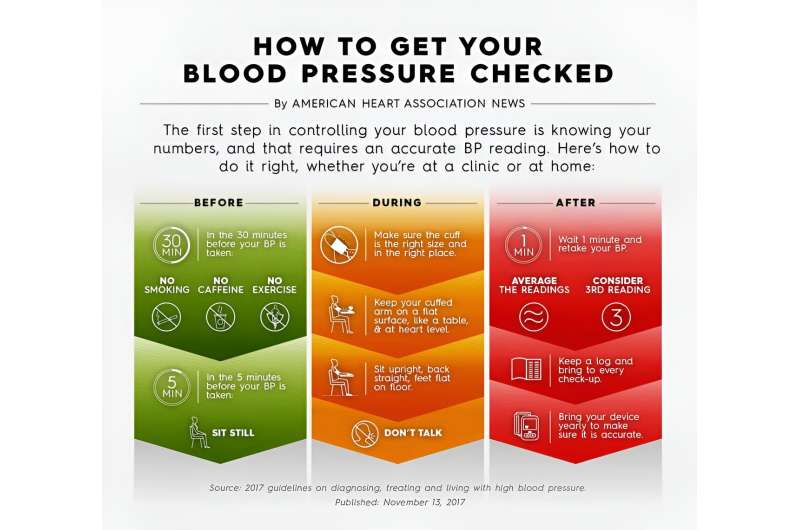
Where and how you sit matters when getting blood pressure taken at the doctor's office

 Where and how you sit matters when getting blood pressure taken at the doctor's office

Credit: American Heart Association

Millions of people with normal blood pressure may be misclassified as having blood pressure that is too high because of improper positioning when measurements are taken, new research suggests.

Guidelines from the American Heart Association and American College of Cardiology call for a patient to be seated in a chair with feet flat on the floor, their back supported and the arm wearing the blood pressure cuff supported at heart level. Doing so helps ensure an accurate reading. But many  take blood pressure measurements while the patient is seated on an examining table, leaving their legs to dangle and their back and arm unsupported.

"That's not conducive to taking blood pressure accurately," said researcher Dr. Randy Wexler, a  at The Ohio State University Wexner Medical Center in Columbus. He will present the research on Saturday, Nov. 11, at the AHA's Scientific Sessions conference in Philadelphia.

Being misclassified with high blood pressure, also called hypertension, can lead to "people undergoing treatment who don't need it," Wexler said. "People may not need to be on as much medication, which has side effects. That's where having good and accurate blood pressure measurements becomes important."

In the study, 150 adults were randomly assigned to one of three groups. In one group, blood pressure readings were taken on a fixed-height exam table and then in an exam chair with adjustable positioning. A second group had the same readings taken in reverse order. A third group had both sets of readings taken in the exam chair. There was a rest period before each set of readings. Results were pooled and the average of three measurements taken on the table were compared to the average of those taken in the chair.

For readings taken on the exam table, the average systolic (top number) blood pressure was 7 mmHg higher and the average diastolic (bottom number) reading was 4.5 mmHg higher than those taken seated in the chair, adhering to guideline-recommended positioning. The researchers concluded this difference was large enough to misclassify millions of people as having hypertension whose blood pressure was actually within the normal range.

"We were not surprised there was a difference," Wexler said. "We were surprised at how much of a difference there was." The findings were published in September in the journal eClinicalMedicine.

Nearly half of all U.S. adults are estimated to have . Hypertension is diagnosed when measurements consistently reach or exceed 130 mmHg systolic or 80 mmHg diastolic.

People given medication to lower blood pressure when they don't need it are at risk for pushing their blood pressure too low, a condition known as hypotension, said Dr. Jordana Cohen, a nephrologist at Penn Medicine in Philadelphia who was not involved in the new research. Low blood pressure can cause dizziness, lightheadedness and fainting and can lead to falls.

"We need to make sure we measure blood pressure correctly and treat it correctly," said Cohen, also an associate professor of medicine at the University of Pennsylvania. "Health systems need to prioritize this. We have to convince them it is economically smart to do so because it will lead to better outcomes."

Health care professionals see so many patients with so many  that they often don't have enough time to take  measurements properly, Wexler said. Research suggests that  would need more than 26 hours per day to follow all preventive and chronic disease care guidelines for seeing patients, or more than nine hours per day when providing team-based care.

"We need to make things more efficient," said Wexler, adding that future research should look for such strategies. "But how do we make changes that are doable without slowing down the process of the visit?"

More information: Bruce S. Alpert et al, Comparison of outcomes for routine versus American Heart Association-recommended technique for blood pressure measurement (CORRECT BP): a randomised cohort study, eClinicalMedicine (2023). DOI: 10.1016/j.eclinm.2023.102219


https://medicalxpress.com/news/2023-11-blood-pressure-doctor-office.html

Moody's Cuts USA's Aaa Rating Outlook To 'Negative'; Treasury Dept "Disagrees"

 Who could have seen that coming?

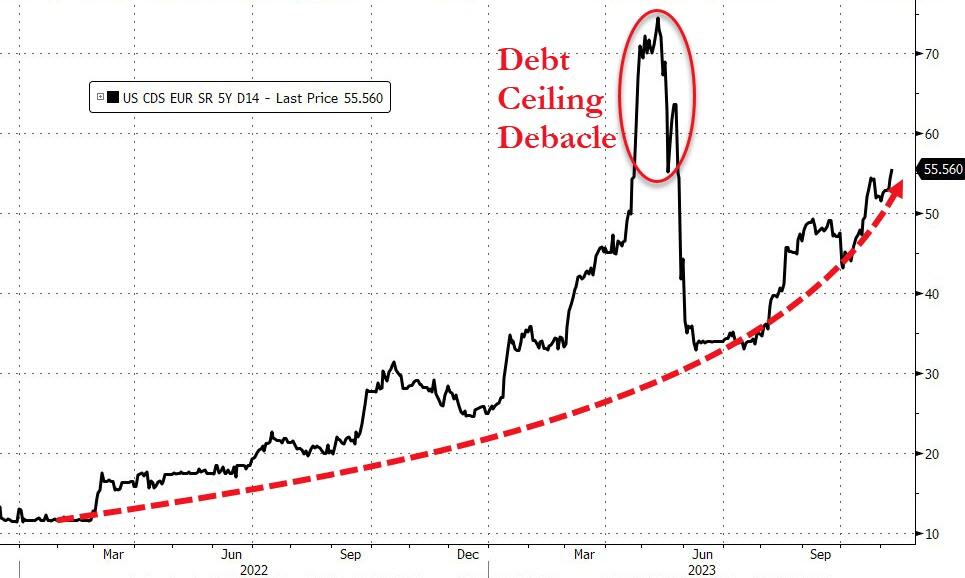
After a disastrous 30Y bond auction this week, a collapse in Treasury market liquidity, and an accelerating rise in the market's perception of the United States' credit risk, Moody's has just cut its outlook on US credit ratings to negative from stable.

The key driver of the outlook change to negative is Moody's assessment that the downside risks to the US' fiscal strength have increased and may no longer be fully offset by the sovereign's unique credit strengths.

In the context of higher interest rates, without effective fiscal policy measures to reduce government spending or increase revenues, Moody's expects that the US' fiscal deficits will remain very large, significantly weakening debt affordability.

Continued political polarization within US Congress raises the risk that successive governments will not be able to reach consensus on a fiscal plan to slow the decline in debt affordability.

Moody's does affirm the Aaa rating:

The affirmation of the Aaa ratings reflects Moody's view that the US' formidable credit strengths continue to preserve the sovereign's credit profile.

  • First, Moody's expects the US to retain its exceptional economic strength. Further positive growth surprises over the medium term could at least slow the deterioration in debt affordability.

  • Second, the US' institutional and governance strength is also very high, supported in particular by monetary and macroeconomic policy effectiveness. While the adjustment of the US economy and financial sector to higher-for-longer interest rates is underway, policymakers have facilitated the transition through transparent and effective policy.

  • Finally, the unique and central roles of the US dollar and Treasury bond market in the global financial system provide extraordinary funding capacity and significantly reduce the risk of a sudden spiraling of funding costs, which is particularly relevant in the context of high debt levels and weakening debt affordability.

The US' long-term local- and foreign-currency country ceilings remain unchanged at Aaa. The Aaa local-currency ceiling reflects a small government footprint in the economy, relatively predictable and reliable institutions, very low external imbalances and moderate political risks, all of which reduce the risks posed to non-government issuers by government actions or shocks that would commonly affect the government and the private sector. The foreign-currency ceiling at Aaa reflects the country's strong policy effectiveness and open capital account which reduce transfer and convertibility risks to minimal levels.

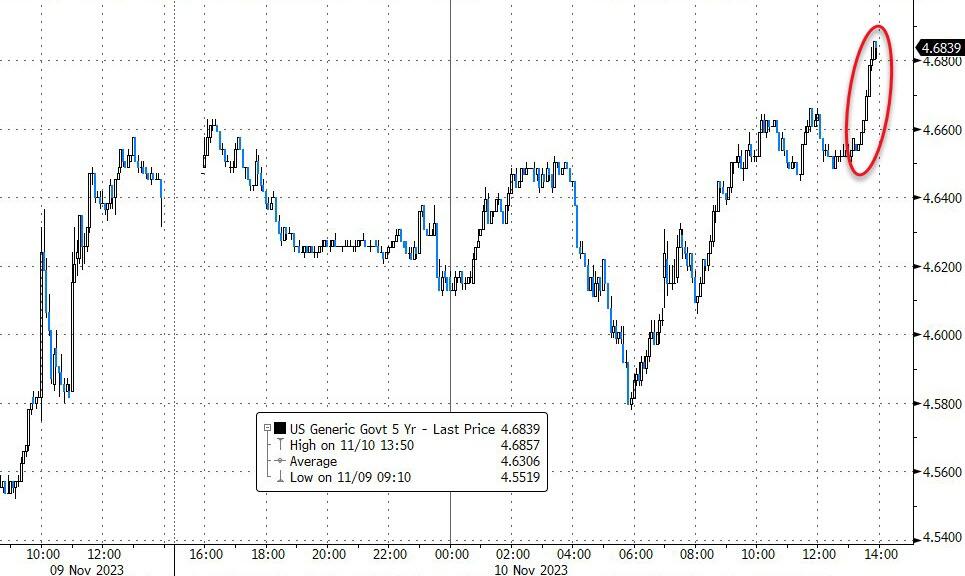
The market - late on a Friday - pushed yields on the 2Y and 5Y Treasyr notes to fresh new highs for the day...

Full Rationale for Outrlook cut:

ABSENT POLICY ACTION, FISCAL STRENGTH WILL DECLINE

The sharp rise in US Treasury bond yields this year has increased pre-existing pressure on US debt affordability. In the absence of policy action, Moody's expects the US' debt affordability to decline further, steadily and significantly, to very weak levels compared to other highly-rated sovereigns, which may offset the sovereign's credit strengths.

Past increases in interest rates by the Federal Reserve will continue to drive the US government's interest bill higher over the next few years. Meanwhile, although the government's revenue base will rise in line with the economy as a whole, in the absence of specific policy action, this will occur at a much slower pace than the rise in interest payments.
Moody's expects federal interest payments relative to revenue and GDP to rise to around 26% and 4.5% by 2033, respectively, from 9.7% and 1.9% in 2022. These projections factor in Moody's expectation of higher-for-longer interest rates, with the average annual 10-year Treasury yield peaking at around 4.5% in 2024 and ultimately settling at around 4% over the medium term. The debt affordability forecasts also take into account Moody's expectations that, absent significant policy changes, the federal government will continue to run wide fiscal deficits of around 6% of GDP near term and to around 8% by 2033, the widening being driven by higher interest payments and aging-related entitlement spending.

By comparison, deficits averaged around 3.5% of GDP from 2015-2019. Such deficits will raise the US federal government's debt burden to around 120% of GDP by 2033 from 96% in 2022. In turn, a higher debt burden will inflate the interest bill.

For a reserve currency country like the US, debt affordability - more than the debt burden - determines fiscal strength. As a result, in the absence of measures that limit the size of fiscal deficits, fiscal strength will increasingly weigh on the US' credit profile.

FISCAL RISKS ARE EXACERBATED BY ENTRENCHED POLITICAL POLARIZATION UNDERSCORING RISING POLITICAL RISK

At a time of weakening fiscal strength, there is an increased risk that political divisions could further constrain the effectiveness of policymaking by preventing policy action that would slow the deterioration in debt affordability. These risks underscore rising political risk to the US' fiscal position and overall sovereign credit profile.

Recently, multiple events have illustrated the depth of political divisions in the US: renewed debt limit brinkmanship, the first ouster of a House Speaker in US history, prolonged inability of Congress to select a new House Speaker, and increased threats of another partial government shutdown due to Congress' inability to agree on budgetary appropriations. In Moody's view, such political polarization is likely to continue. As a result, building political consensus around a comprehensive, credible multi-year plan to arrest and reverse widening fiscal deficits through measures that would increase government revenue or reform entitlement spending appears extremely difficult.

While the US' Aaa rating takes into account relative weaknesses with regards to the quality of the country's legislative and executive institutions and fiscal policy effectiveness compared to other Aaa-rated sovereigns, there is a risk that these weaknesses take greater credit relevance because the deteriorating debt affordability trend would call for a more significant and effective fiscal policy response.

In particular, the US' lack of an institutional focus on medium-term fiscal planning, either through legislated fiscal rules aimed at improving the fiscal balance or general bipartisan consensus on the need for fiscal consolidation, is fundamentally different from what is seen in most other Aaa-rated peers such as in Government of Germany (Aaa stable) and Government of Canada (Aaa stable). Meanwhile, the more short-term focus of US fiscal policymaking, along with limited fiscal flexibility - because a very large portion of nondiscretionary budgetary spending is on mandatory entitlement programs and debt service (around 75% of total outlays), exacerbates already fractious bipartisan politics around a relatively disjointed and disruptive budget process. As annual debt service costs continue to rise, fiscal flexibility will diminish even further.

And cue Janet Yellen to dismiss this as folly...

Five minutes later, US Deputy Treasury Secretary Wally Adeyemo comments in emailed statement to Bloomberg:

“While the statement by Moody’s maintains the United States’ Aaa rating, we disagree with the shift to a negative outlook. The American economy remains strong, and Treasury securities are the world’s preeminent safe and liquid asset

“The Biden administration has demonstrated its commitment to fiscal sustainability, including through the more than $1 trillion in deficit reduction included in the June debt-limit deal as well as President Biden’s budget proposals that would reduce the deficit by nearly $2.5 trillion over the next decade

Still, not a great look as she "negotiates" with the Chinese.

https://www.zerohedge.com/political/moodys-cuts-usas-aaa-rating-outlook-negative