Search This Blog

Monday, April 22, 2024

Planned Parenthood Abortions Among 'Top Four Leading Causes Of Death' In America

 by Naveen Athrappully via The Epoch Times (emphasis ours),

Abortions conducted by Planned Parenthood are a leading cause of death in the United States, with the organization recommending the procedure to pregnant clients 97 percent of the time, according to Susan B. Anthony Pro-Life America group.

Planned Parenthood, the country’s largest abortion provider, released its 2022–2023 annual report revealing the organization conducted 392,715 abortions during the period. “This puts abortions performed by Planned Parenthood in the top four leading causes of death in the United States, after heart disease, cancer, and COVID-19,” said Marjorie Dannenfelser, the president of Susan B. Anthony Pro-Life America group.

According to data from the U.S. Centers for Disease Control and Prevention (CDC), over 695,000 Americans died from heart disease in 2021, with 605,000 dying from cancer, 416,000 from COVID-19, and nearly 225,000 from accidents.

“Once again, pregnant women who walk into Planned Parenthood are sold an abortion 97 percent of the time, rather than helped to keep their child or make an adoption plan. Meanwhile, they saw 80,000 fewer patients, provided 60,000 fewer pap tests and breast exams, and even gave out less contraception, she said.

Ms. Dannenfelser blamed Democrats in Washington and several other states for backing Planned Parenthood abortions by sending them almost $700 million in taxpayer funds. This amount made up a third of the organization’s revenue, with Planned Parenthood ending the fiscal year with $2.5 billion in net assets, she noted.

Around 60 percent of women who have had an abortion “would rather have kept their babies if they just had more emotional or financial support,” Ms. Dannenfelser stated. “Democrats’ response? They demonize and strip funding from pregnancy resource centers that serve women and their children.”

Michael New, a social scientist and senior associate scholar at Charlotte Lozier Institute, pointed out that Planned Parenthood’s abortion number was a record for the organization, representing around 40 percent of total abortions performed in the United States.

While boosting its abortion numbers, Planned Parenthood also “continues to cut back on several health services,” he said. “Between 2022 and 2023, preventive-care visits fell by 31.0 percent, pap tests fell by 13.5 percent, cancer screenings fell by 1.4 percent, and adoption referrals fell by 4.5 percent.”

“In the past ten years, the number of abortions performed by Planned Parenthood has increased by 20 percent. Meanwhile, cancer screenings fell by more than 58 percent, and prenatal services declined by more than 67 percent.”

Despite cutting back on several healthcare services in 2022, Planned Parenthood continues to see an increase in government funding, Mr. New noted.

Funding, Election Issue

Republican lawmakers have been trying to cut back government funding for Planned Parenthood. In January last year, Rep. Lauren Boebert (R-Colo.) proposed a draft bill to defund the organization by instituting a one-year moratorium on federal funding for the organization.

The nation’s largest abortion provider has no business receiving taxpayer dollars,” she said at the time. “Planned Parenthood claims these funds go to healthcare for women, but last year, Planned Parenthood performed a record number of abortions while also reducing the number of well-woman exams and breast cancer screenings it performed.”

In a Dec. 12 press release, Sen. Marsha Blackburn (R-Tenn.) questioned the funding provided to Planned Parenthood, citing a report by the U.S. Government Accountability (GAO) to point out that the organization received $1.78 billion in federal taxpayer funding in fiscal years 2019–2021.

The amount included $90.4 million the group allegedly “illegally siphoned” from the Paycheck Protection Program, a COVID-19 loan program aimed at assisting small businesses affected by the pandemic.

“While small businesses struggled to make ends meet during the pandemic, Planned Parenthood illegally siphoned over $90 million from the Paycheck Protection Program, specifically designed to help our mom-and-pop shops keep their doors open,” Ms. Blackburn said.

Commenting on the report, Rep. Chris Smith (R-N.J.), co-chair of the House Pro-Life Caucus, said that federal taxpayer funds “should not be funneled to big abortion corporations like Planned Parenthood, which has killed over 9.3 million unborn children since 1970, including 1.11 million between 2019-2021.”

The Planned Parenthood annual report comes as abortion is one of the key themes in the upcoming presidential race. Democrats are pushing abortion as a central issue, running ballot initiatives in battleground states.

In Arizona, a ballot measure seeks to amend the state’s constitution to ensure that abortion is a “fundamental right,” even up to the point where a baby can survive outside the womb, which typically happens around 24 weeks. Nevada, Colorado, and Maryland also have abortion amendments planned out.

“The Democrats’ strategy heading into this election cycle was to put these measures on the ballot in every big swing state,” Republican strategist Marcus Dell'Artino told The Epoch Times.

Former President Donald Trump, who is running for his second term in the 2024 elections, has stopped short of echoing other Republicans’ calls for a national abortion ban, saying that the matter is best left to the states.

“My view is now that we have abortion where everyone wanted it from a legal standpoint, the states will determine by vote or legislation or perhaps both. And whatever they decide must be the law of the land. In this case, the law of the state,” he said in a recent video posted on Truth Social.

“Many states will be different. Many will have a different number of weeks, or some will have more conservative than others, and that’s what they will be. At the end of the day, this is all about the will of the people.”

https://www.zerohedge.com/political/planned-parenthood-abortions-among-top-four-leading-causes-death-america

Genetically engineering a treatment for incurable brain tumors

 Purdue University researchers are developing and validating a patent-pending treatment for incurable glioblastoma brain tumors. Glioblastomas are almost always lethal with a median survival time of 14 months. Traditional methods used against other cancers, like chemotherapy and immunotherapy, are often ineffective on glioblastoma.

Sandro Matosevic, associate professor in the Department of Industrial and Molecular Pharmaceutics in Purdue's College of Pharmacy, leads a team of researchers that is developing a novel immunotherapy to be used against glioblastoma. Matosevic is also on the faculty of the Purdue Institute for Cancer Research and the Purdue Institute for Drug Discovery.

The Matosevic-led research has been published in the journal Nature Communications.

The glioblastoma treatment

Matosevic said traditional cell therapies have almost exclusively been autologous, meaning taken from and returned to the same patient. Blood cells from a patient are engineered to better recognize and bind to proteins on , then given back to the same patient to bind to and attack cancer cells. Unfortunately, these therapies have limited to no effect on glioblastoma.

"By contrast, we are developing immunotherapy based on novel, genetically engineered, fully off-the-shelf or allogeneic immune cells. Allogeneic cells are not sourced from the same patient, but rather another source," Matosevic said.

"In our study, we sourced—or rather engineered—cells from induced . So we eliminated the need for blood and instead differentiated stem cells into immune cells, or , and then genetically engineered those."

Matosevic said novel Purdue immunotherapy can be considered to have a true off-the-shelf source.

"We can envision having unlimited supplies of these stem cells ready to be engineered," Matosevic said. "This does not require blood to be sourced. And because these are human cells, they are directly usable in human patients."

Genetically engineering a treatment for incurable brain tumors
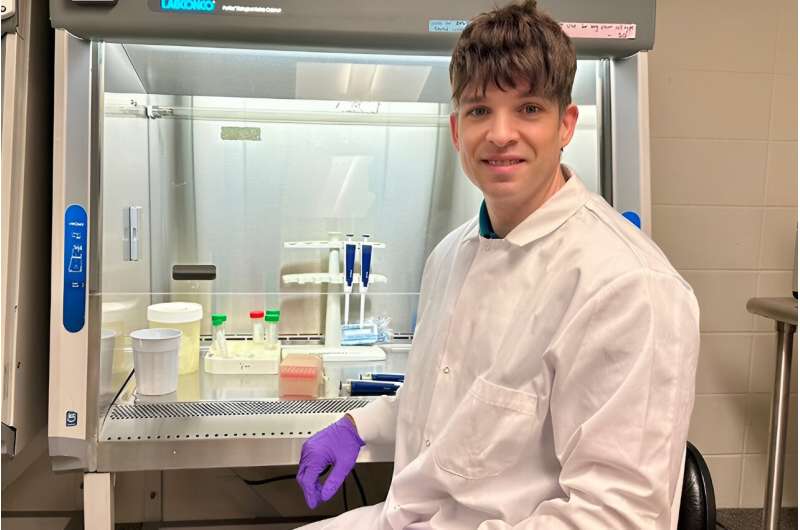
Sandro Matosevic, associate professor in the Department of Industrial and Molecular Pharmaceutics in Purdue's College of Pharmacy, leads a team of researchers that is developing a novel immunotherapy to be used against glioblastoma. Credit: Purdue University photo/Shambhavi Borde

Validation and next development steps

The research team tested its treatment by conducting animal studies with mice bearing human brain tumors, which were treated by direct injection of the newly engineered immune cells.

"Our preclinical studies showed these  to be particularly remarkable in targeting and completely eliminating the growth of the tumors," Matosevic said. "We found that we can engineer these cells at doses suitable for clinical use in humans.

"This is significant because one of the major hurdles to clinical translation of cell-based therapies to humans has been the poor expansion and lack of potency of cells that were sourced directly from patients. Using an off-the-shelf, fully synthetic approach breaks down significant barriers to the manufacturing of these cells."

Matosevic said the next step to develop the glioblastoma treatment is to conduct clinical trials to treat patients with brain tumors, including those that were not successfully eliminated by surgery.

"Our ultimate goal is to bring this  to patients with brain tumors," Matosevic said. "These patients urgently deserve better, and more effective, treatment options. We believe there is true potential for this therapy, and we have the motivation and capacity to bring it to the clinic.

"We are working with neurosurgical clinician collaborators to not only obtain funding, but also initiate clinical protocols," he added. "We are also open to and always seeking new collaborations and partnerships with those who have interest in supporting our mission to translate this therapy to the clinic, where it is needed the most."

Matosevic disclosed the innovative   to the Purdue Innovates Office of Technology Commercialization, which has applied for a patent from the U.S. Patent and Trademark Office to protect the intellectual property.

More information: Kyle B. Lupo et al, synNotch-programmed iPSC-derived NK cells usurp TIGIT and CD73 activities for glioblastoma therapy, Nature Communications (2024). DOI: 10.1038/s41467-024-46343-3


https://medicalxpress.com/news/2024-04-genetically-treatment-incurable-brain-tumors.html

AI no good at medical coding: Mount Sinai study

 State-of-the-art artificial intelligence systems known as large language models (LLMs) are poor medical coders, according to researchers at the Icahn School of Medicine at Mount Sinai. Their study, published in the April 19 online issue of NEJM AI, emphasizes the necessity for refinement and validation of these technologies before considering clinical implementation.

The study extracted a list of more than 27,000 unique diagnosis and procedure codes from 12 months of routine care in the Mount Sinai Health System, while excluding identifiable patient data. Using the description for each , the researchers prompted models from OpenAI, Google, and Meta to output the most accurate medical codes. The generated codes were compared with the original codes and errors were analyzed for any patterns.

The investigators reported that all of the studied large language models, including GPT-4, GPT-3.5, Gemini-pro, and Llama-2-70b, showed limited accuracy (below 50%) in reproducing the original medical codes, highlighting a significant gap in their usefulness for medical coding. GPT-4 demonstrated the best performance, with the highest exact match rates for ICD-9-CM (45.9%), ICD-10-CM (33.9%), and CPT codes (49.8%).

GPT-4 also produced the highest proportion of incorrectly generated codes that still conveyed the correct meaning. For example, when given the ICD-9-CM description "nodular prostate without urinary obstruction," GPT-4 generated a code for "nodular prostate," showcasing its comparatively nuanced understanding of medical terminology. However, even considering these technically correct codes, an unacceptably large number of errors remained.

The next best-performing , GPT-3.5, had the greatest tendency toward being vague. It had the highest proportion of incorrectly generated codes that were accurate but more general in nature compared to the precise codes. In this case, when provided with the ICD-9-CM description "unspecified adverse effect of anesthesia," GPT-3.5 generated a code for "other specified adverse effects, not elsewhere classified."

"Our findings underscore the critical need for rigorous evaluation and refinement before deploying AI technologies in sensitive operational areas like medical coding," says study corresponding author Ali Soroush, MD, MS, Assistant Professor of Data-Driven and Digital Medicine (D3M), and Medicine (Gastroenterology), at Icahn Mount Sinai.

"While AI holds great potential, it must be approached with caution and ongoing development to ensure its reliability and efficacy in health care."

One potential application for these models in the , say the investigators, is automating the assignment of medical codes for reimbursement and research purposes based on clinical text.

"Previous studies indicate that newer  struggle with numerical tasks. However, the extent of their accuracy in assigning medical codes from clinical text had not been thoroughly investigated across different models," says co-senior author Eyal Klang, MD, Director of the D3M's Generative AI Research Program.

"Therefore, our aim was to assess whether these models could effectively perform the fundamental task of matching a medical code to its corresponding official text description."

The study authors proposed that integrating LLMs with expert knowledge could automate medical code extraction, potentially enhancing billing accuracy and reducing administrative costs in health care.

"This study sheds light on the current capabilities and challenges of AI in health care, emphasizing the need for careful consideration and additional refinement prior to widespread adoption," says co-senior author Girish Nadkarni, MD, MPH, Irene and Dr. Arthur M. Fishberg Professor of Medicine at Icahn Mount Sinai, Director of The Charles Bronfman Institute of Personalized Medicine, and System Chief of D3M.

The researchers caution that the study's artificial task may not fully represent real-world scenarios where LLM performance could be worse.

Next, the research team plans to develop tailored LLM tools for accurate medical data extraction and billing code assignment, aiming to improve quality and efficiency in health care operations.

The study is titled "Generative Large Language Models are Poor Medical Coders: A Benchmarking Analysis of Medical Code Querying."

The remaining authors on the paper, all with Icahn Mount Sinai except where indicated, are: Benjamin S. Glicksberg, Ph.D.; Eyal Zimlichman, MD (Sheba Medical Center and Tel Aviv University, Israel); Yiftach Barash, (Tel Aviv University and Sheba Medical Center, Israel); Robert Freeman, RN, MSN, NE-BC; and Alexander W. Charney, MD, Ph.D.

More information: Ali Soroush et al, Large Language Models Are Poor Medical Coders — Benchmarking of Medical Code Querying, NEJM AI (2024). DOI: 10.1056/AIdbp2300040


https://medicalxpress.com/news/2024-04-ai-advancements-human-oversight-essential.html

Study identifies signs of repeated blast-related brain injury in active-duty US Special Operations Forces

 Repeated exposure to explosive blasts has the potential to cause brain injuries, but there is currently no diagnostic test for these injuries. In a study of 30 active-duty United States SOF personnel, researchers found that increased blast exposure was associated with structural, functional, and neuroimmune changes to the brain and a decline in health-related quality of life. The researchers are now designing a larger study to develop a diagnostic test for repeated blast brain injury

United States (US) Special Operations Forces (SOF) personnel are frequently exposed to explosive blasts during training and combat. However, the effects of repeated  on the brain health of SOF personnel are unclear, and there is currently no  that can detect brain injury caused by the cumulative effects of subconcussive blast exposure.

As a result, SOF personnel may experience cognitive, psychological and  for which the cause is never identified, and they may return to training or combat when their brains are vulnerable.

US Special Operations Command (USSOCOM) recognizes that the health and well-being of its elite SOF members is a critical element to develop and employ the world's finest warfighters. Because brain health is a key element to fielding a healthy force, USSOCOM willingly participated in this pilot study to help both the US Military and the medical community understand and identify signs related to repeated blast effects. Collectively, USSOCOM hopes that the impact of this study will benefit all US Military members with repeated blast exposure in the future.

To understand the effects of repeated blast exposure on SOF brain health and inform the development of a diagnostic test for repeated blast brain injury, a team at Massachusetts General Hospital, a founding member of the Mass General Brigham health care system, conducted the ReBlast study, a comprehensive, multimodal investigation of 30 active-duty US SOF. The University of South Florida, Institute of Applied Engineering coordinated and managed the study, which was supported by USSOCOM.

In a publication titled "Impact of Repeated Blast Exposure on Active-Duty United States Special Operations Forces," published in Proceedings of the National Academy of Sciences, the team reports that higher blast exposure was associated with structural, functional, and neuroimmune brain alterations and lower health-related quality of life.

The  imaging (MRI) and  (PET) findings converged at a region of the frontal lobe called the rostral anterior cingulate cortex (rACC), which is known to be a widely connected brain network hub that modulates cognition and emotion.

Three lines of evidence—structural MRI, functional MRI, and translocator protein PET—showed an association between cumulative blast exposure and changes in the rACC. Among all the findings, the association between cumulative blast exposure and structural MRI changes in the rACC was the most significant. These results suggest that the rACC may be particularly sensitive to blast waves that penetrate the openings in the skull behind the eyes.

Higher cumulative blast exposure was also associated with decreased health-related quality of life on self-reported questionnaires. However, blast exposure was not associated with changes in cognitive performance, post-traumatic stress disorder symptoms, or blood proteomics. No signs of blast-related brain injury were identified by conventional MRI scans.

Higher cumulative blast exposure was also associated with decreased health-related quality of life on self-reported questionnaires. However, blast exposure was not associated with changes in cognitive performance, post-traumatic stress disorder symptoms, or blood proteomics. No signs of blast-related brain injury were identified by conventional MRI scans.

Characteristics of study participants

SOF study participants represented all branches of the military and included both enlisted personnel and officers. On average, participants were 37 years old and had 17 years of military service. All participants had extensive combat exposure and reported levels of cumulative blast exposure at which individuals are likely to experience cognitive, physical or psychological symptoms. They also reported high levels of blunt impacts to the head, with half the cohort having more blows to the head than they could recall.

These blunt head impacts, as well as age and amount of combat exposure, were accounted for in statistical analyses that tested for associations between blast exposure and a broad spectrum of cognitive, physical symptom, psychological, neuroimaging and blood-based biomarkers.

"A key limitation of the study is that we were unable to measure the many additional exposures that SOF personnel experience during training and combat, such as inhalation of heavy metals, lack of oxygen during high-altitude jumping or deep-sea diving, and acceleration g-forces when flying in aircraft or traveling over waves at high speeds," explains Brian L. Edlow, MD, principal investigator of the study.

"As a result, the associations we observed between cumulative blast exposure and brain network disruption do not prove causation."

Dr. Edlow is co-director of Mass General Neuroscience, associate director of the Center for Neurotechnology and Neurorecovery (CNTR) at Mass General, an associate professor of Neurology at Harvard Medical School and a Chen Institute MGH Research Scholar 2023-2028.

"Future studies with more comprehensive and objective exposure measurements, larger sample sizes, and a longitudinal design are needed to definitively link blast exposure to the imaging biomarkers that we observed," adds Natalie Gilmore, Ph.D., first author of the study and a research fellow in the CNTR.

The researchers are now designing such a longitudinal study with the goal of developing a reliable diagnostic test for repeated blast brain injury. Although no specific blood-based biomarkers for brain injury were detected during the study, the researchers did find higher than expected levels of tau in the blood of study participants, a finding that could help in developing a portable diagnostic test.

"The availability of a reliable diagnostic test could improve Operators' quality of life by ensuring that they receive timely, targeted medical care for symptoms related to repeated blast brain injury," explains Yelena G. Bodien, Ph.D., co-senior author of the paper and an investigator in the CNTR.

"A diagnostic test could also be used to inform decisions by Commanders about the combat readiness of individual Operators."

"Ultimately, the goal of this research is to enhance the combat readiness, career longevity, and quality of life of the United States' most elite forces," Edlow says.

"These are American heroes who answered the call to serve after the terrorist attacks of September 11, 2001 and fought the most dangerous missions of the Global War on Terror for two decades. They deserve the best medical care, and while more research is needed, our results suggest that a diagnostic test for repeated blast  is within reach."

More information: Edlow, Brian L., Impact of repeated blast exposure on active-duty United States Special Operations Forces, Proceedings of the National Academy of Sciences (2024). DOI: 10.1073/pnas.2313568121doi.org/10.1073/pnas.2313568121


https://medicalxpress.com/news/2024-04-blast-brain-injury-duty-states.html

Bacteria in intestine that change in response to inflammation could impact immune system

 Gut bacteria have emerged as a focal point of scientific exploration, with their intricate roles in our metabolism, nutrition, and overall health coming into sharp focus. New research from the Technion—Israel Institute of Technology has made a discovery that could lead to a better understanding of and treatment for inflammatory bowel diseases (IBD) such as colitis and Crohn's disease. The research is published in the journal Cell Host & Microbe.

Over millions of years of coevolution with humans,  have become indispensable for our immune system's proper functioning. The gut is a constantly changing organ, undergoing structural, mechanical, and chemical alterations. Gut bacteria must adapt to this dynamic environment.

A major mechanism that enables such dynamic adaptation is their ability to undergo rapid genomic changes due to a trait known as plasticity—a facet that Professor Naama Geva-Zatorsky and her team in the Ruth and Bruce Rappaport Faculty of Medicine have been investigating together with their collaborators.

The study focused on species of the Bacteroidales order, some of the most abundant species in the human gut microbiome. While analyzing more than 2,000 healthy and sick individuals and conducting preclinical research in mice models, the Technion scientists identified distinct patterns of DNA inversions in health and disease. These reversible DNA inversions flip the orientation of key gene segments, switching ON and OFF production of molecules.

Interestingly, in Bacteroides fragilis, DNA inversions turned OFF the production of polysaccharide A, a molecule coating the bacteria that beneficially induces regulatory T cells—a specialized immune cell type that suppresses excessive inflammation and maintains gut homeostasis.

The likely culprit? Bacteriophages, or viruses that infect bacteria. Further examination of fecal samples from IBD patients revealed a striking pattern: the PSA promoter was predominantly in the OFF state, correlating with increased levels of B. fragilis-associated bacteriophages. Subsequent experiments with germ-free mice, colonized with B. fragilis in the presence of bacteriophages, highlighted a significant increase in B. fragilis with the OFF state and a notable reduction in populations of Treg cells.

Remarkably, the findings reveal an ingenious adaptation strategy used by gut microbes, allowing them to dynamically reprogram gene expression based on local conditions like inflammation or viral attacks. However, this biological shape-shifting may worsen disease by crippling production of molecules like PSA that regulate the immune system and attenuate gut inflammation.

"This research offers a critical insight into the intricate interactions between gut bacteria and the immune system in inflammatory bowel disease. Our explanation is that the same genomic flexibility that was developed through evolution provides the bacteria with functional plasticity, thereby helping them to adapt to intestinal disease," commented Prof. Geva-Zatorsky. "It opens doors for targeted interventions aimed at restoring the balance of gut microbiota in IBD patients."

The research team of this study included Shaqed Carasso, Rawan Zaatry, Haitham Hajjo, Dana Kadosh-Kariti, and Dr. Tal Gefen, and it was performed in collaboration with scientists from the U.S., Spain, and Israel: Dr. Michael Coyne, Prof. Laurie Comstock, Prof. Juan Joffre, Dr. Jeffrey Kate, Technion graduate Dr. Itai Sharon from the Migal Galilee Research Institute, and Prof. Yehuda Chowers and Dr. Sigal Pressman from the Rambam Medical Center.

More information: Shaqed Carasso et al, Inflammation and bacteriophages affect DNA inversion states and functionality of the gut microbiota, Cell Host & Microbe (2024). DOI: 10.1016/j.chom.2024.02.003


https://medicalxpress.com/news/2024-04-bacteria-intestine-response-inflammation-impact.html

Common antibiotic may be helpful in fighting respiratory viral infections

 A new, Yale-led study suggests that a range of respiratory viral infections—including COVID-19 and influenza—may be preventable or treatable with a generic antibiotic that is delivered to the nasal passageway.

A team led by Yale's Akiko Iwasaki and former Yale researcher Charles Dela Cruz successfully tested the effectiveness of neomycin, a common antibiotic, to prevent or treat respiratory viral infections in animal models when given to the animals via the nose. The team then found that the same nasal approach—this time applying the over-the-counter ointment Neosporin—also triggers a swift immune response by interferon-stimulated genes (ISGs) in the noses of healthy humans.

The findings were published in the journal Proceedings of the National Academy of Sciences.

"This is an exciting finding, that a cheap over-the-counter antibiotic ointment can stimulate the human body to activate an antiviral response," said Iwasaki, the Sterling Professor of Immunobiology and professor of dermatology at Yale School of Medicine and co-senior author of the new study.

"Our work supports both preventative and therapeutic actions of neomycin against viral diseases in animal models, and shows effective blocking of infection and transmission," said Iwasaki, who is also professor of molecular, cellular, and  in Yale's Faculty of Arts and Sciences, professor of epidemiology at Yale School of Public Health, and an investigator at the Howard Hughes Medical Institute.

Respiratory viruses affect millions of people each year. The global COVID-19 pandemic, caused by the coronavirus SARS-CoV-2, has led to 774.5 million cases worldwide as of February 2024, with global mortality of 6.9 million people. Influenza viruses account for up to 5 million cases of severe illness and 500,000 deaths annually worldwide.

Currently, most therapies used to fight respiratory viral infections—including antivirals, , and convalescent plasma therapy—are delivered intravenously or orally. They focus on stopping the progression of existing infections.

A nasal-centered therapy has a much better chance of stopping infections before they can spread to the  and cause severe diseases, the researchers said.

"This collaborative multi-disciplinary work combined important insights from animal pulmonary  modeling experiments with human study evaluation of this intranasal approach to stimulate antiviral immunity," said Dela Cruz, former associate professor of pulmonary, , and sleep medicine, and of microbial pathogenesis at Yale School of Medicine and former director of the Center for Pulmonary Infection Research and Treatment. Dela Cruz is currently at the University of Pittsburgh.

In their study, the researchers found that mice treated intranasally with neomycin showed a robust ISG line of defense against both SARS-CoV-2 and a highly virulent strain of influenza A virus. The researchers also found that an intranasal treatment of neomycin strongly mitigated contact transmission of SARS-CoV-2 in hamsters.

In healthy humans, intranasal application of Neosporin (containing neomycin) also initiated a strong expression of ISGs in a subset of volunteers, the researchers said.

"Our findings suggest that we might be able to optimize this cheap and generic antibiotic to prevent viral diseases and their spread in human populations, especially in global communities with limited resources," Iwasaki said. "This approach, because it is host-directed, should work no matter what the virus is."

The co-first authors of the new study, all from Yale, are Tianyang Mao, Jooyoung Kim, and Mario Peña-Hernández.

More information: Tianyang Mao et al, Intranasal neomycin evokes broad-spectrum antiviral immunity in the upper respiratory tract, Proceedings of the National Academy of Sciences (2024). DOI: 10.1073/pnas.2319566121


https://medicalxpress.com/news/2024-04-common-antibiotic-respiratory-viral-infections.html

If You’re A Criminal, This Is the County To Avoid

 by John Haughey via The Epoch Times (emphasis ours),

Across a six-decade career, beginning as a 16-year-old ambulance driver to his ascension as America’s most renowned lawman, Grady Judd has made one thing clear.

He’s that guy, that old-school sheriff whose tough-talking press conferences garner national attention, but he’s also a lifelong student of integrating new-school techniques with emerging technologies, a pioneering innovator in administration, and a conscientious mentor who lives as he leads.

And so, on this April afternoon, Mr. Judd, 70, is looking back on 54 years in public service by doing what he’s always done, looking forward.

He’s prioritizing goals for his sixth term as sheriff of Polk County, a 2,000-square-mile sprawl of Central Florida sawgrass savannah between Orlando and Tampa that’s doubled in population in a decade.

His new term officially begins in January but it actually began the February day he filed to run, instantly clinching his third-straight unopposed re-election.

There’s plenty of time to talk about the past but, right now, he told The Epoch Times, “There’s plenty of work to do over the next four years in keeping crime down.”

Mr. Judd said the 1,800-employee Polk County Sheriff’s Office (PCSO), which includes 1,100 deputies, 1,330 vehicles, and a 2,500-bed jail with a $236 million budget, will be busy doing just that every day, all day, while taking on two initiatives.

He is launching a program to help keep the mentally ill out of jail, a chronic national urgency that defies easy solutions, while training a unit to combat the next great global crime challenge: artificial intelligence (AI).

Right now, AI is capable of emulating voices. Right? So we’re going to have to protect the community from false AI allegations and keep evil parasites from attacking us from within as well as internationally,” he said, noting it’s the first such unit created by a local law enforcement agency in the United States.

A pressing focus everywhere, he said, is to “reduce the need” for first-responders to be roadside therapists in protecting the mentally ill from themselves and others, and to find alternatives to using jails as primary—and often only—sources of medication for many with mental health issues.

As a newly-minted deputy in 1974, he recalls, those arrested exhibiting mental problems were housed in a regional hospital where inmate patients were treated.

“Fast-forward to today” and his deputies don’t have that option, Mr. Judd said.

“The state and federal government did away with mental hospitals. So where did those mentally ill end up? They ended up in prison, in county jail lockups. They ended up underneath overpasses, sleeping behind buildings, out in the woods.”

Prisoners fill out paperwork before receiving a COVID-19 vaccination in Cleveland, Miss., on April 28, 2021. (Spencer Platt/Getty Images)

Institutional options narrowed as pharmaceutical solutions expanded, he said. Advocates for the mentally ill argued, “They have a constitutional right not to be incarcerated’ and, ‘Oh, we have these new medicines. They just have to take the medicines.’”

Good concept, Mr. Judd said, bad plan.

Where do we find them to give them their medicines? And, oh, you’re not going to provide medicines? How’re they going to afford it? It’s very expensive” especially for mentally ill people living “out in the woods,” he said.

So he has a plan—and $1 million in seed money from Polk County commissioners to provide court-mandated medications for itinerant offenders.

We’re in the infant stages of that. We’ve gotten total cooperation from everyone,” Mr. Judd said of a coalescing coalition that includes providers, the courts, state attorney’s office, public defenders, and advocates for the mentally ill. “That’s pretty remarkable that everybody says, ‘Yes, let’s do this.’ It’s a win-win for everyone.”

In an age of polarity, a “win-win for everyone” is a rare air that Grady Judd exudes.

He’s doing what he’s wanted to do since he was 4, what he believes God put him here to do, to protect the place where he was born, raised, and lived his whole life, where he married his high school sweetheart and raised two sons, where he pioneered crime-fighting tactics in a changing world while never wavering from fundamental truths such as right from wrong, good from bad.

In exchange, Polk County got the right sheriff at the right time, a leader to meet the challenges posed by growth as it evolved into an urbanizing I-4 corridor where 100,000 new people have arrived each of the last three years.

And yet, unincorporated Polk County’s 2023 crime rate of 1.06—one per 100 residents—is less than half the state’s rate and lowest since the metric was created in 1971, lower than when it had three times fewer people and 88 percent less than when it had half as many people.

A “win-win” for all—except criminals.

“I’m blessed to live God’s mission for me,” Mr. Judd said. ”All I’ve ever wanted to be was sheriff—the sheriff of Polk County.”

Sheriff-in-Waiting

Raised in a Lakeland subdivision of cinder block homes without air conditioning, Mr. Judd shows office visitors a black-and-white 1954 photo of him sitting on an uncle’s lap. His uncle was White County, Tenn., Sheriff Joe McCoy, but it was Grady Judd wearing the sheriff’s star.

Polk County Sheriff Grady Judd at the agency's emergency communications center in Winter Haven, Fla., on April 2, 2024. The sheriff will begin serving his sixth term in 2025. (Edward Linsmier for The Epoch Times)

He was the cop when playing ‘cops and robbers’ with childhood friends, grew up watching TV shows such as ‘Dragnet’ and ‘The Andy Griffith Show,’ and was scanning police radio frequencies and mastering codes at 12.

As he told The Epoch Times in November 2023, his father, a Cadillac dealership service-manager, was a church deacon. “I was raised in the church,” he said. “We were sometimes the first to arrive and the last to leave.”

Faith, his “guiding light,” compelled him to be a relentless teenager in informing the sheriffs office he’d be joining them soon and someday be the boss.

As a high school junior in 1970, he was hired as a $1.65-an-hour ambulance attendant in Winter Haven. He helped deliver a baby at 16 and at 17, convinced the notoriously recalcitrant musician George Jones, in a drunken rage, to get into his ambulance, later admitting he had no idea who the world-famous country star was.

After going to high school by day, finishing his ambulance shift at night, Mr. Judd hung out at the sheriff’s office, effectively forcing them to hire him two months after graduation as a dispatcher despite a minimum-age requirement of 21.

He remembers July 21, 1972, a humid, storm-stirred Friday night, his first shift at Bartow’s Hall of Justice, which “housed the entire justice system” and “one teletype computer.”

Richard Nixon was president, Reuben Askew was governor of Florida, gas was 34 cents a gallon, ‘The Godfather’ was a box office hit, Bill Withers’ ‘Lean On Me’ topped the charts.

Two months later, Mr. Judd married his fiancé, Marisa, also 18 and also newly hired at a municipal finance department. They lived on combined salaries of $550 a month. They’ve been together since.

When legislators waived the 21-year-old requirement to be a law enforcement officer. Mr. Judd convinced Sheriff Brannen—the icon of his youth—to send him to the state’s police academy. Just before he turned 20, he was sworn in as the first-ever PCSO deputy under 21.

He hit the road as a 19-year-old deputy in February 1974 in a green-and-white Ford Galaxy and a pistol his father had to buy because state law precluded him from doing so. Nevertheless, as Mr. Judd says, “The rest is history.”

https://www.zerohedge.com/political/if-youre-criminal-county-avoid