Search This Blog

Saturday, March 1, 2025

Why Arab Countries Do Not Want Gazans

 For decades, Arab nations have positioned themselves as staunch supporters of the Palestinian cause, yet their actions suggest otherwise.  Although they publicly denounce Israel and advocate for Palestinian rights, behind closed doors, many Arab leaders have systematically worked to prevent a permanent resolution to the Palestinian issue.  Nowhere is this hypocrisy more evident than in the refusal of most Arab states — particularly Jordan — to integrate Palestinians, despite historical, demographic, and geopolitical realities that make Jordan the most viable Palestinian homeland.

Jordan is historically part of Palestine, with the majority of its population being Palestinian.  Given these facts, Jordan should logically serve as the natural homeland for displaced Palestinians rather than advocating for a separate Palestinian state in the West Bank or Gaza.  However, the Hashemite monarchy, which has ruled Jordan since its creation as a British protectorate, actively disenfranchises Palestinian Jordanians, maintaining them in a second-class status while simultaneously portraying itself as a champion of Palestinian rights.

Western policymakers often justify Jordan’s treatment of Palestinians by referencing the events of 1970, when King Hussein used the Pakistani army to crush an attempted PLO takeover.  However, declassified White House documents suggest a different perspective.  Then–U.S. secretary of State Henry Kissinger viewed the idea of Palestinian self-rule in Jordan as the chance for a solution to the Palestinian question.  In a White House memo to President Nixon, Kissinger argued that a Palestinian-led government in Jordan could provide “a Palestinian settlement.”

Nixon did not support the concept.  This allowed King Hussein to enlist the support of Pakistan, which sent troops to Jordan and swiftly suppressed the Palestinians, killing thousands of civilians.  With that, the prospect of a Palestinian state in Jordan was extinguished, paving the way for decades of failed peace initiatives based on the so-called two-state solution.

Fast-forward to today, and Jordan’s King Abdullah himself is in an alliance with Iran — yes, Iran.  Unlike other Arab leaders who maintain a distance from Tehran, Abdullah has openly courted the Iranian regime, even going so far as to feature a photograph with Iran’s supreme leader in his memoir Our Last Best Chance.  This relationship has been extensively documented, including by Israeli journalist Edy Cohen, who wrote in The Jerusalem Post, “It’s official: Jordan is now allies with Iran.”

Beyond Iran, Abdullah has also strengthened economic ties with China, Iran’s primary military and political backer.  Instead of accepting discounted Israeli liquid natural gas, he chose to take a significant loan from China to build a power station, which trapped Jordan in billions of dollars of debt to China.

Also, Abduallah is in full alliance with the radical Muslim Brotherhood in Jordan, which he uses for leverage against the disgruntled Palestinian majority.  Simply put, whenever the oppressed Palestinian majority requests basic civil rights, the Jordanian Bedouin-dominated Muslim Brotherhood group launches demonstrations requesting “the right of return to Palestine” to remind Jordan’s Palestinians that “they are mere refugees in Jordan despite being citizens” and hence “should have no rights here.”

This may explain why Abduallah, like most Arab rulers, is keen to sustain the Palestinian issue rather than resolve it.  By keeping Palestinians in a stateless limbo, Abdullah and other Arab leaders maintain a useful political tool for extracting foreign aid and exerting leverage over the West.

The manipulation of the Palestinian-Israeli conflict is not unique to Jordan.  With the exception of Saudi Arabia, nearly every Arab state has benefited from prolonging the conflict.  The Palestinian issue has become a convenient pretext for securing foreign aid, suppressing internal dissent, and leveraging influence in Washington.  Though publicly condemning Israel, many of these regimes have secretly collaborated with Israel on security matters while ensuring that Palestinians remain in permanent refugee status to serve as a bargaining chip.

Contrary to what the so-called “Middle East experts” claim, Arab states’ reluctance to integrate Palestinians has little to do with Palestinians being perceived as “troublemakers.”  The real reason is far more calculated: Arab regimes do not want the Palestinian issue resolved, because doing so would strip them of one of their most potent political weapons.

As a Jordanian of Palestinian heritage, I have often heard Palestinians referred to as “the Jews of the Arabs.”  This phrase, though controversial, reflects an important truth: Palestinians, like Jews, have historically excelled in fields such as education, medicine, and business, often outperforming their Arab counterparts.

Palestinians have played a crucial role in building the Gulf states.  In Qatar and Kuwait, they established the education, health care, and military systems.  The first two Kuwaiti fighter pilots were two Palestinian brothers from the Shaheen family in Hebron.  In the United Arab Emirates, the two key advisers to the president are Mohammad Dahlan and Zaki Nusseibeh, both Palestinian.  Even in Jordan, Palestinians transformed a barren desert into one of the most developed Arab countries, despite facing a ghoulish Apartheid system imposed by the Hashemite monarchy.

At the same time, Palestinian political leadership has made grave miscalculations.  The PLO’s occupation of Lebanon in the 1970s resulted in the destruction of the country’s social fabric.  As of today, Lebanon has not recovered from the destruction the PLO brought it.  In addition, in 1990, both Yasser Arafat and King Hussein backed Saddam Hussein’s invasion of Kuwait, a decision that led to the mass expulsion of Palestinians from the Gulf.  Although Palestinians’ resilience is undeniable, poor political leadership has contributed to their ongoing statelessness.

Nonetheless, the Palestinians and their cause have become the scapegoat for Arab regimes.  When Saddam’s hubris resulted in sanctions that lasted for 13 years and improved the Iraqi people, he kept claiming that it was “Zionist revenge” because “Iraq supported Palestine.”  Saddam even invented the slogan “Iraq and Palestine are the same case.”  Today, Jordan’s king is claiming he would not allow the Palestinians to have their civil rights in Jordan and that he is there to “protect the Palestinian cause,” “save Jerusalem,” and “prevent the expulsion of Palestinians from Palestine.”

Abdullah claims that he is protecting Palestinians by denying them full civil rights in Jordan.  He insists that granting Palestinians citizenship would undermine their “right of return” to Israel and weaken the Palestinian cause.  In reality, this is a cynical ploy to maintain his grip on power.

The Hashemite monarchy faces mounting discontent from both Jordanian Bedouins and Palestinians.  By keeping Palestinians in a stateless condition, Abdullah aims to redirect public frustration toward Israel instead of himself while portraying himself as the defender of Palestinian rights.

But imagine a different scenario: Imagine Palestinians being fully integrated into Jordan as citizens, free to build businesses, serve in government, and contribute to their country without being labeled “refugees.”

Imagine Palestinian refugees in Lebanon and Syria finally having a homeland where they can exercise their right of return — not to Israel, but to Jordan, where they have historical roots.

Imagine the Palestinian cause ending because Palestinians finally have a state of their own.

This is precisely what Arab regimes fear.

After the devastation of October 7, most Gazans despise Hamas and want to flee.  Hamas has exploited civilians, hoarded aid, and used human shields, making life in Gaza unbearable.  But where can they go?  Egypt, with its struggling economy, is not a viable option.  Jordan, on the other hand, shares a common culture and language along with economic ties with Gazans.  It is the most logical destination.

President Trump’s plan to relocate Palestinians to Jordan was the closest the world has come to a real solution.  Unlike the failed two-state approach, which has only prolonged conflict, Trump’s plan has reminded the world and the Arabs that Jordan is the true Palestinian homeland.

Further, if the world is serious about ending Palestinian suffering, it must hold Arab rulers accountable for deliberately sustaining the conflict.  For decades, these leaders have fueled the war, exploited Palestinians for political gain, and refused to integrate them into their societies.  The United States and its allies must demand that Jordan and other Arab states take political and fiscal Arab responsibility for settling the conflict.  They have paid billions for the conflict; it is time they do the same to establish peace.  It is time to build a New Jordan — a secular, Muslim Brotherhood–free democratic Palestinian state that offers a real future for its people.

Any other “fixes” have been already tried, and the results have been disastrous.  It’s time for reality to take effect.

Mudar Zahran is a Jordanian Palestinian politician living in exile.  He heads the Jordanian Opposition Coalition.  He previously served as an economic specialist and assistant policy coordinator for the U.S. embassy in Amman.

https://www.americanthinker.com/articles/2025/03/why_arab_countries_do_not_want_gazans.html

Coal’s Four-Year Lows Hide a Coming Global Supply Squeeze


  • Benchmark price is at lowest since 2021, close to $100 a ton
  • New mines held back by financing curbs, stranded asset concern

Languishing global prices today mask a very different future for the world’s most-consumed source of power.

Australian thermal coal contracts, the benchmark for Asia, are hovering close to $100 a ton thanks to a mild winter and global oversupply, a price level last seen in May 2021, before the energy-market upheaval that followed Russia’s invasion of Ukraine. While that is battering producers and will cheer those predicting the end of the dirtiest fossil fuel, it’s a trough that may not last.

https://www.bloomberg.com/news/articles/2025-03-01/coal-s-four-year-lows-hide-a-coming-global-supply-squeeze

The Kennedy Effect on Food

 by Jennifer Galardi

It’s been just over two weeks since Robert F. Kennedy Jr. took the helm at the Department of Health and Human Services (HHS), and already some companies are adopting policy recommendations aligned with the MAHA agenda.

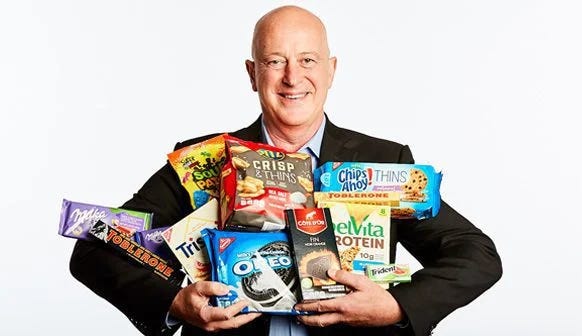
In what might be the biggest shift yet, the CEO of Chicago-based Mondelez International, Dirk van de Put, announced the food conglomerate would begin to use European recipes for its U.S. based products. Mondelez is one of the largest snack companies in the world,producing popular brands such as Clif, Triscuit and Ritz, Philly Cream Cheese, and OREO. Also in the company’s portfolio: healthier snacks such as Hu chocolate and Perfect Snacks.

According to a report in Reuters, because Mondelez does business in both the U.S. and Europe, van de Put said it would be "relatively straightforward" for it to adapt its recipes.

"It's work that needs to be done," said the CEO, but he also stated that such work would also result in cost increases for consumers. It's not an easy time to raise prices, Van de Put acknowledged, "so I do expect it will take us a few years to work our way through this."

Recipe changes won’t be the only reason for price hikes. An increase in the cost of eggs, cocoa, and coffee will also cause inflation at grocery stores. Van de Put expects chocolate to be 30% to 50% more expensive than it used to be due to a supply crisis in Africa. Mondelez manufactures Cadbury and Milka chocolates.

Historically, processed foods have been cheaper and easier to access than whole, fresh foods such as meat, fruits, and vegetables. This is often an argument used by those who contest that healthy dietary changes are unattainable for lower income individuals and families, and that only affluent people can afford to eat healthy. This is only true because processed foods are made less expensive through the subsidization of crops used in junk food such as wheat, corn and its byproducts (corn syrup), and soy. Because processed food must undergo several steps between harvest, processing, and packaging, it is actually more time and energy intensive.

The cost hurdle can be overcome if incentives are restructured to make fresh foods less expensive by supporting and encouraging farmers to engage in practices that support polyculture which mimics the diversity found in natural ecosystems.

Consumers Demand Better

While the new MAHA ethos is putting pressure on food companies to remove seed oils (Sweetgreens, the popular health conscious salad chain, removed the products from its menu all the way back in the Fall of 2023), consumers are also turning up the heat on manufacturers for deceptive advertising.

A nationwide class action $10 million lawsuit was filed last week in San Francisco federal court against Mondelez International, accusing the company of deceptively labeling the crackers as "100% Whole Grain," though they contained corn starch, a refined grain. According to the October 2022 complaint, whole grains are healthier than refined grains, and Wheat Thins purchasers would not have bought or would have paid less for the crackers had they known Mondelez's labels were false.

In addition to monetary compensation, Mondelez also agreed not to use "100% Whole Grain" on Wheat Thins packaging without qualifying that language.

Lawsuits like this prove there is an appetite for real change within the food industry. Back in October, Vani Harari, aka “The Food Babe,” led a group of activists in front of Kellogg’s in Battle Creek, MI to protest the use of artificial dyes in food. Harari delivered a petition with over 400,000 signatures to support the protest and appeared on Good Morning America, reaching millionsMany of the ingredients in Kellogg’s cereal have been shown to have harmful health effects, particularly in children.

Early this year, on January 16, the U.S. Food and Drug Administration (FDA) banned Red Dye 03.The ban applies to foods, beverages, oral drugs, and dietary supplements. Although cancer concerns were cited as the primary rationale for removing Red Dye 03, no doubt public pressure and President’s support for Kennedy’s MAHA movement, contributed to the swift decision. Manufacturers have until January 2027 to remove the dye from food products, and makers of ingested drugs like cough syrup have until January 2028.

According to Center for Science in the Public Interest, a watchdog and consumer advocacy group that calls for safer and healthier foods, dozens of large food manufacturers, restaurant chains, and retailers have pledged to remove ingredients like artificial colors and flavors from their products over the past decade. But, many of these companies have gone back on or have not yet met their promises. In some cases, the corporations have removed color additives in other countries but blame American consumers for the decision to break their commitments here in the U.S. , contesting that they prefer the way food looks with unnatural dyes.

However, in the past year, Kennedy and the MAHA movement have generated more awareness around food than any other health movement in history. Thousands of concerned citizens, particularly mothers, have been mobilized to begin putting pressure on both food companies and lawmakers to change U.S. food policy to benefit all Americans, not just those who can afford to make healthier choices.

For food activists, it’s only the beginning.

https://thekennedybeacon.substack.com/p/hhs-secretary-kennedys-effect-on

The Turnaround

 by Robert Gore via StraightLineLogic.com,

The best way to understand Trump is also the simplest: he’s a businessman. From that perspective, little of what he’s doing is as inexplicable or surprising as many make it out to be. The inexplicability arises from general ignorance of business. Most Americans have little knowledge or understanding of how private American businesses work, although they generates the majority of the U.S.’s $29 trillion GDP and employ many of them.

Trump is now CEO of the federal government. That enterprise has over $36 trillion in direct liabilities and unfunded liabilities in the hundreds of trillions. Its cost of credit is rising and debt service is taking an ever-expanding share of its revenues. Self evidently, it cannot continue on its present course.

The common element of successful business turnarounds is that they don’t emerge from slow, incremental changes from within the system. Somebody comes in and administers shock therapy. Turnaround artists are never popular. Lots of people are fired, unprofitable operations discarded, finances tightened, business philosophies rethought, and the company’s direction radically reset. Because the company’s situation is dire, this all has to be done quickly, with shareholders howling and creditors pounding at the door.

It begins with the numbers. In failing enterprises, they often reek of falsification, self-dealing, and corruption. You analyze the numbers and you keep asking questions until you uncover the real answers. What Musk and DOGE are doing would be standard operating procedure in a comparable business situation; indeed Musk did the same thing when he took over Twitter. Applied to government, it’s considered revolutionary, but how many politicians or bureaucrats have ever run a business?

That the Department of Defense has never passed an audit and the Federal Reserve tenaciously resists one tells you all you need to know about the government’s numbers. Finding the “anomalies” is like shooting fish in a barrel. Resolving them invariably uncovers sordid secrets. Secrecy is the decaying dreck that feeds swamp corruption. Publicly, swamp creatures are screaming about “democracy” and DOGE access to the government’s sacred information. Privately, they’re checking into overseas bank accounts, defense attorneys, and realtors while updating their LinkedIn profiles.

There are valid security, cybersecurity, and legal, even Constitutional, concerns about the way DOGE is operating that would not be present in a business situation. DOGE’s victims can be counted on to litigate these issues and courts may well impose restrictions. There will also be pushback from within the bureaucracy, even from Trump appointees. Kash Patel has already told FBI employees not to file Musk’s what-I-did-last-week emails. Courts and pushback could derail the project, in which case, revolution would be the only avenue left to defeat the Blob.

At Twitter, Musk fired 80 percent of the workforce, reflecting business wisdom that 20 percent of any workforce does 80 percent of the work. For government, those figures should be revised to 10 and 90. However, is any of the work useful? It’s often counterproductive, producing results contrary to its stated purpose. Government-declared wars on poverty, drugs, and terror produced more impoverishment, drug-addiction, and terrorists, wasting billions. Those “war fighting” agencies and many others should be terminated.

Trump has decided that Operation Ukraine must be terminated. The sunk cost fallacy—throwing good money after bad—has cost the U.S. government trillions, particularly in its military endeavors. The fallacy justifies future spending, and in the case of the military, more destruction and death, on a failing project (like Afghanistan) by citing money already spent and lives already lost—sunk costs. Those costs are irrelevant in deciding whether to continue a project; only the probability of future success matters.

Businesspeople who throw good money after bad go bankrupt. They don’t have fiat money or tax dollars to perpetuate their mistakes. Trump’s not going to throw more money down the Ukrainian rathole. He’s talking about cutting the military budget in half, and the only way to do that is to forego these forever fiascos. The money already spent on Ukraine cries out for an illuminating line-by-line audit. If it happens, watch the cockroaches scatter, including the Bidens and the Clintons.

It appears that Trump and team have decided that unipolarity—the foreign affairs equivalent of monopoly—must give way to multipolarity—the foreign affairs equivalent of oligopoly. As a businessman, Trump undoubtedly prefers monopoly, but reality requires recognition of competitors who are too big to eliminate.

Trump now acknowledges Russia as a peer oligopolist, and obviously, so, too, is China (see “Russia and China Are Facts of Life,” SLL, 1/28/25). It’s always a risk trying to guess Trump’s thinking. However, he apparently wants to settle the ugly Ukraine business quickly and get on with the three-party oligopoly in which the oligopolists sometimes cooperate and sometimes compete—hopefully economically and diplomatically, not militarily. Blood, as businessman Virgil Sollozzo noted in The Godfather, is a big expense. Oligopoly may well have been Trump’s thinking back in his first term (see “The Eagle, the Dragon, and the Bear,” SLL, 6/21/18). However, the Russiagate hoax prevented him from even making overtures in that direction.

Everyone else, including Europe, will be second- or third-tier, although jockeying for markets and securing favorable arrangements for extracting resources will be important aspects of oligopolistic competition. Like many oligopolies, there will be a territorial dimension. Without admitting it, Trump will cede Eurasia to China and Russia while shoring up the U.S. base in North and South America. That may be the thinking behind Trump’s rhetoric concerning Greenland, Canada, and the Panama Canal. Africa and the poles will be open territory over which the oligopolists will compete.

The Middle East and Israel have bedeviled presidents since Truman. If it had no oil, the Middle East would be a desert backwater, an oxymoron. The U.S. has plenty of oil and natural gas. It could buy Middle East oil when prices were favorable and otherwise stay out of the region. However, there is the relationship with Israel, which gets far more from it than the U.S. That’s intolerable from a business perspective, but it’s a political necessity for Trump. The relationship could destroy Trump’s presidency if the two countries wage war on Iran. Given Iran’s ties with Russia and China, such a war could escalate to World War III.

While Trump’s business perspective brings fresh thinking and some honesty to government, there are times when it’s grossly inappropriate. Since 1948, Palestinians have been squeezed into ever-smaller areas in the land formerly known as Palestine, and it’s clear that Netanyahu and Trump want them completely evicted. Getting rid of them and turning Gaza into a luxury beach resort may have a cold-blooded business logic to it, but it’s a patently unjust solution for the Palestinian “problem.” The Trump Gaza video recently released on Truth Social is beyond grotesque.

Back at home, Trump and many Americans understand that the U.S. government is a rathole. Indeed, it’s been common knowledge since Roosevelt’s New Deal, which turned a recession into a Great Depression on the moronic mantras that government bureaucrats are omniscient and government spending is the key to prosperity. Unfortunately, the average American has no power to force the government to disclose information or change its ways. Turnarounds are top-down affairs, which is why so much hope rests on Trump, Musk, and DOGE.

You can’t cut costs to prosperity; successful turnarounds require new revenues. In the case of a government turnaround that doesn’t mean government finds new ways to soak the productive private economy. It means government gets out of the way and lets entrepreneurs, capitalism, and markets do their revenue- and wealth-generating thing. Laws, regulations, and bureaucratic extortion are barnacles encrusting the U.S.S. Economy, stopping it dead in the water. Neither inflation-adjusted private-sector incomes nor the real economy have grown in years. (The public sector has made out nicely, though.)

If Trump and Musk fire government employees, but thousands of laws and regulations aren’t blowtorched, their efforts will come to naught. Legislation drafted by the ignorant stifles industries they don’t understand. Many businesspeople have to “politely” explain to regulators the business they presume to regulate.

That their taxes pay the salaries of these parasites, often with additional “taxes” levied under the table, compounds the absurd injustice. Large, connected, crony-socialistic enterprises can absorb the costs, gaming the system to subsidize themselves and stifle the competition. Ultimately, it’s the much-heralded but much-abused entrepreneurs and small businesses who are crushed. Europe has snuffed out its innovation and economic dynamism almost entirely. The U.S. is well down the same path.

Unfortunately, Trump wants the government to “help” business instead of simply getting out of its way. Business will supposedly thrive behind tariff walls, but its going to be the large, crony-socialistic enterprises that benefit. Trump’s Stargate project will throw half a trillion dollars at well-heeled Silicon Valley outfits to develop AI. China’s DeepSeek and Musk’s latest iteration of Grok has made Stargate obsolete before it spends its first dollar. The one thing Trump and team can do that will help all business is slash spending, reducing the government’s drain on the economy and the national debt’s upward pressure on interest rates.

Honest, successful businesspeople—and the U.S. still has plenty—must deal with reality. They have to produce a good or service at a cost less than what the market will pay for it. The miracle of profit propels production and progress. Yet, it’s the villain in the unreal worlds of government, academia, and mainstream media and entertainment, none of which would survive a day if somebody out there wasn’t generating profit. America is built on profit, not politics. General recognition of that fact would restore some sanity in what’s loftily called the “national discourse.”

The business of America has been and must be business. Trump can’t elucidate an Ayn Rand-type defense for the morality of free enterprise, production, and profit. However, he realizes that the productive element of society is supporting its own parasitic destroyers. Nor can he elucidate a John Quincy Adams-type defense of a foreign policy in which America minds its own business. However, he apparently recognizes that the empire cannot be sustained.

It remains to be seen if Trump and team can turn around America at home and abroad. They’re taking on a powerful Overclass that produces far less than it takes, destroys far more than it creates, and will fight tooth-and-nail to preserve its sinecures. One thing is clear. Without recognition of hard realities and a dramatic turnaround, America’s government will go the way of other failing enterprises that couldn’t change course, sooner rather than later.

https://www.zerohedge.com/geopolitical/turnaround