Search This Blog

Friday, March 7, 2025

US yanks first visa of foreign student linked to ‘Hamas-supporting disruptions’ on college campus

 The State Department has yanked the first visa of a foreign student linked to “Hamas-supporting disruptions” after President Trump vowed to crack down on those involved in anti-Israel protests on college campuses.

“We revoked the first visa of an alien who was previously cited for criminal behavior in connection with Hamas-supporting disruptions,” a State Department spokesperson said in a Thursday statement first obtained by Fox News.

“This individual was a university student. [Immigration and Customs Enforcement] will proceed with removing this person from the country.”

The State Department has revoked the first visa of a foreign student linked to “Hamas-supporting disruptions.”Michael Nagle

Neither the student’s name nor nationality was released due to “legal constraints.”

00:00
00:00

It also wasn’t immediately clear what college the student attended, or what type of protest they had been cited for participating in.

The move comes just days after Trump promised to halt all federal funds for any educational institution that allows “illegal protests” — and to unmask and even imprison agitators.

The commander-in-chief issued the warning as disruptive pro-Hamas demonstrations have rocked college campuses across the country.

His administration has also vowed to pull more than $50 million in government contracts from Columbia University due to the Ivy League school’s alleged inaction on clamping down on anti-Israel protests there.

Anti-Israel protesters swarm Harvard University on Oct. 14, 2023.AFP via Getty Images

Separately, it emerged Thursday that the State Department is reportedly planning to use artificial intelligence to spot Hamas-sympthazing foreigners in the US in a bid to revoke their visas.

The effort — dubbed “Catch and Revoke” — will see officials pore through social media accounts of foreign students on visas to assess whether there’s evidence of sympathies toward Hamas in the wake of the Oct. 7, 2023, terror attack, Axios reported.

“Those who support designated terrorist organizations, including Hamas, threaten our national security. The United States has zero tolerance for foreign visitors who support terrorists,” Secretary of State Marco Rubio declared Thursday.

Students at Princeton University hang pro-Palestinian signs around campus on April 25, 2024.Aristide Economopoulos

“Violators of US law — including international students — face visa denial or revocation, and deportation.”

The Post has reached out to the State Department.

https://nypost.com/2025/03/07/us-news/us-revokes-first-visa-of-foreign-student-linked-to-hamas-supporting-disruptions-on-college-campus/

Biogen, Eisai’s Leqembi Set Back Overseas as UK Denies Coverage, Australia Denies Approval


Days after suffering a rejection in Australia, the Alzheimer’s drug hit another roadblock in the U.K., which found the drug not cost-effective.

The U.K.’s National Institute for Health and Care Excellence on Thursday again denied to recommend Biogen and Eisai’s Alzheimer’s disease therapy Leqembi, noting that its clinical benefits do not justify its price tag.

Thursday’s draft guidance also covers Eli Lilly’s Kisunla, according to a press statement. The agency explained that after a re-evaluation of additional evidence, it “has confirmed that the medicines are not currently cost effective and the committee’s recommendation remains that they should not be provided on the [National Health Service (NHS)] at this time.”

The National Institute of Health Care and Excellence (NICE) also declined to recommend Leqembi for NHS coverage in August 2024, when the Medicines and Healthcare products Regulatory Agency (MHRA) granted Leqembi marketing approval in the U.K., similarly finding that the drug’s benefits were “too small to justify the cost.” NICE’s draft guidance will now undergo consultation with stakeholders and the agency will accept comments through March 27.

With this latest rebuff from NICE, Biogen and Eisai suffer another overseas setback for their Alzheimer’s disease therapy. Earlier this week, Australia’s health regulatory authority, the Therapeutic Goods Administration, refused to overturn a previous decision to deny marketing approval for Leqembi “on the basis that the demonstrated efficacy did not outweigh the safety risks” associated with its use.

Specifically, the agency said that while patients on Leqembi saw lower disease progression versus placebo, “this difference was not deemed significant enough to provide a meaningful clinical benefit.” Nor was it sufficient to justify the risk of “frequent occurrence of amyloid-related imaging abnormalities” related to Leqembi.

In a statement following Australia’s rejection, Eisai chief clinical officer Lynn Kramer said that the company is “extremely disappointed and surprised” by the verdict, particularly as “eleven countries and regions across the globe have granted marketing authorization” to Leqembi.

The pharma is currently “exploring options” for the drug in Australia, “including potentially seeking review by the Administrative Review Tribunal,” Kramer added.

Despite winning the FDA’s first traditional approval for an anti-amyloid Alzheimer’s therapy, Leqembi has suffered from a rough roll-out in the U.S. Sales have been underwhelming enough that Eisai in November 2024 lowered its full fiscal year 2024 projections for the asset down from $370 million to $280 million.

However, Eisai reported in its most recent quarterly report last month that uptake is picking up, driven by increased amyloid-beta PET testing and better provider education. Biogen, too, pointed to the growing sales of Leqembi and is now shifting its focus to establishing its “value proposition,” CEO Chris Viehbacher said during the company’s fourth-quarter report.

Recently, the European Union’s Committee for Medicinal Products for Human Use reiterated its positive opinion on Leqembi, recommending its use in all 27 member states plus Norway, Liechtenstein and Iceland. Leqembi’s application is moving on to the European Commission, which will have the final say over its approval.

https://www.biospace.com/policy/biogen-eisais-leqembi-suffers-overseas-setbacks-as-uk-denies-coverage-australia-denies-approval

J&J Axes Late-Stage Depression Trial After Underwhelming Efficacy


Analysts do not believe the Phase III stumble for aticaprant will derail J&J’s broader neuroscience strategy, particularly given its recent $14.6 billion acquisition of Intra-Cellular Therapeutics and the success of Spravato for treatment-resistant depression.

Johnson & Johnson’s neuro pipeline suffered a late-stage setback on Thursday after the pharma announced that it would discontinue the Phase III VENTURA program for its kappa opioid receptor blocker aticaprant in major depressive disorder.

The decision follows a disappointing late-stage readout that showed “insufficient efficacy” in VENTURA, according to the pharma’s announcement. J&J did not reveal specific data on Thursday, though it did reveal that no new safety signals were detected. Full findings and analyses from VENTURA will be presented at an upcoming medical congress.

Nevertheless, despite the Phase III failure in this indication, the pharma will stand by aticaprant, pointing to the “potential for this mechanism” in other therapeutic areas, according to its Thursday release. J&J will continue to “explore future development opportunities” for aticaprant in other indications.

Designed to be taken orally, aticaprant is a small-molecule inhibitor of the kappa opioid receptor (KOR), which plays a central function in modulating the reward and mood processes in the brain. Several studies have established KORs as promising targets for both addiction and depression. According to J&J’s pipeline page, it was only developing the drug candidate as an adjunctive therapy for major depressive disorder with anhedonia.

In a note to investors on Thursday evening, analysts at Guggenheim Partners called aticaprant’s stumble “disappointing,” however noting that “this outcome is not entirely surprising,” especially given the difficulty of developing therapies for depression, particularly by targeting the kappa opioid receptor.

In January, for instance, Neumora Therapeutics’ own kappa opioid receptor antagonist navacaprant also failed in its Phase III KOASTAL-1 study in major depressive disorder.

Still, Guggenheim doesn’t think VENTURA’s failure will derail J&J’s neuro portfolio, which it says “remains intact.”

“We believe JNJ’s broader neuroscience strategy remains on track, bolstered by Spravato’s recent milestone of surpassing $1 billion in annual sales,” the analysts wrote. The pharma’s $14.6 billion acquisition of Intra-Cellular Therapeutics—announced in January 2025 and expected to close in the second quarter—will also help beef up its neuro pipeline.

Aside from its sales milestone, Spravato, an esketamine nasal spray, also recently notched a regulatory win in January when the FDA cleared it as the first-ever monotherapy for treatment-resistant depression. The treatment can now be used without an oral agent in patients who have failed to respond to at least two lines of oral therapies.

https://www.biospace.com/drug-development/j-j-axes-late-stage-depression-trial-after-underwhelming-efficacy

AstraZeneca Builds Stomach Cancer Case for Imfinzi With Strong Phase III Data


Imfinzi is one of AstraZeneca’s key growth drivers for 2025, with potential approvals in stomach and bladder cancers. The PD-L1 blocker brought in over $4.7 billion in sales last year.

AstraZeneca’s PD-L1 blocker Imfinzi outperformed standard of care at boosting event-free survival in certain types of stomach cancer, according to a late-stage readout posted on Friday.

In the Phase III MATTERHORN trial, AstraZeneca enrolled nearly 950 patients who had stage II to IVA gastric and gastroesophageal junction (GEJ) cancers. For its active treatment, the pharma combined Imfinzi with a chemotherapy regimen called FLOT—the current standard of care in this indication, consisting of the drugs fluorouracil, leucovorin, oxaliplatin and docetaxel.

Patients in MATTERHORN were treated with neoadjuvant Imfinzi plus FLOT before surgery, followed by adjuvant Imfinzi and FLOT, then Imfinzi monotherapy. Meanwhile, patients in the control arm were given perioperative FLOT alone.

AstraZeneca did not provide specific data in its news release on Friday, with the company revealing only that the Imfinzi combo elicited a “statistically significant and clinically meaningful improvement” in event-free survival, the study’s primary outcome, as compared with FLOT.

Overall survival (OS), a key secondary endpoint, was immature at the time of the analysis, but nevertheless showed a “strong trend” in favor of the PD-L1 inhibitor, according to AstraZeneca. MATTERHORN is an ongoing study and will continue to follow patients to get a mature readout of OS.

As for safety, Imfinzi’s adverse event profile was consistent with what had been established in prior studies, with no new signals of concern.

Imfinzi is an intravenously administered IgG1 monoclonal antibody which binds the PD-L1 ligand and blocks its downstream signaling cascade. Since the biologic was first approved in 2017, it has become a cornerstone of AstraZeneca’s business, bringing in more than $4.7 billion last year.

In a company presentation last month, AstraZeneca named Imfinzi as one of its key growth drivers for 2025, particularly looking forward to potential approvals in bladder and gastrointestinal cancers “to unlock [its] next wave of growth.” MATTERHORN is one of three studies that could help the pharma achieve this goal—alongside the POTOMAC and VOLGA programs in bladder cancer.

In its press announcement on Friday, AstraZeneca said it plans on taking MATTERHORN’s findings to global regulatory authorities, positioning Imfinzi as a perioperative treatment option for gastric and GEJ cancers. The pharma will also present complete data and analyses of MATTERHORN at an upcoming medical meeting.

https://www.biospace.com/drug-development/astrazeneca-builds-stomach-cancer-case-for-imfinzi-with-strong-phase-iii-data

Indonesia issues local content certificates for Apple products, including iPhone 16

 Indonesia has issued local content certificates for Apple products, including the iPhone 16 phones, a spokesperson for its industry ministry said on Friday, adding the company cannot sell the phones pending further procedures.

https://money.usnews.com/investing/news/articles/2025-03-07/indonesia-issues-local-content-certificates-for-apple-products-including-iphone-16

France, Germany, & Poland Are Competing For Leadership Of Post-Conflict Europe

 by Andrew Korybko via substack,

French President Macron’s declaration on Wednesday that he’s flirting with extending his country’s nuclear umbrella over other continental allies shows that he’s throwing down the gauntlet to Germany and Poland for leadership of post-conflict Europe. Outgoing German Chancellor Scholz published an hegemonic manifesto in December 2022 that later took the form of what can be described as “Fortress Europe”, which refers to the German-led attempt to lead Europe’s containment of Russia.
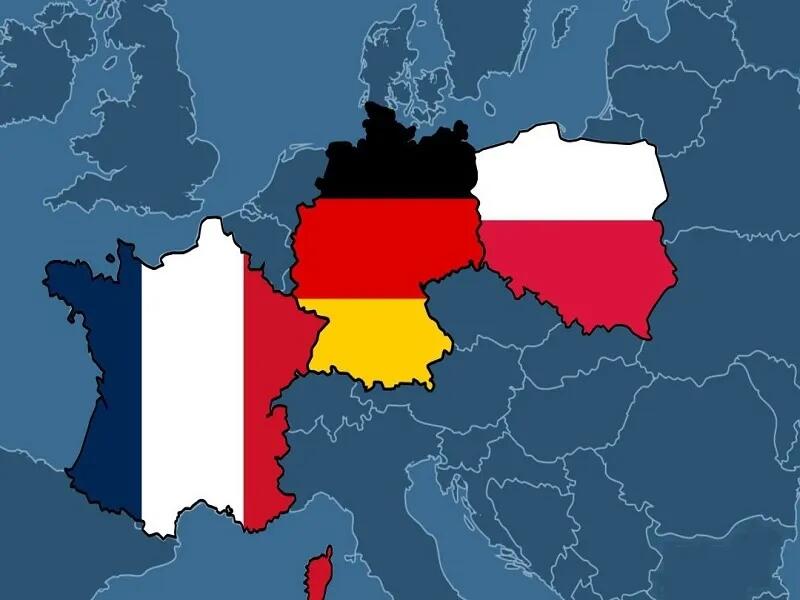
This concept requires Poland subordinating itself to Germany, which unfolded over the first half of last year but then slowed as the ruling liberal-globalist coalition started taking a more populist-nationalist approach towards Ukraine ahead of May’s presidential election. Even if this started off insincerely, it’s since assumed a life of its own and created a new dynamic in the latest circumstances brought about by Trump’s return whereby “Poland Is Once Again Poised To Become The US’ Top Partner In Europe”.

Poland’s economy is the largest of the EU’s eastern members, it now boasts NATO’s third-largest army, and it’s consistently sought to be the US’ most reliable ally, the last point of which works most in its favor amidst the transatlantic rift. If these trends remain on track, Poland could prevent France or Germany from leading post-conflict Europe by carving out a US-backed sphere of influence in Central Europe, but it would have a shot at leadership in its own right if conservatives or populists come to power.

The sequence of events that would have to unfold begins with either of them winning the presidency, and this either pushing the liberal-globalists more in their direction ahead of fall 2027’s parliamentary elections or early elections being held on whatever pretext and then won by conservatives or populists. Poland’s former conservative government was very imperfect, but their country served as a bastion of EuroRealists (usually described by the Mainstream Media as Euroskeptics) during those eight years.

Should it reassume that role upon the return of conservative rule in parliament, perhaps in a coalition with populists, then this would perfectly align with Trump’s vision and could result in Poland either leading similar domestic political processes across the continent or at least in its own region. Even if only the second-mentioned scenario materializes, it would most effectively prevent liberal-globalist France or Germany from leading Europe as a whole by bifurcating it into ideologically competing halves.

France’s nuclear weapons are the ace up its sleeve though that it might play for keeping some conservative/populist-inclined societies under liberal-globalist sway by extending its umbrella over those countries which fear that Russia will invade but that they’ll then be abandoned by the US. That might help reshape some of their voters’ views if they come to feel dependent on France and thus decide to show fealty to it by keeping their ideologically aligned governments in power instead of change them.

This doesn’t mean that France will succeed, but what was explained above accounts for Macron’s unprecedented proposal in the context of his country’s Great Power ambitions at this historic moment. A lot in this regard will likely depend on the outcome of Romania’s domestic political crisis, which readers can learn more about here, since the liberal-globalist coup against the populist-nationalist frontrunner in May’s election redux could further entrench French influence in this geostrategic frontline state.

Few are aware, but France already has hundreds of troops there, where it leads a NATO battlegroup. It also signed a defense pact with neighboring Moldova in March 2024, which could hypothetically include the deployment of troops to there too. France’s military presence in Southeastern Europe places it in a prime position for conventionally intervening in Ukraine if it so chooses, whether before or after the end of hostilities, and suggests that Macron will focus on this region for expanding French influence.

Should progress be made, then three other scenarios would be possible. 

  • The first is that Poland and France compete in Central Europe, with the first eventually extending its sway over the Baltics while the second does the same over Southeastern Europe (within which Moldova is included in this context due to its close ties with Romania), thus trifurcating Europe between them and Germany. In this scenario, Germany would also have some influence over each Central Europe region, but it wouldn’t predominate.

  • The second scenario is that Poland and France, which have been historical partners since the early 1800s, cooperate in Central Europe by informally dividing the Baltics and Southeastern Europe between them in order to asymmetrically bifurcate Europe into imperfectly German and Polish-Franco halves. The Polish part would either remain under partial US influence if Poland continues aligning with the US even under liberal-globalist rule or the liberal-globalists might pivot towards France and away from the US.

  • The final scenario is that all three employ their Weimar Triangle format to coordinate tripartite rule over Europe, but this is dependent on the liberal-globalists capturing the Polish presidency in May and then aligning with Berlin/Brussels over Washington. It’s therefore the least likely, especially since the liberal-globalists might pivot towards France instead of Germany/EU as a compromise between their ideological, electoral, and geopolitical interests ahead of fall 2027’s parliamentary elections.

Regardless of what ends up transpiring, the “military Schengen” that was pioneered between Germany, Poland, and the Netherlands last year and to which France expressed an intent to join will likely continue incorporating more EU members in order facilitate these three aspiring leaders’ interests. Germany needs this for its “Fortress Europe” plans, Poland needs its allies to swiftly come to its aid in a hypothetical war with Russia, while France needs this to entrench its influence in Southeastern Europe.

What’s ultimately being determined through the interplay of France, Germany, and Poland’s competing leadership plans for post-conflict Europe is the continent’s future security architecture, which will also be influenced to varying degrees by Russia and the US, be it jointly through their “New Détente” and/or independently. There are too many uncertainties at present to confidently predict what this emerging order will look like, but the dynamics described in this analysis account for the most likely scenarios.

https://www.zerohedge.com/geopolitical/france-germany-poland-are-competing-leadership-post-conflict-europe

Thursday, March 6, 2025

ARS Wins FDA Approval for Neffy Spray for Children in Anaphylaxis


Neffy 1 mg is the “first significant innovation” for epinephrine delivery in small children aged 4 years and up in over 35 years, according to ARS Pharmaceuticals.

The FDA gave the go-ahead to a 1-mg formulation of ARS Pharmaceuticals’ epinephrine nasal spray neffy, allowing its use to treat type I allergic reactions, including anaphylaxis, in small children.

Specifically, a 1-mg dose of neffy can now be given to pediatric patients aged 4 years and older who weigh at least 15 kg but less than 30 kg. According to ARS Pharma, the nasal spray is the “first significant innovation” in administering epinephrine to children “in more than 35 years.”

Neffy was first approved in August 2024, becoming the industry’s first nasal spray to address severe allergies. ARS CEO CEO Richard Lowenthal at the time called the approval “a watershed moment” for allergy care.

The company expects neffy to be available in pharmacies by the end of May 2025 and, through a co-pay savings program, will cap out-of-pocket cost at $25 for two single-use application devices for “most commercially insured patients,” as per the company’s press announcement. Otherwise, the two doses of neffy will cost $199.

Lowenthal in a statement called Wednesday’s approval “a major milestone” not just for the company but also for children, their families and their healthcare providers. “Many children and caregivers fear needle-based auto-injectors, which can delay lifesaving treatment.”

“We believe neffy 1 mg will improve access to a needle-free option for the treatment of severe allergies and reduce hesitation in treating this vulnerable group,” Lowenthal continued.

The neffy nasal spray contains ARS Pharma’s formulation of epinephrine, mixed with the proprietary absorption agent dodecyl-maltoside, a well-established anti-allergy medication. The hormone therapeutic works by targeting both alpha- and beta-adrenergic receptors, in turn relaxing the airways and tightening the blood vessels—both of which serve to counter the common symptoms of anaphylaxis.

Elsewhere in the allergy space, Roche’s Genentech and development partner Novartis reported on Sunday that their asthma drug Xolair bested oral immunotherapy—in a trial where patients were exposed to increasing amounts of the allergen—at treating food allergies. Following Xolair treatment, 36% of patients were able to tolerate at least 2,000 mg of peanut protein taken together with two other food allergens.

This latest win for Xolair is good news for Novartis, which in January 2024 was forced to terminate a Phase III trial for ligelizumab, a subcutaneous biologic therapy that the pharma was positioning as a successor to Xolair. Novartis no longer lists the asset on its pipeline page.

https://www.biospace.com/fda/ars-wins-fda-approval-for-neffy-spray-for-children-in-anaphylaxis