Search This Blog

Thursday, April 24, 2025

Philly Shipyard owner Hanwha says it needs more space and workers to build U.S. Navy vessels

 The U.S. government wants to build more military and cargo ships to better compete with China, and Hanwha Philly Shipyard is ready for a larger role in building those ships, Daniel O’Brien, head of Hanwha’s Washington, D.C., lobbying arm, said Wednesday on a tour of the facility his company bought for $100 million last year.

But first, the shipyard is going to need more room — and more workers, O’Brien said.

U.S. Sen. Chris Coons (D., Del.) joined O’Brien and other Hanwha officials, along with U.S. Rep. Mary Gay Scanlon (D., Pa.) and an aide to U.S. Sen. David McCormick (R., Pa.), to learn more about Hanwha’s expansion plans.

Coons said he would meet next week with a top Navy operations officer to find ways to move the “mothball fleet” of old Navy ships in the basin adjoining the yard, so Hanwha can use the space for ship maintenance jobs and other work shipyard officials have said are needed to make the yard profitable.

Meanwhile, “we are looking at options across the river” in New Jersey to acquire former industrial sites that might be converted to shipbuilding and support work, O’Brien said. The New Jersey bank of the Delaware River is lined with active and closed-down energy, chemical, and manufacturing facilities that could support shipbuilding.

Hanwha is also in talks about the future of some of the former Navy dry docks adjoining its property, which were formerly operated by Philadelphia Shipbuilding Co. That company stopped operations last year after completing maintenance work on the Battleship New Jersey, now a tourist attraction in Camden.

The Philadelphia shipyard as seen from the southbound I-95 expressway in August 2024, when it was still owned by Aker.
The Philadelphia shipyard as seen from the southbound I-95 expressway in August 2024, when it was still owned by Aker.Alejandro A. Alvarez / Staff Photographer

Hiring hundreds

As of last year, the yard employed around 1,800 people, around two-thirds of whom were contract employees. Many are from outside the region, due to a shortage of maritime welders and other skilled labor.

Hanwha plans to hire another 100 staff this year and 240 next year to handle new work and replace veterans nearing retirement age.

The company has 160 apprentice trainees in eight-week courses as marine welders, shipbuilders, and ship outfitters. It plans additional classes for machine operators, said Megan Heileman, a Detroit native who trained as a schoolteacher but is now an instructor for Hanwha.

Heileman said that’s the largest apprentice class since the yard reopened its training programs in 2021.

She said candidates have been referred by state and county agencies. Some formerly worked in construction, others in offices. One ran a daycare center; another was a Wawa manager. Some have come from other parts of the country, attracted by rising pay and the prospect of steady hours.

Brendan Donohoe, a Tacony native, moved home to join the apprentice training program, leaving his job at an Indiana automotive factory after a supervisor told him the Philadelphia yard was hiring.

He’s training as a marine welder. The eight-week course follows eight previous weeks he and other prospective apprentices worked as helpers in the yard to acclimate them to work conditions there.

Donohoe said he was attracted by the wages — $22.60 an hour to start and raises every six months during the three-year apprenticeship to the maximum scale of $38 an hour. Union leaders say they expect base pay will top $40 an hour in future contracts.

Joseph Zanolli said he was a pipe fitter for a nonunion construction company in Montgomery County before joining the apprenticeship program. He was attracted not only by the wages but also by the prospect of regular overtime.

“It seems like more steady work, with less possibility of layoffs,” he said.
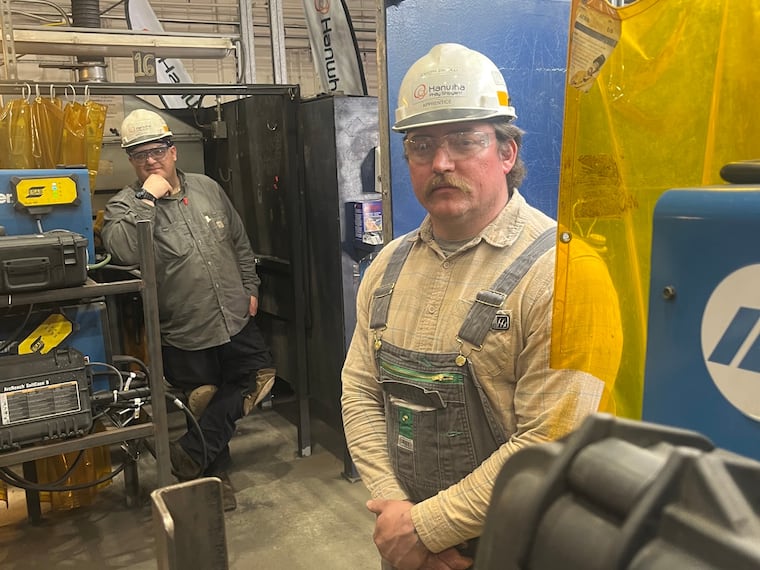
Joseph Zanolli, an apprentice at Hanwha Philly Shipyard.
Joseph Zanolli, an apprentice at Hanwha Philly Shipyard.Joseph N. DiStefano

Jeneece Zlomek, a Baltimore native who lives in Philadelphia, is training as a welder. She used to be a hairstylist. Nobody in her family worked on ships, but an uncle was an Air Force mechanic. “My dad said, ‘You’re gonna go from using razors to using welding guns,’” she said, smiling.

Global competition
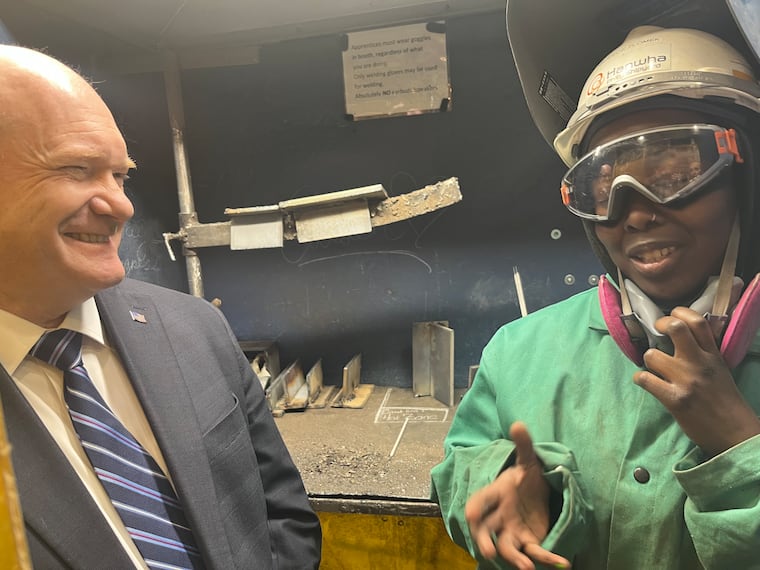
U.S. Sen. Christopher Coons (D., Del,) and Jeneece Zlomek, an apprentice, at Hanwha Philly Shipyard.
U.S. Sen. Christopher Coons (D., Del,) and Jeneece Zlomek, an apprentice, at Hanwha Philly Shipyard.Joseph N. DiStefano

China is by far the largest shipbuilding nation, with South Korea, including the giant Hanwha (formerly Daewoo) yard in Ulsan, a distant second.

Shipbuilders need patient, wealthy investors. With private investment funds focused on faster, higher returns from digital and biotech projects, shipyards rely on government contracts and subsidies. Without competing offers, Hanwha was able to purchase the Philadelphia yard last year for $100 million, a fraction of the value of the total subsidies the federal and state government had poured in over nearly 30 years.

Coons noted that China has been sending ships and planes over international waters close to U.S. allies such as the Philippines and Taiwan. That has been fueling calls from both parties for the U.S. to build more seagoing drones and other warcraft to counter the China threat.

Under its previous controlling owner, Norway-based Aker, the Philadelphia yard, after a difficult period won a string of contracts for training ships and commercial freight carriers and has since 2020 become the busiest of the handful of working shipyards in the U.S.

The Trump administration, besides boosting taxes on Chinese export ships, is also trying to force shippers to rely more on commercial ships built in U.S. yards. The U.S. Trade Representatives Office last week proposed a domestic-content rule for ships that export U.S. liquefied natural gas that could send new LNG tanker work to the Philadelphia yard.

The yard is part of the former Philadelphia Naval Base. Besides the shipyard, the sprawling site is now a suburban-style office campus that is home to the Urban Outfitters retail store chains, Altaris’ Advanced Therapies (formerly WuXi AppTec) cell and gene therapy production centers, GlaxoSmithKline investment offices — and U.S. Navy engineering offices, the property’s largest single employer.
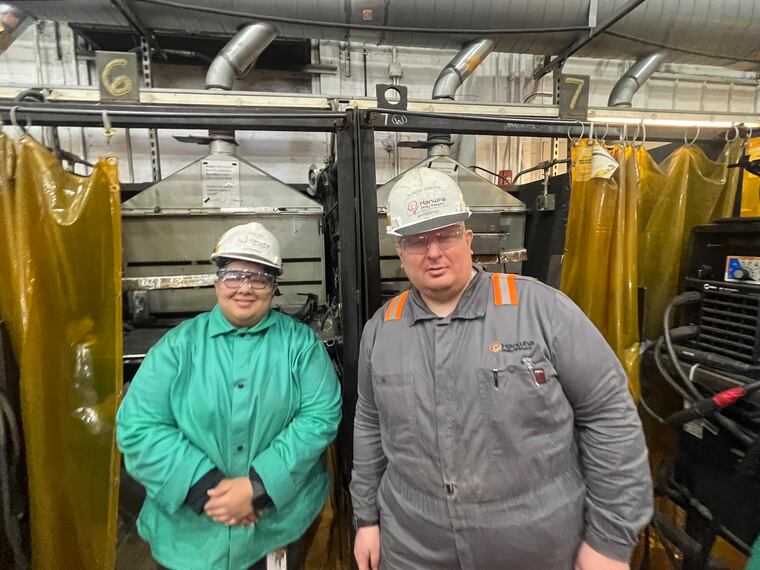
Kiana Cruz (left) and Brendan Donohoe, apprentices at Hanwha Philly Shipyard.
Kiana Cruz (left) and Brendan Donohoe, apprentices at Hanwha Philly Shipyard.Joseph N. DiStefano

Plans call for adding housing and other amenities — mostly in the central and eastern parts of the former base, far from the junction of the Schuylkill and the Delaware River, where the main shipyard facilities are.

There are also plans to expand the civilian port facilities operated by Holt Logistics Corp. on the Delaware River north of the old base.

https://www.inquirer.com/business/hanwha-shipyard-navy-maintenance-contracts-20250424.html

Drug that treats flu shows additional benefit of protecting close contacts from infection

 One dose of the antiviral baloxavir marboxil lowers the chance of transmitting the influenza virus to family members by about 30%, according to research published in the New England Journal of Medicine.

In the study, a Phase III global trial of  marboxil (brand name Xofluza) led by University of Michigan epidemiologist Arnold Monto, researchers found that the drug significantly slowed the viral shedding that infects close contacts.

Dubbed the CENTERSTONE trial, the study involved 1,457 influenza-positive patients ages 5–64 and 2,681 household contacts. The patients were randomly given either baloxavir or a placebo, and their contacts were followed to detect influenza transmission.

"There's always been a question: Could antivirals, which are known to shorten the duration of influenza when used early in treatment, also prevent the spread of influenza," said Monto, a longtime vaccine and respiratory contagions advisor to the Centers for Disease Control and Prevention and the Federal Drug Administration.

"We have had drugs which treat influenza in use for many years, but it has been unclear whether there was any reduction in transmission from the sick person. It also was not clear whether this was because no study was designed specifically to look for a reduction in spread, or if no spread was taking place.

"Our study was designed to directly evaluate whether this meant we could finally establish that transmission could be reduced, and we were finally able to show that it was."

Co-author Adam Lauring, chief of the Division of Infectious Diseases at the U-M Medical School, said the findings indicate great potential for lowering flu incidence.

"This was a really exciting study to work on," said Lauring, professor of internal medicine and microbiology and immunology. "It highlights how we could potentially use an antiviral to help not just our patients but also households and larger communities by preventing influenza transmission. It could change how we approach future influenza outbreaks."

Because other flu antivirals require a daily dose for five days and baloxavir is a single dose, it may mean greater use of treatment "since it means not only protecting oneself from complications but protecting others," said Monto, professor emeritus of epidemiology and global public health at the U-M School of Public Health and co-director of the Michigan Center for Respiratory Virus and Research and Response.

"These findings extend the rationale for treating influenza patients with the antiviral. It's a twofer: shortening the duration of the illness, which can also prevent complications leading to hospitalizations or deaths, while also reducing ."

An antiviral that reduces viral shedding also brings promise for fighting the spread of avian flu, Monto said. While it has not been studied for  either in birds or daily cattle, researchers have learned from laboratory studies that baloxavir prevents the replication of these kinds of influenza, as well.

More information: Arnold S. Monto et al, Efficacy of Baloxavir Treatment in Preventing Transmission of Influenza, New England Journal of Medicine (2025). DOI: 10.1056/NEJMoa2413156


https://medicalxpress.com/news/2025-04-drug-flu-additional-benefit-contacts.html

Two-phase vaccination can boost the immune system against cancer

 Our body's own defense system not only clears away bacteria and viruses, it can also fight cancer. However, not all tumor cells are easily recognizable by the immune system. In addition, they are constantly changing and camouflaging themselves to evade the defense system.

In order to treat tumor diseases better and more successfully,  is focusing on so-called therapeutic cancer vaccines. In this form of immunotherapy, people who already have cancer are vaccinated. It works in a similar way to  against pathogens and teaches the immune system to recognize tumor cells by certain typical characteristics—known as tumor antigens—and kill them.

One approach is to remove highly specialized immune cells from cancer patients and load them with tumor antigens outside the body. After these  are injected back into the body, they can trigger and regulate antigen-specific immune responses.

In another approach, the , which is protein-based or peptide-based, contains only the protein of the tumor antigen or at least parts of it. This synthetic method is faster, cheaper and less complex. The problem with both methods is that the  triggered is often rather weak and the vaccination must be repeated frequently to activate the immune cells.

A research team led by associate professor Dr. Thomas Wirth and Dr. Dimitrij Ostroumov from the Department of Gastroenterology, Hepatology, Infectious Diseases and Endocrinology at Hannover Medical School (MHH) has now developed a new two-phase liposomal peptide vaccine.

With this therapeutic immunotherapy, just two injections under the skin are enough to effectively mobilize the immune system against the tumor within only 14 days. The work has been published in the journal Cellular & Molecular Immunology

Vaccination takes place in two phases

Researchers have been working for 15 years to improve cancer vaccines. "The key lies in the dendritic cells," says Dr. Wirth. These cells are part of the innate immune system and constantly scan our bodies for viruses, bacteria and tumor cells. If they recognize structures as foreign or different, they absorb them completely or partially, eating them, so to speak.

As , they are able to break down the foreign cell components into smaller pieces and then present them as peptides on their own cell surface. These mini-proteins show the specific T cells of our acquired immune system how to recognize the foreign structures, thereby activating the targeted immune response.

To achieve this as quickly and effectively as possible, the researchers opted for a two-phase vaccination schedule: a basic vaccination followed by a booster vaccination. In such heterologous prime-boost vaccines, the same antigens are injected into the organism twice in different compositions.

In this case, a single antigen peptide specifically produced by the tumor cells was sufficient to activate the dendritic cells directly in the body. However, because the peptide alone does not trigger a sufficiently strong immune response, the researchers added a so-called agonist in both vaccination phases to further activate the  in the body.

"For the primary immunization, we package the peptide with the immune activator in a lipid shell," explains Dr. Wirth. This drives the dendritic cells in the body to present the tumor antigen to the specific T cells so that they can recognize and attack the tumor.

The liposomes used for primary immunization were developed as part of a collaboration in the Netherlands. "When boosting a week later, we also add an antibody that acts as an additional stimulator to ensure that the T cells directed against the tumor multiply ultra-fast."

Exceptional enhancement of the T-cell response

The vaccination regimen was tested in a mouse model for colon cancer. The effect astonished even the researchers. "After only two vaccinations, we observed an extremely strong immune response that led to a complete regression of the tumor," emphasizes Dr. Ostroumov.

"Our experiments not only show that liposomes can be used as peptide carriers without any problems, but also confirm the extraordinary enhancement of the T-cell response by stimulating antibodies in the heterologous vaccination regimen."

The rapid production of the vaccines and the early anti-tumor effect mean an extreme time advantage and thus also a survival advantage for people with cancer.

Another advantage of the vaccination regimen is that it is universal: the peptide building block can be exchanged like in a construction kit and adapted to the respective requirements.

"On the one hand, we can tailor the peptide to the genetic profile of the tumor, i.e., produce personalized vaccines that are individually tailored to each patient," says Dr. Wirth. "On the other hand, the peptide does not even have to be a tumor antigen, but can also carry other information, such as for the detection of parasites, bacteria or viruses."

However, there is still a long way to go before the vaccine becomes part of standard care. The next step would be  to prove its efficacy and safety for use in humans.

More information: Dmitrij Ostroumov et al, Sequential STING and CD40 agonism drives massive expansion of tumor-specific T cells in liposomal peptide vaccines, Cellular & Molecular Immunology (2025). DOI: 10.1038/s41423-024-01249-4


https://medicalxpress.com/news/2025-04-phase-vaccination-boost-immune-cancer.html