Having 'adjusted' their model for gold imports, and on the heels of ongoing calls from the 'establishment' that a recession is coming... because OrangeManBadEconomist, The Atlanta Fed has hiked itsGDPNOW forecastdramatically higher (to 4.6% from +3.87% prior) after this morning’s releases from the US Census Bureau and the Institute for Supply Management.
That would be the best growth since Q4 2021...
The swing is being driven in large part by volatility on the import front (so expect some more 'adjustments'...
Additionally, the nowcasts of second-quarter real personal consumption expenditures growth and real gross private domestic investment growth increased from 3.3 percent and -1.4 percent, respectively, to 4.0 percent and 0.5 percent.
We look forward to the likes of Liesman explaining to us why this is not real.. and just you wait and see what will happen next.
ATAI Life Sciences BV (NASDAQ:ATAI) shares surged 18.6% following the announcement that the company will merge with Beckley Psytech in a strategic move to create a global leader in psychedelic mental health therapies. The all-share transaction, which is expected to close in the second half of 2025, will see the combined entity operate under the name atai Beckley, leveraging the expertise of both companies in the development of central nervous system (CNS) drugs and psychedelic therapies.
The market reacted positively to the news, which promises to establish a market-leading company with a pipeline that includes potentially transformative, rapid-acting psychedelic assets. These assets are differentiated by their convenient route of administration and short time required in a clinical setting. The merger is anticipated to bring financial synergies and a strong intellectual property portfolio with U.S. patents extending to 2043.
Investors are particularly interested in the forthcoming topline data from the Phase 2b study of BPL-003 in patients with treatment-resistant depression (TRD), expected in mid-2025. This study represents the largest controlled trial of mebufotenin (5-MeO-DMT) and the first of its kind to be conducted in the U.S. The results could be a significant value inflection point for the company, with the potential to impact the treatment of TRD.
The merger’s financial details reveal that Beckley’s shareholders will receive approximately 105 million new shares, which equates to about 31% of the combined company on a fully diluted basis. This values Beckley at approximately $390 million. Furthermore, the deal includes a concurrent $30.0 million private placement by Ferring Ventures S.A. and Adage Capital Partners LP, which is set to close on June 3, 2025, and is not contingent on the merger’s completion.
BioNTech's U.S.-listed shares surged more than 15% Monday morning after the company said it will partner with Bristol Myers Squibb.
The companies will co-develop a drug currently in trials to treat several types of cancerous tumors.
Bristol Myers Squibb will pay $1.5 billion to BioNTech up front, $2 billion in "non-contingent anniversary payments through 2028," and up to $7.6 billion in future payments possible based on certain milestones.
U.S.-listed shares of BioNTech (BNTX) jumped more than 15% Monday morning after the German vaccine maker announced a collaboration with Bristol Myers Squibb (BMY).1
The companies will work together to develop and eventually sell BNT327, one of BioNTech's developmental antibodies that is in trials to treat a number of types of tumors. More than 20 trials are ongoing or planned to study the drug's effectiveness in treating certain lung, breast, and other types of cancer.
Princeton, N.J.-based Bristol Myers Squibb "will pay BioNTech $1.5 billion in an upfront payment and $2 billion total in non-contingent anniversary payments through 2028." BioNTech is also eligible to receive up to $7.6 billion in future payments based on certain developmental and regulatory milestones, while the companies will share manufacturing costs and profits or losses.
"Our collaboration with BMS, a pioneering leader in immuno-oncology, aims to accelerate and broadly expand BNT327’s development to fully realize its potential," BioNTech CEO Dr.Ugur Sahin said. "Our focus remains on advancing high-impact, pan-tumor programs and combination strategies in oncology, with BNT327 complementing our antibody-drug conjugate programs and mRNA-based immunotherapies."
Kymera Therapeutics announced positive Phase 1 results for KT-621, their first-in-class oral STAT6 degrader medicine. The trial demonstrated >90% STAT6 degradation in blood at doses above 1.5mg and complete degradation in both blood and skin at MAD doses ≥50mg. The drug showed impressive efficacy with TARC reduction up to 37% and Eotaxin-3 reduction up to 63%, comparable or superior to dupilumab. KT-621 exhibited excellent safety with no serious adverse events and a profile undifferentiated from placebo. The Phase 1 study included 118 healthy volunteers across single and multiple ascending dose cohorts. The company plans to advance KT-621 through their ongoing BroADen Phase 1b trial in atopic dermatitis patients, with data expected in Q4 2025, followed by Phase 2b trials in AD and asthma starting in Q4 2025 and Q1 2026 respectively.
State unveils second sports betting tax increase in a year
Calls for operators to pay 25 cents on the first 20 million bets booked
After that, the levy increases to 50 cents per bet
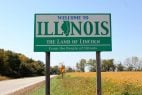
The Illinois budget signed Saturday by Gov. J.B. Pritzker (D) contained a late addition that resulted in the state’s second sports wagering tax increase in a year.
Illinois is again raising sports betting taxes. DraftKings and FanDuel will feel another pinch. (Image: OZinOH/Flickr.com)
The proposal, floated by the governor’s office, adds a levy of 25 cents per wager on an operator’s first 20 million booked bets with that rate doubling to 50 cents per bet for each wager placed after that initial 20 million. As is the case with the graduated tax plan implemented last year in the state, Flutter Entertainment’s (NYSE: FLUT) FanDuel and DraftKings (NASDAQ: DKNG) will bear the brunt of the new tax scheme.
In a Sunday note to clients, Jefferies analyst David Katz said that over the trailing 12-month (TTM) period spanning April 24, 2024, to March 25, 2025, FanDuel and DraftKings booked 164 million and 146 million bets, respectively in Illinois, meaning there could be consequences for those operators’ financial guidance.
Given these TTM figures, FanDuel would have paid an additional ~$77M, followed by DKNG at ~$68M (full-year impact). If implemented on 7/1/2025, we estimate the costs to company guidance for this year only (July-Dec) would be ~$40-45M for FLUT and ~$35-40M for DKNG,” observes Katz.
Among other operators that are publicly traded or with ties to listed entities, BetMGM could see a financial hit of approximately $4 million due to the latest Illinois tax hike with Chicago-based Rush Street Interactive (NYSE: RSI) potentially pinched to the tune of $3.25 million, according to the Jefferies analyst. It’s estimated the new levy will bring in $36 million in new revenue for the state.
DraftKings, FanDuel Cards to Play in Illinois
Katz highlights several possibilities for DraftKings and FanDuel in Illinois against the backdrop of another tax increase, including the possibility of those operators mandating minimum bet sizes, passing the costs onto bettors in the form of surcharges, and the possibility of prediction market companies pilfering market share from traditional sportsbooks.
The analyst acknowledges there are bad optics with minimum bet mandates and last year, DraftKings floated a surcharge plan in several high-tax states only to scrap the idea when none of its competitors would go along.
As for the potential threat from prediction market operators such as Kalshi, it’s possible the new Illinois sports betting tax could drive bettors to those platforms for straight bets, but those firms don’t yet feature the parlay menus that make DraftKings, FanDuel, and other online sportsbooks so popular with the betting public.
Should Kalshi and others like it gain share in Illinois, it would also highlight the advantage possessed by those firms to operate in states without gaming licenses. That’s not lost on Illinois, which is among the cadre of states that have issued cease-and-desist letters to Kalshi. For his part, Katz notes the latest sports betting tax increase in Illinois could open the door to iGaming legislation being approved in the future.
“Overall, the FY26 IL budget increases state spending on what we expect to be a lower revenue base, with IL likely having limited opportunities to extract further tax dollars from OSB,” said the analyst. “We still view iGaming as the next move for budget-challenged states given the sizable tax contributions it can offer.”
Pritzker Hails Fiscal Responsibility, but …
Pritzker, who’s rumored to be a 2028 presidential candidate, hailed the budget — the seventh consecutive delivered in balanced form — as another sign of his state’s fiscal responsibility. Fortunately for the governor, “responsibility” and “stability” aren’t always the same thing.
Illinois ranks 50th in terms of fiscal stability — 50th in long-term stability and 41st in short-term — according to U.S. News & World Report. For fiscal 2026, Pritzker’s office projected a deficit of $3.2 billion, which is forecast to grow to $4.1 billion in the next fiscal year and to $5 billion in fiscal 2028.
Since Pritzker took office in January 2019, Illinois has implemented 50 tax increases and the state’s budget has surged $16.7 billion, according to Illinois Policy. Add to that, Pritzker’s latest budget includes a $13 billion increase for the state’s public pension recipients while slashing funding by $5 billion to keep the system afloat for future retirees. Some municipalities in the state are already leaning on the gaming industry to shore up public pensions.
Regeneron ispaying Hansoh Pharma$80 million upfront for a phase 3-stage GLP-1/GIP receptor agonist the companies believe can hold its own against Eli Lilly’s Zepbound.
As well as the upfront fee, Regeneron has agreed to pay up to $1.93 billion in development, regulatory and sales milestones to secure the ex-China rights to the asset, dubbed HS-20094. Hansoh has already studied the drug in more than 1,000 patients, according to Regeneron, which claimed that HS-20094 has a “potentially similar profile” to Lilly’s approved GLP-1/GIP agonist.
Hansoh is currently running both a phase 2b study of the drug in diabetes and a phase 3 trial in obesity in its home territory of China.
“Despite the transformative impact of recent weight loss therapies, significant unmet needs remain, including the ability to sustain weight loss and maintain muscle mass over time,” Regeneron Chief Scientific Officer George Yancopoulos, M.D., Ph.D., said in a June 2 release.
“Securing access to a GLP-1/GIP receptor agonist will increase the versatility of our clinical programs for obesity and accelerate our mission to support quality, sustained weight loss and the associated long-term health benefits,” Yancopoulos added.
Regeneron already has an obesity pipeline in the works in the form of the GDF8 antibody trevogrumab. In a separate update this morning, the company unveiled interim results from an ongoing phase 2 study that it claimed showed combining trevogrumab with semaglutide—the ingredient in Novo Nordisk’s obesity drug Wegovy—“helped preserve lean mass while increasing loss of fat mass.”
A number of other biopharmas are chasing the same holy grail of treating obesity without losing muscle. They include Roche, which is hoping that combining an injectable dual GLP-1/GIP receptor agonist acquired from Carmot Therapeutics alongside its own anti-myostatin antibody could also help patients reduce the muscle loss typically associated with losing weight.
Regeneron’s own trial is also assessing allying its anti-activin antibody garetosmab to see what impact that could have on weight loss.
“In-licensing a late-stage GLP1/GIP agonist will allow us to study combinations with Regeneron’s proprietary drugs and drug candidates in order to holistically address muscle loss and potentially other comorbidities of obesity, such as cardiovascular diseases, diabetes and liver conditions,” Boaz Hirshberg, M.D., senior vice president for clinical development, internal medicine, at Regeneron, explained in the Hansoh deal release.
“This is an exciting development in our obesity work at Regeneron, which also includes the muscle-sparing phase 2 COURAGE study investigating the addition of trevogrumab.”
Regeneron isn’t the only Big Pharma to spot potential in Hansoh’s obesity pipeline. Merck & Co. ended last year paying $112 million upfront for a preclinical GLP-1 drug the company hopes will have a wide range of cardiometabolic benefits.