Search This Blog

Friday, June 6, 2025

FDA exposed - hundreds of drugs approved with no proof they work

A two-year investigation reveals a broken approval system where ineffective—and sometimes deadly—drugs are fast-tracked to market without solid evidence.

The US Food and Drug Administration (FDA) has approved hundreds of drugs without proof they work—and in some cases, despite evidence they cause harm.

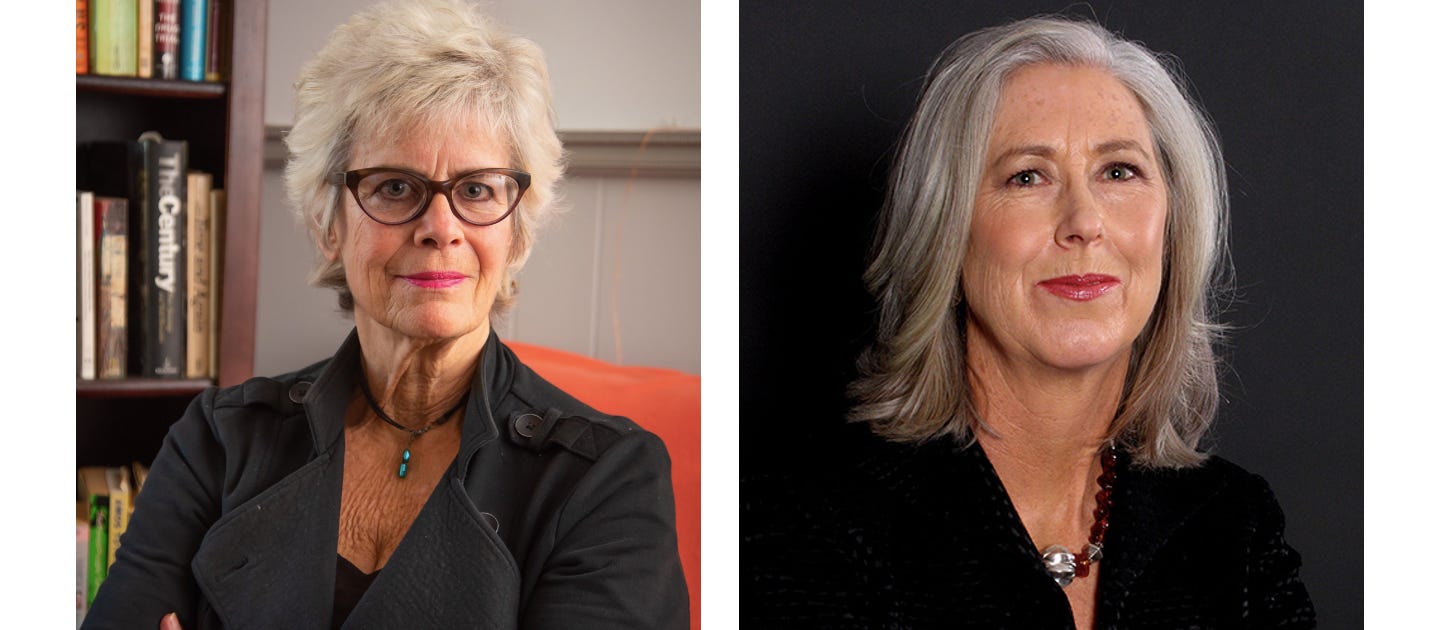
That’s the finding of a blistering two-year investigation by medical journalists Jeanne Lenzer and Shannon Brownleepublished by The Lever.

L: Jeanne Lenzer, R: Shannon Brownlee

Reviewing more than 400 drug approvals between 2013 and 2022, the authors found the agency repeatedly ignored its own scientific standards.

One expert put it bluntly—the FDA’s threshold for evidence “can’t go any lower because it’s already in the dirt.”

A system built on weak evidence

The findings were damning—73% of drugs approved by the FDA during the study period failed to meet all four basic criteria for demonstrating “substantial evidence” of effectiveness.

Those four criteria—presence of a control group, replication in two well-conducted trials, blinding of participants and investigators, and the use of clinical endpoints like symptom relief or extended survival—are supposed to be the bedrock of drug evaluation.

Yet only 28% of drugs met all four criteria—40 drugs met none.

These aren’t obscure technicalities—they are the most basic safeguards to protect patients from ineffective or dangerous treatments.

But under political and industry pressure, the FDA has increasingly abandoned them in favour of speed and so-called “regulatory flexibility”.

Since the early 1990s, the agency has relied heavily on expedited pathways that fast-track drugs to market.

In theory, this balances urgency with scientific rigour. In practice, it has flipped the process. Companies can now get drugs approved before proving they work, with the promise of follow-up trials later.

But, as Lenzer and Brownlee revealed, “Nearly half of the required follow-up studies are never completed—and those that are often fail to show the drugs work, even while they remain on the market.”

“This represents a seismic shift in FDA regulation that has been quietly accomplished with virtually no awareness by doctors or the public,” they added.

More than half the approvals examined relied on preliminary data—not solid evidence that patients lived longer, felt better, or functioned more effectively.

And even when follow-up studies are conducted, many rely on the same flawed surrogate measures rather than hard clinical outcomes.

The result: a regulatory system where the FDA no longer acts as a gatekeeper—but as a passive observer.

Cancer drugs: high stakes, low standards

Nowhere is this failure more visible than in oncology.

Only 3 out of 123 cancer drugs approved between 2013 and 2022, met all four of the FDA’s basic scientific standards.

Most—81%—were approved based on surrogate endpoints like tumour shrinkage, without any evidence they improved survival or quality of life.

Take Copiktra, for example—a drug approved in 2018 for blood cancers. The FDA gave it the green light based on improved “progression-free survival,” a measure of how long a tumour stays stable.

But a review of post-marketing data showed that patients taking Copiktra died 11 months earlier than those on a comparator drug.

It took six years after those studies showed the drug reduced patients’ survival for the FDA to warn the public that Copiktra should not be used as a first- or second-line treatment for certain types of leukaemia and lymphoma, citing “an increased risk of treatment-related mortality.”

Elmiron: ineffective, dangerous—and still on the market

Another striking case is Elmiron, approved in 1996 for interstitial cystitis—a painful bladder condition.

The FDA authorised it based on “close to zero data,” on the condition that the company conduct a follow-up study to determine whether it actually worked.

That study wasn’t completed for 18 years—and when it was, it showed Elmiron was no better than placebo.

In the meantime, hundreds of patients suffered vision loss or blindness. Others were hospitalised with colitis. Some died.

Yet Elmiron is still on the market today. Doctors continue to prescribe it.

“Hundreds of thousands of patients have been exposed to the drug, and the American Urological Association lists it as the only FDA-approved medication for interstitial cystitis,” Lenzer and Brownlee reported.

“Dangling approvals” and regulatory paralysis

The FDA even has a term—"dangling approvals”—for drugs that remain on the market despite failed or missing follow-up trials.

One notorious case is Avastin, approved in 2008 for metastatic breast cancer.

It was fast-tracked, again, based on ‘progression-free survival.’ But after five clinical trials showed no improvement in overall survival—and raised serious safety concerns—the FDA moved to revoke its approval for metastatic breast cancer.

The backlash was intense.

Drug companies and patient advocacy groups launched a campaign to keep Avastin on the market. FDA staff received violent threats. Police were posted outside the agency’s building.

The fallout was so severe that for more than two decades afterwards, the FDA did not initiate another involuntary drug withdrawal in the face of industry opposition.

Billions wasted, thousands harmed

Between 2018 and 2021, US taxpayers—through Medicare and Medicaid—paid US$18 billion for drugs approved under the condition that follow-up studies would be conducted. Many never were.

The cost in lives is even higher.

A 2015 study found that 86% of cancer drugs approved between 2008 and 2012 based on surrogate outcomes showed no evidence they helped patients live longer.

An estimated 128,000 Americans die each year from the effects of properly prescribed medications—excluding opioid overdoses. That’s more than all deaths from illegal drugs combined.

A 2024 analysis by Danish physician Peter Gøtzsche found that adverse effects from prescription medicines now rank among the top three causes of death globally.

Doctors misled by the drug labels

Despite the scale of the problem, most patients—and most doctors—have no idea.

A 2016 survey published in JAMA asked practising physicians a simple question —what does FDA approval actually mean?

Only 6% got it right.

The rest assumed it meant the drug had shown clear, clinically meaningful benefits—such as helping patients live longer or feel better—and that the data was statistically sound.

But the FDA requires none of that.

Drugs can be approved based on a single small study, a surrogate endpoint, or marginal statistical findings. Labels are often based on limited data, yet many doctors take them at face value.

Harvard researcher Aaron Kesselheim, who led the survey, said the results were “disappointing, but not entirely surprising,” noting that few doctors are taught about how the FDA’s regulatory process actually works.

Instead, physicians often rely on labels, marketing, or assumptions—believing that if the FDA has authorised a drug, it must be both safe and effective.

But as The Lever investigation shows, that is not a safe assumption.

And without that knowledge, even well-meaning physicians may prescribe drugs that do little good—and cause real harm.

Who is the FDA working for?

In interviews with more than 100 experts, patients, and former regulators, Lenzer and Brownlee found widespread concern that the FDA has lost its way.

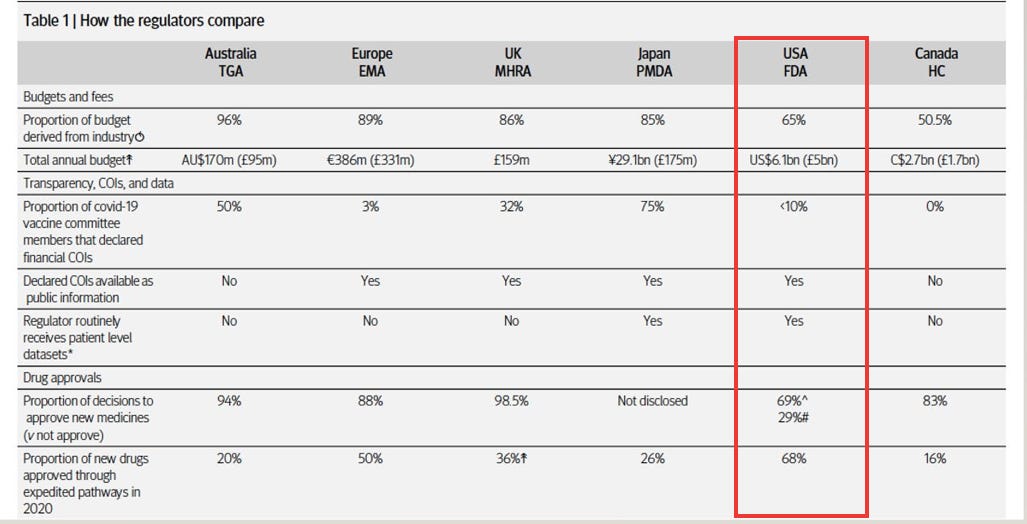
Many pointed to the agency’s dependence on industry money. A BMJ investigation in 2022 found that user fees now fund two-thirds of the FDA’s drug review budget—raising serious questions about independence.
Yale physician and regulatory expert Reshma Ramachandran said the system is in urgent need of reform.

“We need an agency that’s independent from the industry it regulates and that uses high quality science to assess the safety and efficacy of new drugs,” she told The Lever. “Without that, we might as well go back to the days of snake oil and patent medicines.”

For now, patients remain unwitting participants in a vast, unspoken experiment—taking drugs that may never have been properly tested, trusting a regulator that too often fails to protect them.

And as Lenzer and Brownlee conclude, that trust is increasingly misplaced.

https://blog.maryannedemasi.com/p/fda-exposed-hundreds-of-drugs-approved

Chinese Self-Driving Car Company Stole A Massive Trove Of US Data

 by José Niño via Headline USA,

The Trump administration is rethinking how it deals with Chinese-linked tech firms after a short-lived self-driving truck company was found to have stolen a vast trove of U.S. intellectual property. 

Founded in 2015 by Chinese entrepreneurs and backed by Chinese capital, TuSimple was once hailed as a leader in autonomous trucking, boasting a record-setting 80-mile driverless journey in Arizona and partnerships with major firms like UPS and Navistar.

But beneath its rapid rise, TuSimple’s dual presence in the U.S. and China created vulnerabilities. According to a Wall Street Journal report, February 2022, the company signed a national security agreement with the U.S. government after concerns emerged about its Chinese ties and potential for technology transfer. 

The agreement, enforced by the Committee on Foreign Investment in the United States (CFIUS), required TuSimple to separate its U.S. operations and technology from China-based employees and partners, build firewalls, and prohibit the sharing of intellectual property. 

Yet, just a week after signing, TuSimple transferred a trove of sensitive data, which included test results and technical blueprints—to Beijing-owned Foton, a major Chinese truck manufacturer.

“They want a lot of details,” said TuSimple employee Xiaoling Han in a February 2022 chat.

“It is pretty time consuming.”

Internal correspondence shows the data sharing continued up to the six-month compliance deadline. 

WSJ reporter Heather Somerville noted thatTuSimple provided Chinese companies with what essentially constituted a complete autonomous driving system.

This included the source code that serves as the brain of an autonomous truck, in addition to various elements of the design, hardware, and integration of all these systems. 

A CFIUS investigation later found that while the data sharing did not technically violate the agreement, TuSimple was fined $6 million for other infractions. The company did not admit fault, and co-founder Xiaodi Hou insisted that no information prohibited by the company’s national security agreement “was ever shared with anyone.” 

The fallout was swift. TuSimple shut down U.S. operations, while being delisted from Nasdaq. These events prompted it to move investor funds to China

The episode compelled the Trump administration to rethink its reliance on mitigation agreements for high-risk, foreign-connected firms. According to new directives, the White House will “cease the use of overly bureaucratic, complex, and open-ended ‘mitigation’ agreements” and instead block more China-backed deals outright.

Earlier this year, Commerce Department has also issued new rules prohibiting the sale of internet-connected vehicles and components to entities connected to China, with further restrictions on commercial vehicles expected to be imposed soon

https://www.zerohedge.com/technology/chinese-self-driving-car-company-stole-massive-trove-us-data

'USDA redaction of trade analysis causes concern about report integrity'

 Analysts voiced concerns this week about the integrity of U.S. Department of Agriculture reports after the agency delayed a report and excluded findings that point to tariffs as a reason for a forecasted increase in the agricultural trade deficit, according to Reuters interviews with four analysts.

The administration of President Donald Trump has pledged to shrink the farm trade deficit and has said tariffs will strengthen the farm economy, but farm groups have been critical of the approach. 

The agency’s delay of a quarterly agricultural trade report and exclusion of its typical explanatory text were concerning because the moves raised questions about the objectivity of the data, two analysts said.

"The trade is uneasy about USDA statistics now," said Charlie Sernatinger, head of grains with Marex, a brokerage and financial services company.     

A USDA spokesperson said the report was delayed by an internal review. 

"The report was hung up in internal clearance process and was not finalized in time for its typical deadline. Given this report is not statutory as with many other reports USDA does, the department is undergoing a review of all of its non-statutory reports, including this one, to determine next steps," the spokesperson said.

The quarterly trade outlook report jointly published by the USDA’s Economic Research Service and Foreign Agricultural Service was scheduled to be released on May 29. Shortly before it was set to publish, its authors were told to stop its release, according to a source familiar with the situation. 

The authors were then questioned by leaders at the ERS, FAS and USDA Office of the Chief Economist about the report’s attribution of the growing agriculture trade deficit to tariffs and sentiments like "Buy Canadian" that have reduced demand for U.S. goods, the source said. In the delayed report released on Monday, the USDA raised its forecast of the U.S. agriculture trade deficit for fiscal-year 2025 to $49.5 billion, from the $49 billion it previously forecast in February.

The version of the report published on Monday contains correct and unaltered data, the source said, but excludes explanatory text typically contained in the forecasts. 

The report delay and redaction were first reported by Politico.

Such trade reports would typically be reviewed by communications and policy staff, but the removal of the explanatory text was highly unusual, according to a second source familiar with the report publication process.

Two other analysts said they were confident in the USDA data for now, but expressed concern about how Trump’s disruption of the federal government could affect future reports. 

"Departures of key personnel limit the ability of agencies to collect and analyze information," said Patrick Westhoff, director of the Food and Agricultural Policy Research Institute at the University of Missouri. 

The USDA has lost about 27% of ERS employees and 14% of FAS employees to terminations or voluntary incentives to leave the agency as the Trump administration works to reduce the size and cost of the federal government, according to Reuters reporting.

The U.S. had an agricultural trade surplus for decades but in recent years, imports of high-value goods like alcohol, fruits and vegetables have driven a growing deficit, according to USDA data.

https://www.investing.com/news/economic-indicators/usda-redaction-of-trade-analysis-causes-concern-about-report-integrity-4085807

Japan trade negotiator Akazawa says he made progress in US tariff talks

 Japan had made some progress in a fifth round of trade talks with U.S. officials aimed at ending tariffs that are hurting Japan's economy, Tokyo's chief tariff negotiator said.

"Tariffs have already been imposed on autos, auto parts, steel and aluminum, and some of them have doubled to 50% along with 10% general tariff. These are causing daily losses to Japan's economy," Ryosei Akazawa, said in Washington on Friday after talks with officials, including Treasury Secretary Scott Bessent and Commerce Secretary Howard Lutnick.

Akazawa declined to say what progress they had made.

The latest round of talks may be the last in-person meeting between senior Japanese and U.S. officials before the Group of Seven (G7) leaders summit that starts on June 15, where U.S. President Donald Trump is expected to meet Japanese Prime Minister Shigeru Ishiba.

Japan also faces a 24% tariff rate starting in July unless it can negotiate a deal with Washington.

"We want an agreement as soon as possible. The G7 summit is on our radar, and if our leaders meet, we want to show what progress has been made," Akazawa said. "Still we must balance urgency with a need to guard our national interests," he added.

Last month Japan's trade negotiator said U.S. defence equipment purchases, shipbuilding technology collaboration, a revision of automobile import standards and an increase in agricultural imports could be bargaining chips in tariff talks.

In a bid to reach an agreement with the U.S., Japan is also proposing a mechanism to reduce the auto tariff rate based on how much countries contribute to the U.S. auto industry, the Asahi newspaper reported on Friday.

Akazawa said Japan's position has not changed and that the tariffs are not acceptable.

https://ca.finance.yahoo.com/news/japan-trade-negotiator-akazawa-says-005642935.html

Trump says China's Xi agreed to let rare earth minerals flow to US

U.S. President Donald Trump said on Friday that Chinese President Xi Jinping agreed to let rare earth minerals and magnets flow to the United States, a move that could lower tensions between the world’s biggest economies.

Asked by a reporter aboard Air Force One whether Xi had agreed to do so, Trump replied: “Yes, he did.”

The Chinese embassy in Washington did not immediately respond to a request for comment.

Trump’s comment came one day after a rare call with Xi aimed at resolving trade tensions that have been brewing over the topic for weeks.

Donald Trump aboard Air Force One.
President Trump told reporters aboard Air Force One on Friday that China’s Xi Jinping will allow rare earth minerals to flow to the US.AFP via Getty Images

At that time, Trump said there had been “a very positive conclusion” to the talks, adding that “there should no longer be any questions respecting the complexity of Rare Earth products.”

In another sign of easing tensions over the issue, China has granted temporary export licenses to rare-earth suppliers of the top three U.S. automakers, two sources familiar with the matter said.

The U.S. president’s top aides are set to meet their Chinese counterparts in London on Monday for further talks.

“We’re very far advanced on the China deal,” Trump told reporters on Friday.

https://nypost.com/2025/06/06/world-news/trump-says-chinas-xi-will-allow-rare-earth-minerals-to-flow-to-us/

Google’s AI is ‘hallucinating,’ spreading dangerous info

 Google’s AI Overviews, designed to give quick answers to search queries, reportedly spits out “hallucinations” of bogus information and undercuts publishers by pulling users away from traditional links.

The Big Tech giant — which landed in hot water last year after releasing a “woke” AI tool that generated images of female Popes and black Vikings — has drawn criticism for providing false and sometimes dangerous advice in its summaries, according to The Times of London.

Google’s latest artificial intelligence tool which is designed to give quick answers to search queries is facing criticism. Google CEO Sundar Pichai is pictured.AFP via Getty Images

In one case, AI Overviews advised adding glue to pizza sauce to help cheese stick better, the outlet reported.

In another, it described a fake phrase — “You can’t lick a badger twice” — as a legitimate idiom.

The hallucinations, as computer scientists call them, are compounded by the AI tool diminishing the visibility of reputable sources.

Instead of directing users straight to websites, it summarizes information from search results and presents its own AI-generated answer along with a few links.

Laurence O’Toole, founder of the analytics firm Authoritas, studied the impact of the tool and found that click-through rates to publisher websites drop by 40%–60% when AI Overviews are shown.

“While these were generally for queries that people don’t commonly do, it highlighted some specific areas that we needed to improve,” Liz Reid, Google’s head of Search, told The Times in response to the glue-on-pizza incident.

Google AI Mode is an experimental mode utilizing artificial intelligence and large language models to process Google search queries.Gado via Getty Images

The Post has sought comment from Google.

AI Overviews was introduced last summer and powered by Google’s Gemini language model, a system similar to OpenAI’s ChatGPT.

Despite public concerns, Google CEO Sundar Pichai has defended the tool in an interview with The Verge, stating that it helps users discover a broader range of information sources.

“Over the last year, it’s clear to us that the breadth of area we are sending people to is increasing … we are definitely sending traffic to a wider range of sources and publishers,” he said.

Google appears to downplay its own hallucination rate.

When a journalist searched Google for information on how often its AI gets things wrong, the AI response claimed hallucination rates between 0.7% and 1.3%.

Google’s AI Overviews, was introduced last summer and is powered by the Gemini language model, a system similar to ChatGPT.AP

However, data from the AI monitoring platform Hugging Face indicated that the actual rate for the latest Gemini model is 1.8%.

Google’s AI models also seem to offer pre-programmed defenses of their own behavior.

In response to whether AI “steals” artwork, the tool said it “doesn’t steal art in the traditional sense.”

When asked if people should be scared of AI, the tool walked through some common concerns before concluding that “fear might be overblown.”

Some experts worry that as generative AI systems become more complex, they’re also becoming more prone to mistakes — and even their creators can’t fully explain why.

The concerns over hallucinations go beyond Google.

OpenAI recently admitted that its newest models, known as o3 and o4-mini, hallucinate even more frequently than earlier versions.

Internal testing showed o3 made up information in 33% of cases, while o4-mini did so 48% of the time, particularly when answering questions about real people.

https://nypost.com/2025/06/06/business/googles-ai-overviews-are-hallucinating-by-spreading-false-info/