Search This Blog

Friday, September 12, 2025

'Trump is said to force Big Pharma to lower drug prices within weeks'

 President Donald Trump is exerting pressure on major pharmaceutical companies to lower drug prices in the U.S. and wants them to commit to his most-favored-nation pricing policy within weeks, Commerce Secretary Howard Lutnick said during an interview with Axios.

On July 31, Trump sent letters to 17 leading drugmakers, including Eli Lilly (NYSE:LLY), Pfizer (NYSE:PFE), and Merck (NYSE:MRK), outlining the steps they should take to adjust U.S. prices of their pharmaceutical products to match those in other developed countries in line with the MFN policy.

U.S.-based Gilead (GILD), Bristol Myers (BMY), J&J (NYSE:JNJ), Regeneron (REGN), Amgen (AMGN), and AbbVie (ABBV) also received Trump’s letters along with EU drugmakers Merck KGaA (OTCPK:MKGAF), Sanofi (SNY), GSK (GSK), AstraZeneca (AZN), Novo Nordisk (NVO), Roche (OTCQX:RHHBY), and Novartis (NVS).

“The president's going to say that you drug manufacturers cannot sell here unless you sell there at a higher price. Stop being willing to sell to them at such a low price," Lutnick said ahead of a Sept. 29 deadline Trump granted to drugmakers to comply with the policy.

According to Lutnick, President is deploying multiple executive branch agencies to achieve the outcome. "I just got the call from [Health Secretary] Bobby Kennedy. I got a call from [CMS Administrator] Mehmet Oz and said, 'OK, let's get to work on this,'" Lutnick added.

"The president was talking about this all day on Saturday. ... He was talking about 'we got to drive these prices down."

https://www.msn.com/en-us/money/markets/trump-is-said-to-force-big-pharma-to-lower-drug-prices-within-weeks/ar-AA1MpJpn

Kenvue CEO lobbied RFK Jr. not to cite Tylenol as autism cause, WSJ reports

 Kenvue's interim CEO Kirk Perry met Robert F. Kennedy Jr. to try and dissuade him from listing Tylenol as a potential cause of autism in an upcoming report, the Wall Street Journal said on Friday, citing a person familiar with the matter.

Perry argued at the hastily scheduled meeting this week that there was no clear link between the two, the report said.

WSJ reported on September 5 that the U.S. health secretary planned to announce that the use of Tylenol, a popular over-the-counter pain medication, in pregnant women was potentially linked to autism - contrary to medical guidelines that say it is safe to use.

Kenvue shares fell more than 9% to $18.62 after the report last week, but have since recovered slightly.

The U.S. Department of Health and Human Services did not immediately respond to a Reuters request for comment.

As we would with any regulator who reaches out to us, we engaged in a scientific exchange with the secretary and members of his staff as it relates to the safety of our products, Kenvue said in an emailed response.

The company said it continues to believe that taking acetaminophen - the active ingredient in Tylenol - does not cause autism and that global health regulators, independent public health organizations and medical professionals agreed.

Kenvue executives have also argued that there are few safe alternatives to acetaminophen to reduce fevers in pregnant women, according to the WSJ report.

According to some researchers, there is no firm evidence of a link between the use of the drug and autism. Recent studies have yielded conflicting conclusions on whether its use during pregnancy might create risks for the developing fetus.

Wall Street analysts view Kenvue as an acquisition target after it came under pressure from investors, who have criticized its lackluster performance.

https://finance.yahoo.com/news/kenvue-ceo-lobbied-rfk-jr-100237169.html

BridgeBio Says Pfizer, Alnylam Aren’t Playing Fair in Blockbuster Race


BridgeBio Pharma Inc. is challenging Pfizer Inc. and Alnylam Pharmaceuticals, Inc. with a heart medicine that it says has better results at a lower cost. But it claims rivals are using questionable tactics to compete in the multibillion-dollar market.

At issue is a video Pfizer presented at a medical meeting this month that claimed its drug, Vyndamax, was “the first and only approved treatment” for a devastating form of heart failure. It left out the fact that BridgeBio’s competing medicine hit the market in November 2024 and Alnylam’s has been available since March. At another recent meeting, Pfizer compared its drug and BridgeBio’s in a manner that wasn’t apples-to-apples, according to BridgeBio Chief Executive Officer Neil Kumar.

https://www.bloomberg.com/news/articles/2025-09-11/bridgebio-says-pfizer-alnylam-aren-t-playing-fair-in-blockbuster-race

Apple Postpones Release of New iPhone Air in Mainland China

 Apple Inc. delayed the launch of its new iPhone Air in mainland China, citing regulatory approval issues.

When pre-orders for the new models began on Friday, the company’s China website would not let customers in the region order the new, thinner device. Instead, a message reads: “Release information will be updated later. All models will be released after approval.”

The iPhone maker previously said that the new product would become available in the region Sept. 12 for pre-order and on Sept. 19 for general availability, matching the US and other major markets.

An Apple spokesperson didn’t immediately respond to a request for comment.

A launch in China is far more complex for the iPhone Air than it is elsewhere. Unlike the US, China is mostly reliant on physical SIM cards and hasn’t widely adopted eSIM technology, which the iPhone Air uses because of its thinner frame.

When the iPhone Air was announced, Apple said that the device would initially only be available through a single Chinese carrier — China Unicom — and would require users to visit a physical carrier store to activate their eSIM and start using the device.

The company’s website has also added that other carriers like China Mobile Ltd. and China Telecom Corp. would eventually support the iPhone Air and eSIM. Apple’s other new iPhones — the iPhone 17, 17 Pro and 17 Pro Max — launched as planned in the region and include physical SIM cards locally.

Separately, in the US, home deliveries for some iPhone 17 Pro Max models slipped to a window of Oct. 6 to Oct. 13, potentially indicating strong initial demand for the device.

New orders now arriving later include the 17 Pro Max cosmic orange model in 256-gigabyte, 512-gigabyte and 1-terabyte storage capacities. The silver version with either 256GB or 512GB of storage has also seen new orders get pushed to next month.

The iPhone Air, the smaller 17 Pro and the standard iPhone 17 did not show any meaningful US delays 45 minutes after pre-orders opened.

https://finance.yahoo.com/news/apple-postpones-release-iphone-air-123445681.html

Trump Carves Tariff Exemptions for Some Pharma Products


President Donald Trump is considering tariff exemptions for certain “non-patented” pharmaceuticals, though the White House has yet to release specific guidelines.

The White House may exempt certain pharmaceutical imports from its reciprocal tariff scheme, with an eye toward helping “satisfy domestic demand.”

In an executive order last Friday, President Donald Trump insisted that he is “generally unwilling” to limit the scope of reciprocal tariffs “before the conclusion of a final agreement.” Still, certain concessions may indeed make it into the final policy, depending on various factors, such as the “national interests” of the U.S. and the “scope and economic value of a trading partner’s commitments” to the U.S.

Those exemptions from tariffs are included in a new list of products, called Annex III, that came attached to the order. That list includes a variety of pharmaceutical-related products, such as individual molecules used for drug synthesis, finished products like “vaccines for human medicine,” “cell therapy products,” and a variety of “immunological products.” Annex III also contains non-pharma related products like metals, oilcake, foodstuffs like pineapple juice, and a variety of live animals like primates, whales, camels and ostriches.

For the biopharma industry, such exemptions would apply to “non-patented articles.” The other types of imports covered by the executive order are spread across other industries, including products that “cannot be grown, mined, or naturally produced in the United States” or otherwise produced in enough quantities to meet domestic needs.

Trump additionally qualified these exemptions, noting that “the imports that might receive a reciprocal tariff rate of zero percent may be different for each final agreement between a foreign trading partner” and the U.S.

Since assuming office in January, tariffs have been a centerpiece of Trump’s trade policy, though for certain sectors, including pharma, they have remained threats for months. Last month, for instance, reporting from Reuters pointed to delayed implementation of pharma tariffs. A Section 232 national security probe initiated in April, which would have provided information on the national security need for tariffs, was initially expected to have been completed by mid-August, according to Commerce Secretary Howard Lutnick.

It is unclear from last Friday’s executive order if this investigation has already concluded.

Amid these delays, however, Trump has successfully kept tariffs top-of-mind for the industry with threats of hefty levies. Last month, he told CNBC that additional duties on pharma imports could hit as high as 250%. But in a pair of trade deals, the final pharma tariffs on certain regions have turned out to be much lower.

In July, Trump reached an agreement with the European Union to slap a 15% levy on imported pharmaceutical products. And while Jefferies analysts at the time said that this outcome is “less bad” than what had been expected, other analysts at ING and Bernstein cautioned that these tariffs could amount to up to $19 billion in additional pharma costs. Generics from the EU will also carry a 15% duty.

The 15% figure now also applies to imports from Japan, as per another executive order last week. Of note, this new trade deal involves exemptions for “generic pharmaceuticals, generic pharmaceutical ingredients, and generic pharmaceutical chemical precursors,” which will not be subjected to added levies.

https://www.biospace.com/policy/trump-carves-tariff-exemptions-for-some-pharma-products

How The EU Pays Mainstream Media To Promote Its Narratives

 by Robert Williams via The Gatestone Institute,

The unelected leadership of the evidently corrupt European Union (EU) is now paying mainstream media to promote the agendas of its EU "elites." The EU appears to have spent as much as 1 billion euros during the past decade alone in the process, according to a recent report, "Brussels's media machine: European media funding and the shaping of public discourse," by Thomas Fazi, from the European think tank MCC Brussels.
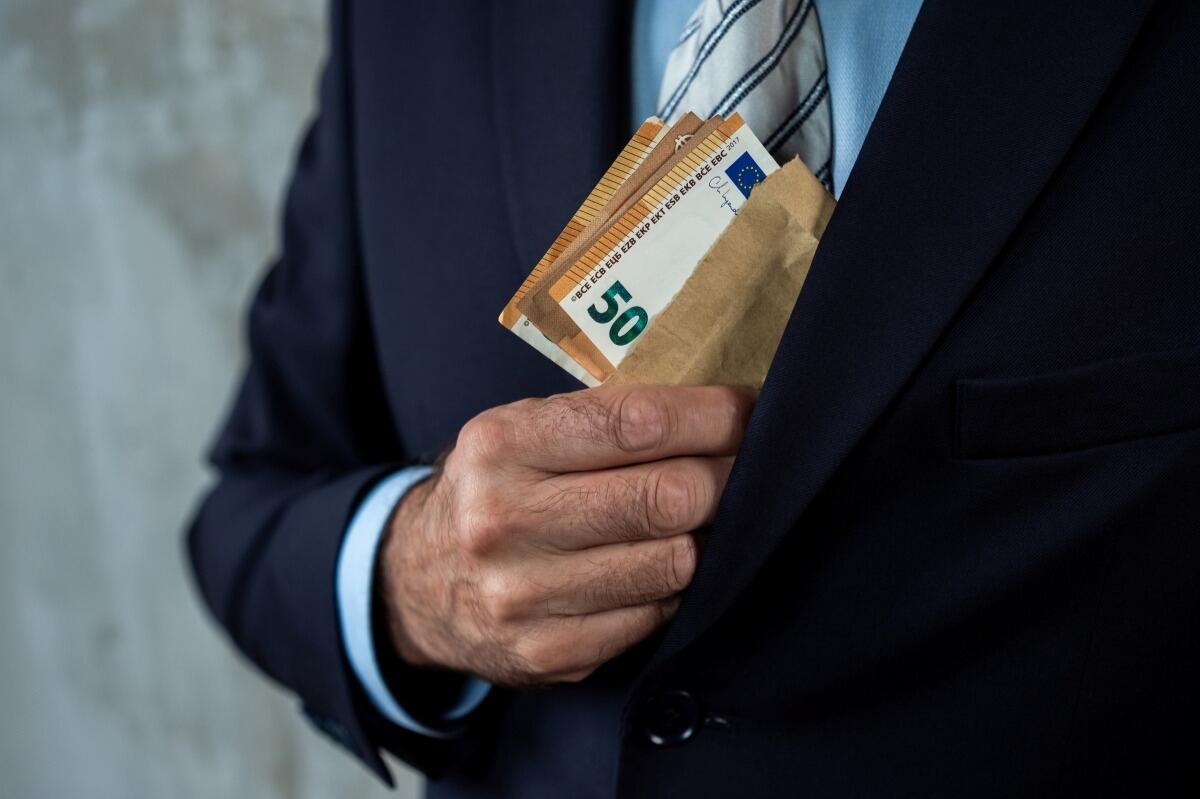
Framing the projects as "fighting disinformation" and "promoting European integration" the EU has been throwing taxpayer money, conservatively estimated at €80 million annually, to "media projects" -- not including indirect funding, such as advertising contracts.

The report also shows that the EU runs a highly sophisticated "EU media complex" through which it gets to shape media narratives about itself and its agendas.

According to Fazi's report:

"The European Commission – through its Journalism Partnerships programme alone, with a cumulative budget approaching € 50 million to date – oversees a vast ecosystem of EU media 'collaborations.' Over the years, these have included hundreds of projects, ranging from pro-EU promotional campaigns to questionable 'investigative journalism' initiatives and sweeping 'anti-fake news' efforts. And that's on top of the advertorial campaigns funded through the Information Measures for the EU Cohesion policy (IMREG) programme, to the tune of € 40 million so far...

"Even more concerning is the central role played by major European public broadcasters in this process. These projects show that this is not a matter of one-off collaborations, but rather an evolving semi-structural relationship between EU institutions and public media networks."

The European Commission has, it seems, has literally paid off almost everything and everyone in the media world -- meaning that everyone, from news agencies to media outlets, public broadcasters and other media organizations, sits in the pocket of the European Commission to greater or smaller degrees.

Some examples:

Among news agencies -- upon which practically all news outlets depend for their reporting -- the European Commission has poured money into the following, among others:

Agence France-Presse has received €7 million from the EU, ANSA (Italy) €5.6 million, Deutsche Presse-Agentur, (Germany) €3.2 million, Agencia EFE (Spain) €2 million, Associated Press (AP) €1 million, Lusa News Agency (Portugal) €200,000 Polish Press Agency €500,000, and Athens News Agency €600,000.

selection of news outlets also appear to be being paid off by the European Commission:

Euronews (pan-European) €230 million, ARTE (France) €26 million, Euractiv (pan-European) €6 million, Gazeta Wyborcza (Poland) €105,000, 444.hu (Hungary) €1.1 million, France TV (France) €400,000, GEDI Gruppo Editoriale (Italy) €190,000, ZDF (Germany) €500,000, and Bayerischer Rundfunk (Germany) €600,000.

Public broadcasters have received the following:

Deutsche Welle (Germany) €35 million, France Médias Monde €16.5 million, France Télévisions €1 million, RAI Radiotelevisione italiana (Italy) €2 million, RTBF (Belgium) €675,000, RTP (Portugal) €1.5 million, Estonian Public Broadcasting, ERR €1 million, RTVE (Spain) €770,000 ERR (Estonia) €1 million and TV2 (Denmark) €900,000.

Media organizations such as Reporters Without Borders (France) and Journalismfund Europe (Belgium) have received €5.7 million and €2.6 million respectively. A Dutch organization that calls itself independent, Bellingcat, has received €440,000.

These abundant examples of media and news organizations are just those within the EU. The EU, however, is also operating a large-scale influence operation outside of the EU, of course under the benign sounding propaganda words of "framed as support for media freedom and pluralism" – as if the EU knows the first thing about freedom and pluralism. The projects have centered especially on media in Ukraine, Armenia,  Azerbaijan, Georgia, Moldova, Russia, Belarus and the western Balkans.

There is nothing transparent about any of this funding.

According to the report, it is opaque and difficult to uncover.

It makes sense, however, that the EU would seek to cover up its own influence peddling as much as possible.

The report concludes:

"[T]he EU's ever-expanding system of media financing... creates financial dependencies, incentivises narrative conformity and fosters an ecosystem in which dissenting voices are marginalised – all under the virtuous banners of 'fighting disinformation', 'promoting European values' and 'building a European public sphere.'

"The extent of institutional entanglement between EU bodies and major media actors – from public broadcasters to news agencies to online outlets – cannot be brushed aside as harmless or incidental. It constitutes a systemic conflict of interest that compromises the media's ability to function as an independent pillar of democracy. Even absent direct editorial interference, the structural dependency on EU grants and contracts is enough to exert a chilling effect on critical reporting and encourage a reflexive alignment with official EU positions."

The EU appears, sadly, to be a deeply corrupt and undemocratic regime, which desperately clings to power through influence-peddling and the imposition of heavy-handed censorship.

Hundreds of millions of Europeans continue to put up with these tactics. When will they please wake up?

https://www.zerohedge.com/geopolitical/how-eu-pays-mainstream-media-promote-its-narratives

https://www.zerohedge.com/energy/china-continues-import-sanctioned-russian-arctic-lng-cargoes