Summary
President Pezeshkian: prepared to end war with guarantees against further attacks.
IRGC warns it will hit 18 US tech companies in region, says Siemens in Israel already attack
China, Pakistan issue broad five-point framework for peace (document below); France, Italy begin to block airspace for Iran-related US ops
WarSec Hegseth saw "upcoming days will be decisive", strikes will continues without any deal - says "regime fragmenting"
President Trump signals off-ramp, tells world "go get your own oil", says Iran 'decimated'. Tells NYP the strait could 'automatically open'
Isfahan, home to much of Iran's enriched uranium and a sprawling 'missile city' - was pounded hard overnight by US 2,000-pound bunker buster bombs.
* * *
Iran FM Clarifies Not Negotiating with US, But Messages Sent
Iran's Foreign Minister Aragchi has clarified some things to AI Jazeera regarding diplomatic engagement with the US on potentially ending the war. The main takeaway is his explanation that what is happening now does not constitute negotiations in Tehran's view, but an exchange of messages directly or through our friends in the region (namely Pakistan).
He said that all communication concerning diplomacy and the war is routed through the Foreign Ministry and overseen by the National Security Council. They have neither responded to reported US proposals nor submitted their own, stressing that no decision on talks has been made. Instead of a ceasefire, Iran is calling for a full regional end to the war, along with guarantees against future attacks and compensation for damages.
Aragchi emphasize that Iran is acting defensively, not initiating conflict, and is targeting only US assets - not regional allies per se. The Strait of Hormuz remains open to friendly shipping but could be restricted for adversaries, he continued. While warning they are prepared for escalation, Iran also acknowledges tensions with neighboring countries may rise, though they believe trust can eventually be restored.
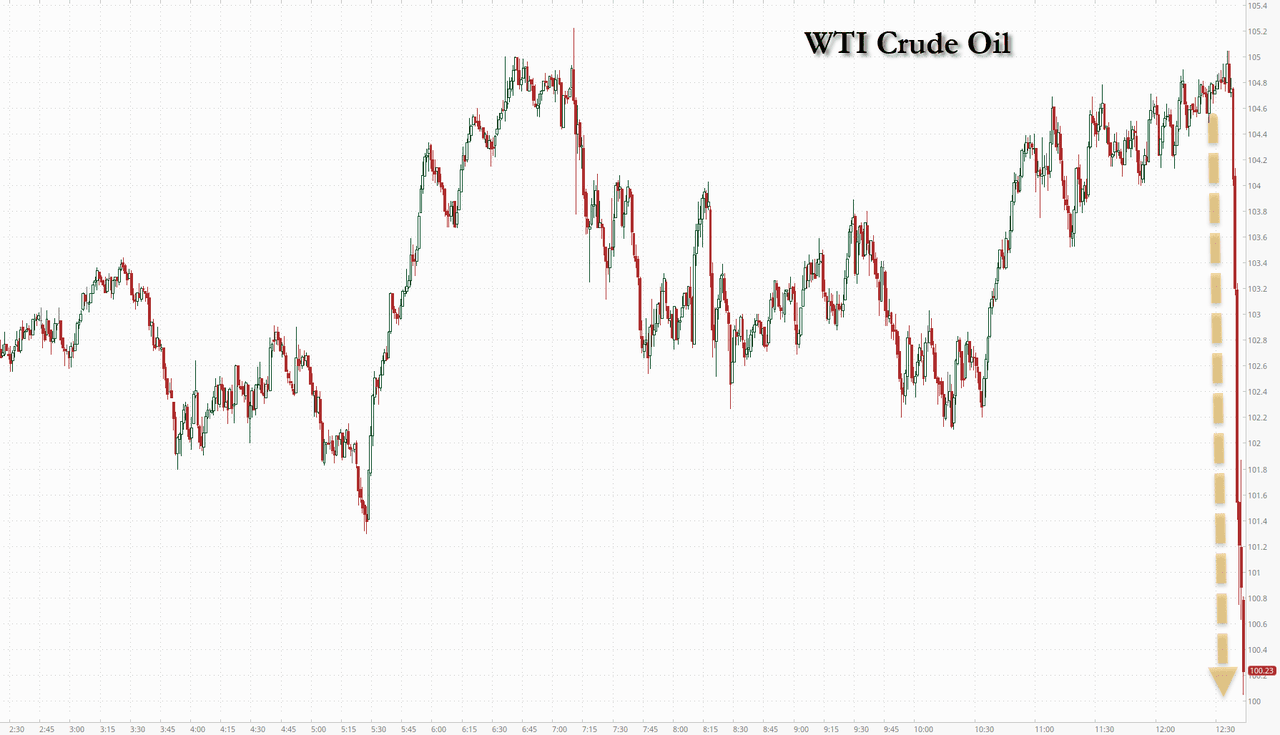
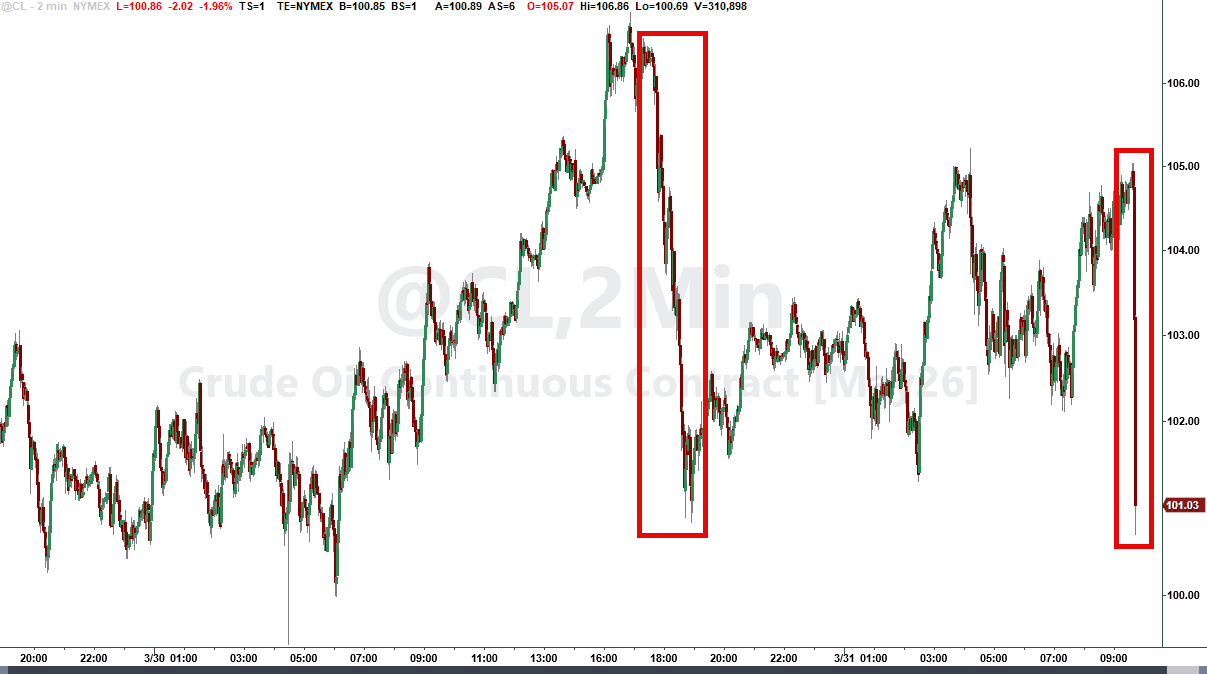
Oil Plunges on Iran Overture
A big developing headline has sent oil plunging...
IRAN'S PRESIDENT PEZESHKIAN STATES THEY ARE PREPARED TO END THE WAR IF THEY RECEIVE GUARANTEES
Iranian President Pezeshkian says Iran seeks no war but is prepared to end it with guarantees against further attacks, per state PressTV:
• The US-Israeli military aggression against Iran is an unprecedented crime and a flagrant violation of international law.
• Iran engaged in good-faith talks with the US, only to be illegally attacked mid-negotiation—proving the US rejects diplomacy.
• Neighboring countries hosting US bases failed to prevent their territories from being used to attack Iran.
• The solution is an end to aggression; Iran seeks no war but is prepared to end it with guarantees against further attacks.
• Europe should drop its destructive approach and engage with Iran professionally and in line with international law.
A big question will be whether this could represent an IRGC vs. civilian government divide, as far as whether this peace overture sticks. Also, the US and Israel would have to both agree to halt the ongoing aerial strikes, but it's not at all clear whether the Netanyahu government would be on board with ceasefire, given many believe Israel's objectives are much more expansive, oriented toward total regime collapse.
Trump: Hormuz Strait to 'Automatically Open'(?)
"When we leave the strait will automatically open," President Trump has told the New York Post Tuesday, when asked whether he's considering ending action in Iran without reopening the Strait of Hormuz.
"Well, I think it’ll automatically open, but my attitude is, I’ve obliterated the country. They have no strength left, and let the countries that are using the strait, let them go and open it… because I would imagine whoever’s controlling the oil will be very happy to open the strait," Trump continued. "But we won’t have to be there much longer - but we have more work to do in terms of killing their offensive, whatever offensive capability they have left."
AntiWar.com's Dave DeCamp points out a certain circular reasoning and sad reality of where the situation stands: "The goal of the war has become fixing a problem that didn't exist before the war."
IRGC Threatens US Tech Companies in Region
The IRGC has reportedly threatened to target the Middle East operations of 18 US technology companies starting Wednesday night. It warned of this escalation should any more senior military commanders or government leaders be assassinated. Among companies named in a statement include Apple, Google, Tesla, Microsoft, Intel, Oracle, IBM, Meta, Nvidia, Boeing, and others.
This may have already started happening in terms of the ongoing Iranian bombardment of Israel - though the ballistic missiles are said to be less frequent compared to opening weeks of the war. Newsquawk: "Iran's Army says they have targeted industries belonging to Siemens and AT&T in Ben Gurion and Haifa." Confirmed in state media (based on emerging reports, they are Cisco, HP, Intel, Oracle, Microsoft, Apple, Google, Meta, IBM, Dell, Palantir, NVIDIA, JPMorgan, Tesla, General Electric, Spire Solutions, G42, Boeing)
US Claims Iran Fragmenting, High Level Desertions
Among Hegseth's earlier themes which we said signaled preparation for an 'offramp' is that he asserted that heavy US strikes on Iran are fragmenting the regime, and greatly dampening morale among Tehran authorities.
"Our strikes are damaging the morale of the Iranian military, leading to widespread desertions, key personnel shortages and causing frustrations amongst senior leaders," Hegseth said at the morning Pentagon briefing on Tuesday. Also, Gen. Caine added that "The joint force continues to degrade and destroy Iran’s ability to project power and threaten stability beyond its borders." President Trump has followed in words given to NYP that he doesn't expect the war to continue for much longer, telling Americans they can 'soon' expect an end - in a repeat of similar remarks from last week.
France, Italy Block Airspace for Some US Planes Operating In Iran
France has reportedly refused to allow the United States to use its airspace to transport weapons for the Iran conflict -marking the first such denial since the war began, according to Reuters. This follows a similar move by Spain, signaling growing reluctance and angst among key European allies to facilitate US military logistics. At the same time, Italy has denied certain US aircraft access to an airbase in Sicily, though officials there insist the issue stems from procedural violations, specifically that the Pentagon failed to obtain proper authorization before requesting landing clearance.
Italian officials emphasize that all requests must comply with established agreements and legal frameworks, which require case-by-case approval and, in some cases, parliamentary oversight. This legal positioning provides the Meloni government with a way to limit involvement (and so domestic fall-out among largely anti-war youth) while maintaining formal cooperation, even as domestic opposition to the conflict and unease over US interventionism continue to grow.

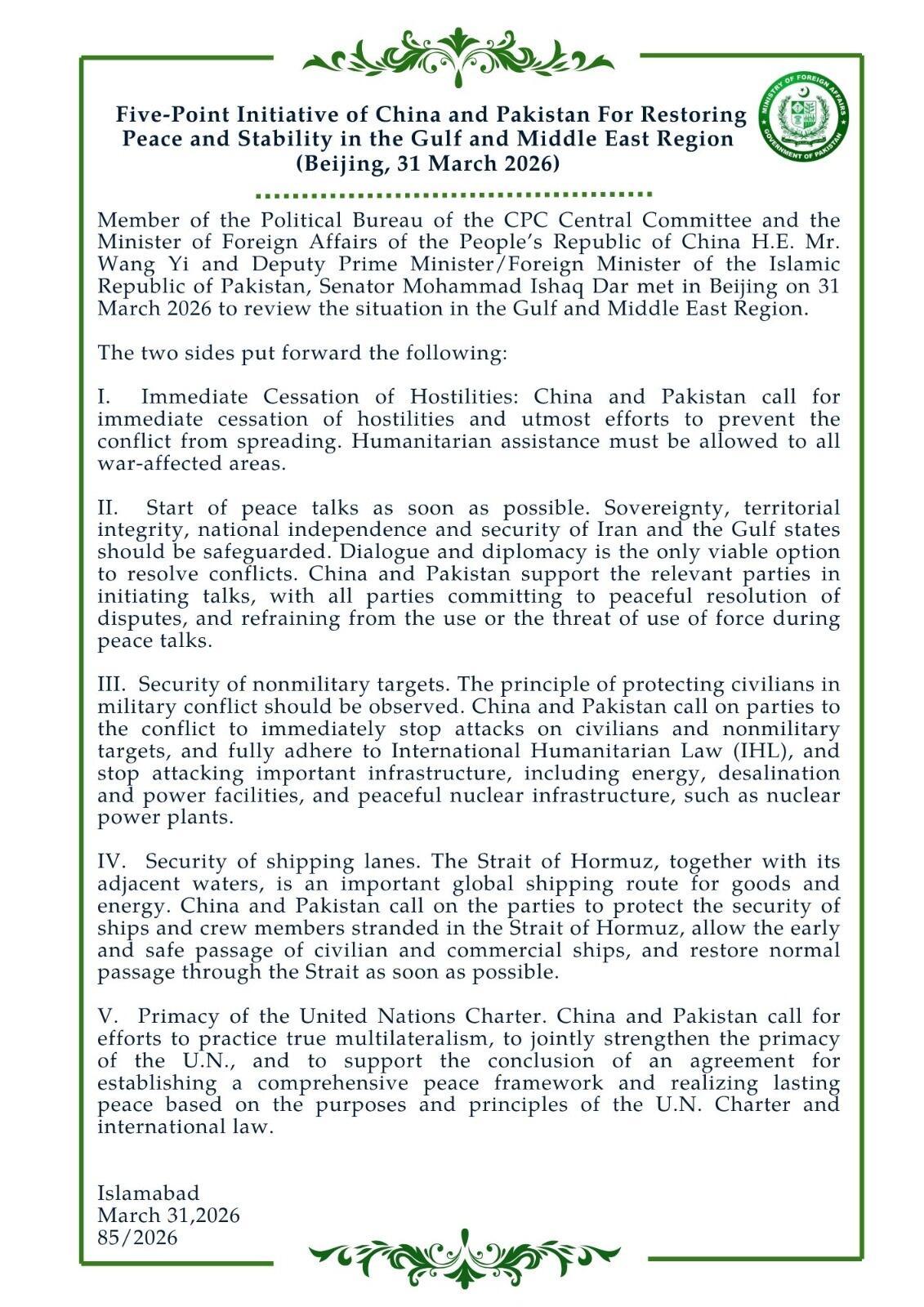
China-Pakistan Issue 5-Point Peace Framework
China and Pakistan on Tuesday issued a five-point initiative for restoring peace in the Gulf and Middle East, after Chinese Foreign Minister Wang Yi held talks with Pakistani Deputy Prime Minister and Foreign Minister Mohammad Ishaq Dar in Beijing. These countries have taken the lead, with Islamabad playing host to shuttle diplomacy - after earlier Egypt and Turkey also sent their top diplomats for a Sunday summit. In short, it is broken down according these five points and headings, laying out a broad path for Iran war ceasefire and permanent truce:
I. Immediate Cessation of Hostilities: China and Pakistan call for immediate cessation of hostilities and utmost efforts to prevent the conflict from spreading.
II. Start of peace talks as soon as possible.
III. Security of nonmilitary targets.
IV. Security of shipping lanes.
V. Primacy of the United Nations Charter.
Notably, there's nothing in here about 'denuclearization' of Iran or anything touching on what might be US-Israeli strategic aims, but instead it is quite ambiguous and broad as a proposed starting point. This comes as the US has signaled it could be open to an offramp or peace deal even if the Hormuz Strait remains under Iran's de facto control. Here is the document issued by Pakistan's official Ministry of Foreign Affairs accounts on social media:
Secretary of War Hegseth Says 'Upcoming Days Will Be Decisive', 'Damaging Iran Military Morale'
WarSec Hegseth's comments were not quite a "Mission Accomplished" but definitely a reflection on the courage and completion of "systematically destroy" Iran's military capabilities. Hegseth said he visited US troops involved in operations against Iran over the weekend, describing a campaign that is intensifying as American firepower ramps up while Iran’s capabilities decline.
He stressed that "upcoming days will be decisive," acknowledging Iran is still expected to launch missiles but adding, "we will shoot down" incoming threats. According to Hegseth, sustained US strikes are not only degrading military assets but also "damaging Iran military morale" and triggering "widespread Iran military desertions." And another key line:
"We would much prefer to get a deal. If Iran was willing to relinquish material they have and ambitions they have, open the strait, great. That's the goal. We don't want to have to do more militarily than we have to."
He went further, claiming "regime change has occurred in Iran," while warning that if Tehran refuses to make a deal, Washington will press ahead. “If Iran isn’t willing to make deal, US will continue,” he said, adding that strikes will persist "with more intensity" in the absence of an agreement.
* * *
Off-Ramp Imminent? Trump Tells World "Go Get Your Own Oil" Via Strait After 'Decimating' Iran
There's been a lot of speculation that the White House is preparing to find a 'mission accomplished' declaration moment, as 'any offramp will do' as a way to avoid a costly potential quagmire of introducing ground troops, and we may be seeing the start of one.
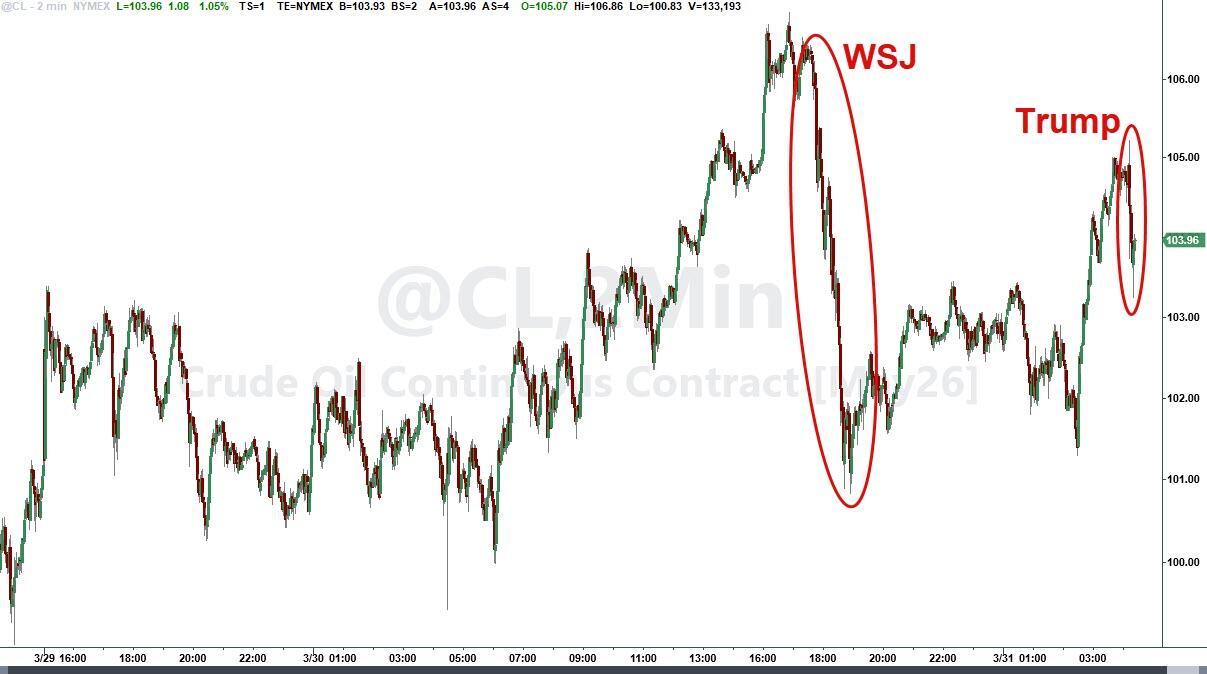
After comments apparently leaked to The Wall Street Journal overnight that Trump is willing to leave Iran with the Strait unopened, the President has clarified his thinking in his out loud voice this morning.
President Trump has posted on social media this morning, clearly signaling he is further down the road towards an off-ramp:
All of those countries that can’t get jet fuel because of the Strait of Hormuz, like the United Kingdom, which refused to get involved in the decapitation of Iran, I have a suggestion for you:
Number 1, buy from the U.S., we have plenty, and
Number 2, build up some delayed courage, go to the Strait, and just TAKE IT.
You’ll have to start learning how to fight for yourself, the U.S.A. won’t be there to help you anymore, just like you weren’t there for us.
Iran has been, essentially, decimated.
The hard part is done. Go get your own oil!
President DJT
The reaction was a drop in the price of oil...
...and stocks rising...
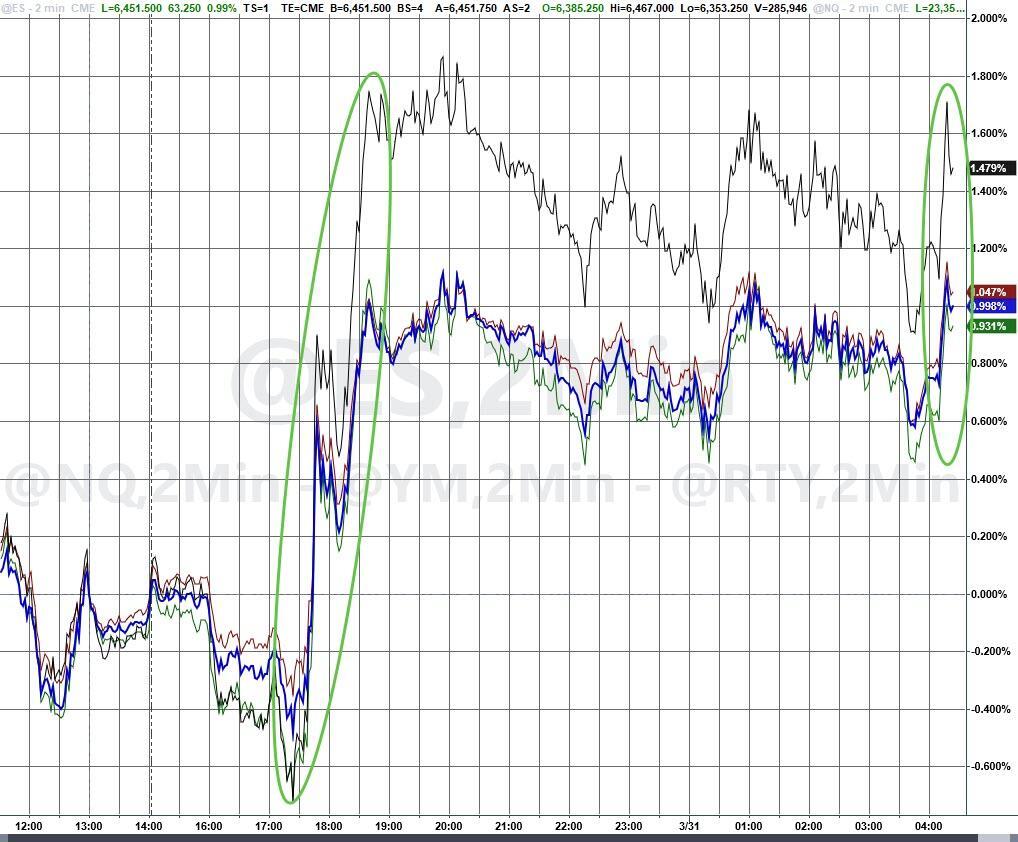
Nothing dramatic in either - as traders remain nervous of Trump-Talk still - but nevertheless, as Goldman's Rich Privorotsky noted overnight (in a seemingly precognitive comment before Trump's tweet), this is shaping up like an off-ramp:
After ~5 weeks of conflict "President Trump told aides he's willing to end the U.S. military campaign against Iran even if the Strait of Hormuz remains largely closed" (WSJ).
Politically messy (especially in GCC...less so domestically), but probably the least bad short-term pathway (can argue LT worse).
There’s a press conference at 8am EST from the Defense Department.
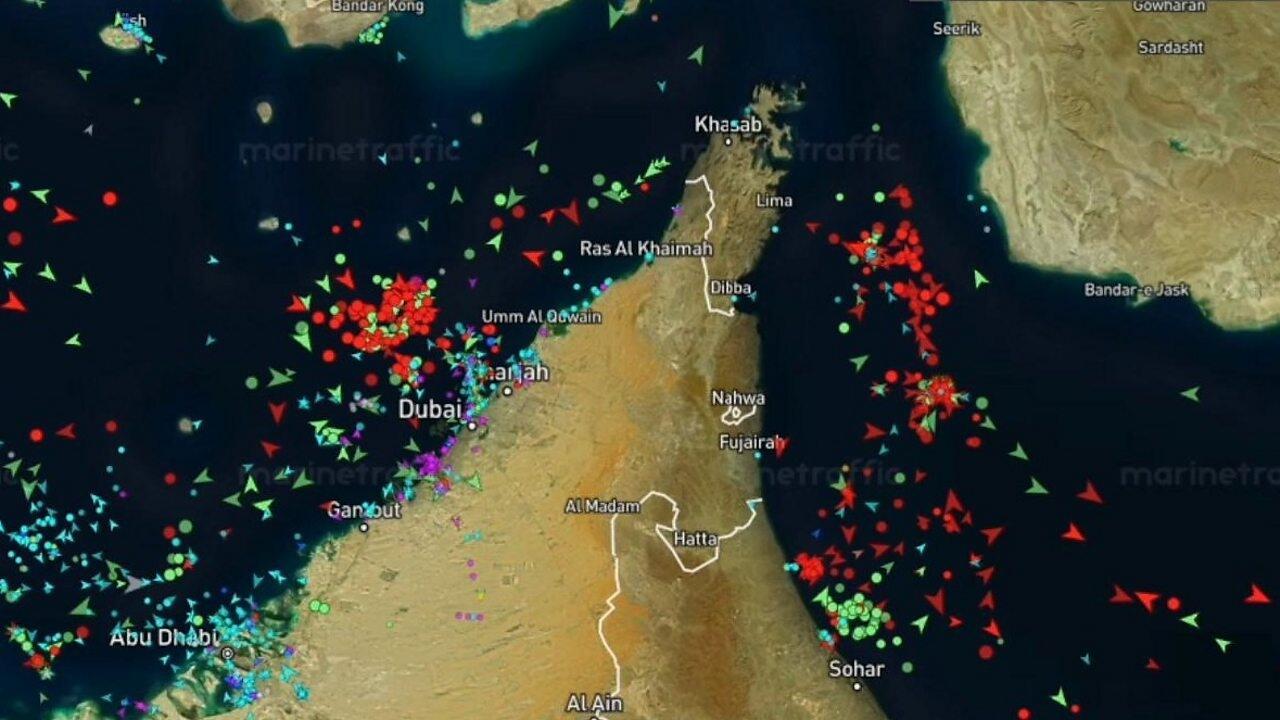
Overnight saw meaningful escalation… Iran struck a heavily laden oil tanker in Dubai port… a very explicit signal around control of shipping.
Likely in response to US actions around nuclear facilities in Isfahan
(Trump on his Truth Social posted uncaptioned video of large explosion 5 hours ago).
The most bullish near term outcome would be a “mission accomplished” style announcement...
i.e. nuclear capabilities set back materially (say 10–20 years), allowing the US to step away.
No edge here, frankly could be anything but will be watching.
...
The key shift then remains the Strait.
If the US pauses while Iran maintains some level of disruption, the pressure flips… China, Korea, Japan, India, Europe and the GCC all become directly incentivized to force flows back online.
Even partial restrictions (e.g. US/Israeli vessels) are manageable…so a unilateral victory could actually restart flows and shift pressure to ROW to get strait moving.
2,000-pound Bunker Buster Bombs Hit Isfahan Hard Overnight
Videos and reporting from the region has made clear that the central Iranian city of Isfahan has been hit very hard in the latest US-Israeli strikes. A major ammunition depot and other "military-linked" sites were attacked using 2,000-lb bunker busters. Isfahan is the Islamic Republic's third-most populous city and is believe to host majority of the nation's highly enriched uranium as well as a sprawling "missile city".
The Wall Street Journal reported that a "high volume of bunker busters, or penetrator munitions, was used for the strike" at a large ammunition depot, creating immense fireballs.
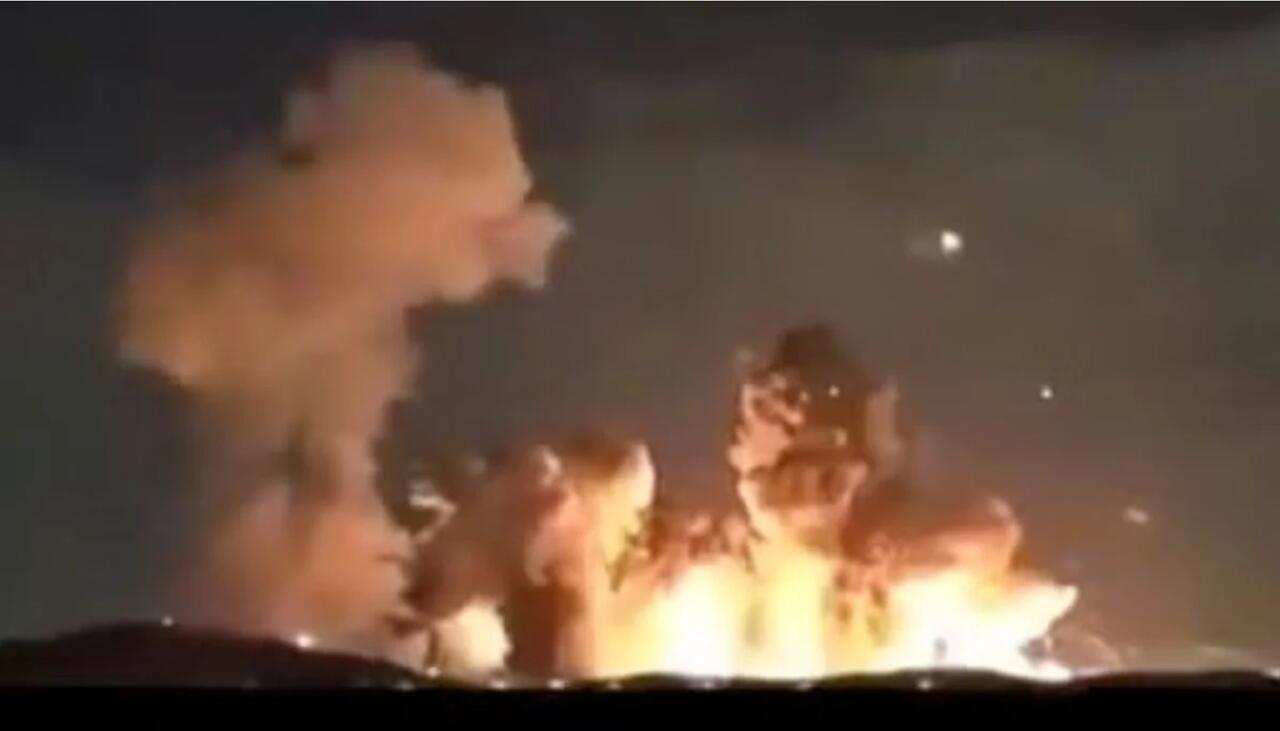
US forces have now hit more than 11,000 targets over the monthlong war, focusing heavily on degrading Iran's missile, drone, as well as nuclear power and development sites.
CBC has written, "The attacks were testament to the intensity of the month-long war the U.S. and Israel launched against Iran, as Prime Minister Benjamin Netanyahu suggested in an interview that Israel has achieved more than half of its war aims."
The heavy overnight explosions were widely recorded, being viewed for miles around:
"Isfahan is home to one of three sites earlier attacked by the U.S. military last year. NASA fire-tracking satellites suggest explosions happened in a mountainous region on the city's southern edge," the report described further, noting that Iran has yet to confirm the attack. President Trump previously warned on Truth Social, "Great progress has been made but, if for any reason a deal is not shortly reached, which it probably will be, and if the Hormuz Strait is not immediately ‘Open for Business’. He continued: "we will conclude our lovely ‘stay’ in Iran by blowing up and completely obliterating all of their Electric Generating Plants, Oil Wells and Kharg Island (and possibly all desalinization plants!), which we have purposefully not yet ‘touched’."
As for the ordinance used, "bunker buster" refers to a class of bombs engineered to drive deep beneath the surface - particularly through rock, soil, or reinforced concrete - before detonating. The technology was honed and widely used by the US during the Persian Gulf War of 1991.
https://www.zerohedge.com/markets/ramp-imminent-trump-tells-world-go-get-your-own-oil-strait-after-decimating-iran


