Search This Blog

Wednesday, June 10, 2026

Lawsuits Claiming Social Media Is 'Addictive' Gain Momentum

 Social media has been on trial for allegedly harming youth mental health, and tech companies have been facing uphill legal battles in recent months.

In a landmark case in March, a California jury found Meta and Google liable for the depression and anxiety of a woman who compulsively used social media as a child, awarding her $6 million.

Last month, a Kentucky school district secured $27 million in settlements after alleging social media companies fueled a mental health crisis among students. And the Supreme Court declined to hear Meta's challenge to a Vermont social media addiction lawsuit.

Other individuals, school districts, and attorneys general have brought cases, too.

Their strategy has been alleging that social media apps are designed to be addictive -- and those claims appear to be resonating.

"Unlike prior cases, which have primarily focused on harmful content like false or harassing statements, the plaintiff instead targeted the platforms' core design features," Ashley Shea, MS, a PhD candidate at Cornell University in Ithaca, N.Y., told MedPage Today in an email regarding the California case.

Shea explained that the case used a "relatively novel argument" that "common features of social media platforms (such as autoplay, infinite scroll, and pull-to-refresh) exploit the cognitive vulnerabilities of the adolescent brain and therefore constitute defective and harmful product design."

Section 230 of the federal Communications Decency Act provides technology platforms protection from liability related to third-party content, but focusing on the design of the platforms themselves and how they allegedly "create an addictive experience for users" is a different strategy, said Cayce Myers, PhD, JD, LLM, of Virginia Tech in Blacksburg, Va.

The cases recently brought against social media companies have been compared with the "type of cases that came out in the 90s against Big Tobacco," Myers said.

The argument that the "systems themselves are designed to be addictive," coincides "with a larger social discussion around the net impact of social media on the mental health of adolescents," he said.

Recent studies have suggested that addiction to screen time, including social media, was tied to suicidality in U.S. kids, that social media "detox" was linked to better mental health for 18- to 24-year-olds, and that increases in social media use during early adolescence were significantly associated with lower performance in key areas of cognitive function.

But it is important to interpret these and other findings with caution, experts said.

"I think we need to be clear that much of the relationship between social media use and mental health is correlation rather than causation," pediatrician Heidi Schumacher, MD, of the University of Vermont Larner College of Medicine in Burlington, who also is a member of the American Academy of Pediatrics (AAP) Council on Communications and Media, told MedPage Today.

Additionally, "every child develops their own unique relationship with social media," Schumacher noted.

"I find that, for many of the young people I work with, social media can be a really positive experience," she explained, "especially marginalized youth in communities where they might seek connection beyond, say, their small community."

"Finding folks that they connect with in the bigger world can be a really positive experience, and yet of course, when social media becomes problematic or excessive, there can be real consequences," she added.

AAP has pushed for more child-centered design when it comes to social media. Platforms should prioritize child privacy, encourage critical thinking and healthy social connection, and offer age-appropriate content, Schumacher said.

The organization also has called for companies to help take the burden off of parents. For instance, Schumacher said: "When a new parent buys a car seat for a baby, it is their responsibility to install the car seat according to the instructions, and to strap their baby in consistently. But the parent has to rely on the manufacturer to build a car seat that has their child's safety top of mind, and on regulations to ensure that quality standards have been met. Why shouldn't we expect similar layers of protection for young people as they engage in digital media platforms?"

Meta and Google have denied direct links between social media use and mental health concerns and have said their platforms have safety features for kids, have pointed to the First Amendment as protection, and have appealed the California verdict.

What happens in that appeal and others will matter, Myers said. "People are paying attention to it," he said. "These lawsuits are paralleling a larger societal discussion on the topic."

https://www.medpagetoday.com/special-reports/features/121698

Trivia Nights, Valentine’s Cards: Overlooked Social Connections Can Prevent Suicide

 Nearly every Tuesday for a decade, Steve Siple attended a bar trivia night with friends in Birmingham, Alabama. After moving to North Carolina, he developed a new ritual — joining other Charlotte locals on Saturdays to pick up trash along the city’s light rail.

These are more than fun outings to Siple. They help keep him alive.

Siple has battled suicidal thoughts in the past. He lost his father to suicide, and one of his sons has struggled with thoughts of hurting himself.

That’s made Siple vigilant about protecting himself and his family. In addition to seeing a counselor regularly and speaking openly about mental health, he prioritizes social connection.

“Loneliness was, over my lifetime, one of the greatest risk factors” for suicide, said Siple, a former board chair for the American Foundation for Suicide Prevention.

To some, this concept may seem obvious. Yet in the overall approach to suicide prevention, it’s often overlooked. Treatment of a serious mental illness that can lead to suicide, such as major depressive disorder, often centers on medication and talk therapy with little or no consideration of factors such as social isolation or financial duress. Now, there’s a growing movement to address loneliness not just through personal choices but also through public policy.

The research is clear: Among the various complex issues that contribute to suicide, loneliness is a big one. It’s a particularly strong predictor for older adults, who have the highest rates of suicide, and for youths, for whom suicide is the second-leading cause of death.

Humans are social animals. When we feel cut off from one another, our stress levels increase, our immune systems are disrupted, and ultimately we’re likely to die earlier (by suicide or of other causes). An oft-cited study concluded that being socially disconnected is as harmful to one’s health as smoking up to 15 cigarettes a day.

And it’s getting worse.

Mental health researchers and clinicians say a variety of factors are fueling increased rates of loneliness in America, including the rapid growth of technology, such as smartphones and artificial intelligence; increased political polarization; the shift to remote work since the covid pandemic; and decreased participation in religious institutions.

With suicide rates remaining stubbornly high — often ranking among the top 10 causes of death in America — some advocates and people who have lost loved ones to suicide say increasing pathways to social connection could be a new frontier.

In this ongoing series, KFF Health News is examining new approaches to suicide prevention that shift the focus from stopping harm in moments of crisis to efforts that give people reasons to live well before they make fateful choices.

“If we want to reduce suicide rates in our country, which is absolutely essential, then a key part of that has to be fostering social connection,” said Vivek Murthy, who served as surgeon general under Presidents Barack Obama and Joe Biden. “We have more than enough data to support this as being an important area of focus.”

In 2023, Murthy released the first U.S. Surgeon General’s Advisory on loneliness as a public health issue, with more than 300 supporting citations. He’s also written a book on the topic and is touring the country discussing the value of social connection.

“To help someone else feel less alone, to help them feel seen and understood and valued,” he told KFF Health News, “that can be one of the most powerful interventions that we make.”

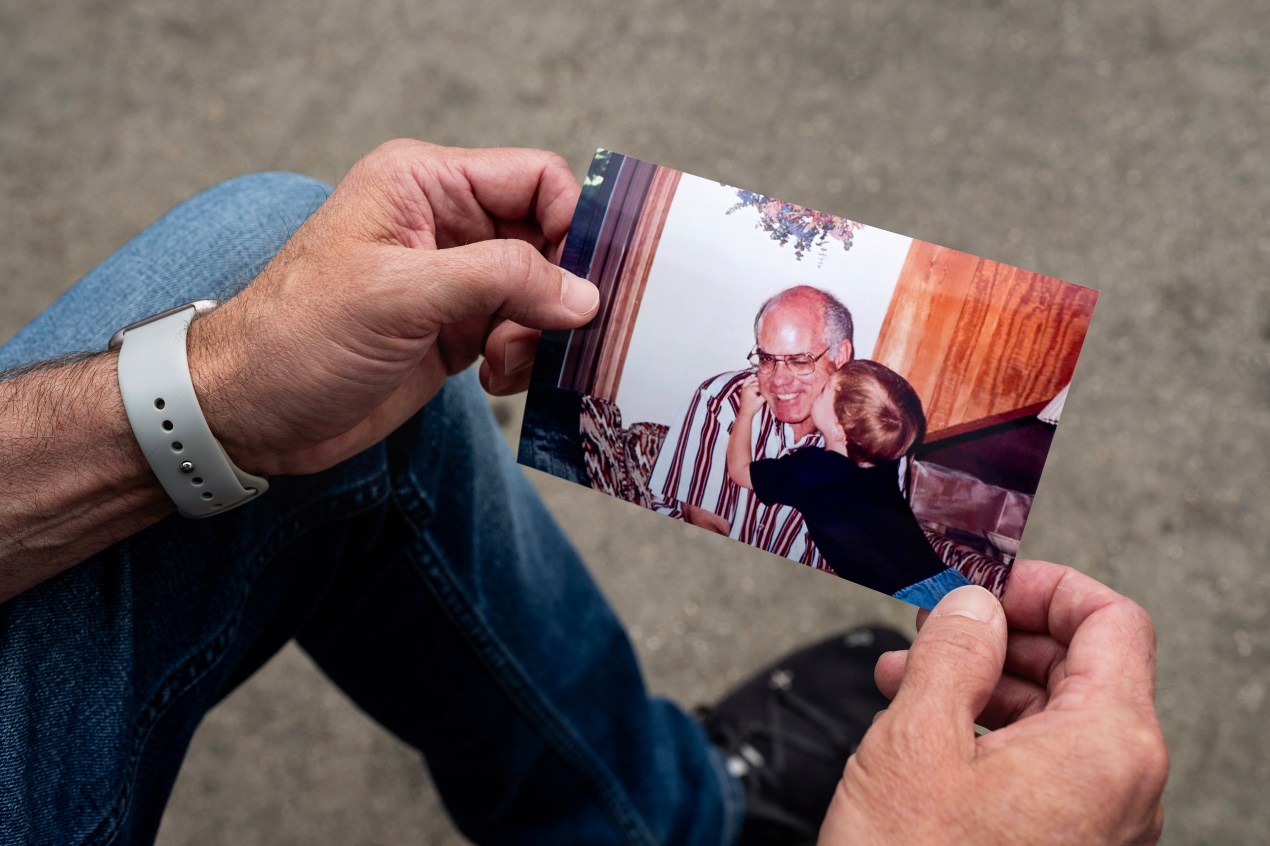
Two hands hold a photo of an older man wearing a striped shirt and glasses who is being hugged and kissed on the cheek by a small boy
Steve Siple holds a photo of his father and his son. Siple’s father died by suicide in 2001. (A.M. Stewart for KFF Health News)

A Role for Elected Officials

Curing loneliness may seem like the responsibility of families and neighbors, people making one-to-one connections. But Murthy says elected officials have work to do, too.

They can use their bully pulpits to turn this into a mainstream issue, he said. They can create microgrants to support grassroots ideas from community entrepreneurs and invest in “social infrastructure,” he added.

That term refers to things in the community that support the development of social connection, from physical spaces, such as libraries and parks, to policies and programs, such as building public transportation and fostering volunteer groups.

“These all matter and impact whether people gather,” Murthy said.

However, investing in public institutions and infrastructure is a costly endeavor that can seem unreasonable when local officials are struggling to balance budgets without increasing tax burdens.

That’s where creativity can kick in.

A health system and a museum in Charlotte have teamed up to provide “prescriptions” for people to attend art classes or live performances together. In Tennessee, the city of Chattanooga is funding community ideas to increase connection and time in nature, including benches where people can speak with volunteer listeners. And across the country, men’s sheds have popped up as places where men can work on projects side by side and discuss their mental health.

Meal Deliveries and Valentines

Marcie O’Neal knew she wouldn’t have much money at her disposal. She was hired in 2024 to lead suicide prevention efforts in the rural Pennyrile region of western Kentucky after local leaders saw a rise in suicides among the elderly. Her grant was about $280,000 — less than $3 per person in the region.

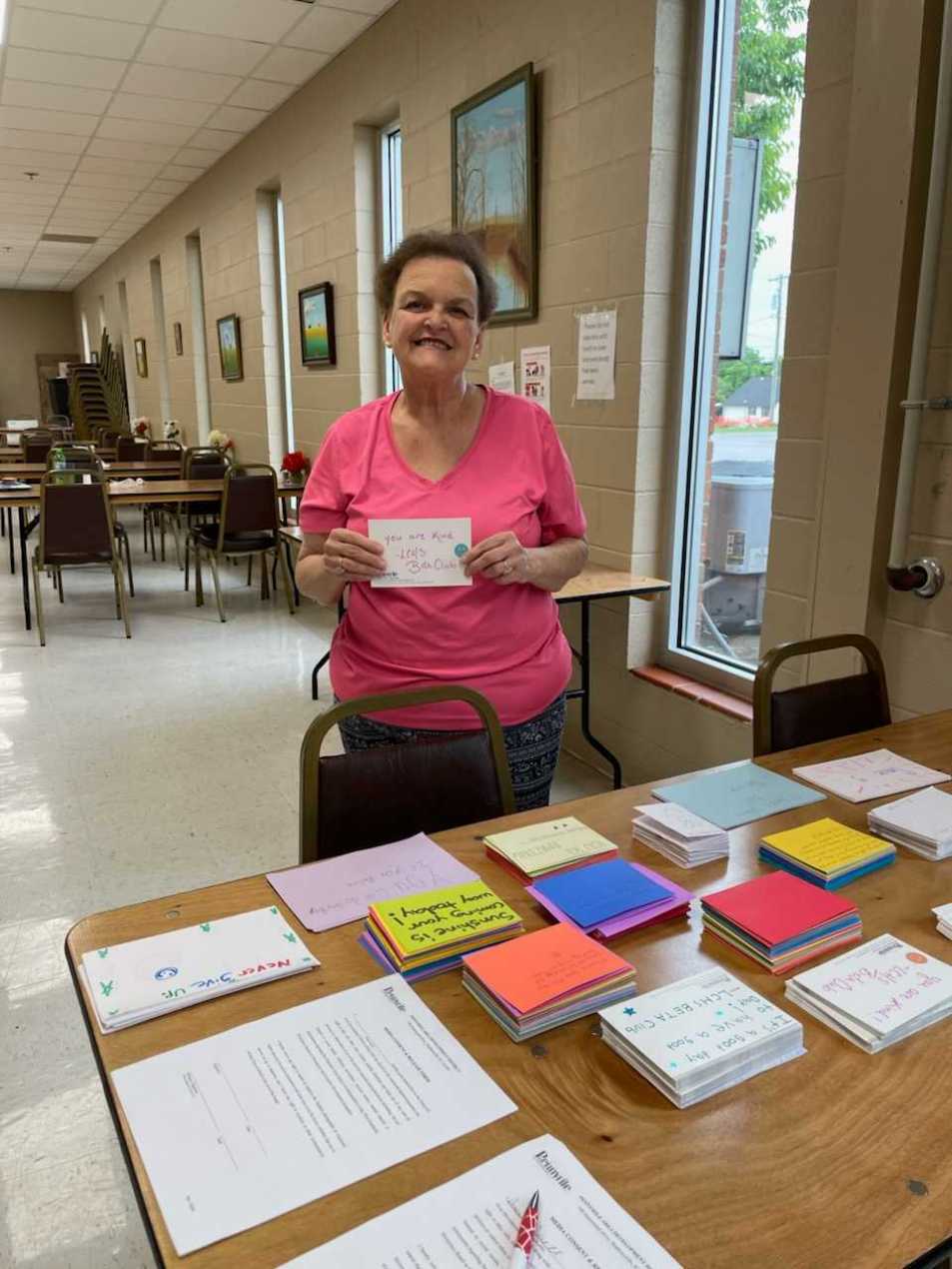
A woman wearing a pink v-neck shirt smiles and holds up a card that reads "you are kind" as she stands in front of a table
Denise Porter holds one of the cards that high school students send to older people in western Kentucky’s Pennyrile region as part of local suicide prevention efforts. Program leaders say the goal is to help these residents feel less isolated and empower youths to feel they can make a difference in their communities. (Marcie O’Neal)

But she knew the nine-county area had other strengths, such as dedicated meal delivery programs and high school clubs.

Drivers who drop off prepared meals to homebound residents “can be the only person that an older adult sees in the week,” O’Neal said.

The state had already been training some of those drivers to recognize warning signs of suicide among older people and alert county agencies to follow up with them. O’Neal thought there could be another component.

She reached out to high school Beta clubs, which focus on fostering leadership skills and volunteerism, across the nine counties and asked them to write cards that could be distributed to older residents along with meals. The response was swift, O’Neal said.

About 1,200 cards were delivered last May. They repeated the gesture in February for Valentine’s Day and again this May.

O’Neal said one of the older residents told her, “I don’t remember the last time I got a Valentine’s card.”

The students also enjoyed feeling as if they made a difference, O’Neal said. She’s helping one school set up an ongoing pen pal program with a nearby retirement community.

Locals affectionately call O’Neal “the suicide lady” — a term she considers “a badge of honor.”

Suicide prevention “doesn’t have to be sweeping huge things,” she said. “It’s a little thing you can do that can kind of snowball into more things.”

‘The Secret Sauce’

Siple, who has prioritized social connection through the trivia nights and volunteer clean-ups, felt most alone when he transitioned from a job at a commercial bank to working at home.

He spent most of his day analyzing Excel sheets, drafting grant proposals, and compiling recommendations for clients. The work felt important, but it was isolating, Siple said.

“If my wife or kids were around during the evening, I was safe,” he said. Holding meetings at coffee shops helped, too.

But when it was just him at his desk, “that’s where I got the darkest lonely feelings,” he said, including thoughts of suicide.

Breaking out of that required seeking new connections.

Siple said church was a great anchor for him and his wife — not just on Sundays but throughout the week at Bible studies and potlucks. They also go to see a variety of live music, including bluegrass and alternative rock.

“Being with folks that are into the same type of music that we’re into for a concert feels like connection,” he said.

A man wearing a navy baseball cap and glasses stands in front of a green bush and looks off to the side of the frame
“Loneliness was, over my lifetime, one of the greatest risk factors” for suicide, says Siple, a former board chair for the American Foundation for Suicide Prevention. (A.M. Stewart for KFF Health News)

Research suggests sports can play a similar role in some instances. At least two studies have found major sporting events are associated with lower suicide rates. The authors posit it’s because people coming together to support their team or to enjoy the event creates a sense of belonging, which is protective.

That concept resonates with Sarah Brummett, who has worked on suicide prevention efforts at the state and national level and helps run Sources of Strength, an upstream prevention program. Fostering that sense of belonging has played a central role in each of those initiatives, she said.

“We can’t eliminate hard stuff in our lives,” said Brummett, who lost five friends to suicide, starting in middle school.

“Belonging is really the secret sauce,” she said, “for how we, as humans, can navigate really hard things.”

https://kffhealthnews.org/mental-health/suicide-prevention-loneliness-social-connection-mental-health-eleven-minutes/

'High-Intensity Transcranial AC Stimulation for Emotion Regulation, Attentional Bias in Youth'


  1. Tiejun Kang, PhD1; Xuan Zhao, MS2; Xiaoning Huo, MD2

AMA Delegates Stop Short of Backing Universal Newborn Cytomegalovirus Screening

 by Cheryl Clark

A proposal to back universal newborn screening for congenital cytomegalovirus (CMV) was fiercely debated among the American Medical Association (AMA) House of Delegates on Tuesday.

The proposal was ultimately referred for more study after several speakers threw cold water on the idea, saying such policies -- now in place just in Minnesota and Connecticut -- could do more harm than good.

"This one's tough," said Eli Freiman, MD, a delegate from the Massachusetts Medical Society who spoke on the society's behalf. "I want us to screen for congenital CMV; I want us to do it right ... I'm asking us, as physicians, to understand the nuance and restraint that is required here."

"This does need to get done, but we're not there yet," he said.

In its rationale, the proposal said one in every 200 newborns in the U.S. has the congenital CMV infection, although most are asymptomatic at birth. It must be diagnosed within the first 21 days of life to distinguish it from postnatal CMV infections. And, it said, many infected individuals who are asymptomatic at birth develop late-onset hearing loss.

After Minnesota implemented universal CMV screening, the time of the child's first audiology visit dropped from 8.5 months of age to 25 days of age, and diagnoses rose from three to 61 per year, the proposal said.

In support, Pam Shaw, MD, of the American Academy of Pediatrics from Kansas City, who spoke as a pediatrician, said she saw an infant who passed their newborn screening but developed hearing loss at 18 months. "They were delayed in their speech and development," which a CMV screening policy would have caught and prevented, she said.

"Universal screening has significantly increased our ability to identify infants with or at risk for congenital CMV-associated hearing loss and neurological abnormalities," said Laurel Ries, MD, alternate Minnesota delegate.

But many of the delegates were reluctant to move forward without more studies.

"We're talking about screening nearly 4 million newborns per year to diagnose approximately 20,000 cases, 85% of which will not be symptomatic," and for whom treatment is not now recommended, said Dana Block-Abraham, DO, an alternate delegate from the American College of Obstetricians and Gynecologists who spoke on behalf of the college.

At the same time, she said, "a positive screening test could create substantial anxiety for families while they wait and see over the 27 months whether these sequelae develop. ... We don't know yet if this is best practice."

Freiman also was cautious without appropriate studies to show that universal screening reduces harm. He explained that in his state of Massachusetts, about 70,000 babies are born each year, and screening would mean that about 350 would be identified and 30 would be symptomatic, meaning they'd be already identified.

"But what do we do with the 200 plus infants that are asymptomatic or would never go on to develop severe disease? We don't know if identifying those infants is meaningful," he said. "We're asking for a legislative solution that could potentially worry 200 additional families, require 200 additional specialty follow-ups," and would require resources and time, when "we don't know if it's effective yet."

Joseph Sanfrancesco, MD, alternate delegate of the College of American Pathologists speaking on behalf of the Pathologist's Section Council, also said the proposed policy was premature. It would cause "a significant uptick in high complexity molecular confirmatory testing" when there's a shortage of laboratory professionals.

A study should investigate laboratories' ability to handle universal CMV testing in the many states that don't now have it, he urged.

https://www.medpagetoday.com/meetingcoverage/ama/121697

First Guideline on Cardiovascular-Kidney-Metabolic Syndrome Released


  • A new U.S. guideline covers the prevention, detection, evaluation, and management of cardiovascular-kidney-metabolic (CKM) syndrome.
  • CKM syndrome is defined as a health disorder stemming from connections among heart disease, kidney disease, diabetes, and obesity.
  • Healthy lifestyle and weight management are strongly recommended for all patients, and GLP-1 drugs and other medications are also recommended starting in the early course of the condition.

The first dedicated U.S. guideline for cardiovascular-kidney-metabolic (CKM) syndrome makes a big push to unite primary and specialty care in managing large swaths of the population.

The American Heart Association (AHA) and the American College of Cardiology (ACC) now stress interdisciplinary collaboration among cardiologists, endocrinologists, nephrologists, and primary care clinicians caring for patients at various stages of or at risk for CKM syndrome in the new guideline, which was published in the Journal of the American College of Cardiology.

CKM syndrome is defined as a health disorder stemming from connections among heart disease, kidney disease, diabetes, and obesity. Nearly 90% of U.S. adults are said to have at least one CKM syndrome risk factor (e.g., excess weight, high blood pressure, abnormal lipids, high blood glucose, or reduced kidney function).

"The multisystem interplay highlighted in the CKM syndrome definition further supports the avoidance of siloed subspecialty care for the management of the component conditions within CKM syndrome, emphasizes the importance of screening for CKM syndrome in both primary care and relevant subspecialty clinics, and underscores the value of interdisciplinary collaboration," noted Chiadi Ndumele, MD, PhD, of Johns Hopkins University School of Medicine in Baltimore, and co-authors.

The CKM syndrome framework was first introduced by the AHA in 2023. The new guideline replaces the one on overweight and obesity from 2013.

"Heart, kidney, and metabolic conditions don't occur in isolation -- they are deeply connected," said Ndumele in a press release. "This guideline calls for earlier screening and care, focusing on prevention and coordinated action to reduce the risk of cardiovascular disease before serious complications develop or a major cardiac event occurs."

The AHA and ACC say that, for starters, staging for CKM syndrome is now strongly endorsed in all youths and adults alike, with important assessments including metabolic risk factors, kidney function, and cardiovascular disease (CVD) status (class I recommendation).

Of note, the PREVENT outcome-specific equations are to be used to quantify 10-year risk related to CKM syndrome and to inform prevention strategies in people without CVD (class I); as for calculating 30-year risk, the PREVENT equations get a weaker recommendation (class IIa).

The guideline further describes how implications for monitoring and treatment vary depending on where a given person falls within the five-stage CKM syndrome framework.

For example, among adults without CKM syndrome (CKM stage 0), lipids, glycemia, and kidney function should be assessed at least every 5 years to ensure timely identification of CKM syndrome risk factors for optimal CVD prevention (class I). Recommended monitoring frequency increases to at least once every 2 to 3 years in individuals with overweight/obesity or prediabetes (CKM stage 1; class I), and once a year once metabolic risk factors and/or chronic kidney disease (CKD) enter the picture (CKM stage 2-3; class I).

Meanwhile, for all adults with or at risk for CKM syndrome, it is recommended that body mass index and waist circumference be measured at least annually to identify the risk for CKM stage progression (class I). It is also noted that blood pressure should be measured at least once a year, though a more focused blood pressure guideline already exists.

Additionally, healthy lifestyle and weight management are emphasized to avoid advancing CKM syndrome stages.

Add-on pharmacotherapy is also listed for some groups starting with the earliest stage of disease. GLP-1 receptor agonists are weakly recommended for CKM stage 1 for weight loss and improving blood sugar (class IIa) and non-GLP-1 medications are noted as reasonable for the purpose of weight loss (class IIb).

By CKM stage 2 or 3, SGLT2 inhibitors or GLP-1 receptor agonists are more strongly endorsed in patients who have type 2 diabetes with CVD or increased risk for CVD per the PREVENT risk equations (class I).

Meanwhile, for people with CKD and type 2 diabetes or CKD and albuminuria, renin-angiotensin system inhibitors and SGLT2 inhibitors are promoted as first-line therapy (both class I). If albuminuria persists among patients with CKD and type 2 diabetes, a nonsteroidal mineralocorticoid receptor antagonist or a GLP-1-based therapy may be added for further kidney and cardiovascular protection (both class I).

"The recommended approach is aligned with the overarching premise of targeting individuals at the highest absolute risk for the most intensive treatments," wrote Ndumele and colleagues. "As such, individuals with CKD and T2D [type 2 diabetes] or CKD and albuminuria represent key benefit groups at high baseline absolute risk, with population-based analyses demonstrating that the overwhelming majority of individuals with CKD and T2D or albuminuria have a 10-year PREVENT-CVD score ≥7.5%."

The CKM guideline was developed by the AHA and the ACC in collaboration with the American Diabetes Association, the Obesity Association, and the American Society of Nephrology.

Disclosures