Search This Blog

Saturday, May 4, 2019

AUA’19: Predicting Clinically Significant Prostate Cancer: Combining 4Kscore, MRI

Prostate specific antigen (PSA) is the most commonly used biomarker in prostate cancer (PCa) but is far from being the ideal marker, resulting in a nearly 70% negative biopsy rate1 as well as overdiagnosis of clinically insignificant PCa2. The 4Kscore test (4K) has shown improved discrimination of clinically significant PCa (csPCa), reducing the number of required prostate biopsies3. Additionally, mpMRI also identifies a higher proportion of csPCa (18% more than transrectal ultrasound guided prostate biopsy) and lowers the rate of non-significant PCa diagnosis by 5%4. It has a sensitivity range of 44-87% and negative predictive value range of 63-98%5.
Recently, it was shown that the combination of 4K and mpMRI (4K-mpMRI) outperforms both tests individually in both area under the curve (AUC) and decision curve analyses6. However, attempts at devising a practical algorithm for 4K-mpMRI have yielded relatively weak sensitivities and low negative predictive values (NPV). In this presented study, the authors attempted to validate the combination of 4K-mpMRI and devise an improved algorithm for the identification of csPCa while limiting unnecessary prostate biopsies.
This was a retrospective study analyzing patients considered at risk for PCa and tested with 4K and mpMRI between the years 2016 and 2018. The primary outcome of csPCa was defined as Gleason grade group (GGG) >= 2 on prostate biopsy. 4K and mpMRI were compared via receiver operating characteristic (ROC) curves and logistic regression, and a model combining the two was tested for accuracy and efficiency. The 4K test was stratified to low (<7.5%) vs. high (>7.5%) risk disease, and mpMRI was stratified to PIRADS 3-5 vs. 0-2. The entire cohort consisted of 233 patients, and their basic clinical details are demonstrated in Table 1.
Table 1 – Basic clinical data of patients analyzed in the study:
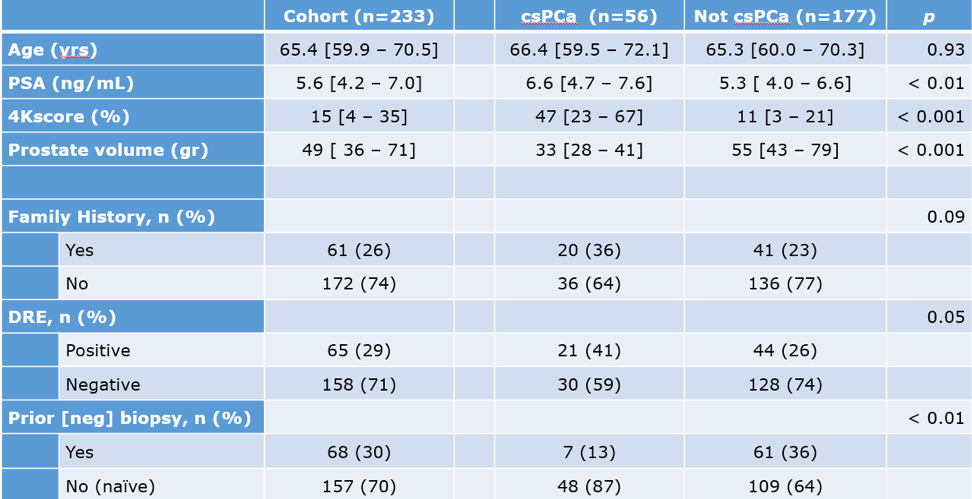
mpMRI results of csPCa and non-csPCa stratified by the PIRADS score are shown in table 2, and the biopsy results are shown in table 3. The biopsy results demonstrate that 177/233 (76%) had either a negative or GGG =1 biopsy result, meaning that 76% of the biopsies should potentially have been avoided.
Table 2 – mpMRI results:
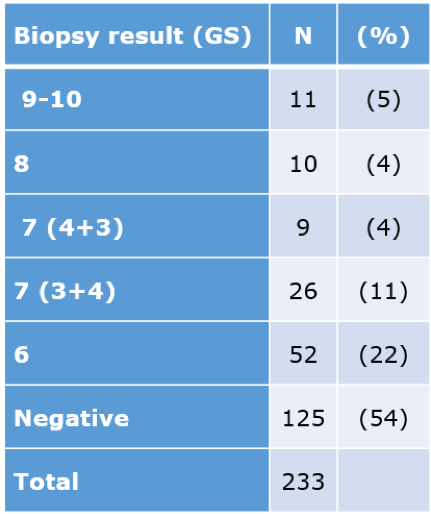
Table 3 -Biopsy results
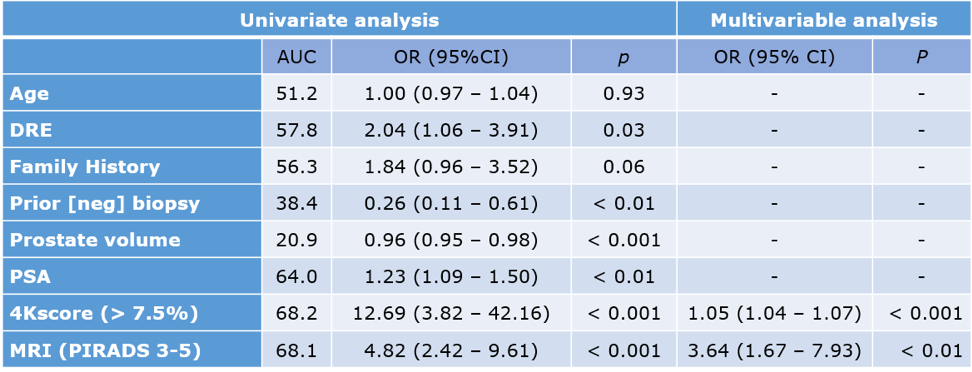
The univariable and multivariable models identified an association between csPCa and both 4K and mpMRI, as shown in table 4. The combination of 4K+mpMRI had resulted in an AUC of 0.796, and a sensitivity of 93%, specificity of 71%, positive predictive value of 50%, and a NPV of 97%, which is quite impressive.
Table 4 – Univariable and multivariable models:
Dr. Lubin concluded his excellent presentation and stated that the combination of 4K+mpMRI might be a potentially useful screening test, maintaining high sensitivity and dramatically improving specificity. Larger prospective multicenter studies are obviously needed to validate these results before widespread clinical implementation.
Presented by: Marc Lubin, MD, Mount Sinai Hospital, New-York, USA

AUA’19: Apalutamide in Nonmetastatic Castration-Resistant Prostate Cancer

Dr. Fred Saad gave a presentation on an exploratory analysis using the DECIPHER test in patients included in the SPARTAN trial.
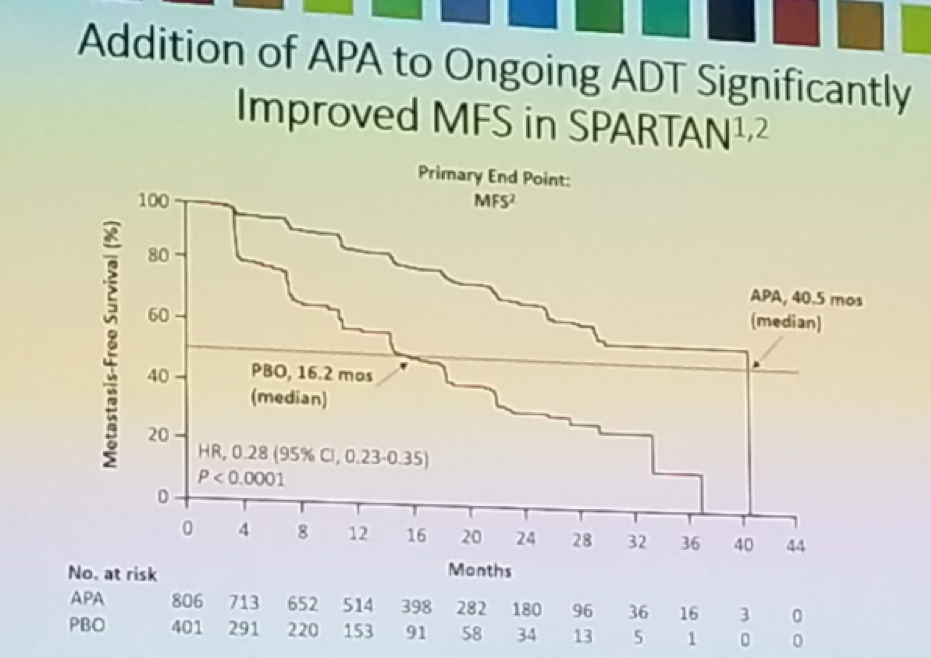
Patients with non-metastatic castrate-resistant prostate cancer (nmCRPC) and a PSA doubling time (PSADT)<=10 months are at higher risk for metastases/death when compared to patients with longer PSADT. Androgen receptor inhibitors, including Apalutamide, enzalutamide, or Darolutamide added to ongoing androgen deprivation therapy (ADT) have been shown to improve outcomes in high-risk nmCRPC patients. In the SPARTAN trial,1 nmCRPC patients with a PSA doubling time<10 months, who were receiving ADT, were given Apalutamide and were compared to patients who were given ADT alone (figure 1). Apalutamide was shown to improve metastasis-free survival (MFS) and other secondary end points, as seen in figure 2.
Figure 1- The SPARTAN trial:
AUA2019_UroToday_MFS by DECIPHER_1 .png
Figure 2- Apalutamide shown improve MFS in the SPARTAN trial:
AUA2019_UroToday_MFS by DECIPHER_2 .png
The DECIPHER prostate test (GenomeDx Biosciences, Inc., San Diego, CA) is a clinical-grade 22-marker mRNA-based genomic classifier (GC) that can support treatment decisions in patients with localized disease and predict disease progression in newly diagnosed patients (2). Patients with high GC scores have a significantly higher risk for metastasis than patients with low to average GC scores.
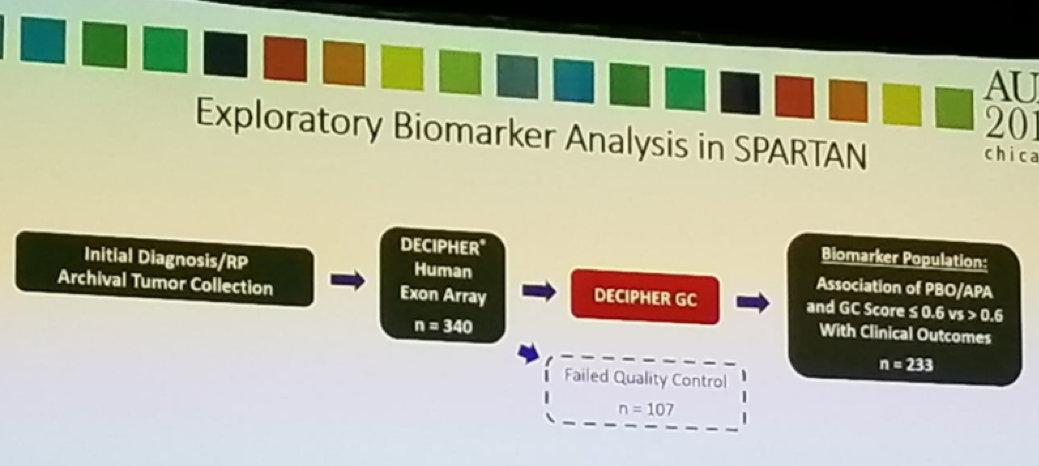
According to Dr. Saad, in this study, the authors evaluated the association between DECIPHER GC score and MFS following Apalutamide treatment in the SPARTAN trial. This was an exploratory analysis of SPARTAN patients (figure 3). Analyzed samples were stratified into high-risk (GC score>0.6) and low-to-moderate risk (GC score <=0.6) subtypes. Approximately 50% of patients had high risk, and 50% had low to average risk DECIPHER GC score. The association between DECIPHER GC subtypes and MFS was assessed as well.
Figure 3 – Exploratory analysis in SPARTAN trial:
AUA2019_UroToday_MFS by DECIPHER_3 .png
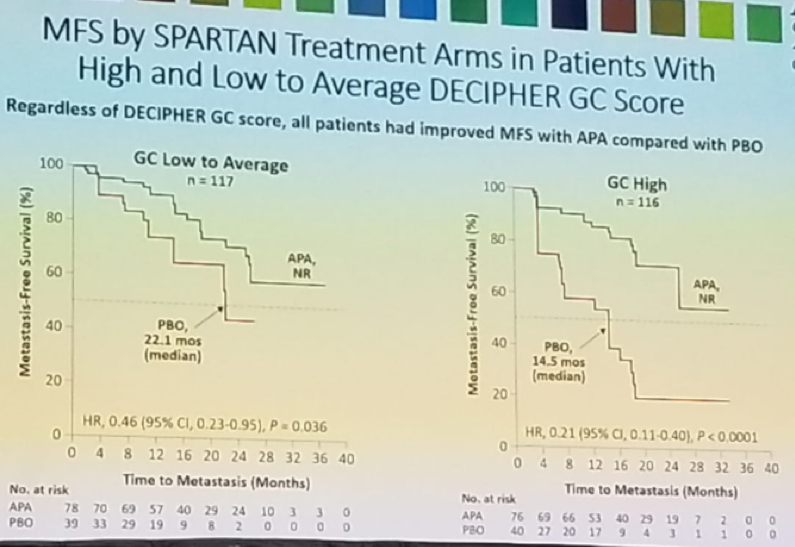
Figure 4 and figure 5 demonstrates the MFS by SPARTAN treatment arms in patients with high and low to average DECIPHER GC scores, and the MFS by DECIPHER GC score in the treatment arms, respectively.
Figure 4 – MFS by SPARTAN treatment arms in patients with high and low to average DECIPHER GC score:
AUA2019_UroToday_MFS by DECIPHER_4 .png
Figure 5 – MFS by DECIPHER GC score in SPARTAN treatment arms:
AUA2019_UroToday_MFS by DECIPHER_5 .png
Dr. Saad concluded his presentation and stated that the results demonstrate, that regardless of DECIPHER GC scores, all patients had significantly prolonged MFS following the addition of Apalutamide to ongoing ADT. nmCRPC patients with high GC score are the highest risk of early metastases with ADT alone. Despite the high risk of early progression in patients with high GC score, the addition of Apalutamide to ADT was as effective in this subgroup as in the low to average GC score subgroup. Early treatment intensification with Apalutamide in the high-risk GC subgroup significantly prolonged MFS and seems to fulfill an unmet need.
Presented by: Fred Saad, MD FRCS, Professor and Chief of Urologie; Director of GU Oncology; Raymond Garneau Chair in Prostate Cancer; University of Montreal Hospital Centre (CHUM); Director, Prostate Cancer Research; Institut du cancer de MontrĂ©al/CRCHUM.

AUA’19: Social Media Presence of US Academic Urology Residency Programs

Dr. Johnston and colleagues at Duke University presented work that adds insight into the growing interest regarding the utilization of social media (SoMe) in academic medicine. The academic urology community has a particularly robust SoMe presence (>70% of AUA members have a SoMe account), making this presentation highly relevant.
The investigators sought to characterize the usage of Twitter and Facebook among ACGME-accredited urology residency programs in the United States. In addition, they studied whether the presence of a SoMe account or SoMe activity correlates with program rankings (i.e. Doximity reputation ranking and U.S. News & World Report rankings and score).
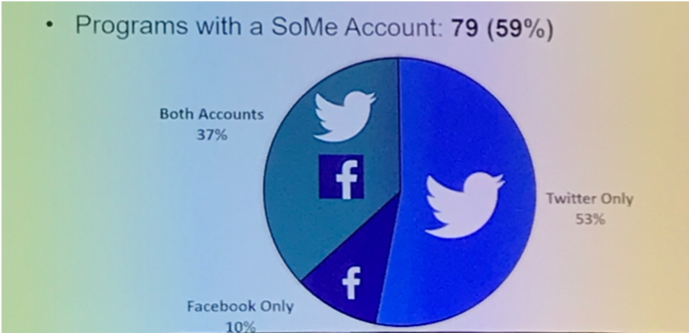
Of the 134 residency programs that were identified, 79 (59%) had a SoMe account. Of these, 53% had only a Twitter account, and 10% only used Facebook (Figure 1). Interestingly, no programs in the Northeastern AUA section had a Facebook account (Figure 2). Presence of a Twitter account or Facebook account were both significantly associated with more favorable Doximity reputation ranking and with U.S. News & World Report score (but not rank). Regarding SoMe activity, a higher number of tweets was associated with a more favorable Doximity ranking and U.S. News & World Report score (Table 1). The number of Facebook followers was not significantly associated with any rankings.
These findings underscore the importance of SoMe usage by academic urology programs. In addition to the established advantages afforded by SoMe in the dissemination of scientific publications, it is clear that higher utilization of SoMe accounts is associated with highly regarded urology residency programs. Dr. Johnston also pointed out that the inclusion of urology faculty and urology resident SoMe activity would be of great interest in further characterizing the relationship between SoMe usage and urology program reputation.
AUA2019_UroToday_Social Media Presence_US_Urology Residency Programs.png
Figure 1. ACGME-accredited urology residency programs with a Twitter and/or Facebook account (n=79/134).
AUA2019_UroToday_Social Media Presence_US_Urology Residency Programs2.png
Figure 2. ACGME-accredited urology residency programs with a Twitter (blue) or Facebook (purple) account by AUA section.
Table 1. Correlation between social media activity (i.e. number of tweets and followers) and urology residency program ranking.
  1. Correlation between social media activity and Doximity reputation ranking.
  2. Correlation between social media activity and U.S. News and World score.
a. AUA2019_UroToday_Social Media Presence_US_Urology Residency Programs3.pngb.AUA2019_UroToday_Social Media Presence_US_Urology Residency Programs4.png
Presented by: Ashley Johnston, MD, Duke University School of Medicine, Durham, North Carolina
Co-authors: Rohit Tekwani, Jonathan Routh, Andrew Peterson, Judd Moul, Michael Ferrandino, Duke University School of Medicine, Durham, North Carolina

AUA’19: PET/CT with 18F-fluciclovine in post-treatment prostate ca recurrence

Detection and treatment of micrometastatic prostate cancer before radiographic evidence have been widely studied. However, the currently used computed tomography (CT), bone scans and even multiparametric MRI lack sensitivity.  Positron emission tomography/computed tomography (PET/CT) with nuclear radiotracers such as NaF, F-FDG and choline/acetate show some promise, but still miss a large proportion of recurrent disease. PET/CT with 18F-fluciclovine has been shown to improve the detection of recurrent prostate cancer and detect up to 57% of recurrences in previously treated prostate cancer, not detected by CT or bone scan.
In the presented retrospective study, the authors evaluated the ability of 18F-fluciclovine to change treatment, and also tried to identify an optimal PSA cut-off to screen for recurrent prostate cancer. Patients who received 18F-fluciclovine for recurrent PCa following treatment were analyzed, and patients with positive scans were compared to those who had negative scans. Also, a receiver-operator characteristic (ROC) curve was used to estimate the optimal PSA cut-off to predict for a positive scan.
According to the authors’ presentation, 84 patients with post-treatment suspected recurrent prostate cancer received 18F-fluciclovine PET/CT at a single institution. In the final analysis, 78 patients were included, divided into those with (n=53) and those without 18F-fluciclovine PET/CT positivity (n=25). 18F-fluciclovine was demonstrated to predict radiographic recurrence or metastatic disease in 53 patients (67.9%). The following parameters were similar between both groups: Age, number of comorbidities, mean PSA at diagnosis, Gleason score, Gleason grade group, clinical stage, treatment type received, nadir PSA, PSA velocity, and time from diagnosis to scan. The following covariates were shown to be associated with a positive scan: a higher mean PSA at the time of the scan (6.29 vs. 1.1 ng/ml, p = 0.01), receiving salvage radiotherapy to the prostatic bed (55% vs. 27%, p<0.01), any use of androgen deprivation therapy (ADT) (62% vs. 32%, p=0.016), and a higher mean number of scans since PSA began to rise (2.77 vs. 1,59, p = 0.042), as seen in table 1.
AUA2019 UroToday PETCT with 18F fluciclovine 1a
Recurrence sites included: lymph nodes in 65.8%, bone in 22.5%, prostatic bed in 9.2%, and others, such as lung and mediastinum, in 2.5%. A PSA of 0.5 ng/ml was identified from a ROC curve for detecting recurrent/metastatic disease, with a sensitivity of 81.13%, and a specificity of 71.43% (figure 1).
AUA2019 UroToday PETCT with 18F fluciclovine 2a
Alteration of the treatment plan occurred in 34/58 (58.6%) patients.The most common treatment alterations included directed stereotactic body radiation therapy (SBRT) (16/34, 47%), salvage surgical resection (4/34, 11.7%), and continuous ADT (3/34, 8.7%).
The authors concluded that 18F-fluciclovine PET/CT detected recurrence in almost 68% of patients with rising PSA. The most common site of recurrence was within the pelvic lymph nodes. Alteration of treatment plans occurred in 58% of the time with salvage SBRT being the most common treatment modality. Any use of salvage therapy and or ADT were associated with PET/CT positivity. Lastly, a PSA cut-off of 0.5 ng/ml was demonstrated to be a good starting point in identifying patients with recurrent prostate cancer after localized treatment. This was especially true if they have risk factors such as prior salvage therapy or use of ADT.
Presented by: Julio Chong, MD, Icahn School of Medicine at Mount Sinai

Beyond Meat Just Had the Best IPO of 2019 as Value Soars to $3.8B

Beyond Meat Inc. piled on the market value, serving up the year’s best first day for a U.S. initial public offering.
The maker of vegan beef and sausage substitutes soared, rising as much as 192 percent from its IPO price of $25 share. The shares, which opened at $46, closed their first day of trading Thursday up 163 percent to $65.75 in New York, giving the company a market value of about $3.8 billion.
The first-day pop eclipsed the 81 percent gain by Silk Road Medical Inc. in its U.S. debut last month and was the best for a U.S. listing raising at least $200 million since before the 2008 financial crisis. Globally, Beyond Meat bested the debuts this year of all but a handful of small listings, none of them larger than $22 million.
Beyond Meat raised $241 million from the sale of 9.63 million shares on Wednesday, after increasing its marketing range for them to $23 to $25.
The company’s business and Hollywood celebrity backers, including MicrosoftCorp. co-founder Bill Gates and actor Leonardo DiCaprio, helped explain the investor zeal, along with a growing consumer appetite for meat alternatives.
Investor and actress Jessica Chastain, who is a vegan, said she cooks Beyond Meat products at home, to the approval of her non-vegan husband and friends.

Toronto Burger

“I love any plant-based product,” Chastain said in an interview at the Nasdaq exchange. She said she invested in Beyond Meat after being on set in Toronto and being unable to find a Beyond Burger at an A&W restaurant. “I tried for four months in Canada to get one and it sold out everywhere,” she said.
Chief Executive Officer Ethan Brown doesn’t expect a conflict between making environmentally based decisions and those that serve shareholders.
“Consumers are looking for products that enable them to be healthier and reduce their footprint,” he said in an interview. “Every time we’re making a sale we’re furthering our mission and increasing sales.”

International Potential

One food-industry consultant said investors are taking a lot on faith with money-losing Beyond Meat.
The company’s valuation in its IPO is “entirely reasonable if it’s got internationalizable potential and a great product, and has capacity to make money in its core profit structure,” said Robert Lawson, chief executive officer of London-based Food Strategy Associates. “But it’s not clear that Beyond Meat is that.”
The company will need to expand its product range to succeed outside the U.S., where burgers aren’t as popular, Lawson added.
Consumers are looking for more plant-based meat alternatives because of concerns about health, animal welfare and the environment. Startups like Beyond Meat are tapping into that demand by offering beef-like versions of the veggie burger and other meat products.
Supermarket sales of meat alternatives surged 19.2 percent to $878 million for the year ended Jan. 5, according to data from Nielsen. The field is crowded, with Silicon Valley-based Impossible Foods also placing its meatless burgers in thousands of restaurants, including all Burger King locations. Nestle SA makes a plant-based Incredible Burger, which is available in McDonald’s Corp.’s German locations.

TGI Fridays, Del Taco

Beyond Meat is sold in grocery stores nationwide and is also increasingly being featured on restaurant menus, including TGI Fridays and Carl’s Jr. and now under a new deal with Del Taco Restaurants Inc. Its burger patties, with no cholesterol and 5 grams of saturated fat, are made of pea protein and beet juice, which makes them “bleed” when cooked. That compares with 80 milligrams of cholesterol and 9 grams of saturated fat for a 4-ounce patty of 80 percent lean beef.
And despite the company’s mission, Brown said the company will choose the customer over the planet when necessary.
“Our packaging is not great,” he said, referring to the plastic wrap. “That runs counter to what I believe in in terms of ability to recycle things and the overall footprint of that packaging, but we care about the quality of the product. So we will make trade-offs that make sense for the product and market instead of the most environmental path.”

Shrinking Losses

Beyond Meat shrank its 2018 loss, while its revenue more than doubled for the second year in a row, according to its filings. Last year, it lost $29.9 million on revenue of $87.9 million compared with a 2017 loss of $30.4 million on revenue of $32.6 million.
The company had significant shortages in 2017 and 2018 and has since made significant investments to keep up with demand, Brown said.
“Now it’s about sequencing customers,” he said. Quick-service restaurants have thousands of locations, so supplying them requires a huge jump in output. To keep up, Brown said, the company has been staggering rollouts.
Brown said he wants to eventually lower the price of the company’s products, which currently can cost twice as much as standard ground beef. Beyond Meat wants to sell its products for less than animal protein in the next five years, he said.

McDonald’s Ex-Chief

Beyond Meat’s investors include former McDonald’s Chief Executive Officer Don Thompson and venture capital firm Kleiner Perkins Caufield & Byers LLC, which owns 16 percent of the company, and Twitter Inc. co-founder Ev Williams’s Obvious Ventures with 9 percent, according to its filings.
Its backers had included Tyson Foods Inc., the largest U.S. meat producer. Tyson sold its 6.5 percent stake in Beyond Meat, according to a statement in April. Tyson’s shares were sold both to insiders and new shareholders, Brown said.
The offering was led by Goldman Sachs Group Inc., JPMorgan Chase & Co. and Credit Suisse Group AG. Beyond Meat trades on the Nasdaq Global Market under the symbol BYND.

Say No To Canadian Drug Imports

Lawmakers in the Sunshine State are looking to our northern neighbor to help them reduce drug prices. The Florida House of Representatives recently passed a bill that would allow the importation and sale of prescription drugs from Canada, where prices are generally lower because the government forcibly controls them.
Florida isn’t the only state to have jumped on this buy-Canadian bandwagon. More than a dozen states are considering or have previously weighed bills to permit the importation of foreign drugs.
Importing drugs from abroad will provide meager savings—if it provides any at all. And it could jeopardize patient safety by dramatically increasing the risk of counterfeit drugs entering the U.S. supply chain.

The case for prescription drug importation seems obvious. Consider Januvia, a drug that treats type 2 diabetes. It sells for more than $1,400 a bottle in the United States—but just $340 in Canada. Why should Americans pay more than their brethren across the border for the same drugs?
Canada’s price controls on drugs ensure that its citizens do not pay their fair share of the cost of innovation. By paying higher prices, Americans effectively subsidize the development of new drugs for the rest of the world. And that’s expensive. It takes about $2.6 billion to develop and bring a new drug to market. Just under 12% of drugs that enter clinical development actually garner regulatory approval.
But in the aggregate, prescription drug importation won’t save U.S. consumers much money. According to one study of the issue by the Congressional Budget Office, importing drugs from Canada “would produce a negligible reduction in drug spending.”
The vast majority of drugs Americans take are generics, which cost about the same in the United States as they do in Canada. So the only potential savings from importation will be on a small number of brand-name drugs.
It’s one thing for an individual to cross the border to buy a three-month supply of drugs at the margin. It’s another for a state government to import drugs en masse for thousands of people. If drug companies discovered that the drugs they’d made for sale in Canada were all being rerouted to Florida, they might stop selling drugs in Canada altogether. Or they might make sales contingent on the drugs not being exported to the United States.
Remember, too, that Canada is a relatively small country. Its entire population—37.5 millionis lower than California’s estimated 2018 population of 39.6 million. The combined population of Florida and the 15 other states that have been considering Canadian drug imports is more than double Canada’s.
Canadian shelves would run dry,” Steve Morgan, a Canadian health economist, told Politico recently. Canada’s drug supply would be exhausted in 224 days—less than eight months—if just 10% of U.S. prescriptions were filled with Canadian drugs, according to a study published in the Canadian Pharmacists Journal.
Canadian officials aren’t likely to stand by idly as life-saving medicines intended for their citizens head south into Americans’ medicine cabinets.
So the purported benefits of importation are unlikely to materialize. The dangers, however, are very real.
In a letter to the Wall Street Journal, Mary Mayhew, the new Secretary of the Florida Agency for Health Care Administration, called drug importation “no more risky than a trip to your local Walgreens.”
The evidence suggests otherwise. Federal investigations have repeatedly found drugs labeled as being from Canada originated in other nations. A 2005 operation conducted by the Food and Drug Administration found that nearly half of the imported drugs intercepted from four select countries were purported to be from “Canadian” internet pharmacies. Of those supposedly “Canadian” drugs, 85% were from 27 other nations. Many were counterfeit.
Health officials in Canada and the United States have issued warnings about the trafficking of adulterated prescription drugs across the two countries’ border. Health Canada told an FDA task force that it “does not assure that products being sold to U.S. citizens are safe, effective, and of high quality, and does not intend to do so in the future.”
The FDA has warned that “medicine bought over the internet from foreign sources . . . may not be safe or effective.” In 2017, four former FDA commissioners—two Democrats, and two Republicans—wrote a letter to Congress expressing their opposition to drug importation. They argued that the FDA wouldn’t be able to sufficiently monitor such sales. That would open the door for manufacturers of counterfeit and substandard drugs to inject their wares into the U.S. drug supply.
Many Americans are struggling to afford medicines they need. But the answer isn’t to sanction imports of dubious origin or quality. It’s to increase competition here by streamlining the drug approval process. The Trump administration has had some success on that front. Last year, the FDA approved a record 59 novel drugs.
The United States doesn’t need to look outside its borders for lower drug prices. Market competition can reduce costs without compromising patient safety.

China Cosmetic Surgery Site So-Young Soars Again After IPO

China cosmetic surgery information and services site So-Young International soared for a second day today after its U.S. listing, gaining amid broad enthusiasm for shares following an upbeat jobs report and a strong Nasdaq close.
So-Young rose 14% on Friday to close at $20.77. The company earlier this week raised $179.4 million in an IPO, selling 13 million American Depositary Shares at $13.80 each. Nasdaq trading began on Thursday.
So-Young describes itself as “the most popular online destination for discovering, evaluating and reserving medical aesthetic services in China.” So-Young investors include Trustbridge Partners and Orchid Asia. So-Young CEO Jin Xing’s nearly 16% stake was worth more than $300 million at today’s close.
So-Young’s revenue last year increased by 138% from 259.3 million yuan in 2017 to 617.2 million, or $89.8 million. It earned $8 million in profit. The company had 1.4 million monthly average mobile users last year.
Trustbridge is also involved in the upcoming Nasdaq listing of China e-commerce site Yunji. Yunji has raised $121 million in an IPO by offering 11 million shares at $11, the low end of the range of $11 to $13, according to Renaissance Capital.  Existing shareholders Crescent Point and Trustbridge had indicated an interest in purchasing up to $100 million of the deal, accounting for 83% of the transaction, Renaissance said.
China stocks that had been dragged down at the end of last year on worries about U.S.-China trade negotiations have recovered on hopes that the two sides will soon reach an agreement.
Among China bellwether shares traded in the U.S., Alibaba Group rose by 2.5% today to $195.21, its best close since last summer.