Search This Blog

Sunday, May 5, 2019

Mental Prep for Better Performance

“Get your head in the game!” Coaches say it to players all the time to get them to focus. The same advice can help you be more enthusiastic about your workouts. Here are five ideas:
1. Set both short-term and long-term goals based on your current abilities. Celebrate each one as you reach it and then re-set it. According to the American Council on Exercise, a goal should meet five different criteria to be effective. Make sure each goal is:
  • Specific: You should be able to articulate it in one simple sentence.
  • Measurable: The goal should be something you can see, like an amount of weight lost or duration of a workout.
  • Attainable: The goal should represent a challenge to you, but not be impossible to reach.
  • Relevant: It should be important to you and your life.
  • Time-Bound: The time you allot to reach the goal shouldn’t be open-ended, which could lead to procrastination. Set a reasonable time period for achieving it.
2. Identify what type of pre-exercise prep gets you psyched, such as quiet focused breathing or loud pulsing music.
3. Develop and repeat a mantra, an uplifting statement of what you know you can do. This will help you develop a positive attitude and have an unshakable belief in yourself. It will naturally get stronger as you reach goals.
4. Practice mental toughness. This is the mindset that helps you stay determined, focused and confident. Self-talk is a motivator that can help keep your confidence level high. Talk to yourself the same way you’d encourage a loved one: Remind yourself of your skills, your accomplishments and future goals.
5. Use mental imagery. Picture yourself reaching each goal, whether it’s completing a spin class or a 5K run. Tap into the image whenever you need to refocus during exercise.
More information
The American Council on Exercise has more specifics on setting goals that you’ll attain.

Breast Surgeons’ Group Issues New Mammogram Guidelines

The largest organization representing U.S. breast surgeons is issuing new screening guidelines, advising women at average risk to begin annual mammograms at age 40.
Those guidelines differ from advisories from the influential U.S. Preventive Services Task Force (USPSTF), which moved first mammogram screening from 40 to 50 years of age, as well as that of the American Cancer Society, which puts the starting age at 45.
The American Society of Breast Surgeons (ASBrS) says it based the new guidelines on a different model than that used by the USPSTF.
The new guidelines recommend that all women undergo formal risk assessment by age 25. Screening based on specific risk factors is recommended for women with an increased risk of breast cancer.
Women with average risk should begin annual screening at age 40, however.
“Routine screening for women age 40 to 49 has been unequivocally demonstrated to reduce mortality by 15%,” ASBrS president Dr. Walton Taylor said in a society news release.
“However, today’s USPSTF guidelines delay annual screening until age 50 because they are based on an ‘efficiency’ statistical model that also considers the impact of potential screening risks,” he said.
Risks or adverse effects in the USPSTF’s calculations include the cost of screening, as well as the probability “of false-negative and -positive results,” Taylor explained. Mistaken findings can mean unnecessary anxiety and unnecesssary medical procedures, he said.
In contrast, the new ASBrS guidelines “are based on a ‘life-years gained’ model,” Dr. Julie Margenthaler said in the news release.
“They are based solely on the demonstrated breast cancer survival benefits. The ASBrS prioritizes life,” said Margenthaler. She directs breast surgical services at the Siteman Cancer Center and is also professor of surgery at Washington University School of Medicine, both in St. Louis.
Individual risk assessment is a key part of the new guidelines, the ASBrS said.
For example, women with a predicted lifetime breast cancer risk of 20% or more should begin mammography screening, with access to supplemental MRI imaging, starting at age 35.
Similar imaging should start at age 25 for women with breast cancer-related genetic abnormalities, the group advised.
“While mammographic screening is not as easy or accurate in younger women, when we find and treat cancer, the benefits in years of life saved are highly significant. Many current guidelines will leave a subset of these women to die,” Margenthaler explained.
Dr. Dana Smetherman is chair of the American College of Radiology (ACR) Commission on Breast Imaging. “Catching more cancers early by starting yearly screening at age 40 — rather than less frequent or later screening — increases the odds of successful treatment and can preserve quality of life for women,” she said in the news release.
“We are pleased that ASBrS has reaffirmed their support for this most sensible approach,” said Smetherman. The new ASBrS guidelines are in keeping with ACR recommendations.
Two more experts in breast cancer care supported the new guidelines.
“As breast surgeons we have long realized that one-size-fits-all screening is a problem,” said Dr. Alice Police, regional director of breast surgery for Northwell Health Breast Care Centers of Westchester County in Sleepy Hollow, N.Y.
She believes that guidelines that don’t account for individual risk profiles “sacrifice many ‘life years’ for some women for a greater good that claims to be more cost-effective and to create less anxiety.”
Breast surgeons “think the life years are more important,” Police said.
Dr. Kristin Byrne is chief of radiology at Lenox Hill Hospital in New York City. She believes the new guidelines are “individualized, in order to balance the benefits and harms of screening in each category without risking the patient’s lives.
“For example, mammography should not be used on a patient under the age of 30 [under the ASBrS guideline],” Byrne noted. Instead, young, at-risk patients “with genetic mutations or prior chest wall radiation should have annual screening MRI until they feel it is safe for mammography screening,” she said.
And at the other end of the life span, the new guidelines recommend stopping screening mammography when life expectancy is less than 10 years. This is “medically reasonable,” Byrne said.
“Many guidelines have arbitrarily chosen the age of 74 to stop screening mammography, but this does not reflect the life expectancy of many individuals, and the risk of breast cancer increases with age,” she said.
Finally, “screening every year for women of average risk over the age of 40 is essential to early diagnosis,” Byrne believes.
More information
The U.S. National Cancer Institute has more on mammograms.
SOURCES: Alice Police, M.D., regional director, breast surgery, Northwell Health Breast Care Centers in Westchester, Sleepy Hollow, N.Y.; Kristin Byrne, M.D., chief, radiology, Lenox Hill Hospital, New York City; American Society of Breast Surgeons, news release, May 3, 2019

Alnylam posts strong Onpattro sales as competition heats up

  • Sales of Alnylam Pharmaceuticals’ rare disease drug Onpattro more than doubled between the fourth quarter of last year and the first three months of 2019, outstripping expectations and helping to ease worries of a slow start for the therapy.
  • By the end of the first quarter, more than 400 patients were on commercial treatment with Onpattro, which last year became the first RNA interference therapeutic to win U.S. approval. That figure was double what Alnylam reported at the end of 2018.
  • Onpattro remains in the early phases of its launch, however, and investors appeared cautious on how well Alnylam can identify new patients with hereditary ATTR amyloidosis, the disease Onpattro treats. A new competitor looms as well: Pfizer expects to win Food and Drug Administration approval this July for tafamidis, a potential rival.

As first-to-market with a new type of drug, Alnylam has had to build a market for Onpattro (patisiran).
While Onpattro has been commercially available for less than a year, first quarter results suggest Alnylam has had some success at accomplishing that task.
“We’re … very pleased with the overall and continued global demand this quarter even with competition from recent market entrants and the availability of investigational drugs through a very large expanded access program and clinical trials,” said Alnylam president Barry Greene, speaking on the company’s first quarter conference call.
Greene’s referring to Ionis Pharmaceuticals and Akcea Therapeutics’ Tegsedi (inotersen), which launched with a similar indication several months after Onpattro, and tafamidis, an experimental drug from Pfizer that treats a related phenotype of ATTR amyloidosis.
Tafamidis could win approval by July, potentially making the amyloidosis market more competitive.
Alnylam’s results from the first three months of 2019 help to build confidence the biotech can maintain its lead.
Sales of Onpattro totaled $26.3 million, up from $12.1 million in the fourth quarter. While start forms submitted to the company through its Alnylam Assist program fell, the company highlighted that prescriptions outside that program now account for 20% to 25% of demand for the drug — a sign of increasing physician comfort, Alnylam said.
Alnylam also noted signs that some doctors are switching patients to Onpattro from other products, including tafamidis.
“A number of patients in Europe, specifically France and Germany, are patients that a physician has deemed progressing on tafamidis and need to add or switch to Onpattro,” Greene said. Tafamidis has been approved in Europe for familial amyloid polyneuropathy, a related indication.
Yet while first quarter numbers beat Wall Street expectations, Alnylam still has its work cut out for it. Initial sales were boosted by a bolus of patients coming onto commercial drug from the clinical development program.
To sustain growth, Alnylam will need to continue identifying new patients. To do that, the biotech has set up a genetic screening program called Alnylam Act. More than 13,000 patient samples have been submitted so far, yielding 850 positive tests for the pathogenic TTR mutation.

UroGen has updated CR, durability data from UGN-101 Phase 3 OLYMPUS trial

UroGen Pharma announced findings from a secondary analysis from the pivotal Phase 3 OLYMPUS trial which showed that UGN-101 for instillation, an investigational mitomycin formulation, demonstrated a 59% complete response rate in a subset of patients with endoscopically unresectable low-grade upper tract urothelial cancer. The analysis showed that in the OLYMPUS intent-to-treat population, 71 patients had undergone PDE at the time of the analysis and 42 of the 71 patients achieved a CR. 41 patients entered follow-up. Of the evaluated complete responses to date, 27 patients have undergone a six-month evaluation, and 24 out of 27 patients have remained disease free at six months. Overall, 5 of 41 patients who achieved a CR have relapsed at any time during the study. Of these 71 patients, 34 were initially characterized by the treating physician as having endoscopically unresectable tumor at baseline, and 20 of 34 of these patients achieved a CR at the PDE. The most common adverse events observed were urinary tract infection, ureteral narrowing and stricture formation. The majority of ureteral events were reported as mild to moderate and have resolved. The company initiated its rolling submission of the UGN-101 New Drug Application to the U.S. Food and Drug Administration in December 2018. The FDA previously granted Orphan Drug, Fast Track, and Breakthrough Therapy Designations to UGN-101 for the treatment of UTUC. If approved, UGN-101 would be the first drug approved for the non-surgical treatment of LG UTUC

Ionis, which has transformed medicine, undergoes its own transformation

Three decades after Ionis Pharmaceuticals was founded, the Carlsbadbiotech company is going through its first change of leadership.
Stanley T. Crooke, the only CEO Ionis has ever known, steps down in January to become executive chairman. Crooke, 73, will be replaced by another Ionis veteran, chief operating officer Brett Monia, 57.
The transformation during these 30 years has been huge.
When Crooke founded what was then Isis Pharmaceuticals, the company had just a handful of employees. It had no products. And even when its drugs began reaching the market, Ionis kept racking up heavy losses.
Today, Ionis is becoming a top-tier biotech company. With a growing number of drugs approved and nearing approval, its market value recently exceeded $11 billion for the first time. (It has since dropped back to about $10 billion, largely due to positive news from a competitor.)
And it now foresees continuous and growing profits as its drugs reach patients.
Ionis’ most successful drug, Spinraza, halts a wasting disease called spinal muscular atrophy. Marketed by Biogen, Spinraza brought in $1.72 billion in 2018. Biogen, which sells the drug, paid Ionis nearly $240 million in royalties.
Another Ionis drug, for Huntington’s disease, has shown early signs in experimental human testing that it may be effective against the invariably fatal illness.
Many Ionis employees and collaborators at academic centers such as UC San Diego made this possible. But Crooke has been the single most essential person to the success of Ionis, said John McCamant, editor of the Medical Technology Stock Letter in Berkeley.
“The story’s about Stan,” McCamant said. “It’s his company, his patents, the whole deal.”
The Medical Technology Stock Letter, a company then led by his father Jim McCamant, recommended buying Ionis stock in its 1991 initial public offering.
This transformation was driven by a drug technology Ionis pioneered called antisense. The technology blocks or modifies production of proteins involved in diseases.
Antisense drugs intercept specific sequences of RNA, which bring to cells the genetic instructions encoded in DNA. Complementary molecules Ionis calls “designer DNA” bind to the targeted RNA. This can suppress the effect of a certain gene or change how it works.
From the beginning, Crooke was known as antisense’s staunchest advocate. In the late 1980s, when antisense was strictly a laboratory tool, Crooke dreamed of turning that technology into a new platform to make genetically targeted drugs.
Turning that dream into reality required answering a number of hard questions. How to produce stable molecules? How to safely administer them? How to get them into cells in therapeutic doses? Which RNA molecules are the best targets for each disease?
The answers, discovered over the lifespan of Ionis, are documented in the patents Ionis holds.
Different styles
Monia, the incoming CEO, has led the company’s programs in oncology and rare diseases, the latter of which yielded Spinraza.
Another rare disease drug, Tegsedi, treats hereditary transthyretin-mediated amyloidosis, which causes nerve damage. FDA approval of Tegsedi was announced in October.
Both Monia and Crooke began as academics before crossing over into industry. However, they have different styles.
“Stan is a much more direct individual than I am,” Monia said. “He’s very detail-oriented. I tend to step back a little bit and delegate more to my individuals, but monitor very closely and jump in if I feel like I need to.”
The differences aren’t an issue.
“He has said multiple times that’s fine,” Monia said. “There’s no one way to manage an organization and it might be time for a new approach.”
As executive chairman, Crooke’s role will be a “strategic adviser,” looking for the long-term view, Monia said.
Monia said he understands the challenge ahead.
“I’ve learned a great deal from him and we have common core principles that we follow for the organization. However, I don’t plan on walking in Stan’s shoes. I brought my own shoes.”
The transition began a few years ago with conversations between Crooke and the Ionis executive team, including Monia. The conversation was broadly centered on preparing a succession plan.
“He got a lot of input from the executive team, including me,” Monia said. “And the conversations became less of group discussions (and) more sort of individual discussions that I started having with him.”
It was agreed that whoever succeeded Crooke should know antisense well, and should know the company’s history. And since Monia fit that picture, Crooke encouraged him to throw his hat into the ring.
To prepare for the CEO role, Monia became chief operating officer at the beginning of 2018. This job required Monia, trained as a drug research and development scientist, to become more familiar with the financial aspects of Ionis.
“I had to make sure that this was an aspect of the business that I liked,” Monia said. “Toward the end of last year it started coming together.”
Monia’s succession was formally announced in December, starting the year-long transition.
Mentor
For Monia, leading Ionis caps a career that he decided at the outset would center on discovering and developing new drugs.
Monia prepared by getting degrees in molecular biology and analytical chemistry at Stockton State College in New Jersey. He then got a Ph.D. in pharmacology at the University of Pennsylvania. There he met Crooke, who in addition to teaching also headed research at SmithKline Beckman.
Crooke impressed Monia with his multiple roles, teaching graduate-level course in pharmacology while handling worldwide research for a major pharmaceutical company.
“I decided that the best way for me to make an impact in the industry as rapidly as possible, would be to work with Stan,” Monia said. “We spent a lot of time together and talked about science and patients.”
Monia went on to earn his doctoral degree in Crooke’s laboratories.
By that time, Crooke had become fascinated by antisense. This technology allowed precise control over genetic activity, affecting only the desired genes while leaving others unaffected.
From his pharmaceutical experience, Crooke knew that even one drug could transform a company. He made that point in a May 1984 New York Times article about the stomach acid blocker Tagamet.
“SmithKline Beckman is in transition,” Crooke said in the article. “And that transition is driven by Tagamet. It’s hard to fathom, but the truth is this company is being changed by a drug.”
Five years later, Crooke was faced with even bigger possibilities. Antisense wasn’t just one drug, it was what pharma industry people call a platform technology that could give rise to a multitude of drugs.
Crooke decided antisense deserved its own company to exploit that potential. He founded Isis Pharmaceuticals, moved to San Diego and asked Monia to join his quest.
Carlsbad was a deliberate choice, because it had open space and was less expensive than San Diego’s biotech hub in La Jolla, Monia said.
The cross-country move was meant to be temporary.
“I told my mother I’ve got to come out here for five years, and then I’ll go back to the East Coast where my family was,” he said. “That obviously didn’t pan out.”
Ionis Pharmaceuticals Quotes by TradingView
By the numbers
A major selling point for a company like Ionis is the social benefit of treating severe diseases. But in strictly financial terms, has Ionis been a good stock? That depends on many factors, including how long ago the stock was purchased.
In general, those who bought within the last year, and for much of the last three years, should be happy. But those who bought at the $10 IPO price have seen mixed results. Their shares have increased in value, but massive dilution has taken even more.
The market capitalization of Ionis has increased by 100 fold since its IPO, from slightly over $100 million to more than 11 billion. That equals about 18 percent compound growth per year.
By comparison, during that 28-year period the Nasdaq index has increased from 500 to 7,600, or 15-fold
However, Ionis shares have been heavily diluted with repeated offerings — something normal for growing biotech companies. So that share purchased at the $10 IPO price didn’t increase nearly 100 times. Instead, per-share price has increased less than eight-fold.
So was the call to invest in Ionis made too soon? “That’s not an answerable question,” McCamant said. All biotech companies face setbacks from factors they don’t control.
For example, the first Ionis drug, for an AIDS-related eye infection, reached the market about the same time as the first effective HIV drugs. That dramatically lowered the market potential for the drug, Vitravene.
Ionis kept a focus on developing antisense and securing patents, McCamant said.
“One has to give them some odds of success when you have 35-plus drugs in the pipeline, with easily 10 new drugs coming into the market over the next five to 10 years,” McCamant said.
While Ionis has grown dramatically over the years, it still faces competition. Sales of its blockbuster Spinrase are likely to decline starting in 2020 as other drugs reach the market, wrote Morningstar analyst Karen Andersen in a Feb. 27 report.
“In addition, despite strong data in clinical trials to date and multiple partnerships, Ionis is just reaching sustainable profitability,” Andersen wrote.
As for Monia, Andersen wrote that his science background and seven years of executive experience at Ionis should serve him well.
Monia says he’s using the transition period to continue learning from Crooke about being a CEO.
“At the end of this year, I’ll essentially be doing this on my own,” Monia said.

Esperion announces FDA acceptance of NDAs for Bempedoic Acid, combo tablet

Esperion announced that the U.S. Food and Drug Administration has accepted both New Drug Applications for bempedoic acid and the bempedoic acid/ezetimibe combination tablet for filing and regulatory review. Bempedoic acid and the bempedoic acid/ezetimibe combination tablet were developed to be complementary, cost-effective, convenient, once-daily, oral therapies for the treatment of patients with elevated low-density lipoprotein cholesterol who need additional LDL-C lowering despite the use of currently accessible therapies. The PDUFA goal date for the completion of the bempedoic acid NDA review is set for February 21, 2020, and the PDUFA goal date for completion of the bempedoic acid/ezetimibe combination tablet NDA review is set for February 26, 2020. The FDA has communicated that there is no current plan to hold an advisory committee meeting to discuss the applications.

Cytokinetics Phase 2 Results in ALS Trial at American Academy of Neurology

Trial Did Not Meet Statistical Significance for Primary Efficacy Analysis
Figure 1
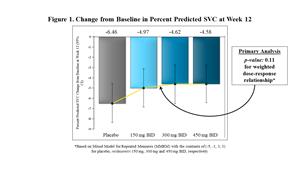
Change from Baseline in Percent Predicted SVC at Week 12
Figure 2
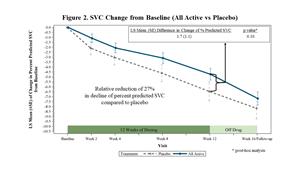
SVC Change from Baseline (All Active vs Placebo)
Figure 3
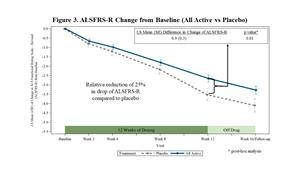
ALSFRS-R Change from Baseline (All Active vs Placebo)
Figure 4
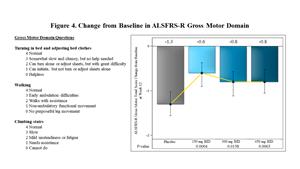
Change from Baseline in ALSFRS-R Gross Motor Domain
Patients on All Doses of Reldesemtiv Declined Less Than Patients on Placebo 
for SVC and ALSFRS-R, With Clinically Meaningful Differences Emerging Over Time
Early Terminations and Serious Adverse Events 
Were Balanced Across Treatment Arms
Investor Event & Conference Call on May 6, 2019 at 7:30 a.m. Eastern Time
Conference Call/Webcast
Cytokinetics will host an investor event and conference call on May 6, 2019 at 7:30 a.m. Eastern Time including members of management and members of the Steering Committee of FORTITUDE-ALS. The event will be held at the Loews Philadelphia Hotelin the Lescaze Room. The conference call will be simultaneously webcast and will be accessible in the Investors & Media section of Cytokinetics’ website. The live audio of the conference call is also accessible via telephone to investors, members of the news media and the general public by dialing either (866) 999-2985 (CYTK) (United Statesand Canada) or (706) 679-3078 (International) and typing in the passcode 4284768. An archived replay of the webcast will be available via Cytokinetics’ website until June 3, 2019. The replay will also be available via telephone from May 6, 2019 at 11:00 a.m. Eastern Time until June 3, 2019 by dialing (855) 859-2056 (United States and Canada) or (404) 537-3406 (International) and typing in the passcode 4284768.
Cytokinetics, Incorporated (Nasdaq: CYTK, “Cytokinetics”) announced that results of FORTITUDE-ALS (Functional Outcomes in a Randomized Trial of Investigational Treatment with CK-2127107 to Understand Decline in Endpoints – in ALS) were presented today by Jeremy Shefner, M.D., Ph.D., Lead Investigator of FORTITUDE-ALS, Professor and Chair of Neurology at Barrow Neurological Institute, and Professor and Executive Chair of Neurology at the University of Arizona, Phoenix, at a podium presentation at the American Academy of Neurology Annual Meeting in Philadelphia.
FORTITUDE-ALS did not achieve statistical significance for a pre-specified dose-response relationship in its primary endpoint of change from baseline in slow vital capacity (SVC) after 12 weeks of dosing (p=0.11). Similar analyses of ALSFRS-R and slope of the Muscle Strength Mega-Score yielded p-values of 0.09 and 0.31, respectively. However, patients on all dose groups of reldesemtiv declined less than patients on placebo for SVC and ALSFRS-R, with larger and clinically meaningful differences emerging over time.
While the dose-response analyses for the primary and secondary endpoints did not achieve statistical significance at the level of 0.05, in a post-hoc analysis pooling the doses together, patients who received reldesemtiv in FORTITUDE-ALS declined less than patients who received placebo. The trial showed effects favoring reldesemtivacross dose levels and timepoints with clinically meaningful magnitudes of effect observed at 12 weeks for the primary and secondary endpoints. The differences between reldesemtiv and placebo in SVC and ALSFRS-R total score observed after 12 weeks of treatment were still evident at follow-up, four weeks after the last dose of study drug.
The incidence of early treatment discontinuations, serious adverse events and clinical adverse events in FORTITUDE-ALS were similar between placebo and active treatment arms. The most common clinical adverse effects in the trial included fatigue, nausea and headache. The leading cause for early termination from FORTITUDE-ALS for patients who received placebo was progressive disease; the leading cause for early termination for patients who received reldesemtiv was a decline in cystatin C based estimated glomerular filtration rate (eGFR), a measure of renal function. Elevations in transaminases and declines in cystatin C eGFR were dose-related.
“Results from FORTITUDE-ALS are among the most impressive we have seen in a Phase 2 clinical trial in ALS,” said Dr. Shefner. “Especially noteworthy are the consistency and durability of effects observed across treatment arms on clinically meaningful endpoints.”
In collaboration with Astellas, Cytokinetics is developing reldesemtiv, a next-generation fast skeletal muscle troponin activator (FSTA), as a potential treatment for people living with debilitating diseases and conditions associated with skeletal muscle weakness and/or fatigue.