Search This Blog

Friday, April 3, 2020

Engineers, Doctors Develop Ventilators from Sleep Apnea Devices

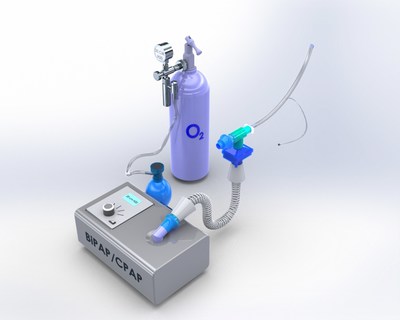
A group of doctors and engineers from UC San Francisco, UC Berkeley and other hospitals and businesses today announced that they have developed a simple technique for repurposing sleep apnea machines so they can be used as ventilators as demand outstrips supply for the life-saving devices in hospitals overwhelmed by COVID-19 patients. The group, calling themselves the COVID-19 Ventilator Rapid Response Team, have developed a way to retrofit off-the-shelf sleep apnea devices so they can mimic the function of a ventilator that gets oxygen into the lungs of patients who are seriously ill with the new coronavirus. To get these adapted ventilators into hospitals quickly, they are seeking speedy FDA approval and want to enlist local and federal officials. They also are requesting donations of sleep apnea devices, also known as CPAP and BIPAP devices, that citizens may have in their homes and not be using.
Government regulations typically restrict the development and use of medical devices for purposes for which they were not designed. The Food and Drug Administration has issued new guidance in light of the ventilator shortage, enabling sleep apnea machines to be used by hospitals caring for patients infected by COVID-19. Doctors and engineers collaborated on the design and are in the process of establishing the infrastructure to get them repurposed and into hospitals.
They also are seeking government support in rallying manufacturers and logistics companies to work together to provide simple off-the-shelf components, to repurpose devices, and get them distributed as quickly as possible to doctors.
The new coronavirus can attack a patient’s respiratory system, weakening the lungs and, in severe cases, making it difficult, if not impossible to breathe without a ventilator. Ventilators are in scarce supply in hospitals around the globe, with many hospitals unable to provide them for new COVID-19 patients, let alone other patients who need help breathing for non-virus-related conditions. The Institute for Health Metrics and Evaluation at the University of Washington has forecasted that the demand for ventilators will far exceed the capacity available for COVID-19 patients by mid April.
“We are hoping for expedited government support because hospitals are quickly getting besieged with COVID-19 patients,” said Ajay Dharia, pulmonary critical care doctor and staff physician at Mills Peninsula Hospital. “In emergency situations doctors need viable alternatives that can be made ready in very short order. The use of home-based CPAP and BIPAP machines offer such a possible solution, but to become a feasible option this project needs backing from the FDA, manufacturers and the government.”
The priority now is for the state and federal government to pick up this project and work with manufacturers and logistics companies to put the components together and get devices to healthcare workers on the front lines. The group also is seeking donations of sleep apnea devices from the community that they can repurpose and distribute to hospitals that need them. People and organizations can find out how to donate devices at ventilatorsos.com. Members of the public are also encouraged to contact their state governors and White House officials and voice their support so that these efforts to increase the number of retrofitted ventilators are quickly approved and deployed.
“We’re trying to help the government by bringing in a solution that we think can scale quickly,” said Bryan Martel, a team organizer and co-founder of Berkeley Engineering and Research, Inc. “This is an opportunity to address a life-critical issue and we’re looking forward to doing everything we can to help the White House and governors save lives during this crisis.”
Members of the COVID-19 Ventilator Rapid Response Team include:
  • Bertram Lubin, MD, Professor Emeritus, UC San Francisco
  • Ajay Dharia, MD, Pulmonary Critical Care, Staff Physician, Mills Peninsula Hospital
  • Karl A. van Bibber, Professor, Department of Nuclear Engineering, UC Berkeley
  • Grace O’Connell, Associate Professor of Mechanical Engineering, UC Berkeley
  • Glen Stevick, PhD, Berkeley Engineering and Research, Inc.
  • Bryan Martel, PE retired, Berkeley Engineering and Research, Inc.
  • David Butze, Member of Stand Together Foundation
For more information on the Ventilator Rapid Response Program, read the blog on ventilatorsos.com.
https://www.biospace.com/article/releases/group-of-engineers-and-doctors-have-developed-a-technique-for-turning-sleep-apnea-devices-into-ventilators-amid-covid-19-pandemic/

Montefiore, Einstein in Trial for Potential Coronavirus Treatment Remdesivir

Montefiore Health System and Albert Einstein College of Medicine has joined a clinical trial to evaluate the experimental drug remdesivir to treat people who are hospitalized with severe COVID-19 infection. The National Institute of Allergy and Infectious Diseases (NIAID), part of the National Institutes of Health, is sponsoring the trial. This treatment has the potential to help people who have serious lung complications as a result of COVID-19. Recruitment for the trial began in March and is still underway.

Montefiore-Einstein is one of 46 testing sites nationwide and is the first site in New York State to open. NIAID launched the multi-center international effort to determine if remdesivir, a broad-spectrum antiviral drug, acts against COVID-19 viral infection. Remdesivir has shown promise in animal models of severe acute respiratory syndrome (SARS) and Middle East respiratory syndrome (MERS), both caused by human coronaviruses.
The randomized, double-blind, placebo-controlled trial is being led by principal investigator Barry Zingman, M.D., professor of medicine at Einstein and clinical director, infectious diseases, in the Moses division of Montefiore Health System. The trial is “adaptive,” meaning it can be modified to include other investigational treatments. “This flexibility allows us to add additional therapies to the trial step-by-step to improve treatment as the pandemic continues,” said Dr. Zingman.
Trial participants are hospitalized patients with a laboratory-confirmed coronavirus infection and lung complications, including rattling sounds when breathing, a need for supplemental oxygen, abnormal chest X-rays showing pneumonia, or the need for a mechanical ventilator.
People in the treatment group will receive 200 mg of remdesivir intravenously on the first day of their enrollment in the study and will receive another 100 mg each day for the duration of hospitalization, for up to 10 days total. The placebo group will receive an equal volume of a solution that resembles remdesivir but contains inactive ingredients.
Montefiore and Einstein’s robust clinical trial infrastructure contributed to its selection and rapid approval for participation.
No therapies have yet been approved by the U.S. Food and Drug Administration for treating COVID-19.
Remdesivir, an investigational antiviral therapy, was developed by Gilead Sciences, Inc.
https://www.biospace.com/article/releases/trial-for-potential-coronavirus-treatment-is-underway-at-montefiore-and-einstein/

Cellex, Mayo Launch Tests of COVID-19 Immunity from Previous Exposure

The U.S. Food and Drug Administration (FDA) approved the first blood test that looks for the antibodies against the novel coronavirus that causes COVID-19. This is different than assays that test for presence of the virus—those test to determine if a patient has COVID-19. These new antibody tests determine if the person was exposed to the virus, had COVID-19 and recovered. And it suggests, if positive, that the person is now immune to COVID-19 and can’t get it again.
Research Triangle Park, North Carolina-based Cellex was granted an emergency use authorization (EUA) on its test yesterday.
The test is performed on a blood sample taken from a patient’s vein and can be performed by laboratories certified under the Clinical Laboratory Improvement Amendments of 1988 (CLIA), the Health and Human Services division that oversees clinical diagnostic testing in the United States.
The authorization stated, in part, “Results are for the detection of SARS-CoV-2 antibodies, IgM and IgG that are generated as part of the human immune response to the virus. IgM antibodies to SARS-CoV-2 are generally detectable in blood several days after initial infection, although levels over the course of infection are not well characterized. IgG antibodies to SARS-CoV-2 become detectable later following infection. Positive results for both IgG and IgM could occur after infection and can be indicative of acute or recent infection.”
Mayo Clinic is reportedly to begin antibody testing on Monday as well, using an internally developed test. Elitza Theel, director of the Mayo Clinic laboratory testing COVID-19 antibody tests, told Minnesota Public Radio (MPR), “It’s important to know that these types of tests are different than all of the molecular tests that are being done off of nasal swabs or throat swabs. Those tests detect viral genetic material [to show whether the coronavirus has infected that person].”
Theel also pointed out that, in some cases, it takes 10 to 11 days for an individual’s immune system to attack the virus and produce the antibodies. That’s why the tests won’t be used to diagnose patients with COVID-19 that are showing symptoms within the last two or three days.
Theel also says Mayo hopes to have the tests available next week, but because of a limited supply, will be doing a slow roll out and hope that commercial manufacturers will speed production in the next few weeks.
“FDA approval is not needed at this time,” Theel said. “However, laboratories that are offering these tests have to go through a very rigorous verification process to make sure that the tests they’re offering provide the right results.”
Part of the reason these antibody tests would be valuable is it can provide guidance on people potentially returning to work and continuing quarantine.
There is also the potential to use antibodies against the virus for therapy against the disease.
Theel said, “As we wait for antivirals and vaccines to be developed and deployed, we need some sort of bridging therapy. So, the idea here is to identify individuals who have recovered from COVID-19, collect their plasma, make sure that it has the antibodies, and then use that plasma to treat acutely ill patients.”
Of the tests in general, and specifically the Cellex test, Alan Wu, professor of laboratory medicine at the University of California, San Francisco and chief of the clinical chemistry and toxicology laboratories at Zuckerberg San Francisco General Hospital, told USA Today, “Antibody positivity likely means a person has recovered and can’t be reinfected. This test will be extremely valuable, especially for healthcare workers.”
Healthcare workers are, obviously, at the front lines of this battle and at high risk of catching COVID-19.
“We could sort out who among the health care workers has antibodies and assign them to coronavirus patients,” said William Schaffner, a professor of preventive medicine and infectious disease at Vanderbilt University in Nashville, Tennessee. “They’d still use protection, but would have a much greater sense of security.”
https://www.biospace.com/article/fda-approves-1st-covid-19-antibody-test/

White House considers using hospital relief funds to pay for uninsured

Vice President Mike Pence said Thursday that the Trump administration is considering using $100 billion that Congress designated for hospital relief to pay for COVID-19 treatment for the uninsured.
“The White House Coronavirus Task Force is working on a proposal for the president to use some of the $100 billion we are making available to hospitals to compensate the hospitals directly for any coronavirus treatment they provide to uninsured Americans,” Pence said.
Choosing to use the provider reimbursement fund to pay for treatment for the uninsured instead of reopening enrollment for the Affordable Care Act exchanges could potentially shift costs from insurers to hospitals and siphon hospital funds away from a hotspot like New York toward states that have not expanded Medicaid under the Affordable Care Act such as Florida and Texas.
If the Trump administration doesn’t create a special enrollment period, uninsured people who otherwise may have bought insurance on the exchanges, received subsidies, paid premiums and had treatment costs covered by insurers may remain uninsured.
The Federation of Hospitals said that uninsured individuals should not have to worry about paying for COVID-19 treatment, but that the funding should not come out of money Congress set aside in a so-called “Marshall Plan” for hospital surge capacity, protective equipment and lost revenue for providers.
“We need to be reimbursed for care for the uninsured, that’s important. But if we don’t have up-front resources to keep caregivers on the front line, it’s not going to make that much of a difference down the line,” said FAH President and CEO Chip Kahn.
HHS has not yet released details about how the $100 billion in provider funds will be distributed, but hospital groups have asked for most of the money to be given directly to hospitals and for it to be distributed quickly.
An HHS spokesperson said Thursday that HHS Secretary Alex Azar is leading an administration-wide policy process to determine how to distribute the funds to make sure the approach represents the “best thinking” across the government.
“It is premature to speak in detail about how these funds will be distributed. Needless to say, the administration will seek to distribute the funds in a way that is fast, fair, simple and transparent,” the spokesperson said.
House Speaker Nancy Pelosi (D-Calif.) and Senate Appropriations health subcommittee Chair Roy Blunt (R-Mo.) said they both spoke with Azar on Wednesday about the fund.
The administration is considering a blanket distribution of a significant portion of the funds to hospitals across the country within the next three weeks, Blunt said.
The American Hospital Association told HHS on Tuesday that it wants every hospital across the country to directly and immediately get $25,000 per hospital bed, with additional payments for hospitals in COVID-19 hotspots. The baseline funding request alone would cost $23 billion, the group estimated.
Pelosi said her advice to Azar was to get the money out quickly, and that Congress will make sure HHS has more funds for medical supplies and hospitals if needed.
https://www.modernhealthcare.com/politics-policy/white-house-considers-using-hospital-relief-funds-pay-uninsured

3M hits back against Trump request to stop exporting masks

3M (NYSE:MMM) warns of “humanitarian implications” and retaliation from the Trump Administration’s request for the company to cease exporting respirator masks that it manufactures in the U.S. to Canada and Latin America.
“Ceasing all export of respirators produced in the United States would likely cause other countries to retaliate and do the same, as some have already done,” the company says, adding it would cause the net number of masks made available to the U.S. actually would decrease.
The company, which has said demand for N95 masks was exceeding capacity, says it will work with FEMA to boost production after Pres. Trump invoked the Defense Production Act against the company.
In a tweet last night, Trump said he “hit 3M hard today after seeing what they were doing with their masks.”
3M has not directly responded to a Fox News report featuring the head of Florida’s Division of Emergency Management accusing the company of shipping N95 masks to foreign countries ahead of U.S. buyers.

NOVARTIS AG: Goldman Sachs maintains a Buy rating

Goldman Sachs is positive on the stock with a Buy rating. The target price remains set at CHF 113

https://www.marketscreener.com/NOVARTIS-9364983/news/NOVARTIS-AG-Goldman-Sachs-maintains-a-Buy-rating-30298035

ASTRAZENECA: JP Morgan reiterates its Buy rating

James Gordon from JP Morgan retains his positive opinion on the stock with a Buy rating. The target price continues to be set at GBp 8500.
https://www.marketscreener.com/ASTRAZENECA-PLC-4000930/news/ASTRAZENECA-JP-Morgan-reiterates-its-Buy-rating-30300464/