Search This Blog

Wednesday, March 17, 2021

S. African Oxford AstraZeneca Covid vax study called 'global game-changer'

 This is a landmark study in so far as being the first to raise the alarm that, despite early successes with Covid-19 vaccines, further research is warranted on a next generation of Covid-19 vaccines.

The results from this study, however, only indicate that the AstraZeneca vaccine does not have at least 60% efficacy against mild-moderate Covid-19 due to the B.1.351 (N501Y.V2) variant.

Based on a broader body of evidence, the World Health Organization recommends that this vaccine still be deployed in countries where the B.1.351 variant circulates, as it likely still protects against severe infection, hospitalisation, and death caused by Covid-19.

Professor Shabir Madhi, Executive Director of the Vaccines and Infectious Diseases Analytics (VIDA) Research Unit at the University of the Witwatersrand, Johannesburg, led the trial in South Africa:

"Despite the disappointing finding that the AstraZeneca vaccine did not protect against mild Covid infection because of the B.1.351 variant first identified in South Africa, peer review and publication of our research validates the findings and makes a compelling case for the development of a second-generation vaccines worldwide," says Madhi.

First-generation vaccines refer to those designed to respond to the original SARS-CoV-2 virus. Second-generation vaccines refer to technology and design innovations that can provide protections against the constantly evolving variants that cause Covid-19 disease.

A rapid response to variant reality

The findings of this study were previously publicised as a preprint on Sunday, 7 February 2021, and concluded that the ChAdOx1 nCoV-19 vaccine provided minimal protection against mild to moderate Covid-19 infection from the B.1.351 coronavirus variant first identified in South Africa in mid-November 2020.

Prior to the evolution of the B.1.351 and P.1 variants, the South African National Department of Health (NDOH) had ordered and taken delivery of approximately one million doses of the Oxford AstraZeneca vaccine on 1 February 2021, after a published pooled analysis of this vaccine in December 2020 showed an overall vaccine efficacy of 66.7% in the UK and Brazil.

"We were in a state of euphoria about the high efficacy of several Covid-19 vaccines against the original virus, but then the AstraZeneca study threw us a curve-ball," says Madhi. "In this study now published in NEJM, we found that two doses of ChAdOx1 nCoV19 had no efficacy against non-hospitalized mild to moderate Covid-19, mainly due to the B.1.351 variant."

What the SA study published in NEJM reveals

The randomised, multi-centre, double-blinded trial enrolled 2026 participants between 24 June and 9 November 2020.

The trial was a phase 1b/11 trial that aimed to evaluate the safety, immunogenicity, and efficacy of the AstraZeneca vaccine ChAdOx1 nCoV19 in preventing symptomatic Covid-19. Immunogenicity refers to the ability of a foreign substance, such as an antigen, to provoke an immune response. Vaccine efficacy refers to the percentage reduction of a disease in a clinical trial.

"A trial enrolling just 2026 participants is considered small, while phase 3 trials enroll tens of thousands of participants," says Madhi. "Yet the startling data that our small trial generated was irrefutable, and the implications profound."

Profile of a South African AstraZenca Covid-19 vaccine trial participant

The majority of participants enrolled were relatively young (under 65-years-old), generally healthy, and HIV-negative. The median [middle] age of participants was 30 years old. More than half (56.5%) of the trial participants identified as male, 70.5% were Black Africans, 12.8% were white, and 14.9% identified as 'mixed' race.

"These demographics are important because they reflect characteristics of the overall population in South Africa. Conducting clinical trials in diverse settings like these is critical to understanding how vaccines work in local contexts," says Madhi.

Testing a hypothesis

The primary ojective of this trial was to establish this vaccine's efficacy against all-severity Covid-19, irrespective of variants.

A secondary objective was to evaluate the vaccine's efficacy against the B.1.351 variant specifically.

"When this trial began in June 2020, we were testing a vaccine against SARS-COV-2," says Madhi. "By January 2021, SARS-CoV-2 had spawned variants, including the B.1.351 first discovered in South Africa. As a secondary objective, we tested a hypothesis: would this vaccine prove at least 60% efficacious in preventing mild to moderate Covid-19 disease? It did not."

The results showed that a two-dose regimen of ChAdOx1-nCov19 did not show protection against mild to moderate Covid-19 due to the B.1.351 variant.

Crucially, Madhi notes that, "This vaccine may still help protect high-risk individuals with co-morbidities from contracting severe Covid-19 disease, having to be hospitalised, mechanically ventilated, or dying. The AstraZeneca vaccine remains essential in the arsenal against this virus, particularly in Africa, which has already received 14 million doses of this vaccine as the Covid-19 immunization programme starts in multiple countries."

How the WHO took note

On 15 February 2021, the WHO recommended that the AstraZeneca vaccine still be rolled out, even in countries where the B.1.351 variant or other similar variants of concern are circulating.

A WHO news release says that the vaccine was reviewed on 8 February by the WHO Strategic Advisory Group of Experts on Immunization (SAGE), which makes recommendations for vaccines' use in populations (i.e. recommended age groups, intervals between shots, advice for specific groups such as pregnant and lactating women). The SAGE recommended the vaccine for all age groups 18 years and above.

"While the AstraZeneca vaccine - like many other first-generation Covid-19 vaccines - is unlikely to interrupt transmission of SARS-CoV-2 or protect against mild infection from variants like B.1.351, these first-generation vaccines could still provide the only sustainable option to prevent flooding our hospitals with severe Covid-19 cases, and to mitigate Covid-19 deaths once the third wave hits," says Madhi.

Second-generation vaccine innovation

The development of an Oxford AstraZeneca and other Covid-19 vaccines targeting the B.1351 variant is currently underway.

The South African study increased awareness worldwide of the necessity of developing vaccines that target variants specifically - and even reimagining vaccines entirely.

Innovations in vaccine technologies, platforms and designs suggest exciting advances in this field.

"The finding of our [Oxford AstraZeneca Covid-19 vaccine] study are truly a turning point in Covid vaccine development - and a rude awakening," says Madhi. "This one small South African study has alerted the world to the fact that second generation Covid-19 vaccines will be required to provide protection against inevitable and persistent SARS-COV-2 variants. If we had not conducted this trial in South Africa, the world would be none the wiser."

https://www.eurekalert.org/pub_releases/2021-03/uotw-sao031721.php

Kintor Pharma: In Brazil Trial, 92% Reduction in Mortality in Hospitalized COVID-19 Patients

 Kintor Pharmaceutical Limited (HKEX: 9939), a clinical-stage biotechnology company developing small molecule and biological therapeutics, announced today top-line results from its investigator-initiated Brazil trial evaluating the efficacy of Proxalutamide relative to standard of care as assessed by the COVID-19 ordinal scale. In the clinical trial, Proxalutamide met the primary endpoint at day 14, demonstrating a reduction of 4.01 in WHO COVID-19 ordinal scale from a baseline of 5.663 to 1.653 in the Proxalutamide arm versus a reduction of 0.25 from a baseline of 5.618 to 5.368 in the control arm with a p value <0.0001. Proxalutamide also demonstrated a reduction in mortality risk by 92% (3.7% vs 47.6%) and shortened median hospital length stayby 9 days (median hospital stay of 5 days vs 14 days).


The investigator-initiated trial (NCT04728802), conducted by Dr. Andy Goren and Dr.Flávio Adsuara Cadegiani, is a placebo-controlled, double-blinded randomized parallel assignment and multi-center study. The trial has two cohorts (men and women) and two arms (Proxalutamide and control). It enrolled 588 patients who met the eligibility criteria within 48 hours of admission to hospital.


In the Proxalutamide arm, patients were orally administered Proxalutamide 300mg once daily (QD) for 14 days. In the control arm, patients were orally administered placebo once daily (QD) for 14 days. Each arm also received standard of care as determined by the principal investigator at the site. The primary endpoint of the trial is the treatment efficacy of Proxalutamide relative to control, as assessed by the WHO COVID-19 ordinal scale on day 14.


The preliminary analysis conducted on March 9, 2021 was based on 294 patients (56.8% male) inthe Proxalutamide arm and 296 patients (57.8% male) in the control arm. According to the results on day 14, the mortality in Proxalutamide arm was 11(3.7%), compared to 141 (47.6%) in control arm, demonstrating a reduced mortality risk of 92%. The number of new mechanical ventilation (MV) and/ordeath in Proxalutamide arm was 13 (4.4%), compared to 156 (52.7%) in control arm, reducing mortality risk by 92%; and median hospital length stay (days) in Proxalutamide arm was 5, while it was 14 in control arm, which means Proxalutamide shortened hospital stay by 9 days.


Proxalutamide arm

(n=294)

Control arm

(n=296)

 CasesPercentageCasesPercentage
Mortality113.7%14147.6%[1]
Hospital Length Stay (Days)514
New mechanical ventilation (MV) and/or Death134.4%15652.7%
Discharged from hospital26289.1%9732.8%


Dr. Tong Youzhi, Founder, Chairman and Chief Executive Officer of Kintor Pharmaceutical, commented, “This trial for treatment of hospitalized COVID-19 patients was conducted in 12 sites in the Brazilian state of Amazonas, where the pandemic has been devastating. Most of the newly test-positive patients in Amazonas have been infected by the new P.1 variant, which is more contagious and has led to a higher mortality rate. We are delighted to see that Proxalutamide could significantly reduce the mortality rate, shorten the length of hospital stay, reduce the number of new mechanical ventilations (MV), and increase the percentage of discharge from hospital, thus alleviating shortages of public health resources in Amazonas. Based on thepositive results of this phase 3 trial, the treatment of COVID-19 outpatients, hospitalized patients (including those admitted to Intensive Care Units), we expect Proxalutamide could become an important tool in the global fight againstCOVID-19. We at Kintor Pharmaceuticals thank Dr. Andy Goren , Dr.Flávio Adsuara Cadegiani and the Samel Group for their continued efforts.”


About Proxalutamide(GT-0918)

Proxalutamideis a nonsteroidal antiandrogen – specifically, a selective high-affinity silentantagonist of the androgen receptor – which is under development for thepotential treatment of COVID-19, prostate cancer, and breast cancer.


About Kintor Pharmaceuticals

Kintor Pharmaceuticals is developing and commercializing a robust pipeline of smallmolecule and biological drugs for androgen-receptor-related disease areas with unmet medical needs, including COVID-19, prostate, breast and liver cancer, alopecia and acne. For more information, visit www.kintor.com.cn.

https://en.kintor.com.cn/news/166.html

3 v. 6 feet physical distancing to control spread of COVID-19 for primary, secondary students and staff

 Polly van den Berg, MD, Elissa M Schechter-Perkins, MD, MPH, Rebecca S Jack, MPP, Isabella Epshtein, MPP, Richard Nelson, PhD, Emily Oster, PhD, Westyn Branch-Elliman, MD, MMSc


Abstract

Background

National and international guidelines differ about the optimal physical distancing between students for prevention of SARS-CoV-2 transmission; studies directly comparing the impact of ≥3 versus ≥6 feet of physical distancing policies in school settings are lacking. Thus, our objective was to compare incident cases of SARS-CoV-2 in students and staff in Massachusetts public schools among districts with different physical distancing requirements. State guidance mandates masking for all school staff and for students in grades 2 and higher; the majority of districts required universal masking.

Methods

Community incidence rates of SARS-CoV-2, SARS-CoV-2 cases among students in grades K-12 and staff participating in-person learning, and district infection control plans were linked. Incidence rate ratios (IRR) for students and staff members in districts with ≥3 versus ≥6 feet of physical distancing were estimated using log-binomial regression; models adjusted for community incidence are also reported.

Results

Among 251 eligible school districts, 537,336 students and 99,390 staff attended in-person instruction during the 16-week study period, representing 6,400,175 student learning weeks and 1,342,574 staff learning weeks. Student case rates were similar in the 242 districts with ≥3 feet versus ≥6 feet of physical distancing between students (IRR, 0.891, 95% CI, 0.594-1.335); results were similar after adjusting for community incidence (adjusted IRR, 0.904, 95% CI, 0.616-1.325). Cases among school staff in districts with ≥3 feet versus ≥6 feet of physical distancing were also similar (IRR, 1.015, 95% CI, 0.754-1.365).

Conclusions

Lower physical distancing policies can be adopted in school settings with masking mandates without negatively impacting student or staff safety.


https://academic.oup.com/cid/advance-article/doi/10.1093/cid/ciab230/6167856

Clofazimine broadly inhibits coronaviruses including SARS-CoV-2

 Shuofeng Yuan, Xin Yin, Xiangzhi Meng, Jasper Fuk-Woo Chan, Zi-Wei Ye, Laura Riva, Lars Pache, Chris Chun-Yiu Chan, Pok-Man Lai, Chris Chung-Sing Chan, Vincent Kwok-Man Poon, Andrew Chak-Yiu Lee, Naoko Matsunaga, Yuan Pu, Chun-Kit Yuen, Jianli Cao, Ronghui Liang, Kaiming Tang, Li Sheng, Yushen Du, Wan Xu, Chit-Ying Lau, Ko-Yung Sit, Wing-Kuk Au, Runming Wang, Yu-Yuan Zhang, Yan-Dong Tang, Thomas Mandel Clausen, Jessica Pihl, Juntaek Oh, Kong-Hung Sze, Anna Jinxia Zhang, Hin Chu, Kin-Hang Kok, Dong Wang, Xue-Hui Cai, Jeffrey D. Esko, Ivan Fan-Ngai Hung, Ronald Adolphus Li, Honglin Chen, Hongzhe Sun, Dong-Yan Jin, Ren Sun, Sumit K. Chanda & Kwok-Yung Yuen

DOI:  https://doi.org/10.1038/ s41586-021-03431-4 (2021).

This is a PDF file of a peer-reviewed paper that has been accepted for publication. Although unedited, the content has been subjected to preliminary formatting. Nature is providing this early version of the typeset paper as a service to our authors and readers. The text and fgures will undergo copyediting and a proof review before the paper is published in its fnal form. Please note that during the production process errors may be discovered which could afect the content, and all legal disclaimers apply.


COVID-19 pandemic is the third zoonotic coronavirus (CoV) outbreak of the century after severe acute respiratory syndrome (SARS) in 20031 and Middle East respiratory syndrome (MERS) since 20122 . Treatment options for CoVs are largely lacking. Here we show that clofazimine, an anti-leprosy drug with a favourable safety profle3 , possesses pan-coronaviral inhibitory activity, and can antagonize SARS-CoV-2 and MERS-CoV replication in multiple in vitro systems. The FDA-approved molecule was found to inhibit viral spike-mediated cell fusion and viral helicase activity. In a hamster model of SARS-CoV-2 pathogenesis, prophylactic or therapeutic administration of clofazimine signifcantly reduced viral load in the lung and faecal viral shedding, and also mitigated infammation associated with viral infection. Combinatorial application of clofazimine and remdesivir exhibited antiviral synergy in vitro and in vivo, and restricted upper respiratory tract viral shedding. Since clofazimine is orally bioavailable and has a comparatively low manufacturing cost, it is an attractive clinical candidate for outpatient treatment and remdesivir-based combinatorial therapy for hospitalized COVID-19 patients, particularly in developing countries. Taken together, our data provide evidence that clofazimine may have a role in the control of the current pandemic SARS-CoV-2, and, possibly most importantly, emerging CoVs of the future.

https://www.nature.com/articles/s41586-021-03431-4_reference.pdf

The Problem with COVID-19 Clinical Trials

By Derek Lowe

Let’s talk about a painful subject. I am of the opinion – and I’m far from alone – that the most reliable way to determine if a possible therapy has any usefulness is a randomized, double-blinded controlled clinical trial. I can be a bit more specific than that, even: let’s make that “a trial that is run with sufficient statistical power to have a good chance of providing a meaningful readout”.

The worldwide coronavirus pandemic has featured some well-run trials that have truly advanced our knowledge of the disease and how to treat it. But it has featured far, far more garbage. That word was chosen deliberately. There have been too many observational trials, too many uncontrolled (or poorly controlled) ones, too many open-label ones, and above all, there have been way too many trials whose number of patients would be insufficient to tell us much of anything even if everything else had been run properly.

I am not revealing any hidden tricks of the trade here. Clinical trial design is a subject with a very large literature, and there are any number of people and organizations who can provide useful guidance on both its theoretical and practical aspects. Among these aspects are the calculations that should be made for how many patients a trial is likely to need to be well-powered enough for a clean read on its clinical endpoints. You can start to learn the basic outlines of the subject online. Now, that’s not to say that it’s an easy subject to get ahold of. You’re going to have to estimate some of your key parameters as well as you can, among them what you think the effect size of your treatment might be, what the patient-to-patient variability might be like, the time course of treatment that might be needed, and more. Just picking the proper clinical endpoints is a subject all in itself (and it’s one that can have a huge effect on a trial’s design and on its chances for success). And at the other end of things, your inclusion criteria and patient enrollment process is a place for serious thought, too. Who should be evaluated (or definitely not evaluated) in your trial, and how long will it take you to round those people up? Where are you thinking about doing all this, anyway?

There are a wide variety of trial designs out there as well, and you can find yourself sorting through some that are clearly inappropriate to the problem at hand, some that would be great if you had about ten times as much money and time as you do, and several that at first glance look like they could all work out, but which have real-world differences that it’s crucial that you be aware of. You would be well advised to consult with experience practitioners before you start, to make sure you’re on the right track.

Unfortunately, underpowered, badly-run, and badly designed trials have been with us for a long time. Here are some well-justified concerns from 2002, for starters, and various fields of clinical research undergo periodic bouts of soul-searching over the years about these issues. But the pandemic year has really made some of our problems more obvious. Not only do we have trouble with badly run trials, but mixing in with that is a bandwagon effect. Clinicians all over the world just piled onto some of the coronavirus ideas, and kept piling on for months and months and months. Think, for example, about the hydroxychloroquine situation. Now, I still get messages condemning me as an implacable, irrational foe of the One True Coronavirus Therapy. But it’s worth remembering that I started out as a “Huh, I don’t know how that would work, but let’s look into it” person, which I really think should be the default setting. And in that spirit, I was all for running trials and getting more hard data.

But what did we get? A search through clinicaltrials.gov for “hydroxychloroquine|coronavirus” gives you 113 trials. What’s more, thirty-six of those are still listed as “recruiting patients”. This is ridiculous, but it’s not amusing. There are some large, well-controlled data sets available that indicate that HCQ is very likely not a useful therapy, but as you can see, there are also dozens of other smaller ones that say Yes! No! Maybe! Sorta! Kinda! Kinda Not! Depends! Could Be! Who Knows? And that adds up not just to a lack of knowledge, it turns into an actual hindrance to knowledge as you try to sort through the data. The heap of fuzzy indeterminate results also fuels the extrascientific political and cultural arguments about the drug, since everyone can find some sort of “support” for whatever opinion they might have.

You have to think that there were other therapies that deserved a look in the clinic as compared to the forty-third, sixty-seventh, or ninety-eighth hydroxychloroquine study. You’ll recall that for a while, HCQ ended up mixed into other clinical trials just because everyone wanted it or imagined that it was some sort of standard of care, and that did no one much good, either. Now, HCQ isn’t the only offender, but it’s a big one, and I think it illustrates what we should try not to do next time.

How, then, should we try not to do that? It’s not like the US (to pick a big example) has a National Clinical Trial Authority that passes judgment on these things. To be honest, the downsides of having such an agency might worry me even more. But letting everyone go into Headless Poultry Mode and pile up overlapping crap in the clinic isn’t such a good way to go, either. You would hope for a little more coordination among major medical research centers, and you’d also hope for some local university/research hospital review boards to be aware that greenlighting the East Porkford Covid-19 Treatment Study with 47 patients isn’t really going to advance medical science very much. Especially when it’s covering the same ground as the trials kicking off in Mashed Potato Falls, Rancho Malario, and Kidneystone Pass. But I’m being unfair to East Porkford – some of these lackluster trials were conducted at larger institutions that should have known better. The way we’re set up, it’s down to the review boards and the sources of funding to police things better, and to keep their heads while all about them are losing theirs.

And it’s also down to the NIH and the CDC to lead the way more than they did during 2020. The RECOVERY trial in the UK has been an example of what can be accomplished in that line. The NIH has helped run some good trials, but we’ve had nothing that comprehensive in the US as compared to the UK effort, and I really wish we had. I fear that some day, eventually, we’re going to have a chance to do better, and I hope that we take it.

https://blogs.sciencemag.org/pipeline/archives/2021/03/17/the-problem-with-covid-19-clinical-trials

Covid’s Transportation Tsunami

 Covid-19 caused a tsunami of changes to the transportation sector. In its wake, Congress shouldn’t design the $1.9 trillion stimulus package as though Americans will eventually return to their pre-pandemic behavior. Instead, legislators should determine what changes in behavior will be permanent and, until the future is clearer, focus on maintaining existing infrastructure rather than building new and ambitious projects.

Some modes of transportation have fared better than others since the pandemic began. A recent Department of Transportation (DOT) report by Steven Polzin finds that passenger cars have seen only a 10 percent decline in mileage, while Amtrak, airlines, public transit, and intercity buses have seen drop-offs in excess of 60 percent. The report projects that only air travel will return to its pre-pandemic level by 2024, while travel via other modes, including cars, will remain about 5 percent to 10 percent lower.

The pandemic accelerated the substitution of telecommunications and e-commerce for in-person trips, from telemedicine supplanting the doctor’s office to digital streaming replacing the movie theater. As long as these changes continue after the pandemic, they will continue to affect how people get around.

Remote work will have an especially pronounced effect. Before the pandemic, 5 percent of Americans telecommuted. By September 2020, 34 percent did so—ranging from 73 percent of individuals making above $200,000 to 12 percent of those earning under $25,000, according to the DOT report. If telecommuting increases even modestly from pre-pandemic levels to, say, 10 percent or 15 percent of the workforce, then transportation needs will change due to declining congestion. Stan Caldwell, executive director of the Mobility21 National University Transportation Center at Carnegie Mellon University, told me that a reduction in urban-vehicle mileage produces up to twice the decline in traffic congestion; a 5 percent reduction in traffic on a congested highway may cause a 10 percent–30 percent increase in average vehicle speeds. In a future where more people work remotely, cities could put more resources into maintaining infrastructure and dealing with such problems as delivery-vehicle parking rather than building with rush-hour traffic in mind.

These changes will create several losers, the biggest being public transit—urban bus, subway, and rail systems. Public transit in major metropolitan areas achieves efficiencies from transporting millions of people daily in close quarters. Yet transit systems lost money even before the pandemic, and Congress allocated to them a combined $39 billion in emergency relief last year as ridership plummeted. New York City’s transit system typifies the decline: as of mid-February, subway ridership was down by 70 percent, and bus ridership 60 percent, from a year ago. Ridership is unlikely to return to pre-pandemic levels.

Emptier roads also threaten the viability of emerging technologies such as Maglev (travel pods above roadways) and hyperloop (travel pods under roadways) systems, both of which are expensive to build and designed to bypass traffic jams. With less traffic, travelers may not be willing to pay a premium for such services.

Though the DOT expects air travel to rebound, the pandemic hurt the airline industry. Domestic air travel is down by almost 40 percent from the same time a year ago, and international travel is down by about 55 percent. Congress allocated $12 billion to airlines in emergency relief last year. Airlines earn a substantial share of their profits from business travel—they will have to change their pricing models as telecommunications replaces in-person meetings.

On the other hand, nothing beats personal vehicles for social distancing, and cars have been clear pandemic winners. Some buyers have purchased cars as part of a move from cities to suburbs, and many car owners have substituted driving for flying or rail. As AutoNation CEO Mike Jackson told CNBC in October: “The demand for individual mobility has gone through the roof. . . . It’s hard to predict past five years, but for the next three to five years, there’s been a shift in demand.”

It’s not just personal vehicles that stand to benefit. More retail, grocery, and restaurant deliveries mean more demand for delivery vehicles, drivers, and shoppers, as well as for short-term parking outside restaurants. New technology, such as drones and delivery robots, could go the last mile to the home or office. FedEx and Wing, a division of Alphabet, began experimenting with drone delivery in 2019.

To allocate federal infrastructure dollars wisely, legislators need to know how many people will continue to work from home—and how this share will be divided among cities, suburbs, and rural areas. As our transportation habits have changed, so have the answers to these questions. Congress should take note.

Goldman: We Were Wrong About The Fed

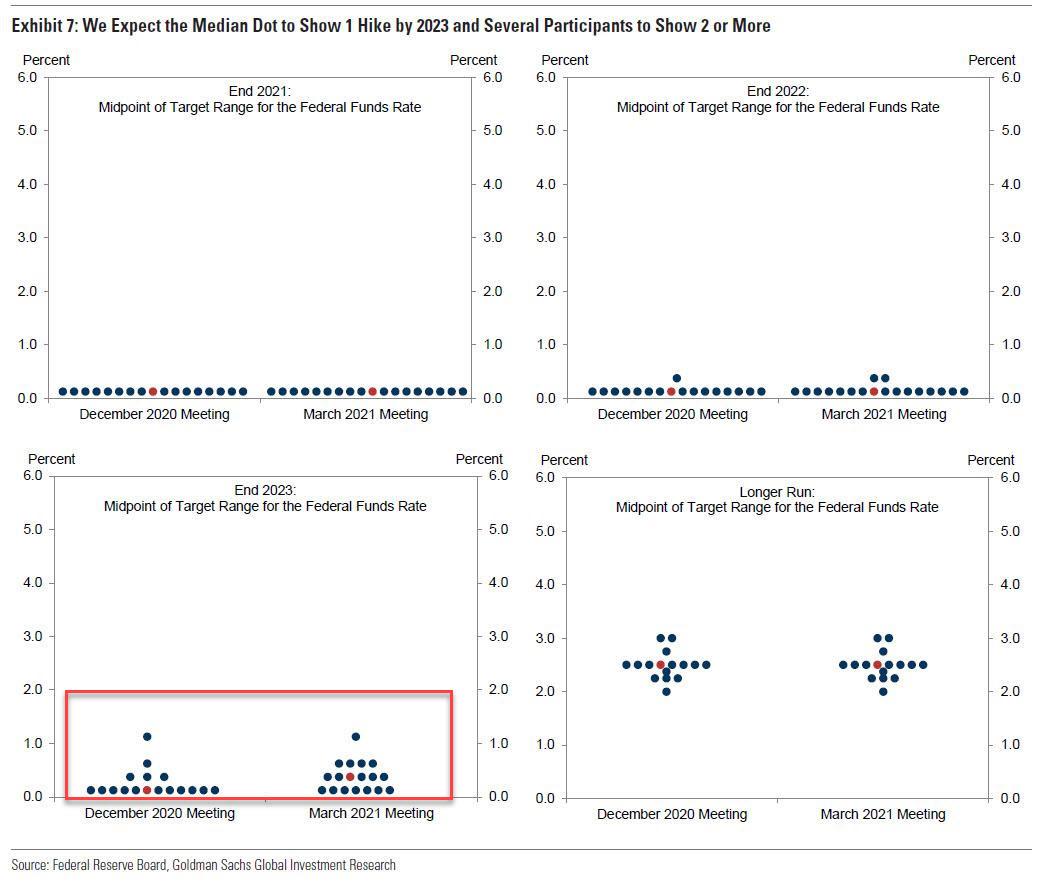
 Yesterday, when we looked at Goldman's forecast for monetary policy over the next few years, one thing stood out: the bank's expectation that the median 2023 dot would show one rate hike, a hawkish prediction that spread like wildfire across markets and prompted speculation among some, such as JPM, that a shorter liftoff telegraphed by the Fed would spark a "repricing" across the entire rates complex which then obviously would also impact risk assets. It's also why others - such as Nomura's Charlie McElligott - said that the fate of that 2023 median dot could lead to a surge - either higher lower - in stocks depending on whether the Fed would go ahead with this tighter signaling.

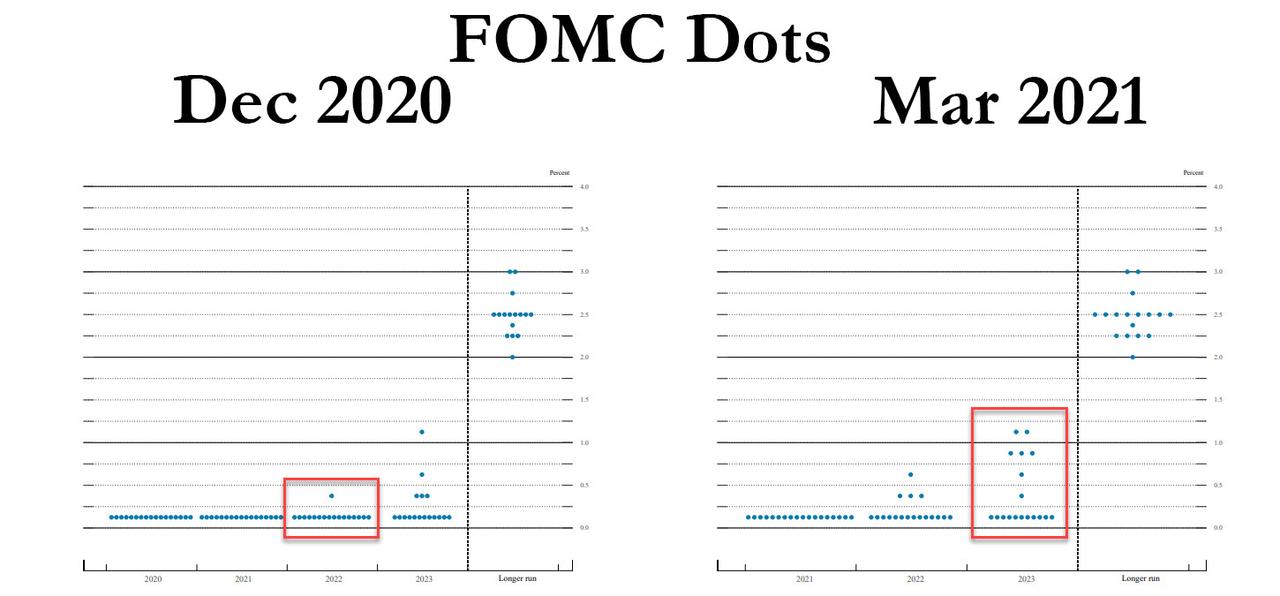
Well, we now know that the Fed would have none of this, and while a handful of FOMC members did in fact push higher on their 2023 dots, the median remained unchanged.

Which brings us to Goldman's just published FOMC post-mortem in which the bank admits that it was wrong about the Fed, an error which it attributed to the Fed's new reaction function which suggests that "several FOMC participants have a higher inflation bar for liftoff than 2.1%." In other words, the economy will be really overheating when the Fed will a) taper and b) consider hiking rates.

Here is what Hatzius just published:

The FOMC made modest changes to the post-meeting statement and left the funds rate target range unchanged at 0–0.25% at the March meeting. The median projected path for the policy rate in the Summary of Economic Projections continued to show no change over the forecast horizon, against our expectations for one hike in the SEP. The March projections suggest that several FOMC participants have a higher inflation bar for liftoff than 2.1%. We continue to expect tapering to begin in early 2022 and the fed funds rate to remain unchanged until the first half of 2024.

Below are all the main points from Goldman:

1. The FOMC left the funds rate target range unchanged at 0–0.25% and left the policy outlook characterization and asset purchase policy unchanged. The statement’s characterization of the current economic situation continued to emphasize the effect of COVID-19 on economic activity and was updated to acknowledge that the pace of the recovery has “turned up recently” after previously moderating. The Committee also removed the language on oil prices “holding down”inflation and now more plainly states that “inflation continues to run below 2%.” In the implementation note, the FOMC increased the counterparty limit on overnight reverse repurchase agreements from $30bn to $80bn.

2. The median projected path for the policy rate in the Summary of Economic Projections (SEP) continued to show no change over the forecast horizon, against our expectations for one hike in the SEP. However, FOMC participants expressed divergent views, as six of the seven participants that expected at least one hike by the end of 2023 projected multiple hikes (vs. five previously with one or more hike;we had expected eleven at this meeting). Additionally, four participants showed a hike at the end of 2022 (vs. one previously; we had expected two at this meeting). The median longer run projection for the fed funds rate was unchanged at 2.5%, as expected.

3.Likely reflecting the American Rescue Plan Act and improvement in the public health situation, the GDP projections in the SEP were increased substantially, with the median growth projection for 2021 raised 2.3pp to 6.5% (median growth projections for 2022 and 2023 were little changed: +0.1pp and -0.2pp, respectively).But while the 2021 core inflation median increased sharply (+0.4pp to 2.2%), the median participant did not project much overheating in the medium-term: the 2023unemployment rate median fell only 0.2pp (to 3.5%), the longer-run unemployment rate median was surprisingly revised down (-0.1pp to 4.0%), the 2023 core inflation median rose 0.1pp to 2.1%, and only one participant projected core inflation rising above 2.2% over the forecast horizon.

Finally, in terms of what Goldman's revised view of the Fed's reaction function now means, Hatzius writes that "the March projections suggest that several FOMC participants have a higher inflation bar for liftoff than 2.1%. We continue to expect tapering to begin in early 2022 and the fed funds rate to remain unchanged until the first half of 2024."

https://www.zerohedge.com/markets/goldman-we-were-wrong-about-fed