Search This Blog

Sunday, March 21, 2021

Gottlieb: 'Costly' Social Distancing Mandate 'Wasn't Based On Clear Science'

 Amid the always-fearmongering, always-pessimistic, always-more-control-demanded, (and almost always wrong) daily headlines from Dr. Fauci, Former FDA Commissioner Dr. Scott Gottlieb dared to speak optimistically about the way forward on Friday:

"We now know that the vaccines dramatically reduce your chance of both contracting COVID and becoming symptomatic to the point where you are going to have a bad outcome; we also know it reduces asymptomatic disease and reduces transmission... we are seeing that in the data."

The Pfizer board member does hedge a little by suggesting those who are high risk should still take precautions.

By many measures, March was supposed to be a "difficult month" but as the vaccine campaign continues uninterrupted, April and May will "look much more clear."

"...people can be more liberal... people will be taking off their masks because we are going to see prevalence decline around the country and people who've been vaccinated can go out with more confidence."

Then Gottlieb dropped some serious truth bombs (which were mysteriously edited out of CNBC's clip above) saying that within a few weeks, it could be "obvious" that masks may be safely removed, and even more significantly, following CDC's flip-flopping and confusing rules this week on distancing in schools:

"This six-foot distancing requirement has probably been the single costliest mitigation tactic that we've employed in response to COVID... and it really wasn't based on clear science... we should have readjucated this much earlier."

Watch this 70 seconds and consider the source - this is not some 'white supremacist, disinformation-spreading, alt-right blogger', this is the former FDA Commissioner who many mainstream media outlets have listened to verbatim through the crisis.


But, but, but, what about Fauci's "science"?
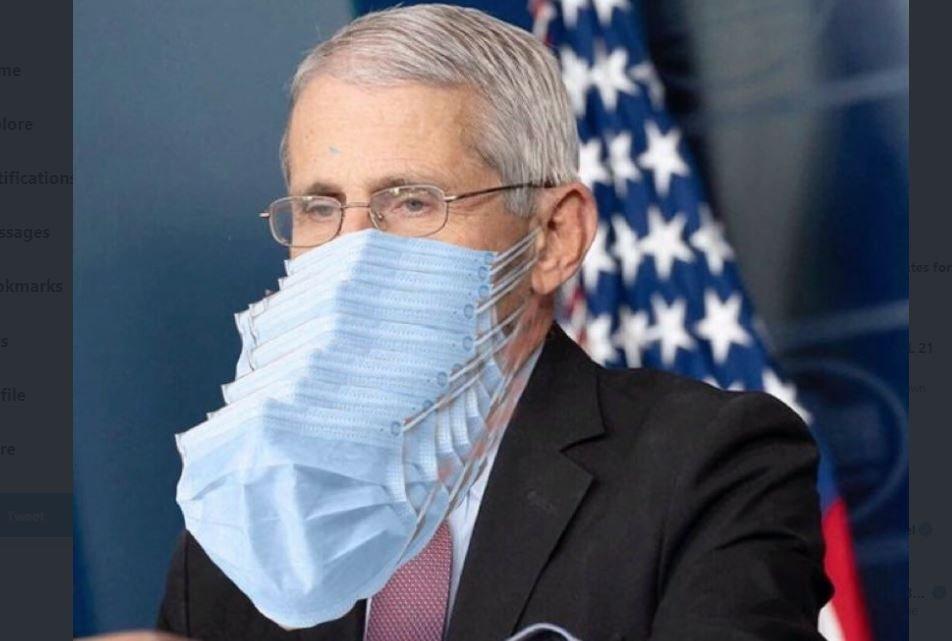
This shocking revelation comes just days after Senator Rand Paul destroyed Dr. Fauci's so-called "science"-based reasons for various restrictions - from mask-wearing to social-distancing - as 'useless political theater'.

Interestingly, Gottlieb said "both [Paul and Fauci] made valid points," but specifically said that "Senator Paul was right, we need to see light at the end of the tunnel and have guidance that prescribes an environment where people can start doing things again."

Amid the now-politicized divide between nanny-state-obeyers and science-denying-extremists (there is no middle ground anymore), it would appear the entirely opposite-think statements, declarations, and proclamations made by officials one year ago have been almost entirely 'memory-holed'.

As Sharyl Attkisson points out in an extensively researched note, around this time last year:

  • Vaccine propagandist Dr. Peter Hotez made the case against travel bans

  • Dr. Anthony Fauci said there was no reason to walk around wearing masks

  • New York City's Health Commissioner urged people to go to crowded places and busy restaurants

  • Rep. Nancy Pelosi (D-Calif.) encouraged people to get out and be around others in San Francisco's Chinatown

And one year ago, the World Health Organization gave what many scientist called confusing guidance on wearing masks for Covid-19. 

World Health Organization, March 19, 2020: “Wearing medical masks when not indicated may result in unnecessary costs and procurement burdens and create a false sense of security that can lead to the neglect of other essential measures, such as hand hygiene practices. Further, using a mask incorrectly may hamper its effectiveness in reducing the risk of transmission.”

It was just ten days after Dr. Anthony Fauci stated, on March 8, “there’s no reason to be walking around with a mask.”

Dr. Fauci also, notoriously, testified to Congress that coronavirus was ten times deadlier than flu about the same time he published a scientific paper that said something quite different: Covid’s lethality was akin to a bad flu season. 

President Trump’s ban on travel from China had been installed January 31 when there had only been a few confirmed cases of Covid-19 in the U.S. 

Here's a look back at some of the most notable statements made by public officials from January through March 31, 2020. 

Some of the comments, guidance, and reflections proved accurate in the long run; some did not. Some seem to have long been forgotten or deposited down the selective memory hole.

Nothing to fear, It's a 'bad flu', 'masks, schmasks'...

Dr. Anthony Fauci, White House Coronavirus Task Force, Jan. 21, 2020: This is not a major threat to the people in the United States and it is not something that the citizens of the United States right now should be worried about.”

Dr. Fauci, in sworn testimony to Congress, March 11, 2020: ’Coronavirus ten times more lethal than flu.’ but Dr. Fauci in the New England Journal of Medicine, March 26, 2020: “…the case fatality rate may be considerably less than 1%. This suggests that the overall clinical consequences of Covid-19 may ultimately be more akin to those of a severe seasonal influenza (which has a case fatality rate of approximately 0.1%)…”

Dr. Oxiris Barbot, New York City health commissioner, Jan. 27, 2020: People who had recently traveled from Wuhan were not being urged to self-quarantine or avoid large public gatherings.” “There is no reason not to take the subway, not to take the bus, not to go out to your favorite restaurant, and certainly not to miss the parade next Sunday.”

and

“As we gear up to celebrate the #LunarNewYear [Chinatown parade] in NYC, I want to assure New Yorkers that there is no reason for anyone to change their holiday plans, avoid the subway, or certain parts of the city because of #coronavirus…We are here today to urge all New Yorkers to continue to live their lives as usual.”

and

“…theres no risk at this point in time…about having it be transmitted in casual contact, right?” “The risk to New Yorkers for Coronavirus is low, and our preparedness as a city is very high.”

LA Times, Soumya Karlamangla, Jan. 31, 2020: For Americans, flu remains a bigger threat than coronavirus. “…unlike the coronavirus, which so far hasnt led to any deaths in the U.S., influenza has killed approximately 10,000 Americans since October, according to federal data released Friday.” “…a much deadlier killer already stalking the United States has been largely overshadowed: the flu.”

Rep. Nancy Pelosi, House Speaker, Feb. 24, 2020: Urged people to visit San Franciscos Chinatown. "Thats what were trying to do today is to say everything is fine here. Come because precautions have been taken. The city is on top of the situation."

New York City Mayor Bill De Blasio, March 2, 2020: “…Im encouraging New Yorkers to go on with your lives + get out on the town despite Coronavirus…” 

Cuomo, March 23, 2020: Many people will get the virus, but few will be truly endangered. Hold both of those facts in your hands: Many will get it, up to 80 percent may get it, but few are truly endangered and we know who they are.”

Dr. Anthony Fauci, National Institutes of Health and White House Task Force, March 8, 2020: “there’s no reason to be walking around with a mask.”

Read more hypocritical insanity here...

So what changed? Why did all these officials suddenly flip to fearmongering the deadliest of deadly things imaginable (that leaves 99.7% of those 'infected' unharmed)?
It couldn't be politics, surely?


https://www.zerohedge.com/covid-19/one-year-ago-gather-crowds-masks-are-useless-only-few-percent-are-vulnerable

Biomarin Presents on Achondroplasia 2-Year Study Results

 BioMarin Pharmaceutical Inc. (NASDAQ: BMRN) today announced that data from the open-label long-term extension of the Phase 3 study of 15 µg/kg dose of vosoritide was presented at an oral presentation at ENDO21, the Endocrine Society's Annual Meeting by Professor Ravi Savarirayan, M.B., B.S., M.D., clinical investigator from the Murdoch Children's Research Institute, Royal Children's Hospital, University of Melbourne, Parkville, Victoria. Vosoritide is an investigational, once daily injection analog of C-type Natriuretic Peptide (CNP) for the treatment of achondroplasia, the most common form of disproportionate short stature in humans. 

The data from the open-label extension presented at ENDO21 showed that children maintained an increase in Annual Growth Velocity (AGV) through the second year of continuous treatment with vosoritide.  Children who received two years of vosoritide therapy had a baseline mean AGV of 4.28 cm/year. After one year of treatment, mean AGV was 5.71 cm/year and after the second year mean AGV was 5.65 cm/year, demonstrating sustained restoration of a major portion of the growth deficit in achondroplasia through the second year of treatment. Children also had an improved height z-score, which is a measure of height relative to that of a similar population of average height.

https://www.prnewswire.com/news-releases/biomarin-announces-oral-presentation-at-endo2021-the-endocrine-societys-annual-meeting-with-data-demonstrating-2-years-of-treatment-benefit-in-children-with-achondroplasia-treated-with-vosoritide-301252378.html

Saturday, March 20, 2021

ENDO 2021: Steroid abuse by men leads to long-lasting impaired testicular function

 Illegal use of anabolic steroids not only has dangerous side effects during use but also can harm of men's testicular function years after they stop abusing steroids, according to a study published in the Endocrine Society's Journal of Clinical Endocrinology & Metabolism.

Anabolic steroids are synthetic forms of testosterone, and their abuse is prevalent among athletes worldwide. Some people use these steroids without a prescription to improve athletic performance or get a more muscular look. Known side effects of these drugs in men include breast growth, hair loss, shrunken testicles and lower testosterone levels. Also called hypogonadism, low testosterone can cause decreased sex drive, poor erections and a low sperm count.

"It is still debated whether illicit use of anabolic steroids causes long-lasting testosterone deficiency," said Jon J. Rasmussen, M.D., Ph.D., the study's principal investigator and a scientist at Rigshospitalet in Copenhagen, Denmark.

Researchers at the hospital have identified a hormone made by Leydig cells--cells in the testicles that produce testosterone--as a promising biological marker of testicular function, Rasmussen said. Because blood levels of testosterone can vary greatly during the day and vary by body composition, Rasmussen and his co-workers are investigating a more stable marker than testosterone, called serum insulin-like factor 3 (INSL3).

For this study, supported by Anti Doping Denmark, the research team included 132 participants from another study: men who did recreational strength training. Their ages ranged from 18 to 50 and averaged 32. Three study groups consisted of 46 men currently using anabolic steroids, 42 former steroid users and 44 who had never used these steroids. On average, former users had reportedly not taken anabolic steroids for 32 months.

Among current steroid users, INSL3 was markedly suppressed compared with former users and never-users, Rasmussen said. Compared with never-users, the former steroid users had lower INSL3 concentrations: 0.39 versus 0.59 microgram micrograms per liter. Furthermore, the longer the duration that the men reportedly used steroids, the lower their INSL3 levels, the researchers found.

"Our results suggest a long-lasting impaired gonadal capacity in previous anabolic steroid users," Rasmussen said.

Although the clinically relevant difference in INSL3 levels is not yet known, because INSL3 measurement is primarily for research, he said their findings indicate that prior steroid users may have an increased risk of hypogonadism later in life.

"The results," Rasmussen said, "raise the question whether some previous anabolic steroid users should receive medical stimulation therapy to increase Leydig cell capacity in the testicles."

This therapy would include drugs used to block estrogen production or its conversion to testosterone, such as aromatase inhibitors and selective estrogen receptor modulators, he noted.

###

Other authors of the study include: Jakob Albrethsen, Niels Jørgensen of Rigshospitalet; Mikkel Nicklas Frandsen and Caroline Kistorp of the University of Copenhagen in Copenhagen, Denmark; and Anders Juul of both Rigshospitalet and the University of Copenhagen.

The manuscript, "Serum Insulin-like Factor 3 Levels are Reduced in Former Androgen Users Suggesting Impaired Leydig Cell Capacity," was published online, ahead of print.

The research also will be presented at ENDO 2021, the Endocrine Society's annual meeting, which runs from March 20-23.

https://www.eurekalert.org/pub_releases/2021-03/tes-sab030321.php

ENDO 2021: Eating before 8:30 a.m. could reduce risk factors for type 2 diabetes

 People who start eating before 8:30 a.m. had lower blood sugar levels and less insulin resistance, which could reduce the risk of developing type 2 diabetes, according to a study presented virtually at ENDO 2021, the Endocrine Society's annual meeting.

"We found people who started eating earlier in the day had lower blood sugar levels and less insulin resistance, regardless of whether they restricted their food intake to less than 10 hours a day or their food intake was spread over more than 13 hours daily," said lead researcher Marriam Ali, M.D., of Northwestern University in Chicago, Ill.

Insulin resistance occurs when the body doesn't respond as well to the insulin that the pancreas is producing and glucose is less able to enter the cells. People with insulin resistance may be at higher risk of developing type 2 diabetes. Both insulin resistance and high blood sugar levels affect a person's metabolism, the breaking down of food to its simpler components: proteins, carbohydrates (or sugars), and fats. Metabolic disorders such as diabetes occur when these normal processes become disrupted.

"With a rise in metabolic disorders such as diabetes, we wanted to expand our understanding of nutritional strategies to aid in addressing this growing concern," Ali said. Previous studies have found that time-restricted eating, which consolidates eating to a shortened timeframe each day, has consistently demonstrated improvement in metabolic health, she noted. Her group wanted to see whether eating earlier in the day affected metabolic measures.

The researchers analyzed data from 10,575 adults who participated in the National Health and Nutrition Examination Survey. They divided participants into three groups depending on total duration of food intake: less than 10 hours, 10-13 hours, and more than 13 hours per day. They then created six subgroups based on eating duration start time (before or after 8:30 a.m.).

They analyzed this data to determine if eating duration and timing were associated with fasting blood sugar levels and estimated insulin resistance. Fasting blood sugar levels did not differ significantly among eating interval groups. Insulin resistance was higher with shorter eating interval duration, but lower across all groups with an eating start time before 8:30 a.m.

"These findings suggest that timing is more strongly associated with metabolic measures than duration, and support early eating strategies," Ali said.

https://www.eurekalert.org/pub_releases/2021-03/tes-eb8031521.php

ENDO 2021: Osteoporosis drug prescribing often does not follow guidelines

 Less than one in 10 commercially insured patients in the United States who broke a hip, a major complication of osteoporosis, receive any osteoporosis medical treatment within two calendar quarters of their fracture, according to a study whose results will be presented at ENDO 2021, the Endocrine Society's annual meeting.

Rates of treatment with osteoporosis, or bone loss, medicines dropped dramatically over the past decade from 15 percent to 8 percent, a new analysis of a large nationwide private insurance database found. The decrease comes despite fractures often being the first sign of osteoporosis, said the study's lead author, Sara Cromer, M.D., an endocrinology fellow at Massachusetts General Hospital in Boston, Mass.

"This very low rate of treatment with bone-directed medications to prevent future fractures is concerning," Cromer said. "This is analogous to providing no therapy to lower blood pressure or cholesterol after a heart attack."

Medical associations recommend osteoporosis evaluation and treatment after a hip fracture. Osteoporosis medications, also called bone-directed or bone-modifying drugs, prevent bones from getting weaker by slowing the natural breakdown of bone or by stimulating new bone to form.

Some 54 million Americans--primarily women--have osteoporosis or are at risk of the bone-weakening disease, putting them at increased danger of broken bones, according to the Hormone Health Network. Each year, more than 300,000 older adults nationwide sustain a hip fracture requiring hospitalization, according to the U.S. Centers for Disease Control and Prevention.

The new study involved more than 15 million prescription claims and reviewed trends in U.S. prescribing of bone-directed therapies from 2009 to 2020. Although the study data do not address possible reasons for the decrease in bone-directed treatment of hip fractures, Cromer said the diagnosis of osteoporosis is often overlooked, even in patients who experience disease-defining fractures.

Another reason could be public concerns about the side effects of some common osteoporosis drugs, including bisphosphonates, she suggested. These include the very rare chance of either osteonecrosis of the jaw, which is a severe breakdown of bone in the jaw, or of fractures of the thigh bone.

The Society's Clinical Practice Guideline on osteoporosis treatment in postmenopausal women state that the benefits of bone-directed medications outweigh their risk for women at high risk of breaking a bone, especially those who recently experienced a fracture.

"The risk of second fracture is higher without osteoporosis medications," Cromer said. "Also, a hip fracture can be deadly, with approximately 20-30 percent of people dying within a year after a hip fracture, and studies show that some medications for osteoporosis can even lower this risk of death."

Another trend that their study identified that Cromer said seems out of proportion to the Society's guideline recommendations is the rapid rise in use of denosumab, which became available in 2010. This medicine, which is given twice a year as an injection in the doctor's office, is a monoclonal antibody that works similar to bisphosphonates. The guidelines recommend denosumab as an alternative to bisphosphonates for the initial treatment of osteoporosis if they cannot take bisphosphonates or are at high risk of osteoporotic fractures.

By 2017, use of denosumab surpassed all other bone-directed drugs except the bisphosphonate alendronate for the treatment of osteoporosis, the study data showed. Furthermore, Cromer said by 2013 denosumab became the most commonly used drug for the prevention of fractures related to cancers that have, or are likely to, spread to the bone.

"While denosumab is highly effective at improving bone density and preventing fracture, it has also been known for several years that there is an increase in spinal fractures if denosumab is discontinued without follow-up treatment, and sometimes even with follow-up treatment," Cromer said. "This safety concern does not seem to be reflected in medication use as of early 2020, the end of our study."

Cromer hypothesized that the popularity of denosumab over other effective medications may be because its form of administration--twice-a-year injections--is more convenient than that of oral bisphosphonates that patients take once a week. However, she said denosumab was used more often than zoledronic acid, an intravenous bisphosphonate that requires only once-yearly dosing. The reasons for the rapid increase in use of denosumab remain unclear, she noted.

She encouraged patients with osteopenia or osteoporosis to discuss their risks and benefits of treatment with their doctor and to ask which medicine is best for them.

https://www.eurekalert.org/pub_releases/2021-03/tes-odp031521.php

ENDO 2021: 1 in 3 older thyroid patients' meds interfere with function tests

 Nearly one-third of adults age 65 and older who take thyroid hormone also take medications that are known to interfere with thyroid function tests, according to a study presented virtually at ENDO 2021, the Endocrine Society's annual meeting.

"Our findings highlight the complexity of managing thyroid hormone replacement in older adults, many of whom take medications for other medical conditions," said first author Rachel Beeson, M.D., of the University of Michigan in Ann Arbor, Mich. "Until now, the prevalence of concurrent use of thyroid hormone and interfering medications in older adults, and patient characteristics associated with this practice, has been unknown."

Thyroid hormone use is very common in older adults. Levothyroxine, used to treat hypothyroidism (low thyroid hormone), is one of the most frequently prescribed medications in the United States. Thyroid function tests are used to determine the dose and effectiveness of treatment. The results of these tests can be altered by a variety of medications.

Beeson and colleagues analyzed data from 538,137 adults age 65 and older who used thyroid hormone. They looked at how many patients concurrently took thyroid hormone and medications that commonly interfere with thyroid function tests, such as prednisone, prednisolone, carbamazepine, phenytoin, phenobarbital, amiodarone, lithium, interferon-alpha and tamoxifen.

Overall, 31.6% of patients were taking medications that have been known to interfere with thyroid function tests.

"When we examined patient characteristics associated with concurrent use of thyroid hormone and at least one interfering medication, this was more likely to be seen in patients who were female, non-white and of Hispanic ethnicity," Beeson said. The researchers also found people who had other chronic medical conditions were more likely to concurrently use thyroid hormone and medications that interfere with thyroid tests.

###

The National Institute on Aging supported the research with a grant to senior author Maria Papaleontiou, M.D.

https://www.eurekalert.org/pub_releases/2021-03/tes-1i3031521.php

ENDO 2021: Antiandrogens Reduce SARS-CoV-2 Virus Entry in Lung Cells


Authors
Damien A. Leach, PhD1, Mohr Andrea, PhD2, Ralf Zwacka, PhD2, Stathis Giottis, PhD2, Laura Yates, PhD1, Clare Lloyd, PhD1, Greg N. Brooke, PhD3Charlotte Lynne Bevan, PhD1.
1IMPERIAL COLLEGE LONDON, London, United Kingdom, 2University of Essex, Colchester, United Kingdom, 3Essex University, Colchester, United Kingdom.

Abstract
The SARS-CoV-2 coronavirus is the cause of the COVID-19 pandemic. Entry of the virus into host cells, most destructively lung cells, requires two host cell surface proteins, ACE2 and TMPRSS2, downregulation of which is thus a potential therapeutic approach for COVID-19. Both of these cell surface proteins are steroid regulated: TMPRSS2 is a well-characterised androgen-regulated target in prostate cancer. Analysis of sequencing data shows co-expression of the androgen receptor (AR) and TMPRSS2 in key human lung cell types that are targeted by SARS- CoV-2. We show that treatment with antiandrogens such as enzalutamide (a well-tolerated drug widely used in advanced prostate cancer) significantly reduces TMPRSS2 levels in human lung cells and in vivo in mouse lung. We demonstrate that AR binding in the region of the TMPRSS2 gene differs between lung and prostate, identifying distinct regulatory regions. Together, the data and evidence presented supports clinical trials to assess the efficacy of antiandrogens as a treatment option for COVID-19.

https://www.abstractsonline.com/pp8/#!/9188/presentation/3912