Search This Blog

Friday, November 19, 2021

Scientists mystified, wary, as Africa avoids COVID disaster

 At a busy market in a poor township outside Harare this week, Nyasha Ndou kept his mask in his pocket, as hundreds of other people, mostly unmasked, jostled to buy and sell fruit and vegetables displayed on wooden tables and plastic sheets. As in much of Zimbabwe, here the coronavirus is quickly being relegated to the past, as political rallies, concerts and home gatherings have returned.

"COVID-19 is gone, when did you last hear of anyone who has died of COVID-19?" Ndou said. "The mask is to protect my pocket," he said. "The police demand bribes so I lose money if I don't move around with a mask." Earlier this week, Zimbabwe recorded just 33 new COVID-19 cases and zero deaths, in line with a recent fall in the disease across the continent, where World Health Organization data show that infections have been dropping since July.

When the coronavirus first emerged last year, health officials feared the pandemic would sweep across Africa, killing millions. Although it's still unclear what COVID-19's ultimate toll will be, that catastrophic scenario has yet to materialize in Zimbabwe or much of the continent.

Scientists emphasize that obtaining accurate COVID-19 data, particularly in African countries with patchy surveillance, is extremely difficult, and warn that declining coronavirus trends could easily be reversed.

But there is something "mysterious" going on in Africa that is puzzling scientists, said Wafaa El-Sadr, chair of global health at Columbia University. "Africa doesn't have the vaccines and the resources to fight COVID-19 that they have in Europe and the U.S., but somehow they seem to be doing better," she said.

Fewer than 6% of people in Africa are vaccinated. For months, the WHO has described Africa as "one of the least affected regions in the world" in its weekly pandemic reports.

Some researchers say the continent's younger population—the average age is 20 versus about 43 in Western Europe—in addition to their lower rates of urbanization and tendency to spend time outdoors, may have spared it the more lethal effects of the virus so far. Several studies are probing whether there might be other explanations, including genetic reasons or past infection with parasitic diseases.
Scientists mystified, wary, as Africa avoids COVID disaster
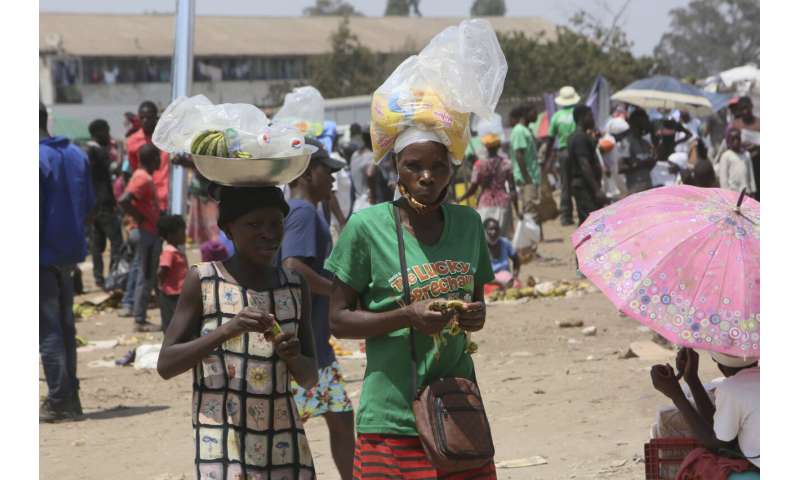
A woman and her daughter sell refreshments at a busy market on the outskirts of the capital Harare, Monday, Nov, 15, 2021. When the coronavirus first emerged last year, health officials feared the pandemic would sweep across Africa, killing millions and destroying the continent's fragile health systems. Although it's still unclear what COVID-19's ultimate toll will be, that catastrophic scenario has yet to materialize in Zimbabwe or much of Africa. Credit: AP Photo/Tsvangirayi Mukwazhi

On Friday, researchers working in Uganda said they found COVID-19 patients with high rates of exposure to malaria were less likely to suffer severe disease or death than people with little history of the disease.

"We went into this project thinking we would see a higher rate of negative outcomes in people with a history of malaria infections because that's what was seen in patients co-infected with malaria and Ebola," said Jane Achan, a senior research advisor at the Malaria Consortium and a co-author of the study. "We were actually quite surprised to see the opposite—that malaria may have a protective effect."

Achan said this may suggest that past infection with malaria could "blunt" the tendency of people's immune systems to go into overdrive when they are infected with COVID-19. The research was presented Friday at a meeting of the American Society of Tropical Medicine and Hygiene.

Christian Happi, director of the African Center of Excellence for Genomics of Infectious Diseases at Redeemer's University in Nigeria, said authorities are used to curbing outbreaks even without vaccines and credited the extensive networks of community health workers.

"It's not always about how much money you have or how sophisticated your hospitals are," he said.

Devi Sridhar, chair of global public health at the University of Edinburgh, said African leaders haven't gotten the credit they deserve for acting quickly, citing Mali's decision to close its borders before COVID-19 even arrived.

"I think there's a different cultural approach in Africa, where these countries have approached COVID with a sense of humility because they've experienced things like Ebola, polio and malaria," Sridhar said.
Scientists mystified, wary, as Africa avoids COVID disaster
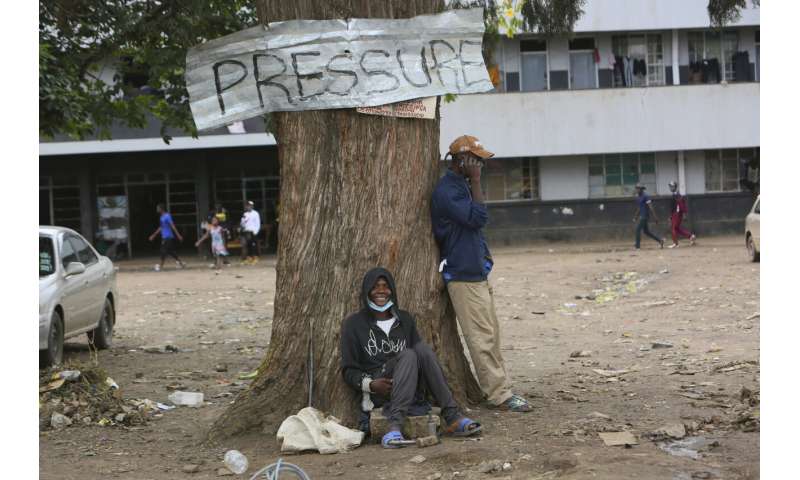
Two men relax under a tree in a poor township on the outskirts of the capital Harare, Tuesday, Nov, 16, 2021. When the coronavirus first emerged last year, health officials feared the pandemic would sweep across Africa, killing millions and destroying the continent's fragile health systems. Although it's still unclear what COVID-19's ultimate toll will be, that catastrophic scenario has yet to materialize in Zimbabwe or much of Africa. Credit: AP Photo/Tsvangirayi Mukwazhi

In past months, the coronavirus has pummeled South Africa and is estimated to have killed more than 89,000 people there, by far the most deaths on the continent. But for now, African authorities, while acknowledging that there could be gaps, are not reporting huge numbers of unexpected fatalities that might be COVID-related. WHO data show that deaths in Africa make up just 3% of the global total. In comparison, deaths in the Americas and Europe account for 46% and 29%.

In Nigeria, Africa's most populous country, the government has recorded nearly 3,000 deaths so far among its 200 million population. The U.S. records that many deaths every two or three days.

The low numbers have Nigerians like Opemipo Are, a 23-year-old in Abuja, feeling relieved. "They said there will be dead bodies on the streets and all that, but nothing like that happened," she said.

On Friday, Nigerian authorities began a campaign to significantly expand the West African nation's coronavirus immunization. Officials are aiming to inoculate half the population before February, a target they think will help them achieve herd immunity.

Oyewale Tomori, a Nigerian virologist who sits on several WHO advisory groups, suggested Africa might not even need as many vaccines as the West. It's an idea that, while controversial, he says is being seriously discussed among African scientists—and is reminiscent of the proposal British officials made last March to let COVID-19 freely infect the population to build up immunity.

That doesn't mean, however, that vaccines aren't needed in Africa.

"We need to be vaccinating all out to prepare for the next wave," said Salim Abdool Karim, an epidemiologist at South Africa's University of KwaZulu-Natal, who previously advised the South African government on COVID-19. "Looking at what's happening in Europe, the likelihood of more cases spilling over here is very high."
Scientists mystified, wary, as Africa avoids COVID disaster
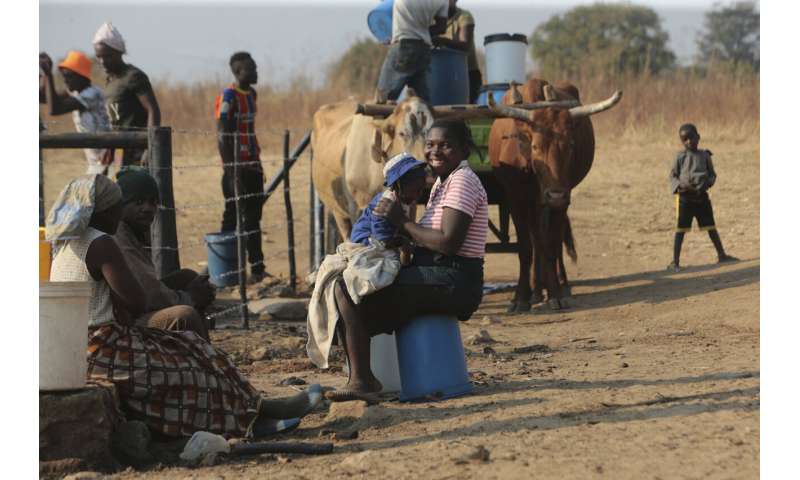
A woman smiles while playing with her baby at a water point on the outskirts of the capital Harare, Sunday, Nov, 14, 2021. When the coronavirus first emerged last year, health officials feared the pandemic would sweep across Africa, killing millions and destroying the continent's fragile health systems. Although it's still unclear what COVID-19's ultimate toll will be, that catastrophic scenario has yet to materialize in Zimbabwe or much of Africa. Credit: AP Photo/Tsvangirayi Mukwazhi

The impact of the coronavirus has also been relatively muted beyond Africa in poor countries like Afghanistan, where experts predicted outbreaks amid ongoing conflict would prove disastrous.

Hashmat Arifi, a 23-year-old student in Kabul, said he hadn't seen anyone wearing a mask in months, including at a recent wedding he attended alongside hundreds of guests. In his university classes, more than 20 students routinely sit unmasked in close quarters.

"I haven't seen any cases of corona lately," Arifi said. So far, Afghanistan has recorded about 7,200 deaths among its 39 million people, although little testing was done amid the conflict and the actual numbers of cases and deaths are unknown.

Back in Zimbabwe, doctors were grateful for the respite from COVID-19—but feared it was only temporary.

"People should remain very vigilant," warned Dr. Johannes Marisa, president of the Medical and Dental Private Practitioners of Zimbabwe Association. He fears that another coronavirus wave would hit Zimbabwe next month. "Complacency is what is going to destroy us because we may be caught unaware."

https://medicalxpress.com/news/2021-11-scientists-mystified-wary-africa-covid.html

More turn to abortion pills by mail, with legality uncertain

 Before her daughter's birth, she spent weeks in bed. Another difficult pregnancy would be worse as she tried to care for her toddler.

Faced with that possibility, the 28-year-old Texas woman did what a growing number of people have considered: She had a friend in another state mail her the pills she needed to end her pregnancy. She took the pills, went to bed early and describes the experience as "calm" and "peaceful."

"If people can have births at birthing centers or in their own homes, why shouldn't people be able to have abortions in their own homes?" said the woman, who spoke on the condition of anonymity because she worries about legal reprisals as Texas moves to join several other states in disallowing mail delivery of  medications. "It's a comfort thing."

The COVID-19 pandemic and Texas' near-ban on abortion fueled increased interest in obtaining abortion medications by mail. But with the legality in doubt in several states, some people looking to get around restrictions may not see it as worth the risk. The matter is taking on new urgency with the Supreme Court set to hear arguments next month in Mississippi's bid to erode the Roe v. Wade decision guaranteeing the right to an abortion.

Some abortion-rights advocates worry that whatever state officials and anti-abortion groups promise, people ending their pregnancies at home will face criminal prosecutions.

"We don't think that people are doing anything wrong to order medication from an online site," said Elisa Wells, co-founder and co-director of Plan C, which provides information about medical abortions. "I mean, that's how men get Viagra. They order it online, and nobody's talking about that and asking, is that illegal?"

Medication abortions have increased in popularity since regulators started allowing them two decades ago and now account for roughly 40% of U.S. abortions. The medication can cost as little as $110 to get by mail, compared with at least $300 for a surgical abortion.

However, people seeking abortion pills often must navigate differing , including bans on delivery of the drugs and on telemedicine consultations to discuss the medication with a health care provider. And until Democrat Joe Biden became president, U.S. government policy banned mail delivery nationwide.

We just didn't want women to use these medications and not have any protections, any guidance, any consultation," said Oklahoma state Sen. Julie Daniels, a Republican and lead sponsor of her state's law banning delivery of abortion medication by mail, which is on hold amid a legal challenge.

Plan C saw roughly 135,000 hits on its website in September, about nine times the number it had before the Texas law that bans abortion as early as six weeks into a pregnancy took effect Sept. 1, Wells said.

Aid Access, which helps women get abortion pills and covers costs for those who can't afford them, says it can't yet provide data from recent months. It saw a 27% increase in the U.S. in people seeking abortion pills as states instituted restrictions early in the COVID-19 pandemic, according to a University of Texas study. The biggest increase was in Texas, which had limited access to clinics, saying it was necessary to check the coronavirus' spread.

Aid Access has a physician based in Europe, Dr. Rebecca Gomperts, provide prescriptions to clients in 32 states that only allow doctors to do so. The pills are mailed from India.

"I don't think that any state level regulation is going to stop Dr. Gomperts from what she's doing," said Christie Pitney, a California nurse-midwife who is Aid Access' provider for that state and Massachusetts.

Indeed, Aid Access defied a 2019 order from the Food and Drug Administration to stop distributing medications in the U.S. In April, the Biden administration dropped the FDA ban on mail delivery of abortion medications during the pandemic.

The divide among Democratic-leaning and Republican-leaning states is stark in the St. Louis area. On the Illinois side, Planned Parenthood offers telemedicine consultations and prescriptions by mail. Missouri, however, bars telemedicine and requires a pre-abortion pelvic exam, which providers see as unnecessary and invasive.

"In Missouri, we don't actually provide medication abortion because of the state requirement," said Dr. Colleen McNicholas, chief medical officer of the regional affiliate.

Abortion opponents don't expect the FDA restriction on abortion medication to be reinstated under Biden. GOP lawmakers in Arkansas,Arizona, Montana and Oklahoma already were working on new laws to ban mail delivery when the FDA acted. Texas' mail-delivery ban takes effect Dec. 2. South Dakota GOP Gov. Kristi Noem issued an executive order in September.

Even some abortion opponents believe it will be difficult for states to crack down on providers and suppliers outside their borders, especially outside the U.S.

"Obviously it would be a lot easier if we had the cooperation of the federal government," said John Seago, Texas Right to Life's legislative director. "There's no silver bullet yet identified of how we're going to approach this kind of next frontier of the fight."

Still, Seago says tough penalties give prosecutors an incentive to pursue violators. The Montana law, for example, mandates a 20-year prison term, a $50,000 fine, or both to anyone who mails pills to a state resident.

Pregnant people seek telemedicine consultations and abortion pills by mail because they don't want to or can't travel or can't arrange time off or child care, abortion-rights advocates said.

"Just because somebody can't access an abortion doesn't mean that they're going to all of a sudden want to continue a pregnancy that originally was not desired, right?" said Dr. Meera Shah, chief medical officer for the Planned Parenthood affiliate outside New York City, who also does abortions in Indiana.

A person in Ohio who identifies as nonbinary said they used an herbal remedy to self-manage an abortion alone in their college dorm room in 2016, before Aid Access launched its site, telling their roommate they had the stomach flu. They said they didn't have a car and didn't know they could get financial help, and called the Aid Access model "fantastic."

"Any avenue to help pregnant people facilitate their own abortions and have that experience in whatever way best suits them is a great way to give bodily autonomy back to a wider range of patients," they said, speaking on condition of anonymity because they fear harassment from anti-abortion protesters.

The new laws in Montana, Oklahoma and Texas say people can't face criminal penalties for having medication abortions. Yet those provisions—and assurances from abortion foes that their goal is not to prosecute people who have ended pregnancies—don't comfort some abortion-rights advocates.

They say roughly two dozen women have been prosecuted since 2000 in the aftermath of self-managed abortions. An Indiana woman who was sentenced to 20 years in prison for feticide in 2015 for a self-induced abortion spent more than a year behind bars before her conviction was overturned.

Some abortion-rights advocates said prosecutors also can use child endangerment or manslaughter charges against people who have had abortions—or who have had miscarriages that authorities deem suspicious. They worry that the poor and people of color are especially vulnerable.

"They can't get drugs where they are, and so they may purchase pills from informal networks or online sites," said Melissa Grant, chief operating officer of carafem, which operates clinics in four states and provides abortion medications in nine. "But that's riskier in this country than actually taking the medicines."

https://medicalxpress.com/news/2021-11-abortion-pills-mail-legality-uncertain.html

Plant-derived antiviral effective in blocking highly infectious SARS-CoV-2 Delta variant

 A plant-based antiviral treatment for Covid-19, recently discovered by scientists at the University of Nottingham, has been found to be just as effective at treating all variants of the virus SARS-CoV-2, even the highly infectious Delta variant.

The struggle to control the Covid-19 pandemic is made more difficult by the continual emergence of virulent SARS-CoV-2 variants, which are either more infectious, cause more severe infection, or both.

In a new study published in Virulence, a group of scientists, led by Professor Kin-Chow Chang from the School of Veterinary Medicine and Science at the University, found that the Delta , compared with other recent variants, showed the highest ability to multiply in cells, and was most able to directly spread to neighboring cells. In co-infections with two different SARS-CoV-2 variants, the Delta variant also boosted the multiplication of its co-infected partners.

The study also showed that a novel natural antiviral drug called thapsigargin (TG), recently discovered by the same group of scientists to block other viruses, including the original SARS-CoV-2, was just as effective at treating all of the newer SARS-CoV-2 variants, including the Delta variant.

In their previous studies the team showed that the plant-derived antiviral, at small doses, triggers a highly effective broad-spectrum host-centered antiviral innate immune response against three major types of human respiratory viruses, including SARS-CoV-2.

In this latest study, the team set out to find out how well the emergent Alpha, Beta and Delta variants of SARS-CoV-2 are able to multiply in cells relative to each other as single variant infections and in co-infections- where cells are infected with two variants at the same time. The team also wanted to know just how effective TG was at blocking these emergent variants. 

Of the three, the Delta variant showed the highest ability to multiply in cells, and was most able to spread directly to neighboring ; its amplification rate at 24 hours of infection was over four times that of the Alpha variant and nine times more than the Beta variant.

In co-infections, the Delta variant boosted the multiplication of its co-infected partners. Furthermore, co-infection with Alpha and Delta or Alpha and Beta conferred multiplication synergy, where total new  output was greater than the sum of corresponding single-variant infections.

Notably, all SARS-CoV-2 variants were highly susceptible to TG treatment. A single pre-infection priming dose of TG effectively blocked all single-variant infections and every co-infection at greater than 95% relative to controls. Likewise, TG was effective in inhibiting each variant during active .

Professor Kin Chow Chang, lead author of the study, says that their "new study has given us better insights into the dominance of the Delta variant. Even though we have shown that this variant is clearly the most infectious and promotes production of other variants in co-infections, we are pleased to have shown that TG is just as effective against all of them."

"Together, these results point to the antiviral potential of TG as a post-exposure prophylactic and an active therapeutic agent."


Explore further

COVID-19 antibodies remain in the body 10 months after infection

More information: Sarah Al-Beltagi et al, Emergent SARS-CoV-2 variants: comparative replication dynamics and high sensitivity to thapsigargin, Virulence (2021). DOI: 10.1080/21505594.2021.2006960
https://medicalxpress.com/news/2021-11-plant-derived-antiviral-drug-effective-blocking.html

Delta-like SARS-CoV-2 variants are most likely to increase pandemic severity

 A SARS-CoV-2 variant with traits similar to that of the Delta variant—enhanced transmissibility and an ability to infect people who had previous infections/vaccination—will cause a more severe pandemic with more infections and breakthrough infections/reinfections than variants with either trait alone, according to a mathematical model created by researchers at Harvard T.H. Chan School of Public Health.

Their work, which was published online November 19, 2021 in Cell, could help researchers and  interpret the significance of novel and existing variants and design tailored public health responses for various scenarios based on a 's characteristics.

"Thus far, evidence of immune escape—the ability of a variant to evade the  and cause reinfections or breakthrough infections—has been a red flag," said Mary Bushman, co-author of the Cell paper and a postdoctoral research fellow in the Department of Epidemiology at Harvard Chan School. "Our findings say it's maybe more of a yellow flag—this is not such a big deal on its own. But when it's combined with enhanced transmissibility, then it can be a really big deal."

As the COVID pandemic has progressed, variants of the initial wild-type SARS-CoV-2 virus have emerged. Some have quickly become a dominant strain and increased the number of infections, like the Alpha and Delta variants, while others, like Beta, failed to take hold or significantly affect the pandemic's trajectory. To understand the effects that certain factors would have on a pandemic, Bushman created a model that simulates how pandemics fueled by hypothetical variants would affect populations that are using various combinations of masking with physical distancing, and vaccinations.

The analysis simulated a SARS-CoV-2 pandemic with several different hypothetical variants including combinations of the two traits: enhanced transmissibility, similar to the Alpha variant; partial immune escape, similar to the Beta variant; enhanced transmissibility with partial immune escape, similar to the Delta variant; and a variant with neither trait. The analysis also factored in how certain variables, such as masking/physical distancing or vaccinations, would affect the pandemic's trajectory. For each of the scenarios, the researchers analyzed the total number of infections as well as the number/percentage of infections averted by vaccination.

Bushman and their team determined that a variant with enhanced transmissibility alone would likely be more dangerous than a variant that could partially evade the immune system. Yet a variant with both traits could cause more infections, reinfections, and breakthrough infections than a variant with either trait alone.

According to the model, vaccination is also predicted to be highly beneficial in the case of Delta-like variants because vaccinations would prevent a greater number of cases that a more transmissible virus would potentially cause, and because the milder nature of  should substantially reduce overall mortality.

"It's really important that people realize the emergence of variants like Delta make high levels of vaccination all the more crucial," said Bill Hanage, associate professor of epidemiology and co-author of the Cell paper. "Even if we cannot eliminate the virus, we can ensure that people face it with the best preparation, and a more transmissible virus means there will be more infections in the absence of vaccination, so more people stand to benefit from it."

Other Harvard Chan School co-authors of the study included Rebecca Kahn, Bradford Taylor, and Marc Lipsitch.


Explore further

Plant-derived antiviral drug is effective in blocking highly infectious SARS-CoV-2 Delta variant

More information: Mary Bushman et al, Population impact of SARS-CoV-2 variants with enhanced transmissibility and/or partial immune escape, Cell (2021). DOI: 10.1016/j.cell.2021.11.026
https://medicalxpress.com/news/2021-11-delta-like-sars-cov-variants-pandemic-severity.html

Research Pipeline Poised to Conquer Alzheimer’s with Combination Drug Treatments

 The recent approval of Aduhelm, a drug that removes amyloid plaques from the brains of people with Alzheimer’s, is a reason for cautious celebration. Not just because it is the first new treatment approved in 17 years, but because it is the first piece of a complex puzzle that researchers are hot on the trail of solving.

Protein abnormalities in the brain, like tau tangles and the amyloid plaques that Aduhelm attacks, are what usually come to mind when most people think about Alzheimer’s disease. But more than 20 years ago, the Alzheimer’s Drug Discovery Foundation (ADDF) began urging scientists to broaden their research to include the many biological processes that falter with aging and contribute to the disease.

For example, as people age, they are more likely to have chronic inflammation, including inflammation in the brain, which is associated with poorer cognitive function. Other aging malfunctions in the brain trigger inefficient use of internal and external energy sources, vascular problems, changes in how certain genes work, and loss of synapses, the pathways that carry signals across our brains.

Compared to 20 or even just 10 years ago, scientists today have a much stronger understanding of how each of these pathways — and indeed the overall biology of aging — contribute to Alzheimer’s disease. Alzheimer’s is not caused by one single factor, but by a complex set of these mechanisms that interact with one another and lead to deterioration and death of brain cells. This is what causes the loss of memory and cognitive abilities that Alzheimer’s patients and their families fear.

Today’s Alzheimer’s research pipeline is built on this deeper understanding of the biology of the disease. As a result, today’s pipeline is more robust and diverse than ever before. There are more than 120 potential Alzheimer’s drugs currently in clinical trials, and most work on targets other than the abnormal buildup of amyloid and tau.

Here are just a few examples of research that the ADDF is supporting in these areas.

Researchers at the University College London have identified an overactive protein in the brains of Alzheimer’s patients that damages the blood brain barrier (BBB). The blood brain barrier controls what gets into and out of the brain, including glucose, which provides the essential energy the brain needs to stay healthy. These researchers are working on ways to inhibit the overactive protein to help the BBB maintain its normal function.

A drug being tested at Johns Hopkins University in Baltimore also aims to maintain balance in the brain, but in this case, focusing on nerve cell signaling. Nerve cells, or neurons, are information messengers that carry essential signals within the brain and between the brain and the rest of the nervous system. Disruptions in the normal balance of nerve cell signaling contribute to cognitive deficits and memory impairment.

At Wake Forest School of Medicine in North Carolina, researchers are looking at ways to rid the aging brain of “zombie cells.” These cells activate internal programs to sidestep the natural death cycle that all cells go through. These cells survive, but like zombies, they have no useful function. Instead, zombie cells release toxins that damage nearby healthy cells, causing harmful inflammation.

These are just three of the pathways for which prospective drugs are in various stages of development that go beyond the once traditional targets of amyloid and tau proteins. Today, we have more than two dozen trials in phase 3 development, which is usually the last phase of testing before the FDA considers whether a drug can be approved for routine use in this country.

Dozens more potential drugs are in phase 2 of development. This is when a drug’s effectiveness is usually first tested in small number of patients. And while phase 1 drugs, the “safety” phase, have a longer way to go before they make their way to patients, the fact that we have about two dozen drugs in phase 1 means our pipeline will continue to deliver for years to come.

As a physician and researcher who has been working with Alzheimer’s patients and their families for more than 40 years, I am more optimistic than ever about our drug pipeline. The research pipeline is primed to give us drugs that target a range of pathways that contribute to the development and progression of Alzheimer’s disease.

In time, physicians will have the tools they need so they can combine medications, much as we do today for cancer, to address individual patient needs rather than having a “one-size-fits-all” approach to Alzheimer’s disease. We have entered a modern era and are moving closer to the real prize: personalized medicine for Alzheimer’s that will treat the full range of patients, including new ways to treat the disease, as well as better methods to prevent or delay its onset for those at risk.

Howard Fillit, M.D. is the Founding Executive Director and Chief Science Officer of the Alzheimer’s Drug Discovery Foundation (ADDF).

https://www.realclearhealth.com/articles/2021/11/17/alzheimers_research_pipeline_is_poised_to_conquer_alzheimers_with_combination_drug_treatments_111269.html

Tighter Phase II Trial Criteria in Oncology Urged

 A recent study has highlighted the need for more stringent Phase II trial protocols and criteria on the basis that over 80% of candidate oncology treatments that go into Phase III failed to demonstrate the ability to extend survival. 

In research published in the Journal of the National Comprehensive Cancer Network (JNCCN), of the 362 industry-sponsored, randomized Phase III oncology trials conducted from 2008 to 2017, 87% were either false-positive or true-negative for achieving overall survival (OS) goals. 

Changyu Shen, an associate professor at the Harvard Medical School, and his colleagues evaluated data on 187 OS and 216 progression-linked survival (PRS) endpoints on trials involving breast, lung, hematologic, and gastrointestinal cancers. 

They observed that of the 56 OS endpoints that did deliver statistically significant changes, true efficacy was not achieved in 33 cases, with 58.4% logged as false-positives. In addition, of the 131 OS endpoints that failed to deliver significant results, 24.5% were false-positives, while 4.2% were false-negatives among PRS. 

"Our study shows that reducing false-positive errors by imposing a more stringent statistical threshold in Phase III trials is not likely to be practically feasible. A better strategy is to rethink the process that leads to the decision of moving a new therapy to Phase III testing to begin with. More research is needed in this regard," said Dr. Shen in a statement

The high number of false-positive results has serious ramifications. It may lead to therapies getting approval even with insufficient effectiveness, exposing patients to greater risks. Financially, it could hurt drug developers, especially as new cancer drugs typically cost upwards of $100,000 per patient per year. False-positive Phase III trials could create a major financial burden on patients and therapy producers. 

The Phase III trials evaluated for this study were mostly two-arm studies of an interventional candidate versus a control. They also did not include trials that had fewer than 100 participants, thereby excluding rare cancers or subsets of common malignancies and trials that were national cooperative-sponsored. 

Quoting from the study's conclusion: "A better solution is to apply more stringent statistical criteria to phase II trials. This strategy would increase the proportion of truly effective therapies that are advanced to phase III trials, subsequently reducing false-positives and true-negatives and improving trial success rate. Ultimately, this is the strategy that can potentially reduce unnecessary healthcare expenditures and, most important, improve patient outcomes."

Details of the research can be read at the JNCCN website, titled "Underperformance of Contemporary Phase III Oncology Trials and Strategies for Improvement." It is free to access until December 10.

https://www.biospace.com/article/scientists-urge-more-stringent-phase-ii-trial-criteria-as-false-positives-in-phase-iii-oncology-trials-exceed-80-percent-/

Avrobio cut to Equal Weight from Overweight by Morgan Stanley

 Target to $7 from $24

https://finviz.com/quote.ashx?t=avro