Search This Blog

Monday, June 13, 2022

Vaccine panel must discuss imprinting among infants and toddlers

 This week, when the CDC’s vaccine advisory committee considers approving the Moderna and Pfizer/BioNTech mRNA Covid-19 vaccines for infants and toddlers, the issue of imprinting may not be on the agenda. But it should be, given lessons from the Russian pandemic of 1889, the Spanish flu pandemic of 1918, the Hong Kong flu of 1968, the swine flu pandemic of 1957, and the 2009 H1N1 pandemic.

Immune imprinting results from exposure to proteins or other biological structures of viruses, like those found in SARS-CoV-2, that allow the virus to penetrate host cells and cause infection. The process, also called original antigenic sin, refers to the preference of the immune system to recall existing memory cells (lymphocytes that “remember” the same pathogen for faster future antibody production) rather than stimulating de novo responses when encountering a novel but closely related antigen.

Imprinting may come directly from an acute infection or indirectly through vaccination. It can result in reduced — or enhanced — responses to future variants with unknown clinical consequences. The former is beneficial, the latter is not.

The immune systems of infants and toddlers — the targets of the latest Covid-19 vaccination approval — are immature and developing. If an immature immune system is immunologically imprinted, either by acute infection from the currently circulating viral variant or by a Covid-19 vaccine based on the original, wild-type variant that is no longer in circulation, it may fail to develop appropriate defenses when confronted — even years later — by a Covid variant or another totally different pathogen.

Immune system imprinting is not a new concept, but it is one that has garnered relatively little attention outside of academic circles. Historical precedents suggest the negative effects of imprinting. Infants who survived the Russian pandemic of 1889 were more likely to experience excess mortality as adults during the Spanish flu pandemic of 1918. This association was described in a 2013 PLOS One paper by a team of researchers with expertise in microbiology, sociology, anthropology, and medical statistics led by Alain Gagnon, professor of demography at the University of Montreal.

The group explored the fact that a statistically inordinate number of healthy 28-year-olds, whose mothers had been pregnant with them during Russian pandemic of 1889, experienced excess mortality during the Spanish flu pandemic of 1918. The team wrote, “We posit that in specific instances, development of immunological memory to an influenza virus strain in early life may lead to a dysregulated immune response to novel strains encountered in later life.”

Infants who survived the Spanish flu were more likely to experience excess mortality as adults during the Hong Kong flu of 1968. More recently, research links exposure of infants to the swine flu pandemic of 1957 with excess mortality as adults during the 2009 H1N1 pandemic in Mexico.

Such analysis of past epidemics suggests, but does not prove, that imprinting can lead to worse outcomes when new pathogens arise — and they will arise. What has been the core strength of early vaccination against disease also has the potential, especially in the case of SARS-CoV-2 vaccines, to have unintended, delayed, and significant adverse consequences.

A second concern about the administration of Covid-19 vaccines to infants and toddlers is the potential for the unintended development of a runaway inflammatory process called cytokine storm. Cytokines play a key role in the normal immune response to infection. With infections such as Covid-19, however, the virus can cause an immune system dysfunction leading to an excess release of cytokines, triggering uncontrolled inflammation, blood clots, and organ damage. One of us (S.B.) formed a company in 2006 called StormBio that focused on developing treatments that would modulate the inflammation caused by the excess release of cytokines in influenza and other inflammatory conditions.

Infants and toddlers have a minimal risk of suffering adverse events from vaccines. The absence of short-term adverse events to vaccination, however, is no justification for future health risks.

The FDA’s Vaccines and Related Biological Products Advisory Committee (VRBPAC) is taking on a herculean task. Facing considerable political pressure, the committee is deciding whether to approve vaccinating infants and toddlers (children 6 months to 5 years old) using 18 months of data extrapolated from an older population using an analysis known as immunobridging.

Immunobridging is a well-established method for predicting the clinical safety and efficacy of vaccines in the absence of rigorous randomized clinical trial data. Bridging trials are controlled studies, but they enroll fewer subjects than traditional double-blind, randomized, controlled studies. To be useful, bridging methodology requires a validated and accepted correlate of protection to provide the bridge.

In the case of Covid-19 vaccines, analysts compare the safety and efficacy of extensive adult studies with smaller studies of infants and toddlers to see if there is a bridge — namely, is the safety and efficacy found in adults applicable to infants and toddlers?

The Covid-19 bridging study uses neutralizing antisera titer — the number of antibodies that can be detected — as the bridge. Yet Covid-19 neutralizing antisera provides protection from infection only for a finite time, a reason why vaccinated individuals may be infected with SARS-CoV-2, or reinfected later.

A still-unexplained phenomenon is that even in the absence of neutralizing antisera, vaccination affords protection from severe disease, hospitalization, and death. This protection must lie in another part of immune system. T cells are one possibility, though there may be others.

Neutralizing antisera is not the best parameter by which to measure long-term benefit from vaccination, yet that is the metric the VRBPAC is using to justify administration of the Covid-19 vaccine to infants and toddlers.

The data from immunobridging neutralizing titer levels from adult Phase 3 trials are flawed for another reason. The adult trials demonstrated clinical efficacy against a strain of SARS-CoV-2 that is no longer dominant, having been supplanted by multiple variants. That strain has become largely undetectable and continuous data demonstrate that currently circulating strains exhibit reduced cross-reactive neutralizing activity. That means the newer strains of SARS-CoV-2 are already evading the protections afforded neutralizing antibodies derived from the current vaccines.

It is unreasonable to assume that a two-day meeting will afford adequate time for reasoned analysis, debate, and discussion of so many unknowns. The panel has been given just 18 months of vaccine data, all based on the original, or ancestral, strain of SARS-CoV-2. Even Omicron has been replaced by fourth and fifth generations of variants. Asking the panel to extend approval for the current vaccines to a younger age group is not unlike advocating for administration of the 2019 influenza vaccine for the 2022 flu season.

The almost total reliance on vaccination to dealing with the pandemic has left the U.S. with one main therapeutic: mRNA vaccines. Unfortunately, the benefits wane not only with time but with each booster administered. SARS-CoV-2 is not the flu, yet success against it is measured using influenza statistical modeling and therapies. This is little more than confirmation bias which reinforces preconceived notions that Covid-19 is just another flu; reality is contradicting that reasoning.

There’s no question that over the course of modern medical practice, vaccines have saved more lives than any other medical intervention. That said, perfect vaccines do not exist. Pursuing a therapeutic course to treat the Covid-19 pandemic based solely on these vaccines will not only fail to deal effectively with the pandemic but will also erode the credibility of the response to Covid-19 and with it credibility in the health care system.

Our message is that the VRBPAC must exercise extreme caution before authorizing administration of vaccines to the incredibly young until there is better assurance that a current health benefit will not produce a negative effect later in life. Immunobridging data are insufficient justification for administering Covid-19 vaccines to infants and young children. The VRBPAC panel must take into consideration a Centers for Disease Control and Prevention report that stated, as of February, 75% of all infants, children, and unvaccinated adolescents had been infected with Covid-19, and most experienced no symptoms.

Mortality data from previous pandemics suggest that the imprinting that took place in utero, or at the earliest of ages, appears to have had the strongest effect, which would be expected from naïve immune systems. Expanding the vaccination pool to infants and exposing them to elements from a stronger and noncirculating virus is doing something that had not been possible before.

Rather than hastening to extend emergency use authorization of Covid-19 vaccines to infants and toddlers, the VRBPAC should pause and demand more than the two hours allotted for discussion and voting. The panel should also call for a three- to four-year study comparing vaccinated and unvaccinated control cohorts of infants and toddlers.

The vote on this vaccine for this vulnerable sector of the population is not inexorable. The availability of a therapy is not a justification for its use when benefits of such use are so poorly justified and no data on future consequences for this population to specifically include imprinting even exists.

The VRBPAC should say “no” to vaccinating infants and toddlers with the Moderna or Pfizer/BioNTech vaccines. “First do no harm” has never been a more important dictum.

Steve Brozak is the managing partner and CEO of WBB Securities LLC and the founder of the WBB Research Institute. Richard Marfuggi is a surgeon, medical director of the WBB Research Institute, and member of the New Jersey State Biomedical Ethics Committee.

https://www.statnews.com/2022/06/13/lessons-from-earlier-pandemics-vaccine-panel-must-discuss-imprinting-among-infants-and-toddlers/

AARP’s Billion-Dollar Bounty

 In September, AARP, the giant organization for older Americans, agreed to promote a burgeoning chain of medical clinics called Oak Street Health, which has opened more than 100 primary care outlets in nearly two dozen states.

The deal gave Oak Street exclusive rights to use the trusted AARP brand in its marketing — for which the company pays AARP an undisclosed fee.

AARP doesn’t detail how this business relationship works or how companies are vetted to determine they are worthy of the group’s coveted seal of approval. But its financial reports to the IRS show that AARP collects a total of about $1 billion annually in these fees — mostly from health care-related businesses, which are eager to sell their wares to the group’s nearly 38 million dues-paying members. And a paid AARP partnership comes with a lot: AARP promotes its partners in mailings and on its website, and the partners can use the familiar AARP logo for advertisements in magazines, online, or on television. AARP calls the payments “royalties.”

AARP’s 2020 financial statement, the latest available, reports just over $1 billion in royalties. That’s more than three times what it collected in member dues, just over $300 million, according to the report. Of the royalties, $752 million were from unnamed “health products and services.”

But controversy has long dogged these sorts of alliances, which have multiplied over the years, and the latest is no exception. Are the chosen partners actually a good choice for AARP’s members, or are they buying the endorsement of one of the country’s most respected organizations with lavish payments?

“I don’t have a problem with AARP endorsing travel packages,” said Marilyn Moon, a health policy analyst who worked for the group in the 1980s. But when AARP lobbies on Medicare issues while profiting off partnerships with those who are marketing to Medicare patients, “that certainly is a problem,” Moon said.

There are reasons for concern about the latest partnership. Less than two months after announcing the AARP deal, Oak Street revealed it was the subject of a Justice Department civil investigation into its marketing tactics, including whether it violated a federal law that imposes penalties for filing false claims for payment to the government. Oak Street has denied wrongdoing and says it is cooperating with the investigation.

Companies like Oak Street, whose funders have included private equity investors, have alarmed progressive Democrats and some health policy analysts, who worry the companies may try to squeeze excessive profits from Medicare with the services they market mainly to people 65 or older. Oak Street hopes it can cut costs by keeping patients healthy and in the process turn a profit, though it has yet to show it can do so.

AARP has stood for decades as the dominant voice for older Americans, though people of any age can join. Members pay $16 a year or less and enjoy discounts on hundreds of items, from cellphones to groceries to hotels. AARP also staffs a busy lobbying shop that influences government policy on a plethora of issues that affect older people, including the future and solvency of Medicare.

Perhaps not as well known: that AARP depends on royalty income to help “serve the needs of those 50-plus through education, programs and advocacy,” said Jason Young, a former AARP senior vice president.

“Since our founding, AARP has engaged with the private sector to help advance our nonprofit social mission, including by licensing our brand to vetted companies that are meeting the needs of people as they age,” Young told KHN in an email before leaving his AARP position last month.

For years, AARP has drawn intermittent scrutiny for its longtime partnership with UnitedHealthcare, which uses the AARP seal of approval to market products that fill gaps in the traditional Medicare program — gaps filled by private insurers.

The arrangement has brought in hundreds of millions of dollars in annual royalties, according to court records.

Young said AARP “advocates for policies that are in the best interests of seniors without regard to how it may impact revenue or any licensing agreements.” He said AARP “has taken many strong stands against the insurance industry,” citing opposition in 2017 to proposed legislation that AARP said could have hiked seniors’ premiums by as much as $3,000 a year.

John Rother, who left AARP in 2011 after more than two decades as its policy chief, said business interests were “never a consideration” in these decisions. “I can absolutely say that was never the case,” Rother said. “We separated those operations.”

But that alliance raises alarms among critics who see a conflict of interest that undermines the group’s credibility to speak for all seniors on critical Medicare policy issues.

AARP “is in the insurance business,” said Bruce Vladeck, who ran the Medicare program for several years during the Clinton administration. “There ought to be accountability and visibility about it,” he said.

In 2020, a conservative group called American Commitment went further, concluding that AARP “has grown into a marketing and sales firm with a public policy advocacy group on the side.”

Keeping People Healthy

In a November 2021 conference call with analysts, Oak Street Health CEO Mike Pykosz said he was “thrilled” to be the first primary care medical provider endorsed by AARP, a decision he said would “enhance our ability to attract and engage patients.”

The company offers “value-based” care to more than 150,000 Medicare patients. AARP officials would not discuss why the group had picked Oak Street Health, except to say that it favors experiments that could improve the quality of medical care and hold down costs.

Oak Street receives a flat monthly rate from insurers for each patient. That “allows us to focus on those services that have the greatest impact on keeping people healthy, such as behavioral health and screening 100% of our patients for the social determinants of health — including food and housing insecurity,” Erica Frank, the company’s vice president of public relations, said in an email.

Frank said Oak Street sees patients in many places where primary care is “either hard to come by or not available.” The company’s patients are seen almost eight times a year on average, versus just three visits for the average person on Medicare, Frank said.

Many of Oak Street’s treatment centers are in communities where poverty levels exceed national norms. The centers typically feature distinctive green and white colors throughout and contain a “community room” with a big-screen television that is also used for activities such as exercise, cooking, and computer classes.

Oak Street participates in a pilot project called “direct contracting,” which Medicare advanced in the final days of the Trump administration. In direct contracting, medical providers accept a set fee to cover all of a person’s medical needs.

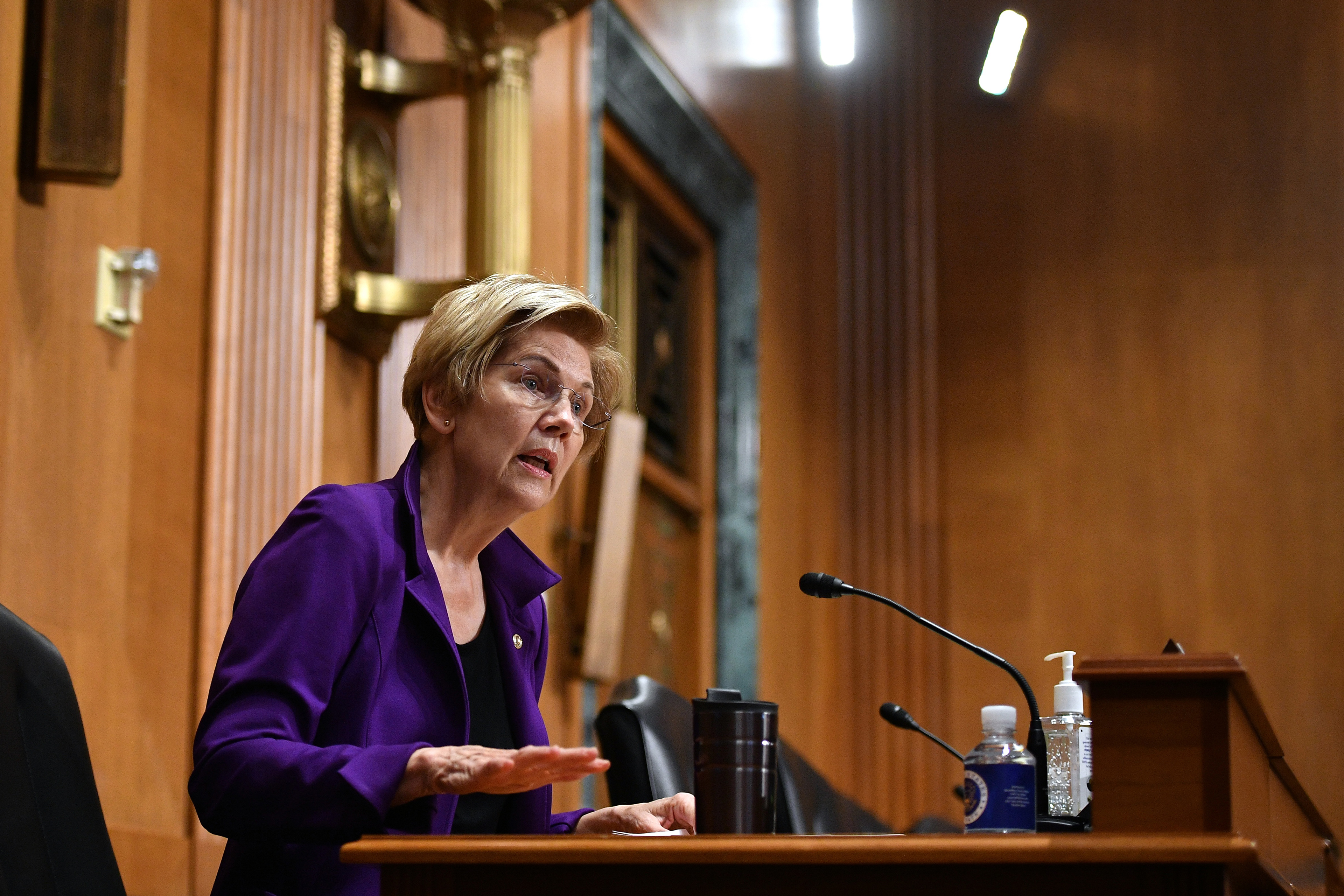
In a Senate Finance Committee hearing on Feb. 2, Sen. Elizabeth Warren (D-Mass.) argued that direct contracting rewards “corporate vultures.” Warren said companies could pocket as much as 40% of their payments as profit.

Sen. Elizabeth Warren is seen facing to the right, speaking into a microphone during a Senate Finance Committee hearing.
Sen. Elizabeth Warren (D-Mass.) speaks during a Senate Finance Committee hearing on Oct. 19 in Washington.(MANDEL NGAN / GETTY IMAGES)

Supporters argued these concerns were overblown, but the federal Centers for Medicare & Medicaid Services, or CMS, announced a redesign of the pilot program in late February.

The scope of the Justice Department review of Oak Street is unclear. According to the company, DOJ is investigating whether it violated the False Claims Act and is seeking documents related to “third-party marketing agents” and “provision of free transportation” to patients.

Amanda Davis, an AARP senior adviser for advocacy and external relations, said the group learned of the DOJ matter when Oak Street disclosed it publicly on Nov. 8, 2021 — less than seven weeks after their joint venture was announced. “We are closely monitoring this issue’s development and expect all providers to fully comply with all laws and regulations,” she wrote in an email.

Likewise, AARP will not say how much Oak Street paid to become a partner, only that the fee is “for the use of its intellectual property” and that “these fees are used for the general purposes of AARP.” Some feel that’s not enough.

“I think the vast majority of people signing up for these products are not aware that AARP is paid a very large amount for use of their name,” said Dr. David Himmelstein, a physician and professor in the City University of New York’s School of Urban Public Health at Hunter College. He added: “If you are making hundreds of millions selling [health] insurance, it gives you a strong interest in assuring that product remains attractive for people to buy.”

Promoting Independence

Since its founding in 1958 by a retired high school principal, AARP says it has acted “to promote independence, dignity and purpose for older persons.”

The AARP Foundation provides services such as passing out more than 3 million meals in low-income neighborhoods during the pandemic and assisting older people with tax preparation and legal matters. AARP also awards millions of dollars in annual grants to a wide range of organizations. (KFF, which operates KHN, received a $100,000 grant from the AARP Public Policy Institute for “general support” of KFF’s work on Medicare in 2020 and a similar amount the two previous years related to Medicare policy issues.)

Last year, AARP spent more than $13.6 million on lobbying, according to Open Secrets. More than 60 AARP lobbyists opined on dozens of legislative proposals, from bills intended to protect seniors from scammers to holding nursing homes accountable, according to the campaign finance watchdog group.

Although many supporters argue that AARP pursues worthy goals, criticism of its business dealings goes back years. A 2008 media exposé reported that some AARP members had overpaid for insurance policies because they assumed AARP had the cheapest deal. In 2011, a congressional investigation led by House Republicans found it “unlikely that AARP could survive financially, with its current expenses, if the hundreds of millions of dollars in annual insurance industry revenue disappeared.” The report also questioned whether AARP deserved its tax-exempt status as a nonprofit.

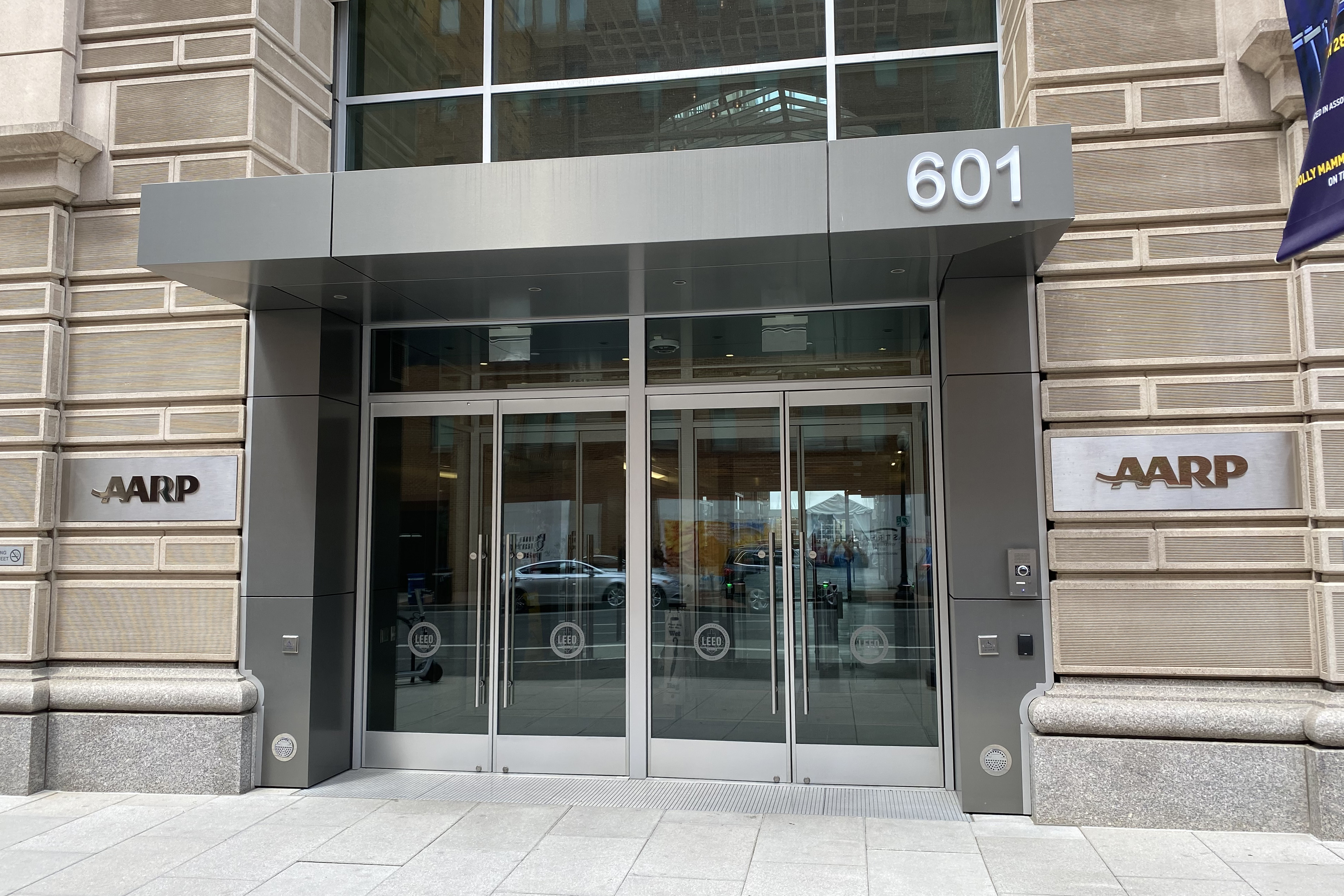
The exterior of an office building with glass doors at its entrance is seen in Washington. The AARP logo is emblazoned on the walls on each side of the entrance.
AARP’s headquarters in Washington, D.C.(JOHN HILLKIRK / KHN)

AARP’s health insurance pacts, which UnitedHealthcare refers to as a “strategic alliance,” have been challenged in nearly a dozen federal lawsuits as well — though AARP has prevailed so far.

One group of lawsuits has targeted a type of co-branded AARP-UnitedHealthcare policies called Medigap, which Medicare enrollees buy to pay for items such as copayments for hospital stays and doctor visits. These policies cover about 4.4 million people, according to the company.

AARP receives 4.95% of the premium, which it takes as its royalty, according to court filings. Several lawsuits have argued that amounts to an illegal commission because AARP is not licensed to sell insurance, court records show. The lawsuits cite AARP records showing annual income of hundreds of millions of dollars from the sales.

Federal judges have consistently dismissed such cases, however, ruling that state regulators had approved the rates or that buyers didn’t suffer any real damage.

Helen Krukas, a retiree who lives in Boca Raton, Florida, is appealing in the U.S. Court of Appeals for the District of Columbia Circuit. She claims AARP failed to disclose that it was “syphoning” 4.95% of what she paid for her policy.

In a deposition, Krukas testified that she “always thought of AARP as a club that negotiates on the behalf of retired people” and “it didn’t even occur to me to look anyplace else” for a policy. “Had I known that they were receiving money for it, I would have gone and shopped around with other brokers,” she said.

Calling for Transparency

AARP has also faced challenges for another type of UnitedHealthcare Medicare policy it has promoted in recent years, called Medicare Advantage.

Critics cite a range of fault-finding government reports, audits, and whistleblower lawsuits targeting such products.

Dr. Donald Berwick, a former administrator of CMS, said Medicare Advantage plans have devised “legal ways” to game the billing system so they get paid “a lot more for writing down things that don’t have much to do with the actual needs of the patients.”

AARP, which strongly supported the 2003 law that created Medicare Advantage, has received a fixed monthly fee from UnitedHealthcare for use of its name in marketing the health plans, according to the 2011 congressional investigation. How much AARP wouldn’t say, then or now.

Medicare pays the insurer a fixed monthly payment for each patient, which rises proportionally to each patient’s burden of illness. More than two dozen whistleblower lawsuits have accused health plans, including UnitedHealthcare, of ripping off Medicare by exaggerating how sick patients are.

Medicare Advantage plans offer tempting extra benefits, such as eyeglasses and hearing aids, and proponents say they cost seniors less than traditional Medicare. But many policy experts argue the plans soak taxpayers for billions of dollars in overpayments every year.

UnitedHealthcare spokesperson Heather Soule told KHN via email that the company “sees incredible value in Medicare Advantage.” When compared with original Medicare, Medicare Advantage “costs less, has better quality, access, and outcomes with greater coverage and benefits and nearly 100% consumer satisfaction,” according to the company.

But the Justice Department’s civil fraud case alleges that UnitedHealthcare reaped $1 billion or more in illegal overcharges. The company has denied the allegations, and the case is set for trial late next year.

As the debate over how to contain Medicare costs intensifies, reformers say AARP should be an ally, not a beneficiary of industry largess.

“It’s hard to know whether they’re advocating for their business interests or for the seniors that they are supposed to represent,” said Joshua Gordon, director of health policy for the Committee for a Responsible Federal Budget, a nonpartisan group.

https://khn.org/news/article/aarp-health-marketing-partnerships-medicare-medigap/

Merck Seeks FDA's OK to Use Keytruda as Adjuvant Lung Cancer Treatment

 Merck & Co. Inc. is seeking the U.S. Food and Drug Administration's approval for its drug Keytruda to be used as an adjuvant treatment for patients with stage IB, II or IIIA non-small cell lung cancer following a complete surgical resection.

The company said Monday that the FDA has accepted and will review its supplemental biologics license application for Keytruda, which is based on a pivotal Phase 3 trial evaluating the drug against a placebo that showed a significant improvement in disease-free survival for lung cancer patients regardless of their PD-L1 expression.

The trial, which is being conducted in collaboration with the European Organisation for Research and Treatment of Cancer and the European Thoracic Oncology Platform, will continue analyzing disease-free survival for patients whose tumors express high levels of PD-L1, Merck said.

The FDA has set Jan. 29, 2023 as the target date to respond to Merck's biologics license application, though further data provided during the review process may delay that.

U.S. Supreme Court Takes No Action on Bayer Bid to Nix Weedkiller Suits

 The U.S. Supreme Court on Monday took no action on Bayer AG's bid to dismiss legal claims by customers who contend its Roundup weedkiller causes cancer as the German company seeks to avoid potentially billions of dollars in damages.

The case was not mentioned on a list issued by the court on Monday as it decided on whether to hear pending appeals, raising at least the possibility that the justices are considering hearing it. Bayer has asked the justices to take up its appeal of a lower court decision that upheld $25 million in damages awarded to California resident Edwin Hardeman, a Roundup user who blamed his cancer on the pharmaceutical and chemical giant's glyphosate-based weedkillers.

The Supreme Court's decision on whether to take up the appeal is being closely watched as Bayer maneuvers to limit its legal liability in thousands of cases.

U.S. President Joe Biden's administration in May urged the court not to hear the Bayer appeal, reversing the government's position previously taken under former President Donald Trump.

Bayer has lost three trials in which Roundup users have been awarded tens of millions of dollars in each. Bayer has pinned hopes for relief on the conservative-majority Supreme Court, which has a reputation for being pro-business. Bayer has won three trials, including one last week.

Bayer has asked the Supreme Court to review the verdict in Hardeman's case, which was upheld by the San Francisco-based 9th U.S. Circuit Court of Appeals in May 2021. Hardeman had regularly used Roundup for 26 years at his home in northern California before being diagnosed with a form of non-Hodgkin's lymphoma.

Bayer has said it should not be penalized for marketing a product deemed safe by the U.S. Environmental Protection Agency and on which the EPA would not allow a cancer warning to be printed.

https://money.usnews.com/investing/news/articles/2022-06-13/u-s-supreme-court-takes-no-action-on-bayer-bid-to-nix-weedkiller-suits

BeiGene: PDUFA Goal Date Extension for U.S. sNDA for BRUKINSA for leukemiaL

 BeiGene (NASDAQ: BGNE; HKEX: 06160; SSE: 688235), a global, science-driven biotechnology company focused on developing innovative and affordable medicines to improve treatment outcomes and access for patients worldwide, today announced that the U.S. Food and Drug Administration (FDA) has extended the Prescription Drug User Fee Act (PDUFA) goal date by three months to January 20, 2023 for the supplementary new drug application (sNDA) for BRUKINSA as a treatment for adult patients with chronic lymphocytic leukemia (CLL) or small lymphocytic lymphoma (SLL).

The FDA extended the PDUFA goal date to allow time to review additional clinical data submitted by BeiGene, which was deemed a major amendment to the sNDA. The submission included final response analysis from the global ALPINE clinical trial showing BRUKINSA demonstrated superiority versus ibrutinib in overall response rate (ORR) as assessed by an Independent Review Committee (IRC) in adult patients with relapsed or refractory (R/R) CLL or SLL. This final response analysis was announced by the company on April 11, 2022.

https://finance.yahoo.com/news/beigene-announces-pdufa-goal-date-110000532.html

Endo Agrees to Commercialize Phase 3 Treatment of Osteoarthritis Knee Pain

 Endo International plc (NASDAQ: ENDP) announced today that its subsidiary Endo Ventures Limited (EVL) has executed an agreement with Taiwan Liposome Company, Ltd. (TLC), a clinical-stage specialty pharmaceutical company developing novel nanomedicines to target areas of unmet medical need, to commercialize TLC599, a TLC investigational product. TLC599 is an injectable compound in Phase 3 development for the treatment of osteoarthritis knee pain.

"TLC599 is fully aligned with our commitment to providing differentiated nonsurgical options to healthcare providers and their appropriate patients," said Patrick Barry, Executive Vice President and President, Global Commercial Operations at Endo. "This investigational product is highly synergistic with our existing orthopedic commercial capabilities and complements our current on-market and in-development orthopedic-focused opportunities."

"We are thrilled to be partnering with Endo once again," said George Yeh, President of TLC. "Endo's proven capabilities in the orthopedic space complement TLC's expertise in developing novel nanomedicines, and together, we hope to deliver life-enhancing therapies to meet an unmet need with a large patient base."

Endo currently expects to launch the differentiated branded product in the United States in 2025.

Under the terms of the agreement, TLC will primarily be responsible for the development of the product and EVL will primarily be responsible for obtaining regulatory approval and commercialization of the product in the United States. Upon receipt of regulatory approval, Endo will have exclusive rights to manufacture, market, sell and distribute the product in the United States. TLC will receive an upfront payment of $30 million and will be eligible to receive up to an additional $110 million based on the achievement of certain development, regulatory, and manufacturing milestones related to the initial indication for the treatment of osteoarthritis knee pain. TLC will be eligible to receive payments based on the achievement of certain commercial milestones and royalties based on the product's net sales in the United States. Additionally, TLC will be eligible to receive certain milestone payments for potential future indications.

EHA 2022 – Crispr’s second off-the-shelf Car-T disappointment

 Crispr Therapeutics has seen impressive activity in heavily pretreated patients with T-cell lymphoma, a tough malignancy, given its CD70-directed allogeneic Car-T therapy CTX130. Unfortunately, this project has been hit with the same relapse problems as Crispr’s own and others’ off-the-shelf Cars: of the nine remissions in the company’s Cobalt-Lym trial reported at the EHA meeting on Saturday just one can be said to be long-lasting, a PR of eight months’ duration from CTX130 infusion. One short-term response is ongoing without further intervention, while one was achieved only after a second Car-T cell infusion. The remaining six responses have all relapsed, though three were retreated, and two of these went on to be transplanted. As such, Crispr’s headline ORR number of 50% across all doses, or 70% at level 3 or above, does not tell the whole story. Investors in all allo Car-T companies will be used to this story, with Caribou falling into the relapse trap just last Friday. Crispr itself has already suffered this fate with its lead off-the-shelf Car, CTX110, which hits CD19. Allogene, whose anti-CD70 Car ALLO-316 is in phase 1 for kidney cancer, will pay particularly close attention.