Search This Blog

Thursday, May 4, 2023

'Room for Improvement in Teen Substance Use Screening'

 Six in 10 primary care pediatricians reported always screening adolescents for substance use, but less than half reported using a standardized instrument, Deepa Camenga, MD, said in a presentation at the 2023 Pediatric Academic Societies annual meeting.

Dr Deepa Camenga

The American Academy of Pediatrics recommends universal screening for substance use in adolescents during annual health visits, but current screening rates and practices among primary care pediatricians in the United States are unknown, said Dr. Camenga, an associate professor at Yale University, New Haven, Conn.

Uniformity in screening is lacking

Dr. Camenga presented data from the 2021 AAP Periodic Survey, which included 1,683 nonretired AAP members in the United States. Residents were excluded. The current analysis included 471 pediatricians who reported providing health supervision to adolescents. Overall, 284 of the 471 included respondents (60%) reported always screening adolescent patients for substance use during a health supervision visit. Of these, 42% reported using a standardized screening instrument, Dr. Camenga said.

The majority (70%) of pediatricians who used a standardized screening tool opted for the CRAFFT tool (Car, Relax, Alone, Forget, Friends, Trouble) designed for ages 12-21 years. Another 21% reported using an unspecified screening tool, 4% used RAAPS (Rapid Assessment for Adolescent Preventive Services), 3% used S2BI (Screening to Brief Intervention), and 1% used BSTAD (Brief Screener for Tobacco, Alcohol, and other Drugs).

A total of 77% of respondents reported screening their adolescent patients for substance use without a parent or guardian present. Approximately half (52%) used paper-based screening, 22% used electronic screening, 21% used verbal screening, and 6% reported other methods.

A total of 68% and 70% of respondents, respectively, agreed or strongly agreed that top barriers to screening were the lack of an onsite provider for counseling and the lack of readily available treatment options. Other reported barriers included lack of knowledge or information, patient reluctance to discuss substance use, too many other priorities during the visit, and inadequate payment. Only 6% of respondents strongly agreed that lack of time was a barrier, said Dr. Camenga.

Screening frequency and screening practices varied by geographic region, Dr. Camenga said. Pediatricians in the South and Midwest were only half as likely as those in the Northeast to report always screening adolescents for substance use (adjusted odds ratio, 0.43 and 0.53, respectively; < .05). Similarly, compared with pediatricians in the Northeast, those in the South, Midwest, and West were significantly less likely to report using a standardized instrument for substance use screening (aOR, 0.53, 0.24, and 0.52, respectively; < 0.001 for all).

The disparities in screening by geographic region show that there is room for improvement in this area, said Dr. Camenga. Systems-level interventions such as treatment financing and access to telehealth services could improve primary care access to substance use treatment professionals, she said.

At the practice level, embedding screening and referral tools into electronic health records could potentially improve screening rates. Many primary care pediatricians do not receive training in identifying and assessing substance use in their patients, or in first-line treatment, Dr. Camenga said.

"We have to invest in a 'train the trainer' type of model," she emphasized.

Data highlight regional resource gaps

The current study is important because it highlights potential missed opportunities to screen adolescents for substance use, said Sarah Yale, MD, assistant professor of pediatrics at the Medical College of Wisconsin, Milwaukee, in an interview. Dr. Yale said that the disparities in screening by region are interesting and should serve as a focus for resource investment because the lack of specialists for referral and treatment options in these areas is likely a contributing factor.

However, lack of training also plays a role, said Dr. Yale, who was not involved in the study but served as a moderator of the presentation session at the meeting. Many pediatricians in practice have not been trained in substance use screening, and the fact that many of those who did try to screen were not using a standardized screening tool indicates a need for provider education, she said. The take-home message for clinicians is to find ways to include substance use screening in the care of their adolescent patients. Additionally, more research is needed to assess how best to integrate screening tools into visits, whether on paper, electronically, or verbally, and to include training on substance use screening during pediatric medical training.

The survey was conducted by the American Academy of Pediatrics Research Division. This year's survey was supported by the Conrad N. Hilton Foundation. Dr. Camenga had no financial conflicts to disclose. Dr. Yale had no financial conflicts to disclose.

https://www.medscape.com/viewarticle/991570

Ultragenyx backs current guidance

 First quarter 2023 total revenue of $100.5 million, Crysvita® revenue of $76.0 million and Dojolvi® revenue of $14.3 million

Total revenue grew 26% and Crysvita revenue grew 28% versus the first quarter 2022

Reaffirmed 2023 expected total revenue guidance between $425 million to $450 million, Crysvita revenue of $325 million to $340 million, and Dojolvi revenue of $65 million to $75 million

Ultragenyx will host a conference call today, Thursday, May 4, 2023, at 2 p.m. PT/ 5 p.m. ET to discuss the first quarter 2023 financial results and provide a corporate update. The live and replayed webcast of the call will be available through the company’s website at https://ir.ultragenyx.com/events-presentations. To participate in the live call, please register by clicking on the following link (https://register.vevent.com/register/BI1183803cc36b46baa6367e521e12e605), and you will be provided with dial in details. The replay of the call will be available for one year.

https://finance.yahoo.com/news/ultragenyx-reports-first-quarter-2023-200100799.html

Ligand ups guidance

 Ligand is increasing 2023 revenue and EPS guidance provided on its fourth quarter earnings call held on February 22, 2023. We now expect 2023 royalties of $78 million to $82 million (previously $74 million to $78 million), sales of Captisol of $21 million (unchanged) and contract revenue of $25 million (unchanged).These revenue components result in total revenue of $124 million to $128 million (previously $120 million to $124 million). We now expect 2023 diluted EPS of $4.60 to $4.75 (previously $3.30 to $3.45). The increase in EPS guidance is related to gains from the sale of Viking Therapeutics stock as well as the increased revenue guidance. Due to the unpredictable nature of COVID-19 and related Captisol sales, Ligand excludes Captisol for remdesivir from guidance and will update investors if and when orders are received and shipped each quarter.

First Quarter 2023 and Recent Business Highlights

Travere Therapeutics (Nasdaq: TVTX) received FDA accelerated approval for FILSPARI™ (sparsentan) for the treatment of IgA nephropathy (IgAN) on February 17, 2023, with commercial availability beginning in the last week of February. A review decision on sparsentan for the treatment of IgAN in Europe by the EMA is expected in the second half of 2023. On April 1, Travere announced publication in The Lancet of the interim analysis of efficacy and safety data from the ongoing pivotal, Phase 3 PROTECT Study evaluating sparsentan in adults with IgAN. The data were simultaneously presented in a late-breaking trials session at the World Congress of Nephrology 2023. On May 1, Travere announced that the pivotal Phase 3 DUPLEX Study evaluating sparsentan in focal segmental glomerulosclerosis (FSGS) did not achieve the primary efficacy eGFR slope endpoint over 108 weeks of treatment compared to the active control irbesartan. Secondary and topline exploratory endpoints trended favorably and a reduction of proteinuria was sustained through 108 weeks of treatment. Travere plans to engage with regulators to explore a potential path forward for sparsentan as a treatment for FSGS in the U.S. and Europe.

Viking Therapeutics (Nasdaq: VKTX) completed enrollment in its Phase 2b clinical trial of VK2809 in patients with biopsy-confirmed non-alcoholic steatohepatitis (NASH) with topline data on the primary endpoint expected in 1H 2023. Separately, Ligand sold 3.2 million shares of Viking stock during the quarter resulting in $43 million of net proceeds following Viking’s announcement of positive data on their VK2735 obesity program. Ligand does not have any direct economic interest in VK2735. As of March 31, 2023, Ligand owned 3.6 million shares of VKTX stock.

Novan (Nasdaq: NOVN) submitted an NDA to the U.S. FDA seeking marketing approval for berdazimer gel, 10.3% (SB206) for the topical treatment of molluscum contagiosum. The NDA has been accepted and assigned a PDUFA date of January 5, 2024.

Palvella Therapeutics (private) announced positive topline results from its Phase 2 study of QTORIN™ rapamycin in microcystic lymphatic malformations; 100% of participants were rated by physicians as being "Much Improved" or "Very Much Improved" as measured on the Clinician Global Impression of Change following 12-weeks of dosing with QTORIN rapamycin. Results showed that QTORIN was generally well-tolerated with no drug-related severe adverse events. QTORIN rapamycin has the potential to become the first FDA-approved treatment for this serious, rare genetic skin disease and has been granted Fast Track and Orphan Drug Designation from the FDA for this indication. Pavella anticipates initiation of a pivotal Phase 3 study in the second half of 2023.

Novartis AG (NYSE: NVS) announced that the FDA granted approval for a liquid form of TAFINLAR® (dabrafenib) + MEKINIST® (trametinib) for the treatment of pediatric patients one year of age and older with low-grade glioma (LGG) with a BRAF V600E mutation and who require systemic therapy. This is the first approval of an oral Captisol-enabled product.

Sermonix (private) announced the initiation of a registrational Phase 3 clinical study comparing targeted lasofoxifene in combination with the CDK 4/6 inhibitor abemaciclib to fulvestrant plus abemaciclib in pre- and post-menopausal subjects with locally advanced or metastatic ER+/HER2- breast cancer with an ESR1 mutation. Additionally, Sermonix announced that lasofoxifene improved vaginal/vulvar symptoms relative to fulvestrant in a study of postmenopausal women with locally advanced or metastatic estrogen receptor-positive ER+/HER2- breast cancer with an ESR1 mutation.

Anebulo Pharmaceuticals (Nasdaq: ANEB) announced completion of dosing in its randomized, double-blind, placebo-controlled, Phase 2 clinical trial evaluating ANEB-001 as a potential treatment for acute cannabinoid intoxication. The preliminary data showed ANEB-001 reduced effects of a 30 mg dose of THC, and that delayed dosing of ANEB-001 rapidly reversed pre-existing THC effects. Anebulo is targeting an End of Phase 2a meeting with FDA in the second quarter 2023.

Ligand management will host a conference call today beginning at 4:30 p.m. Eastern time (1:30 p.m. Pacific time) to discuss this announcement and answer questions. To participate via telephone, please dial (888) 350-3452 (U.S. toll-free) or 1 (646) 960-0369 (ex-U.S. toll dial-in number) using the conference ID 6501694. To participate via live or replay webcast, a link is available at www.ligand.com.

https://finance.yahoo.com/news/ligand-reports-first-quarter-2023-200100311.html

Alignment Healthcare Reports Strong First Quarter 2023 Results; Exceeds Outlook


  • Reports $439.2 million in total revenue, up 27.1% year-over-year

  • Medicare Advantage enrollment increases to approximately 109,700 members

  • Delivers consistent performance underpinned by strong care management capabilities and stable utilization trends

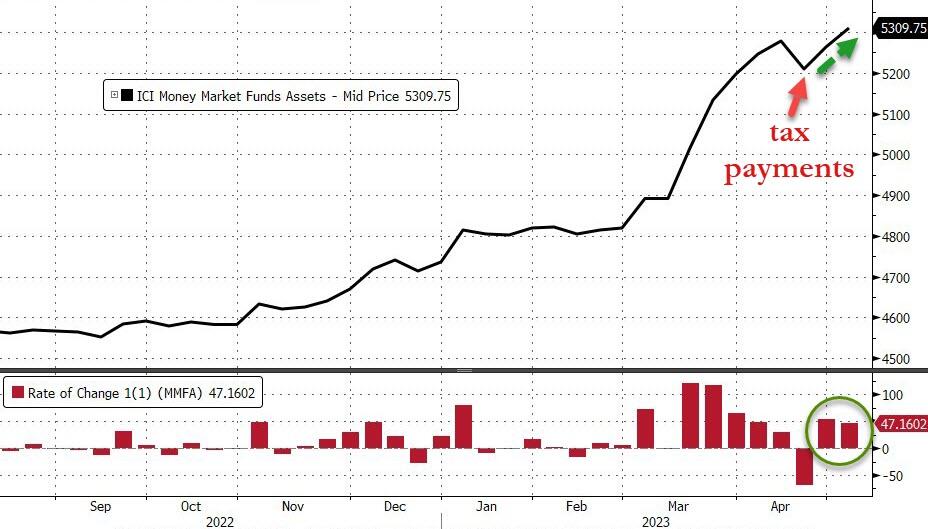
Massive Retail Money Market Inflows Suggest Bank Deposit Run Accelerating

 After last week saw The Fed's balance sheet continue is decline back from its bank-bailout resurgence, all eyes will be back on H.4.1. report this evening for signs that the regional banking crisis is accelerating (as regional bank shares suggest).

The answer is not a good sign for the bulls as Money Market Funds saw $47 billion of INFLOWS, pushing the aggregate to a record high of $5.31 trillion. That is over $100 billion of inflows in two weeks...

Recreational Cannabis Use a Negative for Adolescent Mental Health

 Cannabis use that doesn't rise to the level of diagnosable substance abuse disorder was nonetheless associated with negative affects on mental health, national data showed.

In the 2015 to 2019 National Surveys on Drug Use and Health, 2.5% of participants ages 12-17 reported repeated past-year cannabis use to a degree that led to clinically significant impairment or distress and met thresholds for a cannabis use disorder (CUD) diagnosis, according to Ryan S. Sultan, MD, of Columbia University in New York City, and coauthors.

But fourfold more -- 10.2% -- reported nondisordered cannabis use (NDCU), meaning use in the month to year prior that didn't rise to the Diagnostic and Statistical Manual of Mental Disorders (Fifth Edition) criteria

opens in a new tab or window for an official diagnosis, according to the cross-sectional study published in JAMA Network Openopens in a new tab or window.

In terms of impact, suicidal ideation was 2.08-fold more likely among those with NDCU (adjusted OR 2.08, 95% CI 1.88-2.29) when compared with those who did not use cannabis at all in the prior year. Major depression was also significantly more common with NDCU (aOR 1.86, 95% CI 1.67-2.08), as were difficulty concentrating (aOR 1.81, 95% CI 1.65-2.00) and slower thoughts (aOR 1.76, 95% CI 1.58-1.96).

NDCU was also associated with problems for these teens and tweens, including arrest (aOR 4.15, 95% CI 3.17-5.43), aggression (aOR 2.16, 95% CI 1.79-2.62), fighting (aOR 2.04, 95% CI 1.80-2.31), truancy (aOR 1.90, 95% CI 1.67-2.16), and lower grade point average (aOR 1.80, 95% CI 1.62-2.00).

Sultan told MedPage Today by email that seeing such adverse effects in patients that aren't experiencing a clear substance use disorder is surprising.

"The core purpose of labeling something as a mental health condition is its linkage to adverse impact on a person's life. These findings are suggestive that cannabis use, even at recreational levels, is linked to adverse outcomes in youth," he said. "In the context of an epidemic of depression and suicidality among youth -- this is concerning."

Building on prior studies, these findings support "subdiagnostic cannabis use" as a risk marker for adverse psychosocial events in adolescence, including major depression and suicidality, according to the researchers.

They pointed to a stepwise severity gradient in the odds of psychosocial associations from nonuse to NDCU and CUD. "This severity gradient was also observed in prevalence values for adverse psychosocial events across all degrees of cannabis use. Furthermore, this observation was corroborated by a stepwise cannabis use frequency trend between NDCU and CUD."

For example, suicidal ideation was nearly three times more likely among those with CUD (aOR 2.92, 95% CI 2.43-3.50) when compared with those who did not use cannabis at all, while major depression was more than twice as likely (aOR 2.42, 95% CI 2.02-2.89). Other outcomes followed a similar pattern.

Researchers noted that cannabis use itself could be a symptom of previously existing issues surrounding mental health, but that it might also make preexisting problems worse.

"Cannabis use in adolescence may represent self-treatment to ameliorate mood symptoms and is also associated with developing major depression," they wrote. However, recent studies have suggested that ongoing use worsens mood symptoms. "Given public perspectives on cannabis as a treatment for depressive symptoms, future longitudinal research is necessary to better describe this association."

As of last month, 21 U.S. statesopens in a new tab or window and the District of Columbiaopens in a new tab or window have legalized marijuana, with many of the remaining states having either decriminalization or medicinal-use-only policies in place.

As the laws and policies change against a backdrop of fairly positive public perceptions of cannabis useopens in a new tab or window but negative associations between mental health and cannabisopens in a new tab or window, Sultan encouraged discussions surrounding cannabis use among clinicians and patients, noting that cannabis use could act as a "marker" for other issues needing intervention.

"Educators, parents, medical providers, and mental health professionals should be vigilant about screening for and treating cannabis use in youth," he said, pointing out that depression, suicidality, truancy, and poor academic performance can all have long-term negative effects on a young person's life trajectory.

A total of 68,263 participants responded to the survey, ranging in age from 12 to 17. Of those respondents, the average age was age 14.5 years, and males comprised 50.9% of the study population.

Limitations to this study included self-reported data that did not account for potential psychiatric comorbidities prior to cannabis use. "If anxiety were a common cause of both cannabis use and psychosocial events, it might partially or even fully account for the observed associations between cannabis use and psychosocial events," the researchers noted.

Due to both the cross-sectional and observational nature of this study, direct causality between cannabis use and psychological events could not be determined.

Disclosures

A coauthor reported relationships with government, industry, and other non-governmental organizations. No other disclosures were reported.

Primary Source

JAMA Nework Open

Source Reference: opens in a new tab or windowSultan RS, et al "Nondisordered cannabis use among US adolescents" JAMA Netw Open 2023; DOI: 10.1001/jamanetworkopen.2023.11294.


https://www.medpagetoday.com/pulmonology/smoking/104343

FDIC plans to hit big banks with fees to refill deposit insurance fund

 The U.S. Federal Deposit Insurance Corporation is planning to exempt smaller lenders from kicking in extra money to replenish the government's bedrock deposit insurance fund, and instead saddle the biggest banks with much of the bill, Bloomberg News reported on Thursday, citing people familiar with the matter.

https://www.marketscreener.com/news/latest/FDIC-plans-to-hit-big-banks-with-fees-to-refill-deposit-insurance-fund-Bloomberg-News--43748869/