Search This Blog

Friday, February 2, 2024

Scientific Alarmism Drives DoD Climate Policy

 by Scott Sturman and Doug Goodman via The Epoch Times,

Executive Order 14057 justifies the Department of Defense’s (DOD) Plan to Reduce Greenhouse Gas Emissions as necessary to counteract the existential threat of climate change. The program’s comprehensive and prohibitively expensive initiative proposes to transform the operational military by achieving net-zero carbon emissions by 2045, purportedly on firmly established “science-based” targets that are validated by computer models and consensus within the scientific community.

The plan’s ambitious yet unrealistic goals, which are presented as an alarmist ultimatum, ignore the foundational principles of physics and battle-proven lessons of military history.

The Plan establishes emission objectives by determining “alignment with the scale of reductions required to limit global warming below 2°C above pre-industrial temperatures and to pursue efforts to limit warming to 1.5°C.” These emission reduction targets come directly from the Intergovernmental Panel on Climate Change’s (IPCC) Net-Zero Paris Climate Accord. The IPCC is not a science based organization that conducts its own research but rather a governmental policy organization whose members are countries, not scientists, and whose representatives are bureaucrats who develop and promote international climate policy. The IPCC sponsors and filters climate science research generated from outside organizations to support its primary charter of establishing the man made causes and influences on climate change.

The narrative that the earth’s climate balances precariously on the brink of catastrophe and merits the distinction of a national security priority is constantly presented to the public in familiar, apocalyptic terms. President Biden warns that global warming is the greatest threat to national security. DOD Secretary Austin alerts the public of existential climate threats, including an ice-free Arctic Ocean, although as of January 2023 the Arctic sea ice pack is at its highest since 2003. The DOD and high ranking officials from the navyarmy, and air force proclaim that it is incumbent upon the armed services to implement net zero without delay to avert a worldwide catastrophe. Despite the incessant fearmongering, no one appears to pause and consider that the DOD produces only 1 percent of the United State’s CO2 emissions, which in turn is responsible for 13 percent of the world’s total. Even if the DOD achieves net zero, eliminating 0.13 percent of the world’s CO2 output would not detectably reduce global temperatures.

The McKinsey Report details the enormous costs and disruption to society to attain net zero and concedes there is only an even chance of limiting warming to 1.5°C, and it is far from certain whether the world will be able to keep the temperature increase to that level. The transition will require a fundamental change to the world’s economy, costing an estimated $6 trillion per year for the next 30 years. This translates to $11,000 per year for every American until 2050 for a result that cannot be ensured. Most of the sacrifice will come from the Third World, where 1/3-1/2 of GDP will be required to achieve net zero, but at a further cost of killing millions and plunging more millions into extreme poverty and starvation. Bjorn Lomborg warns that a zero fossil fuel solution is expensive, leads to misery and an impoverishment of the planet, and will fail to mitigate temperature elevation appreciably.

The hasty evolution to net zero comes at a prohibitive price, and its adherents concoct doomsday scenarios that demand and ennoble mass sacrifice. Depicting a world in complete environmental collapse due to the effects of fossil fuels promotes a theme intended to instill panic. The DOD embellishes adverse weather-related and environmental events but fails to place them in context or provide contrary interpretations. The extent and history of glacial retreat, sea level rise, desertification, forest fires, heat waves, death due to heat as opposed to cold, hurricanes, and tornados are exaggerated and depicted in emotional terms to legitimize drastic action. These contentions have been examined extensively, using the National Oceanic and Atmospheric Association’s (NOAA) and the IPCC’s own data, and refute the hypothesis that there is a climate crisis based on these criteria. The number and intensity of severe climate events have diminished, and for those that occur, poor countries lack the resources to deal with natural disasters, while wealthier societies are able to better mitigate structural damage and human injury.

Computer modeling, a useful tool for conceptualization, forms the heart of climate science. The technique, however, is unable to prove hypotheses and has been wildly inaccurate since its inception. Climate science is a complex subject of interacting variables acting over time cycles that differ by order of magnitudes from the depths of the oceans to the upper stratosphere that are in turn affected by orbital mechanics and solar perturbations. The authenticity of ground-based temperature readings, the raison d’ĂȘtre of climate activists, raises alarm about the IPCC’s most fundamental assessments, since the underestimation of the heat island effect may distort the temperature anomaly data by up to 40 percent.

The major problem with computer models is the resolution and averaging required to make the models computable. The atmosphere is divided into volumes with horizontal grid lengths of tens of kilometers within which parameters like temperature, pressure, and density are averaged to represent the entire volume. Atmospheric processes like cloud physics and turbulence occur at scales well below the resolution of these cells, which compels modelers to estimate the values and effects of these processes. These guesses invariably favor global warming and the deleterious effects of CO2.

Since data collection points rarely align with the grid points required by the numerical models, discrepancies of hundred of kilometers exist, which modelers homogenize to allow the data to fit the grid. This leads to false adjustments and manipulations of the real data. Computational models are inherently unstable and diverge from physical reality. At distances below the grid scale, perturbations multiply and a butterfly effect ensues. Modelers are forced constantly to realign or reset the initial conditions, which mask the deviations and give the illusion that the models accurately predict observed conditions.

DOD officials defend net-zero defense prioritization by claiming that scientific consensus and sham peer reviewed studies validate this contention. Peer review has degenerated into a process that favors a regression to the mean, and has become a form of consensus. The original 97 percent consensus claim from Cook in 2013 that humans are the major cause of global warming that will result in catastrophic climate events has been widely discredited. Investigators point out that the number is closer to 1.6 percent, but the original, inaccurate claim of near-universal consensus, advanced by Barack Obama and John Kerry, remains a favored technique of politicians to inject ideology into science.

John Clauser won the Nobel Prize in physics for his work with particle entanglement and serves as an example that the most distinguished and competent scientists are not immune from rebuke for challenging the climate change narrative. Dr. Clauser stated publicly that there is no climate emergency and the dangerous corruption of science threatens the world economy and welfare of billions of people. Mainstream media outlets allied to climate science activism predictably marginalized the distinguished physicist with ad hominem attacks and inferred that only bona fide climate scientists like Dr. Michael Mann, the originator of the widely debunked hockey stick shaped temperature acceleration profile, are qualified to speak on the subject.

The DOD plan to reduce greenhouse emissions makes no mention of the stabilizing benefits of rising atmospheric CO2 concentrations in terms of food production or the weak correlation between temperature and CO2 levels over the last 570 millions years. There has been a 20 percent increase in the world’s biomass over the past 40 years, and CO2 is responsible for 70 percent of this benefit. Some of the world’s most unstable regions have achieved an element of food security, as exuberant plant life has reversed desertification and conferred a degree of economic stability—a benefit for developing more accurate military contingencies.

A nation’s military priorities must optimize its access to natural resources, develop war plans that allow for flexibility and maximum projection of power, and to conclude that one’s enemies will not be concerned with carbon footprints when it comes to surviving and winning a major military conflict. No commander purposely informs potential enemies that the armed forces will be restricted for decades to specific, unproven technologies and untested operational strategies that are established solely to comply with climate change dogma. Future and present adversaries are under no such constraints and will devote resources predicated on the best opportunity for success. Virtue signaling climate scientists and their dutiful DOD disciples, whose premises are based on computer modeling, enact policies that weaken the military and serve as classic examples of those who hijack science to advance political agendas.

https://www.zerohedge.com/political/scientific-alarmism-drives-dod-climate-policy

Israeli Defense Minister: Two-Thirds Of Hamas Have Been Taken Out

 Now on the brink of reaching 120 days of war (which will happen this weekend), Israeli Defense Minister Yoav Gallant has claimed in fresh comments that the Israel Defense Forces (IDF) have destroyed about two-thirds of Hamas' fighting force. 

He said in the remarks that the military has effectively neutralized 20,000 of the estimated pre-conflict total of around 30,000 fighters. He essentially declared the defeat of Hamas in their southern stronghold of Khan Younis, saying that in addition to the 10,000 killed there's been another some 10,000 wounded. Currently, there is no way of verifying this and Hamas does not publish on its own casualty rates.

"Hamas' Khan Younis Brigade boasted that it would stand against the IDF," Gallant said, but then declared instead the group has been "dismantled."

"I am telling you here, we are completing the mission in Khan Younis and we will also reach Rafah and eliminate everyone there who is a terrorist who is trying to harm us," Gallant told a gathering of Israeli soldiers in Gaza.

He additionally assessed that IDF gains in Khan Younis are "very impressive" and said the end result has been that Hamas doesn't "have ammunition, they don't have the ability to treat the wounded." The defense chief added: "They have 10,000 dead terrorists and another 10,000 wounded who are not functioning. It's a blow that is eroding their ability [to fight], but you have to reach all the places."

According to figures cited in the Jerusalem Post, "If true, along with the close to 2,500 Hamas terrorists who have been arrested, the percentage of Hamas forces out of commission would now be up to between 56-75%, up from 48-64% around 10 days ago, presuming Hamas' forces pre-war were between 30,000-40,000."

Gallant concluded his remarks by saying the military will target Rafah next for a ground operation, which is the southern most city in the Gaza Strip, on the border with Egypt.

The IDF's current death toll since the start of the ground offensive in Gaza is 224; however, many even Israeli sources believe the real death toll could be significantly higher, given Hamas' demonstrated effectiveness at carrying out devastating ambushes in small teams, often from the tunnel system.

Palestinians say that with hundreds of thousands of refugees crowded into Rafah, and with nowhere to go, they may have no choice other than to climb the border fence and pour into Egypt. 

"Israeli forces shelled the outskirts of the last refuge on the southern edge of the Gaza Strip on Friday, where the displaced, penned against the border fence in their hundreds of thousands, said they feared a new assault with nowhere left to flee," Reuters writes.

"More than half of Gaza's 2.3 million residents are now homeless and crammed into Rafah," the report documents. "Tens of thousands more have arrived in recent days, carrying belongings in their arms and pulling children on carts, since Israeli forces launched one of the biggest assaults of the war last week to capture adjacent Khan Younis, the main southern city."

Despite the mounting humanitarian crisis, and a reported death toll which has surpassed 27,000 - mostly civilians according to Palestinian sources, there has been no change in Biden administration policy regarding to support to Israel. This has resulted in fierce backlash among Progressive Democrats especially, and is an issue expected to erode his base going into the November election.

https://www.zerohedge.com/geopolitical/israeli-defense-minister-declares-two-thirds-hamas-have-been-taken-out

China Poised To Take Further Control Of Iraq's Key Southern Oil Assets

 by Simon Watkins via OilPrice.com,

  • China is over the halfway mark in completing its strategically vital oil project in the critical Iraqi energy hub of Nasiriyah.

  • This facility will act as a storage hub and supply conduit for 3.0-3.5 million barrels of crude oil.

  • Even before the huge strategic importance of the new Nasiriyah facility, China will benefit from its massively enhanced presence there in the matter of increasing its oil supplies from southern Iraq, with the DhiQar Province being home to several huge fields

China is over the halfway mark in completing its strategically vital oil project in the critical Iraqi energy hub of Nasiriyah, at the heart of the some of the country’s biggest oil and gas fields and close to its main export terminal of Al Fao in Basra. According to the Iraq Ministry of Planning, the China Petroleum Pipeline Engineering Company (CPPEC) is now over 55 percent complete on the construction of the country’s biggest crude oil storage facility, located in Nasiryah city in DhiQar province.

This facility will act as a storage hub and supply conduit for 3.0-3.5 million barrels of crude oil that will then either go to export out of Basra Port or will be transported through pipelines to refineries and power plants in central and northern Iraq. It will also act as a logistical command centre for all of China’s extensive oil and gas projects in Iraq and for the build-out of multiple non-oil projects connected to the all-encompassing ‘Iraq-China Framework Agreement’, as analysed in full in my new book on the new global oil market order

Even before the huge strategic importance of the new Nasiriyah facility, China will benefit from its massively enhanced presence there in the matter of increasing its oil supplies from southern Iraq, with the DhiQar Province being home to several huge fields. The Gharraf field is one, holding around 1.3 billion barrels of oil reserves and currently producing around 130,000 barrels per day (bpd), with plans to increase this to 230,000 bpd within the next two years. Lead operator Petronas of Malaysia said last May that it wants to sell its stake in the field. However, China already effectively controls what goes on at the site through major ‘contract-only’ awards secured by its companies.

The winning of multiple contract-only awards by Chinese firms at major oil and gas sites in Iraq was for a long time the preferred way for the country to covertly gain control over a site without provoking the ire of the U.S., while it still retained a strategic interest in Iraq, as also analysed in full in my new book on the new global oil market order. In Gharraf’s case, the China Petroleum Engineering and Construction Corporation (CPECC) was awarded a US$308 million engineering, procurement, construction and commissioning contract a while ago. Additionally, July 13 saw China’s Zhongman Petroleum and Natural Group sign a separate engineering and construction project for Gharraf. Back in 2015, Zhongman was also awarded a US$526.6 million drilling deal for Iraq’s supergiant West Qurna 2 oilfield. Further emboldened by the effective withdrawal of the U.S. from Iraq at the end of its combat mission in December 2021, the beginning of this year saw PetroChina take over the lead developer role at the neighbouring supergiant West Qurna 1 oilfield from the U.S.’s ExxonMobil. This was followed just a week later by the awarding of a major build-own-operate-transfer contract to a subsidiary of PetroChina to develop the Nahr bin Umar onshore gas field.

At the other end of the development scale in DhiQar Province is the supergiant Nasiriyah oilfield, discovered by the Iraq National Oil Company in 1975, with an estimated 4.36 billion barrels of reserves in place. Coming on stream in 2009 and listed on Iraq’s 2009-2010 fast-track plan, which aimed to raise its output to about 50,000 bpd, the first half of 2009 saw ENI, Nippon Oil, Chevron, and Repsol submitting bids to develop the field on an Engineering Procurement Construction (EPC) contract basis, with a consortium comprised of Nippon Oil, Inpex, and JGC Corporation looking set to win the contract before negotiations broke down again. The departure in 2014 of the divisive figure of Shia Islamist Nouri al-Maliki as prime minister, and his replacement by the seemingly more inclusive, although also Shia, Haider al-Abadi led to optimism in Iraq that the Nasiriyah project could move ahead again, but these hopes were also dashed.

China has long seen Nasiriyah as an important part of its overall plans for Iraq, which are essentially to turn it into a client state, as it has done with Iran, to create one giant oil and gas station for it in the Middle East, which it can also use for geopolitical pressure purposes against the U.S. In Iran’s case, China has been successful so far into effecting this transformation from it as sovereign state into a Middle Eastern equivalent of Hong Kong (a Special Administrative Region of China) through the all-encompassing ‘Iran-China 25-Year Comprehensive Cooperation Agreement’ , as first revealed anywhere in the world in my 3 September 2019 article on the subject and analysed in full in my new book on the new global oil market orderChina is using the same sort of arrangement for Iraq, as evidenced in the equally all-encompassing ‘Iraq-China Framework Agreement’ of 2021. This in turn, was an extension in scale and scope of the ‘Oil for Reconstruction and Investment’ agreement signed by Baghdad and Beijing in September 2019, which allowed Chinese firms to invest in infrastructure projects in Iraq in exchange for oil.

Following this, Iraq approved nearly IQD1 trillion (US$700 million) for infrastructure projects in the city of Al-Zubair in the southern Iraq oil hub of Basra. The Al-Zubair announcement came around the same time as the awarding by Baghdad of another major contract to another Chinese company to build a civilian airport to replace the military base in Nasiriyah - the capital of DhiQar Province. This airport project, China announced, would include the construction of multiple cargo buildings and roads linking the airport to the city’s town centre and separately to other key oil areas in southern Iraq, which it now controls. In the later discussions involved in the 2021 ‘Iraq-China Framework Agreement’, it was decided unanimously by both sides that the airport could be expanded later to be a dual-use civilian and military airport. The military component would be usable by China without first having to consult with whatever Iraqi government was in power at the time, a senior source who works closely with Iraq’s Oil Ministry exclusively told OilPrice.com at the time.

https://www.zerohedge.com/energy/china-poised-take-further-control-iraqs-key-southern-oil-assets

East Palestine, Ohio Water Still Contaminated As Biden Prepares Victory Lap

 President Biden's planned trip to East Palestine, Ohio, is pure politics as the election cycle begins. The White House plans to do a victory lap on its response to the train derailment that nuked the small town with toxic chemicals one year ago. Yet, a new report reveals the federal government's response has been sub-par, with cancer-causing chemicals still found in surrounding rivers and streams. 

One year after the Norfolk Southern train derailment, NewsNation found toxic chemicals in rivers and streams around East Palestine. This comes even as the Environment Protection Agency has given residents the all-clear to return. 

Mega Malpractice Verdicts Against Physicians on the Rise

 In December, in what's known as the "Take Care of Maya" case, a Florida jury returned a record $261 million verdict against Johns Hopkins All Children's Hospital, St. Petersburg, Florida, for its treatment of a young patient and her family after an emergency room visit.

A month earlier, in New York, a jury ordered Westchester Medical Center Health Network to pay $120 million to a patient and his family following delayed stroke care that resulted in brain damage.


Mega malpractice awards like these are rising against physicians and hospitals around the country, according to new data from TransRe, an international reinsurance company that tracks large verdicts.

"2023 blew away every record previously set among high medical malpractice verdicts," said Richard Henderson, senior vice president for TransRe. "If we look at the 50 largest verdicts in 2023 and average them out, we have a higher monetary amount than any other year."

In 2023, there were 57 medical malpractice verdicts of $10 million or more in the United States, the data showed. Slightly more than half of those reached $25 million or more.

From 2012 to 2022, verdicts of $10 million or more ranged from 34 in 2013 to 52 in 2022, TransRe research found.

While New York, Illinois, and Florida typically saw the highest dollar verdicts in previous years, so-called "nuclear" verdicts now occur in states like Utah and Georgia where they once were uncommon, said Robert E. White Jr, president of TDC Group and The Doctors Company, a national medical liability insurer for physicians.

A rollback of tort reforms across the country is one contributor, he said. For example, Georgia's cap on noneconomic damages is among those that have been ruled unconstitutional by courts. Utah's cap on noneconomic damages still stands, but the limit was deemed unconstitutional in wrongful death cases. In 2019, a portion of Utah's pre-litigation panel process was also struck down by the state's Supreme Court.

"We used to be able to predict where these high verdicts would occur," White said. "We can't predict it anymore."

Research shows a majority of malpractice cases are dropped or settled before trial, and claims that go before juries usually end in doctors' favor. Plaintiffs' attorneys cite large jury verdicts in similar cases to induce settlements and higher payouts, White said.

And while mega verdicts rarely stick, they can have lasting effects on future claims. The awards lead to larger settlement demands from plaintiffs and drive up the cost to resolve claims, according to Henderson and White.

"Verdicts are the yardstick by which all settlements are measured," White said. "That's where the damage is done." The prospect of a mega verdict can make insurers leery of fighting some malpractice cases and motivate them to offer bigger settlements to stay out of the courtroom, he added.

Why Are Juries Awarding Higher Verdicts?

There's no single reason for the rise in nuclear verdicts, Henderson said.

One theory is that plaintiffs' attorneys held back on resolving high-dollar cases during the COVID pandemic and let loose with high-demand claims when courts returned to normal, he said.

Another theory is that people emerged from the pandemic angrier.

"Whether it was political dynamics, masking [mandates], or differences in opinions, people came out of it angry, and generally speaking, you don't want an angry jury," Henderson said. "For a while, there was the halo effect, where health professionals were seen as heroes. That went away, and all of a sudden [they] became 'the bad guys'."

"People are angry at the healthcare system, and this anger manifests itself in [liability] suits," added Bill Burns, vice president of research for the Medical Professional Liability Association, an industry group for medical liability insurers.

Hospital and medical group consolidation also reduces the personal connection juries may have with healthcare providers, Burns said.

"Healthcare has become a big business, and the corporatization of medicine now puts companies on the stand and not your local community hospital or your family doctor that you have known since birth," he said.

Plaintiffs' attorneys also deploy tactics that can prompt higher verdicts, White said. They may tell a jury that the provider or hospital is a threat to the community and that awarding a large verdict will deter others in the healthcare community from repeating the same actions.

Juries may then want to punish the defendant in addition to assessing damages for economic harm or pain and suffering, White said.

"I am concerned that jurors are trying to right social wrongs rather than judging cases on the facts presented to them," added Mike Stinson, vice president for policy and legal affairs for the Medical Professional Liability Association.

Third-party litigation financing also can lead to mega verdicts. That's an emerging practice in which companies unrelated to a lawsuit provide capital to plaintiffs in return for a portion of any financial award. The firms essentially "invest" in the litigation.

"What this does is provide an additional financial backdrop for plaintiffs," Henderson said. "It allows them to dig in harder on cases. They can hold out for higher numbers, and if nothing else, it can prolong litigation."

Do High Awards Actually Stick?

Multimillion-dollar verdicts may grab headlines, but do plaintiffs actually receive them?

Rarely, said TransRe, which tracks the final outcomes of verdicts. In many cases, large verdicts are reduced on appeal.

In the Maya case, which involved child protection authorities, a judge later lowered the damages against Johns Hopkins All Children's Hospital by $47.5 million.

federal judge in October, for example, rejected a record $110 million medical malpractice award in Minnesota, reducing it to $10 million. The district judge ruled the award was "shockingly excessive" and that the plaintiff should either accept the $10 million award or retry the case.

After a verdict is awarded, the defendant typically challenges the award, and the case goes through the appellate pipeline, Henderson explained. A judge may reduce some elements of the verdict, he said, but more often, the plaintiff and defendant agree on a compromised figure.

Seattle medical liability defense attorney Jennifer Crisera has experienced this firsthand. She recalled a recent case where a plaintiff's attorney demanded what she describes as an unreasonable amount to settle a claim. Crisera did not want to give exact numbers but said the plaintiff made an 8-figure demand and the defense offered a low 7-figure range.

"My impression was that plaintiff's counsel believed that they could get a nuclear verdict from the jury, so they kept their settlement demand artificially high," she said. "The division between the numbers was way too high. Ultimately, we had to let a jury decide the value."

The plaintiff won the case, and the verdict was much less than the settlement demand, she said. Even so, the defense incurred trial costs, and the health provider was forced to endure the emotional stress of a trial that could have been avoided, Crisera said.

Higher medical malpractice premiums are another consequence of massive awards.

Premium rates are associated with how much insurers pay on average for cases and how frequently they are making payouts, White said.

Medical liability insurance premiums for physicians have steadily increased since 2019, according to data from the Medical Liability Monitor, a national publication that analyzes liability insurance premiums. The Monitor studies insurance premium data from insurers that cover internists, general surgeons, and obstetrician-gynecologists.

From 2019 to 2023, average premium rates for physicians increased between 1.1% and 3% each year in states without patient compensation funds, according to Monitor data.

"Nuclear verdicts are a real driver of the industry's underwriting losses and remain top of mind for every malpractice insurance company," said Michael Matray, editor for the Medical Liability Monitor. "Responses to this year's rate survey questionnaire indicate that most responding companies have experienced an increase in claims greater than $1 million and claims greater than $5 million during the past 2 years."

However, increases vary widely by region and among counties. In Montgomery County, Alabama, for instance, premiums for internists rose by 24% from 2022 to 2023, from $8,231 to $10,240. Premiums for Montgomery County general surgeons rose by 11.9% from 2022 to 2023, from $30,761 to $34,426, according to survey data.

In several counties in Illinois (Adams, Knox, Peoria, and Rock Island), premiums for some internists rose by 15% from $24,041 to $27,783, and premiums for some surgeons increased by 27% from $60,202 to $76,461, according to survey data. Some internists in Catoosa County, Georgia, meanwhile, paid $17,831 in 2023, up from $16,313 in 2022. Some surgeons in Catoosa County paid $65,616 in 2023, up from $60,032 in 2022. Inflation could be one factor behind higher liability premium rates. Claim severity is a key driver of higher premium rates, White added.

"We have not seen stability in claims severity," he said. "It is continuing to go up and, in all likelihood, it will drive [premium] rates up further from this point."

https://www.medscape.com/viewarticle/mega-malpractice-verdicts-against-physicians-rise-2024a10002bz

Doc Sues State Over 'Antiquated' Telehealth Rules

 Telemedicine visits skyrocketed during the pandemic, but a new lawsuit alleges that the return to pre-COVID licensing mandates unnecessarily restricts interstate medical practice and reduces patients' ability to get care from specialists.

In the complaint filed on December 13 in New Jersey District Court, plaintiff Shannon MacDonald, MD, radiation oncologist at Massachusetts General Hospital, Boston, Massachusetts, said that New Jersey's telehealth rules make it illegal for her and other out-of-state specialists to consult with and treat residents who could benefit from their unique expertise, unless they first obtain licensure through the medical board.

While she currently maintains licenses in six states, New Jersey's application process can take several months and requires an initial fee of $550, plus additional expenses for a background check and fingerprinting, court documents said.

Physicians providing telehealth services to New Jersey residents without a state-authorized medical license are subject to up to 5 years in prison and criminal and civil fines exceeding $10,000.

"Every day, my ethical obligations to my patients are in direct conflict with the legal framework," said MacDonald.

She and coplaintiff Paul Gardner, MD, neurosurgical codirector of the Center for Cranial Base Surgery at the University of Pittsburgh Medical Center, Pittsburgh, Pennsylvania, are represented by the public interest law firm Pacific Legal Foundation, which recently sued Louisiana's governor over its medical board diversity rules.

The lawsuit names Otto Sabando, president of the New Jersey State Board of Medical Examiners. Representatives for Sabando and the medical board did not respond to a Medscape Medical News request for comment.

The complaint describes the care MacDonald provided several years before the pandemic for an out-of-state patient, J.A., also named as a plaintiff, who was diagnosed with pineoblastoma at 18 months old.

After initially undergoing treatment in New York, court documents indicate that J.A.'s medical team referred him to MacDonald "because of her nationally recognized expertise in proton therapy" targeting rare childhood cancers. MacDonald remotely reviewed J.A.'s scans and discussed options before his family pursued treatment with her in Boston.

MacDonald told Medscape Medical News that allowing more patients like J.A. to use telehealth to access services when specialists are unavailable in their state would go a long way toward achieving health equity. She says it could reduce the financial burden of travel and lodging expenses and provide timely consultations and follow-up care.

Many states, including New Jersey, waived or eased licensing regulations during the pandemic so physicians could temporarily practice in other states. Since those emergency orders have ended, physicians must again seek licensure in the states where their patients are located or potentially be subjected to fines or other penalties by state medical boards.

New Jersey Governor Phil Murphy signed a law in 2022 joining the Interstate Medical Licensure Compact, an agreement that offers a streamlined process for physicians already licensed in their home states to obtain licensure in 37 other member states as well as the District of Columbia and Territory of Guam. However, the lawsuit alleges that applications still take weeks and pose significant administrative and financial barriers for physicians.

Telehealth in a Post-COVID World

"Until COVID, we didn't realize that a telephone call really was practicing medicine," said MacDonald. "After being allowed to do telemedicine consultations across state lines for a year and 2 years for follow-ups, I thought it would last forever, but it's placed a spotlight on what we cannot do."

MacDonald, who recently penned a related editorial in the Wall Street Journal, said laws regarding interstate practice are outdated.

"They made sense in the preindustrial era when you had to be in the same location as your patient, but they make little sense in the modern era when distance disappears over the internet or telephone," she said.

The issue isn't unique to New Jersey. Caleb Trotter, JD, attorney for the Pacific Legal Foundation, told Medscape Medical News that 30 states prohibit doctors from conducting telemedicine services in states where they are not licensed.

"Some hospitals instruct doctors and administrators to ask the patient where they are physically located at the beginning of a telehealth appointment, and if it isn't a state where the physician is licensed, they are instructed to end the appointment immediately," Trotter said. "A win in New Jersey would solve a very real problem for these [patients] of not having convenient legal access to specialists."

Neither MacDonald nor Gardner have had any enforcement actions taken against them, said Trotter. Still, he said the New Jersey attorney general's office reminded physicians last year that state licensure rules apply to out-of-state doctors using telemedicine to conduct follow-up appointments.

In November, the Center for Health Law and Policy Innovation at Harvard Law School, Cambridge, Massachusetts, proposed telemedicine reforms, including exceptions for the care of established patients and screening for specialty referrals.

MacDonald hopes the lawsuit will increase awareness of telehealth laws and spur changes.

https://www.medscape.com/viewarticle/doc-sues-state-over-antiquated-telehealth-rules-2024a10002aw

For 18 Seconds in Capitol, Jan. 6 Defendant Gets 24 Months' Probation, 30 Days Home Detention

 by Patricia Tolson via The Epoch Times (emphasis ours),

A Jan. 6 protester who spent 18 seconds inside the Capitol building during the protests has been sentenced to 24 months of probation with 30 days of home detention.

Angelo Pacheco, a 24-year-old man from Kansas City, will also have to pay $500 restitution for damages done to the Capitol building that day, which the federal government says totaled more than $2.73 million, according to an April 8, 2022, court filing.

Mr. Pacheco’s sentencing was held before Judge Randolph D. Moss on Jan. 31 via video conference in the U.S. District Court for the District of Columbia.

He faced a maximum sentence of six months in jail, a $5,000 fine, and five years of probation.

According to the Jan. 6, 2021, criminal complaint, Mr. Pacheco was charged with knowingly entering or remaining in any restricted building or grounds, disorderly and disruptive conduct in a restricted building or grounds, disorderly conduct in a Capitol Building, and parading, demonstrating, or picketing in a Capitol Building.

As stated in the July 14, 2023 Statement of Facts, “The FBI received a tip from a confidential human source (CHS)” that Mr. Pacheco “was on the U.S. Capitol grounds on January 6, 2021.”

While the informant did not know Mr. Pacheco, the CHS “identified him by comparing images on his Facebook and Instagram pages with open-source photos from January 6, 2021.”

Based on this information, the special agent investigating the case conducted database checks for “Angelo J. Pacheco,” later identifying him as a resident of Kansas City, Missouri. The special agent then compared Mr. Pacheco’s driver’s license photo to the one provided by the unidentified informant and confirmed it was the same individual.

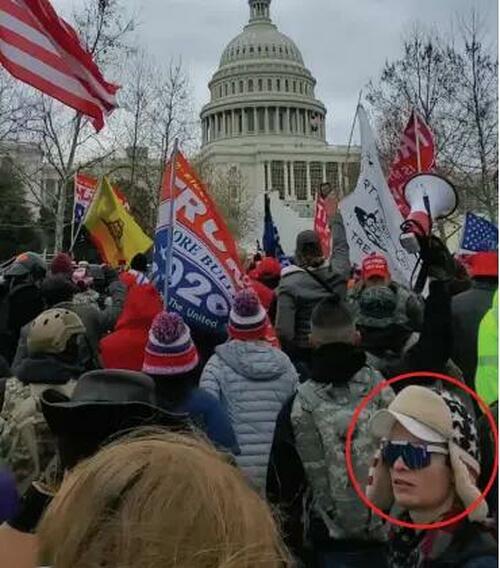
Additional photos showed Mr. Pacheco standing on the scaffolding outside of the Capitol building.

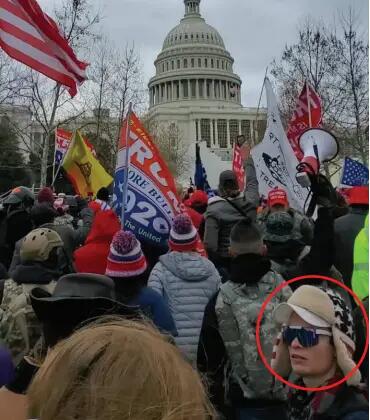
Photo of Angelo Pacheco, provided to the FBI by a confidential informant, showing him standing on the grounds of the United States Capitol Building on January 6, 2021 (July 14, 2023 Statement of Facts).

A review of Capitol Building CCV footage from Jan. 6, 2022, showed him standing at the doorway of the upper west terrace of the Capitol building, entering briefly, “approximately six seconds,” before turning around and exiting through the same door.

During an initial interview at his home on Sept. 29, 2022, Mr. Pacheco admitted being at the Capitol Building on Jan. 6, 2021, but told investigators he didn’t remember going inside. During a second interview at Mr. Pacheco’s attorney’s office on March 17, 2023, investigators showed him six images taken from the CCTV footage showing him entering the Capitol for about six seconds. It was then that he admitted going inside briefly.

Based on this evidence, the special agent in charge of the investigation submitted “that there is probable cause to believe that PACHECO violated 18 U.S.C. § 1752(a)(1) and (2), which makes it a crime to (1) knowingly enter or remain in any restricted building or grounds without lawful authority to do; and (2) knowingly, and with intent to impede or disrupt the orderly conduct of Government business or official functions, engage in disorderly or disruptive conduct in, or within such proximity to, any restricted building or grounds when, or so that, such conduct, in fact, impedes or disrupts the orderly conduct of Government business or official functions; or attempt or conspire to do so.”

The special agent further submitted that “there is also probable cause to believe that PACHECO violated 40 U.S.C. § 5104(e)(2)(D) and (G), which makes it a crime to willfully and knowingly (D) utter loud, threatening, or abusive language, or engage in disorderly or disruptive conduct, at any place in the Grounds or in any of the Capitol Buildings with the intent to impede, disrupt, or disturb the orderly conduct of a session of Congress or either House of Congress, or the orderly conduct in that building of a hearing before, or any deliberations of, a committee of Congress or either House of Congress; and (G) parade, demonstrate, or picket in any of the Capitol Buildings.”

https://www.zerohedge.com/political/jan-6-defendant-sentenced-24-months-probation-30-days-home-detention