Over the past 25 years, nearly 390,000 American students have been exposed to gun violence. Such exposure includes the 1,375 school shootings that occurred from 2000 to 2022, which resulted in 515 deaths and twice as many injuries. Between 2021 to 2022 alone, there was a record number of such incidents involving 81 deaths and 269 injuries.
Last month, a jury in Virginia awarded a former teacher $10 million for being shot by a 6-year-old student after an ex-administrator ignored repeated warnings that the child came to elementary school with a gun. Despite a documented history of violence, the child had been treated with ADHD medication, drugs that are wildly overprescribed for children in America. The school has responded by placing metal detectors at entrances and installing the Raptor app on each teacher’s phone so they can send an emergency alert to all staff.
But the school district still ignores the real problem, a crisis rarely confronted across America: how do we treat children with mental health problems? It’s something you can’t fix with medications. No metal detector can stop it. And there’s no app for that.
The year 2023 began with a shot heard around the globe.
On January 6, a six-year-old shot his teacher at Richneck Elementary in Newport News, Virginia. The child’s mother received a nearly four-year prison sentence after pleading guilty to related charges of child neglect and using marijuana while owning a firearm. The $10 million jury award for the teacher, covered damages, including being maimed and left with a bullet permanently lodged near her heart. The assistant principal is still facing criminal charges for neglecting to act on repeated warnings from teachers and other staff that the child-shooter may have come to school with a gun.
Other school professionals seem to have been let off the hook. The city’s school superintendent was let go, but his termination was announced as “without cause,” according to CBS News. Not only was he absolved of responsibility, he was publicly praised for his leadership and provided a $502,000 severance. The director of elementary education was also not held accountable even though a special grand jury found she appeared to have either engaged in criminal “obstruction of justice” or, at best, demonstrated “a complete lack of competence.”
The city’s attorney was “appalled” by the “preventable” shooting and, by state law, a school principal must foster a “safe school climate for all stakeholders.” Yet, the principal’s lawyer said she was not responsible because nobody informed her that the child might have a gun.
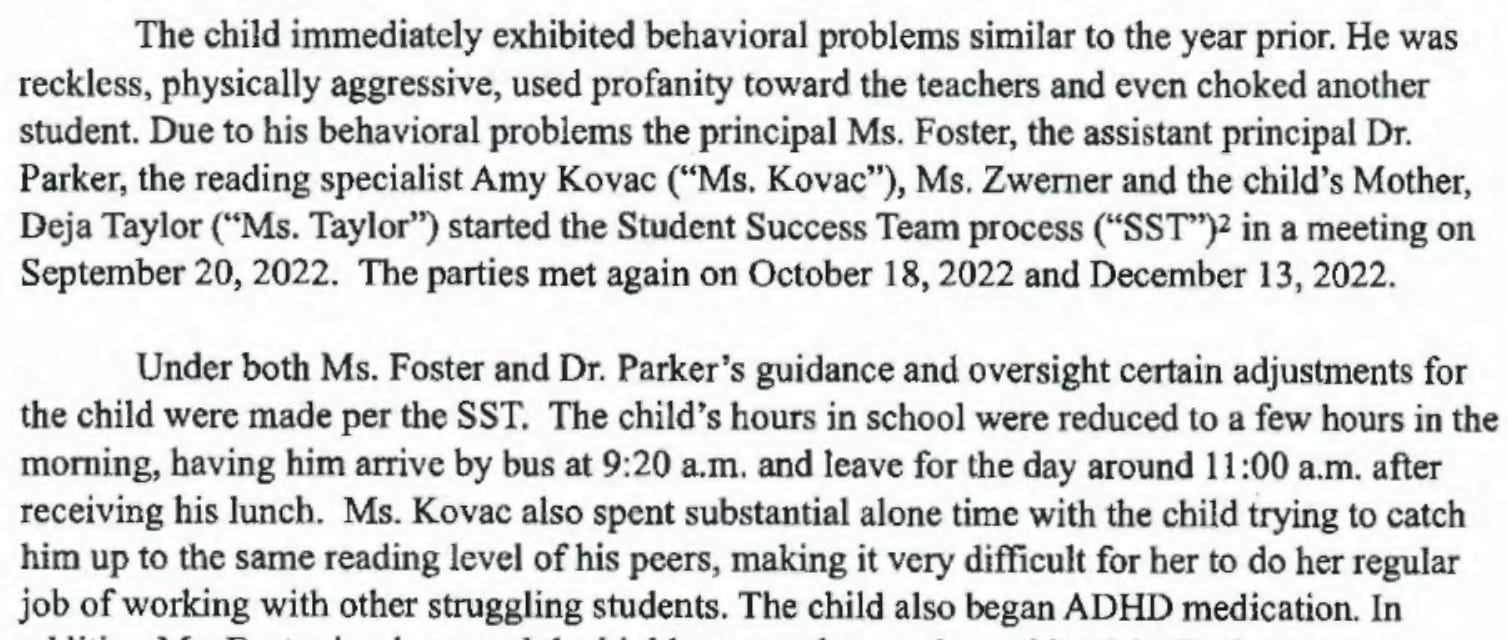
According to the special grand jury report, the shooter had a documented history of academic delays and violence, which included fighting with classmates, choking his Kindergarten teacher, and hurling profanities. Yet, he was not afforded any of the available behavioral interventions for socially and emotionally disturbed students. Instead, he received medication for ADHD, which is known to increase aggression.
In my opinion as a clinical psychologist, the shooter’s problems were beyond the scope of ADHD. This is particularly relevant for an elementary school in southern Virginia because this geographic region has a well-documented history of suppressing evidence that it over-medicates children for ADHD.
This raises the question of who diagnosed the Richneck shooter with ADHD? Were the parents informed of the risks of ADHD medication? First-line ADHD medications aim to reduce distractibility and restlessness, not to subdue aggression. In fact, they can exacerbate aggression and induce violence.
Adverse drug events reported to the FDA for the most common ADHD medication — Adderall, a stimulant — document this problem. Almost half these reports indicate problems of “aggression,” “increased irritability” or “exacerbation of the condition.” And the special grand jury found it was obvious that non-drug interventions “may have better addressed the child’s behavioral issues.”
While the city has released a report that looks at various solutions to fix safety and security problems where this unprecedented shooting by a six-year-old occurred, there was zero discussion about improving the treatment of emotionally distraught children. No examination of the risks of medicating them with psychotropics.
School shootings must stop. If schools continue to turn to medicine to treat children with social, emotional, and academic problems, school violence is likely to intensify, not diminish. Starting a child on medication can set an ADHD prescribing cascade in motion, wherein more drugs are later prescribed to treat the adverse effects of the initial psychotropic medication.
The result is unsafe combinations of multiple psychiatric medications, according to a recent Wall Street Journal analysis. And the combined effects of these powerful psychotropic drugs haven’t been studied well in young children.
Aiming to deter gun violence, some states have begun to hold parents accountable for shootings committed by their children. Twenty-six states, including Virginia, have child access or safe storage laws. But what about laws against pushing drugs on young kids before they’ve received behavioral interventions?
No matter what, school safety is a priority. Moving forward, Americans in every state must hold accountable all educators who undermine school safety or circumvent the use of behavioral interventions and any professionals who negligently diagnose or medicate schoolchildren.
Dr. Gretchen LeFever Watson, a clinical psychologist in Virginia, is an academic affiliate of the University of South Carolina and member of SONAR, a drug surveillance program funded by the National Institutes of Health.
https://disinformationchronicle.substack.com/p/school-shootings-rise-along-with

No comments:
Post a Comment
Note: Only a member of this blog may post a comment.