The crash looked season-ending, maybe career-ending. On January 30th, Lindsey Vonn wiped out just seconds into her downhill run at the FIS Alpine Ski World Cup in Crans-Montana, Switzerland. She was soon airlifted off the mountain, and reports later surfaced that she’d suffered a complete ACL rupture in her left knee.
Yet seven days later, Vonn, wearing a brace, completed an official Olympic downhill training run on the Olimpia delle Tofane course in Cortina, placing 11th and instantly igniting a predictable media cycle: minor miracle, impossible, how is that even safe?
But if the reports are accurate, nothing “miraculous” happened to the ligament itself. What happened is that the public is watching, in real time, a concept sports medicine has been wrestling with for decades: some knees can function at a very high level without an intact ACL, while others cannot.
How Is Vonn Able to Ski Again?
The anterior cruciate ligament (ACL) is a major knee ligament that connects the thigh bone to the shin bone, preventing the shin bone from sliding forward and providing rotational stability. And to be clear it doesn’t just “grow back” in seven days. If it’s truly ruptured, the tissue continuity is gone. What can change quickly is everything around the ligament: swelling, pain, neuromuscular control… and how effectively the athlete can use the rest of the system to dynamically stabilize the knee: muscle, coordination, movement strategy, and (often) bracing.
That’s where the literature’s not-so-catchy (but very real) term comes in: “Copers.” Athletes who tear their ACL, but are able to return competitive sports without surgery to repair it.
In ACL research, patients are often described as copers or non-copers. A coper is someone who can return to high function without repeated episodes of the knee “giving way” despite their ACL being torn. A “non-coper” is someone whose knee keeps feeling unstable after an ACL tear, their knee may “give out” during certain movements. When that happens, surgery becomes more necessary, especially if the person wants to return to high-demand sports.
Is ACL Repair Surgery Always Necessary?
A key reason many are shocked by Vonn’s comeback is the misconception that an ACL rupture automatically necessitates surgery, with a long recovery. That belief is understandable, since most ACL injuries the public sees occur in elite sport, where reconstruction is common. Moreover, we often see injuries in contact sports, like football, where it’s not just the ACL that gets torn, but other ligaments and knee cartilage (i.e., the meniscus). But when researchers zoom out and synthesize the broader literature, the need for surgery becomes less certain.
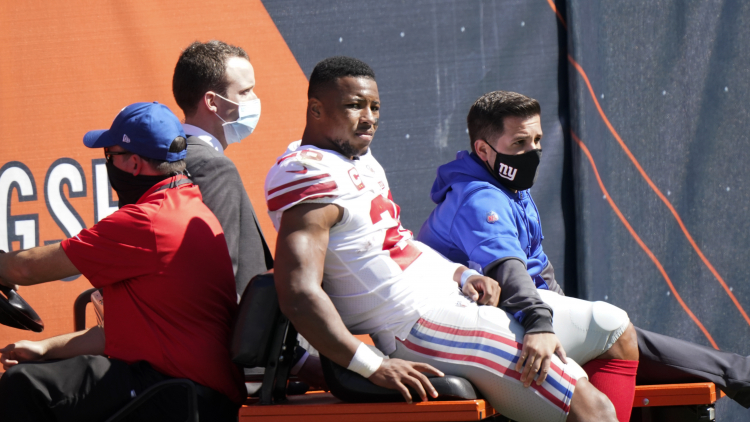
Recent systematic reviews comparing surgical (ACL reconstruction) versus non-surgical (rehab-first) management commonly report that patient-reported functional outcomes can be similar between approaches, while objective stability measures tend to favor surgery. One 2024 systematic review concluded there is insufficient empirical evidence to recommend ACL surgery as the default pathway, noting no differences in functional outcomes overall, but results favor surgery for knee stability and rates of secondary meniscal surgery. Another 2024 review similarly explored conservative versus surgical management, and reflected ongoing uncertainty and variability in the evidence base.
The most influential “real-world” translation of this debate came from randomized trials comparing two strategies: 1) rehab plus early ACL reconstruction, versus 2) rehab first, with surgery only if it was still needed later. In these studies, “early” surgery was typically done within about 10 weeks of injury. The “delayed” group didn't simply forgo surgery. Everyone in this group started with structured rehab, then clinicians essentially asked: Is the knee becoming stable enough to function well? If yes, surgery could often be avoided. If the knee continued to feel unstable, kept “giving way,” or the athlete couldn’t safely meet their goals, reconstruction remained an option. Many in the rehab-first group never needed surgery at all, and at long-term follow-up (including five years), their self-reported outcomes were similar to those who had early reconstruction.
To be clear, this isn’t a knock on ACL surgery; it just doesn't need to be the inevitable next step in every case.
Surgery can improve mechanical stability and may reduce certain downstream risks in some patients, while rehab-first can be an appropriate course for others, especially when instability is not persistent, goals are compatible, and return-to-activity criteria are applied rigorously. The point is that ACL management is case by case.
Clearly, Vonn seems to be delaying or avoiding surgery. But, what allows copers like her to succeed?
What Makes a “Coper”?
Importantly, “coper” is not an attitude or personality trait. It’s a classification based on function and stability, often incorporating objective tests (like hop testing), patient-reported knee function, global ratings of knee function, and instability episodes.
So why do some people become copers while others remain non-copers? The research suggests it’s rarely one single factor. It tends to be a mix of the nature of the injury (for example, whether other structures like the meniscus or cartilage are also involved), the person’s movement skill and baseline training, how quickly swelling and pain calm down, and whether they can regain high-quality strength and control through rehab. Some athletes also naturally move in ways that put less stress on the knee after injury, while others struggle with repeated “giving way” episodes that reinforce instability and limit progress.
Mechanically, being a coper is less about having “strong muscles” and more about having the right muscles turn on at the right time. The ACL is a passive stabilizer, like a seatbelt. When it’s torn, the body must rely more on active stabilization, meaning the nervous system coordinates the muscles around the knee (especially the quadriceps and hamstrings) to control positioning of the knee. It’s a timing game: microsecond-level coordination, muscle contraction, and precise control, especially during quick transitions, can partially substitute for what the ligament used to do.
Being a coper is also not fixed. Research published in the Journal of Orthopaedic & Sports Physical Therapy described rehab-first return-to-sport pathways and early screening methods to help predict who may become a coper with rehab and who may remain a non-coper. In that group, a meaningful proportion of athletes who initially tested as non-copers (their knee still felt unstable) later shifted toward potential coper status (a more stable knee) after progressive neuromuscular and strength training. In other words, rehab didn’t just make them stronger, it helped many athletes learn to control the knee better, and the more stable their knees became, the more successful they tended to be long-term. This makes a case for delaying surgery, rather than having it as the automatic pathway following an ACL tear.
What Makes Lindsey Vonn Unique?
The coper framework helps explain why a 'miraculous' comeback can be possible. It also helps explain why Lindsey Vonn might be uniquely positioned to pull this off.
Vonn is a world-class skier in a sport that demands tremendous strength, coordination, agility, and precision. With access to elite rehab, bracing, and careful day-to-day symptom monitoring, she may be able to ski despite a reported ACL rupture - or at least ski long enough to complete training runs and evaluate whether the knee tolerates the demands without swelling or instability. If anyone can coordinate the timing needed to stabilize the knee, on less than a week of rehab, it’s her.
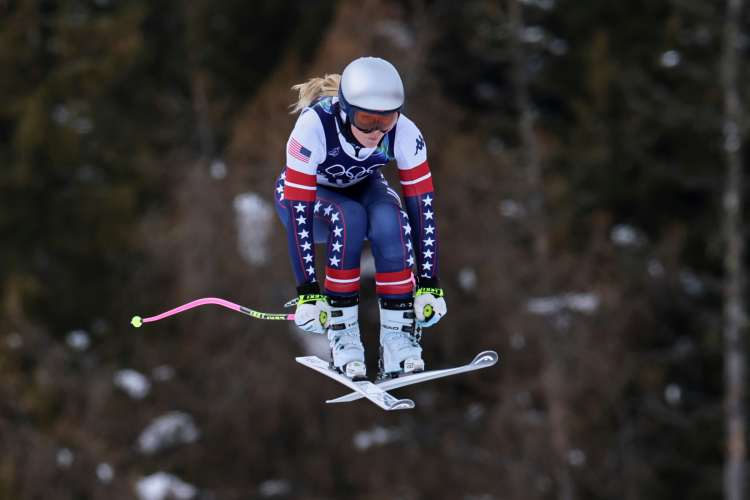
It also shows why extrapolating her scenario to laypersons watching at home is risky: most people do not have the same physical preparation, support system, or sport demands, and many ACL tears include associated injuries that can change the calculus entirely. A 13-year-old athlete who tears an ACL may not have the strength base, movement skill, or neuromuscular “library” built from years of high-level training, and may be far less likely to stabilize an ACL-deficient knee under speed and pressure.
Conclusion
If there’s a “media moment” worth capturing here, it isn’t that Vonn defied biology. It’s that the public is getting an accidental crash course in the nuance the research has been pointing to for years: some people can function without an ACL, some cannot, and the best pathway varies person by person: their knee instability history, goals, sport demands, associated injury, and risk tolerance.
Right now, Lindsey Vonn is skiing again, and doing it well. Whether it’s enough to outcompete the very best in the world remains to be seen.
Regardless of what happens next, Vonn’s ability to return to competitive skiing days after an ACL tear is impressive, but it’s within biological possibilities. She may be in a unique situation to bounce back quickly without surgery because she already has the pre-requisite strength, coordination, and agility to be a world class skier. We shouldn’t think of Vonn as “amazing” because she’s able to return so quickly; rather, she’s able to return so quickly because she is so amazing already.

No comments:
Post a Comment
Note: Only a member of this blog may post a comment.