Search This Blog

Sunday, January 27, 2019

Triclosan, often maligned, may have good side — treating cystic fibrosis infections


Maybe you’ve had the experience of wading in a stream and struggling to keep your balance on the slick rocks, or forgetting to brush your teeth in the morning and feeling a slimy coating in your mouth. These are examples of bacterial biofilms that are found anywhere a surface is exposed to bacteria in a moist environment.
Besides leading to falls in streams or creating unhealthy teeth, biofilmscan cause large problems when they infect people. Biofilms, multicellular communities of bacteria that can grow on a surface encased in their own self-produced matrix of slime, can block immune cells from engulfing and killing the bacteria or prevent antibodies from binding to their surface.
On top of this, bacteria in a biofilm resist being killed by antibiotics due to the sticky nature of the matrix and activation of inherent resistant mechanisms, such as slow-growing cells or the ability to pump antibiotics out of the cell.
Biofilms are one of the primary growth modes of bacteria, but all antibiotics currently used clinically were developed against free-swimming planktonic bacteria. This is why they do not work well against biofilms.
My laboratory studies how and why bacteria make biofilms, and we develop new therapeutics to target them. Because antibiotic resistance is the most problematic aspect of biofilms during infections, we set out to identify novel molecules that could enhance antibiotic activity against these communities.
We discovered that an antimicrobial that has recently obtained a bad reputation for overuse in many household products could be the secret sauce to kill biofilms.

The hunt for antibiotic superchargers
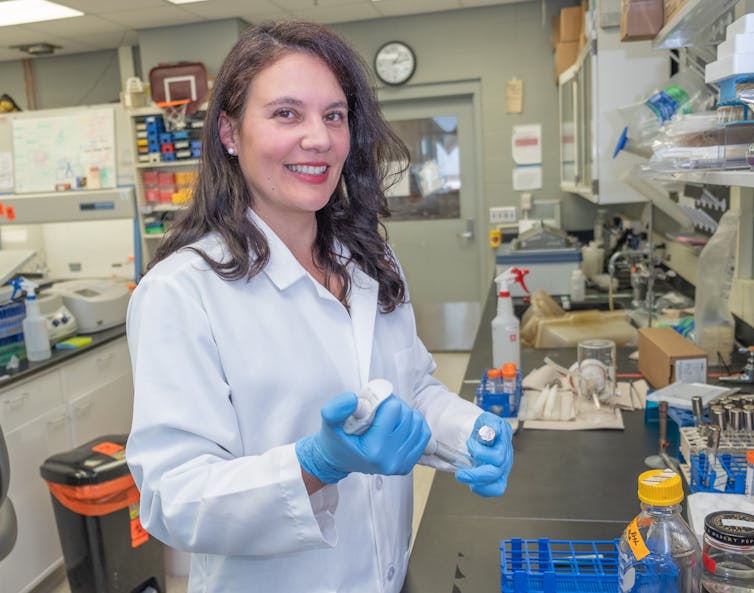
Dr. Alessandra Agostinho Hunt measures biofilm formation of Psuedomonas aerugionsa by pipetting in the purple dye crystal violet to stain the microbial structure. Derrick Turner/Michigan State UniversityCC BY-SA
To find such compounds, we developed an assay to grow plates of 384 tiny biofilms of the bacterium Pseudomonas aeruginosa. We did this to screen for molecules that enhance killing by the antibiotic tobramycin. We chose this bacterium and this antibiotic as our test subjects because they are commonly associated with cystic fibrosis lung infections and treatment.
People with cystic fibrosis (CF) are at particular risk from biofilm-based infections. These infections often become chronic in the lungs of cystic fibrosis patients and are often never cleared, even with aggressive antibiotic therapy.
After we screened 6,080 small molecules in the presence of tobramycin, we found multiple compounds that showed the antibiotic enhancement activity we were searching for. Of particular interest was the antimicrobial triclosan because it has been widely used in household products like toothpaste, soaps and hand sanitizers for decades, indicating that it had potential to be safely used in CF patients. Triclosanhas also garnered a bad reputation due to its overuse, and states like Minnesota have banned it from these products. The Food and Drug Administration banned its use from hand soaps in September 2016. This ruling was not based on safety concerns, but rather because the companies that made these products did not demonstrate higher microbial killing when triclosan was added, compared to the base products alone.
Another fact that piqued our interest is that P. aeruginosa is resistant to triclosan. Indeed, treatment with either tobramycin or triclosan alone had very little activity against P. aeruginosa biofilms, but we found that the combination was 100 times more active, killing over 99 percent of the bacteria.
We further studied this combination and found that it worked against P. aeruginosa and other bacterial species that had been isolated from the lungs of CF patients. The combination also significantly enhanced the speed of killing so that at two hours of treatment, virtually all of the biofilm is eradicated.
Our efforts are now focused on pre-clinical development of the tobramycin-triclosan combination. For CF, we envision patients will inhale these antimicrobials as a combination therapy, but it could also be used for other applications such as diabetic non-healing wounds.
Although questions about the safety of triclosan have emerged in the mainstream media, there are actually dozens of studies, including in humans, concluding that it is well tolerated, summarized in this extensive EU report from 2009. My laboratory completely agrees that triclosan has been significantly overused, and it should be reserved to combat life-threatening infections.
The next steps for development are to initiate safety, efficacy and pharmacological studies. And thus far, our own studies indicate that triclosan is well tolerated when directly administered to the lungs. We hope that in the near future we will have enough data to initiate clinical trials with the FDA to test the activity of this combination in people afflicted with biofilm-based infections.
We think our approach of enhancing biofilm activity with the addition of novel compounds will increase the usefulness of currently used antibiotics. Learning about how these compounds work will also shed light on how bacterial biofilms resist antibiotic therapy.

Train the body’s own cells to combat antibiotic resistance


Drug-resistant superbugs have threatened human health for decades. The situation is getting worse because of the shortage of new antibiotics. But what if we changed the way we aim to treat them, and trained our cells to kill these invaders instead of relying on antibiotics to do the dirty work? This new strategy, called host-targeted defense, could help to solve antibiotic resistance problem.
Antibiotic resistance is a growing concern for global health. A recent report commissioned by the British government shows that every year globally around 700,000 people died due to infections caused by drug-resistant bacteria. The report also warned that, without action, the death toll could rise to 10 million globally and cost US$80 trillion to the global economy.
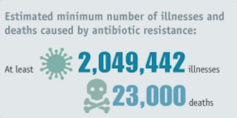
Drug resistance is a serious problem in the United States too. More than 23,000 people die every year due to multidrug-resistant pathogens and cost the country around $55 billion per year. The main culprits threatening the U.S. are methicillin-resistant Staphylococcus aureus(MRSA), carbapenem-resistant Enterobacteriaceae (CRE) and Clostridium difficile.
The CDC estimates that antibiotic-resistant pathogens cause more than 23,000 deaths annually in the United States. Source: Centers for Disease Control and Prevention. CDC webpage
The shortage of new antibacterial drugsin development to tackle the growing threat is a disturbing trend. A pathogen that is resistant to a drug reserved to treat infections when all others have failed is a particular concern. This is the case with carbapenem-resistant pathogen.
The decline in antibacterial drugs coupled with emergence of drug-resistant pathogens demands alternative approaches.
In Malay Haldar’s lab, along with other projects, my colleagues and I are studying how factors in an animal host play a role in response to infections. To test the approach, we are doing this work using a mouse model of infections. Our aim is to find novel traits or factors of the host that can be targeted to boost an individual’s immune response high enough to kill the offending microbes. The host factor we are investigating is called Spi-C, a gene found in every cell of the human body.
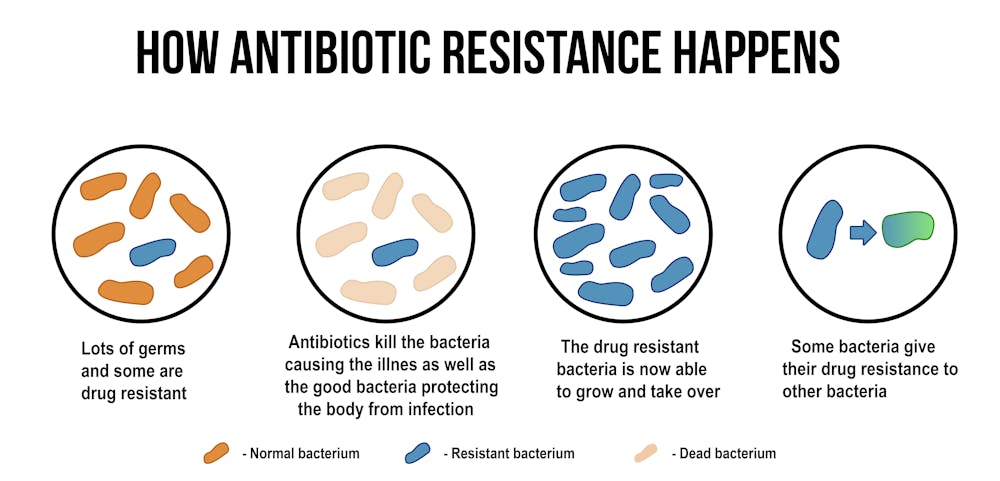
This is how antibiotic-resistant bacteria arise. ducu59us/Shutterstock.com

Targeting host factors

My interest in host factors arose during my graduate studies. While working on my Ph.D. research project, I learned that host factors, a variety of traits intrinsic to humans, play a significant role in bacterialinfections. This inspired me to investigate how the host’s immune system fights bacteria.
New insights into the host’s defense against pathogens have led researchers to explore a new strategy called host-directed therapy (HDT), a relatively recent idea that has only been around for about a decade.
The goal of HDT is to enhance and amplify the host’s immune response to kill pathogens, rather than relying exclusively on antibacterial drugs. By targeting host factors as well as delivering antibiotic treatment, HDTs deliver a double whammy.
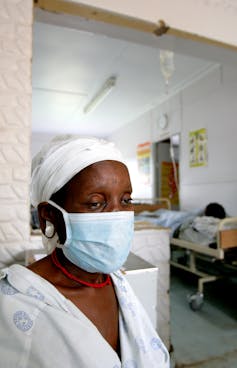
A patient who tested positive for extreme drug-resistant tuberculosis (XDR-TB) awaits treatment at a rural hospital in South Africa’s impoverished KwaZulu Natal province. The new strain of the disease has killed many people, prompting concern from the World Health Organization, which fears XDR-TB could become a major killer. REUTERS\Mike Hutchings
The body naturally responds to infections with inflammation, a process in which specific populations of immune cells attack and kill the invading bacteria by either eating them or zapping them with protein weapons. However, uncontrolled inflammation triggers the production of proteins that can cause multi-organ failure and can even kill the host. Therefore, controlling inflammation is crucial to combat pathogens as well as to protect the body from hyperinflammation.
HDTs include a suite of treatments that boost the host response to pathogens and also protect the host from exaggerated immune response. HDTs include cellular therapy, in which a specific population of bone marrow cells are injected into the host body to prevent excessive immune response and tissue injury. Another HDT involves commonly used drugs for noninfectious diseases. Statins and ibuprofen, for example, calm the host response to infections. Biologics, the complex molecule drugs produced by recombinant DNA technology, do this too by neutralizing small-sized proteins and reducing tissue damage. Nutritional products, such as vitamin D3, have also been shown to cause a host’s immune cells to release antibacterial substances that enhance pathogen killing.
HDTs in conjunction to antibacterial drugs show great promise in treating various multidrug-resistant pathogens, notably against Mycobacterium tuberculosis, the pathogen which causes tuberculosis, one of the top 10 causes of death worldwide.

Personalizing treatments for infections

In the last decade, researchers have made much progress in host factor research, leading to new therapeutic strategies.
One of them is personalized medicine, in which a genomic blueprint can determine an individual’s unique susceptibilities to diseases and choose appropriate therapies.
This concept is applied in noninfectious diseases like cancer. However, the application of the concept in infectious disease is very recent. Nonetheless, personalized medicine leads us to speculate why some individuals are more prone to infections than others. My colleagues and I believe that such differences may be caused by subtle differences in the DNA of the host factor genes. By connecting these differences, called polymorphisms, to the level of individuals’ vulnerability to infections, we hope that our research will contribute to the precision medicine of bacterial infections.

Our quest for a novel host factor

My colleagues in the Haldar lab and I are exploring the role of Spi-C in bacterial infection. Spi-C is essential for the development of a specific type of population of cells in the spleen that regulate the iron  storage in the body. Iron is essential for transporting oxygen in red blood cells.
But, during infections, bacteria also require iron. They need it for growth, and they compete with the host to get it. Hence, if we could alter the activity of the Spi-C gene, we might be able to deprive bacteria of this vital nutrient and thus stop the infections without harming the host.
In a recent paper, we summarized the effect of iron in host cells and its interactions with host factors in the presence or absence of infections.
In mice, we tested the role of host factor, Spi-C, as a way to defend the host. In this study we injected a chemical that is a component of the bacteria into the mice. We wanted to trigger changes that occur in the animal during a real bacterial infection.
Our preliminary results showed that the host factor is active in various organs of the mice treated with the chemical. We believe this activation plays a role in host-defense. And, indeed, we found that losing Spi-C activity increased the release of small-sized proteins that facilitate the host defense against pathogens compared to the cells that have normal Spi-C activity. We believe this change in small-sized proteins might protect the host from hyperinflammation in response to infection.
We believe that shifting of our thinking from pathogen-targeted therapy to host-directed therapy ushers in a new avenue of precision medicine, which could help to end the drug resistance crisis.

Too many children with autism are let down by schools and end up in prison


For many young people, school can be a difficult place. And for some, it can be just about impossible. Negative experiences in school can have harmful long-term effects on pupils with autism spectrum conditions.
Official figures show that children, are increasingly being suspended or expelled from  because of “behavioural problems” – many of which include children on the spectrum. Some regions in the UK have experienced a 100% increase in these types of exclusions since 2011.
So despite policy rhetoric on “inclusive education” – where children ought to be educated in mainstream schools – recent figures show school exclusions are increasing: from 6,685 pupils to 7,720 between 2015-2016 and 2016-2017.
In my current research I interviewed mothers of adult children with autism and other social, emotional and mental health problems. They told me how their young sons had been a challenge in school. And how despite their requests for help, their sons received little support and ended up in the .
Estimates suggest that 30% of prisoners have a learning difficultyor disability and 60% have problems with communication – though this is arguably a conservative estimate, as many inmates choose to hide their disabling condition.
No help or support
Mothers in my research talked to me about how their sons were “different”. They were violent to other children and teachers as well as their own families.
All the mothers told me they felt something was “not quite right” with their child. And because the support was not forthcoming at school, this negative behaviour escalated and then as these boys got older, they ended up in prison.
One mum, Sorcha, told me her son “was made out to be the demon child of the school. He had his first exclusion in September 2004, so he was about 10 then”. Another mum, Elaine, spoke of her son Harry: “He was a difficult child for school, he’s disruptive [and] was getting into so much trouble.”
Udele, explained how she had received a call from the headmistress, to fetch her son after he assaulted a teacher. “I went, you’d better call the police then. He was 10”.
Failed by the system
But a lack of support was not just isolated to the families. One senior teacher who works in a “special school” explained how hard it is to help. She said that the combination of puberty and autism can make things very difficult: “At the age of 14 there’s so much going on for them. One boy got bad grades and didn’t know what to do. He got involved with another pupil who had been excluded and was waving a knife – he got arrested.”
The mothers also spoke to me about their experiences of the criminal justice system. Trudy explained how, when her son was on remand, she “felt squeezed from both sides”. She said: “My instincts were telling me that my son was getting worse and that we needed help and the professionals were telling me he was fine.”
Another mother, Elaine, told me how she was “totally broken”: “I just feel like I’m standing on the edge of the cliff and I don’t know if I’m going to fall. It’s scary.”
The mothers in my research all spoke of the overwhelming challenges of dealing with their child’s disability while moving through the bureaucracy and barriers if the school and criminal justice systems.
They spoke of a lack of support, lack of access to professional help and an overwhelming lack of understanding about their son’s disability, and the impact this had on their lives.
The problem with education
Under the current UK education system – where everything is based on grades and targets – there is little room for children who disrupt the smooth running of the school. These children are all-too often excluded and made to feel that they are worthless – as one teacher explained: “One kid wanted to go back into mainstream [school], but by the time he was 15, he realised this wasn’t going to happen – he ended up in prison.”
For as long as education focuses solely on academic achievement and continues to demand results rather than learning, children and their families will continue to be failed by the system. And, as my research shows, once a criminal pathway is trodden, it is incredibly difficult to find a way out.
This means those who need support the most often end up incarcerated. Both Elaine and Udele’s sons (still now only in their 20s), were in “special schools” and continue to be in and out of the criminal justice system. I interviewed Elaine three times and her son Harry, once. Between her interviews, Harry returned to prison.
Rethinking learning
If more support and intervention in the education system was to occur before the police got involved, then these  would be less likely to end up incarcerated and at the bottom of a human hierarchy.
But for this to happen, there needs to be a rethink of what education is actually about. Because it is clear that the restrictive and damaging nature of the current system just doesn’t work for some pupils.
If instead, schools could help children to learn creatively and open up their minds to new possibilities outside of tests and league tables, then it is likely that more  would stand a better chance of staying out of the criminal justice system and reaching their full potential.

Explore further

More on link between inflammation and cancer


Severe inflammation in tissues is often associated with the occurrence of cancer. The mechanism linking both these conditions is not clearly understood. Furthermore, inflamed and cancerous tissues contain a heterogenous mix of damaged and protective cells. This makes it very difficult to isolate the primary damaged cells and study them further. Researchers at Kanazawa University have recently developed a technique to make this possible.
The team used a method of isolating preferred  from the site of damage, called as laser microdissection (LMD). This involved employing a laser beam to focus on and pick out a specific set of cells. LMD was subsequently applied to understand how gastritis (inflammation of the stomach) can lead to gastric .
The stomach lining comprises mainly . Epithelial cells were therefore isolated from the damaged lining of mice suffering from either gastritis, or inflammation-associated gastric cancer. It was seen that in both these instances, miR-I35B, a gene modulator, was increased to the same extent; much higher than levels observed in healthy mice. Interestingly, miR-I35B levels were already quite high at early stages of cancer—they did not seem to change much as the cancer advanced. This observation was confirmed in human patient samples too.
To then understand what spikes the levels of miR-I35B, the researchers used different chemical triggers of inflammation. They found that IL-1α and IL-1β, two specific inflammatory cytokines present in the body, were responsible for driving this increase. miR-I35B changes were thus closely connected to an inflammatory response. The exact link between miR-I35B and the development of cancer, however, remained a mystery. Using established cancer cell lines, the research group then showed that a miR-I35B mimicking agent led the cells to attach firmly, proliferate and migrate; very much like cancer cells in the body.
Since miR-I35B is a type of microRNA, or gene modulating agent, what  did it target to bring about these actions? A series of gene-analysis studies on the mice suggested a list of implicated genes. Two such candidates, namely, FOXN3 and RECK, were found to be severely inhibited by miR-135B. In the healthy state, FOXN3 and RECK are known to suppress tumour formation. Inhibition of these genes led to increased cell migration, which is a prime feature of cancer cells. FOXN3 and RECK are likely the primary mediators of miR-135B-induced .
This study highlighted a complex mechanism driving inflammation, its close relative cancer, and elucidated how one molecule is involved in both. “The association of miR-135b with gastritis and early-stage gastric carcinogenesis suggest miR-135b may find utility in the development of diagnostic tools for the early detection of gastric abnormalities”, suggest the authors. This detailed understanding of the miR-135B network also paves the way for developing strategies to fight such conditions.

Explore further

More information: Tae-Su Han et al, Interleukin 1 Upregulates MicroRNA 135b to Promote Inflammation-associated Gastric Carcinogenesis in Mice, Gastroenterology (2018). DOI: 10.1053/j.gastro.2018.11.059

What can the ability to balance reveal about brain health?


Stand on one leg. Can you stay that way for 20 seconds?
Yoga lovers, among others, have always preached the importance of balance in health and fitness. Some experts believe that a simple one-leg test could be an indicator of problems, particularly stroke risk.
“Vision, inner ear and problems in the cerebellum, as well as sensation in the feet and leg weakness, can all impact balance,” said Dr. Shari Rosen-Schmidt, a neurologist in Plano, Texas. “If you can’t stand on one foot for 20 seconds, especially if you could before, maybe you should be further evaluated for  and other issues affecting balance.”
The term “vascular” refers to arteries, veins and capillaries that carry blood to and from the heart. When arteries become clogged or blocked, they can lead to heart attacks and strokes.
Rosen-Schmidt, co-medical director of the Stroke Program at Texas Health Presbyterian Hospital Plano, said there is a possible link between balancing ability and small blood vessel damage in the brain, which can result in stroke.
In a 2014 study published in the journal Stroke, nearly 1,400 men and women with an average age of 67 tried to balance on one leg for one minute. Researchers then performed MRI scans of participants’ brains to assess their small blood vessels.
The results suggested that people who could not break the 20-second barrier had higher incidences of reduced cognitive function, microbleeding in the brain and small lacunar infarctions, a  that is sometimes undetected.
Rosen-Schmidt said the 20-second standard might be too low.
“In most people it should be 30 or 40 seconds, but that decreases as we age,” she said. “But balance is an even bigger deal as you age because of the risk of falling.”
At the same time, Rosen-Schmidt said, the balance test is far from definitive, “because some people just have bad balance. But if someone has always had good balance and tries it and says, ‘Hey, I can’t do this,’ that might be a warning,” she said, suggesting anyone with that experience should make a doctor’s appointment.
The Stroke study’s focus on  shouldn’t make anyone underestimate the risk, Rosen-Schmidt said.
“We see a lot of small vessel strokes,” she said. “That means the area of the brain that dies is less than 1.5 centimeters. But those can cause a devastating stroke. They’re very important.”
Stroke is the nation’s fifth-leading cause of death, and the millions of people who survive it can face severe physical and mental challenges.
Although stroke risk increases as people age, and factors such as  play a major role, a  can make a big difference. The American Heart Association has a list of recommendations to reduce  risk: don’t smoke; control your weight, blood pressure, cholesterol and blood sugar; eat a healthy diet; and stay physically active.
“This is all stuff we know we should be doing,” Rosen-Schmidt said.

Explore further

Medications could fill treatment gap for adolescents with obesity


Twelve independent pediatric obesity medicine and surgery specialists, led by experts at Boston Medical Center (BMC), outline an urgent need for evidence-based guidance on the use of obesity pharmacotherapy for adolescents in the Obesity research journal. With almost one of five youth struggling with obesity, weight loss medications could be effective options to treat adolescent obesity that has not improved with other measures.
“There is an emerging population of adolescents ‘stuck’ in between lifestyle modification therapy and for which obesity pharmacotherapy may be helpful,” writes Gitanjali Srivastava, MD, corresponding author. Caroline Apovian, MD, of the Boston University School of Medicine and director of the Nutrition and Weight Management Research Program at BMC, is senior author.
In the manuscript, the authors review published data about pediatric obesity pharmacotherapy and discuss the risks of prescribing, to youth, obesity medications that are approved for adults. They also recommend that any obesity medications for adolescents be prescribed only by well-trained experts in an interdisciplinary team environment with conscientious monitoring and advocate for more research resources for pharmacological intervention trials in youth.
Pediatric obesity is linked to many poor health outcomes both in youth and adulthood, including diabetes, sleep apnea, , muscle and bone problems, heart disease, and mental health problems. Obesity during adolescence can even predict how likely an individual is to die from diabetes in his or her sixties. Common treatments for obesity in adolescents include lifestyle interventions and weight reduction surgeries, but, according to the authors, medications for  remain relatively underutilized.
Pediatric obesity is an emerging field, and there are no official guidelines to help clinicians manage patients with medications that were originally introduced in the adult population.
In Obesity, the authors provide guidance on current best practices in using obesity medications in pediatric populations and review 10 medications for this purpose. Interventions for healthy eating and exercise should still be trialed first and continued concurrently with  therapy later on. Adolescents with severe obesity or those who have obesity-related medical conditions would be appropriate candidates for weight loss medications, and patients and family members should actively participate in decisions to start medications, being fully aware of the  and benefits. Some weight loss medications are not yet FDA-approved for pediatric use, necessitating careful discussion of potential side effects. Special considerations of side effects, such as potential impacts on growth and puberty, apply to the pediatric population.
“We hope this opinion piece on pediatric obesity pharmacotherapy will be followed by more clinical trial data, specialized pediatric obesity medicine training programs, the development of protocols and screening tools, and ultimately formal recommendations on the clinical use of medications to treat pediatric ,” said Srivastava.

Explore further

More information: Gitanjali Srivastava et al, Clinical Considerations Regarding the Use of Obesity Pharmacotherapy in Adolescents with Obesity, Obesity (2019). DOI: 10.1002/oby.22385

Birth mechanics may be part of the process that leads to autism


A team of researchers at Neurochlore, Ben-Ari Institute of Neuroarcheology has found evidence suggesting that the birth process itself may play a role in the development of autism spectrum disorder (ASD) in some people. In their paper published in the journal Science Advances, the group describes monitoring brain size in ASD mouse models before, during and after birth, and what they found.
No one really knows what causes ASD, but many in the medical science community believe that it likely has something to do with the gestation period. In this new effort, the researchers wondered if the  process itself may also play a role. They note that ASD rates are higher in cases of premature c-section deliveries ,suggesting a possible link.
To learn more, the researchers used an imaging technique called iDISCO on ASD mouse models. The technique creates 3-D images of the brain even when the patient is still in the uterus. They were able to measure  just before and just after birth. In looking at the images, the researchers found that the brains of normal mice stopped growing in size for a period of time prior to birth and remained at that size for a period after birth. They suspect the pause was to help the brain cope with the trauma of birth. In ASD mouse models, things were different, however—the brain was larger after birth (specifically in the hippocampus), suggesting its growth had not been suppressed during delivery and in the time shortly thereafter. They also found that administering the drug bumetanide to the mice before delivery prevented the abnormal brain growth from occurring.
The researchers suggest their findings indicate that one or more of the protective mechanisms that reduce stress on the baby during delivery could be involved in slowing (or not slowing) growth during , and may thus play a role in the development of ASD. They further suggest that a therapy designed to overcome problems encountered during birth may prevent ASD from developing.

Explore further

More information: R. Cloarec et al. Pyramidal neuron growth and increased hippocampal volume during labor and birth in autism, Science Advances(2019). DOI: 10.1126/sciadv.aav0394