Search This Blog

Wednesday, December 13, 2023

Shattuck: Positive Phase 1 A/B Data in Myelodysplastic Syndromes, TP53 mutant Acute Myeloid Leukemia

Observed 79% Objective Response Rate (ORR) in frontline HR-MDS patients, primarily with TP53 mutations; initial complete response (CR)/marrow complete response (mCR) rate of 64% –

– Observed 27% initial CR/complete response with incomplete hematologic recovery (CRi) in frontline TP53m AML patients, and 5/11 evaluable patients achieved stable disease with decreasing blast counts and peripheral blood count improvement, these patients continue on treatment –

– SL-172154 demonstrated an acceptable safety and tolerability profile as a monotherapy and in combination with azacitidine (AZA) 

 Shattuck to host conference call and webcast today, December 13, 2023 at 8:00 a.m. ET –

Shattuck will host a conference call today at 8:00 a.m. ET featuring key opinion leader Dr. Naval Daver, MD, (Professor, Director Leukemia Research Alliance Program, Department of Leukemia, The University of Texas MD Anderson Cancer Center, Houston, TX) to present the initial data from the frontline expansion cohorts in HR-MDS and TP53m AML. Additionally, a review of data from the poster presentation featured at the 65th ASH Annual Meeting will be discussed. To listen to the live webcast, please visit the Investor Relations page of the Shattuck Labs website here. Participants may register for the call here. While not required, interested participants are encouraged to join 10 minutes prior to the start of the event.

A replay of the webcast will be available following the conclusion of the live call and will be accessible on the Company’s website.

https://www.globenewswire.com/news-release/2023/12/13/2795366/0/en/Shattuck-Labs-Announces-Positive-Initial-Topline-Data-from-Ongoing-Phase-1-A-B-Dose-Expansion-Clinical-Trial-of-SL-172154-with-Azacitidine-in-Frontline-Higher-Risk-Myelodysplastic-.html

LifeMD and Medifast Partner to Offer Transformative Weight Management Solution

Collaboration will integrate LifeMD’s telehealth platform and GLP-1 offering for medically qualified patients with OPTAVIA Coach-guided, healthy lifestyle solution

Medifast has invested $20 million, including a $10 million payment in support of the collaboration and a $10 million purchase of LifeMD common stock

Conference call to discuss LifeMD and Medifast collaboration begins at 10:00 AM EST today

LifeMD and Medifast management will hold a conference call to discuss this transaction and answer questions today beginning at 10:00 AM EST. The call will be broadcast live over the Internet, hosted on the Investor Relations section of LifeMD’s investor website at ir.lifemd.com or directly here and will be archived online and available through March 13, 2024. In addition, listeners may dial (877) 451-6152 to join via telephone. A telephonic playback will be available from 2:00 PM EST, December 13, 2023, through December 20, 2023. Participants can dial (844) 512-2921 and enter access code 13743024 to hear the playback. Slides describing the announcement are available at ir.lifemd.com.

https://www.globenewswire.com/news-release/2023/12/13/2795365/6480/en/LifeMD-and-Medifast-Partner-to-Offer-Transformative-Weight-Management-Solution.html

Vertex's non-opioid neuropathic pain treatment succeeds in mid-stage trial

 Vertex Pharmaceuticals said on Wednesday its drug, VX-548, was successful in reducing nerve pain in patients in a mid-stage trial.

Treatment with the drug resulted in a statistically significant reduction in weekly average of daily pain intensity, as measured on a scale at 12 weeks.

The trial studied the non-opioid pain drug in patients with diabetic peripheral neuropathy, a type of nerve damage caused by high blood sugar

https://finance.yahoo.com/news/1-vertexs-non-opioid-neuropathic-114932027.html

Editas, Vertex in License Agreement for Cas9

 Vertex Pharmaceuticals to obtain a non-exclusive license for Cas9 for CASGEVY™ (exagamglogene autotemcel)

Agreement extends Editas Medicine’s cash runway into 2026

Editas Medicine, Inc. (Nasdaq: EDIT), a clinical-stage genome editing company, today announced that the Company and Vertex Pharmaceuticals entered into a license agreement. Under terms of the agreement, Vertex will obtain a non-exclusive license for Editas Medicine’s Cas9 gene editing technology for ex vivo gene editing medicines targeting the BCL11A gene in the fields of sickle cell disease and beta thalassemia, including CASGEVY™ (exagamglogene autotemcel). This agreement extends Editas Medicine’s cash runway into 2026.

https://www.globenewswire.com/news-release/2023/12/13/2795602/0/en/Editas-Medicine-and-Vertex-Pharmaceuticals-Enter-into-Non-exclusive-License-Agreement-for-Cas9.html

Pfizer Shares Plunge On Gloomy 2024 Outlook

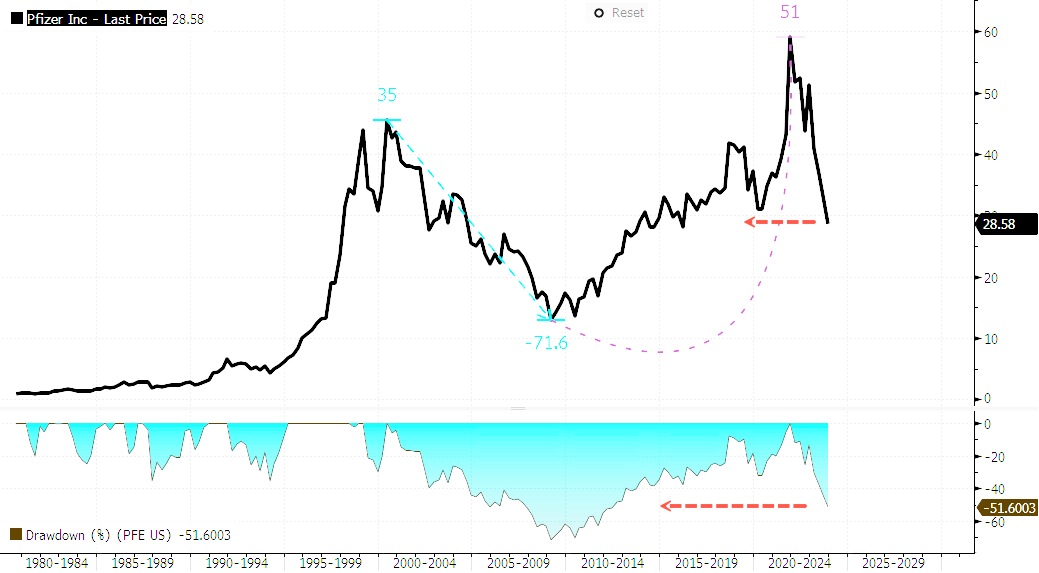
 Shares of Pfizer tumbled in premarket trading in New York after the pharmaceutical company announced a forecasted revenue slump next year. The dismal outlook falls below the average estimates of analysts, attributed to sliding demand for Pfizer's Covid vaccines and other related products. 

Pfizer wrote in a press release titled "Pfizer Provides Full-Year 2024 Guidance" that full-year 2024 revenues are expected to be in the range of $58.5 to $61.5 billion, below the $62.9 billion analysts surveyed by Bloomberg expected. It expects annual earnings of $2.05 to $2.25 a share, far below analysts' $3.21 average estimate. 

The revenue guidance for next year also includes an estimated $8 billion from its Covid vaccine Comirnaty and its antiviral Paxlovid, along with approximately $3.1 billion from Seagen and about $1 billion from the reclassification of its royalty income from other (income)/deductions into the revenue. 

"Pfizer's product portfolio remains strong. In 2024, Comirnaty and Paxlovid are expected to deliver combined revenues of approximately $8 billion and our remaining portfolio of combined Pfizer and Seagen products is expected to achieve year-over-year operational revenue growth in the range of 8% to 10%," stated Dr. Albert Bourla, Pfizer Chairman and Chief Executive Officer. 

Bourla continued, "In addition, we expect our cost realignment program to deliver savings of at least $4.0 billion by the end of 2024, which puts us on a path to potentially regain our pre-pandemic operating margins." 

PFE shares are down 7% in premarket trading. Year-to-date, shares are down 44%, touching lows not seen since 2016. 

Bourla told investors on a recent conference call: "We are acutely aware that all these uncertainties are making it difficult to project the future revenues of Pfizer — and are also affecting our stock price." 

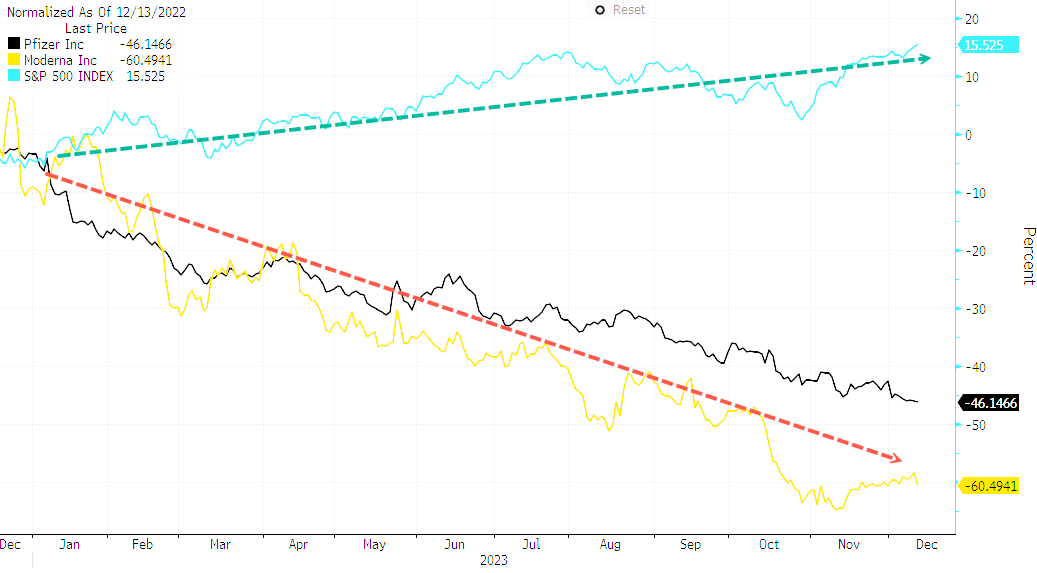
Similar concerns have sent shares of Moderna tumbling while broader markets trend higher.

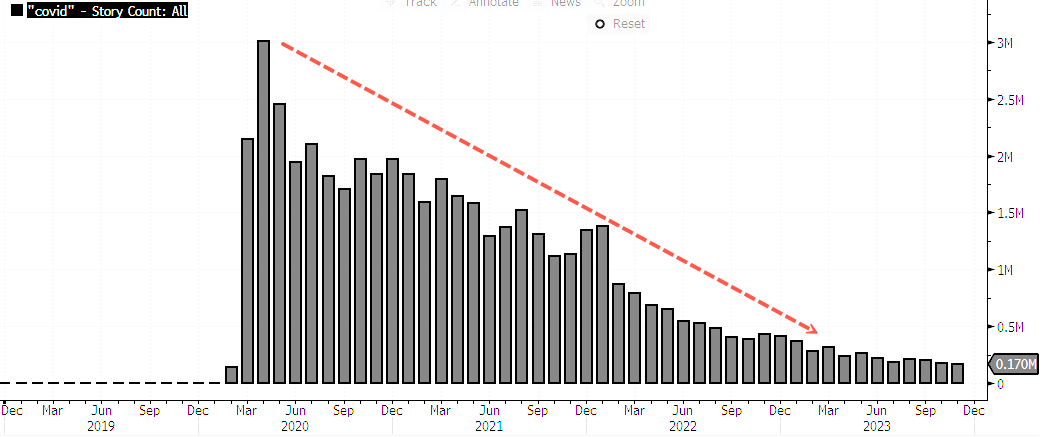
Headlines for "Covid" across US media have tumbled.

The pharma-industrial complex is under severe pressure to find new avenues of growth as Covid revenues plummet. Only another pandemic can turnaround the industry.  

https://www.zerohedge.com/markets/pfizer-shares-plunge-gloomy-2024-outlook

In Musk Era, Pharma Companies Move Ads Away From X

Last month, billionaire Elon Musk publicly endorsed an antisemitic conspiracy theory popular among white supremacists, prompting more than 200 companies to halt their ads on X. Many of them said they don’t plan to return to the platform, to which Musk seemed intransigent. At the New York Times’s Dealbook Summit on November 29, Musk, using an expletive, told advertisers not to spend on the platform. Then, on December 10, Musk restored the X account of conspiracy theorist Alex Jones, adding to X’s kitty of controversies.

While these are among the freshest instances that have given advertisers pause, marketing specialists told BioSpace that a growing number of companies, including those in the biopharma and biotech sector, had been feeling trepidatious about using the platform ever since Musk took over what was then called Twitter in October 2022. In fact, in July of this year, Musk revealed that the company had lost almost half of its advertising revenue since his acquisition of the company.

After the Takeover

Under Musk’s leadership, X quickly instituted a series of rash policy changes, said Bill Gadless, founding partner of emagineHealth, a Florida-based marketing agency for healthcare and biopharma companies. For instance, Musk’s decisions to charge $8 per month for a verification badge and to reinstate banned accounts such as that of Donald Trump made many of Gadless’s clients uneasy. That uneasiness turned into full-blown panic when a fake Eli Lilly account with a paid-for verification badge posted on X: “We are excited to announce insulin is free now.” The incident caused Lily’s share prices to plummet by 4.45%, prompting the company to halt all its ads on X. “At that point, we definitely saw nervous clients pulling back on ads and content on X, but again, not many wanted to leave the platform completely,” Gadless said.

Musk’s rebranding of Twitter in July of this year, when he changed its name to X and called it the new “everything” application, resulted in many companies flying away from the platform, said Shalon Kerr, founder of the London-based biotech and healthcare public relations and communications firm PR-it. “The sense is that Musk wants to turn X into a consumer application like China’s WeChat, which may not be the best place for life sciences businesses,” she said.

Kerr also noted that the lack of robust moderation of fake news and other problematic content on X has been a matter of great concern among her biopharma clients, as the industry has seen a decline in public trust since the COVID-19 pandemic. “I have been advising my biotech and biopharma clients, who already have a complicated relationship with stakeholder audiences, to keep away from X," she said. 

With X's lax moderation came an uptick in neo-Nazi posts, an issue that surfaced long before Musk’s support of antisemitic content last month. In August, nonprofit news watchdog Media Matters for America documented in a report that ads for several brands were placed on an account that had shared content celebrating Hitler and the Nazi Party. The news led two companies, including biotech giant Gilead Sciences, to pause their ad spending while X investigated the issue, CNN reported. (X has since sued Media Matters, alleging the organization defamed it in a later report about ad placement next to hate groups’ posts.)

Kerr said she has been increasingly advising her clients to halt all engagement with the platform out of consideration for their brand reputation. “The last thing biopharma brands need is to be aligned with a platform that posts antisemitic content.”

Sheldon Zhai, founder of Supreme, a life sciences digital marketing firm, said that all his digital health clients have completely abandoned X. “They don’t want the headaches or being associated with a PR nightmare next to their ads.”

Falling Return on Investment

While marketing experts couldn’t put a number to the relative return on ad investment on X before and during the Musk era, sources said it is clear that biotech and pharma companies are finding that they don’t get their money’s worth on the platform. Kerr observed that even though big pharma companies have massive followings on X, there is very little engagement on the platform. “So if they have no engagement organically and no community, then who are they even advertising to?” she said.

At least three pharma companies, Novo Nordisk, Gilead and Merck, have said that they have stopped all paid ads on X, Endpoints News reported last month. According to data from market analytics company Sensor Tower, Pfizer, Eli Lilly and AbbVie have reduced their ad spending on X. For instance, Pfizer’s ad spending dropped 51% year-over-year through the end of October, the article noted.

Zhai said another issue his staff has experienced is consistent technical problems with X. “Ads go through an approval window that takes anything from 48 hours to several days. We don’t see such delays on LinkedIn or Facebook." Moreover, he added, there is almost no technical support for advertisers, and it’s impossible to get ahold of X representatives. 

As a result of these issues, biopharma companies are increasingly turning to other platforms for their advertising needs, sources told BioSpace. Kerr said some of her biopharma clients are shifting to Meta’s Threads as an alternative to X, and some are also moving to Reddit. Gadless has been seeing a similar trend. “Companies are eager to move their advertising budgets to Facebook and LinkedIn . . . not so much on Instagram and Twitter,” he said. 

He adds that at the end of the day, companies are driven by dollars and will place their ads wherever the users are. “But at the moment, advertisers are scrambling and looking for alternatives to X.”

https://www.biospace.com/article/in-musk-era-pharma-companies-move-ads-away-from-x/

Novo Outshined by Smaller Obesity Rival on Danish Stock Market


  • Zealand’s shares gained significantly more than Novo’s in 2023
  • Novo’s success with weight-loss drugs has rubbed off on peers

A blockbuster weight-loss drug has turned Novo Nordisk A/S into a pop culture phenomenon as well as Europe’s most valuable company, but on its home turf the stock has been outgained by a much smaller rival.

Zealand Pharma A/S has so far risen 63% in market value on the Copenhagen stock exchange this year compared with 40% for its larger and much more famous peer. Analyst estimates indicate the stock could outperform Novo again in 2024.

https://www.bloomberg.com/news/articles/2023-12-13/novo-nordisk-stock-upstaged-by-obesity-drug-maker-zealand