Search This Blog

Wednesday, April 23, 2025

'Less Is More: The Case for De-escalation Strategies in Lung Cancer Management'

 Although targeted therapies and immunotherapy have improved survival outcomes in many patients with lung cancer, these therapies come at a cost, not only financially but also in terms of cumulative and long-term treatment toxicities. But could patients benefit from receiving less therapy rather than more? 

At the European Lung Cancer Congress (ELCC) 2025, Benjamin Besse, MD, PhD, presented a keynote talk on the rationale and strategies for treatment de-escalation in lung cancer, challenging the notion that “more is better” when it comes to cancer therapy. Other experts shared their answers to the question as well, during interviews with Medscape Medical News and another session at the meeting.

Why De-escalation?

“De-escalation trials are mandatory, but not everywhere and not with every drug,” Besse emphasized during his keynote lecture. “It has to be based on strong biological and pharmacokinetic rationale.”

Besse explained that the concept of de-escalation is not merely academic; rather, it has profound real-world implications.

“In India, only 2.8% of the people can afford immunotherapy,” he said, during this presentation. This statistic underscores that although cutting-edge treatments are readily available in high-income countries, they remain inaccessible to most of the world’s population.

Suresh Ramalingam, MD, executive director of Winship Cancer Institute of Emory University, Atlanta, echoed this concern.

“The unfortunate reality is that patients in several countries cannot afford the most advanced therapies for lung cancer,” he said in an interview with Medscape Medical News. “The necessity to do more with less is prompting studies exploring lower doses.”

Besse argued that de-escalation strategies could save patients from unnecessary toxicity, reduce time spent in hospitals, and dramatically decrease healthcare costs, without compromising treatment effectiveness.

Dose reduction, which entails using lower doses of medications that maintain the drug’s efficacy; treatment interval extension, which involves extending times between treatments; and duration reduction, which entails shortening the overall treatment period, are methods for de-escalating treatment, Besse outlined during his talk.

Biological Rationale

For immune checkpoint inhibitors, such as pembrolizumab and nivolumab, the biological rationale for dose reduction is that these monoclonal antibodies work by blocking the programmed cell death 1 (PD-1) receptor on T cells, and relatively low doses are needed to achieve saturation.

Besse pointed to data from research showing that even at a dose of 1 mg/kg administered every 3 weeks, pembrolizumab saturates the PD-1 receptor on peripheral T cells.

He also referenced data showing that a single infusion of nivolumab at 10 mg/kg is sufficient to occupy > 70% of PD-1 molecules on T cells for up to 80 days.

“One injection of pembrolizumab at 10 mg/kg saturates PD-1 on lymphocytes for 400 days, and yet we administer the drug every 21 days; it doesn’t make sense,” Besse noted.

Studies in patients with melanoma showed that nivolumab at 0.1 mg/kg (30 times less than the standard dose) achieved similar response rates to 10 mg/kg. However, standard dosing remains “much higher,” with “flat doses calculated based on the median weight of healthy people rather than cancer patients, who typically weigh less,” Besse said.

Real-World Evidence for Lower Doses

real-world study from India demonstrated that ultralow-dose nivolumab (40 mg every 2 weeks) combined with chemotherapy showed promising results in non–small cell lung cancer (NSCLC). According to Besse, although these survival data are not directly comparable to those in standard dosing trials, the survival curves appeared remarkably similar.

“The hazard ratio seems to be similar, as if the biology was similar between the two doses,” Besse noted. “This approach reduced costs by 86% while maintaining efficacy.”

Ramalingam pointed to another study from India, saying, “The study in head and neck cancer from Tata Memorial Hospital could serve as a model for others to study similar approaches that will ultimately extend the use of these agents to broader groups of patients.”

The ongoing DEDICATION-1 trial in the Netherlands is formally testing reduced-dose (300 mg every 6 weeks or 100 mg every 3 weeks) pembrolizumab against standard dosing (400 mg every 6 weeks, 150 mg every 3 weeks, or 200 mg every 3 weeks) in patients with advanced NSCLC, with preliminary results showing comparable progression-free and overall survival rates.

When asked about these findings, Besse noted: “The data presented come from an interim analysis that did not indicate a reduced dose is valid. This interim analysis suggests that the trial can continue to accrue participants.”

However, Ramalingam urged that caution is needed when reducing the doses of cancer therapies.

“There is inadequate knowledge on what level of dose reduction is appropriate,” he said in an interview. “Of course, when patients experience toxicity, dose reduction or interruptions may be necessary.”

Extending Treatment Intervals

The PULSE trial, led by Besse, is investigating whether pembrolizumab can be administered every 6 weeks instead of every 3 weeks in maintenance therapy for nonsquamous NSCLC.

Commenting on the financial implications of extending treatment intervals for immunotherapy, Besse said: “If this trial is positive, it will save €1 billion every 3 years in France alone.” He added that running the trial will save the health system money because the experimental arm receives half the dose of pembrolizumab.

Optimizing Treatment Duration

The question of how long to continue treatment also presents opportunities for de-escalation. Data from the French national healthcare database showed that patients who stopped pembrolizumab after 2 years had similar overall survival to those who continued treatment.

In addition, the phase 3 DICIPLE trial demonstrated that stopping immunotherapy at 6 months did not negatively affect progression-free or overall survival compared to continuing treatment. Stopping immunotherapy also reduced grade 3 or higher immune-related adverse events by nearly 10 times (2.9% vs 28.6%).

Regulatory Challenges

Besse explained that despite its potential benefits, de-escalation faces significant regulatory hurdles. Even if trials prove that lower doses or shorter durations are equally effective, drug labels may not change because pharmaceutical companies have little incentive to pursue such changes.

“We need to modify the clinical guidelines and lobby the FDA [US Food and Drug Administration] and other relevant regulatory agencies through academic incentives so that the label can be changed,” he added.

Ramalingam agreed on the importance of advocating for evidence-based approaches: “Any de-escalation approach should be based on evidence from well-conducted randomized trials. The onus is on the academic community to conduct such trials to inform clinical practice.”

When More Is Better

Some are in favor of extending treatments durations. Hye Ryun Kim, MD, PhD, presented arguments for following this approach when using targeted therapies in EGFR-mutated NSCLC, during a debate session at the ELCC 2025.

“Patients still face the risk of recurrence after 3 years,” Kim noted, pointing to data from the ADAURA trial showing late relapses after discontinuation of osimertinib. She advocated for treatment “as long as possible” in high-risk patients.

Rafal Dziadziuszko, MD, PhD, who also presented during the debate, offered a different perspective, distinguishing between immunotherapies, which he described as “cytotoxic,” and targeted therapies, which are “cytostatic.”

He suggested that 1 year or less might be sufficient for immunotherapy in the adjuvant or perioperative setting. In contrast, targeted therapies might need to be continued until disease progression to suppress the remaining micrometastatic clones.

He noted, however, that prospective data are needed to support this hypothesis and confirm the optimal treatment duration.

The Path Forward

When asked in an interview which de-escalation strategy holds the most promise, Ramalingam noted that the optimal approach varies by context.

“With regards to the use of immunotherapy, there is evidence that lower doses and shorter duration of therapy may be just as effective. In the case of certain targeted therapies, dose reductions may result in preservation of efficacy with an improved tolerability,” he said.

Multiple experts Medscape Medical News interviewed for this story agree that personalization based on biomarkers is key when developing de-escalation strategies.

Kim and Dziadziuszko highlighted the potential of minimal residual disease monitoring to identify patients who truly need extended therapy, for example.

Besse also sees promise in this approach.

“Monitoring the response with circulating biomarkers could allow us to select the best responders and maybe stop treatment earlier, but this is only speculation and needs to be proven,” he said in an interview, noting that this will be tested in the PULSE trial.

When designing de-escalation trials, Besse emphasized that “patients come first, and these trials should aim for zero risk to decrease efficacy while hopefully being less toxic.”

The rationale for de-escalation should be very strong, based on pharmacokinetic data and biology, he added.

Besse reported receiving consultation or advisory fees from AbbVie, BioNTech SE, Beijing Avistone Pharmaceuticals Biotechnology, Bristol Myers Squibb (BMS), CureVac AG, PharmaMar, Regeneron, Sanofi Aventis, Eli Lilly, Ellipses Pharma Ltd, Hoffmann-La Roche Ltd, Foghorn Therapeutics, Genmab, Immunocore, and Owkin. Dziadziuszko reported having financial relationships with Roche, AstraZeneca, Novartis, Pfizer, GlaxoSmithKline (GSK), MSD, Boehringer Ingelheim, Illumina, and BioNTech. Kim reported receiving clinical trial support (to institution) from AstraZeneca, BMS, Genentech/Roche, Merck, Affimed, Immunocore, and GSK; consultation or advisory fees from MSD, AstraZeneca, and GSK; and research funding from the Yonsei Lee Youn Jae Fellowship. Ramalingam reported receiving research funding (to institution) from Amgen, AstraZeneca, BMS, Merck, and Pfizer and travel support from AstraZeneca and AbbVie.

https://www.medscape.com/viewarticle/less-more-case-de-escalation-strategies-lung-cancer-2025a10009sf

Deported 'Maryland Father', Kilmar's Van Full Of Migrants Owned By Convicted Human-Trafficker

 Last week it was revealed that Kilmar Abrego Garcia, a deported El Salvadoran man (aka, 'Maryland Father') at the center of an intense political debate, was suspected by a Tennessee state trooper of human trafficking in 2022 after he was pulled over for driving erratically in a black 2001 Chevrolet Suburban - owned by another individual, full of people.

Abrego Garcia Family via Reuters

"During the interview, subject pretended to speak less English than he was capable of and attempted to put encountering officer off-track by responding to questions with questions," reads the summary. "When asked what relationship he had with the registered owner of the vehicle, subject replied the owner of the vehicle is his boss, and that his work is in construction."

"There was no luggage in the vehicle, leading the encountering officer to suspect this was a human trafficking incident," according to DHS records.

Now, Just the News reports that the SUV was owned by a man who was himself deported after pleading guilty to smuggling illegal aliens in 2020.

Abrego Garcia told the state trooper that the SUV was owned by his boss. DHS documents, meanwhile, identified the owner of the vehicle as Jose Ramon Hernandez Reyes - whose 2001 Suburban was flagged separately by Homeland Security Investigations Baltimore field office as belonging to a target the suspected of human trafficking or smuggling, the documents reveal.

"Vehicle is used by HSI Baltimore target in human smuggling/trafficking operation. Vehicle makes trips to southern border to pick up non-citizens," reads the record, adding that the Baltimore HSI case agent should be notified if the vehicle is encountered.

Jose Ramon Hernandez Reyes, who Abrego Garcia claimed he was working for, had been previously convicted of smuggling illegal aliens into the United States.

In 2020, Hernandez Reyes, himself an illegal alien, pleaded guilty and was sentenced to 18 months in prison for smuggling fellow illegal aliens in the United States after he was stopped by law enforcement in Mississippi in a car with passengers from Mexico, El Salvador and Honduras. Homeland Security records indicate Hernandez Reyes’ “deport order” was reinstated in March 2021, as his 18-month sentence was nearing its end. -Just the News

A DHS official confirmed to JTN that the Hernandez Reyes mentioned in both cases refer to the same individual, though it's unclear what the relationship was between Abrego Garcia and Hernandez Reyes.

According to the report, the similarities in traffic stops between the two men are striking. According to the DOJ, Hernandez Reyes and one co-defendant were stopped outside in Jackson County, Mississippi in the Suburban, which was being driven by one Modesto Alvarez - later determined to be Hernandez Reyes' brother-in-law.

Investigators also determined that the eight of the nine men in that stop were in the US illegally, and were citizens of Mexico, El Salvador and Honduras who had previously been deported from the United States and had illegally returned. They were  charged with unlawful reentry into the country.

Officers determined that Alvarez and Hernandez Reyes were transporting the illegal immigrants from their home base of Houston, Texas, to different locations throughout the United States. -JTN

Hernandez Reyes pleaded guilty in August 2020 to smuggling illegal aliens, and was sentenced to 18 months in prison plus three years of supervised release - after which he was slated to face deportation proceedings which carried a 10-year prison threat if he returns.

In the case of Abrego Garcia, he was stopped for driving erratically and speeding, on an expired driver's license, by a Tennessee state trooper in November of 2022 - similarly transporting a large group of people from Houston, Texas.

Three weeks after the stop, on Dec. 27, 2022, DHS updated its records to urge any personnel who encountered Abrego Garcia to "escort to secondary" - a designation usually applied to someone suspected of wrongdoing.

DHS records also show that Abrego Garcia was offered a chance to claim he required humanitarian assistance for illness or had other reasons for seeking refuge from persecution - two grounds for asylum, but he declined, and instead told authorities he was willing to leave the United States.

https://www.zerohedge.com/political/kilmars-van-full-migrants-owned-convicted-human-trafficker

"West Coast On Tipping Point": Los Angeles Port Set For Steep Drop In Traffic

 The Trump administration is likely monitoring sliding scheduled import volumes at the Port of Los Angeles—the largest container port in the Western Hemisphere—amid President Trump's overnight remarks hinting at a potential de-escalation in the trade war with China. The president's comments to ease trade tensions with Beijing come as scheduled import volumes at the LA Port indicate possible inbound trade disruptions on the horizon. 

According to Port Optimizer, a tracking system for vessel operators, scheduled import volumes for the LA Port for the week ending May 3 show a 38.53% week-over-week plunge. Year-over-year, the data shows a 9.79% decrease. For the week ending May 10, scheduled import volumes continued to slow, with a year-over-year change down around 35%.

We've closely monitored the fallout from the 145% tariffs on Chinese goods entering the U.S. for weeks, as trade disruptions ripple from China to the U.S. Now, it appears those disruptions are about to reach American West Coast ports.

Let's review what's transpired:

"We are at a tipping point on the West Coast," Ken Adamo, chief of analytics at DAT Freight & Analytics, told CNBC, adding, "Looking at how many truck loads are available versus trucks, we've seen a precipitous drop, over 700,000 loads have evaporated nationally in the past week compared to two weeks prior."

Falling scheduled import volumes at the LA Port coincide with a rise in canceled sailings.

More color from CNBC:

The vessel drop coincides with a rise in canceled sailings from ocean carriers on Pacific routes that include ports of Long Beach, Los Angeles, Oakland, and Seattle, according to an alert from Worldwide Logistics informing clients of blank sailings.

The Gemini alliance between Maersk and Hapag Lloyd has a cancellation rate of 24.39%; followed by the Ocean Alliance, comprising CMA CGM, Cosco Shipping, Evergreen, and OOCL, at 18%; and the Premier Alliance, comprising Ocean Network Express, Hyundai Merchant Marine, and Yang Ming Marine Transport, at 15%. MSC and ZIM currently have a 10% rate of canceled sailings.

Ocean carriers are trying to balance the pullback in orders resulting from the tariffs and the escalation of tensions in the trade war. CNBC recently reported a total of 80 blank, or canceled, sailings out of China as demand plummets and carriers suspend or adjust transpacific services.

Trump's possible de-escalation of the trade war also came after the IMF reported on Tuesday that tariffs had prompted it to slash its global growth forecast.

https://www.zerohedge.com/economics/west-coast-tipping-point-los-angeles-port-set-steep-drop-traffic

High-Level Ukraine Peace Talks Scrapped After Rubio, Witkoff Pull Out Last Minute

 US Secretary of State Marco Rubio was expected to lead a high-level American delegation for more Ukraine peace consultations among allies in London on Wednesday. But in the latest sign that White House patience is wearing thin, the American delegation became a no-show.

"European diplomats pulled the plug on high-level talks set for Wednesday about ending Russia’s war in Ukraine after top US diplomats abruptly canceled plans to attend," The Washington Post reports.

AFP/Getty Images

Now there will only be lower-level talks, and a planned foreign minister's meeting has been scrapped due to Rubio's absence. All this highlights the clear rift between Washington and European partners, which has seen the US side push the idea of offering Russia recognition of its sovereignty over Crimea.

Ukraine has instead wanted to "discuss a complete ceasefire first and everything else later" - according to an official quoted in The Washington Post.

British Foreign Secretary David Lammy was supposed to host his peers, but will now merely "drop in" during lower level talks, according to the report. "The foreign minister-level meeting isn’t happening," an unnamed diplomat told the Post.

"We’re hopeful as per the Rubio tweet that a meeting in London can happen soon, but without Witkoff, the secretary of state, the French and German foreign ministers, there’s no reason for the foreign secretary to chair," the diplomat said.

According to more travel details from the report:

U.S. Secretary of State Marco Rubio had been scheduled to fly to London on Tuesday night but canceled those plans middaySteve Witkoff, a special envoy and close ally of President Donald Trump central to White House efforts to broker an end to the war, also dropped out. He will head to Moscow this week, according to the Russians.

Likely these optics of Witkoff going to Moscow instead of London will be seen by Kiev as further evidence it is losing its number one ally and supplier of weapons and intelligence.

And Vice President JD Vance while on a planned trip to India Wednesday reiterated the White House stance, saying "We’ve issued a very explicit proposal to both the Russians and the Ukrainians, and it’s time for them to either say yes or for the United States to walk away from this process."

He continued in the remarks to reporters while visiting the Taj Mahal, "We’re going to see if the Europeans, the Russians and the Ukrainians are ultimately able to get this thing over the finish line."

The suggestion is that both sides would have to give up territories they control, and make mutual compromises, but still it's clear that Russia is in the driver's seat on the battlefield - having just this week also regained nearly all of Kursk territory, leaving Zelensky with no leverage there.

Ukraine has said it's open to negotiations "but not to surrender". President Putin has meanwhile in a surprise move reportedly offered to halt all front line fighting - or freeze it in place - for the sake of achieving peace; however, he would likely want major concessions from the West in return, starting with international recognition of Crimea as under Russia. And any 'freeze' of current lines leaves Russia in control of most of the Donbass region.

https://www.zerohedge.com/geopolitical/high-profile-ukraine-peace-talks-scrapped-after-rubio-witkoff-pull-out-last-minute

HHS autism study to amass medical records of many Americans


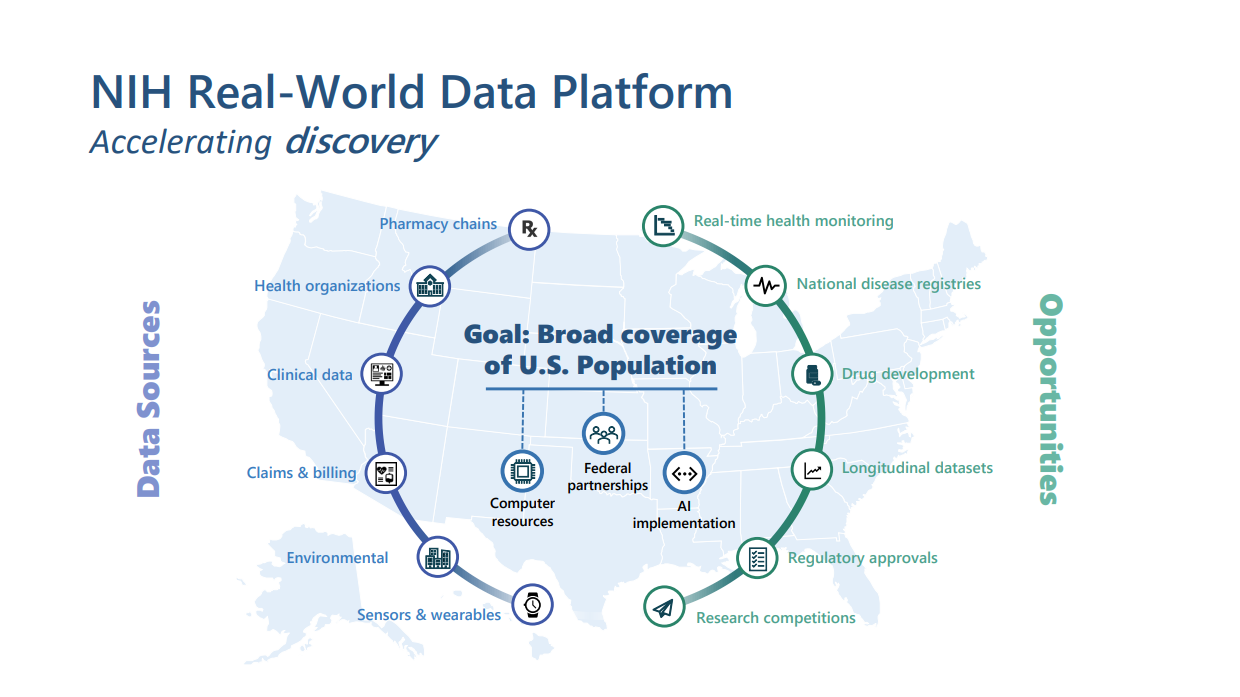
The National Institutes of Health is amassing private medical records from a number of federal and commercial databases to give to Health and Human Services Secretary Robert F. Kennedy Jr.'s new effort to study autism, the NIH's top official said Monday.

The new data will allow external researchers picked for Kennedy's autism studies to study "comprehensive" patient data with "broad coverage" of the U.S. population for the first time, NIH Director Dr. Jay Bhattacharya said.

"The idea of the platform is that the existing data resources are often fragmented and difficult to obtain. The NIH itself will often pay multiple times for the same data resource. Even data resources that are within the federal government are difficult to obtain," he said in a presentation to the agency's advisers.

Medication records from pharmacy chains, lab testing and genomics data from patients treated by the Department of Veterans Affairs and Indian Health Service, claims from private insurers and data from smartwatches and fitness trackers will all be linked together, he said.

The NIH is also now in talks with the Centers for Medicare and Medicaid Services to broaden agreements governing access to their data, Bhattacharya said. A slide presented by National Institutes of Health Director Dr. Jay Bhattacharya at a meeting of the agency's advisers, discussing the new autism research initiative.

In addition, a new disease registry is being launched to track Americans with autism, which will be integrated into the data. Advocacy groups and experts have called out Kennedy for describing autism as a "preventable disease," which they say is stigmatizing and unfounded.

Between 10 and 20 outside groups of researchers will be given grant funding and access to the records to produce Kennedy's autism studies. Bhattacharya did not give details on how they would be chosen, but said their selection would be "run through normal NIH processes."

Bhattacharya said the research they will back using the data will be "the highest quality proposals" that will range "from basic science to epidemiological approaches, to other more applied approaches" to treat and manage autism. He also acknowledged autism's wide variation in how it affects people.

"I recognize, of course, that autism, there's a range of manifestations ranging from highly functioning children to children that are quite severely disabled. And of course the research will account very carefully for that," he said.

While the selected researchers will be able to access and study the private medical data, Bhattacharya said they will not be able to download it. He promised "state of the art protections" to protect confidentiality.


By bringing the data into one place, he said it could give health agencies a window into "real-time health monitoring" on Americans for studying other health problems too.

"What we're proposing is a transformative real-world data initiative, which aims to provide a robust and secure computational data platform for chronic disease and autism research," he said.

They are planning a "rapid timeline" to launch the autism research using this data, he said, but did not give specifics on when it would start or how long the studies would take. Kennedy last week appeared to walk back his earlier prediction that they would have all the answers to autism's causes by September.

Speaking with reporters on Tuesday, Bhattacharya pushed back the timeline, saying that they now hope to have grants going out the door by September for the research.

"It's hard to guarantee when science will make an advance. It depends on, you know, nature has its say," Bhattacharya said.

https://www.cbsnews.com/news/rfk-jr-autism-study-medical-records/

MN Bill Would Criminalize mRNA Vaccines, Label Them 'Weapons Of Mass Destruction'

 A group of Republican lawmakers introduced a bill in the Minnesota House of Representatives that would classify mRNA vaccines and products as "weapons of mass destruction" and criminalize their manufacture, distribution, and possession.

"It's a shot across the bow of the biotechnology industry, which has taken advantage of its unique liability protections and the fear generated by emergency to fast-track novel gene-altering treatments which are not fully understood," Rep. Walter Hudson (Albertville), one of the bill's authors, told Patch.

"These treatments were coerced under threat of lost employment and social censure, rather than offered under the longstanding ethical norm of informed consent."

Hudson said the bill "would need significant amendment to become law" but described its "bold opening position" as an effort to "provoke productive conversation about these issues" and ultimately "arrive at a reasonable legislative response."

The bill, HF 4991, would prohibit the manufacturing, distribution, and possession of "any product that uses or contains messenger ribonucleic acid (mRNA) technology" in Minnesota.

Violations would be treated as criminal offenses under state law. The legislation would also require state and local officials to enforce the ban, with penalties for those who fail to comply.

Messenger RNA (mRNA) vaccines represent a new approach to disease prevention, using genetic instructions to train the body's immune system to recognize and fight infections.

While mRNA vaccines first became widely known through COVID-19 efforts, researchers are developing mRNA-based vaccines for a range of other diseases, including influenza, respiratory syncytial virus (RSV), Zika virus, and certain cancers.

While relatively new, mRNA technology has become the subject of misinformation and unfounded attacks, despite broad support from the scientific community.

For example, mRNA is not able to alter or modify a person's genetic makeup (DNA), notes the Minnesota Department of Health.

Mainstream scientific organizations, including the CDC and FDA, have found mRNA vaccines to be safe and effective.

Separately, the Minnesota Reformer reported that the language from HF 4991 appears to have been drafted by Joseph Sansone, a Florida-based hypnotist.

The Reformer describes Sansone as "a conspiracy theorist who believes that mRNA treatments are 'nanoparticle injections' that amount to 'biological and technological weapons of mass destruction.'"

In addition to Hudson, the bill was introduced by Republican Reps. Shane Mekeland (Clear Lake), Krista Knudsen (Lake Shore), Jeff Dotseth (Silver Township), Tom Murphy (Underwood), Pam Altendorf (Red Wing), Elliott Engen (White Bear Township), and Isaac Schultz (Elmdale Township).

FDA to Phase Out Petroleum-Based Food Dyes

 The FDA will phase out petroleum-based food dyes in the coming months, FDA and HHS officials said Tuesday.

"For the last 50 years, American children have increasingly been living in a toxic soup of synthetic chemicals," FDA Commissioner Marty Makary, MD, MPH, said during a press conference at HHS headquarters in Washington. "The scientific community has conducted a number of studies raising concerns about the correlation between petroleum-based synthetic dyes and several health conditions such as attention deficit-hyperactivity disorder [ADHD], obesity, diabetes, insulin resistance, cancer, genomic disruption, and GI issues ... So why are we taking a gamble?"

The press conference was held as the FDA announced six actionsopens in a new tab or window it was taking on the issue:

  • Establishing a national standard and timeline for the food industry to transition from petrochemical-based dyes to natural alternatives
  • Initiating the process to revoke authorization for two synthetic food colorings -- Citrus Red No. 2 and Orange B -- within the coming months
  • Working with industry to eliminate six remaining synthetic dyes -- FD&C Green No. 3, FD&C Red No. 40, FD&C Yellow No. 5, FD&C Yellow No. 6, FD&C Blue No. 1, and FD&C Blue No. 2 -- from the food supply by the end of next year
  • Authorizing four new natural color additives in the coming weeks, while also accelerating the review and approval of others
  • Partnering with NIH to conduct comprehensive research on how food additives impact children's health and development
  • Requesting food companies to remove FD&C Red No. 3 sooner than the 2027-2028 deadline previously required

During the press conference, Makary had some suggestions -- complete with visual aids -- for petroleum dye replacements. "For companies that are currently using petroleum-based red dye, try watermelon juice or beet juice," he said, holding up glass containers that appeared to contain those juices. "For companies currently combining petroleum-based yellow chemical and red dyes together, try carrot juice." (Disclosure: Makary is former medical editor-in-chief of MedPage Today.)

"To be clear, the transition from petroleum-based food dyes to natural ingredient food dyes will not increase food prices," he added. "We know that from other countries that have already made the transition -- it's not an opinion."

image
Food companies want to make the switch away from synthetic dyes, so "let's start in a friendly way and see if we can do this without any statutory or regulatory changes," said FDA Commissioner Marty Makary, MD, MPH.

No formal agreement or settlement has been made with food companies to remove the dyes, and no regulatory action has yet been taken -- because it might not be necessary, Makary said in answer to a question from a reporter. "You win more bees with honey than fire, and there are a number of tools at our disposal," he said. "I believe in love, and let's start in a friendly way and see if we can do this without any statutory or regulatory changes. But we are exploring every tool in the toolbox to make sure this gets done very quickly."

Food companies actually want to do this, he continued. "So why go down a complicated road with Congress when they want to do this? They don't want to deal with the patchwork of 30 different state [regulatory] plans. We've had wonderful meetings with the food industry. I've been amazed, and they are eager to do this. They are good people ... They have kids too, and I think we all want the same thing."

HHS Secretary Robert F. Kennedy Jr. also praised the food companies. "As we move forward, we are going to work with the industry; they've shown a lot of leadership on this right now," he said. "And in fact, we're getting food companies -- and fast food companies -- who are calling us almost every day and asking us, 'How do we do this? What do you want us to do? Will you do a press conference with us?' And so we're really happy with the reception.... I think most of them really want to have a healthier America. They want clear guidelines, and they want to know what they can and can't do, and we're going to give them that."

But Kennedy also criticized food manufacturers. "I was talking with my staff about these petroleum-based dyes, and I just said, 'If they want to eat petroleum, they ought to add it themselves at home. They shouldn't be feeding it to the rest of us without our knowledge or consent."

"We're going to get rid of every additive in school food that we can legally address," Kennedy said. "One of the problems is that all of these industries cast a dark shadow historically over this agency -- and there's so many conflicts that we are now systematically eliminating -- that has allowed them to suppress the science. There's shockingly few studies, even on food dyes, and on all these other ingredients as well."

The press conference also included a number of other speakers such as West Virginia Gov. Patrick Morrisey (R), whose state recently bannedopens in a new tab or window certain food dyes; Mike Schultz (R), Speaker of the House of Representatives in Utah, which banned synthetic dyesopens in a new tab or window from school lunches; food blogger Vani Hari; and diet and fitness guru Mark Hyman, MD.

"I'm here today because our food system, specifically our regulatory system for food additives and dyes is failing to protect the health of the American people, especially our children," Hyman said. "Every day, Americans consume thousands of chemicals in our food, many of which have never been independently tested for long-term safety.... We're seeing rising rates of chronic diseases linked to food dyes and other additives, like ADHD, obesity, autoimmune diseases, allergies, endocrine disruption, and even cancer."

"No doctor should watch their patients struggle with chronic illness tied to ultraprocessed food and be powerless to change it because our food policies lag decades behind the science," he said. "Americans deserve a food system that protects their health and not corporate interests."

https://www.medpagetoday.com/publichealthpolicy/fdageneral/115235