Friday, January 25, 2019
Ligand announces partner Seelos Therapeutics becomes public company
https://thefly.com/landingPageNews.php?id=2853852

AbbVie says 2018 results ‘well above expectations’
Says: Biosimilar competitors have been more aggressive… Expects to absorb $2B of erosion in 2019 from biosimilar competition… Expects to deliver “positive” revenue growth in 2019… Pleased with investment strategy… Saw “significant” pipeline advancement in 2018. Comments from Q4 earnings conference call.
https://thefly.com/landingPageNews.php?id=2853857
Intuitive Surgical spending to drive future sales growth, says Cantor
Cantor Fitzgerald analyst Craig Bijou reiterates an Overweight rating on Intuitive Surgical with a $620 price target following last night’s Q4 results. The company delivered 19% procedure growth, largely driven by U.S. general surgery and worldwide urology, Bijou tells investors in a research note. However, management plans to increase operating expenditures by 20%-28% in 2019, which comes as a surprise, adds the analyst. He expects investors to have an initial negative reaction to the expected significant increase in spending, but thinks the company’s investments will fuel future sales growth and accelerate its pipeline.
https://thefly.com/landingPageNews.php?id=2853861
AbbVie says sees FY19 revenue growth approximately 1%, consensus $33.6B
https://thefly.com/landingPageNews.php?id=2853867
AbbVie says sees Q1 adjusted EPS $2.05-$2.07, consensus $2.03
https://thefly.com/landingPageNews.php?id=2853870
AbbVie CEO says no plans to retire soon, despite rumors
https://thefly.com/landingPageNews.php?id=2853877
Thursday, January 24, 2019
New blood vessels in bone discovered
Researchers at University Duisburg-Essen, Germany have discovered new blood vessels in the long bones of mice, as well as similar new vessels in human long bones.
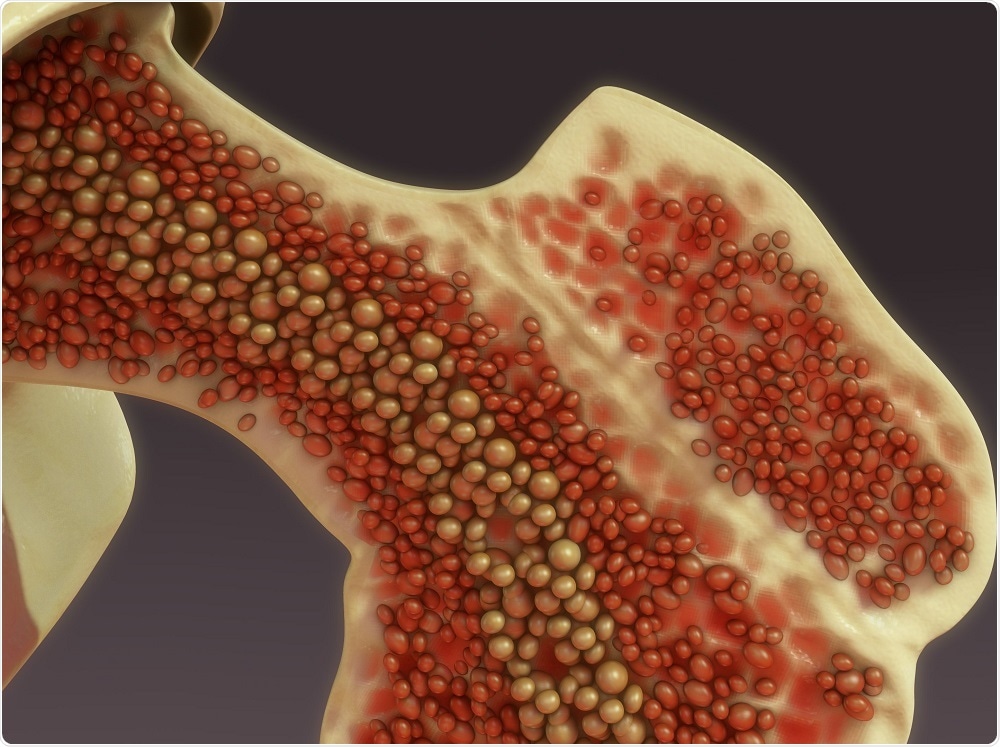 sciencepics | Shutterstock
The vessels, which the scientists have called “trans-cortical vessels” (TCVs), were found to have originate in the bone marrow and traverse cortical bone perpendicularly along the shaft and connect to the periosteal circulation.
The finding, which was recently published in the journal Nature Metabolism, could help to improve understanding of bone diseases such as osteoporosis and immune system disorders.
Scientists were already aware that a few blood vessels exist at the ends of bones or half way along them, but little is known about how blood enters and leaves long bones.
Given this limited knowledge, Matthias Gunzer and colleagues decided to study blood vessel distribution in the long bones of mice using techniques that have only recently been made available or never been previously used in this field.
Analysis of the lower leg bone using light-sheet fluorescence microscopy and X-ray microscopy showed TCVs crossing the bone shaft, covering the whole bone and constituting most of the bone’s blood supply.
It’s totally crazy there are still things to find out about human anatomy – we have discovered blood vessels in a new place that we didn’t know about before.”Matthias Gunzer, Study Author
The study also revealed that humans have vessels that resemble TCVs in the thigh bone. Analysis of tiny samples taken from the neck of the human femur identified vessels that were structurally similar to (although much wider than) the ones seen in the mouse model.
Taken together, these data suggest that human long bones, at least in some areas, also possess a system of TCVs that directly connects the vascular system of the BM to the peripheral circulation through cortical bone.”
Gunzer and colleagues point out that diseases affecting bone physiology are known to cause substantial changes in TCV numbers.
“Since key bone pathologies are associated with alterations in the TCV system, entirely new research possibilities that further characterize the role of TCVs in skeletal biology and disease can be envisioned.”
Subscribe to:
Posts (Atom)