Search This Blog

Sunday, May 9, 2021

Covid-sparked fungal infection assuming epidemic proportions in India

 Twenty-nine-year-old Suhas, a businessman, thought he had defeated coronavirus when he came out of a non-invasive ventilator and went home after two weeks. But soon he started experiencing pain and swelling on the face. A quick CT scan confirmed the doctor's fears - he had contracted mucormycosis, a potentially fatal fungal infection. He recently underwent a surgery at Global Hospital in Parel, where doctors had to remove his upper jaw to arrest the spread of the fungus to the brain.


Triggered by coronavirus, mucormycosis, which has a mortality rate of over 50% and can lead to blindness, is sweeping through parts of the state. City hospitals that are treating dozens of such cases from northern Maharashtra and Vidarbha said its spread is assuming epidemic proportions, so much so that regions have started facing a shortage of anti-fungal medicines. Global Hospital, which has started a dedicated clinic for mucormycosis after witnessing a surge in cases during the first wave, has 18 patients admitted at present.


ENT surgeon Dr Milind Navalakhe, who is a part of the team that runs the clinic, said they have admitted 31 patients, of which 25 are from outside the city. "Cases of mucormycosis have exploded in the state, and the government needs to urgently intervene. Medical centres across Maharashtra, particularly, Vidarbha, must be seeing a 100%-200% rise in cases," he said. At the Global centre, six patients have lost their entire upper jaw, while one has lost an eyeball due to the infection.

Parel's KEM Hospital has 25 patients undergoing treatment for mucormycosis. Dr Hetal Marfatia, head of ENT, said almost all patients are from far-off districts and have come at an advanced stage. The infection typically starts growing from the nose, upper jaw and travels to the brain. "Once it reaches the brain, it's almost a death sentence," she said, adding that from treating a handful cases annually, the hospital is now seeing three-four referrals daily.

ENT surgeon Dr Sanjeev Zambane said he has been seeing a minimum of two mucormycosis cases in a day. The bigger challenge now is treatment, since anti-fungal medicines are not just in short supply but also very expensive.
In pre-Covid times, the 'black fungus' mucormycosis used to be rare and seen mainly in immunocompromised people. However, after the pandemic, three factors have led to an exponential rise- Covid itself, diabetes and abuse of steroids that lower immunity.

Free beer spurs more vaccinations than all Erie County, NY 1st-dose clinics last week

 The idea of getting vaccinated had been rolling around in the back of Tyler Morsch's mind for weeks. As a 28-year-old, he didn't feel in any particular danger, but he finally decided he should start looking for a Covid-19 vaccination clinic this week. Then he heard the magic words.

"Free beer," he said.

Saturday was the first day that Erie County worked with a local microbrewery to host its Shot and a Chaser program, offering individuals who got their first dose of the Covid-19 vaccine at Resurgence 

Brewing Company a free pint glass and coupon for the vaccinated person's drink of choice.

Under normal circumstances, it would be beyond strange for a brewery to host a vaccination clinic in the shadow of 1,000-gallon fermentation tanks, with a brick wall separating a bustling bar service from health care professionals handling syringes filled with the Moderna vaccine. But these are not normal times.

"Given the world we live in right now, it's not so weird," said Ben Kestner, Resurgence Brewing's director of taproom operations.


County Executive Mark Poloncarz, who was nursing his own drink in one hand while directing vaccine recipients to open table with the other, was happy to see the county's first Shot and a Chaser effort going so well. Before the vaccinations started at 11 a.m., there was a line out the door.


As demand for the Covid-19 vaccine continues to fall, the county is taking a new approach. It's offering free beer.


Programs like the Shot and a Chaser program are among the more creative outreach efforts to try and attract individuals who would otherwise not consider vaccination a priority, especially younger adults. New Jersey and Suffolk County have picked up on the idea, offering free drink vouchers at participating breweries for those who agree to get vaccinated.


Poloncarz said he's happy to see others pick up the idea.


"We're going to do more people today at our first-dose clinics than most of our first-dose clinics in the last week combined," Poloncarz said. "It's been a success. We figured it would be pretty good, but now we're seeing the results."


That's not a very high bar, given that many of the county's first-dose clinics have had less than two dozen people show up. At one site, only one person showed up, Poloncarz said. Comparatively, more than 100 people had been vaccinated at Resurgence by mid-afternoon, including some walk-ups and restaurant patrons who decided to get the vaccine at the spur of the moment.


Health Commissioner Dr. Gale Burstein, who was also on site to vaccinate individuals, said she walked from table to table earlier in the day to recruit people who hadn't gotten vaccinated yet. At one table, one woman who hadn't been vaccinated agreed to get a shot after everyone else at the table told her she should.

"There was a lot of social pressure at her table," she said, "so I was able to vaccinate her."


Kestner said some Resurgence employees also agreed to get vaccinated, especially kitchen staff.


Erie County Health Commissioner Dr. Gale Burstein gives a vaccination to Brian Vaughn at the Resurgence Brewery in Buffalo Saturday, May 8, 2021.
Mark Mulville/Buffalo News


County leaders hope the vaccine-for-beer effort will attract younger residents, particularly those in their 20s and 30s who have consistently had the highest rates of positive Covid-19 cases in recent weeks.


Morsch, who had picked up his free beer at the bar after getting vaccinated with a friend, said he got the shot for more peace of mind when visiting his family and traveling. But he acknowledged that among younger people, there's a sense of invincibility that makes them slower to seek out the Covid-19 vaccine.


"This is the best way to do it," he said. "Bring some fun into it."


Since rolling out the program two weeks ago with commitments from Resurgence and Flying Bison, both Buffalo-based breweries, three other county breweries have signed on.


Shot and a Chaser vaccine clinics will be offered at Flying Bison on Wednesday, and Saturday at Steelbound Brewery in Springville and the Thin Man Brewery on Chandler Street in Buffalo. The 12 Gates Brewing Company in Amherst will host the program on May 20. Clinic hours vary by location. Plenty of online appointments are available. Walk-ups are also accepted.

Health experts say these programs might seem like gimmicks, but if they get several thousand more community residents vaccinated, that's a good thing. They don't expect these types of efforts to be enough to get the region to herd immunity, however.


The waning interest in getting vaccinated is evident not only in the fewer numbers showing up at first-dose clinics, but at the numbers of people who are still being hospitalized with Covid-19. Erie County hospitalizations have leveled off since the end of April and remain elevated compared with hospitalizations in March.


But confirmed cases have been falling. The state reported Western New York's average confirmed positive cases has been falling daily and stood at 2.5% on Friday.


Poloncarz said he doesn't expect the county's Shot and a Chaser program to solve the herd immunity problem.


"But if it gets another 200 people vaccinated today who otherwise would not have, that's 200 more people that are going to be protected from Covid-19," he said, "and 200 less people we need to get to eventually reach herd immunity. And that's the important thing."

https://buffalonews.com/news/local/free-beer-offer-results-in-more-vaccinations-than-all-erie-county-first-dose-clinics-last/article_34b5d0d2-b011-11eb-92fd-8b7017585dc1.html

Fosun Pharma unit, BioNTech to set up JV for COVID-19 vaccine production

 China's Shanghai Fosun Pharmaceutical said on Sunday its subsidiary had agreed to set up a joint venture with BioNTech for the manufacture and commercialisation of the German firm's COVID-19 vaccine.

Fosun Pharmaceutical Industrial will provide a manufacturing facility with an annual capacity of up to 1 billion doses of BioNTech's COVID-19 vaccine, while BioNTech agreed to license relevant manufacturing technology and know-how to the JV, in which the two firms will hold 50% stake each, Shanghai Fosun Pharma said in a filing.

https://www.marketscreener.com/quote/stock/SHANGHAI-FOSUN-PHARMACEUT-6548924/news/Shanghai-Fosun-Pharmaceutical-nbsp-Fosun-Pharma-s-subsidiary-BioNTech-to-set-up-JV-for-COVID-19-v-33204670/

EU has not yet ordered more AstraZeneca vaccines: internal market commish

 The European Union has not yet made any new orders for AstraZeneca vaccines beyond June when their contract ends, European Internal Market Commissioner Thierry Breton said on Sunday.

Breton also said he expected that the costs of the EU's recent order for more doses of Pfizer-BioNTech vaccines would be higher than the earlier versions.

The Commission last month launched legal action against AstraZeneca for not respecting its contract for the supply of COVID-19 vaccines and for not having a "reliable" plan to ensure timely deliveries.

"We did not renew the order after June. We’ll see what happens," said Breton, adding that it was "a very good vaccine".

Concerns has risen on potential side-effects of the Anglo-Swedish COVID-19 vaccine.

Europe's medicines regulator said on Friday it is reviewing reports of a rare nerve-degenerating disorder in people who received the shots, a move that comes after it found the vaccine may have caused very rare blood clotting cases.

Breton said an increase in prices for second generation vaccines could be justified by the extra research required and potential changes to industrial equipment.

The European Union signed a new contract with Pfizer-Biontech to receive 1.8 billion doses of COVID-19 vaccines for 2021-2023, to cover booster shots, donations and reselling of doses, the European Commission said on Friday.

"There may be a little extra cost but I will let the competent authorities unveil it in due course," he told France Inter radio.

https://www.marketscreener.com/quote/stock/ASTRAZENECA-PLC-4000930/news/AstraZeneca-nbsp-EU-has-not-yet-ordered-more-AstraZeneca-vaccines-says-internal-market-commission-33204682/

Saturday, May 8, 2021

China Military Eyed Weaponizing COVID In 2015 'To Cause Enemy's Medical System To Collapse'

 In 2015, Chinese military scientists discussed how to weaponze SARS coronaviruses, five years before the COVID-19 pandemic emerged in Wuhan, China - where CCP scientists were collaborating with a US-funded NGO on so-called 'gain of function' research to make bat coronaviruses infect humans more easily.

In a 263-page document, written by People's Liberation Army scientists and senior Chinese public health officials and obtained by the US State Department during its investigation into the origins of COVID-19, PLA scientists note how a sudden surge of patients requiring hospitalization during a bioweapon attack "could cause the enemy’s medical system to collapse," according to The Weekend Australian (a subsidiary of News Corp).

It suggests that SARS coronaviruses could herald a "new era of genetic weapons," and noted that they can be "artificially manipulated into an emerging human ­disease virus, then weaponized and unleashed in a way never seen before."

The chairmen of the British and Australian foreign affairs and intelligence committees, Tom ­Tugendhat and James Paterson, say the document raises major concerns about China’s lack of transparency over the origins of COVID-19.

The Chinese-language paper, titled The Unnatural Origin of SARS and New Species of Man-Made Viruses as Genetic Bioweapons, outlines China’s progress in the research field of biowarfare.

“Following developments in other scientific fields, there have been major advances in the delivery of biological agents,” it states.

“For example, the new-found ability to freeze-dry micro-organisms has made it possible to store biological agents and aerosolise them during attacks.”

Ten of the authors are scientists and weapons experts affiliated with the Air Force Medical ­University in Xi’an, ranked “very high-risk” for its level of defence research, including its work on medical and psychological sciences, according to the Australian Strategic Policy Institute’s ­Defence Universities Tracker.

The Air Force Medical University, also known as the Fourth Medical University, was placed under the command of the PLA under President Xi Jinping’s military reforms in 2017. The editor-in-chief of the paper, Xu Dezhong, reported to the top leadership of the Chinese Military Commission and Ministry of Health during the SARS epidemic of 2003, briefing them 24 times and preparing three reports, according to his online ­biography. -The Australian

"We were able to verify its ­authenticity as a document authored by the particular PLA ­researchers and scientists," according to Robert Potter, a digital forensics specialist who has worked for the US, Australian and Canadian governments - and has previously analyzed leaked Chinese government documents, according to the report. "We were able to locate its genesis on the Chinese internet."

Former US Secretary of State Mike Pompeo and his chief China adviser, Miles Yu, referenced the document in a February op-ed in the Wall Street Journal, writing that "A 2015 PLA study treated the 2003 SARS coronavirus outbreak as a ‘contemporary genetic weapon’ launched by foreign forces."

"We were able to verify its ­authenticity as a document authored by the particular PLA ­researchers and scientists," according to Robert Potter, a digital forensics specialist who has worked for the US, Australian and Canadian governments - and has previously analyzed leaked Chinese government documents, according to the report. "We were able to locate its genesis on the Chinese internet."

Former US Secretary of State Mike Pompeo and his chief China adviser, Miles Yu, referenced the document in a February op-ed in the Wall Street Journal, writing that "A 2015 PLA study treated the 2003 SARS coronavirus outbreak as a ‘contemporary genetic weapon’ launched by foreign forces."

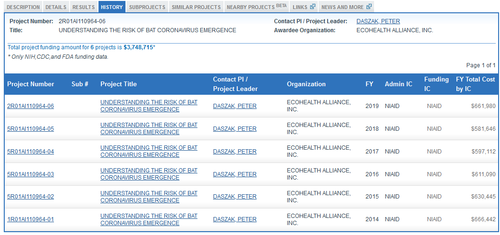
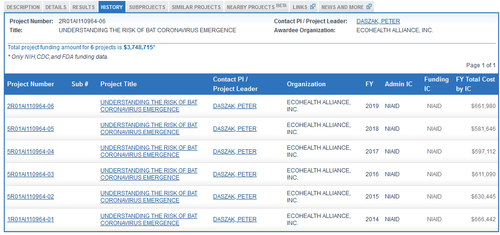
In 2017, Fauci's agency resumed funding a controversial grant to genetically modify bat coronaviruses in Wuhan, China without the approval of a government oversight body, according to the Daily Caller. For context, in 2014, the Obama administration temporarily suspended federal funding for gain-of-function research on bat coronaviruses. Four months prior to that decision, the NIH effectively shifted this research to the Wuhan Institute of Virology (WIV) via a grant to nonprofit group EcoHealth Alliance, headed by Peter Daszak.

The NIH's first $666,442 installment of EcoHealth's $3.7 million grant was paid in June 2014, with similar annual payments through May 2019 under the "Understanding The Risk Of Bat Coronavirus Emergence" project.
Notably, the WIV "had openly participated in gain-of-function research in partnership with U.S. universities and institutions" for years under the leadership of Dr. Shi 'Batwoman' Zhengli, according to the Washington Post's Josh Rogin.

So now we have a 2015 document from the Chinese military describing using COVID as a bioweapon - four years before the COVID-19 pandemic breaks out just miles away from a Chinese lab working to make bat COVID more transmissible to humans, and you're a conspiracy theorist peddling 'debunked lies' if you think they might be related.

And for those who say 'COVID-19 couldn't be man-made because a laboratory-created virus would have tell-tale signs of manipulation' - au contraire. As Nicholas Wade noted three days ago in the Bulletin of the Atomic Scientists, "newer methods, called “no-see-um” or “seamless” approaches, leave no defining marks. Nor do other methods for manipulating viruses such as serial passage, the repeated transfer of viruses from one culture of cells to another. If a virus has been manipulated, whether with a seamless method or by serial passage, there is no way of knowing that this is the case. "

It's as if the painfully obvious answer was right in front of us, only to be shrouded in propaganda by China-friendly politicians, big tech, and news outlets running cover for what should be the easiest game of connect-the-dots on the planet. Luckily, what was taboo as recently as a year ago will soon be exposed for the world to see, thanks to The Bulletin Of Atomic Scientists which earlier this week dared to open The Wuhan Virus "Pandora's Box"...

https://www.zerohedge.com/covid-19/chinese-military-discussed-weaponizing-covid-2015-cause-enemys-medical-system-collapse 
Do people age 105 and over live longer because they have more efficient DNA repair?

 Researchers have found that people who live beyond 105 years tend to have a unique genetic background that makes their bodies more efficient at repairing DNA, according to a study published today in eLife.

This is the first time that people with 'extreme longevity' have had their genomes decoded in such detail, providing clues as to why they live so long and manage to avoid age-related diseases.

"Aging is a common risk factor for several chronic diseases and conditions," explains Paolo Garagnani, Associate Professor at the Department of Experimental, Diagnostic and Specialty Medicine, University of Bologna, Italy, and a first author of the study. "We chose to study the genetics of a group of people who lived beyond 105 years old and compare them with a group of younger adults from the same area in Italy, as people in this younger age group tend to avoid many age-related diseases and therefore represent the best example of healthy aging."

Garagnani and colleagues, in collaboration with several research groups in Italy and a research team led by Patrick Descombes at Nestlé Research in Lausanne, Switzerland, recruited 81 semi-supercentenarians (those aged 105 years or older) and supercentenarians (those aged 110 years or older) from across the Italian peninsula. They compared these with 36 healthy people matched from the same region who were an average age of 68 years old.

They took blood samples from all the participants and conducted whole-genome sequencing to look for differences in the genes between the older and younger group. They then cross-checked their new results with genetic data from another previously published study which analysed 333 Italian people aged over 100 years old and 358 people aged around 60 years old.

They identified five common genetic changes that were more frequent in the 105+/110+ age groups, between two genes called COA1 and STK17A. When they cross-checked this against the published data, they found the same variants in the people aged over 100. Data acquired from computational analyses predicted that this genetic variability likely modulates the expression of three different genes.

The most frequently seen genetic changes were linked to increased activity of the STK17A gene in some tissues. This gene is involved in three areas important to the health of cells: coordinating the cell's response to DNA damage, encouraging damaged cells to undergo programmed cell death and managing the amount of dangerous reactive oxygen species within a cell. These are important processes involved in the initiation and growth of many diseases such as cancer.

The most frequent genetic changes are also linked to reduced activity of the COA1 gene in some tissues. This gene is known to be important for the proper crosstalk between the cell nucleus and mitochondria -- the energy-production factories in our cells whose dysfunction is a key factor in aging.

Additionally, the same region of the genome is linked to an increased expression of BLVRA in some tissues -- a gene that is important to the health of cells due to its role in eliminating dangerous reactive oxygen species.

"Previous studies showed that DNA repair is one of the mechanisms allowing an extended lifespan across species," says Cristina Giuliani, Senior Assistant Professor at the Laboratory of Molecular Anthropology, Department of Biological, Geological and Environmental Sciences, University of Bologna, and a senior author of the study. "We showed that this is true also within humans, and data suggest that the natural diversity in people reaching the last decades of life are, in part, linked to genetic variability that gives semi-supercentenarians the peculiar capability of efficiently managing cellular damage during their life course."

The team also measured the number of naturally occurring mutations that people in each age group had accumulated throughout their life. They found that people aged 105+ or 110+ had a much lower burden of mutations in six out of seven genes tested. These individuals appeared to avoid the age-related increase in disruptive mutations, and this may have contributed in protecting them against diseases such as heart disease.

"This study constitutes the first whole-genome sequencing of extreme longevity at high coverage that allowed us to look at both inherited and naturally occurring genetic changes in older people," says Massimo Delledonne, Full Professor at the University of Verona and a first author of the study.

"Our results suggest that DNA repair mechanisms and a low burden of mutations in specific genes are two central mechanisms that have protected people who have reached extreme longevity from age-related diseases," concludes senior author Claudio Franceschi, Professor Emeritus of Immunology at the University of Bologna.

Story Source:

Materials provided by eLifeNote: Content may be edited for style and length.


Journal Reference:

  1. Paolo Garagnani, Julien Marquis, Massimo Delledonne, Chiara Pirazzini, Elena Marasco, Katarzyna Malgorzata Kwiatkowska, Vincenzo Iannuzzi, Maria Giulia Bacalini, Armand Valsesia, Jerome Carayol, Frederic Raymond, Alberto Ferrarini, Luciano Xumerle, Sebastiano Collino, Daniela Mari, Beatrice Arosio, Martina Casati, Evelyn Ferri, Daniela Monti, Benedetta Nacmias, Sandro Sorbi, Donata Luiselli, Davide Pettener, Gastone Castellani, Claudia Sala, Giuseppe Passarino, Francesco De Rango, Patrizia D'Aquila, Luca Bertamini, Nicola Martinelli, Domenico Girelli, Oliviero Olivieri, Cristina Giuliani, Patrick Descombes, Claudio Franceschi. Whole-genome sequencing analysis of semi-supercentenarianseLife, 2021; 10 DOI: 10.7554/eLife.57849

Science 37 Taps SPAC For NASDAQ Listing Valued At Around $1B


  • Science 37, a life science company, is tapping the craze of a special purpose acquisition company to help it with a major public listing.
  • Specifically, its is penning a merger agreement with LifeSci Acquisition II Corp (NASDAQ: LSAQ).
  • According to its statement, the offering sees Science 37 valued at just over $1 billion and has $250 million to fund its decentralized trial tech platform and “extend into new adjacencies, and power the next generation in clinical research.”
  • The transaction will include a $200 million private placement from investors including BlackRock Inc., Lux Capital, Mubadala Investment Co., PPD Inc., and the SPAC sponsor’s affiliate, LifeSci Venture Partners.
  • It also includes up to $125 million of additional performance-based equity consideration. The company added that Science 37 shareholders “will retain their equity holdings.”
  • Science 37 and is expected to be listed on the Nasdaq under the ticker symbol “SNCE.”
  • According to its website, the company’s platform is used to conduct telehealth check-ins and administrative tasks such as securing patient consent agreements.