Search This Blog

Wednesday, May 19, 2021

Canadians 'may' be able to travel to U.S. for vaccines without quarantine on return


If Canadians were to get vaccinated against COVID-19 in Detroit, they might be able to do so without having to quarantine upon reentry to Canada.

That's according to a letter sent from the Public Health Agency of Canada (PHAC) to Windsor Regional Hospital CEO David Musyj.

Musyj, who is one of a number of local officials pushing for Canadians to gain access to U.S. vaccines, wrote to the federal agency requesting a ruling on whether getting a vaccine would be considered receiving an "essential medical service or treatment" under the current emergency measures at the border.

Receiving such services is one of the reasons a traveller could be exempt from the two week-quarantine and COVID-19 testing requirements laid ut by the federal government. 

In a follow up note to PHAC, Musyj indicated that a large health-care institution in Detroit is interested in providing vaccines to Canadians. 
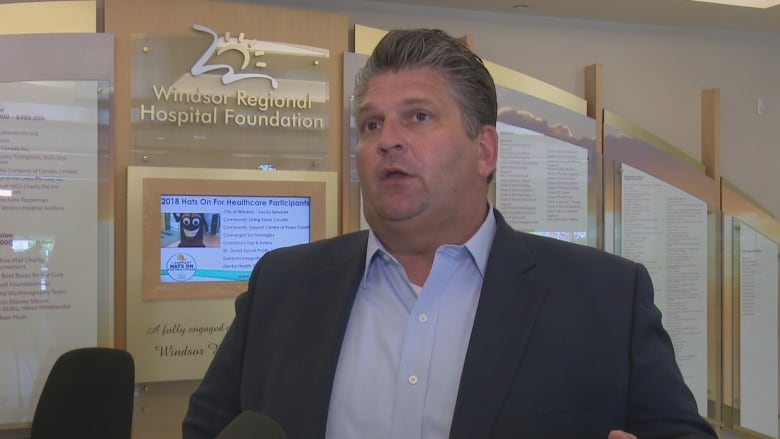
David Musyj, CEO Windsor Regional Hospital (CBC)

PHAC told Musyj that receiving a COVID-19 vaccine would be considered essential, and if Canadian travellers meet certain requirements, they "may" be exempt from the re-entry requirements.

The exception would be in place for a traveller as well as a support person, and they must arrive in a private vehicle with a letter from a health-care professional indicating that the treatments are essential, as well as written evidence from a professional on the other side of the border stating that the treatment had occurred.

The letter said that the onus is on the traveller to provide the proper documentation, and suggested that no other stops could be made on the trip.

As Musyj pointed out in a note to staff at the hospital, any Canadians entering the U.S. would also be subject to U.S. entry requirements.

https://www.cbc.ca/news/canada/windsor/covid19-vaccines-windsor-regional-hospital-1.6030647

Celltrion Confirms Neutralising Potency vs Emerging SARS-CoV-2 Variants With Anti-COVID-19 Monoclonal Antibody


  • CT-P59 demonstrated neutralising capability against key emerging mutations, including SARS-CoV-2 variants first identified in New York (B.1.526), Nigeria (B.1.525) and India (B.1.617)1
  • Evaluation of other emergent variants of concern (first identified in Brazil P.1)2 is ongoing; data expected in the coming months
  • Celltrion is committed to assess the therapeutic neutralising antibodies against a wide array of emerging variants to end the pandemic

Canada will need 75% vaccination before U.S. border reopens, Trudeau suggests

 Prime Minister Justin Trudeau is suggesting that three-quarters of Canadians will need to be vaccinated against COVID-19 before the Canada-U.S. border can be reopened.

Trudeau acknowledges that discussions about the border are ongoing, but he's tamping down any expectations that travel restrictions could be lifted soon.

Discretionary travel between Canada and the United States has been prohibited since March 2020, a restriction that will be extended into June before the end of the week.

Trudeau says Canada is still not out of the current third wave of COVID-19 and has much more work to do before it's safe for travel to resume.

That's in contrast with the U.S., where a blistering vaccination pace has prompted public health officials to lift face mask requirements for people who are fully vaccinated.

That has some U.S. lawmakers urging the Biden administration to get serious about drafting a plan to allow travel to and from Canada to resume in time for the July 4 holiday.

https://www.cp24.com/news/canada-will-need-75-vaccination-before-u-s-border-reopens-trudeau-suggests-1.5433023

6 things to know about 'black fungus' infections among India's COVID-19 patients

 While India has only reported a few cases of Mucormycosis, a deadly infection known as "black fungus," across the last decade, tens of thousands have surfaced within the last month as the country faces the world's most severe COVID-19 outbreak, USA Today reported May 12. 

"We've seen this skyrocket in recent weeks," said Bhakti Hansoti, PhD, associate professor in the department of emergency medicine and international health at Baltimore-based Johns Hopkins Bloomberg School of Public health. "It consumes a lot of resources especially during this pandemic right now in India where healthcare resources are stretched at the limit," she told USA Today. 

Six things to know about the fungal infection: 

1. Mucormycosis is caused by Mucormycetes, a group of molds that live in soil and decaying organic matter. While rare, the exact number of U.S. cases is unknown because the country does not require national surveillance of the infection. 

2. Among COVID-19 patients in India, rhinocerebral mucormycosis, which starts in the sinuses and can spread to the brain, has been the most common form of the infection. This type of the infection has a mortality rate of 46 percent, while those with mucormycosis that has spread through the bloodstream to other parts of the body has a death rate of 96 percent, according to the CDC.

3, Rhinocerebral mucormycosis occurs most frequently in people with uncontrolled diabetes, a possible explanation of why there's been an influx of cases in India. "The Indian population has a high prevalence of uncontrolled diabetes due to the lack of routine screening," Dr. Hansoti said. "Up to 75 percent of mucormycosis cases occur among COVID-19 patients with diabetes," nearly half of which were previously undiagnosed until showing up to the hospital with mucormycosis symptoms, she added.  

4. Symptoms of rhinocerebral mucormycosis include one-sided facial swelling, headache, nasal or sinus congestion, black lesions on the nasal bridge or upper inside of the mouth, and fever. Symptoms have typically appeared two to three weeks after COVID-19 infection among patients in India who've developed the fungal infection. To prevent the infection from spreading to the brain, some patients have undergone surgery to have an eye removed. 

5. Immune-supressing steroids, prescribed to reduce COVID-19 induced inflammation, can leave people vulnerable to fungal infections. As India faces an oxygen shortage, many COVID-19 patients with breathing issues have been prescribed steroids, likely tied to the increase in mucormycosis infections there, experts told USA Today.

6. While mucormycosis is less common outside of India, a different type of fungal infection, Aspergillosis, has surfaced among a small number of COVID-19 patients in the U.S., according to USA Today. It's caused by Aspergillus, a common mold that lives indoors and outdoors, with a one-year survival rate of 59 percent, according to a 2018 study from the CDC. While rare, the CDC does not list an exact number of cases among U.S. COVID-19 patients. 

https://www.beckershospitalreview.com/public-health/6-things-to-know-about-black-fungus-infections-among-india-s-covid-19-patients.html

WuXi Bio answers the growing demand for ADC manufacturing

Antibody-drug conjugates are rushing to the fore. Of 11 ADCs on the market today, six have been approved since 2019.

That means demand for ADC manufacturing is on the rise—and now answering the call is China’s WuXi AppTec pharmaceutical conglomerate.

WuXi is setting up a new contract development and manufacturing organization called WuXi XDC to focus on manufacturing bioconjugates, including ADCs. 

The firm is a joint venture between WuXi Biologics, which is investing $120 million for a 60% stake, and WuXi STA, which contributes $80 million for a 40% stake. It will be a non-wholly owned subsidiary of WuXi Biologics.  

“Bioconjugates have recently emerged as an exciting therapeutic modality to address unmet medical needs,” said WuXi Biologics CEO Chris Chen in an announcement, adding that WuXi XDC will “provide superior one-stop service for global partners in an effort to expedite development and lower costs.”

Still relatively new in fighting cancer, ADCs use a chemical linker to combine a monoclonal antibody with a potent drug payload. The antibody then homes in on specific antigens in target cells, allowing the drug to operate without damaging the cells around it.


In August of 2019, WuXi Biologics said it was kicking off construction of a $20 million, 60,000-square-meter site near Shanghai to produce ADCs. Creating WuXi XDC kicks manufacturing of the drugs up a notch. 

“Many ADC drug development companies face complex global supply chain and project management challenges with multiple contract partners,” said WuXi STA chairman Minzhang Chen, who added that the initiative will provide "partners with optimized bioconjugates development and manufacturing.” 

Jimmy Li, who joined WuXi Biologics in 2011, was named the CEO of the new company.

WuXi’s announcement comes days after French CDMO Novasep said it would increase capacity for highly potent active pharmaceutical ingredients (HPAPIs), a key component in ADC manufacturing, at its plant in LeMans, France.

https://www.fiercepharma.com/manufacturing/establishing-a-new-subsidiary-wuxi-bio-steps-up-its-adc-manufacturing-game 

Reata eyes pre-NDA FDA meeting for ataxia treatment

 Reata Pharmaceuticals, Inc. (Nasdaq: RETA) (“Reata,” the “Company,” or “we”), a clinical-stage biopharmaceutical company, today announced that it received a communication from the Division of Neurology Products 1 (“Division”) of the U.S. Food and Drug Administration (“FDA”) stating that, after a preliminary review of briefing materials for an upcoming Type C meeting, a pre-NDA meeting is the most appropriate format for a discussion of the development program for omaveloxolone in Friedreich’s ataxia (“FA”). The Division suggested that the Company withdraw the current meeting request for a Type C meeting and instead request a pre-NDA meeting, which the Division will grant upon receipt. The Division asked the Company to focus the new briefing package on questions, issues, and needs applicable to a pre-NDA meeting. As requested by the FDA, the Company plans to withdraw the current request for a Type C meeting and submit a request for a pre-NDA meeting as soon as practicable.

https://finance.yahoo.com/news/reata-announces-fda-asked-company-104500498.html

BeiGene Gets FDA Priority Review of Brukinsa in Marginal Zone Lymphoma

 BeiGene Ltd. on Wednesday said the U.S. Food and Drug Administration granted priority review to its application for expanded use of Brukinsa in adults with marginal zone lymphoma who have received at least one prior anti-CD20-based therapy.

The Beijing biotechnology company said there is currently no clear standard of care for marginal zone lymphoma, a group of slow-growing lymphomas that account for roughly 8% of all non-Hodgkin's lymphoma cases.

The FDA grants priority review to medicines that have the potential to provide significant improvements in the treatment of a serious disease, and the designation shortens the review period. BeiGene said the agency set a target action date of Sept. 19 for its application.

The FDA previously approved Brukinsa for the treatment of mantle cell lymphoma in adults who have received at least one prior therapy.

https://www.marketscreener.com/quote/stock/BEIGENE-LTD-26123632/news/BeiGene-Gets-FDA-Priority-Review-of-Brukinsa-in-Marginal-Zone-Lymphoma-33301310/