Search This Blog

Thursday, July 8, 2021

'Misuse Of Government Power': Judge Quickly Denies CDC Appeal To Keep COVID Cruise Curbs

 By Robert McGillivray of CruiseHive

Earlier this week we reported that the CDC had asked for a stay to the injunction on the Conditional Sail Order. It didn’t take Judge Merryday long to ponder the question of whether or not he should grant a stay in the case. The answer from the judge was a clear and definite DENIED.

The injunction of the CSO will remain in place as initially planned and will go into effect on July 18. This ruling does not affect the appeal the government organization has in the US court of appeals in Atlanta.

However,  it is a blow for the CDC, who, according to the judge, has shown no reasoning why the CDC should be able to wield extreme and unnecessary measures over one industry.

It’s Not About Health

While the CDC insists that this case is about the measures the cruise industry needs to follow and about the health and well-being of guests onboard cruise ships while stopping the spread of COVID ashore and onboard, Judge Merryday has some different thoughts on this.

According to the three-page response the judge penned, the CDC is mistakenly taking this as a health issue, where the judge sees the CDC using unwarranted governmental power, according to Fox Business:

“This action is not about what health precautions against COVID-19 are necessary or helpful aboard a cruise ship; this action is about the use and misuse of governmental power.

The CDC then uses this power to dismiss the ability of local health authorities to deal with any situation that might come up:

“Although CDC invariably garnishes the argument with dire prospects of ‘transmission’ of COVID-19 aboard a cruise vessel, these dark allusions dismiss state and local health authorities, the industry’s self-regulation, and the thorough and costly preparations and accommodations by all concerned to avoid ‘transmission’ and to confine and control the ‘transmission,’ if one occurs,”

Judge Merryday has likely taken into account that he offered the CDC the chance to develop an alternative to the CSO, something the CDC has not been willing to take part in. The government has also not proven that a stay would hurt the CDC, the United States, any third party, or the public materially.

What’s Next?

The ruling from Judge Merryday on the CSO and the request for a stay is not the end of the line for the CSO. Even after July 18, the CSO will remain in place. The difference is that the CSO would become a recommendation instead of a regulation. Meaning cruise lines can act upon it or not at will.

The entire Conditional Sail Order could also be reinstated in Florida if the CDC’s appeal in the US Court of Appeals for the Eleventh Circuit proved successful. The CSO is in place until November of this year. 

The cruise lines could decide for themselves that they will comply with the rules as most ships will be sailing already in the upcoming month, and preparations are already underway or complete to sail under the CSO.

Booster shot after 6 to 12 months likely to provide best protection from COVID-19: Pfizer

 Pfizer and BioNTech have released initial data from a study on booster shots for their COVID-19 vaccine, saying a third dose delivered about six months after the second shot has shown neutralization titers are five to 10 times higher than after two primary doses.

The companies said they expect to publish "more definitive data" soon and submit the Food and Drug Administration "in the coming weeks."

Pfizer said real-world evidence from Israel showed a decrease in efficacy about six months after people were fully vaccinated.

"While protection against severe disease remained high across the full 6 months, the observed decline in efficacy against symptomatic disease over time and the continued emergence of variants are key factors driving our belief that a booster dose will likely be necessary to maintain highest levels of protection," Pfizer said in a statement.

Additionally, the companies are working on materials with a plan to test a new vaccine construct based on the delta variant -- with plans to start clinical trials in August.

"While we believe a third dose of BNT162b2 has the potential to preserve the highest levels protective efficacy against all currently known variants including Delta, we are remaining vigilant and are developing an updated version of the Pfizer-COVID-19 vaccine that uses a new construct based on the B.1.617.2 lineage, first identified in India and also known as the Delta variant," the companies said in a statement.

"The companies are already producing clinical trial material and anticipate beginning clinical studies in August, subject to regulatory approvals," Pfizer and BioNTech added.

Moderna, the maker of the only other authorized mRNA vaccine in the U.S., has made similar statements about the need for booster shots in the past.

"Booster shots will be needed as we believe the virus is not going away," Moderna CEO Stephane Bancel said during a first-quarter earnings call to investors in early May.

It will be up to the FDA and the Centers for Disease Control and Prevention to determine if and when booster shots will be allowed, recommended and made available.

SeaSpine 7D Surgical Percutaneous Spine Module Gets FDA 501(k) Clearance

 Shares of SeaSpine Holdings Corp. are trading higher in Wednesday's after-hours market, following news its 7D Percutaneous Spine Module received 510(k) clearance from the U.S. Food and Drug Administration.

The company said the clearance for its 7D Percutaneous Spine Module for minimally invasive surgery "represents a new application and increased functionality for its 7D Flash Navigation System."

At 4:57 p.m. EDT, shares were trading 26% higher at $23.80. Volume at the time topped 17,000 shares.

The stock finished the day's regular-trading session with a 4.41% loss, closing at $18.84.

SeaSpine's stock hit a 52-week high of $22.97 on April 9.

SeaSpine said it is preparing a limited release of the Percutaneous Spine Module in the third quarter.

https://www.marketscreener.com/quote/stock/SEASPINE-HOLDINGS-CORPORA-22497349/news/SeaSpine-Shares-Higher-7D-Surgical-Percutaneous-Spine-Module-Gets-FDA-501-k-Clearance-35811420/

F-star Therapeutics in Licensing Deal with AstraZeneca

 F-star Therapeutics Inc. said it is in an exclusive licensing agreement with AstraZeneca PLC, sending shares higher premarket.

AstraZeneca will receive global rights to research, develop and commercialize next generation Stimulator of Interferon Genes, or STING, inhibitor compounds. F-star is a clinical-stage biopharmaceutical company focused on bispecific immunotherapies for cancer.

AstraZeneca will be responsible for all future research, development and commercialization of the STING inhibitor compounds, and F-star will retain rights to all STING agonists, currently in clinical development for patients with cancer.

F-star is eligible to receive upfront and near-term payments of up to $12 million. F-star can also receive development and sales milestone payments of more than $300 million, as well as single digit percentage royalty payments.

F-star shares were up 8% to $7.95 premarket.

https://www.marketscreener.com/quote/stock/F-STAR-THERAPEUTICS-INC-115594552/news/F-star-Therapeutics-in-Licensing-Deal-with-AstraZeneca-Shares-Up-35815578/

Humana Hiring up to 200 Virtual, Seasonal Positions in San Antonio

 Humana Inc. (NYSE: HUM) today announced it is looking to hire up to 200 virtual, seasonal Enrollment Representatives in and around San Antonio.

Humana’s Medicare Enrollment Representatives respond to inquiries from current and prospective members seeking to enroll into a 2022 Medicare Advantage or Prescription Drug Plan. They also review and process member applications.

These seasonal employees will serve for six months or less through the Medicare Advantage and Prescription Drug Plan open enrollment window, which runs from Oct. 15 to Dec. 7, 2021. Although these positions are home-based, Humana is seeking applicants who live within a 50-mile radius of the company’s San Antonio location at 8119 Datapoint Dr., as there may be opportunities for some of these roles to transition to full-time employment.

These positions offer competitive compensation with a strong hourly rate and eligibility for a retention bonus up to $1000.

Virtual interviews begin this month and start dates for the Enrollment Representatives will range from late August through October. Humana is looking for professionals with customer service experience, attention to detail, and proficiency in Microsoft Outlook and Excel. Candidates interested in the seasonal positions can apply online at careers.humana.com and enter #HumanaSeasonalJobs in the keyword search box.

Humana is working with a number of community organizations to recruit candidates for these positions.

https://finance.yahoo.com/news/humana-hiring-200-virtual-seasonal-170000368.html

Portable MRI Device Maker Hyerfine Going Public Via SPAC

 Portable MRI Device Maker Hyerfine Going Public Via SPAC: What Investors Should Know

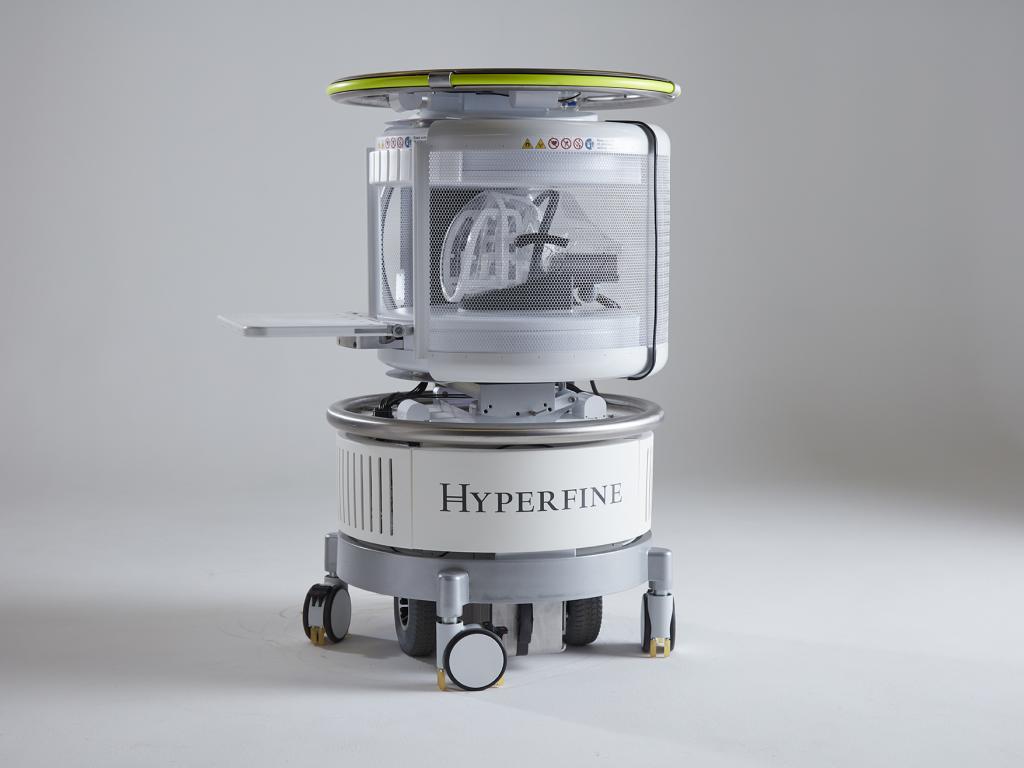
An MRI scanner on wheels is the highlight of Hyperfine, a company that announced a SPAC merger Thursday morning.

The SPAC Deal: Hyperfine Inc and Liminal Sciences are merging with HelathCor Catalio Acquisition Corp HCAQ 2.1% valuing the company at an enterprise value of $580 million.

A $126 million PIPE for the deal includes investments by Ark Invest.

The merger marks the third company founded by Dr. Jonathan Rothberg to go public via SPAC with Butterfly Network Inc BFLY 3.63% and Quantum-Si Inc QSI 2.07% previously completing deals.

Public HCAQ shareholders will own 21.7% of the company. The new company will trade on the Nasdaq as HYPR after the merger is complete.

About Hyperfine, Liminal: Hyperfine is the creator of the portable MRI system named Swoop. Liminal Sciences is dedicated to non-invasive brain monitoring.

The Swoop was FDA approved in 2020 and offers an easy-to-use interface and portable design providing accessibility for hospitals and other medical facilities.

Hyperfine utilizes a subscription-based business model and provides tools and software for its customers.

Liminal has a vision to make brain monitoring as simple as taking blood pressure measurements, according to the release. A non-invasive brain monitoring device is currently being developed by the company. The company believes its sensors can help in traditional care settings like the ICU and operating rooms with a long-term goal of monitoring patients at home.

“We are taking the next step in our mission to provide affordable and accessible imaging, sensing and guided robotic intervention to democratize and bring equity to healthcare for people around the world,” Rothberg said.


Growth Ahead: The imaging market is listed with a $23 billion total addressable market, according to the company. The company’s additional markets of sensing and guided intervention could add addressable markets of $22 billion and $28 billion, respectively.

Sense and Intervene businesses both have products in development that could complement the existing imaging business. The company has the potential to “build an ecosystem across the care continuum,” according to the presentation.

The company has 46 installed portable MRI devices with a target market size of over 100,000 hospitals and outpatient centers.

The portable MRI device reduces workflow time by 94% to 90 minutes and can help tackle the 22% to 46% of cases that see adverse events happen during transport of patients according to the presentation.

A $7,250 monthly subscription model could produce a high recurring revenue model for the company.

Financials: The combined company is expecting revenue of $2.3 million in fiscal 2021 and $16.3 million in fiscal 2022. Revenue is expected to grow at a compounded annual growth rate of 238% from fiscal 2021 to fiscal 2025.

The company projects revenue out to fiscal 2025 with a total of $301.6 million projected. The company lists gross margins of 47.9% in fiscal 2022 growing to 71.9% in fiscal 2025.

HCAQ Price Action: HCAQ shares are up 3% to $10 on Thursday.

https://www.benzinga.com/m-a/21/07/21898048/portable-mri-device-maker-hyerfine-going-public-via-spac-what-investors-should-know

Yes, COVID Vaccines Work in People With Obesity

 All COVID-19 vaccines authorized for emergency use in the U.S. are effective in people with obesity, according to a new position statement issued by the Obesity Society.

In a review of data available on the Pfizer-BioNTech, Moderna, and Johnson & Johnson vaccines, efficacy was not significantly different between people with obesity versus those without obesity, reported W. Scott Butsch, MD, MSc, of the Cleveland Clinic in Ohio, and colleagues in the journal Obesity.

Therefore, the Obesity Society recommended that all people with obesity -- a BMI of 30 or higher -- get vaccinated with any of the current options.

"At present, there is no definitive way to determine which COVID vaccine is 'best' for patients overall or for specific patient subgroups, including those with obesity," they stated. "Current FDA-approved COVID-19 vaccines from Pfizer-BioNTech, Moderna and Johnson & Johnson were all highly efficacious against COVID-19-associated hospitalization and death in trials, and were found to be equally efficacious in persons with obesity compared to normal weight individuals."

In addition, because obesity was identified as a "high-risk" condition prioritized for vaccination in phase 1c by the CDC, the society likewise recommended that COVID care plans acknowledge that people with obesity are at higher risk for more severe infection and death.

Using data from FDA briefing documents and peer-reviewed literature, Butsch's group looked at the efficacy for each available vaccine in the overall trial population and subgroups of people with obesity.

"Analysis of COVID-19 vaccine efficacy in certain disease subgroups has been difficult because the number of trial participants with the disease was too small," said co-author Alexandra Hajduk, PhD, MPH, of Yale School of Medicine in New Haven, Connecticut, in a statement.

"This was not the case for obesity. Because the prevalence of obesity among trial participants was high, and because obesity is highly associated with hospital admission and death in COVID-19, the trial results were able to show that, contrary to concerns of reduced vaccine efficacy in people with obesity, that the vaccines were just as efficacious among persons with obesity compared with persons without obesity," she added.

Looking at the Pfizer vaccine first, the overall efficacy in over 36,000 people without prior infection was 95.0% (95% CI 90.0-97.9) compared with placebo.

When this cohort was divided into those with and without obesity, the vaccine efficacy was 95.4% (95% CI 86.0-99.1) in 13,218 participants ages 16 and older (roughly 32% of the cohort) with a BMI of 30 or higher. Conversely, efficacy was 94.8% (95% CI 87.4-98.3) among the participants without obesity.

For the Moderna vaccine, the overall efficacy was 94.1% (95% CI 89.3-96.8) among participants without prior COVID infection. Among those with obesity, which was about 35% of the overall cohort, efficacy was 95.8% (95% CI 82.6-99.0). Taking that one step further, in a subgroup of participants with severe obesity -- a BMI of 40 or higher -- vaccine efficacy was 91.2% (95% CI 32.0-98.9). In the 901 participants with severe obesity, there was only one case of severe COVID-19 that occurred after vaccination versus 11 cases in 884 participants with severe obesity in the placebo group.

Finally, for the Janssen/Johnson & Johnson vaccine, vaccine efficacy was 66.1% (95% CI 55.0-74.8) for the prevention of moderate to severe or critical COVID-19 infection 28 days after vaccination.

This vaccine's trial included 12,492 participants with obesity, accounting for 29% of the overall cohort. For these participants specifically, efficacy was 66.8% (95% CI 54.1-76.3) 14 days after vaccination and 65.9% (95% CI 47.8-78.3) 28 days after vaccination.

Of note, AstraZeneca's vaccine candidate, which isn't yet cleared for use in the U.S., doesn't have available efficacy data in people with obesity in its primary safety or efficacy trials.

The Obesity Society said there are plans to continue to evaluate additional vaccine data as they become available. In order to best evaluate and compare outcomes, the society is also strongly encouraging that long-term efficacy outcomes be stratified by obesity status, including with new data against emerging variants, like the Delta variant.

"In addition to general misconceptions about the disease of obesity, speculation on the effectiveness of COVID-19 vaccines in obesity has certainly added to vaccine hesitancy in those individuals with obesity," Butsch said. "I hope this position statement not only will encourage those with and without obesity to get vaccinated, but to continue the conversations on the existing weight bias in our current health policies and poor coverage and reimbursement of effective treatments for obesity."


Disclosures

Butsch reported relationships with Rhythm Pharmaceuticals and Novo Nordisk.

Other co-authors also reported disclosures.