British biotech firm Redx Pharma plc and U.S.-based Jounce Therapeutics Inc will merge to create a $425 million entity specialised in treating cancer and fibrotic disease.
Redx shareholders will receive 0.2105 Jounce share in exchange for each Redx share, the companies said on Thursday, adding that the combined company would be called Redx Inc and will be listed on Nasdaq.
Redx shareholders will own about 63%, while Jounce shareholders will own 37% of the combined group, the statement added.
Jounce said it intends to conduct a reverse stock split of its shares in line with the combination, with a ratio of one new share for every five outstanding stocks of Jounce.
The all-share merger is expected to be completed by the second quarter.
The new company will be led by Redx CEO Lisa Anson and will be headquartered in the UK, with a drug discovery and clinical development team in the United States, the companies said.
AstraZeneca PLC said Thursday that it has entered into an agreement with KYM Biosciences Inc. regarding an exclusive license agreement for a gastric cancer treatment.
The Anglo-Swedish pharma major said it will be responsible for the research, development, manufacture and commercialization of CMG901 globally.
AstraZeneca will make an upfront payment of $63 million, additional development and sales-related milestone payments of up to $1.1 billion to KYM Biosciences and tiered royalties up to low double digits, it added.
The deal is expected to close in the first half of 2023.
MG901 is currently under a Phase 1 clinical trial for the treatment of Claudin 18.2-positive solid tumors, including gastric cancer.
Recent advances in cancer genomics have deepened the medical community’s understanding of the molecular alterations in brain tumours, more precisely subclassifying patients into specific diagnoses.
Understanding a patient's brain tumour mutation status in the IDH1 and ATRX genes enables more informed clinical decisions and may improve patient outcomes.
The IDH1 R132H and ATRX antibodies are the latest additions to Roche’s neuropathology portfolio, which contains 29 biomarkers.
Roche (SIX: RO, ROG; OTCQX: RHHBY) announced today the launch of the IDH1 R132H (MRQ-67) Rabbit Monoclonal Primary Antibody and the ATRX Rabbit Polyclonal Antibody to identify mutation status in patients diagnosed with brain cancer.
A brain tumour is formed when there is an abnormal growth of cells in the brain. There are two main types of cells in the brain: neurons, the communicators of the nervous system and glial cells, which support and protect neurons and maintain the body’s natural state of balance. Gliomas, brain tumours that develop from glial cells, are the most prevalent type of malignant brain tumours in adults.1
Gliomas that have mutations in the IDH1 and ATRX genes are biologically distinct from tumours that do not carry these mutations. Knowing a patient’s IDH1 and ATRX mutation status enables clinicians to provide personalised care to patients based on their specific tumour classification, including a more informed prognosis, the selection of targeted therapies and inclusion in clinical trials.2
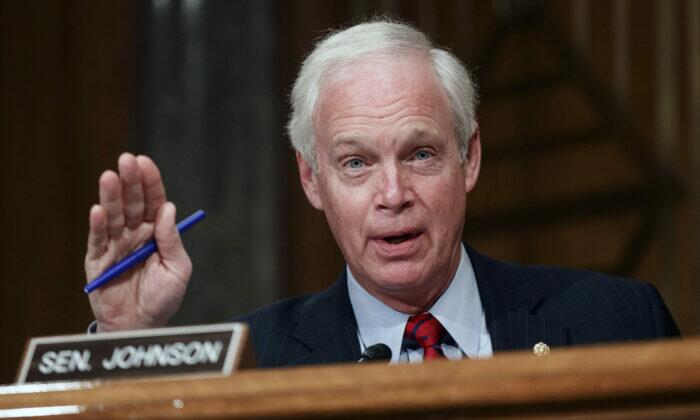
U.S. Sen. Ron Johnson (R-Wis.) is expressing dismay over how the Federal Aviation Administration (FAA) responded to his questions about the agency’s handling of pilot health issues.
“How can the FAA maintain safe skies when it turns a blind eye toward pilots experiencing COVID-19 vaccine injuries?” Johnson said in an email sent exclusively to The Epoch Times on Feb. 21.
“Is it willful ignorance that the FAA is aware of only four active pilots experiencing adverse events connected to the COVID-19 vaccine? The American people are not getting the full transparency and honesty from federal agencies that they deserve.”
Johnson made those remarks in response to how Susan Northrup, the FAA’s federal air surgeon, answered eight questions surrounding pilot health.
In his Jan. 27 letter to the FAA, Johnson provided specific information about five named pilots with suspected COVID-19 vaccine ill effects; one of the pilots died 17 days after being vaccinated.
Numerous other accounts of pilots with suspected vaccine injuries are included in the Vaccine Adverse Event Reporting System, as The Epoch Times reported previously.
Johnson wanted to know what steps the FAA has taken or planned to take to investigate whether the five named pilots and others had suffered adverse effects after COVID-19 shots.
Northrup wrote that her agency isn’t in charge of that.
“The Centers for Disease Control and Prevention (CDC) is the responsible agency for tracking and follow up of suspected vaccine adverse events,” she wrote.
Northrup noted that pilots experiencing any medical issues are required to “ground themselves,” seek medical help and report any “significant medical events.”
“FAA is responsible for determining whether that event will have an adverse safety effect,” Northrup wrote.
She also said the agency was “aware of only four potentially vaccine-related adverse events in active pilots.”
Among those four, “only one has provided medical documentation through the normal process,” Northrup wrote. She gave no further information on what that process involves.
Justification For Shots
Johnson noted that, on Dec. 12, 2020, the day after the U.S. Food and Drug Administration authorized COVID-19 vaccines for “emergency use” among the general public, the FAA declared pilots were permitted to take the shots, too.
That action surprised many in aviation because pilots are forbidden from taking other emergency-use-authorized drugs.
To justify the drugs’ use in pilots, Northrup listed nine websites about the general safety of the various brands of vaccines. Aviation experts have questioned whether any studies were done on pilots specifically. There were no such studies immediately apparent among the list Northrup provided.
Asked whether the FAA evaluated whether any changes should be made to guidance on COVID-19 vaccines for pilots,Northrup responded that the agency has “continued to monitor the data and determined no change in policy was indicated.”
Shoplifting has become so rampantthat one of the Big Apple’s busiest commercial districts is turning to “man’s best friend” to sniff out thieves, The Post has learned.
The 34th Street Partnership — the trade group serving the neighborhood that includes Macy’s Herald Square, Penn Station and Madison Square Garden — is trying to take a bite out of crime by contracting with a firm that provides K-9 units.
The dogged pursuit was launched this month at the CVS at Eighth Avenue and West 34th Street in the heart of the district that has been plagued with thefts.
“We’ve had a lot of complaints. A lot of shoplifting occurs in drugstores,” said Kevin Ward, the vice president of security for the 34th Street Partnership.
“We’re trying to address the issue.”
The program — which the trade group says costs in the “low-five figures monthly” — was a necessary investment amid a flood of shoplifting complaints and lax enforcement tied to the state’s soft-of-crime laws, according to Ward.
“We decided to have a very visible deterrent,” said Ward, a retired police officer who was chief of staff to former NYPD Commissioner Bill Bratton.
The 34th Street Partnership has contracted a security firm with K-9 units to prevent shoplifting in the commercial district.G.N.Miller/NYPost
As part of the initiative with Stapleton Security Services — a firm led by a retired veteran of the NYPD’s Emergency Service Unit — three K-9 units accompanied by handlers are posted in the vestibule of the store, and outside, working in shifts.
The crime-fighting dogs include Drako, a Czechoslovakian Shepherd; Emirs, a Belgian Malinois, and Del, a primary German Shepherd.
One was recently spotted by The Post wearing a black and white harness that said, “Do Not Pet” while on the job.
One of the guards and K-9s outside of a store on Feb. 21, 2023.G.N.Miller/NYPost
When it comes to enforcement, however, the K-9s are more bark than bite as they don’t engage in pursuits.
But the partnership says the program still has teeth — noting there’s been success in thwarting sticky-fingered shoppers simply by having the dogs and guards stationed in the vestibule and outside the CVS.
“It’s effective so far,” Ward said. “We’ve had a couple of people who were known shoplifters who saw the dog and walked out without stealing anything.”
The guard dog program was launched this month at the CVS on West 34th Street.G.N.Miller/NYPost
Initial reports over five days from Feb. 15-19 show that the K-9 unit prevented at least 25 thefts and deterred others, according to the trade group, which provided the following examples:
On Feb. 15: a homeless man attempted to leave the store with unpaid items in the morning. He dropped the goods and fled after being approached by the security officer and the K-9.
On Feb. 16: Two known serial shoplifters entered the vestibule of the store — but left without entering after seeing the K-9 and guard.
On Feb. 17: A man attempted to leave the store without paying for two boxes of Tums and three bottles of juice that morning. The manager alerted the guard and K-9, and the thief returned the items when approached.
On Feb. 19: A homeless man attempted to steal a carton of orange juice along with a container of fruit salad, but returned the goods after management alerted the K-9 and security, who confronted him.
Reports of shoplifting have skyrocketed by nearly 60% in the Midtown South Precinct that encompasses the 34th Street business district — with an increase of 1,000 complaints last year from 2021, according to the most recent available NYPD data.
The surge was primarily driven by small thefts of merchandise worth under $1,000, increasing from 1,572 in 2021 to 2,503 last year, the police statistics show.
1of5
K-9 handler Mike Papas with his dog Del outside of a CVS on Feb. 22, 2023.Brian Zak
A guard dog patrolling 34th street with a police officer.Brian Zak
Advertisement
The 34th Street Partnership says the K-9 units have been effective in stopping shoplifting.Brian Zak
Advertisement
Retail thefts that turned violent more than doubled — with cops recording 219 robberies that started as shoplifting incidents in 2022 vs just 95 the year prior, according to the data.
High-end retail thefts, valued at over $1,000, also surged from 310 in 2021 to 413 in 2022.
But the shoplifting scourge isn’t isolated to the pricey touristy area and transit mecca.
Retail theft surged to more than 63,000 complaints last year — a 45% jump from the year prior.
More business districts, including Fordham Road in the Bronx, are launching or beefing up their own private patrols to help curb the shoplifting epidemic.
The disturbing trend has continuously trended up each year since 2006, the earliest year for which NYPD data is available, but has hit record levels in recent years.
Ward said the partnership and the stores themselves can only do so much with thieves who feel emboldened by a broken criminal justice system. He also called for the NYPD to step up, complaining that staffing at the local precinct has been down significantly.
The number of officers in Midtown South has plummeted from 382 in 1994 to 249 last year. By comparison, the busy 75th precinct in Brooklyn had 342 officers, nearly the same as 344 in 1994, according to the partnership.
“Times Square has a dedicated foot patrol. Penn Station doesn’t. The city needs a dedicated foot patrol in Penn Station similar to Times Square,” said Ward.
“Overall crime in the district is up over 100% over two years. There is a correlation with staffing.”
Betalains are a class of plant pigments that are responsible for the characteristic red-violet (betacyanin) or yellow (betaxanthin) color of certain fruits and vegetables. These naturally occurring, water-soluble, and nitrogen-containing pigments are commonly used as food coloring agents. Recently, research findings have brought to the forefront, the strong antioxidant potential of betalains, making them potential candidates to produce health foods and combat various diseases. At present, betalains are only produced in plants of the order Caryophyllales and higher fungi. Hence, metabolic engineering has been explored to genetically modify cultivable non-Caryophyllales plants, to enhance the production and scalability of these pigments
Although transgenic betalain-accumulating plants have been developed over the years, their applications in producing healthcare food resources are yet to be explored.
To address this gap, a collaborative research team from Tokyo University of Science (TUS) and Iwate Biotechnology Research Center, Japan, led by Professor Gen-ichiro Arimura from TUS, attempted to genetically modify potato and tomato plants to produce betacyanin. Their aim was to test the therapeutic efficacy of betacyanin producing tomatoes and potatoes against murine models of colitis and inflammation-inducing macrophages. Their findings were published in Biotechnology & Bioengineering on January 26, 2023. Discussing the results of this study, Prof. Arimura says, "We successfully engineered potato tubers and tomato fruits to co-express betacyanin biosynthesis genes [genes for CYP76AD1 from Beta vulgaris, DOD (DOPA 4,5-dioxygenase) and 5GT (cyclo-DOPA 5-O-glucosyltransferase) from Mirabilis jalapa] under the control of suitable promoters. This enhanced the endogenous accumulation of betanin and isobetanin -- two common types of betacyanin -- in these transgenic vegetables. The accumulation of these pigments made them appear dark red in color upon maturation, as compared to their wild-type counterparts."
Since macrophages play an important role in several inflammatory diseases, the team further tested the therapeutic efficacy of these transgenic vegetables in macrophage-like cells (RAW264.7), following immune response stimulation by lipopolysaccharides (LPS). They observed that the extracts of the transgenic tomato fruit exerted higher anti-inflammatory activity compared to their wild-type counterparts. This was attributed to a decrease in the LPS-stimulated transcription of the proinflammatory cytokine gene -- a Tnf-? gene, within transgenic cells.
"These findings were in line with the anti-inflammatory effects of transgenic tomato that we observed in the intestines of murine models with dextran sulfate sodium (DSS)-induced colitis. A marked improvement in their body weight loss and disease activity index was observed through the suppression of the DSS-stimulated transcription of proinflammatory genes -- genes for Tnf-?, Il6 and Cox-2," adds Prof. Arimura, while discussing the results derived from the other experiment in mice. Moreover, the additive and synergistic action of betacyanin with natural fruit components (such as lycopene in tomato) further boosted the amelioration of colitis in murine models. Interestingly, while significant anti-inflammatory effects were observed with transgenic tomato extracts at 100-1000-fold dilutions, this was not the case with transgenic potatoes, despite substantial production of betanin and isobetanin. The reason for this is speculated to be the presence of unknown antagonists in transgenic potatoes that work against betacyanin's anti-inflammatory function, but is yet to be confirmed.
"Tomatoes genetically engineered to produce betacyanins were found to have substantial health promoting effects. Although natural plant sources of betalains such as beetroots exist, these pigments demonstrate poor stability in high temperatures and extreme pH. This indicates that betacyanin producing transgenic tomato lines are more likely to be effective as health foods when ingested in their raw state," summarizes Prof. Arimura.
What are the potential applications of these findings? He further adds, "Although there is no commercial cultivation of edible genetically modified crops in Japan, we expect that their applications as health foods through production in enclosed plant factories and other facilities will lead to the widespread use of recombinant plants in Japan."
We are confident that betalain engineering will soon become a promising avenue to improve the commercial production of health foods, that boost food supply while simultaneously conferring health benefits to its consumers.
Journal Reference:
Shiori Saito, Masahiro Nishihara, Masato Kohakura, Kosuke Kimura, Takuya Yashiro, Seidai Takasawa, Gen‐ichiro Arimura. Metabolic engineering of betacyanin in vegetables for anti‐inflammatory therapy. Biotechnology and Bioengineering, 2023; DOI: 10.1002/bit.28335