Search This Blog

Thursday, February 23, 2023

‘We Don’t Know What We Are Breathing’: A Report from East Palestine

 For three decades, Barbara Kugler has lived less than a block from the Norfolk Southern railway line that crosses through East Palestine, Ohio. Up until this month, the sound of an oncoming freight train’s warning whistle—long, long, short, long—used to be a comfort.

But now when she hears it, she tenses. 

“For thirty years that sound meant home. It was part of the rhythm of our lives,” says Kugler, 52, who was born and raised in a town one mile away and spends her days minding her grandkids. “Now I find myself flinching every time I hear it because I don’t know what is coming next.” 

Just before 9 p.m. on February 3, the noise of a train screeching to a halt followed by a large explosion jolted Kugler and her husband off the couch and out onto the street.

Barbara Kugler, 52, stands by the railroad tracks near her home in East Palestine, Ohio, on Thursday, Feb. 16, 2023.

“I thought we needed to get out. This is the end of it. The town’s burning down,” she said.

They saw dozens of railway cars strewn about like a kid’s Tonka trucks, with flames and smoke shooting toward the sky. The blaze was so hot, Kugler said she had to remove her winter coat.

“It was like a bomb going off,” Kugler said. “The cars just hitting and hitting—it was this constant sound of them banging together.”

While no one was injured or killed that night, the chemicals on board the train presented an immediate threat to the town. Most frightening was the flammable gas vinyl chloride, which causes headaches, dizziness, and—in acute cases of exposure—cancer. 

Fearing a massive explosion would send shrapnel and toxic fumes soaring for miles, nearly 2,000 residents, including the Kuglers, were evacuated. On February 6, Norfolk Southern officials set off a controlled burn. But even that sent a fireball into the sky, with a black mushroom cloud that looked like something out of Chernobyl. 

The people of East Palestine are back, but they don’t feel safe. 

Faint traces of soot line the insides of some of their homes. An oddly sweet odor, like fresh bubblegum, also lingers.

I spoke to more than a dozen people over the past few days and many say they feel dizzy and have headaches. They worry about breathing in fumes that cause cancer. “It is a big fear,” said Kaylee Jackson, 40, who does odd jobs for a living. “These chemicals literally got sucked up into the air during the controlled burn and the derailment. Well, where do clouds go? What comes up, must come down.”

Several locals have taken photos of dead fish floating in the nearby creeks. The Ohio Department of Natural Resources estimates the chemical blast affected more than seven miles of streams, killing some 3,500 small fish.

Kaylee Jackson, 40, and her fiancé, Andrew Mayer, 30, of East Palestine, stand near a stream by their home that crews are monitoring for contamination.

Even so, Ohio’s Environmental Protection Agency insists the five wells supplying the village’s drinking water are clean. The agency also declared the water in 50 private wells and the air quality in over 500 homes free from deadly contaminants.

For the past two weeks, Ohio’s Republican governor Mike DeWine has also tried to reassure the public that their water is safe to drink and their air is safe to breathe. On Tuesday, he made home visits in the town and drank the tap water to prove it.

But few people here trust the authorities. If the fish are dying, why should they? And they’re getting conflicting messages, too. Earlier this week J.D. Vance, Ohio’s newly elected Republican senator, traveled to one of the contaminated creek beds and was filmed scraping its bottom with a branch, sending a bloom of chemicals to the surface. 

“This is disgusting,” Vance said in his now-viral video. “The fact that these chemicals are still seeping in the ground is an insult to the people who live in East Palestine.”

Kaylee Jackson doesn’t know who to trust. She refuses to drink water from her tap, and now gets her supply from bottles that local officials are providing to the town. And when she showers, she worries about the chemicals getting into her pores.

“We don’t know what we are breathing, we don’t know what we are drinking,” Jackson tells me while fighting back tears.

Sulphur Run, a stream in East Palestine, Ohio.

Christa Graves, a stay-at-home mom in her fifties, breaks down as she talks about the creeks that were a playground for her and her kids growing up. Her grandkids still play there.

“That was our swimming hole,” she says. “How many years? How many decades? How many generations can we not use any of these resources?” 

Many in East Palestine (pronounced Pal-e-steen) are seeking their own independent tests of the air and water. They also want better answers, more federal support, and a proper cleanup that eradicates all chemicals from the ground and the streams, guaranteeing their safety. But because this disaster is deemed man-made rather than environmental, relief from the Federal Emergency Management Agency (FEMA) isn’t coming.

On Wednesday afternoon, former president Donald Trump, who is running again in 2024, came here in an 18-wheeler, bearing food and water supplies. Yesterday, former representative for Hawaii Tulsi Gabbard also tweeted that she had flown in “to see firsthand” what was going on in the town.

Nearly 150 people wait in line for $1,000 compensation checks from Norfolk Southern railway.

But while Trump and Vance and Gabbard are all showing up, the actual people running this country have been missing in action. It took until February 16—nearly a full two weeks after the crash—for the first top Biden official, EPA administrator Michael Regan, to be on the scene. Meanwhile, Secretary of Transportation Pete Buttigieg—who has one job, overseeing the infrastructure of this country—has not yet witnessed the catastrophe in person nor did he acknowledge it until February 13, though he is scheduled to arrive today. President Joe Biden released a fact sheet about the accident and tweeted about it, but he hasn’t given a speech about it, let alone visited the town. In fact, on Monday, he was 5,000 miles away in Kyiv, meeting with the president of Ukraine and pledging more aid in the war against Russia. 

That the president ignored East Palestine and chose to make a big splash in a foreign country symbolizes what matters most to the White House, the town’s mayor Trent Conaway said.

“That was the biggest slap in the face,” Conaway fumed on Fox. “That tells you right now he doesn’t care about us. He can send every agency he wants to, but I found out this morning that he was in Ukraine giving millions of dollars away to people over there and not to us… on President’s Day in our country, so I’m furious.”

Cars drive along North Market street in East Palestine, Ohio, on February 17, 2023.

In the latter half of the twentieth century, Columbiana County, where East Palestine sits, has swung between Democratic and Republican voters. But more recently, blue-collar workers started to feel abandoned by the party and its old-school progressives who once fiercely defended the unions. The last time people here voted for a Democratic president was Bill Clinton in 1996, and the area has been getting redder ever since. In 2016, Trump swept the county by 68 percent. In 2020, he took it by 72 percent.

You could argue the political shift started as far back as September 19, 1977, the day known as Black Monday, when the steel mills started shutting down in Youngstown, in nearby Mahoning County. Thousands of workers lost their jobs, but when the locals tried to deliver a petition to then-President Carter to grant them some relief, “they were largely ignored,” said Paul Sracic, a political science professor at Youngstown State University.

Hubert Kovalesky, 62, sits in his car watching the cleanup efforts from the Norfolk Southern train derailment.

The Biden administration’s refusal to declare East Palestine a disaster area and grant FEMA aid feels eerily similar to Black Monday now, especially as the tragedy comes at a time of worker strife. Last year, two of the country’s largest freight rail labor unions threatened to strike, citing grievances such as staffing shortages and a requirement that workers be on call on short notice as often as seven days a week. Then, in December, Biden stepped in and signed legislation that imposed an agreement between the rail companies, including Norfolk Southern and its workers. A strike was averted, but the workers got little of what they asked for. 

Crews monitor potential contamination in the town.

“Look, I know this bill doesn’t have paid sick leave that these rail workers and frankly every worker in America deserves,” Biden admitted when he ended the dispute. “But that fight isn’t over.”

He never mentioned it again.

Though early evidence indicates the East Palestine crash was caused by an overheated wheel bearing on a train car, unions claim that rail companies’ push for higher profits is putting safety at risk—and unless something is done, more accidents will happen. Last week, Norfolk Southern railway officials failed to show up for a town hall meeting with locals, claiming in a statement that company representatives feared for their safety. 

Burned vehicles that were on board the derailed Norfolk Southern train sit near the site of the wreck.

Lee Boyle sits in the gazebo in East Palestine’s municipal park with his bulldog Cedric. Nearby, a cheery sign declares: WELCOME TO HISTORIC EAST PALESTINE, OHIO: The place to be.

Boyle said he’s furious at the railway bosses. “Look around you. Have you seen anyone here that strikes fear in you? Yes, we are frustrated and angry, but to be afraid of listening to our concerns is insulting,” he said.

Norfolk Southern recently issued a press release saying the company’s CEO and president Alan Shaw met with a handful of folks, including local officials.

But “we had no idea they were here until hours after the CEO was gone and we read it online,” longtime East Palestine resident Tammy Tsai, 62, told me.

Though Norfolk Southern is paying residents $1,000 each to offset the lodging, travel, food, and clothing costs caused by the four-day evacuation, people say it’s little comfort.

Tammy Tsai, 62, of East Palestine, said the federal government’s reaction to the crisis is “shameful.”

“Everything has changed. This was our forever home, my husband has a chiropractic practice here, we have a good life, had a good life, an idyllic life, and all of that changed in an instant,” Tsai said. “The lack of caring that has come from the federal government and Norfolk Southern has been shameful.”

She said it feels like Biden is trying to ride out the clock until the media’s spotlight on her town eventually fades away, “while the clock is subtracting time away from our lives.” 

Ironically, just last month, Biden said that progressive Democrats have lost sight of the party’s working-class base. Explaining how he won the 1972 Senate race in Delaware by appealing to blue-collar people and their pragmatic, kitchen-table values, he said: “We didn’t pay nearly as much attention to working-class folks as we used to. And the same thing is happening today.”
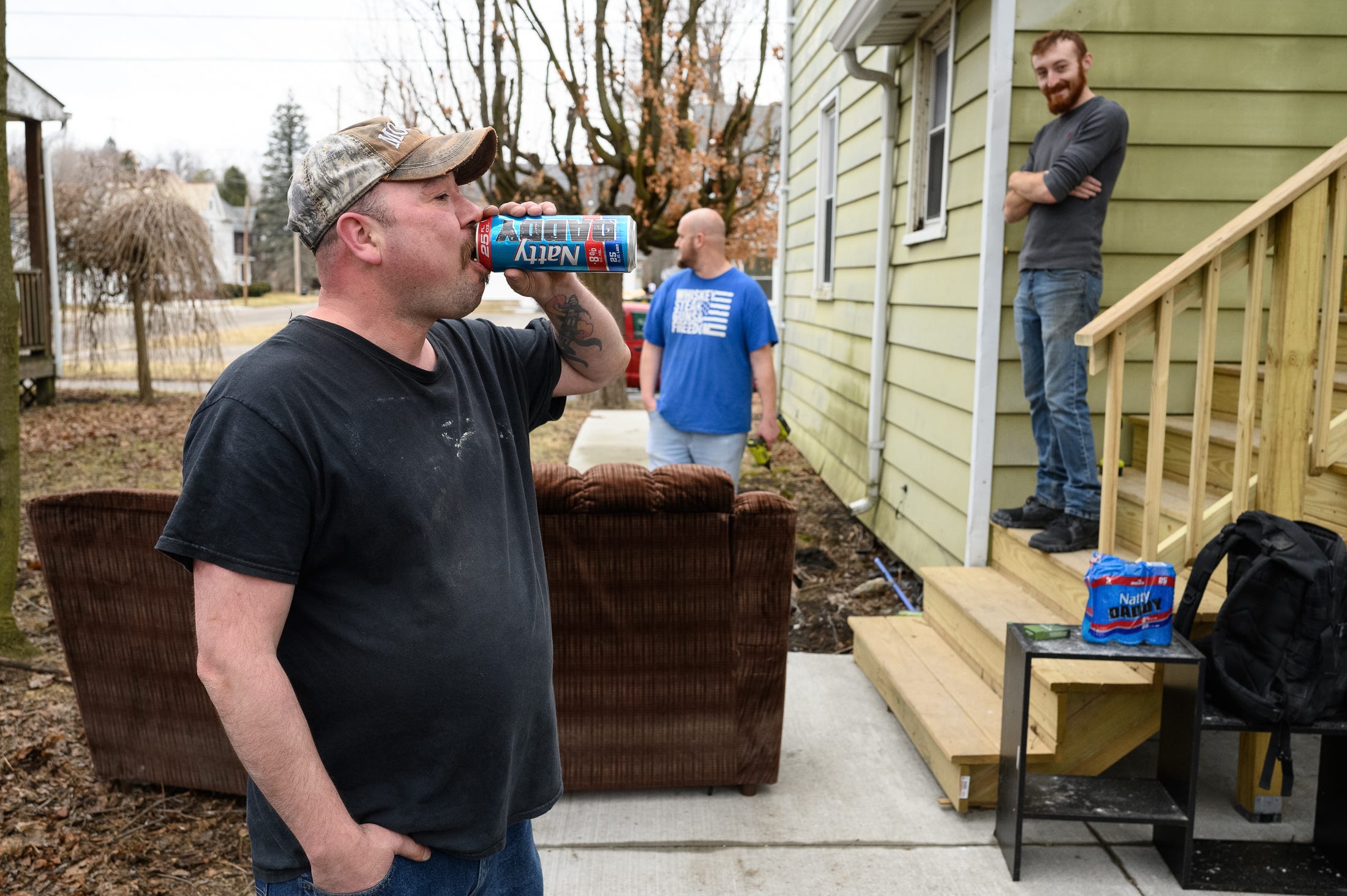
David Lonsbrough, 40, stands in the backyard of a home that abuts the railroad tracks.

David Lonsbrough, an Iraq War veteran who enlisted three months before September 11, said the sights and sounds he experienced the night of the derailment reminded him of being on the battlefield.

Now he is packing to leave East Palestine for a new job in San Antonio.

As he plops down on the sofa he had just been moving, a train rumbles in the distance. 

“Every eleven minutes like clockwork, the day they lifted the evacuation, there was already a train waiting on the tracks and the engine started three minutes after we were all told we could return home,” says Lonsbrough, 40.

The CeramFab ceramic fiber factory where he used to work is located right next to the controlled burn. The plexiglass windows there, he says, have melted. 

“I had the perfect setup here. I live three blocks from work. I love my job, but after what I saw, I am out of here,” he said.

A sign on the town limits calls East Palestine “The place to be…”

But what will happen to East Palestine now?

Tsai, an actress who moved here from California and does a fair amount of film and stage work in Pittsburgh, feels like her world has shattered. She said she and her husband Rick are moving to a cabin they own a few miles away until they have a clearer understanding of the fallout. 

“In a week or two this will all be gone,” she says, pointing to the media vehicles in the community parking lot. “But our problems are only beginning. We’ve lost our best capital—the values of our home. Now we have to think about what the cost will be on our health, something we may not know for years.”

“Nothing will ever be the same in East Palestine,” she says flatly. “Nothing.” 


Salena Zito is a Pittsburgh-based politics writer and co-author of The Great Revolt: Inside the Populist Coalition Reshaping American Politics.

https://www.thefp.com/p/we-dont-know-what-we-are-breathing

Families appeal decision to uphold Boeing 737 MAX crashes plea deal

 Relatives of people killed in two Boeing 737 MAX crashes on Thursday appealed a U.S. judge's rejection of their bid to prosecute the planemaker by reopening or dismissing Boeing's January 2021 deferred prosecution agreement.

The U.S. Justice Department agreement gave Boeing immunity from criminal prosecution over fraud conspiracy charges related to the plane's flawed design. In return, Boeing has to pay $2.5 billion in fines and compensation to the government, airlines and a crash-victim fund.

U.S. District Judge Reed O'Connor in Texas ruled he did not have legal authority to grant the relatives' requests despite what he called "Boeing’s egregious criminal conduct."

Boeing declined to comment.

"The families now come to this court to see that justice is done," they said in a filing with the Fifth Circuit Court of Appeals arguing the Justice Department "misled the families as to whether a criminal investigation existed and then secretly cut a deferred prosecution deal without informing the families at all."

O'Connor ruled in October that the 346 people killed in two Boeing 737 MAX crashes in 2018 and 2019 are legally "crime victims" and said the Justice Department had not complied with its obligations under the law.

O'Connor ordered Boeing arraigned on the 2021 felony fraud conspiracy charge. Boeing pleaded not guilty last month and had argued against reopening the plea deal as did the Justice Department. Boeing says it has fully complied with the agreement and made significant reforms.

Boeing's best-selling 737 MAX was grounded worldwide in March 2019 for 20 months after two fatal crashes in Indonesia and Ethiopia - a move that cost Boeing more than $20 billion.

"Boeing’s crime may properly be considered the deadliest corporate crime in U.S. history," O'Connor wrote

O'Connor also rejected requests by Polish national airline PLL LOT and Czech airline group Smartwings to deem them both victims in the Boeing 737 MAX criminal case, a move that could have made them eligible for compensation.

Both airlines separately sued Boeing and argued they should have gotten compensation from Boeing as part of the plea deal, as other airlines did. Those suits in Seattle are pending.

https://uk.news.yahoo.com/families-appeal-decision-boeing-737-215511947.html

Only 19% Of Americans Have Confidence In Biden's Handling Of Ukraine Conflict: AP

 by Steve Watson via Summit News,

An Associated Press and NORC poll has found that fewer than 20 percent of Americans have a “great deal” of confidence in the way Joe Biden is involving the U.S. in the Ukraine conflict.

The survey reveals that only 19 percent of the public have a “great deal” of confidence in Biden’s ability, while 37 percent say they have “only some” confidence,” and 43 percent have “hardly any” confidence.

The poll also found that only 42 percent approve of the way Biden is handling the U.S.’ relationship with Russia, while 54 percent disapprove. 

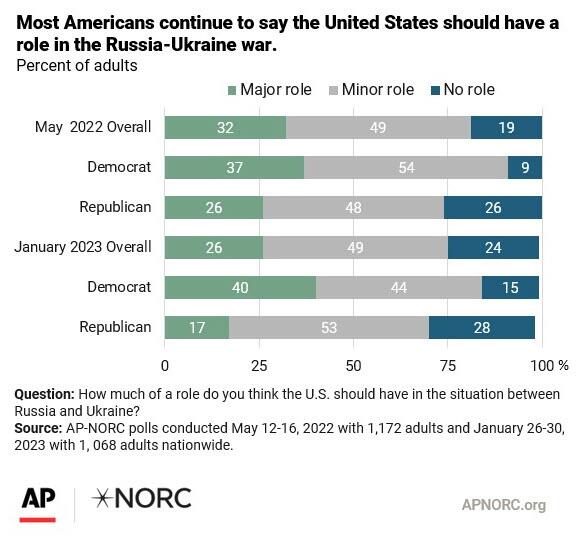
The poll also found that a quarter of respondents believe the U.S. shouldn’t be playing any role in the war, with a further 49 percent saying that the U.S. should only have minor role.

Just 26 percent believe the U.S. should be playing a major role.

The poll also found that while 59 percent of Democrats said they were in favour of sending government funds directly to Ukraine, just 21 percent of Republicans concur.

The figures represent a decrease in support among both groups, as last year 63 percent of Democrats and 28 percent of Republicans said they were in favour.

The findings come after Biden’s probable 2024 opponent Donald Trump declared that he would negotiate a peace deal and end the conflict within 24 hours, as well as ousting all the “demented warmongers and globalists” currently occupying the U.S. National Security establishment.

https://www.zerohedge.com/political/only-19-americans-have-confidence-bidens-handling-ukraine-conflict-new-poll-finds

Brain metastasis from breast cancer and melanoma induced by neuroinflammation

 In a new study from Tel Aviv University published in the journal Nature Cancer, a team of researchers led by Prof. Neta Erez, head of the laboratory for the biology of tumors from the Department of Pathology at the Sackler Faculty of Medicine, identified and characterized a new mechanism that facilitates the formation of brain metastases and found that impairing this mechanism significantly reduced the development of brain metastases in mice.

Brain metastases are one of the deadliest forms of cancer metastasis. They are 2–10 times more common than tumors of the central nervous system (CNS). Despite the progress achieved in recent years in the development of novel treatments for melanoma and , brain metastasis remain highly lethal with grave survival rates of less than one year in many cases.

The recorded incidence of  has been increasing in recent years, probably as a result of improvements in diagnostic methods as well as progress in the treatment of metastases in other organs. Therefore, developing better therapeutic strategies for brain metastasis is an urgent need.

In this new study from the Tel Aviv University, the researchers show that Lipocalin-2 (LCN2) is a key factor in inducing neuroinflammation in the brain. Moreover, the researchers found that high LCN2 levels in patients' blood and brain metastases from several types of cancer are associated with  and reduced survival.

LCN2 is a secreted protein that functions in the innate immune system and was originally discovered due to its ability to bind iron molecules and as part of the inflammatory process in fighting bacterial infection. LCN2 is produced by a large variety of cells and was shown to be involved in multiple cancer-related processes.

Prof. Neta Erez says, "Our findings reveal a previously unknown mechanism, mediated by LCN2, which reveals a central role for the mutual interactions between immune cells recruited to the brain (granulocytes) and brain glial cells (astrocytes) in promoting inflammation and in the formation of brain metastases. The findings establish LCN2 as a new prognostic marker and a potential therapeutic target."

In the study, the researchers used models of melanoma and breast cancer brain metastases in an effort to reveal the mechanism by which neuroinflammation is activated in the metastatic niche in the brain.

Prof. Erez says, "We show that signals secreted into the blood from the primary tumor stimulate pro-inflammatory activation of astrocytes in the brain. The astrocytes promote the recruitment of inflammatory cells from the  (granulocytes) into the brain, and they in turn become a main source of signaling by LCN2.

"We demonstrated the importance of LCN2 for the development of metastases by genetically inhibiting its expression in mice, which resulted in a significant decrease in neuroinflammation and reduced brain metastases. Moreover, in blood and tissue samples from patients with brain metastases from three types of cancer, blood LCN2 levels were correlated with disease progression and with shorter survival , which positions LCN2 as a potential prognostic marker for brain metastases.

"We analyzed the LCN2 protein levels in the blood and cerebrospinal fluid (CSF) of mice with brain metastases, and found that LCN2 levels increased greatly in mice with melanoma and breast cancer metastases compared to healthy mice. Importantly—an increase in blood LCN2 preceded the detection of brain metastases by MRI. Furthermore, the mice in which LCN2 levels were very high developed brain metastases later, further establishing LCN2 as a predictive marker for brain metastases."

The researchers also examined whether LCN2 is elevated in the blood of melanoma patients at the time of initial diagnosis, and whether it can be a prognostic factor. The findings indicated that patients with melanoma had significantly higher levels of LCN2 in their blood compared to samples from healthy individuals. Strikingly, patients who developed brain metastases displayed significantly higher levels of LCN2 even before the diagnosis of the metastases, and high levels of LCN2 in the blood correlated with worse survival.

Prof. Erez says, "We have identified a new mechanism in which LCN2 mediates the communication between  from the bone marrow and supporting cells in the brain, activates inflammatory mechanisms and thus helps the progression of metastatic disease in the brain, and demonstrated its importance. The functional and prognostic aspects of LCN2 that we have identified in brain metastases in mouse models as well as in cancer patients suggest that targeting LCN2 may be an effective therapeutic strategy to delay or prevent the recurrence of  metastases."

More information: Omer Adler et al, Reciprocal interactions between innate immune cells and astrocytes facilitate neuroinflammation and brain metastasis via lipocalin-2, Nature Cancer (2023). DOI: 10.1038/s43018-023-00519-w


https://medicalxpress.com/news/2023-02-mechanism-brain-metastasis-breast-cancer.html

Phase 3 trial: oral empagliflozin provides safe glycemic control in children with type 2 diabetes

 Type 2 diabetes is a chronic disease in which the body does not produce enough of the hormone insulin, which regulates blood sugar, while cells in the muscle, fat and digestive system simultaneously become less sensitive to it, absorbing less sugar from the blood stream. The condition results in high blood sugar levels, which over time can cause damage to the heart, nerves, eyes, and kidneys, as well as delay wound healing and diminish cognitive function. Controlling blood sugar (glycemic levels) through medication is critical to staving off these many complications.

Researchers led by pediatric endocrinologists at Joslin Diabetes Center recently completed a phase 3 clinical trial that assessed the efficacy and safety of two different classes of oral agents for the treatment of type 2  in young people aged 10-17 years. One of the largest studies of children and adolescents with type 2 diabetes to date, the trial demonstrated that one of the two anti-diabetic therapeutics—both of which have already been proven safe and efficacious in adults—provided clinically meaningful and statistically significant improvements in  in young people, while the other did not.

The findings, which appeared in The Lancet Diabetes & Endocrinology, represent a new treatment option for young people with type 2 diabetes and also underscore the differences in disease progression between young people and adults with type 2 diabetes.

"Type 2 diabetes was once called 'adult-onset diabetes,' but it is increasingly common among children—likely linked to the dramatic upsurge in global childhood overweight and obesity—and unfortunately, youth-onset type 2 diabetes carries extraordinary high risk of complications during early adulthood," said first author Lori M. Laffel, MD, MPH, chief of the Pediatric, Adolescent, and Young Adult Section and head of the Section on Clinical, Behavioral, and Outcomes Research at Joslin. "Over the past few decades, many new therapeutic agents across different drug classes have been approved for use in adults with type 2 diabetes; by contrast, there is a paucity of treatments for type 2 diabetes in young people."

As part of the DIabetes study of liNAglipton and eMpagliflozin in children and adOlescents, or DINAMO, Laffel and colleagues assessed the efficacy and safety of  and —two well-studied oral agents with demonstrated safety and efficacy in adults with type 2 diabetes—in children and adolescents with type 2 diabetes. Between April 2018 and May 2022, Laffel and colleagues enrolled 262 and randomized 158 participants aged 10 to 17 with type 2 diabetes in this double-blind, placebo-controlled trial, uniquely comparing two agents with a single placebo group. The participants were followed at 108 sites in 15 countries.

The 158 participants were randomly assigned to receive one of three regimens; 52 participants to empagliflozin, 53 to linagliptin and 53 to placebo once daily for 26 weeks to assess efficacy and safety. After 26 weeks, double-blinding remained and participants on active treatment continued their medication while participants on placebo were randomly assigned to empagliflozin or linagliptin for further assessment of safety up to week 52.

In the empagliflozin group, researchers determined that participants' hemoglobin A1C (HbA1C) levels, a measure of average  levels over the past two to three months, decreased by week four and remained below that of the placebo group at week 26, demonstrating an improvement in diabetes control with an adjusted mean difference in HbA1c of 0.84% favoring empagliflozin compared with placebo.

In the linagliptin group, the scientists found an initial decrease in HbA1C at week four, followed by an increase toward baseline values at week 26, which was similar to that seen in the placebo group. Similarly, when the researchers looked at participants' fasting plasma glucose, they saw larger effects in the empagliflozin group versus the placebo group. The safety profiles of both empagliflozin and linagliptin matched that seen in studies of adults with type 2 diabetes.

"Our findings show that an empagliflozin dosing regimen provides a clinically relevant and statistically significant reduction in HbA1C in young people with type 2 diabetes, whereas linagliptin did not," said Laffel, who is also a professor of pediatrics at Harvard Medical School.

"The results of this trial support the management of type 2 diabetes in young people with empagliflozin for safe and effective lowering of HbA1C early in the course of the disease. Given the recognized challenges of treating type 2 diabetes in , and the likely need for combination phamacotherapy to achieve target glycemic control aimed at preventing complications and preserving health, oral administration of empagliflozin along with injectable insulin might offer a promising approach to care."

More information: Lori M Laffel et al, Efficacy and safety of the SGLT2 inhibitor empagliflozin versus placebo and the DPP-4 inhibitor linagliptin versus placebo in young people with type 2 diabetes (DINAMO): a multicentre, randomised, double-blind, parallel group, phase 3 trial, The Lancet Diabetes & Endocrinology (2023). DOI: 10.1016/S2213-8587(22)00387-4


https://medicalxpress.com/news/2023-02-phase-trial-oral-empagliflozin-safe.html

Long-acting recycling antibody targets endometriosis

 Injections of an engineered antibody known as AMY109, given every month, were found to reduce lesion volume and lessen scar tissue and organ adhesions in monkeys with endometriosis.

Endometriosis occurs when cell tissues, usually found within the lining of the uterus, grow in areas outside the uterus. This tissue is hormonally sensitive and can become inflamed, especially during , and can cause severe cramping, pain, and other symptoms depending on the area affected. These areas of endometrial-like  do not vacate during menstruation as cells within the lining usually do. Instead, they can form scar tissues, cysts, lesions, nodules, and connective tissues binding organs together. They also may make it harder for some to get pregnant.

Around 11% of women have endometriosis, with the highest rates among women in their 30s and 40s. There is no cure. Available treatments only target symptoms, with over-the-counter pain medicines and hormonal birth control, or in some cases, surgery to remove patches of endometriosis. A drug targeting the condition itself would be a huge benefit, especially for anyone planning to get pregnant.

According to the paper by researchers at Chugai Pharmaceutical, published in Science Translational Medicine, AMY109 may represent the first disease-modifying therapy for patients with endometriosis that does just that.

In previous research using , the team had found high levels of the immune system signaling protein interleukin-8 associated with disease progression. While interleukin-8 is important for normal immune health by attracting  to an affected area, it also has been previously reported to induce the growth of endometriotic cells. So as healthy tissues getting invaded by rogue endometriotic cells respond by expressing interleukin-8, they could worsen the problem.

AMY109

The research team developed an antibody prototype to neutralize interleukin-8. After initial testing showed positive results, they further engineered the antibody with recycling antibody technology in which antibodies bind to antigens in a pH-dependent manner, allowing a single antibody molecule to target interleukin-8 multiple times. The addition of the recycling technology greatly increased the longevity of the treatment so that it only needs to be administered once per month. Their final formulation is called AMY109.

The researchers note that  is a chronic disease and that therapies should be highly potent and safe. With the current round of animal trials showing positive therapeutic outcomes, and a concurrent nonclinical safety assessment (also in monkeys) showing no , both look highly encouraging so far.

More information: Ayako Nishimoto-Kakiuchi et al, A long-acting anti–IL-8 antibody improves inflammation and fibrosis in endometriosis, Science Translational Medicine (2023). DOI: 10.1126/scitranslmed.abq5858


https://medicalxpress.com/news/2023-02-long-acting-recycling-antibody-endometriosis.html

Chinese company discusses sending Russia drones: Der Spiegel


Russia is in talks with a Chinese manufacturer about buying 100 drones, with a delivery date of April, German magazine Der Spiegel reported on Thursday, without citing specific sources.

In recent days, the United States, Germany and other Western countries have warned China not to sell weapons to Russia for its war against Ukraine, saying that any such move would have severe consequences.

Russia, hemmed in by severe Western sanctions imposed in response to its attack on Ukraine, is believed to have bought weaponry from Iran and North Korea, including drones from the former, but China has so far stood aside.

Der Spiegel said Chinese drone manufacturer Xian Bingo Intelligent Aviation Technology had said it was prepared to make 100 prototypes of its ZT-180 drone, which the magazine said could carry a 35-50kg warhead.

"I have told China's representatives that it cannot be accepted," German Chancellor Olaf Scholz told ZDF public television earlier on Thursday when asked about less specific reports that China might help Russia.

It said the drone was similar to Iran's Shaheed-136, with which Russia has launched countless attacks on Ukraine, claiming hundreds of lives and damaging civilian infrastructure.

The magazine also said Bingo had plans to help establish a production site for the drone in Russia, where up to 100 aircraft could be made a month.

Bingo could not immediately be reached for comment outside of normal business hours.

It added that there had been earlier plans for a company controlled by the Chinese army to send Russia spare parts for its SU-27 warplane.

https://www.marketscreener.com/quote/currency/US-DOLLAR-RUSSIAN-ROUBL-2370597/news/Chinese-company-discusses-sending-Russia-drones-Der-Spiegel-reports-43072580/