Search This Blog

Monday, April 17, 2023

Therapeutic can seek and destroy potent opioid to treat overdoses

 A new therapeutic designed by Scripps Research chemists can alter the molecular structure of the potent opioid carfentanil, inactivating the opioid and reversing a carfentanil overdose. The compound, which is described in an ACS Pharmacology & Translational Science paper published on April 17, 2023, and hasn't yet been studied in humans, works in a fundamentally different way than existing treatments for opioid overdose.

Carfentanil is up to 10,000 times more potent than morphine and 100 times stronger than fentanyl, making it one of the deadliest opioids. It is typically only used as a tranquilizer for  like elephants and rhinoceroses, but it is known to be added to , ingested accidentally or used in terrorist attacks.

"It has been a big challenge for the field to come up with ways to combat these incredibly strong synthetic opioids like carfentanil," says senior author Kim Janda, Ph.D., the Ely R. Callaway, Jr. Professor of Chemistry at Scripps Research. "What is really different about our approach is that this antibody doesn't just sequester the  in the body; it actually inactivates it."

Opioid drugs—including morphine, codeine, oxycodone, and fentanyl—work by binding to opioid receptors in the brain and spinal cord. At low doses, they can act as painkillers and sedatives. At , they slow breathing and can cause death. In recent decades, the overuse and misuse of opioids has soared, with more than 71,000 deaths in the U.S. due to synthetic opioids in 2021 alone (CDC).

Overdoses of fentanyl, the most abused opioid, can be treated with naloxone (Narcan). Naloxone works by binding to the brain's opioid receptors, thereby kicking fentanyl off those receptors and blocking its effect on the body in the process. But carfentanil binds to the receptors more strongly and sticks around the body for longer than fentanyl. Naloxone does not work as well—or works only temporarily—to treat carfentanil overdoses.

In the past, Janda has developed vaccines to sequester opioids away from their receptors in the body. More recently, he wondered whether there was a way to fully inactivate carfentanil and related synthetic opioids. He was particularly interested in a chemical entity embedded within carfentanil's structure called a methyl ester. He knew that with the right machinery, this methyl ester could be converted to an acid, which he suspected would drastically change the properties of carfentanil and therefore make it unable to bind to the body's . Molecules that can accelerate a chemical reaction—like the conversion of a methyl ester to an acid—are called catalysts or described as catalytic.

"Before we started designing a catalytic-biologic therapy to carry this reaction out, we had to make sure the drug would actually be inactive and unable to bind receptors without that methyl ester," says Janda. "Going into this, no one knew whether that was the case."

In the new work, Janda and his colleagues showed that, indeed, the acid form of carfentanil is about 40,000 times less potent at binding to the opioid receptor compared to the methyl ester form.

Armed with that knowledge, the researchers created a transition-state of carfentanil—partway toward the chemical conversion from a methyl ester to an acid. They then screened libraries of antibodies for one that would bind to this transition-state analogue, helping stabilize it. This kind of molecule, called a catalytic antibody or an "abzyme," helps encourage a chemical reaction to proceed. Moreover, the better an antibody can bind to the transition state of carfentanil's ester hydrolysis, the more it will help usher all the carfentanil molecules to convert to an acid.

Janda's group pinpointed one promising catalytic antibody and showed that it was able to convert carfentanil to the acid form. What is more, treating a mouse respiratory depression model with the catalytic antibody reversed the symptoms of carfentanil overdose, boosting the animals' breathing and heart rate.

"It was important that we not only showed the biochemistry of this catalytic antibody, but also that it could have translational value," says Janda. "It is not quite ready for , but we believe this proof of concept demonstrating a catalytic antibody degrading a synthetic opioid into an innocuous substance is a promising starting point, and it will help encourage other research groups to examine this line of research."

The researchers are also planning to test whether the catalytic enzyme works to inactivate other strong opioids, including lofentanil, which is slightly stronger than carfentanil and has a matching methyl ester.

In addition to Janda, authors of the study, "Catalytic Antibody Blunts Carfentanil Induced Respiratory Depression," are Mingliang Lin, Lisa Eubanks, Nishant Karadkhelkar and Steven Blake of Scripps Research.

More information: Mingliang Lin et al, Catalytic Antibody Blunts Carfentanil-Induced Respiratory Depression, ACS Pharmacology & Translational Science (2023). DOI: 10.1021/acsptsci.3c00031


https://medicalxpress.com/news/2023-04-therapeutic-destroy-potent-opioid-overdoses.html

2/3 of US jobs could be exposed to AI-driven automation: Goldman

 Breakthroughs in generative artificial intelligence technologies could expose about two-thirds of U.S. jobs to some level of automation, according to a report by Goldman Sachs economists.

Generative artificial intelligence (AI) is a technology that can synthesize data and produce audio, imagery and text. It uses tools like deep learning algorithms and neural networks to identify patterns and structures in existing data that it then uses to generate new, original content. 

"Despite significant uncertainty around the potential for generative AI, its ability to generate content that is indistinguishable from human-created output and to break down communication barriers between humans and machines reflects a major advance with potentially large macroeconomic effect," Goldman Sachs economists Joseph Briggs and Devesh Kodnani wrote in a report. 

The two economists analyzed databases that contained information about the type of tasks performed by people in over 900 different occupations and estimated that about two-thirds of U.S. occupations are exposed to some degree of automation by AI technology.

Of those occupations that are exposed to AI-driven automation, roughly a quarter to one-half of their workload could be replaced by AI. However, the authors noted that increased automation wouldn’t necessarily lead to layoffs.

"Although the impact of AI on the labor market is likely to be significant, most jobs and industries are only partially exposed to automation and are thus more likely to be complemented rather than substituted by AI," the authors wrote.

The degree to which AI is adopted and how advanced AI technologies become creates some variability in how it ultimately impacts the economy through increased productivity, the displacement of labor, and re-employment of displaced labor per the Goldman Sachs report.

Under the report’s baseline, the authors estimated a net increase of about 1.5 percentage points over 10 years. That includes an increase in the productivity of non-displaced workers of about 1.1 percentage points and higher productivity due to labor displacement of 0.46 percentage points, which would be partially offset by the re-employment of displaced workers amounting to 0.11 percentage points over 10 years.

The researchers also analyzed a scenario with a much more powerful AI that found a net increase in productivity of over 2.9 percentage points over 10 years. That scenario saw productivity for non-displaced workers increase by 2.19 percentage points and labor displacement add another 0.96 percentage points, while re-employment of displaced workers offset that by 0.22 percentage points.

Historically, innovation cycles centered on automation and other technological advances that disrupt labor markets tend to be offset due to the creation of new jobs. The report notes how the rise of information technology created new occupations like webpage designers, software developers and digital marketers. 

The report also cited a study by economist David Autor, who found that about 60% of workers today are employed in occupations that didn’t exist in 1940. The Goldman Sachs economists say that study implies that over 85% of employment growth in the last 80 years has been driven by technological innovations that lead to the creation of new occupations.

https://www.foxbusiness.com/technology/two-thirds-us-jobs-exposed-ai-driven-automation-goldman-sachs

Shorts Steamrolled As Late Day Squeeze Sends Stocks To Session High, VIX Plummets

 First, some context from Goldman's Prime Brokerage: "our franchise flows have shifted to local selling of tech this week and Nasdaq is only up in two of the past ten sessions (also note that it stands exactly where it stood in ... the spring of 2021)."

In other words, might as well have sold in May of 2021 and gone away for two years, enjoying all the hikes, golfing and trips and you'd still be right where you left off. Instead, you overtraded every market move and lost money.

Today was a micro snapshot of this entire dynamic: after some terrible results from large custody bank State Street, at a time when everyone is on edge about anything negative news out of banks, which sent State Street shares plunging by as much as 18%, the most intraday since March 2020...

... following the sharp early selloff, we say bank stocks gradually recover all losses before eventually trading near session highs by the close, as the massive hedge fund short overhang we discussed last week remains intact.

... and leads to a powerful rally every time a selling thrust is exhausted, and today was no difference. And speaking of massive short overhangs,  after we noted last week that the number of non-commercial net specs (i.e. hedge funds) shorting the S&P is at an 11 year high, we have barely budged..

... which is also why stocks took the escalator down, and the short squeeze elevator up closing at session highs and squeezing another round of shorts in the process...

... a reversal which the 0DTE crew orchestrated starting at exactly 2pm ET with a market-leading spike in delta, driven by a surge in call buying and put selling, a market inflection which was captured vividly in this chart from our SpotGamma partners ...

Source: Spotgamma

... which also is why the VIX was crushed today, as puts were unwound in a frenzy, and tumbled below 17 to the level where it was back in Jan 2022 when stocks were at all time highs!

And while banks promptly recovered and joined most other sectors in the green, the only sector that was lower was energy...

... tracking the renewed weakness in oil...

... where unlike stocks, shorts once again have zero fear of a squeeze, at least no a financial one - indeed, while all financial actors in energy are pressing their shorts having picked this asset class as the best expression of rising recession bets - bets which are encouraged by the senile occupant of the White House, because we learned today that another 1.6 million barrels in oil was drained from the Strategic Petroleum Reserve, it will be up to OPEC+ again to offset the relentless oily gloom.

Elsewhere, there was a still bitter aftertaste in the market's mouth from last Friday's hawkish Fed commentary and today's blow, near record beat in the NY Empire Fed, which pushed May rate hike odds to new cycle highs just shy of 90%...

... which helped push yields higher again and sending the 10Y back to 3.60% even if today that meant no selling in high duration tech names.

It did, however, mean that the dollar rose sharply after months of seemingly relentless declines which in turn helped smash both gold and cryptos with bitcoin dropping back under $30,000 after it was poised to rise above $31,000 just a few days earlier.

That said, with the next round of dollar-debasement just around the corner, the resumption of the fiat money alternatives rally is just a matter of time.

https://www.zerohedge.com/markets/shorts-steamrolled-late-day-squeeze-sends-stocks-session-high-vix-plummets

No US evacuation plan for Sudan at this time, White House's Kirby says

 There are no plans for a U.S. government evacuation from Sudan at this time but Americans should treat the volatile situation in the African country with utmost seriousness, White House national security spokesperson John Kirby said on Monday.

"We urge American citizens in Sudan to treat this situation with the utmost seriousness," Kirby said in a briefing with reporters.

He cited a State Department security alert for Sudan on Sunday that said there were no plans for a U.S. government-coordinated evacuation at this time because of the uncertain security situation in Khartoum and the closure of the airport.

"We expect that will remain the case," Kirby added.

https://finance.yahoo.com/news/1-no-us-evacuation-plan-204128109.html

Avenue: Type C Meeting with FDA and Next Steps in the Development of IV Tramadol

 Avenue Therapeutics, Inc. (Nasdaq: ATXI) (“Avenue” or the “Company”), a specialty pharmaceutical company focused on the development and commercialization of therapies for the treatment of rare and neurologic diseases, today announced that it has received official meeting minutes from the Type C meeting with the U.S. Food and Drug Administration (“FDA”) conducted on March 9, 2023, regarding the development of intravenous (“IV”) Tramadol for the treatment of post-operative pain. The purpose of this meeting was to discuss and reach agreement with the FDA on the proposed study protocol that would assess the risk of opioid-induced respiratory depression related to opioid stacking on IV Tramadol compared to IV morphine.

As disclosed in September 2022, Avenue received meeting minutes from the FDA regarding a Type A meeting conducted on August 9, 2022, for IV Tramadol. At that meeting, Avenue presented a study design for a single safety clinical trial that the Company believes could address the concerns regarding risks related to opioid stacking and the FDA stated that the proposed study design appeared reasonable and agreed on various study design aspects with the expectation that additional feedback would be provided to Avenue upon review of a more detailed study protocol. Subsequent to the August 9 meeting, the Company incorporated the FDA’s suggestions from the meeting minutes and submitted a Type C Meeting Request and a briefing book that included a detailed study protocol as the basis for further discussion with the FDA on the requirements for a complete response to the second Complete Response Letter for IV Tramadol.

The Type C meeting minutes from the FDA indicate that the FDA and Avenue Therapeutics are in agreement with a majority of the proposed protocol items and are in active discussion about remaining open items. The minutes indicate that the FDA also agrees that a successful study will support the submission of a complete response to the second Complete Response Letter for IV Tramadol pending final agreement on a statistical analysis plan and a full review of the submitted data in the complete response as well as concurrence from the Division of Anesthesia, Analgesia and Addiction Products (DAAAP).

Biden EPA’s New Vehicle Emissions Standards Spark Backlash From Auto Industry, GOP

 by Nathan Worcester via The Epoch Times (emphasis ours),

The Environmental Protection Agency’s (EPA’s) proposed emissions standards for automobiles and trucks are raising eyebrows in the auto industry and Washington alike.

“EPA’s proposed emissions plan is aggressive by any measure. By that I mean it sets automotive electrification goals in the next few years that are … very high,” John Bozzella, president and CEO of the automaker trade organization Alliance for Automotive Innovation, wrote in an April 12 blog post.

The federal standards would tightly restrict emissions from new vehicles. That would effectively force automakers to boost their sales of electric vehicles (EVs).

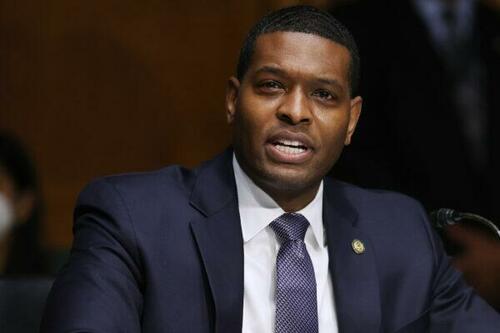
Environmental Protection Agency Administrator Michael Regan testifies before the Senate Appropriations Committee in the Dirksen Senate Office Building on Capitol Hill on April 20, 2021. (Chip Somodevilla/Getty Images)

The agency’s proposal anticipates that under the new standards, two-thirds of new light-duty vehicles sold in the United States would be electric by the model year 2032.

It also predicts that 46 percent of new medium-duty vehicles sold in the United States would be electric by that model year.

EVs made up less than 6 percent of total new vehicle sales in 2022. That’s an increased percentage relative to past years, even as total new vehicle sales were down to 13.8 million units from 17.3 million in 2018.

The EPA claims that its standards would lower carbon dioxide emissions by 10 billion tons.

Agency administrator Michael Regan described the standards as the “strongest ever” during an April 12 press conference.

“The proposal exceeds the administration’s own 50 percent electrification target,” Bozzella wrote, noting that his industry is “fully committed to an electric and low-carbon transportation future.”

Not Enough Chargers

Less than two weeks ago, the IRS and the Treasury Department issued complex guidance on EV tax credits that could make it harder for consumers to benefit from those financial incentives.

Bozzella, who began his career working for then-New York Mayor David Dinkins, a Democrat, said the guidance would reduce the number of vehicles qualifying for tax credits. That would seem to disincentivize EV adoption even as the administration steps up other measures intended to facilitate more EV purchases.

Bozzella also said the 100,000 public, nonproprietary EV chargers in the United States are “not enough.”

An April 6 memo from the automotive alliance stated that electrification would take a “massive, 100-year change to the U.S. industrial base and the way Americans drive.”

Groups outside of the auto industry also voiced concerns.

Will Hild, executive director of Consumers’ Research, a consumer protection organization, said the standards are “the same thing BlackRock and ESG extremists like Larry Fink are doing with U.S. pensions and retirement dollars.”

The American people won’t stand for it,” he said.

https://www.zerohedge.com/markets/biden-epas-new-vehicle-emissions-standards-spark-backlash-auto-industry-republicans

Fetterman returns to Senate, mum on future after depression bout

 Sen. John Fetterman (D-Pa.) was seen on Capitol Hill Monday for the first time since missing more than 60 votes due to his prolonged hospital stay for treatment of clinical depression.

The 53-year-old Fetterman, clad in a hooded sweatshirt and basketball shorts, did not respond to reporters who asked if he’d be able to serve out his full six-year term, which runs through 2029.

The former Pennsylvania lieutenant governor checked himself in to Walter Reed National Military Medical Center two months ago to get treatment after suffering a stroke last year.

He was discharged in late March after a six-week stay.

Fetterman told “CBS Sunday Morning” in an interview earlier this month that his depression had made him “indifferent” to living shortly after he fended off Republican celebrity candidate Dr. Mehmet Oz, who was endorsed by former President Donald Trump.

The victory flipped the seat of retiring Republican Sen. Pat Toomey, and helped give Democrats a 51-49 majority in the Senate.

Fetterman waves
Sen. John Fetterman returned to the US Capitol Monday after a two month bout with depression.
Ron Sachs – CNP
John Fetterman
Fetterman enters at the Capitol Monday.
Getty Images
Fetterman talks to reporters
The freshman Democrat dodged reporter’s questions about his political future.
Getty Images

“It’s like, you just won the biggest, you know, race in the country,” he said. “And the whole thing about depression is … that objectively, you may have won, but depression can absolutely convince you that you actually lost.

“And that’s exactly what happened. And that was the start of a downward spiral,” Fetterman added.

Questions have been raised about Fetterman’s ability to serve since his medical episode shortly before his May 2022 victory in the hotly contested Pennsylvania Democratic Senate primary. He triumphed over Oz despite visibly struggling to form coherent sentences during their one and only debate this past October.

In February, shortly before his hospitalization, the New York Times reported Fetterman had trouble hearing other people’s voices clearly, an auditory processing issue that got worse during periods of great stress or in unfamiliar situations.

https://nypost.com/2023/04/17/john-fetterman-returns-to-senate-after-depression-bout/