Target to $8 from $15
Tuesday, August 8, 2023

Bright Mnds: Positive Data from 1st-in-Human Phase 1 Study of Lead Compound
BMB-101 is a highly selective and potent 5-HT2C agonist being developed for the treatment of refractory epilepsies and other indications, such as psychosis, addiction, and impulse control disorders
-- qEEG study was conducted in healthy individuals in Cohort 4 of the Multiple Ascending Dose arm of the study
-- Proof of Mechanism and target engagement in the brain was established using blood biomarkers and qEEG
-- In qEEG, BMB-101 demonstrated robust increase in central delta power and robust reduction in central alpha and beta power in active group, as previously reported for Anti-Epileptic Drugs (AEDs) in healthy individuals
-- Company to host webcast to discuss findings of the Phase 1 study today, August 8, 2023, at 4:30pm ET
Bright Minds management will host a webcast to discuss the Phase 1 study as follows:
Date: |
| Tuesday, August 8, 2023 |
Time: |
| 4:30pm ET |
Webcast link: |
| https://finance.yahoo.com/news/bright-minds-biosciences-announces-positive-105000040.html |
Lilly raises forecasts as diabetes drug Mounjaro powers upbeat results
Eli Lilly on Tuesday raised its annual forecasts after beating estimates for quarterly results, driven by strong demand for its new diabetes drug Mounjaro, ahead of a decision on its use as a weight-loss treatment.
The company is leaning on Mounjaro, approved last May in the U.S. for diabetes, to soften the hit from insulin price cuts and competition for cancer therapy Alimta.
Earlier on Tuesday, rival Novo Nordisk said its obesity drug Wegovy reduced the risk of a major cardiovascular event like a stroke by 20% in overweight or obese people with a history of heart disease in a closely-watched late-stage study.
"Until now, these medicines were only weight-loss drugs but now they are much more than that," said Wells Fargo analyst Mohit Bansal.
Mounjaro, or tirzepatide, like Wegovy, also targets the GLP-1 hormone and has shown to help people with type 2 diabetes who were also obese or overweight to lose nearly 16% of their body weight.
Lilly's shares extended gains from the data to be up nearly 9% in premarket trading after the results.
A decision on Mounjaro to treat obesity, expected later this year, could help the drugmaker tap a multi-billion dollar market.
Lilly is also betting on the success of its Alzheimer's drug candidate, donanemab, which could be the third in its class on the market if approved in the U.S. A decision on donanemab is also expected by the end of this year.
The company now expects adjusted 2023 earnings of $9.70 to $9.90 per share, compared with its prior forecast of $8.65 to $8.85.
Mounjaro generated quarterly sales of $979.7 million, compared with estimates of $743 million.
Lilly now expects annual revenue in range of $33.4 billion to $33.9 billion, compared with its prior range of $31.2 billion to $31.7 billion.
Excluding items, the drugmaker earned $2.11 per share in the quarter ended June 30, above analysts' average estimate of $1.98.
Overall revenue of $8.31 billion for the second quarter also beat estimates of $7.58 billion.
https://finance.yahoo.com/news/eli-lilly-beats-profit-estimates-105104058.html
FibroGen Looks to Regroup After Rocky Q2 Results, Ongoing Challenges
FibroGen endured clinical setbacks and a leadership shake-up in recent months, but the California biotech remains optimistic about its path forward, the company said Monday during its second-quarter 2023 earnings report.
In particular, FibroGen will focus on what interim CEO Thane Wettig calls its “four strategic pillars” to help the company maximize shareholder value. First of these pillars is its Phase III candidate pamrevlumab, which is currently being developed for Duchenne muscular dystrophy (DMD) and locally advanced pancreatic cancer.
The investigational antibody, designed to target the CTGF protein, hit a rough patch during the second quarter, suffering Phase III failures in DMD and idiopathic pulmonary fibrosis in June. The latter was especially tough and forced FibroGen to abandon the development of pamrevlumab in this indication.
The company now hopes to turn pamrevlumab’s situation around with three upcoming late-stage readouts, including one in ambulatory DMD in the third quarter of this year and two in pancreatic cancer in the first half of 2024.
FibroGen’s second pillar is roxadustat, a first-in-class small molecule inhibitor of the HIF-PH protein approved in several territories for the treatment of anemia in chronic kidney disease. The second quarter of 2023 has seen record Roxadustat sales in China, where the drug made a total of $76.4 million, up 44% from its $53.1 million sales figure during the same period the year before.
Roxadustat is not approved in the U.S., after the FDA rejected its application in August 2021, citing safety signals. In May 2023, the candidate failed the Phase III MATTERHORN trial in myelodysplastic syndrome.
Still, FibroGen is looking to continue to strengthen its roxadustat business, particularly in China, where it is preparing to apply a supplemental New Drug Application for the drug in chemotherapy-induced anemia and expects a potential approval mid-2024.
Bolstering FibroGen’s two most mature assets is a robust early-stage oncology pipeline, which includes FG-3246, an anti-CD46 monoclonal antibody that it in-licensed from Fortis Therapeutics in May 2023. The candidate is being developed for metastatic castration-resistant prostate cancer and other solid tumors, and has best-in-class and first-in-class potential. Data
FibroGen currently has two Phase I studies for FG-3246, with findings expected starting late this year through 2024. A Phase II study is also being planned with data out 2026.
“We believe there are few biotechnology companies of our market cap that have such a compelling mix of commercial, late-stage and early-stage assets,” Wettig said during an investor call Monday, adding that this balance puts FibroGen in a good place to create significant shareholder value moving forward.
To support the advancement of its pipeline is FibroGen’s fourth strategic pillar—its cash position. As of June 30, 2023, its cash—defined as cash, cash equivalents, investments, and accounts receivable—was $361.3 million. FibroGen expects its cash, cash equivalents, investments and accounts receivable to support its operations into 2026.
The company posted $44.3 million in total revenue in the second quarter of 2023 as compared with $29.8 million during the same period the year before, representing a 49% increase. FibroGen anticipates its operating expense savings to ramp up over the next three quarters.
Biophytis Receives a Positive Opinion for its SARA-31 Phase 3 Study in Sarcopenia in Europe
Biophytis SA (Nasdaq CM:BPTS, Euronext Growth Paris:ALBPS), ("Biophytis"), a clinical-stage biotechnology company specialized in the development of therapeutics that are aimed at slowing the degenerative processes associated with aging and improving functional outcomes for patients suffering from age-related diseases, including severe respiratory failure in patients suffering from COVID-19, today announced that it has received a positive opinion from Belgian authorities to conduct its SARA-31 program, which will be the first phase 3 study ever launched in sarcopenia.
The launch of the Phase 3 program follows the promising results obtained in the SARA-INT Phase 2b study, and the scientific advice given in 2022 by the EMA (European Medicine Agency), which helped define the conditions for starting such a study in Europe, specifying the Phase 3 protocol. Final authorization depends on a positive opinion from the Ethics Committee in Belgium. A similar application has been filed with the FDA (Food and Drug Administration) to start this study in the United States, with a response expected in the coming weeks. Further authorizations may be requested in other countries, depending on the needs of the study.
Heart-Scarring Observed In Children Months After COVID-19 Vaccination: Study
by Zachary Steiber via The Epoch Times (emphasis ours),
Some children who experienced heart inflammation after COVID-19 vaccination had scarring on their hearts months later, a new long-term study found.
Researchers followed a group of 40 patients aged 12 to 18 for up to one year after the children were diagnosed with myocarditis, or heart inflammation, following vaccination with one of the messenger RNA shots from Pfizer or Moderna. They performed a series of tests, including echocardiograms.
Cardiac magnetic resonance imaging, or cardiac MRIs, was performed on 39 of the 40 patients. Abnormal results came in for 26 of those who were imaged, including 19 who had late gadolinium enhancement, or signs of scarring.
The patients with abnormal results returned for follow-up cardiac MRIs at least five months after the initial tests and 15, or 58 percent, had residual late gadolinium enhancement (LGE). The one patient without an initial scan also had mild late gadolinium enhancement when scanned during a follow-up visit.
“Persistence of LGE in a significant subset of patients with up to 1 year of follow-up was observed,” Dr. Yiu-fai Cheung, with Hong Kong Children’s Hospital, and the other researchers wrote.
They said that the implications of the persistence remain unclear, but that given it is an indicator of subclinical heart dysfunction and scarring, “there exists a potential long-term effect on exercise capacity and cardiac functional reserve during stress.”
The study was published by Circulation. Authors reported no funding or disclosures.
Dr. Peter McCullough, an American cardiologist and president of the McCullough Foundation, said that the new data is consistent with what cardiologists are seeing in clinical practice.
“Serious cases of COVID-19 vaccine induced myocarditis are not resolved by cardiac MRI at one year of followup in the majority of cases. At some point, we must assume that late gadolinium enhancement represents a scar or permanent damage,” Dr. McCullough, who was not involved in the research, told The Epoch Times via email.
“COVID-19 vaccines should be pulled from the market immediately until further notice. Large scale research programs should be commissioned immediately on subclinical and clinical COVID-19 vaccine induced myocarditis with initial aims at risk stratification and mitigation for cardiac arrest,” he added.
Dr. Anish Koka, another American cardiologist who was not involved in the study, said that the persistent LGE signifies a scar that replaced the initially inflamed heart muscle.
“The good news is that the amount of scar is small. The bad news is that there is scar,” Dr. Koka wrote on X, formerly known as Twitter.
Dr. Koka said that the level of scarring indicates there would likely not be a long-term impact, but that even small levels of scarring could be a foundation for future arrhythmias, with exercise serving as a trigger.
“All these kids (even those without scar) would need exercise stress tests at 6 months to attempt to prognosticate this,” Dr. Koka said.
Pfizer and Moderna did not respond to requests for comment on the study on myocarditis, a known side effect of both of the companies’ COVID-19 vaccines.
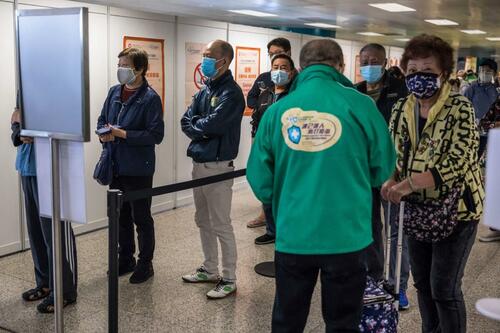
More Evidence
Myocarditis after COVID-19 vaccination was first detected in early 2021, and an increasing number of studies have undercut claims from officials in the United States that the heart inflammation is mild and resolves without treatment.
A study from the U.S. Centers for Disease Control and Prevention (CDC), published in 2022, reported that among patients with follow-up cardiac MRIs, 54 percent had at least one abnormal finding, such as scarring.
The study relied on surveys from health care providers who examined the patients.
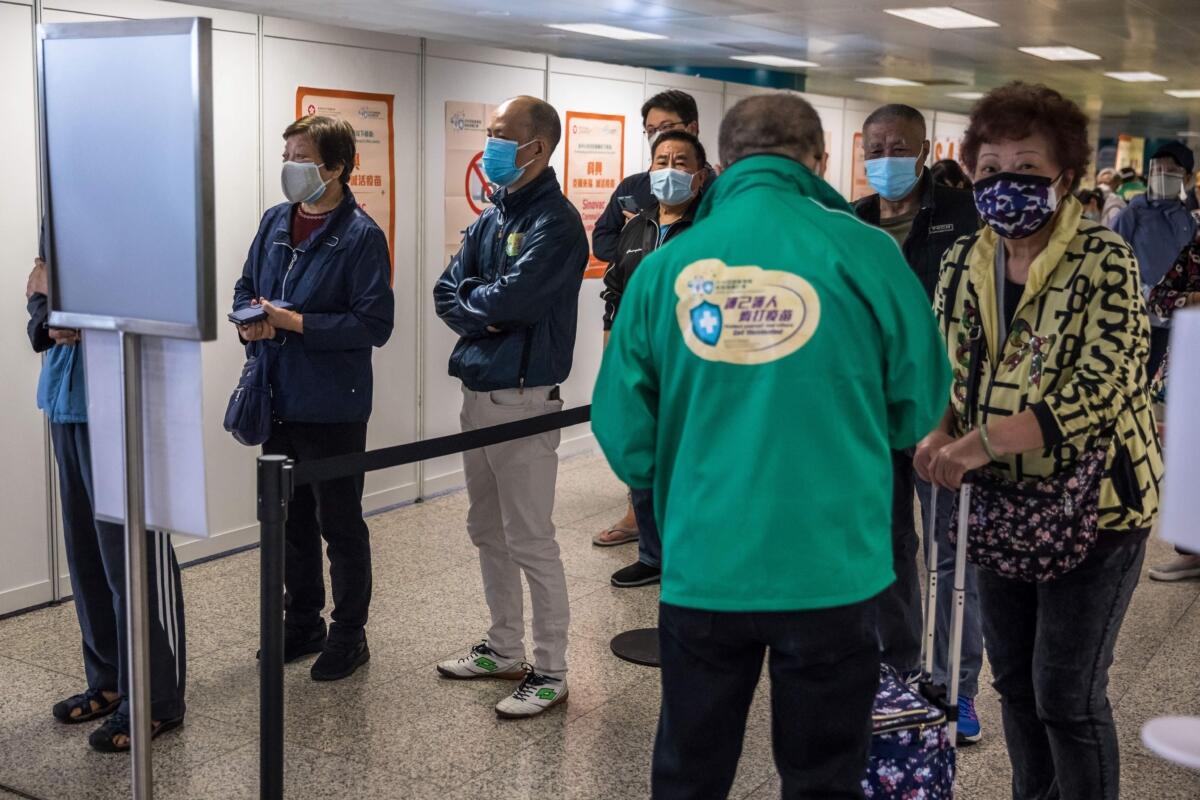
The providers later told the CDC that five to 13 months after the initial diagnosis, 14 percent of patients were still not cleared for all physical activity, and that multiple patients still had abnormal cardiac MRI findings. And in a separate set of surveys, many patients reported experiencing one or more symptoms beyond one year.
Subscribe to:
Posts (Atom)