Search This Blog

Wednesday, August 14, 2024

Vote Integrity's Nitty-Gritty: The Battle Lines of '24's Epic Struggle

 More than a dozen jurisdictions run by Democrats – including Washington D.C., and several adjacent Maryland municipalities – allow noncitizens to vote in some local elections. San Francisco not only permits noncitizens to vote but appointed one to serve on its Elections Commission.

Such developments, against a backdrop of millions of illegal migrants streaming into the United States under the Biden-Harris administration, bring new urgency to debates over election integrity. Many Republicans fear that a widespread effort is afoot to give noncitizens the full benefits of citizenship, including the right to vote in all elections, on top of benefits already available to illegal aliens in some places, notably drivers licenses, food stamps, government health care, and work visas.

Although Democrats note that noncitizens may not participate in federal elections and claim there is little evidence noncitizens are voting unlawfully, critics are unmollified.

A RealClearInvestigations analysis of proposed and enacted state and federal laws, along with other reporting and research, suggests that the fight over noncitizen voting is only likely to intensify this year – both in the immediate wake of an expected closely-contested presidential election and in its aftermath.

States across the country report that thousands of noncitizens have been discovered on voter rolls in the past decade, with unknown numbers already having voted: 

  • Pennsylvania found 11,000 registrants suspected of being noncitizens after becoming aware of a decades-old “glitch” in the state’s “motor voter” registration system in 2017. It removed 2,500 individuals from the rolls, and it could not verify the citizenship status of the other 8,700 registrants.
  • Virginia has removed over 11,000 registrants from its rolls between 2014-2023 – and more than 6,300 from January 2022 to July 2024 alone – upon learning that they had declared themselves noncitizens in other interactions with government, typically in transactions with the state’s department of motor vehicles. House Republicans cited a study showing that of nearly 1,500 noncitizens the Commonwealth removed from rolls from May 2023 to February 2024, 23% had cast ballots since February 2019.
  • New Jersey had some 616 self-reported noncitizens in 11 counties “engaged on some level with the statewide registration system,” 9% of whom cast ballots, according to a 2017 survey conducted by the Public Interest Legal Foundation.
  • Boston, Massachusetts, officials revealed this year that the city had removed 70 noncitizens from the rolls, some 22 of whom had voted, the removals coming in response to disclosure requests from the Public Interest Legal Foundation.
  • Ohio recently ordered the removal of 499 noncitizens from its voter rolls after removing some 137 other registrants back in May.
  • North Carolina identified more than 1,400 registrants on state voter rolls who did not appear to be naturalized, in an audit conducted prior to the 2014 midterm election. Eighty-nine flagged individuals appeared at the polls to vote, and 24 had their registration challenged; 11 challenges were sustained or justified.
  • Arizona classifies some 42,000 people on its rolls as “federal-only” registrants as of July 1, 2024 – after they had failed to provide the proof of citizenship necessary to vote in state and local races. The state’s bifurcated voter rolls are the result of a 2013 Supreme Court ruling in which a 7-2 majority led by the late Justice Antonin Scalia ruled that federal voter registration requirements – of which documentary proof of citizenship is not one – preempted the state’s standards. 

Other evidence of noncitizen voting has been found in states from California to Illinois

Republicans argue that such examples expose weaknesses in the voter registration and administration process – including that registrants need not provide proof of citizenship to get on the voter rolls. These and other loopholes in state-run systems make elections vulnerable to ineligible noncitizen voters today.

Each side has its own research to support its claims. Democrats cite a study by the Brennan Center for Justice at New York University, finding that local election officials overseeing the tabulation of 23.5 million ballots during the 2016 presidential election identified only 30 potential incidents of noncitizen voting.

FBN
Sen. Mike Lee, Republican of Utah: “DOJ investigations of illegal voting are all but nonexistent.” 

Republicans highlight a recent study estimating that 10% to 27% of noncitizens are illegally registered to vote, and 5% to 13% will illegally vote in 2024 – a potentially massive number given the illegal alien portion of the noncitizen population alone numbers well over 10 million. Election integrity advocates argue that states have not found many incidents of noncitizen voting for the simple reason that authorities, including the Department of Justice, do not look for it.

“DOJ investigations of illegal voting are all but nonexistent,” Sen. Mike Lee, a Utah Republican, said in a recent floor debate concerning the SAVE (Safeguard American Voter Eligibility) Act, a bill Lee and House colleague Chip Roy (R-Texas) introduced to combat noncitizen voting. After the House passed the measure in July, Democrats blocked the legislation in the upper chamber, where it remains stalled.

“[T]oo many prosecutors refuse to enforce the law even when such illegal behavior is discovered by election officials or others,” Hans von Spakovsky, a former Department of Justice official who now works at the conservative Heritage Foundation, told Congress in May.

PILF
J. Christian Adams: Finding voter fraud after the fact is futile.

Should election officials fail to prevent noncitizens from casting ballots on the front end, J. Christian Adams, a fellow former DOJ official and president of the Public Interest Legal Foundation, told RCI, there is “almost nothing” the public or political parties can do on the back end to identify, challenge, and invalidate noncitizen votes prior to election certification.

Adams’ group has documented myriad electoral races decided by one vote or tied over the last two decades – something he and others argue indicates just how critical it is to combat illegal voting, given the potential impact to tight races up and down ballots.

States generally seem unfazed by the prospect of noncitizen voting. For this article, RealClearInvestigations contacted authorities in the seven states comprising RealClearPolitics’ top battlegrounds: Arizona, Georgia, Michigan, Nevada, North Carolina, Pennsylvania, and Wisconsin. Two states, Michigan and Pennsylvania, did not respond to RCI’s inquiries. Election authorities in the five responsive states maintained that current law is a sufficient deterrent to noncitizen voting, emphasizing that casting a ballot as a foreigner would constitute a criminal offense with grave penalties.

“Someone would have to knowingly and intentionally commit a class 6 Felony if they did vote as a noncitizen, and it would result in the revocation of their legal status in the USA, and they would likely face deportation,” a spokesman for Arizona’s Democrat Secretary of State Adrian Fontes said in a statement. The spokesman said he hoped his statement, which pointed to the state’s voter challenge process and noted other procedures pertaining to citizenship, would “compel” RealClearInvestigations to “clear up [RCI’s] notions and erroneous assumptions.”

X
Riley Vetterkind: No evidence “that noncitizens are voting in Wisconsin in significant numbers.” 

Georgia touted its 2022 citizenship audit in correspondence with RCI, the first such review of the voter rolls for citizenship in state history, in which it found that 1,634 people who attempted to register to vote were not verified by the SAVE program. All were in “pending citizenship” status within Georgia’s internal systems, and thus none had been allowed to vote. “Due to the effective processes Georgia has in place to verify U.S citizenship at the time of registration … we are confident noncitizens are not voting in Georgia, and if one ever does, they will be punished to the full extent of the law,” Mike Hassinger, a spokesman for Republican Secretary of State Brad Raffensperger, told RCI.

North Carolina election board public information director Patrick Gannon told RCI: “We have little evidence of noncitizens voting in elections, and get very few complaints alleging voting by noncitizens.”

He pointed to a 2016 state audit report and the handful of cases alleging noncitizen voting that the bipartisan State Board of Elections has referred to prosecutors since 2017.

Similarly, Wisconsin election commission public information officer Riley Vetterkind told RCI, “There is not evidence to support the idea that noncitizens are voting in Wisconsin in significant numbers.” The spokesperson for the state’s bipartisan commission cited the few instances of suspected election fraud, irregularities, or violations referred to district attorneys by municipal clerks that the state’s election commission “has been made aware of.”

These messages of reassurance, however, at times come with notes of caution that underpin election integrity advocates’ concerns.

States each have their own independent processes to maintain voter lists. Those processes vary widely in vigor, tempo, and transparency. They are often based on different degrees of access to sources of citizenship status with which to identify ineligible voters. “No state or federal law requires the WEC [Wisconsin Elections Commission] or clerks to verify a voter’s citizenship status beyond requiring the voter to certify that they are a U.S. citizen as a qualification for voter eligibility,” said Vetterkind.

Pennsylvania has asserted that “The Commonwealth has no systematic program to identify and remove noncitizens from the voter rolls.” 

The Public Interest Legal Foundation has litigated against the Keystone State and other jurisdictions just to get a peek into their registration list maintenance processes. As for how states identify potential noncitizens, Gannon said of North Carolina’s audit that “relying on state databases was wildly inaccurate for determining citizenship status.” 

The state passed a law in 2023 requiring that the election board regularly reconcile its registration list with lists provided by state courts of those excused from jury duty due to lack of citizenship – an ad hoc approach commonly used by other states.

Georgia emphasized its use of the Department of Homeland Security’s more robust SAVE tool, which provides “point in time immigration status” for those who have been issued a unique immigration identifier. (This Systematic Alien Verification for Entitlements tool is distinct from the GOP-sponsored legislation with the same acronym.)

Most state officials who responded to RCI’s query emphasized that there are laws on the books permitting third-party challenges to voter eligibility. But this is a measure requiring time, money, and effort. The two former Justice Department officials – Spakovsky and Adams – recently took issue with the view that state audits and scrubs of voter rolls ought to inspire confidence, writing in the Daily Signal:

Because almost no state even attempts to verify that individuals registering to vote are U.S. citizens – and because the federal government, including both the courts and the executive branch, have put up significant barriers to such verification – we don’t really know how many aliens, whether here legally or illegally, are registering and voting.

Rougher Weather Ahead
Abdiel Hernandez/Pexels
Previously in RealClearInvestigations: Left-leaning nonprofits are accused of flouting the law by registering and mobilizing demographics that tend to vote disproportionately Democratic

Whatever the extent of noncitizen registration and voting today, Election Integrity Network leader Cleta Mitchell says conditions are building for a “perfect storm.” Two factors are about to produce it: “the invasion of our country by millions of illegals” and a series of largely Democratic Party-driven efforts to ease voter registration and participation.
AP
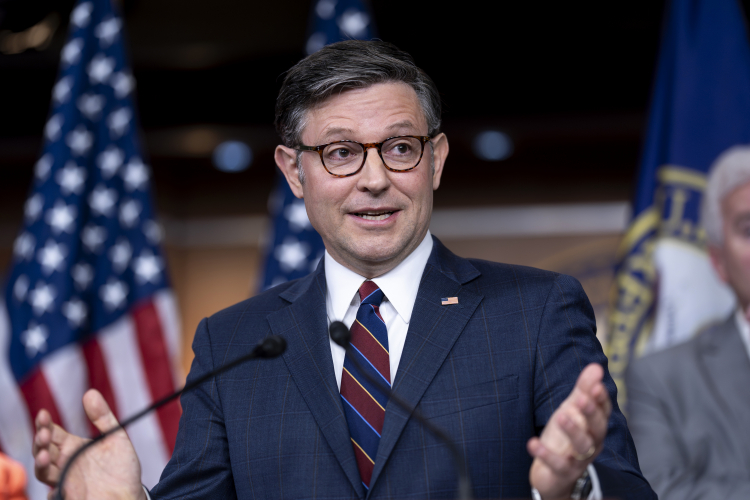
Mike Johnson, House Speaker: Current registration system nothing more than an "honor system."

Mitchell and others, including the Heritage Foundation’s Oversight Project, have suggested that significant numbers of noncitizens could wind up on the voting roles under Biden administration Executive Order 14019, which directs every federal agency to register and mobilize voters. 

Officials in Alabama and Mississippi say that under the executive order, which RCI has previously examined, authorities are already attempting to register noncitizens to vote. The Biden administration initiative calls on federal agencies to coordinate with third-party groups in pursuit of its objectives as well. Adams, testifying alongside Spakovsky for the Republican majority before the House Administration Committee in May, said that “most often noncitizens are getting on the rolls through the motor voter registration process or third-party registration drives.” 

Regarding motor-voter registration, the Only Citizens Vote Coalition warns that “many states are now automatically registering people to vote at the time of coming into contact with the DMV unless the person ‘opts out’ of registration.” 

Brennan Center for Justice
Michael Waldman: “Under current law, noncitizen voting in federal elections is illegal four times over."

Advocates are also concerned that practices like same-day voter registration and allowing the use of student IDs to vote – IDs that can be issued to foreigners – could lead to noncitizens ending up on voter rolls and potentially voting. 

These issues likely only exacerbate concerns election integrity advocates already have around practices like mail-in voting and ballot harvesting that have become widespread since the 2020 election. A more robust “level of citizenship tracking and verification would almost certainly require legislative change to accomplish,” Wisconsin’s Riley Vetterkind told RCI.

Congressional Republicans have sought to do just that with the SAVE Act, which passed the House on July 10 in a largely party-line vote. Under the existing registration system, applicants attest to their citizenship simply by checking a box, under penalty of perjury. House Speaker Mike Johnson calls this nothing more than an “honor system” that leaves “people who have already proven they have no regard or respect for our laws” undeterred. 

The SAVE Act would close this loophole by requiring that applicants provide proof of citizenship in person when registering to vote in federal elections. Adams has argued that under the less stringent status quo, noncitizens often end up on the voter rolls through no fault of their own – subjecting aliens who often can’t speak English to severe legal liability.

Critics of the SAVE Act, echoing some states, believe those liabilities – including the threat of deportation, jail time, and other punishments – sufficiently curb noncitizen registration and voting.
AP
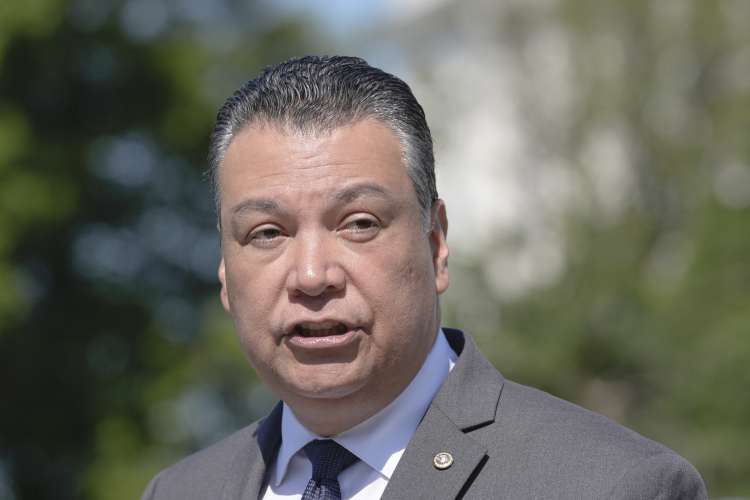
Sen. Alex Padilla, Democrat of California: Nonmcitizens don't vote in legally detectable numbers.

New York University Brennan Center for Justice President Michael Waldman emphasized in the May congressional hearing, as the Democrat minority’s witness opposite Adams and Spakovsky, that “under current law, noncitizen voting in federal elections is illegal four times over: it is both a state and federal crime to register to vote, and it is both a state and federal crime to vote in federal elections.” 

The liberal think-tank did not respond to RCI’s inquiries in connection with this story. Democratic party leaders from President Biden on down also dismiss evidence of noncitizen voting, claiming it is virtually non-existent.

“Even the conservative CATO Institute has said that ‘noncitizens don’t illegally vote in detectable numbers,’” California Democratic Sen. Alex Padilla noted in a floor speech in response to Mike Lee, referencing a 2020 blog post from the libertarian think tank. 

Democrats also claim the bill’s documentary proof of citizenship requirements disenfranchise potential voters. They point to past evidence indicating that similar state laws in places like Kansas ended up preventing eligible registrants from voting. They also highlight surveys showing millions of Americans lack commonly used documents to prove citizenship, like a passport or birth certificate – two of a number of forms one could present to satisfy the SAVE Act’s requirements.

House Minority Leader Hakeem Jeffries branded the SAVE Act an “extreme MAGA Republican voter suppression bill.”

DHS's ‘Slow-Walking’

AP
Previously in RealClearInvestigations: "I'm tired of being quiet!" shouted Biden, pounding the podium for"voting rights." 
.

Registration requirements and Voter ID laws, which vary by state, do not necessarily prevent ineligible individuals from voting since noncitizens – and, in some cases, illegal aliens – can obtain relevant forms of identification. As Republican Virginia Gov. Glenn Youngkin highlighted in a recent executive order, only three states – his included – require even a full social security number to register to vote.

Thus, the SAVE Act would also mandate that states bolster their registration list maintenance practices explicitly to identify and remove noncitizens from voter rolls – including through cross-referencing their lists with more comprehensive data sources.

Only five states currently have access to one resource referenced in the bill, the Department of Homeland Security’s SAVE tool. A House Administration Committee report indicates that DHS is not granting the same level of access to all states and may be “slow-walking” requests to use it. 

'Significant Inaccuracies' in the Federal Database

When asked about this allegation, a spokesperson for the U.S. Customs and Immigration Service told RCI, “There is an established process agencies must undergo and eligibility criteria agencies must meet to complete SAVE registration.”

“USCIS is committed to working with agencies seeking access to SAVE and processing registration requests as efficiently as possible,” the spokesperson added while referring a reporter to several resources on its website.

Still, these databases are not seen by all as a panacea. “Even using the federal SAVE database, which can only be used to determine current citizenship status for one person at a time, and only when that person has been involved in the federal immigration system, our agency found significant inaccuracies in the data we received,” North Carolina’s Patrick Gannon told RCI in an email. “There is no comprehensive, accurate, or up-to-date database of U.S. citizens that election administrators could use for verification purposes.”

Democrats argue that the more robust voter registration list maintenance demanded by Republicans could leave eligible voters purged. Calling the SAVE Act “nothing other than a solution in search of a problem,” Sen. Padilla blocked the bill in the upper chamber.

With a September spending fight looming in Congress, the House Freedom Caucus is seeking to force the issue by calling on leadership to attaching the SAVE Act to any stopgap spending solution – a plan Sen. Lee has also endorsed.

Meanwhile, election integrity advocates like the Only Citizens Vote Coalition are calling for state-level model legislation to combat noncitizen voting. The Heritage Foundation’s Oversight Project has been working to identify vulnerabilities in extant voter registration systems and potential legal violations, publicize them, and press lawmakers to enforce relevant laws to combat noncitizen voting.

The conservative public interest law organization America First Legal recently sent letters to all 50 states instructing them that under existing law, states can and should send requests to the DHS soliciting the citizenship status of registered voters.

America First Legal has also sent demand letters to all 15 Arizona County Recorders compelling them to verify the citizenship of all “federal-only” voters, including through making citizenship requests of DHS – or face legal action.

On Aug. 5, America First Legal filed suit against the Maricopa County Recorder for his alleged failure to act in response to the group’s demand letter. Three days later, the Republican National Committee filed an emergency application at the Supreme Court in a bid to compel Arizona to enforce its proof of citizenship requirements for the 2024 presidential election.

Warning: Extended Lawfare Ahead
AP
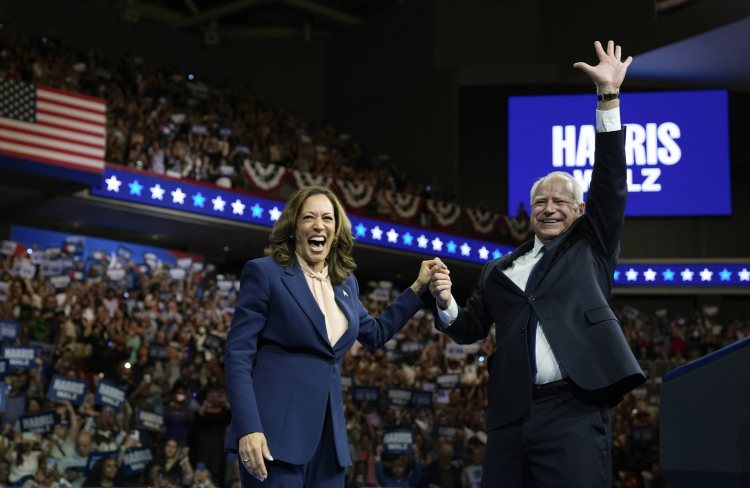
The Democratic presidential ticket has favored government benefits for illegal aliens. Will that include voting rights?

These forces on the right are likely to find themselves locked in battle with the left for years to come. 

House Democrats, today in the slim minority, have voted to continue apportioning congressional seats based on total population rather than total citizens in a given jurisdiction; to protect noncitizen voting rights in Washington, D.C.; and, in legislation aimed at providing certain aliens with a path to permanent resident status, to permit authorities to waive unlawful voting as grounds for deeming noncitizens inadmissible. Liberal witnesses were unable or unwilling to affirm that only citizens should be permitted to vote in federal elections during a March Senate Judiciary Committee hearing concerning elections.
AP
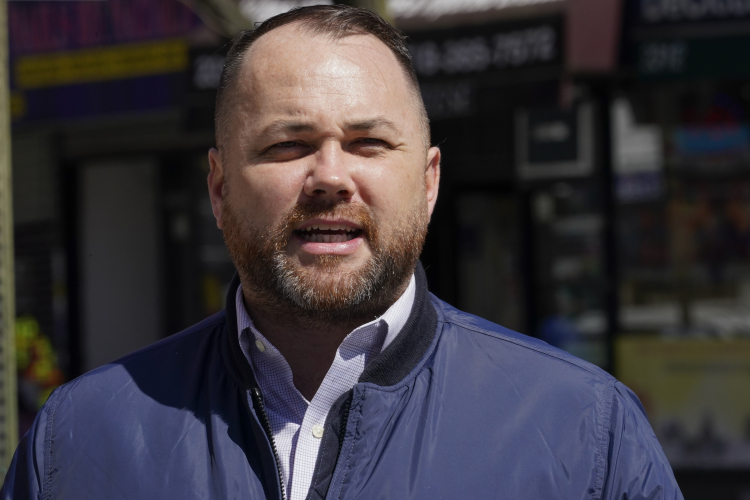
 Corey Johnson, New York City Council Speaker: “Immigrants pay taxes, they use city services, their kids go to our public schools. ... And they deserve a say in local government,”

As a presidential candidate in 2020, Vice President Kamala Harris signaled her support for providing government healthcare to illegal aliens. Her presumed running mate, Minnesota Gov. Tim Walz, signed legislation providing benefits for illegal aliens, including state-funded healthcare, driver’s licenses, and free college tuition.

Those on the left see voting rights, like the expansion of other benefits to noncitizens, as a matter of fairness.

“Immigrants pay taxes, they use city services, their kids go to our public schools. They are part of our community. And they deserve a say in local government,” New York City Council Speaker Corey Johnson said in defending a bill that has been ruled unconstitutional that would have allowed an estimated 800,000 noncitizens to vote in local elections.

The Trump-Vance campaign, by contrast, has called for mass deportation of the illegal alien population to which Democrats increasingly wish to extend rights and benefits, among other immigration measures the Republicans say aim to protect and support Americans. In contrast to the growing coterie of blue-state jurisdictions embracing noncitizen voting, red states are increasingly passing amendments prohibiting local governments from allowing noncitizens to vote, with Louisiana and Ohio most approving such constitutional changes in 2022. Eight more states have citizenship-related ballot measures in the 2024 election.

Benjamin Weingarten is a Senior Fellow at the London Center for Policy Research, Fellow at the Claremont Institute and Senior Contributor at The Federalist. He was selected by The Fund for American Studies as a 2019 Robert Novak Journalism Fellow

https://www.realclearinvestigations.com/articles/2024/08/14/vote_integritys_nitty-gritty_the_battle_lines_of_24s_epic_struggle_1051309.html

Walz Dithered While Minneapolis Burned

 If Kamala Harris wanted to dispel the idea that Democrats are soft on crime, Tim Walz was an odd choice of running mate. Mr. Walz’s tenure as Minnesota’s governor will be defined by the George Floyd race riots in Minneapolis and his response to them. Americans everywhere still live with the consequences.

On Memorial Day 2020, May 25, Floyd passed a counterfeit $20 bill at a Minneapolis convenience store. The clerk called the police; Floyd, high on fentanyl, resisted arrest and said that he couldn’t breathe. After a long struggle, the responding officers managed to cuff Floyd and place him prone on the ground; Officer Derek Chauvin kept his knee on Floyd’s neck and back for nine minutes. Floyd died of cardiac arrest.

The violence in Minneapolis began soon after a cellphone video of the incident went viral on May 26. By May 27, the looting, arson and assaults had become an ecstatic frenzy of destruction. Rioters tore open plywood barricades that business owners had hurriedly nailed over storefronts and tossed Molotov cocktails inside the premises. Cash, merchandise and safes were stolen, businesses burned to the ground.

Firefighters were attacked, and Minneapolis Mayor Jacob Frey said they were delayed in responding to calls because of “insufficient law enforcement presence to ensure firefighters’ safety prior.” The Third Precinct—where the officers who responded to the Floyd call worked—came under attack in the early hours of May 28. Rioters fired high-powered BB guns at officers outside the precinct; the front door was shot out at 4 a.m. All around the station house, businesses were burning down.

On May 27, Gov. Walz used his midday Covid press briefing to racialize what he called Floyd’s wrongful death and to commend the Minneapolis mayor’s immediate firing of the four officers: “We all know that these types of incidents disproportionately affect our black and brown community members,” Mr. Walz said. He thanked the “protesters” for their “commitment to safely protest during this pandemic”—an apparent reference to wearing masks—and “encouraged everyone to be safe, especially in light of the Covid 19 pandemic.” He described himself as “saddened to see that some of the protesters were in harm’s way” the previous night, his only oblique reference to the riots.

At 6:30 p.m. the same day, Minneapolis Mayor Jacob Frey asked Mr. Walz to activate the Minnesota National Guard. Mr. Frey followed up with a written request at 9:11 p.m. Mr. Walz didn’t respond until 4 p.m. the next day, when he signed an executive order activating 500 state soldiers. In the interim, his staff had quizzed the Guard about its members’ DEI training and whether they had experience working with “diverse communities,” according to a report by a Minnesota Senate committee.

By the time the Guard arrived on May 28, it was too late. According to the committee report, officers at the Third Precinct were “taking paintball rounds, frozen water bottles, rocks, and mortar rounds.” Mr. Frey ordered its evacuation just before 10 p.m. The station house was immediately overrun and torched.

On May 29, Mr. Walz held a press conference to explain his decision to send in the National Guard and its belated timing. “There was a decision during the day whether—did you occupy the entire city and shut it down after those 24 hours?” he said. The problem Mr. Walz allegedly confronted was that the “tools of restoring order are viewed by so many as the things that have oppressed and started the problem in the first place.” He spoke of “people who are concerned about that police presence of an overly armed camp in their neighborhoods that is not seen in communities where children of people who look like me run to the police, others have to run from.”

Mr. Walz’s skin color bore on his legitimacy as a decision-maker, he said: “I will not patronize you as a white male without living those experiences of how difficult” it is to have a police force occupying one’s neighborhood. He described the riots themselves as a manifestation of systemic racism: “What the world has witnessed since the killing of George Floyd on Monday has been a visceral pain, a community trying to understand who we are and where we go from here.” Mr. Walz imputed a sacramental quality to the looted and torched buildings: “The ashes are symbolic of decades and generations of pain, of anguish, unheard.”

The limited deployment of Guardsmen proved insufficient. On the morning of May 30, Mr. Walz activated the entire Minnesota National Guard. By the next day, more than 5,000 soldiers and airmen had been called up. They eventually restored order.

The unchecked chaos in Minneapolis had long since spread across the country, with copycat looting, arson, and attacks on police breaking out in multiple cities. In Minneapolis, more than 1,500 businesses and buildings burned. Property damage was estimated at $500 million; the livelihoods destroyed by the mayhem were incalculable. Most of the Minneapolis rioters faced no consequences; police were too overwhelmed to make many arrests, and almost nobody was prosecuted.

The message was clear: Lawlessness is free. Homicides nearly doubled in Minneapolis from 2019 to 2021; aggravated assaults were up by one-third. Carjackings increased more than fivefold between 2019 and 2020 and are still at record levels, with armed juveniles as young as 12 playing a starring role.

So far in 2024, homicides in Minneapolis are 114% above their 2019 level. Homicides in the Third Precinct are more than three times the 2019 figure, and robberies are up 84%. Crime in the state as a whole is up 12% compared with 2019, when Mr. Walz took office.

Nationwide, homicides rose 29% in 2020, the largest annual increase in U.S. history. Felony crime in many cities is still above its pre-George Floyd race riot levels.

A primary cause of this national crime increase is the demoralization of law enforcement. Officers have left the profession in droves and aren’t being replaced. In 2023 Minneapolis’s patrol strength reached its lowest level in at least four decades. The rest of Minnesota isn’t doing much better. In 1996 the Rochester Police Department received 550 applications for five open spots. In 2022, 10 open spots elicited 18 applications. Officers fear accusations of racism if they make too many stops and arrests in high-crime neighborhoods.

In 2022 Mr. Walz declared May 25 “George Floyd Remembrance Day” and has done so each year since. The 2022 and 2023 proclamations invoked “systemic racism” or its equivalent five times. They urged the public to “honor” Floyd “and every person whose life has been cut short due to systems of racism,” and to “deconstruct and undo generations of systemic racism.”

Mr. Walz signed legislation in 2023 to lessen criminal penalties, expunge convictions and reopen felony murder sentences, although Minnesota’s incarceration rate had already been dropping in tandem with the rise in crime.

Mr. Walz’s belief in “systemic racism” dovetails with Kamala Harris’s worldview. Both portray the police as the major threat to black Americans. In Minneapolis, 309 black people were shot in 2021—only one of them by a police officer, who was returning fire. That proportion—99.7% of black shooting victims shot by civilians, themselves overwhelmingly black—is typical. But a Harris-Walz White House would continue the Biden-Harris theme: that police are the problem in black communities. The result will be more lawlessness and more needless loss of black lives.

Ms. Mac Donald is a fellow at the Manhattan Institute and author of “The War on Cops: How the New Attack on Law and Order Makes Everyone Less Safe.”

https://www.wsj.com/opinion/tim-walz-dithered-while-minneapolis-burned-kamala-harris-2020-riots-911b47eb

Press Won’t Discuss Real Campaign Issues, Because They Don’t Want Trump To Win

 The press is hoping you won’t notice they’re covering for Kamala Harris by not covering her record on real issues such as inflation, immigration, education, crime, taxes and so on.

Following the dramatic reveal of Joe Biden’s age-related decline on a national debate stage, there was a brief period of self-examination among the press where they asked themselves whether regurgitating Democrats’ credulous and self-serving narratives was in the best interest of the American people. That lasted about a week, and was clearly insincere.

We’re now three weeks from the press hounding Biden out of the race because they looked like fools for defending years of video clips showing him stumbling around on the international stage non compos mentis. And with no remorse or self-awareness, the media are already back to doing everything they can to serve Democrats’ narrative.

What this means in practice is that, unlike a traditional presidential campaign, there’s been virtually no discussion of actual issues such as the economy, immigration, education, taxes, health care, foreign policy, and so on. The last four years have been pretty disastrous. As a result, if this campaign becomes about issues and what’s happened under the Biden-Harris presidency, Trump is going to benefit greatly from that discussion. So the press won’t let it happen.

Kamala Harris could not survive the scrutiny of a real presidential campaign, and the media know this. They figure they can skate by with three months of embarrassingly puffy coverage and fool just enough voters with the talk of “vibes” and “joyful” campaigning, because vibes are all the Harris campaign has. The Harris-Walz record is indefensible. There’s a reason their website has seven donation buttons, but no webpage dedicated to issues.

Again, it is worth noting just how crazy and disturbing recent events have been. Joe Biden dropped out of the race, Kamala Harris became the Democratic nominee for president just a week ago through an unprecedented and dubious “roll call” of delegates on the internet without Harris receiving a single primary vote, and even more incredibly, without answering a single substantive question from a member of the press.

Harris still has not done a major interview, and has only made noises about doing an interview “before the end of the month.” Meanwhile, major news organizations are just declaring themselves impotent preemptively. It’s pathetic. Here’s an actual CNN headline: “Trump’s campaign cranked up the pressure on Harris to do a major interview, hoping to goad her into a forum in which she’s been historically more vulnerable.” Why is the Trump campaign the one to put pressure on her here? Isn’t it the press’s job to push politicians out of their comfort zones and make them answer tough questions? And here’s a terrifying thought: If Harris is “historically vulnerable” to doing something as basic as giving a press conference, should voters trust her to negotiate with hostile foreign leaders?

It’s true Harris often defaults to embarrassing and ignorant gibberish when she has to talk at any length. Seems like an issue the press should put to the test! Instead, the media doesn’t want to put any pressure on Harris speaking without a teleprompter. The media could easily make the pressure unbearable on Harris and her running mate Tim Walz simply by giving them tough coverage highlighting important issues in their own records.

This is not a hard thing to do. Kamala Harris has flip-flopped on major issues, such as the fact she supported a ban on fracking. She has offered no more of an explanation for her change of heart than a generic campaign statement. She was, despite the press’s frantic and unconvincing walkback, the “border czar” when 10 million-plus illegal immigrants were let into the U.S. She now “promises to go tough on border security,” and the press doesn’t seem concerned about making her explain what she’ll do now that she wasn’t doing before.

And then there’s Tim Walz, the governor of Minnesota who cowardly bailed on a combat assignment and lied about his National Guard service. As governor of Minnesota, Walz openly sympathized with BLM rioters and was very slow to act as they burned 150 buildings and did half a billion in damages to his state. He’s presided over a huge spike in murder and major education failures in Minnesota, and is generally a progressive radical.

Any mildly adversarial reporting on Harris and Walz would pretty quickly see them face real pressure to explain themselves publicly.

By contrast, in the last week Donald Trump held a press conference where he took on all comers from a hostile press, and J.D. Vance did a series of interviews with network news that were almost absurdly adversarial. CNN’s Dana Bash went straight at combat veteran Vance for criticizing Kamala running mate Tim Walz’s questionable decision to abandon his unit and retire from the National Guard before deploying to Iraq. She told millions of viewers that Walz did not know his unit was deploying — which is decidedly untrue.

And then ABC’s Jon Karl also acted as a surrogate for Walz by flatly accusing Donald Trump of lying because he said that Walz supported “kidnapping” children from parents who don’t support their children being hormonally sterilized and surgically mutilated because too much time on the wrong parts of the internet made them confused about their sex.

Contrary to Karl, the fact is that the Minnesota law that Walz enthusiastically supports made the state a “trans refuge” and allows for the state to invoke “temporary emergency jurisdiction,” aka taking kids from parents if there’s a custody dispute over a child getting what the state falsely deems “medically necessary” treatment for being trans. Instead of asking Harris and Walz whether they think undermining parental rights is something Americans support, Karl is cartoonishly calling Trump and Vance liars based on his own misunderstanding of what Walz has done.

It’s worth watching Vance’s response to Karl in full because he does a masterful job of pushing back on his ridiculous defense of Walz’s radical policies. But perhaps what’s most notable about the exchange is the way that Vance calls out Karl and the press for not discussing real issues:

Here’s the more important thing, Jon, why aren’t we talking about inflation? Why aren’t we talking about the fact that groceries are unaffordable thanks to Kamala Harris’ policies, and so is housing? We’ve talked a little bit about the border. Why aren’t we talking about the fact that the entire world is on fire because Kamala Harris’ foreign policy, she’s just asleep at the wheel? We have a set of plans. You talk about sticking to the facts. Donald Trump and I have a set of plans to lower the cost of housing and food, to bring peace back to the world with American leadership, that is all that we want to do. And I think it’s telling that the Harris administration is focused so much on these side issues instead of on the real substance, why Americans are unhappy with Kamala Harris. … What are their policy views? They don’t have a policy position on their website. Should she sit down and answer tough questions with you? I think she should. Where is she?

The reality, of course, is that the Trump campaign should know they can’t count on the media to do their job. They are openly campaigning for her and the double standards are blatant — when Harris recently stole the Trump campaign’s proposal to stop taxing tips, you might be able to detect a slight difference between how the proposal has been covered depending on which candidate is espousing it.

America’s failing media establishment knows that if Trump were elected it would be a massive repudiation and further erode their credibility. They’re going to do what they can to help Harris get elected. If the Trump campaign needs this race to be about issues, they had better have a plan to bring these issues to the public and make Kamala Harris and Tim Walz account for their lack of honesty and failures. The press won’t do this and time is running out.


US junk debt investors cautious of leveraged loans as economy slows

 Leveraged loan deals are expected to pick back up after a stabilization in markets over the past week, although some investors say they are cautious about junk-rated loans if the economy weakens.

Borrowers pulled back on leveraged loan deals last week, following disappointing jobs data on Aug. 1 and Aug. 2 that raised forecasts for aggressive interest rate cuts and spurred concerns about lower-rated debt.

A total of six leveraged loans worth $3.3 billion sold last week, which falls well short of the $10 billion weekly average this year and is the worst week for issuance outside the holiday-shortened first week of July, according to PitchBook LCD data.

One junk-rated loan deal sold on Monday, airline JetBlue Airways' five-year term loan, according to PitchBook LCD. JetBlue originally sought a $1.25 billion loan, but downsized it to $750 million and upsized its bond offering to $2 billion from $1.5 billion, according to Informa Global Markets. JetBlue did not immediately respond to a request for comment.

At least two leveraged loan deals hit the market on Tuesday, including a $160 million add-on to virtual dataroom Datasite’s cross-border term loan and a $253 million repricing of for-profit education operator Adtalem Global Education’s term loan, according to PitchBook. Datasite and Adtalem did not immediately respond to a request for comment.

Lower rates can be good news for highly indebted companies.

"There's no doubt if the Fed ends up cutting more as is priced in currently, that's going to be a big relief for (those) borrowers," said Hans Mikkelsen, credit strategist at TD Securities.

"But (investors) can now expect to earn less going forward because of that, (and) there's going to be less availability of financing in the leveraged loan market (as a result)," he said.

Leveraged loan funds reported $3.1 billion in outflows last week, which is the most since March 2020, according to JPMorgan. That includes a record $2.4 billion outflow from exchange-traded funds.

The Morningstar LSTA US Leveraged Loan Index fell 0.55% on Aug. 5, the worst daily performance for the index since the collapse of Silicon Valley Bank in March 2023. The index has since clawed back these losses.

"For leveraged loans, a wave of volatility did throw a wrench into the works for the loan primary... forcing several opportunistic transactions to the sidelines," said Marina Lukatsky, global head of credit research at Pitchbook.

These included deals for investment firm Focus Financial Partners, theme park owner SeaWorld Entertainment (owned by United Parks & Resorts Inc.), and wireless provider SBA Communications, according to Lukatsky. The companies did not immediately respond to a request for comment.

Cardinal ups guidance

 Cardinal Health (CAH) stock surged early Wednesday after the multinational medical products and pharmaceuticals distributor reported better-than-expected fiscal fourth-quarter results while also hiking its fiscal 2025 profit expectations.

The Dublin, Ohio-based operation announced early Wednesday that fiscal Q4 earnings grew 19% to $1.84 per share while sales increased 12% to $59.87 billion. Prior to the report, analyst consensus had Cardinal Health Q4 EPS coming in at $1.73 on revenue totaling $58.64 billion, according to FactSet.

Cardinal Health also raised its profit guidance for fiscal 2025, expecting adjusted earnings of $7.55-$7.70 per share. The company's previous view had been around $7.50 per share.

Analysts expect fiscal 2025 EPS to remain flat with 2024, coming in at $7.53, while Cardinal Health's forecast represents a 2% increase at the top end of its guidance.

https://www.investors.com/news/cardinal-health-stock-buy-point-earnings/

Viracta lays off 23% of staff, pauses program for race to finish line in lymphoma

 Viracta Therapeutics is going all-in on its lymphoma program. The biotech responded to phase 2 data by throwing its resources behind a plan to file for a blood cancer approval in 2026, hitting pause on its solid tumor program and putting 23% of its staff out of a job in the process.

San Diego-based Viracta has studied the combination of the HDAC inhibitor nanatinostat and antiviral valganciclovir in people with peripheral T-cell lymphoma (PTCL) and solid tumors. In both settings, the biotech has focused on Epstein-Barr virus (EBV)-positive cancers. The idea is to induce EBV expression with nanatinostat and the death of lymphoma cells that carry the protein with valganciclovir.

On Wednesday, Viracta reported phase 2 data on the drug combination in 21 patients with relapsed or refractory EBV-positive PTCL. The biotech saw overall and complete response rates (ORR/CRR) of 33% and 19%, respectively. In the 10 second-line patients, the ORR was 60% and the CRR was 30%.

The study is yet to reach the median duration of response. Those signs of efficacy, coupled with adverse events that were primarily mild to moderate and generally manageable or reversible, have led Viracta to reshape its strategy around the lymphoma opportunity.

Viracta is pausing its solid tumor program and making layoffs that will affect around 23% of employees. The biotech ended March with 40 full-time employees, 30 of whom worked in R&D. Viracta had $30 million at the end of June, a sum it expects to fund operations late into the first quarter of 2025.

The runway stops short of key events on Viracta’s timeline. Management plans to meet with the FDA to discuss the design of a randomized trial in second-line, EBV-positive PTCL in the first half of 2025. Viracta is aiming to start the study in the second half of 2025. In parallel, the biotech will continue to collect data from the expansion phase of its mid-stage trial with the goal of seeking accelerated approval in 2026.

https://www.fiercebiotech.com/biotech/viracta-lays-23-staff-pauses-program-slim-down-race-finish-line-lymphoma