Search This Blog

Monday, February 3, 2025

Was a Novel Eye Treatment Approved Too Soon?

 A pivotal clinical trial that cleared the way for US regulators to approve a new light therapy device as a treatment for macular degeneration has been criticized for several shortcomings, with a warning issued that a host of questions must be answered before clinicians prescribe the device.

photo of Srinivas Sadda
Srinivas Sadda, MD

In a “viewpoint” published in JAMA Ophthalmology in late January, Srinivas Sadda, MD, a retina specialist at Doheny Eye Institute in Pasadena, California, and a professor at UCLA David Geffen School of Medicine, called for more data before clinicians can “confidently” recommend the device to their patients. The publisher released the viewpoint as Online First “because of public health importance.”

The US Food and Drug Administration (FDA) granted De Novo approval to the device, known as the Valeda Light Delivery System (LumiThera), in November 2024, based on the results of the LIGHTSITE III trial. De Novo is a regulatory pathway for novel medical devices that carry what the agency determines is a low to moderate risk for harm but have no equivalent comparator device.

LIGHTSITE III enrolled 100 patients and 144 eyes with the dry form of age-related macular degeneration (AMD), an early form of the disease that can lead to geographic atrophy and eventually blindness. Dry AMD, also known as non-neovascular AMD, is characterized by degeneration of the macula without the growth of new blood vessels, whereas in wet or neovascular AMD, new blood vessel growth leads to the buildup of fluid under the retina. Dry AMD accounts for about 90% of the 20 million cases of AMD in the United States, according to the most recent prevalence data.

In 2023, the FDA approved two drug treatments for geographic atrophy in dry AMD, Syfovre (pegcetacoplan) and Izervay (avancicaptad pegol), but Valeda is the first light therapy system approved for the condition.

Valeda employs photobiomodulation (PBM), an established biotechnology that uses light ranging from the visible spectrum to near-infrared intensity and applies it to tissues to stimulate cellular response. PBM has been used for the treatment of arthritis, skin wounds, and certain sports injuries. Valeda is the first application in ophthalmology.

In the LIGHTSITE III trial, patients underwent nine sessions of treatment over 3-4 weeks, repeated every 4 months over 24 months. The treatment group received light therapy treatments in wavelengths of 590, 660, and 850 nm, while the sham group received light between 50 and 100 times less intense.

Small Population, Inconsistencies

In his commentary, Sadda, who was not available for an interview with Medscape Medical News, noted that LIGHTSITE III assigned 91 eyes to receive the PBM treatment and 54 eyes to the sham group. This relatively small sample size prompted study investigators to include both the eyes of participants in their analysis and adjust for correlations between eyes — both treated and untreated — of the same participant, Sadda stated.

“However, inconsistencies may undermine confidence in the results,” he wrote. Among them is a lack of clarity about when study participants dropped out and how those dropouts affected study results. Among the treatment group, 14% of eyes dropped out, as did 23.5% of the sham eyes. “Providing a study protocol and statistical analysis plan might have been beneficial,” Sadda wrote.

Sadda also noted the LIGHTSITE III trial provided few details on how the therapy was delivered, specifically whether or not patients were dilated during treatment, and offered no information on whether patients were monitored during treatment sessions to ensure compliance. “With relatively small sample sizes, such variability might confound results,” he wrote.

“Treatment burden is also a consideration,” Sadda added. The treatment protocol adds up to 27 office visits a year.

Regarding safety, Sadda cited reports from China of damage to the eyes of children exposed to low-level light therapy in that country, one in a clinical trial that studied light therapy for myopia, the other a case report of photoreceptor damage in a 12-year-old girl. “An older eye with diseased RPE [retinal pigment epithelium] and photoreceptors could potentially be more susceptible to such damage,” Sadda wrote. The latter case “highlights the need for ongoing vigilance of safety,” he added.

The trial reported an average improvement in best-corrected visual acuity (BCVA) of 5.4 letters in the treatment arm and three letters in the sham arm, which, Sadda stated, raises the possibility that even the treated patients may have experienced a placebo effect. Further supporting this argument is that untreated, nonstudy eyes lost BCVA, which, because they started at a better BCVA baseline (20/32 Snellen), had a wider range in which to lose acuity than the treated eyes. A five-letter change in vision can represent an improvement from 20/40 to 20/32 in Snellen visual acuity.

“Treating physicians should seek and receive answers to these questions to increase the possibility of providing the best possible advice to patients,” Sadda wrote. “More data must come to light for physicians to recommend PBM to patients confidently.”

More Data Coming

David Boyer, MD, a retina specialist in Beverly Hills, California, and the lead author of the LIGHTSITE III trial, said more data are on the way. “I appreciate Dr Sadda’s evaluation. Any new treatment needs to be critically evaluated,” Boyer told Medscape Medical News.

photo of David Boyer, MD
David Boyer, MD

Many of the issues Sadda raised will be explained in the 24-month LIGHTSITE III results, which are being prepared for publication, Boyer said. One area where the data will provide clarity is the difference in BCVA improvement between treatment and sham groups, he said.

Sadda argued the difference at 13 months was not clinically significant. One limitation the trial itself pointed out was a potential, although reduced, treatment effect for sham patients.

“However, the sham group at 24 months decreased back almost to baseline, which one would expect if you weren’t getting active treatment, whereas the PBM treatment group continued to maintain separation, and the separation actually grew,” Boyer said.

The 24-month data are “strong,” he said, and demonstrate a continued improvement in BCVA of more than six letters at times. Boyer said the LIGHTSITE II trial in Europe and LIGHTSITE I in Canada have demonstrated similar results to LIGHTSITE III. Longer-term data will come with an ongoing phase 3b study that is evaluating PBM outcomes out to 3 years, and a registry has been established in Europe to track results, he said.

The primary study endpoint, Boyer noted, was an improvement in BCVA, not an anatomical marker, such as a change in retinal thickness, which, he said, was “the biggest limitation.”

The dropout rates in LIGHSITE III, which Sadda cited in his commentary, were similar to those reported in the pivotal studies for the approved drug treatments for geographic atrophy, Boyer said. As for safety, the trial reported dry eye was the only treatment-related adverse event, with no significant changes in visual field or color vision assessments.

“I don’t want anybody to feel we have a cure for geographic atrophy because that’s not what the trial was designed for,” Boyer said. “It was designed to show a potential visual improvement, which it did.”

He also provided insight into what type of patient would be best served by PBM treatment: 20/40 vision or worse and central geographic atrophy. But a patient with 20/25 vision and a few drusen, he said, “I would not consider for treatment.” 

In a statement sent to Medscape Medical News,LumiThera president and CEO Clark Tedford, PhD, said, “The trial design, dropout rate, and treatment of each eye requires further clarification,” but that the treatment group showed “significant improvements” in BCVA.

“The growing body of data presents a positive outlook for a mitochondrial approach using PBM to treat dry AMD,” Tedford added. “The upcoming publication will provide further details on the LIGHTSITE III 24-month trial results. Earlier AMD treatment is important for patients and the LIGHTSITE III trial results will be discussed, digested, and replicated in future trials.”

The LIGHTSITE III study received funding from LumiThera and the National Eye Institute. Sadda reported financial relationships with AbbVie/Allergan, Alexion, Apellis, Astellas/Iveric, Bayer, Biogen, Boehringer Ingelheim, Character Biosciences, Eyepoint, Janssen, Nanoscope, Neurotech, Notal Vision, Novartis, Ocular Therapeutix, ONL Therapeutics, Oyster Point, Pfizer, Regeneron, Regenxbio, Roche/Genentech, Samsung Bioepis, Carl Zeiss Meditec AG, iCare/CenterVue, Heidelberg, Nidek, Optos, Topcon, and Intalight Research Instruments. Boyer was a noncompensated investigator in the LIGHTSITE III trial.

https://www.medscape.com/viewarticle/was-novel-eye-treatment-approved-too-soon-2025a10002l7

'New Data Shed Light on Who Stops Using GLP-1 Drugs, and Why'

 A majority of people with overweight or obesity prescribed glucagon-like peptide 1 receptor agonists (GLP-1 RAs) discontinue them within 1 year, with higher quit rates among those without type 2 diabetes (T2D), new research suggested.

The data, from electronic health records of more than 125,000 adults who initiated GLP-1 RA treatment in the United States, showed that just over half stopped using GLP-1 RAs at 1 year. More than two thirds of those without T2D did so compared with just under half of those with T2D.

In addition, people without T2D were also less likely to reinitiate GLP-1 RAs within a year after stopping them. Weight loss, income, and adverse events were significantly associated with discontinuation, while weight regains predicted GLP-1 RA reinitiation.

Previous studies have examined rates of GLP-1 RA discontinuation, but this is believed to be the first to look at reinitiation, as well as to explore the possible reasons that patients stop and restart the drugs, first author Patricia J. Rodriguez, PhD, told Medscape Medical News.

“GLP-1 medications have changed the way doctors treat type 2 diabetes and obesity…This research, with real-world data, aimed to improve our understanding of how these medications are being used in everyday practice and the barriers patients may face to sustained use,” said Rodriguez, principal applied research scientist at Truveta, Inc., Bellevue, Washington, a collective of US health systems from which the data were obtained.

“I think these findings really highlight the need for clinical teams and patients to work together to assess the patient's needs and to tailor a treatment plan to address some of the barriers that might exist to continued medication-taking behavior and that could involve side effects, affordability, or weight loss,” Rodriguez said.

In a statement provided to Medscape Medical News, the study’s senior author, Ezekiel Emanuel, MD, PhD, co-director of the Healthcare Transformation Institute, University of Pennsylvania, Philadelphia, said, “These insights emphasize the need for policy changes to improve insurance coverage for individuals without T2D, as well as strategies to manage side effects and enhance patient adherence. Personalized treatment plans that incorporate patient-specific weight loss goals and financial assistance programs may help improve long-term adherence.”

Asked to comment, Hamlet Gasoyan, PhD, an investigator at the Center for Value-Based Care Research, Cleveland Clinic, Cleveland, who has also published on GLP-1 RA discontinuation, told Medscape Medical News that the new data align with his prior findings of high overall discontinuation rates and the greater likelihood of discontinuation among those without T2D.

“Their results are consistent with our finding that patients experiencing greater medium-term weight loss have a higher likelihood of persisting with obesity pharmacotherapy,” Gasoyan added.

He called the high discontinuation rate among patients without T2D “striking,” as well as “reinforcing concerns that insurance barriers limit sustained use for those seeking GLP-1 RAs for weight management. Additionally, the study found that weight gain after stopping was strongly associated with reinitiation, suggesting that many patients may need long-term therapy to maintain weight loss.”

And, Gasoyan pointed out, “While insurance status was not available to the study authors, they used age 65 years or older as a proxy for Medicare eligibility, which was again associated with the likelihood of GLP-1 RA discontinuation. The stark differences in discontinuation and reinitiation rates between those with and without type 2 diabetes are likely due to the differences in insurance coverage for these medications based on treatment indication.”

Quitting and Restarting Patterns

The findings came from Truveta Data, which compiles and continuously updates electronic health record data from 30 US healthcare systems, including drug prescribing and dispensing, clinical and demographic data, and clinical notes, as well as linkages to other data including social determinants of health.

The study population included 125,474 adults with overweight or obesity who initiated a GLP-1 RA (liraglutide, semaglutide, or tirzepatide) between January 1, 2018, and December 31, 2023. Of those, 61% (76,524) had T2D, while 39% (48,950) did not. Overall, 112,634 were followed up for at least 1 year and 48,099 for at least 2 years.

A total of 53.6% discontinued GLP-1 RAs by 1 year and 72.2% by 2 years. “There's so much interest in these medications, so finding that the majority of patients stopped them within a year was surprising to us,” Rodriguez commented.

However, 1-year discontinuation rates were significantly lower among those with T2D, just 46.5% compared with 64.8% for those without T2D. At 2 years, those rates were 64.1% vs 84.4%, respectively.

Factors significantly associated with discontinuation included age 65 years or older, with hazard ratios of 1.28 among those with T2D and 1.18 among those without. Higher income was progressively associated with a lower likelihood of discontinuation among those with T2D, with a hazard ratio of 0.72 for those with incomes greater than $80,000 vs under $30,000.

Greater weight loss while on GLP-1 RA treatment also predicted a lower likelihood of quitting the drugs, with a 1% weight reduction associated with a 3.1% lower likelihood of discontinuation among those with T2D and a 3.3% lower rate among those without T2D.

Moderate or severe gastrointestinal (GI) events also predicted discontinuation, both for those with T2D (hazard ratio, 1.38) and those without (hazard ratio, 1.19). According to the clinical notes, side effects were the most common reason for discontinuation among those with T2D, whereas “too expensive” was more common among those without T2D.

Of the total 81,919 patients who had discontinued taking GLP-1 RAs, 51.0% (41,792) were included in a reinitiation analysis. The rates of reinitiation within 1 year of discontinuation were 47.3% of those with T2D vs 36.3% of those without.

Factors significantly associated with reinitiation were a lower likelihood among those aged 65 years or older (hazard ratio, 0.88) and a 1% weight gain since discontinuation, which was associated with a 2.3% increased likelihood of reinitiation among those with T2D and a 2.8% increased likelihood among those without T2D.

Moderate or severe GI adverse events during initial treatment predicted a lower likelihood of reinitiation among those with and without T2D (hazard ratios, 0.86 and 0.82, respectively).

Gasoyan commented, “As more data become available on the reasons for treatment discontinuation with novel GLP-1 RA medications and how early or late discontinuation with these medications impacts clinical outcomes in real-world settings, clinicians will be better equipped to discuss these aspects with their patients and help to choose the best treatment option for them.”

The findings were published online on January 31, 2025, in JAMA Network Open.

Rodriguez is an employee of Truveta, Inc. Gasoyan received grant support from the National Cancer Institute. Emanuel reported receiving personal fees from the University of California, San Francisco, Advocate Aurora Health, Cain Brothers, Bowdoin College, the Suntory Foundation, Ontario Hospital Association, University of Oklahoma, Sanford Health, Health Plan Alliance, Emory Healthcare, and Employer Direct Healthcare; nonfinancial support from Galien Foundation, HLTH, Inc., National University of Singapore, Hawaii Medical Service Association, Tel Aviv University, The Quadrangle, Lazard, University of Bergen, University of Virginia, New York Historical Society, Amangiri, Forerunner Conference, BCEPS International Symposium, Future of Science, Cell and Gene Therapy, and Arendalsuka Meeting during the conduct of the study; and serving as a member of the Board of Advisors for Cellares Corp, advisor for Clarify Health Solutions, advisor for Notable Health, member of the Advisory Board for JSL Health, member of the Advisory Board for Peterson Center on Healthcare, special advisor to the Director General of the World Health Organization (WHO), member of the Expert Advisory Group WHO COVID-19 Committee, member of the Advisory Board of the HIEx Health Innovation Exchange Partnership sponsored by the United Nations, member of the WHO Expert Group on Ethics and Governance of Outbreaks/Emergencies, member of the WHO Guideline Development Group on the Use and Indications of GLP-1s for Adults Living With Obesity, member of the Internal Advisory Board of The Penn Parity Center, advisor for Link Health Technologies, advisor for Nuna Health, member of the Board of Advisors of Alto Pharmacy, consultant for Korro/Coach AI, consultant for Aberdeen, Inc., member of the Advisory Board of FeelBetter, Inc., member of the Advisory Board of Biden’s Transition COVID-19 Committee, and member of the JAMA Editorial Board.

https://www.medscape.com/viewarticle/new-data-shed-light-who-stops-using-glp-1-drugs-and-why-2025a10002lz

JD Vance visits East Palestine on second anniversary of toxic Ohio train accident

 A lawsuit alleging for the first time that people died because of the disastrous 2023 East Palestine train derailment has been filed ahead of Monday’s second anniversary of the toxic crash near the Ohio-Pennsylvania border amid a flurry of new litigation.

On Monday, Vice President JD Vance is visiting the small community near the crash site that he used to represent as a senator, along with President Donald Trump’s newly confirmed head of the Environmental Protection Agency, Lee Zeldin. It’s not yet clear how much pressure the Trump administration will put on the railroads to continue improving safety and whether they will push for the bill Vance co-authored in response to the derailment.

The new lawsuit announced Monday morning contains the first seven wrongful death claims filed against Norfolk Southern railroad — including the death of a 1-week-old baby. It also alleges the railroad and its contractors botched the cleanup while officials at the EPA and Centers for Disease Control and Prevention signed off on it and failed to adequately warn residents about the health risks. Many of the other parties in the lawsuit cite lingering, unexplained health problems along with concerns something more serious could develop.

“Our clients want truth. They want transparency,” attorney Kristina Baehr said about the roughly 750 people she represents. “They want to know what they were exposed to, which has been hidden from them. They want to know what happened and why it happened. And they want accountability.”

The lawsuit provides some examples of the lingering effects on families, but it doesn’t include details about the deaths.

At least nine other lawsuits were filed over the past week by individuals and businesses that argue the railroad’s greed is to blame for the derailment and the $600 million class-action settlement doesn’t offer nearly enough compensation nor sanction the railroad enough to spur them to prevent future derailments. The dollar amount represents only a small fraction of the $12.1 billion in revenue the railroad generated in each of the past two years.

What happened two years ago?

Dozens of rail cars careened off the tracks on Feb. 3, 2023, after an overheating bearing failed. Several cars carrying hazardous materials ruptured and spilled their cargo that caught fire. But the disaster was made worse three days later when officials blew open five tank cars filled with vinyl chloride and burned that toxic plastic ingredient because they feared they would explode.

Investigators from the National Transportation Safety Board determined the controversial vent and burn operation never needed to happen because there was evidence the railroad ignored that the tank cars were starting to cool off and wouldn’t have exploded. The state and local officials who decided to release and burn the vinyl chloride — generating a massive plume of thick, black smoke — have said they never heard anything suggesting the tank cars wouldn’t explode.

“The EPA had rules to follow and chose not to follow their own rules. The EPA was too busy trying to get the train back on track to protect the people,” Baehr said.

Officials haven’t responded Monday to questions about the new lawsuit and separate federal claims that were filed against the EPA and CDC. But in the past, the EPA has defended its role by saying they were only there to advise on the potential consequences of burning the vinyl chloride and measure the contamination.

Baehr said the EPA and CDC’s approach to the derailment followed a similar pattern she’s seen in other environmental disasters, including the Navy’s toxic spill of jet fuel that contaminated water in Hawaii. She said agencies tend to downplay potential health risks. Residents have expressed frustration with the data the EPA discloses and the refusal of the class-action attorneys to reveal what their own testing found.

How did the railroads respond?

A Norfolk Southern spokesperson declined to comment on the litigation. The railroad has agreed to a $600 million class-action settlement for people within 20 miles (32 kilometers) of the derailment and a separate settlement with the federal government in which Norfolk Southern pledged to pay for the cleanup, medical exams and drinking water monitoring. The railroad did not admit any wrongdoing in either settlement.

Norfolk Southern and other major railroads promised to improve safety after the crash by installing additional trackside detectors to spot mechanical problems before they cause a derailment. Federal officials say those steps haven’t improved safety meaningfully, and Vance’s bill that would have required additional changes never passed.

The rail unions on Monday again asked the railroads to join a federal program that would let workers anonymously report safety concerns and members of Congress made plans to renew their push for legislation.

What compensation has the town received?

Some nearby residents have started to receive personal injury payments as part of the class-action settlement, but nearly half of the settlement remains on hold while some appeal for higher compensation and more information about the contamination.

The main payments of up to $70,000 per household won’t go out until the appeal is settled.

Last week, Norfolk Southern agreed to a $22 million settlement for East Palestine that includes $13.5 million the railroad has already provided for upgrades to the water treatment plant and to replace police and fire equipment. The railroad is also paying $25 million to upgrade a park.

What about the other lawsuits?

The nine other new lawsuits included claims by a pipe manufacturer, dog kennels and a winery that the derailment harmed their businesses. One business alleged cleanup work created “smoke, debris and odors” and led to routine flooding. The dog breeder said toxic chemicals killed at least 116 puppies and three adult dogs.

https://www.13abc.com/2025/02/03/lawsuit-blames-deaths-2023-train-derailment-ohio-jd-vance-visits/

'Democratic senator to block Trump nominees over US aid agency shutdown'

 U.S. Senator Brian Schatz said on Monday he would block Senate votes on President Donald Trump's nominees for diplomatic positions in protest over moves to close the U.S. Agency for International Development and fold it into the State Department.

Under the chamber's rules, one senator can hold up nominations even if the other 99 all want them to move quickly, forcing the Senate to consume many hours of floor time to move nominations or promotions ahead.

Trump has said that billionaire Elon Musk has been assigned to cut wasteful spending within the federal government. He has been leading the effort to shut down USAID, while making increasingly harsh and unfounded accusations against it.

USAID provides aid for projects ranging from women's health in conflict zones to access to clean water, energy security and anti-corruption work. It provided 42% of all humanitarian aid tracked by the United Nations in 2024.

On Monday, workers at the agency were told to stay home from work, after reports that hundreds or even thousands of staff had been removed from their jobs.

Schatz was one of several Democratic members of Congress who held a press conference outside the agency to decry what they see as an assault on Washington's primary agency funding billions of dollars' worth of life-saving aid globally.

He told Reuters of his plan, first reported by the Wall Street Journal, before the press conference.

Another Democratic senator, Chris Van Hollen, told reporters after the press conference he would also act to stall State Department nominees.

Slowing nominations or promotions that must be approved by the Senate is one of the few avenues available to members of the minority party to try to influence policy.

Last year, when Democrats held a slim majority in the chamber, Republican Senator Tommy Tuberville blocked hundreds of military promotions over the Defense Department's abortion policy.

https://www.investing.com/news/world-news/democratic-senator-to-block-trump-nominees-over-us-aid-agency-shutdown-3846182

Pfizer Sees Path to Braftovi’s Full Approval With Phase III CRC Data


Topline data on a combo including Pfizer’s kinase inhibitor Braftovi point to improved progression-free survival and pave the way for its full approval for the treatment of certain colorectal cancers, according to the company.

Pfizer on Monday released topline data from the Phase III BREAKWATER study, demonstrating that a combination regimen featuring Braftovi significantly improves survival in certain colorectal cancer patients.

The pharma did not provide specific data in its press release, only revealing that patients treated with the Braftovi combo saw a “statistically significant and clinically meaningful improvement” in progression-free survival (PFS), one of the two primary endpoints of BREAKWATER. Overall survival, a key secondary outcome, was also significantly and clinically better in the Braftovi arm.

In BREAKWATER, Pfizer combined Braftovi, an oral small molecule kinase inhibitor that targets the BRAF gene, with the EGFR blocker cetuximab and the chemotherapy regimen known as mFOLFOX-6. Comparators, meanwhile, were given chemotherapy with or without the VEGF inhibitor bevacizumab. To be eligible for enrollment, colorectal cancer patients had to be treatment-naive, have metastatic disease and harbor a V600E mutation in BRAF. More than 800 participants were ultimately enrolled into the study.

In January, Pfizer revealed in a presentation at the 2025 American Society of Clinical Oncology Gastrointestinal Cancer Symposium that Braftovi aced its other primary endpoint of objective response rate (ORR). The Braftovi combo resulted in a 60.9% ORR versus 40% in control counterparts—a treatment difference that was statistically significant.

According to the company, these findings from BREAKWATER will help build its case to “potentially support full approval for Braftovi in combination with cetuximab and mFOLFOX6” in this indication.

Roger Dansey, Pfizer’s chief oncology officer, said that the pharma is “extremely pleased” with BREAKWATER’s results, noting that they point to Braftovi’s “potential to be practice-changing for this patient population.” Aside from taking these data to health authorities, the pharma also promised to present them at an upcoming medical congress.

Monday’s Braftovi readout continues Pfizer’s recent winning streak in cancer. Last month, the company reported that its subcutaneous PD-1 blocker sasanlimab, when given with Bacillus Calmette-Guérin immunotherapy, results in a significant and clinically meaningful improvement in event-free survival in certain patients with non-muscle invasive bladder cancer. The pharma at the time noted that it plans to file a regulatory submission for sasanlimab in this indication.

Meanwhile, in December 2024, Pfizer’s Ibrance notched a late-stage victory when it extended PFS by over 50% in patients with first-line HR+, HER2+ metastatic breast cancer. The CDK4/6 inhibitor was being tested as a first-line maintenance treatment in combination with anti-HER2 and endocrine therapy.

https://www.biospace.com/drug-development/pfizer-sees-path-to-braftovis-full-approval-with-phase-iii-crc-data

US-Canada Blueprint For Post-Tariff Partnership To 'Disrupt & Dismantle' CCP-Fueled Fentanyl Crisis

 President Donald Trump's weekend tariffs on goods from Mexico, Canada, and China. He stated that these tariffs are necessary to "protect" Americans from "illegal aliens and drugs, including deadly fentanyl," asserting that this "extraordinary threat constitutes a national emergency under the International Emergency Economic Powers Act." 

By 10:23 ET, Mexican President Claudia Sheinbaum capitulated to Trump's tariffs and decided to deploy 10,000 National Guard troops immediately to the Mexico-US border to halt the flow of fentanyl and illegal aliens. 

Financial markets bounced on Sheinbaum's headlines after a gloomy red morning across equities, currencies, bonds, and crypto.  

As for America's neighbor to the north, far-left Prime Minister Justin Trudeau has not yet capitulated. In fact, Trudeau has promised retaliatory tariffs of $100 billion. 

Goldman's chief economist Jan Hatzius has been entirely correct about the multi-day trade war: "The Canada- and Mexico-focused tariffs are likely to be short-lived."

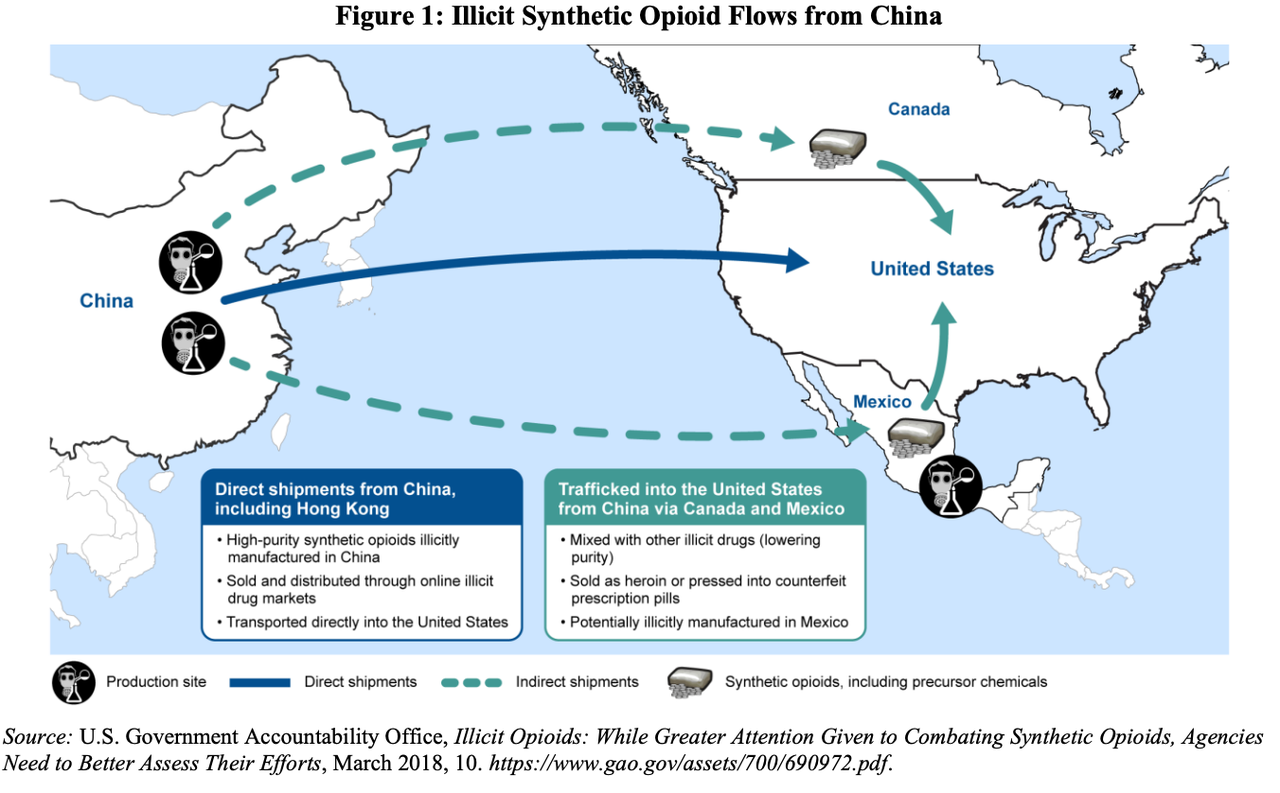
Whether Canada will capitulate remains to be seen, but if and when it does, a joint US-Canada strategy to combat transnational organized crime, money laundering, and terror financing networks will be essential, according to a new report published by Garry Clement, Michel Juneau-Katsuya, and Dean Baxendale of Optimum Publishing International. The Canadian independent publisher and research firm specializes in geopolitics, espionage, and intelligence. 

"This strategy outlines a joint US-Canada plan to systematically disrupt and dismantle transnational organized crime networks, including drug cartels, money laundering operations, cybercrime, and state-sponsored illicit financial flows. It integrates border security, intelligence, military, law enforcement, and political oversight with private sector engagement to address vulnerabilities in the economic system," the authors of the report titled "US/Canada Joint Drug and Money Laundering Task Force" said. 

The key pillars of the joint strategy align with Trump's national emergency under IEEPA to secure both northern and southern borders and stop the flow of illegal aliens and fentanyl.

Here's more color on the strategy: 

Developing a comprehensive strategy to combat the CRINKS Alliance—China, Iran, Russia, North Korea—along with Mexican and Colombian drug cartels and terrorist proxy groups operating within the United States and Canada is an urgent necessity. This policy document focuses on disrupting the financial backbone—better known as the illicit trade and financial ecosystem—that fuels their operations.

No single country can tackle this threat alone, yet Canada has failed to step up. Through political indifference and ambivalence, these criminal and state-backed networks have deeply embedded themselves within Canadian civil society. While the United States faces its own challenges, bipartisan efforts in Congress have made strides in isolating and targeting these threats. President Biden has signaled that this is a national security priority. In contrast, Canada's political leadership has maintained a laissez-faire approach, neglecting the threats emanating from the People's Republic of China (PRC) and other hostile actors for over three decades.

Both of Canada's main political parties have exploited diaspora communities for electoral gains while ignoring the presence of malign actors within these groups—individuals who advance the interests of foreign states engaged in an escalating hybrid war against the West. As a result, Canada has become a safe haven for espionage, human smuggling, and organized crime.

When scrutiny is applied to individuals within Chinese Canadian or immigrant communities who engage in espionage, influence operations, or criminal activity, Beijing's "magic weapon" of disinformation is deployed. The CCP and its allies swiftly label any investigation or reporting as "anti-Asian hate" or "racism," a narrative that the media have amplified to stifle legitimate concerns about Beijing's United Front Work Department (UFWD) and its ties to the People's Liberation Army (PLA) and the Ministry of State Security (MSS).

Let's rewind to April 2024, when we covered the House Select Committee on China that revealed the Chinese Communist Party used tax rebates to subsidize the manufacturing and exporting of fentanyl chemicals to North America. 

The report stated, "Through subsidies, grants, and other incentives, the PRC harms Americans while enriching PRC companies." 

Recall this report in August: Chinese Narcos In Toronto Run "Command & Control" Fentanyl Laundering Network Used In TD Bank Case: US Investigator

A coordinated North American strategy is essential to dismantling the command-and-control centers of these transnational organized crime networks that have fueled the drug death crisis in America, killing 100,000 folks (many working-age or military-age men and women) per year. This is hybrid warfare by Beijing - and folks have to start asking why progressive leadership allowed this to happen.

Whether far-left progressive Trudeau concedes to Trump's tariffs and works with the US to address the drug epidemic remains to be seen. Mexico appears to have joined Trump

https://www.zerohedge.com/geopolitical/newly-proposed-us-canada-strategy-aims-disrupt-dismantle-ccp-fueled-fentanyl-crisis

Trump signs order creating first-ever US sovereign wealth fund

 President Trump signed an Executive Order on Monday creating a sovereign wealth fund, honoring another promise he made on the 2024 campaign trail.

The sovereign wealth fund will be the first ever established in the US.

Trump had said during the campaign at the Economic Club of New York that the money would be brought in through tariffs and “other intelligent things.”

Donald Trump signs an executive order to create a US sovereign wealth fund, in the Oval Office of the White House on February 3, 2025
Donald Trump signs an executive order to create a US sovereign wealth fund, in the Oval Office of the White House on February 3, 2025AFP via Getty Images
The fund will be used to invest in highways, airports, manufacturing hubs, medical research and more, he said at the time.

https://nypost.com/2025/02/03/us-news/trump-signs-order-creating-first-ever-us-sovereign-wealth-fund/