by Beige Luciano-Adams via The Epoch Times,
California legislators on Wednesday considered a plan that would dramatically loosen restrictions on drilling and refining oil in the state, as it scrambles to reconcile ambitious climate goals with the sobering reality of continuing demand for conventional transport fuels.
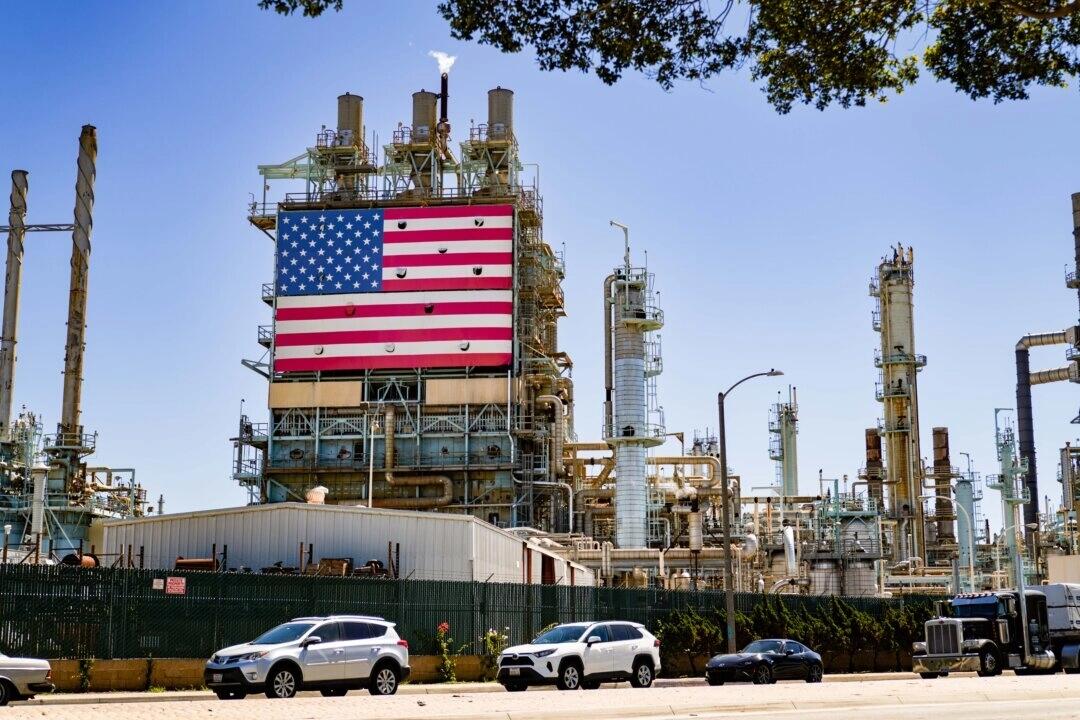
The plan comes at the urging of Gov. Gavin Newsom—a major shift from his hardline decarbonization stance that would have seemed unlikely a year ago.
Citing rapid changes in the transportation fuels sector and the sudden exits of several refineries, the Democratic governor in April asked state agencies to work with refiners to stave off the impending crisis, as California faces mismatched supply and demand during a critical phase in its transition to carbon neutrality.
Phillips 66 refinery in Los Angeles announced in October it would close by the end of this year, and Valero announced the closure of a Northern California refinery by the end of 2026. Six refineries have closed since 2008, with two converting to renewable diesel. Operators have cited high operating costs and punishing state regulations as reasons for leaving.
In a presentation to lawmakers at a Joint Oversight Hearing on National Resources, Transportation and Utilities, and Energy in the State Assembly on Wednesday, state agencies recommended stabilizing fuel supply and infrastructure, and restoring investor confidence.
Some lawmakers noted the gap between the state’s projections about zero-emissions vehicles and the slower-than-expected decline in demand for conventional petroleum
“This is quite startling,” said Committee Chair Cottie Petrie-Norris (D-Irvine), reviewing a chart provided by the California Energy Commission. “This is the fundamental thing we’re trying to solve for, and I don’t think anyone believes that we’re actually going to [decrease] overall demand for some mix of transportation fuels, clean or otherwise, over the next 20 years.”
A CEC chart shows gasoline demand in “baseline” and “advanced electrification” scenarios plummeting over the next 25 years, but at far different rates, while the projected number of zero-emissions vehicles soars, with a similar gap between the current rate and an electrified scenario.
“You are projecting a tremendous, very rapid decrease [in gasoline demand], and this is not reflecting a very rapid decrease at all,” Petrie-Norris said.
Siva Gunda, vice chair of the Energy Commission, noted that the space between what regulators want to happen and their “conservative” projections based on current conditions is what the state should plan for.
“We need to think about how to supply California, no matter where we are in the middle of that,” he said.
“It’s one thing to assume very ambitious [zero emissions vehicle] adoption and implement those policies,” Petrie-Norris said. “But we’re expecting we’re going to somehow reduce overall demand for transport in the state that dramatically, I don’t think this is a realistic assumption.”
Any long-term transition plan, she added, would “need to make sure we’re coming back to very grounded core assumptions.”
Liane Randolph, chair of the California Air Resources Board, told the committee the state doesn’t expect to completely replace fossil fuels with electric and hydrogen as “it will take time.” Even with optimistic scenarios for electric vehicles, there will still be in-state demand from other sectors, including ocean vessels and aviation.
California has some of the highest concentrations of recoverable oil in the world– and also the most stringent oil and gas regulations in the country. Its carbon-rich, heavy crude is refined into finished products like gasoline, diesel, and jet fuel, blended into special mixes that adhere to strict environmental standards.
Officials credit these standards with a 70 percent drop in emissions since the 1970s, but note 18 million people still live in areas that exceed federal air pollution standards, with five out of the nation’s worst cities for air quality located in California.
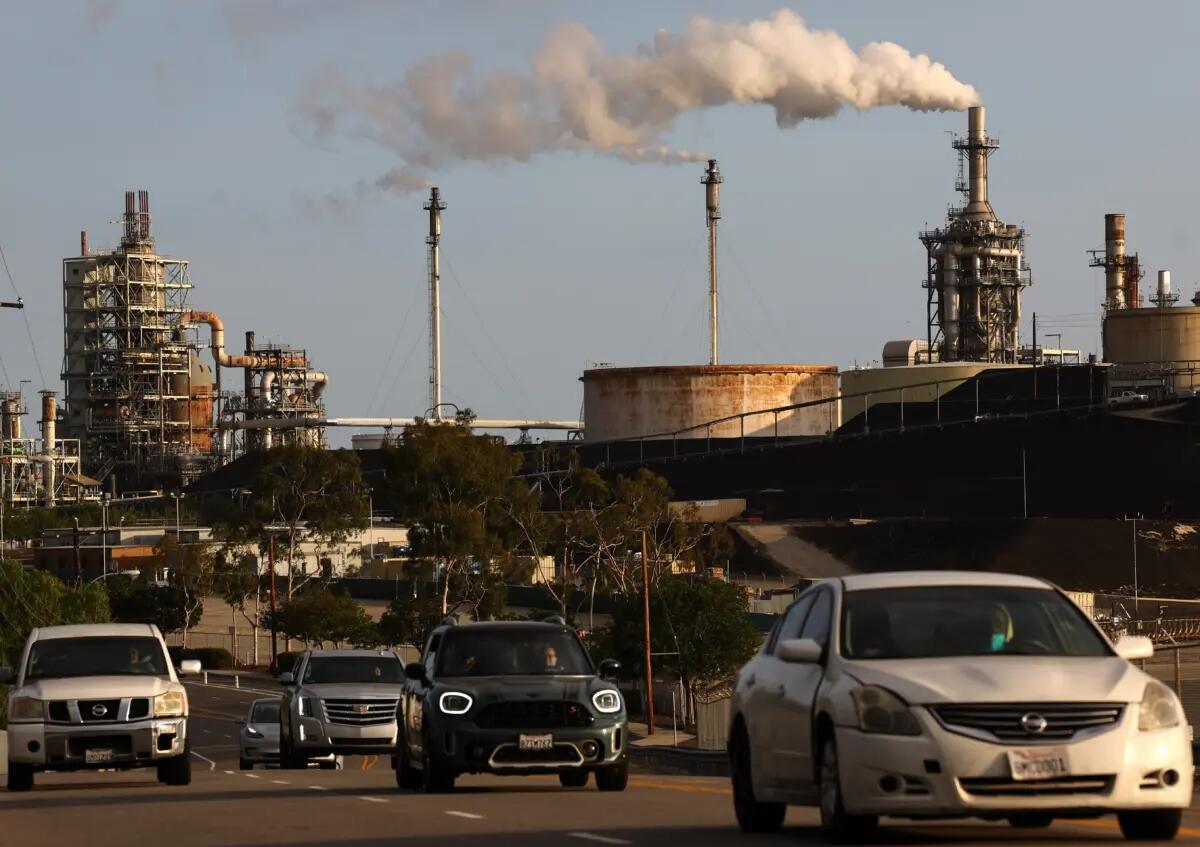
Vehicles pass the Phillips 66 Los Angeles Refinery Wilmington Plant in Wilmington, Calif., on Nov. 28, 2022. Mario Tama/Getty Images
As drilling has declined across the state and refineries shuttered, California increasingly relies on imports, with more than 75 percent of crude oil coming from countries like Ecuador, Brazil, and Iraq. Around 10 to 20 percent of the state’s refined gasoline products come from out-of-state and foreign sources, according to the CEC.
The agency projects statewide oil imports could increase to 25–35 percent of demand by summer 2026, and up to 50 percent in Northern California following anticipated refinery closures. The fear is that this will result in supply disruptions, volatility, and price increases.
The decline in California’s crude oil supply relative to demand from in-state refineries, the Energy Commission acknowledges, is in large part a result of California Environmental Quality Act (CEQA) litigation that has stalled well permitting in Kern County, home to the state’s largest reservoirs and by far the state’s biggest producer.
As pipelines approach critically low levels, the CEC’s Gunda explained, the state is looking to stabilize crude coming through those pipelines at around 125 million barrels a year, or around 25 to 30 percent of overall consumption, which is between 500 to 580 million barrels a year.
But even if more refining stays in California, Gunda said, the state still has an increasing dependence on imports.
Recommendations from the Energy Commission, the Air Resources Board, and Conservation Board were presented to lawmakers as a painstaking balance between long-term planning for a clean energy future and the immediate need to avert a crisis that could result in soaring gasoline costs.
California’s average retail gasoline prices are already 40 to 50 percent higher than national averages.
Michael Mische, a professor at the University of Southern California’s Marshall School of Business, predicted in a May study that gas prices may skyrocket by the end of next year to more than $8 a gallon following recent refinery closures.
“The data and analysis are compelling and clear: California’s high gasoline prices and pending gasoline insecurity and shortage are largely self-created,” Mische writes, comparing decades-long trends of increased excise taxes, motor vehicles, and population, with precipitous declines in oil production, finished gasoline stocks, and refinery capacity.
Meanwhile, he notes, a potential permanent loss of 20 percent of production is unprecedented.
“Even if the surviving California refineries, which are some of the most sophisticated in the world, increased their production of California compliant gasoline, the increase would not completely compensate for the loss of two refineries,” he wrote.
And while California’s consumption of gasoline has declined by 11 percent since 2001, he added, it “is not expected to suddenly drop by 20% in the next twelve months to achieve equilibrium with the shortfall of in-state gasoline production.”
The state has only seen rapid declines in times of acute crisis–1973, 1978, the Financial Crisis of 2008, and during COVID, Mische noted.
Newsom at the time dismissed the study and accused Mische of industry bias.
Meanwhile, the prospect of price spikes and infrastructure collapse had forced a shift in direction.
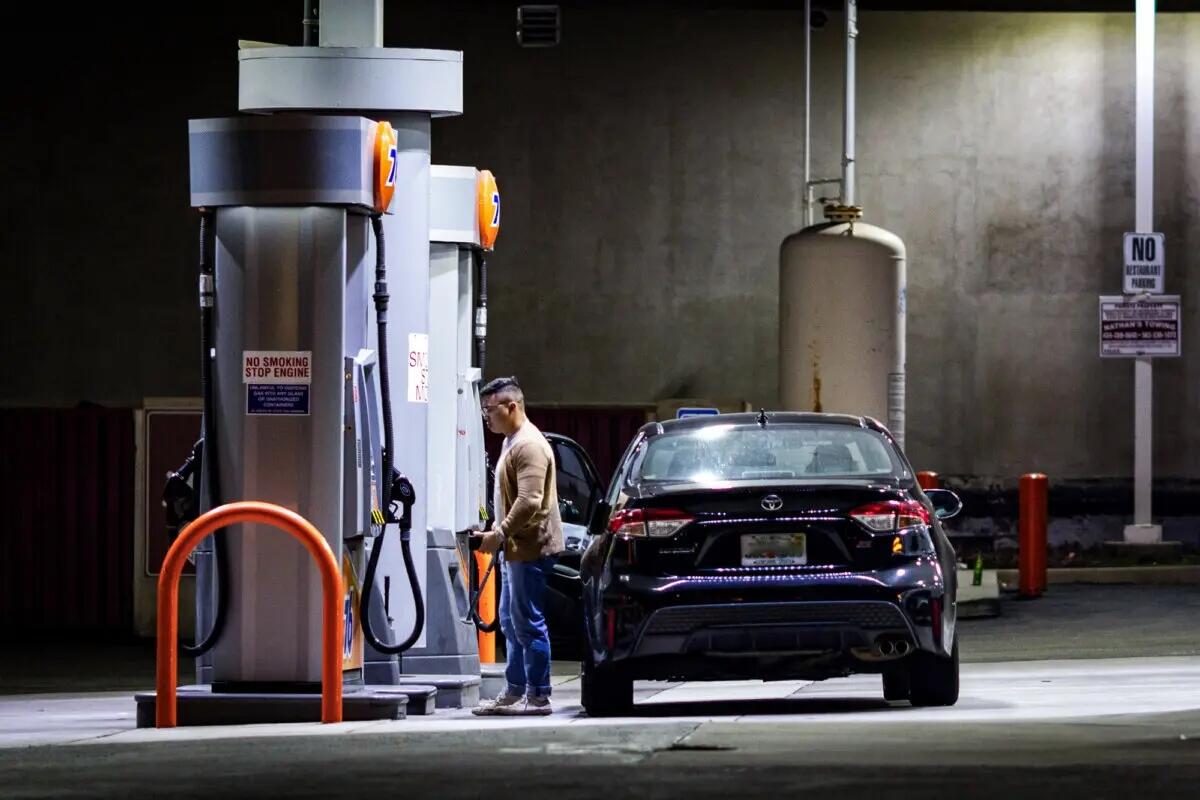
Customers fuel their vehicles at a gas station in Los Angeles on March 25, 2025. John Fredricks/The Epoch Times
Following announcements of the two refinery closures and the ensuing backlash, Newsom solicited recommendations from his Energy Commission in April. Their June 27 response named the looming crisis and recommended actions many Democrats and environmentalists have long seen as concessions to the oil industry, if justified by a need to prevent instability that could “erode support for continued decarbonization.” The same recommendations were circulated in draft legislative language last month.
Catherine Reheis-Boyd, president and CEO of the Western States Petroleum Agency, a Sacramento-based lobbying organization representing oil and gas in the state, told The Epoch Times that the Newsom administration’s shift came from seeing the dilemma spelled out in their own data.
“They trusted the data because they have the data. So it was not this issue of our science or their science… There’s no debate on, are you being transparent? Is this really true? There’s no debate on any of it,” she said.
“They all look at the same data and go, this is a big issue, and all of us see a big problem if we don’t address it,” she said.
Her members, she said, are in a “diversified portfolio position,“ seeing cleaner oil and gas, hydrogen, and electrification as the future. Before this recent shift, she said, California’s leadership had focused on 100-percent electrification, ”which in our opinion, is not a sustainable plan.”
Reheis-Boyd noted that California is one of the top oil consumers in the world. “That’s not going to change in the mid-term for sure,” she said.
“I think it’s just this realization now that if we have any chance of getting there,” she said of a clean energy future, “we have got to address this. Because if you can imagine losing two more refineries in the state, we will have a whole different conversation, and the focus will not be on the future. It'll be on the immediacy of not having enough fuel supply and a cost that no one can afford.”
For state legislators, many of whom expressed concerns on Wednesday about rolling back environmental protections, the shift presents an uncomfortable and urgent conundrum that they may have to act on before the legislative session ends Sept. 12.
The state’s proposal includes making an Environmental Impact Report for Kern County, which has been stalled by a decade of litigation over environmental and health protections, compliant with the California Environmental Quality Act, exempting it from environmental review for the next decade.
There is also a provision from the Department of Conservation to exempt new drill permits outside of Kern County from CEQA, provided the well is on an existing field and that operators participate in a two-for-one scheme, plugging two idle wells prior to drilling a new one.
“The proposal is not a free pass for industry to drill indefinitely,” said Jennifer Lucchesi, director of the Department of Conservation. “It’s a targeted approach, with a sunset date of 10 years.”
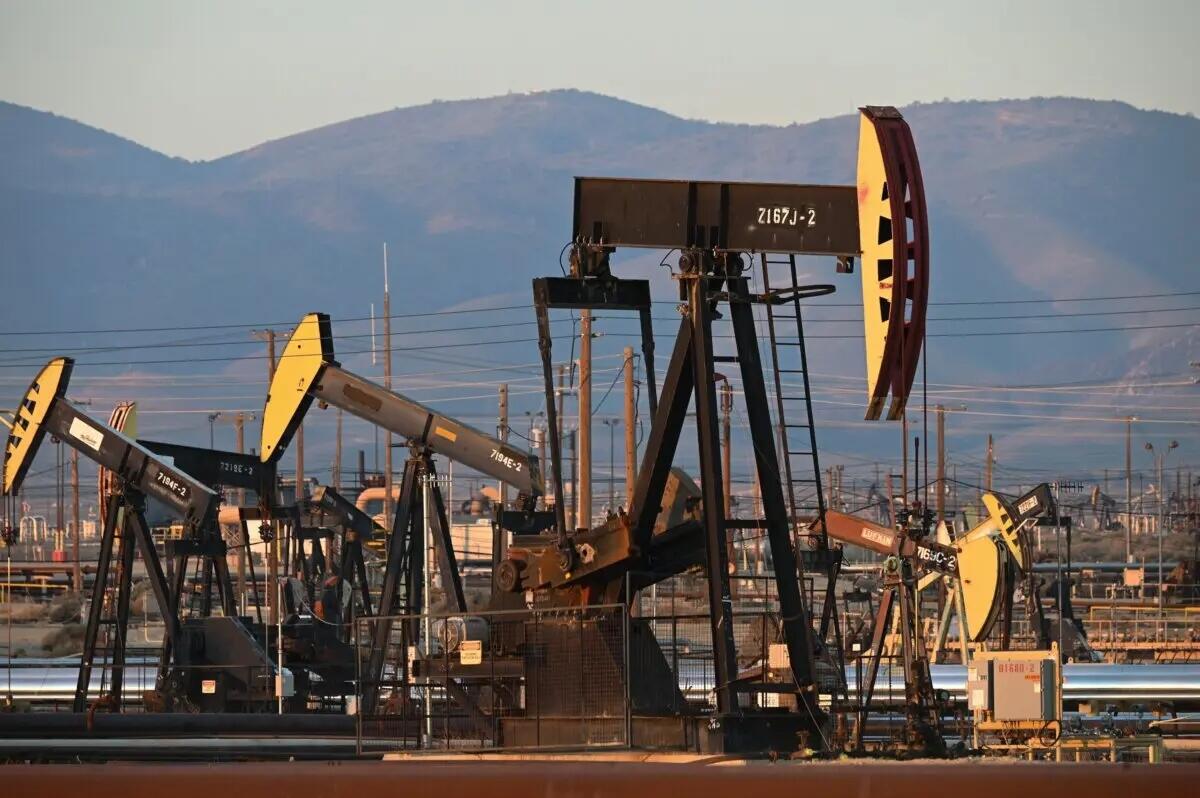
Active pump jacks draw oil toward the surface in unincorporated Kern County, Calif., on Feb. 26, 2022. Robyn Beck/AFP via Getty Images
Environmentalists, many of whom showed up to denounce the governor’s plan at the Aug. 20 hearing, argue that oil production in Kern County and throughout the state has been in decline for decades, not because of stringent regulations but geological conditions and global economic trends.
In an Aug. 8 letter responding to the governor’s proposed legislation, environmental groups noted that the rate of decline only increased during a period when the county was unencumbered by legal challenges and tighter restrictions: From 2016 to 2020, despite thousands of drilling permits, production dropped from 186.7 million to 128.2 million barrels.
“Oil reserves are simply depleted in California, and oil operators must use more energy, more chemicals, and risk ever greater environmental damage to get the last remaining oil… Allowing operators to drill new wells without environmental review and mitigation requirements won’t reverse California’s decades-long production decline but will allow this dying industry to do more damage on its way out the door,” the letter states.
Prices at the pump, opponents of the governor’s plan contend, are not tied to in-state oil production, but to a complex set of global factors.
Asked by Assemblymember Rhodesia Ransom about the risk of exposure California faces as a result of increasing reliance on imports, Gunda said that the process began far before the state tightened regulations on drilling and refining.
“Even if we go to 1990, and you look at refineries like Shell in Carson City, you have seen those refineries close and convert to product terminals. They moved to an import strategy. This was 30 years ago, before any of these stringent regulations,” he said.
In the near future, in-state refining, Gunda said, will give California the most resiliency, but won’t shield it from broader market forces.
“So we can definitely expect refineries to leave California or convert to product terminals,” he said. “The question is—how fast will they do it and what do we do about it?”
Not just importing oil but having the capacity to store it, Gunda said, will become increasingly important.
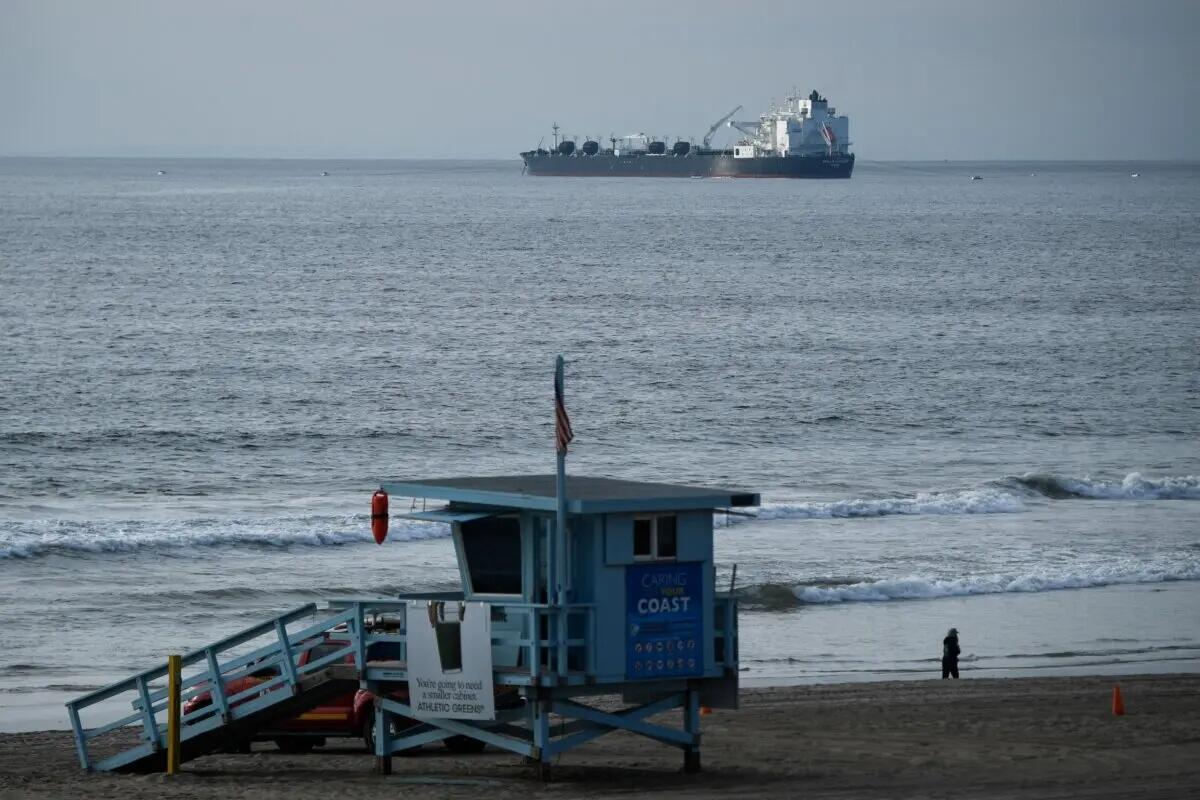
The Apollo Voyager crude oil tanker anchored in the Pacific Ocean off the coast near the Chevron El Segundo oil refinery as seen from Manhattan Beach, Calif., on Nov. 16, 2021. Patrick T. Fallon/AFP via Getty Images
For Steve Young, mayor of Benicia, the Northern California town where Valero plans to close its refinery by April of next year, such is precisely the fate he’d hoped to avoid.
“It seems inevitable, the worst case scenario for Benicia,” Young said at the hearing, “the idea that refined gasoline would need to be imported from elsewhere and then stored before being reintroduced back into the domestic market.”
The city has a deep-water port and existing storage tanks, making it a prime target for conversion to a terminal, a “lose-lose-lose scenario,” according to the mayor.
“There [are] no jobs that come with this, there are no taxes that come with this, there will be continued emissions from those tanks that will need to be monitored,” he said.
Benicia has estimated the refinery brings in about $10-$12 million annually for the city, or around 10 percent of its general fund budget, employing 400 people and supporting various local businesses.
Worse, Young said, is that the city would not be able to plan for replacement or redevelopment of the site, because the port is old and not electrified.
“The most frustrating part of all this for me is that these decisions are being made in the boardrooms of San Antonio and here in Sacramento, and we’re not at the table. We have no influence over what’s going to happen. We are simply waiting for the decision to be made and for our fate to be revealed to us,” he said.
Various labor unions representing refinery workers voiced concern at the hearing over the knock-on effects of shedding jobs in the industry.
“We’ve had contracts in place for almost 100 years now. That’s 100 years of collective bargaining, so our wages and our benefits have gotten to a very good place,” said Norman Rogers, a representative for United Steel Workers Local 675. He noted a high degree of homeownership among the rank and file that would also be impacted by further closures, along with the hit on local city budgets, services, and public employees.
If proposed plans to relax regulations around drilling and refining are adopted, permits can be issued almost immediately, state officials said, but added there would be a lag time until operators can start using them to drill.
“We hope to see an increase in production throughout next year,” said Conservation Department Director Lucchesi, noting most would be in Kern County, with around 1,000 permits through next year and increasing from there. Currently, she estimates new wells will produce around 30 barrels a day on average.
Lucchesi said she expects around 360 new drill permits annually in other parts of the state.
“So this is a very rough estimate,” said Assemblymember Jacqui Irwin (D-Thousand Oaks), noting there was no information about local appetites for drilling in municipalities expected to make up the difference in overall output. “We have no idea what the local government will be doing in those counties.”
The Energy Commission will take action on a few key points at its Aug. 29 meeting, including pausing proposed adoption of refining margins and penalties for producers, as well as maintenance regulations. And Reheis-Boyd expects the legislature to take up recommendations on the Kern County environmental impact report and other production issues before their session ends in September.
While measures aimed at Kern County are “the cornerstone,” on which she expects a broad consensus, Reheis-Boyd said there is more on the table.
Despite the fact that the current plan put forth by Newsom’s administration maintains a ban on fracking, or well stimulation, and offshore drilling, Reheis-Boyd expects both might be reconsidered in the current climate.
Each could contribute another 20 percent to in-state supply, she said.
“I can tell you it’s all in play and should be as they deliberate what this package will look like,” she said.
Inquiries made to Reps. Lori D. Wilson, Isaac Bryan, and Cottie Petrie-Norris, co-chairs of Wednesday’s joint hearing, were not returned in time for publication.
Reheis-Boyd said whatever they approve will have to “be enough of a market signal to businesses like ours and others that California is open for business. You’ve just got to stop the cost impacts while we stabilize the market so we can really begin the conversation about the transition to the future, which has not started. There’s no plan yet,” she said.
“How can you talk about where you’re going to go if you can’t even stabilize where you are?”
https://www.zerohedge.com/political/facing-impending-crisis-california-lawmakers-pivot-fossil-fuels