Exemptions have increased to 3.6% nationwide, and more than half the states experienced declines in coverage for MMR, DTaP, polio, and varicella for the 2024-25 school year. Meanwhile, measles cases have reached a 33-year high, along with a disturbing rise in whooping cough cases, more than doubling in 2025 compared to the previous year.
Why are parents becoming more skeptical of routine childhood vaccinations?
The core reason is trust, with trust eroding so deeply that it may become permanent.
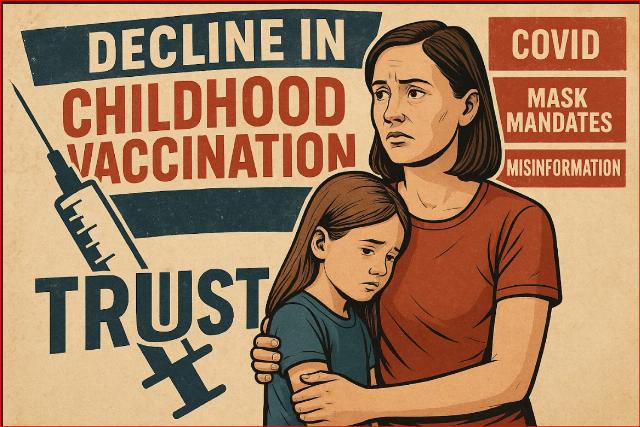
Image created by ChatGPT
That erosion directly results from government actions, missteps, and malevolence during the COVID era. Health authorities at the local, state, and national levels imposed mandates and restrictions on a whim, based on political rather than medical science. They broadcast a cascade of contradictory messages that shattered the public’s faith in health institutions. Let’s review some of these failures.
First, masks, mandates, and COVID origins. These were the initial cracks in the foundational credibility of medical institutions.
The sudden implementation of lockdowns, the flip-flopping on mask effectiveness during the pandemic, and the insistence on mandates created an environment where government directives felt coercive and punitive rather than consultative and altruistic.
Americans who were told that lockdowns were only temporary (remember “15 days to slow the spread”) and then saw those same lockdowns extended multiple times felt proud to comply.
However, much of the public grew increasingly uneasy as scientific explanations kept changing week after week. That growing unease planted doubt, even among those who initially followed orders, which spread beyond just the immediate COVID pandemic.
Liquor stores and strip clubs could stay open, but churches and schools could not. Big Box stores stayed open while small businesses closed. Going into a building without a mask was a super spreader event, while marching with thousands of unmasked protesters was considered safe.
Second, confusion about COVID vaccines with declining confidence in government proclamations. Starting with the jabs. Despite initial hopes, vaccine messaging remained unclear, including claims about efficacy, mandates, and the need for boosters upon boosters.
We were told that if we took the experimental gene therapy (vaccine), we would neither catch nor spread COVID. President Biden promised (lied), “You’re not going to get COVID if you have these vaccinations.”
Yet, we saw our fully vaccinated friends and family repeatedly get COVID.
A Cleveland Clinic study confirmed that more vaccine doses were linked to a higher rate of COVID infection.
Parents watched as health agencies revised their safety statements. Talk of long-term adverse effects, including myocarditis, blood clots, and aggressive cancers, was initially dismissed, only to be quietly investigated and confirmed.
Meanwhile, the VAERS system was misused in public forums to tally raw adverse event reports without proper context, fueling fears instead of easing them. This fostered an environment of understandable parental hesitation that went beyond COVID shots to include routine childhood immunizations.
Third was the misinformation feedback loop and the government’s woefully inadequate response.
While many blame social media disinformation, it’s important to see that misinformation thrived where institutional trust had fallen. Nature abhors a vacuum. Health authority statements, echoed by a pharmaceutical-supported corporate media, created the gap that social media and independent journalists stepped into.
Social media’s echo chambers amplified anti-vaccine stories. Many tales and conspiracy theories, some used as clickbait and others proven true, eroded trust in the “official narrative”.
Physicians and scientists questioning the new situational science were threatened with losing their jobs or licenses, just as I was in the early COVID days.
Yet the government's approach remained reactive, debunking rumors instead of building trust, and repeating talking points rather than acknowledging uncertainty. In many communities, especially rural or lower-income areas, access to trusted local medical voices was already limited, and pandemic-era messaging only widened that gap.
Fourth was the spillover effect. COVID-era distrust has now permeated the entire healthcare system.
The decline in childhood vaccinations indicates a broader loss of trust. Coverage for essential vaccines has dropped below 93%, down from nearly 95% before the pandemic. Pediatricians report that parents are increasingly questioning long-standing immunizations. The hesitant are not only refusing COVID shots but also rethinking traditional pediatric health practices.
There is increasing and credible questioning of a possible link or cause-and-effect relationship between vaccines, their ingredients, and autism. With more anecdotal stories coming to light and long-overdue attention from current HHS Secretary Robert F. Kennedy Jr., victims and their families are finally being heard, rather than dismissed as kooks.
This distrust isn’t unfounded. If the government lied to us about COVID, how can we trust them on measles or polio? This isn’t the government’s first rodeo with misinformation. Think of Tuskegee, thalidomide, opioids, and the food pyramid, to name a few examples.
The blame isn't on concerned parents, but on public health officials who lost their credibility. Fool me once, shame on you. Fool me twice, shame on me.
Fifth, the way forward involves rebuilding trust through transparency and local engagement. Trust is easy to lose and hard to regain. Ask a betrayed friend, a cheated-on spouse, or a scammed business partner.
How do we begin reversing this crisis? The answer is transparency, not coercion. Honesty, not more deception. Accountability, not excuses or blame.
Begin by acknowledging the mistakes. Health agencies should accept responsibility for their errors during COVID, such as shifting guidance, unclear enforcement, and dismissing legitimate concerns about side effects and injuries.
Promote messaging through trusted community voices. Parents depend more on their pediatricians, local clinics, and churches than on faceless federal agencies and self-proclaimed experts like Drs. Anthony Fauci and Deborah Birx. Empower these local voices.
Differentiate routine vaccinations from pandemic policies. Focus on evidence instead of mandates. Present the scientific rationale and accept skepticism rather than punishing it.
Clearly describe the development, testing, and approval stages for traditional vaccines without hiding information or giving blanket immunity to those who cause harm.
Focus on shared values. For concerned parents, protecting children, preserving freedom of choice, and community responsibility are strong themes. Campaigns should highlight these values instead of technocratic directives and illogical mandates.
Rebuilding trust in vaccination is achievable but fragile. It demands acknowledging past errors and placing patients' needs above those of government officials, media outlets, and pharmaceutical companies.
The data is concerning but not surprising. Lower vaccine coverage, increasing exemptions, and rising cases of measles and whooping cough put thousands of vulnerable children at risk.
However, the decline isn’t caused by stubborn anti-science radicals. It’s driven by everyday parents who have seen authority become arbitrary, leading to injuries and deaths, and who are told their observations are not real.
If authorities want vaccination rates to rise again, they must stop talking down and start listening. Regaining trust is hard but not impossible. Health agencies need to acknowledge their role in fueling skepticism and commit to humility, transparency, and partnering with local communities.
Until then, the echoes of COVID misinformation will continue to undermine trust in the public health agencies we might rely on during a real pandemic.
Brian C. Joondeph, M.D., is a physician and writer.