Search This Blog

Saturday, February 28, 2026

Major combat operations

 by Scott Johnson

Following through on his public statements and other signs of impending action, President Trump announced the initiation of major combat operations against the Iranian regime overnight. He made the announcement in a video posted to his Truth Social account (below). Text of the president’s remarks is posted here.

The Pentagon has denominated the action as “Operation Epic Fury” and Israel has named it “Roaring Lion” — this is an operation coordinated with Israel. From reports posted on X, I take it that Israel is targeting the regime’s political and military leadership while the United States is targeting military sites. The Iranian regime has responded with missile attacks on Israel, on American bases in the Gulf, and other other objects of its affection.

The president addressed his remarks in part to the people of Iran. “The hour of your freedom is at hand,” the president said in his statement. “This will be, probably, your only chance for generations. . . . This is the moment for action. Do not let it pass.”

President Trump recited the history of the Iranian regimes attacks on the United States over the past 47 years:

Among the regime’s very first acts was to back a violent takeover of the U.S. Embassy in Tehran, holding dozens of American hostages for 444 days. In 1983, Iran’s proxies carried out the Marine barracks bombing in Beirut that killed 241 American military personnel. In 2000, they knew and were probably involved with the attack on the USS Cole. Many died. Iranian forces killed and maimed hundreds of American service members in Iraq. The regime’s proxies have continued to launch countless attacks against American forces stationed in the Middle East in recent years, as well as U.S. naval and commercial vessels in international shipping lands. It’s been mass terror, and we’re not going to put up with it any longer.

He omitted any mention of the regime’s efforts to assassinate him. The debt we owe the regime is nevertheless large and overdue.

The recent negotiations to arrive at an arrangement terminating the regime’s nuclear program have come to this predictable end. President Trump declined to continue the pretextual haggling with fraudulent rug merchants for another Persian rug. The president did not go into detail regarding the regime’s efforts to reconstitute its missile forces or nuclear program. Referring to last year’s Operation Midnight Hammer, however, the president stated:

After that attack, we warned them never to resume their malicious pursuit of nuclear weapons, and we sought repeatedly to make a deal. We tried. They wanted to do it. They didn’t want to do it. Again, they wanted to do it. They didn’t want to do it. They didn’t know what was happening. They just wanted to practice evil, but Iran refused, just as it has for decades and decades. They rejected every opportunity to renounce their nuclear ambitions, and we can’t take it anymore.

There is more to be said, but at the moment it may be best to leave it with prayers for the safety of the armed forces undertaking this joint operation and for their success. Mark Penn speaks for me:

The time is now…The actions of President Trump are a heroic turn of events in which the regime that had as its ambition to conquer the region will face destruction and not be allowed to continue to suppress its own people while threatening the world.

While Obama and Biden enabled Iran, Trump drew a red line and meant it.

This is a just cause and we must all support our military in this effort that has been clearly planned and thought out as never before. May they be successful in making this a more peaceful and better world.

What War With Iran Could Mean For Markets Monday

 Bloomberg macro strategist, Michael Ball, warned that President Trump’s urging of Iranians to overthrow the government gives Saturday’s US and Israeli strikes on Iran the potential to usher in a more prolonged higher-volatility era rather than being a one-off tradeable shock.

Traders will be closely watching for updates on crude production and shipping disruptions, and any spike in oil will move across global rates and FX and eventually weigh on equities - but Trump’s post-strike comments make it harder for markets to assume this is one and done.

A limited strike would likely see the usual pattern:

Crude and gold spike, equities wobble, then volatility compresses if production is unaffected and Strait of Hormuz flows keep moving, leading the risk premium to ebb quickly.

But a longer-term campaign framed around leadership removal is different.

It will stretch the uncertainty window, raise the probability of wider tail risk outcomes, keep oil prices elevated and volatility high and force broader risk premiums to reflect a more uncertain growth and inflation backdrop.

*  *  *

Submitted by QTR's Fringe Finance

Most of the U.S. woke up today to news that that the U.S. and Israel have started “major combat operations” and a broad military campaign against targets across Iran.

Also it looks like we have an answer about the “mystery” SPY put buyers and the super aggressive gold and silver call buyers into the close last week.

Someone was obviously in the know that full-scale military action involving Iran was about to kick off Friday night and was positioning ahead of it.

Anyone who tells you the options market can’t telegraph news or hint at where the market is headed isn’t paying attention.

Order flow doesn’t predict everything - but sometimes it absolutely signals that something big is coming.
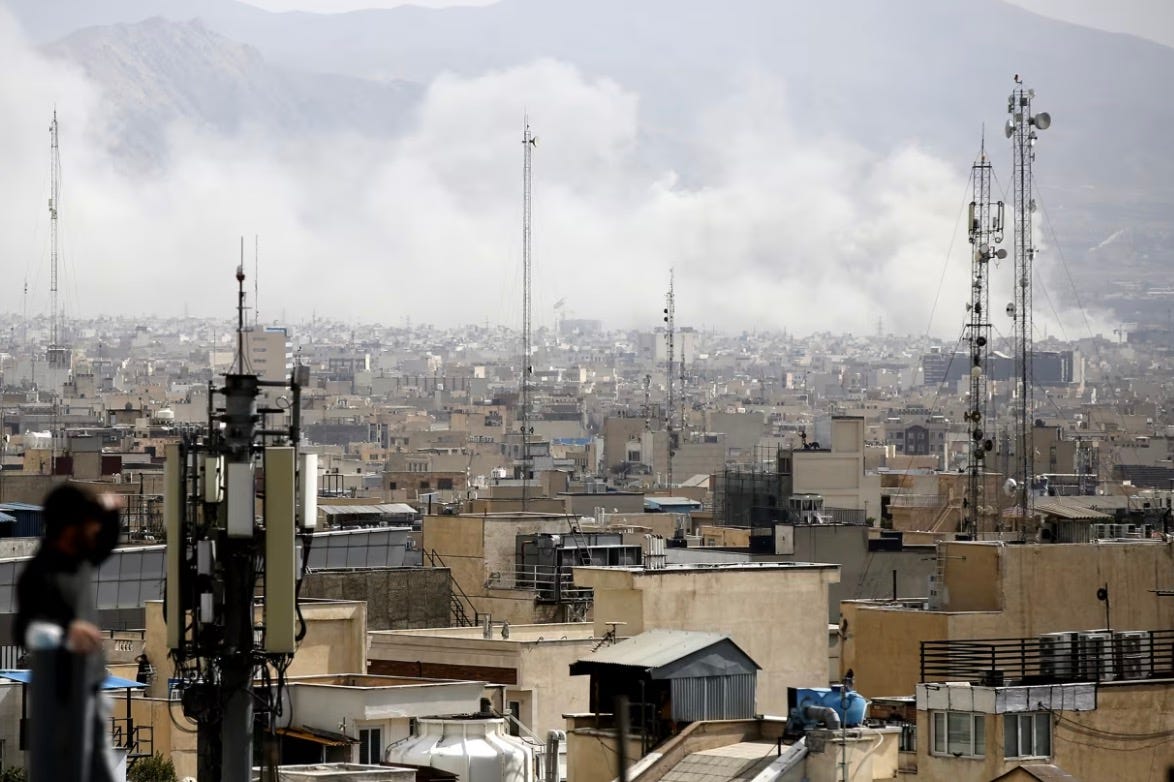
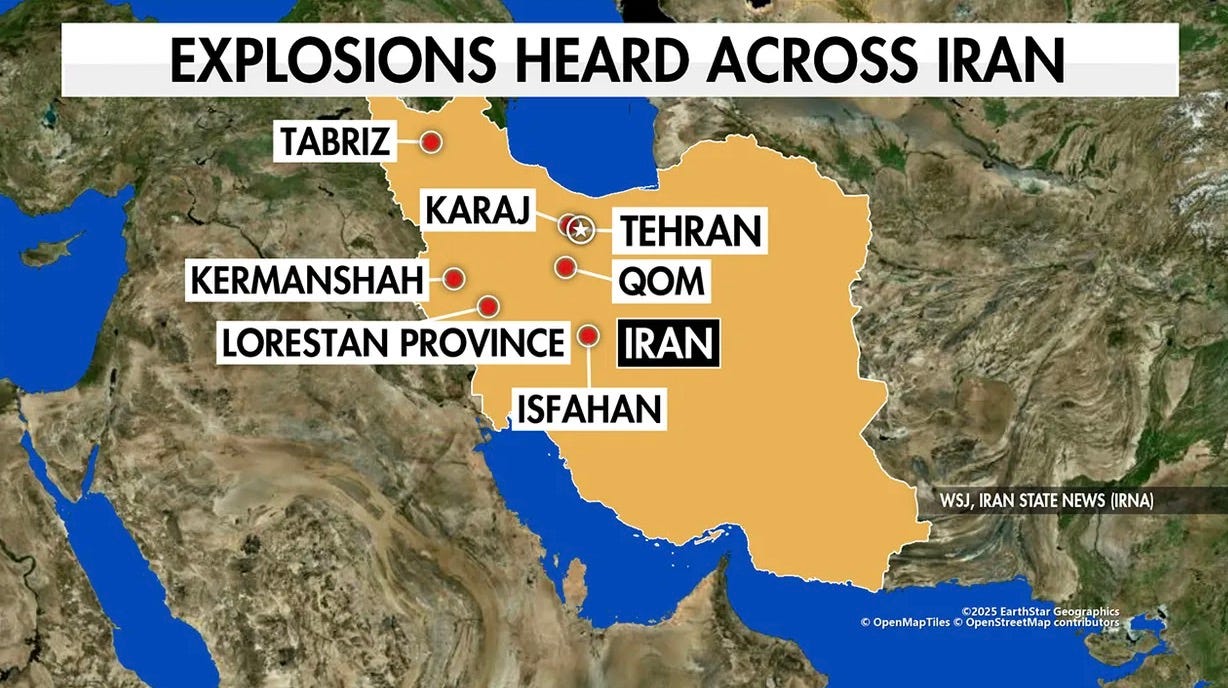
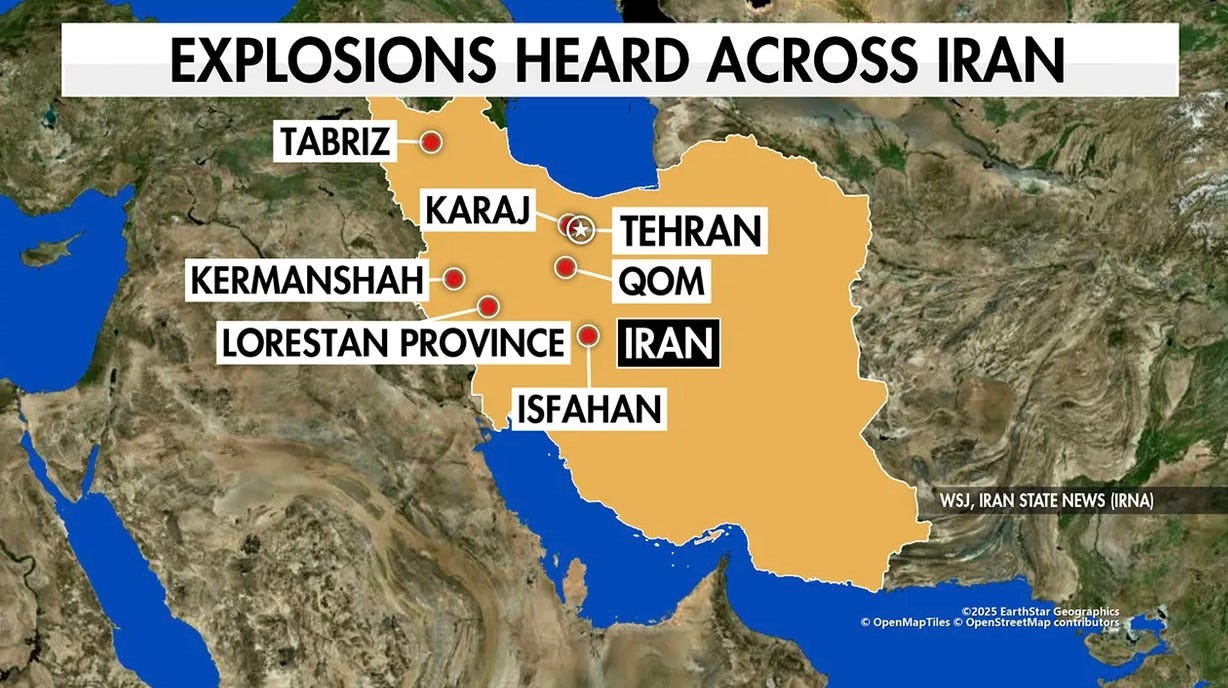
The operation against Iran reportedly began with strikes in Tehran and other strategic locations late last night/early this morning. President Donald Trump urged Iranian civilians to take shelter during the attacks, but also made unusually direct comments suggesting that once operations conclude, Iranians should reclaim control of their government. The framing went well beyond nuclear concerns and referenced decades of hostility between Washington and Tehran since the 1979 revolution.

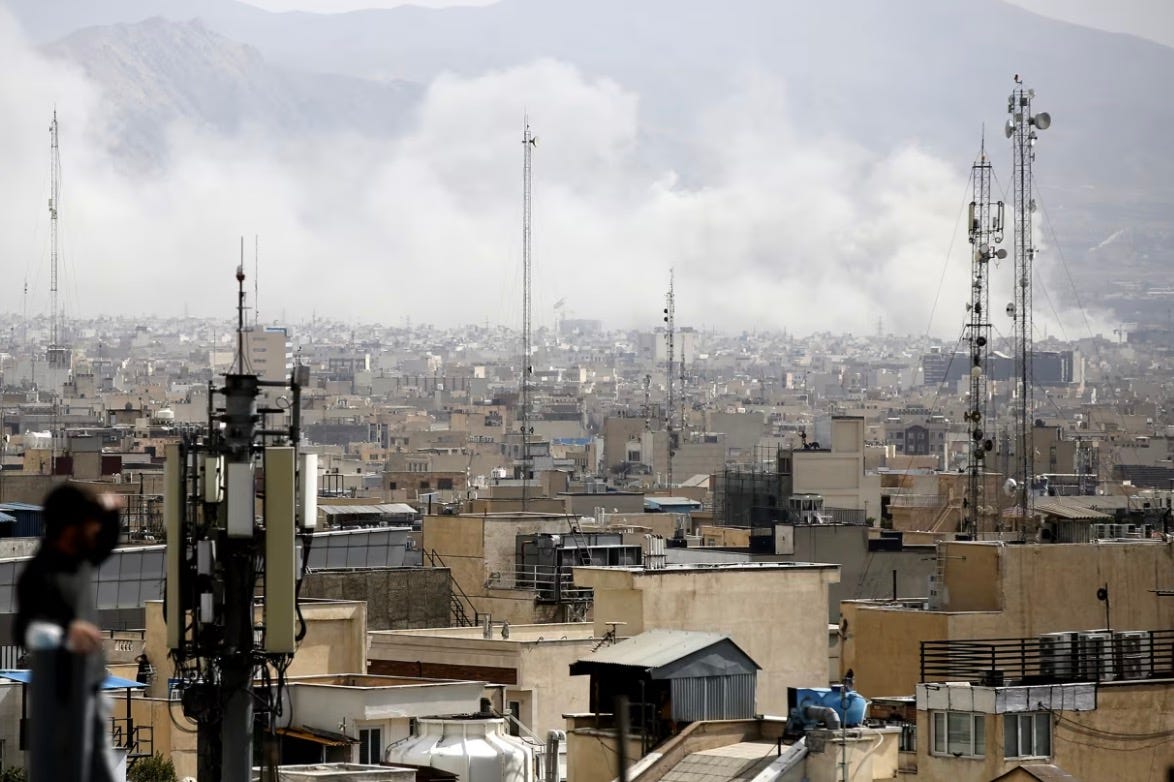
Initial targets reportedly included areas associated with Iran’s Supreme Leader, Ayatollah Ali Khamenei, though it was not immediately clear whether he was present. Smoke was seen rising over parts of Tehran as the strikes unfolded.

According to various live reports (AP, CNN, Bloomberg) up until this morning, Iran responded quickly. The Revolutionary Guard announced it had launched drones and missiles toward Israel in what it described as an initial wave of retaliation. Air raid warnings sounded across Israel as the military moved to intercept incoming fire.

The stated rationale from Washington and Jerusalem centered on escalating tensions over Iran’s nuclear program and missile capabilities. U.S. naval assets had been repositioned in the region in recent weeks as diplomacy stalled. Israeli Prime Minister Benjamin Netanyahu characterized the joint action as necessary to eliminate what Israel sees as a direct and existential threat.

The regional fallout has been swift. Iraq and the United Arab Emirates closed their airspace. Sirens were reported in Jordan. Bahrain said a missile targeted the headquarters of the U.S. Navy’s Fifth Fleet. Explosions were reported in Qatar. Syria later shut down portions of its southern airspace. Several major airlines suspended flights as a precaution.

European leaders issued a joint appeal for restraint, emphasizing the need to prevent further escalation and protect civilians. They stressed the importance of nuclear safety and adherence to international law while noting that the European Union has long pursued diplomatic efforts alongside sanctions targeting Iran’s leadership and Revolutionary Guard. EU officials said they are coordinating with member states to assist citizens in the region.

Meanwhile, Iran’s Revolutionary Guard said it had struck multiple facilities in retaliation, including U.S. installations in Bahrain, Qatar, and the UAE, as well as military targets in Israel.

Ayatollah Khamenei had not made a public appearance in the days leading up to the attack and had reportedly been moved to a secure location during prior hostilities. His current status has not been confirmed publicly. According to a person familiar with the planning, the operation had been coordinated between the U.S. and Israel for months and is expected to continue for several days.
So what does it mean for markets on Monday?

The way I see it, there are two very different paths that are possible here.

One path is that this becomes a non-event by Monday morning. We have precedent.

The U.S. military operation ordered by Donald Trump against Venezuela occurred over the weekend in early January, rather than on a weekday, and involved strikes in and around Caracas and the capture of President Nicolás Maduro.

Markets reopened on the following Monday, and major stock indexes, including U.S. equities and energy shares, were generally steady to higher as investors weighed the news and focused on the implications for oil-related sectors and broader fundamentals rather than selling off sharply in response to the weekend geopolitical event.

In those instances, traders ultimately treated the events as tactical and contained rather than the start of prolonged war. If investors conclude that objectives are narrow, retaliation is limited, and oil flows remain uninterrupted, markets could interpret the move as decisive rather than destabilizing.

In that scenario, dip buyers step in, volatility fades, energy spikes briefly, and by midweek the narrative shifts back to earnings, AI, and Fed policy.

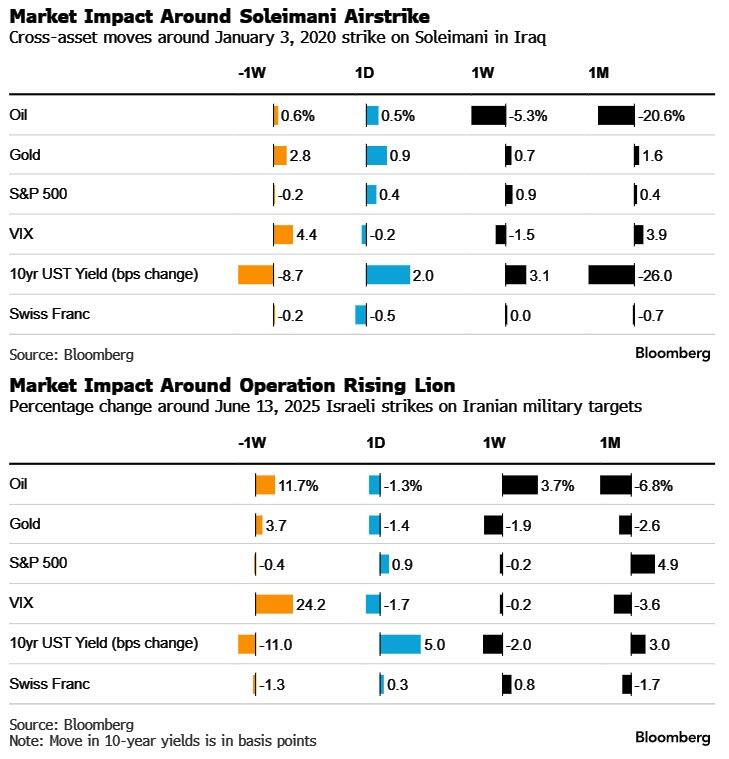
Relevant precedents include the air strike to take out Qassem Soleimani in January 2020, and last year’s extensive Israeli strikes as part of Operation Rising Lion and US strikes on nuclear sites in Iran that comprised Operation Midnight Hammer.
If anyone knows the “I'm long gold and silver at the right time, futures have skyrocketed but by the time the cash open comes they’re already red” scenario, it’s me.

It happened the last time Israel attacked Iran last year — futures were crushed overnight but by the next morning’s cash open, rhetoric had softened and the market had already recovered.

But there’s still always the “other” scenario, too: escalation, both geopolitically and financially.

A worst-case outcome would involve a drawn-out regional conflict marked by heavy missile exchanges and the activation of Iranian proxy groups across Lebanon, Iraq, Syria, and elsewhere. Fighting could spread across multiple fronts, potentially pulling in additional regional actors and forcing deeper U.S. military involvement. Iran could attempt to disrupt shipping through the Strait of Hormuz or target regional energy infrastructure, creating a meaningful shock to global oil supply. Even temporary disruptions could push crude sharply higher, intensify inflation pressures, and rattle global risk assets.

A prolonged conflict could destabilize the Iranian state itself, creating internal fragmentation, humanitarian crisis, or a power vacuum. Alternatively, a regime under severe pressure might accelerate nuclear development as a deterrent. Either direction introduces multi-year instability.

The economic consequences would likely include higher energy costs, rising shipping and insurance expenses, and a broad tightening of financial conditions — all while global growth is already fragile.

There is also an ugly scenario that I don’t think is extremely likely, but needs to be taken very seriously.

As I wrote Friday, the market was only just beginning to acknowledge cracks in private credit. Bank stocks were being sold aggressively.

That matters because private credit has been one of the pillars of liquidity supporting risk assets over the past several years.

If stress there deepens, it can spill into broader credit markets quickly.

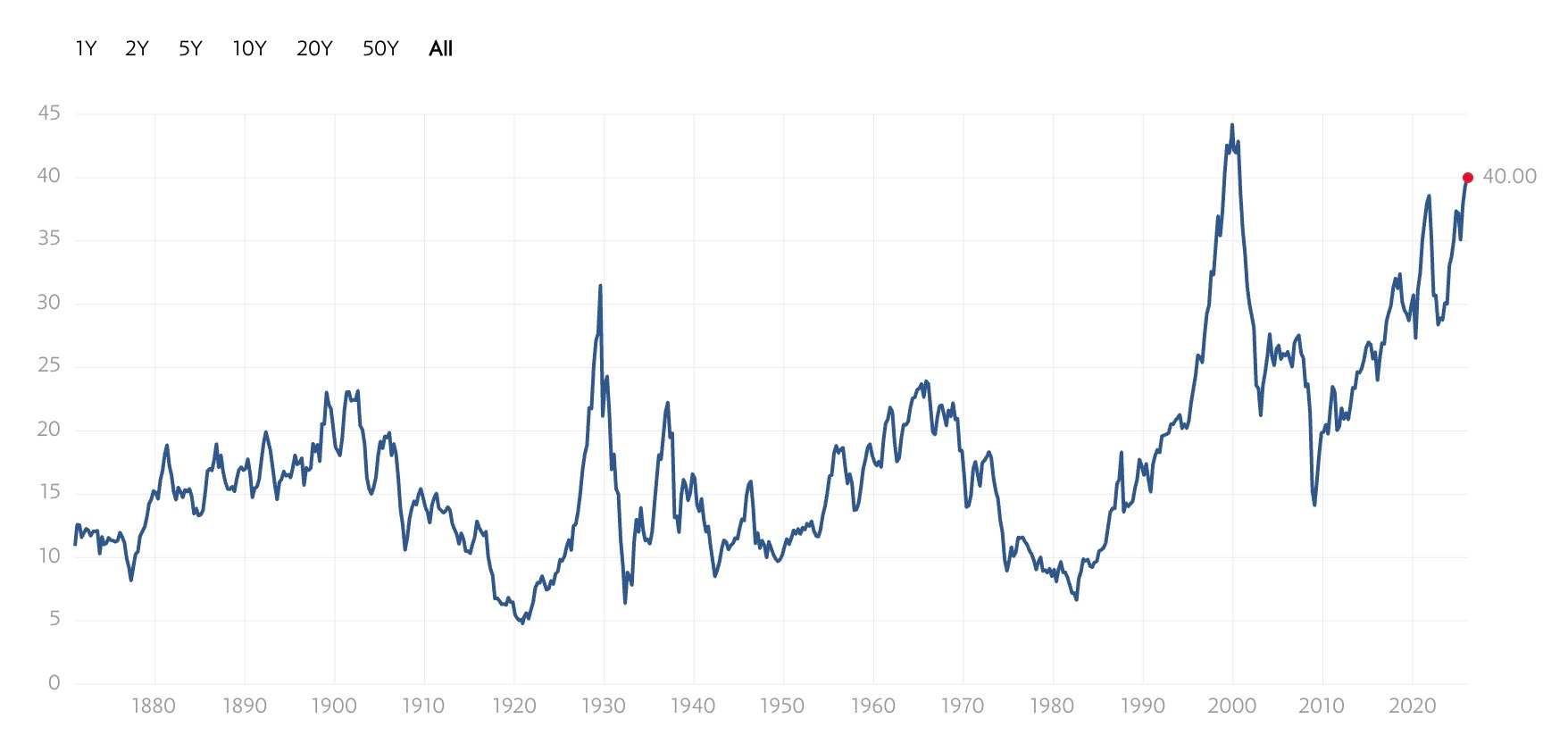
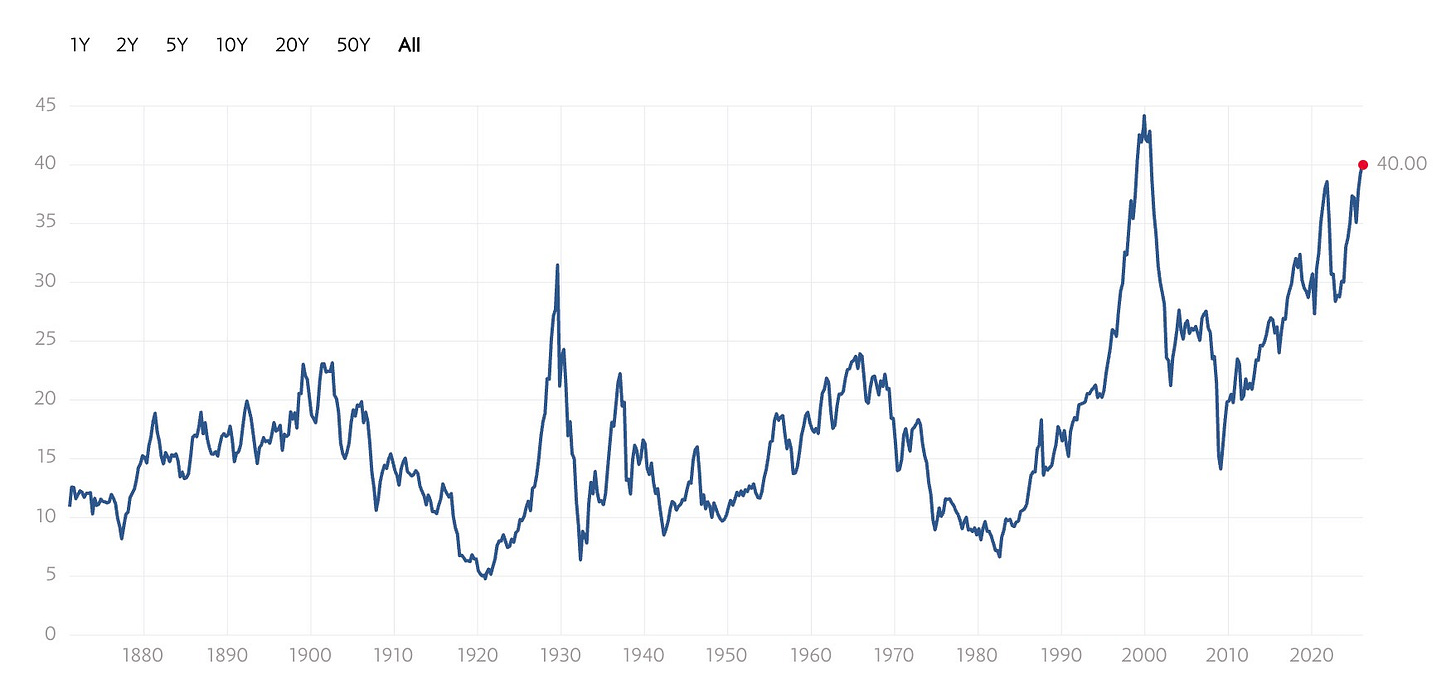
At the same time, last week’s ugly PPI data complicated the Federal Reserve’s position. Sticky inflation limits how aggressively policymakers can ease if financial conditions tighten. If you combine a Fed that looks constrained, early tremors in private credit, aggressive bank selling, and now the introduction of a serious geopolitical shock, the margin for error to keep a market trading at a Shiller PE of 40x shrinks.
If energy prices spike and inflation expectations rise, yields could climb at the same time growth expectations fall — a stagflationary mix that equities historically struggle with.

That is the type of setup that can turn a contained event into a liquidity event.

And once liquidity events begin, correlations go to one.

Positioning into Monday becomes less about prediction and more about preparation.

My 26 Stocks I’m Watching for 2026 were built with this type of uncertainty in mind. Precious metals names provide a hedge against geopolitical instability and currency debasement. Energy exposure benefits if crude moves higher or supply risk premiums expand. Select emerging markets with commodity leverage can outperform in resource-driven cycles. Consumer staples offer defensive ballast if broader indices wobble.

I’m not scrambling to overhaul that list. The bigger adjustment for people positioned similarly will be mostly mental. You prepare for a range of outcomes.

Green futures because traders assume containment. A sharp red open if oil gaps higher and risk parity funds de-risk. A volatility spike that fades by midday. Or a genuine air pocket if credit markets continue Friday’s mini-bank run and seize up.

This is also a reminder of how quickly narratives shift. On Thursday, the focus was inflation prints and private credit stress. By Saturday morning, we are discussing potential regional war that’ll take “days, not hours”, according to U.S. officials. Markets are reflexive and forward-looking, but they are not omniscient. Complacency builds quietly during extended rallies, especially when liquidity has repeatedly rescued drawdowns.

Sharp downturns often arrive before policymakers step in. If history is any guide, meaningful volatility tends to precede intervention — not follow it.

And again the larger lesson: things change fast, and they change without notice. Complacency kills, even in markets that appear permanently supported.

https://www.zerohedge.com/markets/what-war-iran-could-mean-markets-monday

"Tone Down My Opinions": Police Visit Md. Man On Facebook Rage Posts About Soaring Power Bill

 A Baltimore County, Maryland resident in a Facebook group called "BGE Victims," which has 22,000 Marylanders venting about the power bill crisis, revealed earlier this week that a Baltimore County Police detective "paid [him] a visit" over posts in the online group that allegedly threatened "the parasites of BGE and the grid owners/operators."

Baltimore resident Vin Shrader - or at least that's his online name  - said, "A detective from the Balto. Co. P.D. just paid me a visit about some of my post claiming I've been threatening the parasites of bge and the grid owners / operators," adding, "He strongly suggested that I tone down my opinons."

Shrader continued, "BULLSHIT, Now I can expect the swat team to come and get me for using my 1st admenment rights. It's now obvious the parasite democratic policticans along with bge are going to have local law enforcement do their bidding to shut us / me up. BULLSHIT, not going to happen. I have to be a martor, so be it. There's only one way I'm going down."

The Maryland power bill crisis first came to our attention in August 2024, when years of poor power-grid management by Democrats (mostly due to backfiring 'green' policies) in the state collided with surging electricity demand from AI data centers (read here).

Fast forward to today: the power bill crisis in the one-party rule state of Democratic Party kings and queens, headed by leftist Gov. Wes Moore, who has presidential ambitions, is getting hammered in the polling numbers (new data from Annapolis-based Gonzales Research & Media) as struggling Marylanders are financially crushed by mounting power-bill debt and venting their frustration in the group of 22,000.

All along, it was inevitable that the power bill crisis in the Mid-Atlantic would become a "major political issue" and that it was only a matter of time before the people revolted against local politicians who've been wearing green blinders for a decade, if not longer.

We don't want to be the bearer of bad news for residents in the region, but the epic grid mismanagement by Democrats, now colliding with the era of data centers, almost certainly means this crisis is not going away anytime soon and will likely become one of the most pressing issues in Mid-Atlantic states like Maryland.

FYI to the 22,000 members of the group: It seems as if "Big Brother" is watching...

https://www.zerohedge.com/political/tone-down-my-opinions-police-visit-maryland-man-over-facebook-rage-posts-about-soaring

Expanding role of ASCs in orthopedic surgeries

 Orthopedics and spine are among the hottest specialties for ASCs and outpatient settings this year, driven by CMS’ removal of nearly 300 musculoskeletal procedures from its IPO list. 

This shift is leading to better outcomes and recovery for many patients who received care in ASCs, which will only continue to push procedures to these facilities, according to one orthopedic surgeon. 

Orthopedic surgeons have all the same surgical capabilities in ASCs compared to hospitals, which is just another reason for the push. 

Brian Nwannunu, MD, an orthopedic surgeon at the Texas Joint Institute in Dallas, recently connected with Becker’s to share how the drive to outpatient settings will change orthopedics this year. 

Question: What is a big trend you’re paying attention to in 2026?

Dr. Brian Nwannunu: A lot of our orthopedic procedures are now being moved to the ambulatory surgery center or the outpatient setting. I think that’s excellent, because patients just do better at home. The hospital is great, but you can get infections, you can fall and you just don’t have your full routine. You get better at home. It’s also a lower cost to the hospital system. As you can imagine, the hospital costs more because you just have to pay for bodies. You can’t just leave your grandma in the hospital overnight with no one there, so you have to pay for somebody to be there, even if they’re not doing anything. In my experience, a lot of patients the next morning, they wake up and feel like they could have just gone home yesterday. 

CMS has taken a number of previously inpatient only procedures that now took them off that list, so we can do them outpatient. I think that’s going to not only drive better outcomes, but it’s going to drive a lot of cases to the outpatient center. Personally, I do about 50% of my patients in the outpatient center. That’s going to be a big trend for 2026 and not just in joint replacements, which I do, but in spine and in foot and ankle and complex reconstruction.

Q: What are some of the biggest differences you see in patient outcomes between ASC and hospital settings?

BN: It is all about patient selection. The patient has to be healthy enough to be an outpatient candidate, even for something like a routine total knee arthroplasty, which takes most surgeons under an hour. The surgery side of things is not always the tough part, but if the patient is sick or not healthy enough, then their heart may not be able to tolerate the anesthesia and go home. They may need monitoring. If they had previous COPD and they were on oxygen, they may need to stay on some extra oxygen. If they have kidney issues and they need a little bit of extra fluid, they may need to be hooked up to an IV, all which cannot be done at home.

From a technical standpoint, anything I do in an inpatient setting, I can do in an outpatient setting. I will try to be a little bit more sensitive about the patient’s pain. We’re implementing different pain protocols, nerve blocks, intra articular injections or medication that lasts much longer. We’re trying to give them multiple different types of medications, not just narcotics, but anti-inflammatories, muscle relaxants and things that can last in their system much longer, so that they’re comfortable at home. Pain is another aspect of things that drives people back to the ERs, so controlling the pain is important. Those are the real drivers for myself and others to want to go more outpatient.

https://www.beckershospitalreview.com/orthopedics/the-expanding-role-of-ascs-in-orthopedic-surgeries/

Medicare Advantage enrollment declines for first time in 7 states

 Medicare Advantage growth is slowing down as payers prioritize margins over membership, and  some states are recording a decline in enrollment for the first time, according to a Feb. 26 report from HealthScape Advisors and Chartis.

The report used CMS monthly enrollment, penetration, and star ratings data from 2022 through 2026 and surveyed government program leaders at more than 35 health plans in January 2026 to assess the current market outlook.

Nine notes:

1. Medicare Advantage enrollment grew just 2.5% in 2026 to a record 35.4 million beneficiaries, down from 3.6% in 2025.

2. Seven states saw MA enrollment decline for the first time: Vermont, Wyoming, New Hampshire, Idaho, Minnesota, Maryland, and South Dakota. The declines were largely driven by health plan exits and market retreats rather than shifts in enrollee preference.

3. Traditional Medicare enrollment grew by 600,000 beneficiaries this year, reversing years of decline. Standalone prescription drug plan enrollment rose by 1.7 million members as fewer seniors opted into MA.

4. Growth was heavily concentrated among a few players. Humana’s membership grew by 1.2 million members, a 21% increase, while UnitedHealthcare and Aetna pulled back. Newer plans like Devoted Health, Alignment Healthcare, and Clover Health now account for 3% of all MA enrollment nationally, up from 1.9% last year.

5. Special needs plan enrollment grew 12.2%, compared to 10.1% growth in 2025. Chronic condition SNPs were the biggest driver, with enrollment increasing 49% to 1.6 million. Humana, UnitedHealthcare, and Elevance collectively make up about 76% of the C-SNP market.

6. Total plan offerings fell for the third consecutive year. Non-SNP plan options dropped 8.6%, while PPO offerings decreased by 10%. Despite insurers’ strategic shift toward HMOs for cost management, 43% of seniors enrolled in PPO plans this year.

7. Only 67% of enrollees are in plans rated 4 stars or higher, down from 80% earlier in the decade. Just 2% of members are in a 5-star plan, down from 8% in 2024.

8. The survey found that 69% of MA leaders expect their enrollment to remain flat or contract in 2027. Nearly 70% anticipate offering less benefits next year, an increase from the 40% who said the same last year. No respondents predicted richer benefits.

9. Despite the short-term headwinds, no surveyed leaders indicated a negative five-year outlook for the MA market. The report recommends health plans make explicit stay-or-exit decisions, adopt multi-year profitability strategies, evaluate benefit ROI, deepen certain provider partnerships, and engage proactively on policy sustainability.

https://www.beckershospitalreview.com/finance/medicare-advantage-enrollment-declines-for-first-time-in-7-states-9-notes/

Iran to U.N.: All bases, facilities, assets of 'hostile force' are legitimate military targets

 Iran will use “all necessary defensive capabilities and means” to confront attacks by the US and Israel, and will treat “all bases, facilities, and assets of the hostile forces in the region” as legitimate military targets under its right to self-defense, Foreign Minister Abbas Araghchi said on Saturday.

In a letter to UN Secretary-General Antonio Guterres and the president of the Security Council, Araghchi said US and Israeli airstrikes are “a clear violation” of the UN Charter and amount to “an open armed aggression” against Iran.

Tehran is exercising its “inherent and lawful right of self-defense” under the UN Charter, he added.

The letter, seen by Arab News, accused the US and Israel of launching coordinated, large-scale attacks on Iranian territory, targeting defensive facilities and civilian sites in several cities.

Araghchi said Iran will continue to act “decisively and without hesitation until the aggression ceases fully and unequivocally,” adding that the US and Israel “shall bear full and direct responsibility for all ensuing consequences, including any escalation arising from their unlawful actions.”

He called on the 15-member Security Council to convene an emergency meeting to address a “breach of peace which is a real and serious threat to international peace and security,” and urged UN member states to “unequivocally condemn this act of aggression.”

An emergency session of the council is set to convene in New York on Saturday, requested by France, Bahrain, Colombia, China and Russia.

The Russian mission at the UN said in a statement that during the meeting, Moscow will demand that the US and Israel “immediately cease their illegal and escalatory actions and embark on a path toward a political and diplomatic settlement.” It added that “Russia is willing to provide all necessary assistance in this process.”

Meanwhile, Guterres condemned the military escalation, saying “the use of force by the United States and Israel against Iran, and the subsequent retaliation by Iran across the region, undermine international peace and security.”

The UN Charter clearly prohibits “the threat of the use of force against the territorial integrity or political independence of any state, or in any other manner inconsistent with the Purposes of the United Nations,” Guterres said in a statement.

He called for an immediate cessation of hostilities and de-escalation, and an immediate return to the negotiating table, adding that “failing to do so risks a wider regional conflict with grave consequences for civilians and regional stability.”

UN human rights chief Volker Turk also deplored the escalation and warned that civilians are the ones who end up paying “the ultimate price.”

He said: “Bombs and missiles are not the way to resolve differences but only result in death, destruction and human misery.”

Turk called for restraint and implored the parties “to see reason, to de-escalate, and (return) to the ‘negotiating table’ where they had been actively seeking a solution only hours earlier.”

https://www.arabnews.com/node/2634798/amp

Khamenei's account on X posts image

 The X account of Iran's Supreme Leader Ayatollah Ali Khamenei posted what appeared to be an AI-generated image, shortly before United States President Donald Trump said he was killed in US-Israeli strikes on Saturday.

Iran has not yet verified reports of his death, although both US and Israeli officials indicated it. A US strike earlier in the day was said to target Khamenei in Tehran.