Does the word 'avuncular' come to mind when you think of Iran's dead terrorist kingpin, Ayatollah Ali Khameini? Uncle Ali, the guy who bosses you around because he only wants what's best for you?
Nope, my first thought is: 'He won't be missed.'
But both the New York Times and the Washington Post wrote up his obituary that way, according to Fox News, using that exact word 'avuncular' along with a slew of other positives, such as 'magnanimous' and a man with an 'easy smile,' kind of like the man in the news who unfortunately was hit by a car.
To wit:
The New York Times' headline about the Khamenei's death read, "Ayatollah Ali Khamenei, Hard-Line Cleric Who Made Iran a Regional Power, Is Dead at 86." The Times also described the supreme leader as "avuncular and magnanimous" in its obituary.
"With his spectacles, Palestinian kaffiyeh, long robes and silver beard, Ayatollah Khamenei cast himself as a religious scholar as well as a writer and translator of works on Islam. He affected an avuncular and magnanimous aloofness, running the country from a perch above the jousting of daily politics," the NYT's obituary read.
The Washington Post, which once characterized another prominent dead terrorist kingpin as 'an austere religious scholar' was no better. Here's what Fox News reported they said:
"With his bushy white beard and easy smile, Ayatollah Khamenei cut a more avuncular figure in public than his perpetually scowling but much more revered mentor, and he was known to be fond of Persian poetry and classic Western novels, especially Victor Hugo’s 'Les Misérables.' But like the uncompromising Khomeini, he opposed moderates’ efforts to promote political and social reforms domestically and to secure rapprochement with the United States," the Post's obituary of the supreme leader said.
Let's just say 'retch.'
Khameini was better described by President Trump, who called him "one of the most evil men in history." He later added: "I got him before he got me. They tried twice." which tells the story better, given that Khameini sent out a nest of killers to assassinate the president of the United States, on more than one occasion.
Now I'm sure he projected a gentle image -- for the press, knowing how willing they were to carry his water.
But his legacy is one of machine-gun massacres, torture prisons, dead men hanging from cranes, and dirty-necked galoots going around with whips to beat women for not wearing enough veil in public.
When President Trump was banned from Twitter in 2021 by its then-leftist wokesters running it, Congress put out a report on it, noting that Khameini tweeted: "#Israel is a malignant cancerous tumor in the West Asian region that has to be removed and eradicated: it is possible and it will happen" without consequences, presumably because he says that kind of thing all the time, or they didn't mind.
The bottom line here is that the guy was a toad, a thug, a thief, and a destroyer of one of the world's great civilizations, turning it into a place where millions seek to emigrate. He's more like El Mencho than anyone's favorite uncle. If he wanted to play 'cuddly' and avuncular for the press, that's on them for believing it.
His record tells another story, and many were right to call it out on social media and beyond.
The United States ordered its citizens to leave parts of the Middle East as tensions with Iranintensified.
The US State Department published the warning on its website and social media accounts. Assistant Secretary of State Mrora Amdar said Secretary of State Marco Rubio urges Americans "to DEPART NOW from the countries below using available commercial transportation, due to serious safety risks." She also provided emergency phone numbers and advised citizens to seek help if needed.
The Israel Defense Forces (IDF) said on Monday it carried out airstrikes against Iran's state television complex in Tehran and "dismantled" what it described as the "regime's communications center."
The military said the Israeli Air Force carried out the operation based on intelligence guidance. It accused the Islamic Republic of Iran Broadcasting (IRIB) of supporting military coordination under civilian cover and broadcast messaging against Israel.
The military had earlier issued an evacuation warning for residents of Tehran.
New research challenges the assumption that long-term cannabis use improves symptoms or functioning inpost-traumatic stress disorder(PTSD).
On the contrary, researchers found that abstaining from cannabis for 3 months was associated with significantly greater reductions in PTSD symptoms in adults with PTSD and comorbid cannabis use disorder (CUD).
The data suggest that continued cannabis use could limit recovery in some domains — underscoring the need to routinely assess cannabis use during PTSD treatment and to educate patients on the potential consequences of continued use, the researchers said.
The study, was published online February 18 in the Journal of Clinical Psychiatry.
Helpful or Harmful?
PTSD is a debilitating psychiatric condition marked by intrusive memories, avoidance, negative changes in mood and cognition, and hyperarousal. Many patients turn to cannabis to ease symptoms. In one recent study, roughly 28% of individuals with PTSD reported past-year cannabis use and 9% met criteria for CUD.
Although some studies have suggested PTSD symptom reduction with cannabis or cannabinoid-based treatments, others have identified potential risks, such as disrupted fear-extinction learning and worse clinical and treatment outcomes.
A recent systematic review found mixed evidence overall, with six studies suggesting benefits, five reporting worsening of symptoms, and three showing no significant impact of cannabis use in the setting of PTSD.
Led by Ahmed Hassan, MD, University of Toronto, Ontario, the researchers recruited adults aged 18-65 years with confirmed PTSD and CUD through the Centre for Addiction and Mental Health in Toronto and asked them to discontinue cannabis for 12 weeks.
Abstinence was defined as a urine 11-nor-9-carboxy-tetrahydrocannabinol level of 50 ng/mL or lower with no self-reported use, verified at multiple timepoints. Participants received escalating cash incentives for remaining abstinent at weeks 4, 8, and 12.
Eleven (52%) of the 21 participants who completed the 12-week protocol achieved biochemically verified abstinence, while 10 did not.
Those who achieved abstinence reported significantly greater reductions in total PTSD symptom severity and symptom count compared to those who did not.
Total severity scores on the Clinician-Administered PTSD Scale for DSM-5 dropped from 36.2 at baseline to 10.5 at week 12 among abstainers vs 34.6 to 21.8 among those who did not maintain abstinence (P =.001).
A similar pattern emerged for total symptom count, with abstinent participants dropping from 14.3 symptoms at baseline to 4.1 at week 12, compared to a decrease from 13.5 to 8.9 among non-abstainers.
Notably, the investigators observed that individuals who remained abstinent showed greater reductions in several core symptom clusters, including avoidance, negative alterations in mood, cognition, and hyperarousal — domains that are often cited as targets for cannabis-based self-medication among individuals with PTSD.
“However, in this comorbid PTSD and CUD sample, sustained cannabis abstinence was associated with symptom improvement, thereby challenging assumptions about its clinical utility in this population,” they wrote.
Interestingly, they added that there were no differential effects on re-experiencing symptoms such as flashbacks, intrusive memories, and nightmares. Both abstinent and non-abstinent participants reported similar improvements in re-experiencing, suggesting that factors unrelated to cannabis use may have contributed to symptom change or insufficient power, the authors said.
The researchers called for larger randomized trials to “replicate and extend” these preliminary
findings and to investigate mechanisms through which abstinence may relate to symptom changes in PTSD with CUD.
The study had no commercial funding. The authors had no relevant disclosures.
These are the annoying side effects that GLP-1 users complain about most often — and sometimes prompt them to discontinue the medications.
Recently, makers of over-the-counter (OTC) products have taken notice and launched campaigns aimed squarely at GLP-1 users aggravated by the drugs’ gastrointestinal (GI) side effects.
“On a GLP-1? Discover products to power your progress,” reads a page on Amazon devoted to products by Haleon. It features a suite of the company’s long-standing products— Gas-X, Tums, and Benefiber — and its recently launched Centrum Nutrient Replenish, a vitamin and mineral blend marketed specifically to GLP-1 users as a way to fill in the “nutrient shortfalls” that can happen with eating less.
The marketing campaign, launched in 2025, isn’t only about side-effect relief, according to Haleon spokesperson Jennifer Nadelson.
“The increased conversation around GLP-1 medications highlighted a broader, unmet need: Many people using GLP-1s are thinking more intentionally about nutrition, digestive health, and how to manage side effects as their eating patterns change,” she said.
Haleon isn’t the only company zeroing in on this patient population. The brands Vitafusion and Bariatric Fusion also have created vitamin and mineral blends marketed specifically to people taking GLP-1s.
So, are these new (or repurposed) OTC products the answer?
Gastroenterologists told Medscape Medical News that they don’t rule out the products but usually don’t turn to them first due to what they say is a lack of strong evidence for their effectiveness, specifically for the side effects reported with GLP-1 use.
Side Effects: The Problem Is Real
Taking GLP-1s does raise the risk for several GI side effects.
A 2024 study analyzing electronic medical record data of almost 300,000 patients with diabetes or obesity found those taking GLP-1s had a 9% higher incidence of nausea and vomiting (9%), GERD (7.5%), esophagitis (2.6%), and gastroparesis (0.53%) than their counterparts not taking a GLP-1.
In a 2025 study tracking more than 125,000 people with overweight or obesity initiating GLP-1 therapy, moderate or severe side effects were associated with significantly higher risk for discontinuing the medications in patients with and those without type 2 diabetes.
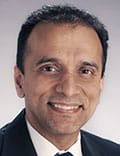
Prateek Sharma, MD
“Many times, the patient has to stop the medication in order for the symptoms to be resolved,” said Prateek Sharma, MD, professor of medicine at the University of Kansas School of Medicine and a physician at the University of Kansas Health System in Kansas City. Some patients have severe nausea three or four times a day, Sharma, an author on the 2024 study, told Medscape Medical News.
In a 2025 joint advisory on nutritional priorities to support GLP-1 therapy for obesity, the Obesity Medicine Association and other organizations noted that side effects, especially GI, are a challenge and that nutritional and medical management of GI side effects in GLP-1 users is critical.
Start With the Basics
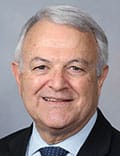
Clinicians may be able to address GI side effects without turning to prescription medication or OTC products by evaluating the patient’s diet first and making adjustments. For example, Michael Camilleri, MD, DSc, professor of medicine, pharmacology and physiology at the Mayo Clinic, Rochester, Minnesota, said that when a GLP-1 user reports constipation, he usually starts by asking about the amount of fiber in their diet.
Michael Camilleri, MD, DSc
The newest Dietary Guidelines for Americans recommend prioritizing “fiber-rich whole grains” with a target of two to four servings a day. The previous guidelines recommended a goal of 22-34 g/d for adults, depending on age and sex.
Many Americans have no idea how much fiber they eat in a day, Camilleri said, so some education might be needed. For example, a cup of oatmeal has 4 grams, and a cup of boiled black beans has 15.
In Camilleri’s experience, up to 40% of patients using a GLP-1 experience nausea, “but it’s transient in most people.”
A 16-week study he co-authored that found that increasing the dose slower than usual recommendations worked well in those who reported nausea. “They were able to continue their medications,” Camilleri said.
Sharma also takes a basics-first approach. He asks patients with constipation, for instance, if they are drinking enough water and eating enough vegetables. Some may need additional protein in their diet to counter loss of muscle mass, he said.
Role of OTC Products — and Caveats
When a patient complains of GLP-1 side effects, Sharma sometimes prescribes medications already known to address their problem.
“If someone is having nausea and vomiting from GLP-1, I would try to prescribe a medication that deals with nausea and vomiting,” Sharma said.
Some of the supplements targeted at GLP-1 users “are being promoted without much evidence to back them up,” he added. Use of supplements has not been studied specifically for symptoms associated with GLP-1 use, Sharma said.
For guidance, gastroenterologists can turn to the joint advisory on nutritional priorities and recent research identifying which nutrient GLP-1 users are likely to be lacking
For instance, under the joint advisory, daily magnesium supplementation, titrated to keep bowl movements regular, can help. Magnesium citrate can normalize bowel movements. Fiber supplements and polyethylene glycol 3350 are also suggested, as well as stool softeners. In a 2025 review, researchers found justification for several dietary supplements in GLP-1 users, including multivitamins, protein to meet the goal of 1.2-2 g/kg/d, whey protein to preserve lean body mass, and fiber for regularity.
In another review, vitamin D, iron, and B vitamins were found to be the most common nutrients GLP-1 users lack.
The Need for Patient Education
When a patient asks about supplements for GLP-1 side effects, Sharma said he tries to educate patients about their regulatory status and encourages his colleagues to do the same. Under the Dietary Supplement Health and Education Act, the FDA doesn’t have the authority to approve dietary supplements for safety and effectiveness or to approve their labeling before they hit the market.
Sharma also encourages colleagues to educate themselves about OTC products targeted toward GLP-1 users and the way they’re marketed.
“All physicians who are seeing patients on GLP-1s should be aware of the different types of supplements and should not be recommending them carte blanche for all patients,” he said.
Sharma recommended a case-by-case assessment. With every patient, he reviews the list of prescription medications and asks about all OTC products taken.
Would Sharma ever recommend a supplement to treat a GLP-1 associated symptom, given the lack of specific research in GLP-1 users? He said he would, in some cases. For instance, he might recommend a fiber supplement, such as Citrucel, for constipation from GLP-1 use, he said.
Camilleri said that after evaluating a patient’s diet, he may suggest fiber supplements or commonly available osmotic laxatives to relieve constipation.
Sharma has no disclosures. Camilleri was an investigator for Vanda Pharmaceuticals.
A long-awaited Medicare add-on billing code not only boosted pay for primary care physicians but also helped specialists, researchers found in anew JAMA studythat’s likely to reignite debate over whether the code is working as intended.
The analysis of Medicare claims data found that in 2024, its first year of use, the G22111 code was billed 26 million times for 10.6 million patients, generating about $394 million in payments.
But specialists billed more G22111 codes than primary care providers, the study found.
First author Ishani Ganguli, MD, MPH, a primary care physician at Mass General Brigham and health services researcher at Harvard Medical School, Boston, said she was disappointed but not surprised that specialists most frequently used a code that was developed to help primary care.
“It was really meant to try to provide an additional payment for doctors providing longitudinal care and holistic care,” Ganguli said.
This study “demonstrates that even when policymakers aim to strengthen primary care payment, broad, specialty-neutral fee schedule changes can be adopted across specialties in ways that dilute the intended impact,” the American Academy of Family Physicians said in a statement.
A Pay Bump for Primary Care
The G2211 code was first introduced in 2021 as part of Medicare’s Physician Fee Schedule for physicians, its text indicating that it was meant to boost compensation for providers “serving as the continuing focal point for all of the patient’s healthcare services needs” or providing “ongoing medical care related to a patient’s single, serious…or complex condition (eg, sickle cell disease).”
Andrew Lyman-Buttler, MD, a third-year family medicine resident at the University of Minnesota, said that code’s reimbursement of $16.04 compensates doctors for the cognitive labor of following patients with complex diseases such as hypertension, diabetes, or polycystic ovary syndrome.
Although the dollar amount isn’t much, Lyman-Buttler said, it adds up over time, recognizing the otherwise unbillable work and other care physicians provide behind the scenes.
“Its purpose is to level the playing field a bit between what are sometimes called the procedural and the more cognitive specialties,” he said. “It’s sort of a little bone that they’ve thrown us.”
Medicare rules prohibit the creation of specialty-specific billing codes, Ganguli said, which meant the agency was unable to restrict G2211 solely to primary care.
That’s not necessarily a bad thing, said Shari Erickson, MPH, chief advocacy officer at the American College of Physicians, as many specialists also provide long-term patient care for patients with complex conditions.
Still, said Dartmouth University pediatrician Andrew Schuman, MD, medicine needs a better way to compensate primary care clinicians for the work that they do.
“Primary care is the base of a pyramid where we generate a lot of services and generate a lot of revenue for institutions and for specialists. So we generate referrals to specialists, we order a lot of tests, and so forth. It generates a lot of revenue,” Schuman said. “It’s an important code because it emphasizes the importance of providers in coordinating care.”
Some associations of specialist physicians opposed the adoption of G2211 because improving payments to primary care would decrease payment to other areas of medicine.
Think of the money Congress sets aside for Medicare reimbursement as a pie, said Sara Pastoor, MD, MHA, a physician who leads Primary Care Advancement at Elation Health.
Because Medicare physician payments must remain budget neutral, increasing reimbursement for longitudinal care through G2211 requires reductions elsewhere to offset the increases, prompting concerns among specialty groups about redistribution of payments. It’s why 19 surgical societies authored a letter to the director of the Centers for Medicare & Medicaid Services (CMS) in July 2023 arguing that “this code will inappropriately result in overpayments to those using it while at the same time penalizing all physicians due to a reduction in the Medicare conversion factor that will be required to maintain budget neutrality under the PFS.”
Despite this opposition, Congress green-lit the implementation of G2211 as part of a 2023 spending bill.
The sometimes contentious debate over G2211, combined with uncertainties as to whether the code would have the desired effect, led Ganguli and colleagues to measure how physicians used the code in their day-to-day practice.
Specialist physicians, including urologists, nephrologists, geriatricians, endocrinologists, and rheumatologists, generated 43% of the 26 million G2211 codes billed in 2024, followed by primary care, which created nearly 40% of the codes. However, primary care providers used G2211 for one quarter of eligible visits, compared to specialists, who only used G2211 for 13% of eligible visits.
That one quarter of physicians used G2211 on 14.5% of appropriate visits in the code’s first year of use was higher than Ganguli expected but less than Medicare’s estimated uptake of 38% of eligible visits in the first year. CMS predicted that number would move toward 54% of visits as doctors nationwide increased their familiarity with G2211.
“It’s very easy to count the number of gauze pads, but when you’re talking about really complex management of patient, it’s much harder to capture that in our current system,” said Erickson. “G2211 is a small step toward more appropriate payment for the services that primary care physicians and other clinicians provide.”
Pastoor agrees that G2211 is only the first step toward improving compensation for primary care.
“Primary care really has been undervalued and underpaid for a long time,” Pastoor said. “If you are managing a problem longitudinally, you’re doing a lot of extra coordination of care. $16 probably doesn’t cover it, but it helps.”
Previous rounds of the National Health Interview Survey had suggested low levels of complementary and alternative medicine use among kids.
A new cross-sectional study showed that use of this type of medicine jumped from 4.6% in 2007 to 17.7% in 2022 among children and adolescents ages 4 to 17.
Mind-body therapies were the most commonly used modalities in 2022, including yoga and meditation.
The use of complementary and alternative medicine (CAM) among kids and teens in the U.S. significantly increased in recent years, a cross-sectional study showed.
Using data for nearly 23,000 children and adolescents ages 4 to 17 from the National Health Interview Survey, use of CAM jumped from 4.6% in 2007 to 17.7% in 2022 (P<0.001), reported Cornelius B. Groenewald, MD, of the Stanford University School of Medicine in California, and colleagues.
Mind-body therapies were the most commonly used CAM modalities in 2022, including yoga (12.6%) and meditation (6.9%), while acupuncture was the least commonly used modality (0.2%), they noted in JAMA Pediatrics.
Between 2007 and 2022, every sociodemographic group examined saw a significant increase in CAM use. The largest prevalence increases were seen in kids ages 6 to 11 (adjusted prevalence ratio [APR] 6.11, 95% CI 4.76-7.84) and those ages 4 to 5 (APR 5.60, 95% CI 3.61-8.68). There were no significant differences in the change of CAM use by sex or race/ethnicity.
Previous rounds of the National Health Interview Survey had suggested low levels of CAM use among kids, Groenewald and colleagues said, but "evidence for the safety and efficacy of pediatric CAM approaches is growing," with a recent systematic review of 23 studies suggesting that mindfulness-based interventions may help reduce substance use in young people.
Despite this, "barriers to access remain, including financial considerations," they pointed out.
"The greater increases in CAM use among younger children compared with adolescents suggest growing acceptability of these therapies for younger age groups," the authors wrote. "These trends may reflect increasing public and clinical acceptance, a growing evidence base for efficacy for various health conditions, and expanded insurance coverage."
"This increased use underscores the need for rigorous clinical trials to further examine the benefits of CAM for both general and specific conditions," they added. "Furthermore, it highlights the importance of conversations between clinicians and patients about the potential benefits of CAM and an examination of accessibility across sociodemographic factors."
For this study, Groenewald and colleagues analyzed data from the 2007, 2012, and 2022 CAM supplements to the National Health Interview Survey. Parents were asked whether their child used or saw a practitioner for the CAM modalities of acupuncture, guided imagery and/or progressive relaxation, massage, meditation, naturopathy, and yoga over the preceding 12 months. (A question on meditation was not captured in 2012, while a question on chiropractic care differed in 2022 and was excluded from analyses.)
Overall, the study sample included 22,978 kids and teens. Mean age was 10.8, and 51.3% were male.
Limitations to the study included a reliance on parent reporting, "which may underestimate or overestimate CAM use," the authors noted, as well as a lack of information on specific reasons for CAM use, intensity of CAM use, or clinical outcomes. "The rarity of certain CAM approaches also limits the precision of some prevalence estimates," they added.