The death toll from the devastatingtwin earthquakesthat struck Venezuela earlier this weekincreasedto 1,430, President of the National Assembly of Venezuela Jorge Rodriguez announced on Saturday.
"As of now, we have recorded that 1,430 brothers and sisters have sadly passed away," Rodriguez revealed during a broadcast on state television, while adding that the tremor had left 3,100 people homeless and more than 3,200 injured.
The UN's International Organization for Migration estimates that up to 6.76 million people require humanitarian assistance, with immediate needs including emergency shelter, safe water, and sanitation. Multiple countries and international organizations have launched emergency response initiatives.
The inventor of the groundbreaking Crispr gene-editing technology is skeptical about artificial intelligence replacing human effort in the realm of scientific discovery, adding to a growing debate over its impact on medical research and innovation.
“I think that innovation is still really in the domain of human beings right now,” Doudna said. “I’m not seeing chatbots coming up with a brand new idea.”
Not everyone agrees. Pharmaceutical companies are striking scores of new licensing deals with AI companies in a bid to accelerate drug development. Anthropic PBC Chief Executive Officer Dario Amodei has said it will eventually eliminate “most cancer” by making it easier to tailor treatments to a patient’s DNA.
The long-term impact of artificial intelligence, including its harms, are yet to be determined. It’s just one of the disruptions facing higher education and scientific research. The Trump Administration has terminated numerous federal grants from the National Institutes of Health, stoking uncertainty about the future health of medical research.
The cuts challenge US leadership in the global race for scientific discoveries and technological advancements, Doudna said.
“Every dollar that’s been invested from the NIH in research leads to about $2.50 of economic benefit,” she said. “If we don’t continue our investment in science, others will.”
Crispr-Cas9 is a molecular technique that snips out targeted parts of DNA, a biological instruction manual that dictates which proteins the body makes, either replacing them with new sequences or removing the gene entirely. The technology generated global attention for its ethical implications and potential risks. Critics cautioned about potential so-called “designer babies,” whose parents may want to select eye and skin color and other traits, as well as the unintended harms that could result.
Doudna downplayed the likelihood of using the technology to boost intelligence and similar traits, as that work is “still at a very early stage.” Designing a baby is a lot more complicated than people realize, as multiple genes are involved and other factors including the environment also play a role. It’s difficult to tease out the long-term outcomes of changing even one DNA sequence, she said.
While the technology is revolutionary, Doudna said it still has a ways to go. For one, the process of editing is “quite involved,” she said. The most common way it’s currently used is expensive and can be unpleasant for patients. And Crispr can sometimes edit the wrong gene sequence or fail to find the target gene.
New ways to circumvent the limitations are already in the works. Earlier this month, scientists at Columbia University developed a new method to more precisely edit DNA, the New York Times reported.
The therapy is already starting to find applications in the real world. The US Food and Drug Administration approved the first gene therapy using Crispr in December 2023 for patients with sickle cell disease.
“I feel very excited about where it’s headed, the opportunities to treat people that have rare disease,” Doudna said.
The European Medicines Agency (EMA) has recommended revoking the marketing authorization for Tavneos (avacopan, ChemoCentryx) in the European Union because its benefits are no longer proven to outweigh its risks.
A review of the drug was initiated at the request of the European Commission following new information questioning the data integrity of the ADVOCATE study, which was used as evidence to support the former EU marketing authorization.
Due to “breaches of good clinical practice,” the EMA said that data from this pivotal trial could no longer be relied upon to demonstrate the medicine’s efficacy.
Tavneos is used as part of a combined treatment that also includes rituximab or cyclophosphamide. Its active substance is avacopan, a complement 5a receptor blocker that aims to reduce blood vessel inflammation.
In the ADVOCATE study, 331 patients with GPA or MPA were given a 52-week course of avacopan or placebo, together with a 20-week course of corticosteroids, both in addition to standard treatment. Based on data from the study, avacopan was found to be at least as effective as the 20-week course of high-dose corticosteroids in inducing remission in patients with GPA or MPA, and led to better long-term remission rates than the comparator.
However, after subsequent review of the available data and new information on how the study data were handled, the EMA concluded that it was conducted in breach of good clinical practice principles. It highlighted that study data provided at the time of the assessment of the marketing authorization application were found to be “incorrect and misleading” and could no longer be relied upon for demonstrating the drug’s effectiveness.
The EMA recommended that no new patients should be started on Tavneos and that those currently receiving it should be switched to suitable alternatives.
As Tavneos is associated with an increased risk for drug-induced liver injury and vanishing bile duct syndrome (VBDS) — a rare condition where the small bile ducts inside the liver are gradually damaged and disappear over time — the EMA advised that liver function should be closely monitored until treatment is permanently stopped. If VBDS is suspected, Tavneos should be discontinued immediately.
The EMA’s opinion will now be forwarded to the European Commission, which will issue a final legally binding decision applicable in all EU Member States. If the recommendation is confirmed by the European Commission, Tavneos will no longer be authorized in the EU.
A Nobel Prize-winning economist has warned that persistent predictions of artificial intelligence destroying the job market could become a self-fulfilling prophecy.
Robert Shiller, who shared the 2013 Nobel Prize in economics for his work on asset prices, wrote a guest essay on Monday in The New York Times that argued the panic over AI is not a new sociological phenomenon.
In fact, he wrote, humans have been worried that new technology could replace them since the days of Aristotle, who envisioned a self-powered loom and a lyre that could play music without someone plucking the strings.
And in the 19th century, a group of English textile workers — who later became known as Luddites — intentionally destroyed machines they believed would put them out of a job.
Shiller fears that similar anxieties inherent within us are rearing their head once again.
He cited a Quinnipiac poll from March, which found that 70% of people believe AI will reduce the number of jobs. Additionally, only 16% of Americans believe AI will have a positive impact on society over the next two decades, according to a Pew Research survey conducted in June.
"Like many others, I believe AI could lower employment. But unlike most, I don’t necessarily blame the technology itself. Instead, I worry about the potency of the fear it is generating," Shiller wrote.
"Our brains are wired to respond to stories. Narratives floating in a population can affect individuals’ economic decisions," he continued. "When millions of people make millions and millions of decisions based upon negative expectations, there is a risk that fear can actually help birth the reality."
Much of the negative media coverage around AI centers on speculation over how much it will impact jobs and the economy.
In late May, Anthropic CEO Dario Amodei told Axios that in the next one to five years, AI could eliminate half of all entry-level white-collar jobs and spike unemployment to as much as 20%. He later expressed uncertainty over the exact timeline.
The current unemployment rate is 4.3%, up from 4% at the beginning of President Donald Trump's term in January 2025.
"While the job market has slowed for a host of reasons, there are reports that fear of an AI apocalypse is worsening the freeze and contributing to record lows in consumer sentiment," Shiller argued.
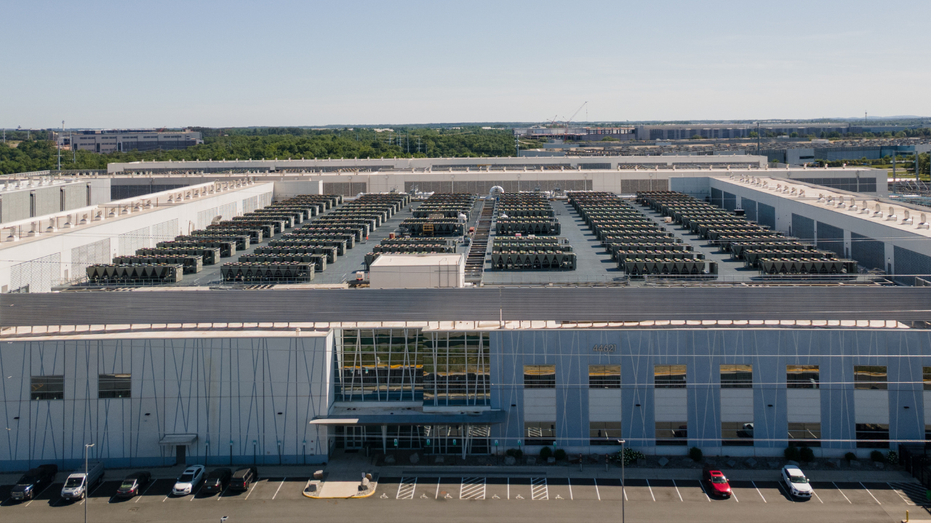
A CloudHQ data center in Ashburn, Virginia, on May 31, 2026. (Lexi Critchett/Bloomberg / Getty Images)
Shiller implied that tech leaders like Amodei, who promote doom-and-gloom scenarios their own companies could help realize, are being somewhat short-sighted and should be reined in to prevent an economic recession.
"Perhaps the best we can do is to appeal directly to the leaders of Silicon Valley who have been promoting these negative narratives with such vigor," Shiller wrote.
He continued: "Surely the resulting media attention highlighting how dangerously powerful your AI model is may help you sell more wares, but it may be far harder to do so in a period of recession. Try not to forget the critical lessons taught by our past."
New York prison officials are sounding the alarm after drones dropped packages stuffed with cell phones, drugs and weapons into two upstate correctional facilities in less than two months — a security threat that Gov. Kathy Hochul recently moved to address with new legislation.
The latest incidents occurred at Wallkill and Sing Sing prisons, where correction officers recovered contraband that had been flown into prison grounds during overnight drone flights, according to a press release by the New York State Correctional Officers and Police Benevolent Association.
An officer at Wallkill Correctional Facility in Ulster, around 1 a.m. on May 26 heard a drone buzzing overhead before a package weighing more than five pounds crashed into the prison yard.
Officers recovered cellphones, charging cables, SIM cards, 15 vacuum-sealed bags of marijuana and bags containing unidentified pills, according to the release.
One of the latest drone drops happened in Sing Sing Correctional Facility in Ossining, NY.APLess than two weeks later, just before 4 a.m. on June 8, an officer at Sing Sing Correctional Facility in Ossining watched a drone drop a package containing a green leafy substance believed to be marijuana, 15 pills, a set of Apple earphones and cellphone charging cord, said the release.
It’s unclear if the two recent incidents are related to a March drone drop at Marcy Correctional Facility in upstate New York.
The DOJ in Georgia announced on June 24 that 12 individuals were charged using drones to allegedly smuggle contraband into prisons.Bloomberg via Getty Images
A mechanism used to drop a payload attached to a drone was displayed at the DOJ announcement.Bloomberg via Getty Images
Inside the package, guards found two eight-inch, double-edged knives, 530 grams of what appeared to be marijuana and five pieces of paper saturated in intoxicating chemicals. It also had a cell phone, some hair clippers and four bandanas, according to an NY DOCCS press release.
“There is a broader pattern of drone use to smuggle contraband into prisons as inmates and their associates continue to find new ways to introduce drugs, weapons, and other dangerous items inside correctional facilities,” NYSCOPBA Mid-Hudson Region Vice President Joe Horacek said.
“These latest incidents at Wallkill and Sing Sing highlight the urgent need to identify and prosecute those responsible under the new legislation signed into law by the governor.”
Sing Sing Correctional Facility first opened to inmates in 1826.USA TODAY Network via Reuters Connect
The recent cases come days after Hochul signed legislation addressing the “nefarious” use of drones on June 17.
The law, which takes effect Aug. 25, specifically makes it illegal to use drones to deliver contraband into prisons or to fly them over correctional facilities and other sensitive locations without authorization.
The problem extends well beyond New York.
South Carolina officials have reported drones delivering everything from drugs and knives to steak dinners and crab legs into prisons, according to a CNN report.
The DOJ office in Georgia announced Wednesday that 12 individuals were charged with using drones to allegedly smuggle contraband, such as drugs and cell phones, into ten prisons across eight states.
And the threat is escalating quickly.
The Federal Bureau of Prisons recorded just 23 drone incursions in 2018. By 2024, that number had surged to 479 incidents — more than a 20-fold increase — as drones delivered drugs, weapons and cellphones into federal prisons, according to testimony given during a Senate Judiciary hearing.
Investigations into the New York State incidents remain ongoing.