Search This Blog

Tuesday, September 29, 2026

Heavy fighting erupts in Iran's restive southeast as tank, drones deployed


Heavy fighting broke out between Iranian security forces and unidentified gunmen in Iranshahr in the southeastern province of Sistan and Baluchestan, with RPG fire reported and a tank and drones deployed, the Baluch rights group Haalvsh reported Tuesday.

Citing local sources, Haalvsh said dozens of security vehicles were sent to the Gharibabad area and that light and heavier weapons were being used in the fighting. Security forces also reportedly blocked roads leading to the area. The identities of the gunmen, the cause of the clashes and any casualties or damage remained unclear.

The confrontation follows a series of armed clashes with government forces in the restive southeast over the past month. On Sept. 12, heavy fighting spread across parts of Saravan, where gunmen attacked military vehicles and security positions and dozens of security personnel were reported killed or wounded.

Earlier in September, the IRGC said two members of an armed cell were killed in a joint security operation in the province. Sunni Baluch cleric Molavi Yousef Gorgij was also shot dead outside his home in Zahedan on Sept. 14.

https://www.iranintl.com/en/202609290399

'Boot Camp Promises a Submitted Acaddemic Paper in Just 2 Days'

 What if writing and submitting an academic paper didn't take weeks or months, but instead could be done over the course of just one weekend at a premium hotel with plenty of snack breaks?

That's the promise offered by Research Boot Camp, based in the U.K.

"Systematic Review and Meta-Analysis in 1 Weekend. Not 6 Months," the website states. "From orientation on Saturday morning to a journal-ready draft by Sunday evening -- every hour is choreographed."

The concept of having a systematic review and meta-analysis written and ready for submission -- with the help of artificial intelligence (AI) -- in a span of just 2 days has some experts rattled.

"A systematic review is only useful if the work behind it was done rigorously and if it is trustworthy," Elisabeth Bik, PhD, a science integrity consultant known for detecting fraud in research, told MedPage Today. "Cranking out systematic reviews written by AI with the goal to enhance one's CV will lead to more pollution of the scientific literature with low-quality slop."

Indeed, experts have started to raise concerns that the increasing use of AI -- and the diminishing ability of publishers to detect its use -- is flooding medical journals with "meaningless" research, as MedPage Today previously reported.

Research Boot Camp is structured around the artificial intelligence (AI)-platform Metysis, which the company's website advertises as being able to compress "the work of an entire research team into a single guided workflow."

Saturday morning kicks off with participants learning how to use Metysis, refining their research question and protocol, and finding and screening papers for inclusion. Sunday involves extracting the data, performing meta-analysis, writing the paper, and submitting it if there's time.

Drafting the article doesn't even begin until 2 p.m. Sunday.

The program boasts "premium" coffee breaks, unlimited specialty drinks, and catered lunch. The next Research Boot Camp is set to be hosted at the Marriott in London in November. Being a project lead and first author costs about $1,320 and being a project member or co-author is about $657.

While the program is marketed as a "masterclass," experts said this design enables shoddy research.

Matt Spick, PhD, a research integrity expert at the University of Surrey in England, told MedPage Today that there's been growth in the number of courses like this that charge for training rather than explicit authorship.

"In many ways these courses are part of an arms race," Spick told MedPage Today. "If paper mills are banned, then training courses are an alternative where it's harder to prove wrongdoing."

A weekend boot camp focused on AI-assisted workflows "trivializes the production of meta-analyses" in part because "they don't include any time for inspection of whether the trials they are analyzing were in turn real, or problematic," he said. Without adequate checks and balances, bad papers and fake studies can find their way into the literature and get cited.

Bik agreed that high-quality meta-analyses require someone with expertise to sift through and decide which studies make the cut. AI isn't yet able to reliably generate complete lists of papers nor do this verification, she said.

There's also the concern that a program like this makes empty promises, experts said.

"Anyone can submit a manuscript to a journal," Bik said. "That says nothing about its quality or whether it will be accepted."

Gideon Meyerowitz-Katz, PhD, who studies research fraud at the University of Sydney in Australia, agreed: "It's like me guaranteeing that you'll be able to apply for American Ninja Warrior after a 2-day fitness camp -- I'm not guaranteeing anything of actual value," he told MedPage Today.

A spokesperson for Research Boot Camp told MedPage Today that it doesn't promise publication, but rather commits to helping authors finish a paper by speeding up "the slow groundwork." The spokesperson emphasized that humans still make each decision and are accountable for every word and number in the manuscript.

They also said that Research Boot Camp shares concerns about "low-quality, AI-generated papers reaching journals." However, they argued that the "answer isn't to keep trainees away from these tools ... it's to teach them to use them openly, with rigorous methods, and to let peer review have the final say."

https://www.medpagetoday.com/special-reports/features/123178

Stifel upgrades STAAR Surgical to Buy from Hold, raises price target to $31


  • Stifel cites improving international sales momentum and a higher-margin China product mix as key drivers for the upgrade.

CMS projects Medicare Advantage premiums to decline by 16% in 2027

 The Trump administration is projecting significant declines in premiums for Medicare Advantage plans in 2027.

The Centers for Medicare & Medicaid Services said Monday that it expects weighted MA premium costs to decline by more than 16% in 2027 compared to 2026, with Medicare Advantage prescription drug premiums set to decrease by 38% year-over-year.

The weighted average monthly premium across all MA plans, which includes MA prescription drug plans as well as special needs plans, is set to decrease from $14.37 in 2026 to $12 in 2027, the agency said. CMS also said it expects supplemental benefits to "remain stable" in the coming year.

Based on data from insurers, CMS said that enrollment in Medicare Advantage is set to be 34 million for 2027, representing about 47.4% of all Medicare eligibles. The agency added that it expects enrollment to ultimately be higher than these estimates.

CMS said that 99% of Medicare beneficiaries will have access to at least one Medicare Advantage plan during open enrollment, with 97% having 10 or more plan options to choose from.

“CMS is fighting to keep high-quality care options affordable and accessible for the millions of beneficiaries who rely on Medicare Advantage and Part D prescription drug plans,” said CMS Administrator Mehmet Oz, M.D., in the press release.

In addition, CMS projects that average Part D premiums are set for a slim increase in the coming year, growing from $35.09 in 2026 to $36 in 2027. Most (88%) of non-low-income beneficiaries can access a basic Part D plan with a monthly premium of $10.30 or less; 93% can access an enhanced Part D plan with a premium of under $6.

In MAPD plans, after Medicare Advantage rebates, the average monthly premium in 2027 is set to be $7, down 38% from $11.32 in 2026.

Medicare Open enrollment begins Oct. 15 and continues through Dec. 7.

https://www.fiercehealthcare.com/payers/cms-projects-medicare-advantage-premiums-decline-16-2027

Iovance record Q2 2026 product revenue of $99.3 m, ups 2026 revenue guidance to $410–$420 million


  • Guidance raised from $350–$370 million on stronger-than-expected U.S. demand for Amtagvi and Proleukin.

'Meta puts popular new tool in hands of small businesses'

 Meta on Tuesday unveiled a version of its Muse artificial intelligence (AI) agent for small businesses.

The release of Muse for Small Business follows Meta's launch of the Muse personal AI agent earlier this month. Agentic AI can complete tasks on its own based on instructions provided by the user, developing multistep projects and working across connected apps or services relevant for a given task.

Meta said that Muse can suggest an idea, help with a task or provide guidance on working toward a goal. Users can also connect Muse with other apps or services to give it more context or complete more actions.

The company said the Muse agent can help small businesses with tasks like putting together a growth plan for the next year after analyzing sales and social media data along with business goals. 

The Muse app works in its own isolated space without the need for supervision and checks with the user before they decide to publish, send, spend or share.

Muse can also review a small business leader's calendar, ideas, feed and news to identify what is important for the user and what the Muse agent can take off of their docket.

It can also perform tasks like using existing ad content and analyzing the best-performing content as well as industry trends to draft a week's worth of posts and a new ad campaign for the small business leader to review.

Meta said that Muse is free for most of the services people and small businesses need from it as the company looks to "put superintelligence in the hands of as many people as possible."

Other apps and services can work with Meta to be available through the platform's connected tools. These include commonly used professional accounts, like Facebook Pages, Instagram professional account analytics, and Meta ad accounts; as well as brand management, storefront, books and customer records.

Muse can also support custom connectors so small businesses can plug in services that Meta doesn't currently support in the platform.

For additional capabilities and higher weekly usage limits, Meta is offering subscription plans for Muse.

https://www.foxbusiness.com/technology/meta-puts-popular-new-tool-hands-small-businesses

IEA's Birol Says "Ready To Act" If Energy Shock Worsens As US Offers 40 Million-Barrel SPR Lifeline

 Summary: 

  • US DoE Offers 40 Million Barrels From SPR 
  • IEA Head Says SPR On Standby If Energy Crisis Deepens 
  • EU Eyes Methane Rule Retreat As Energy Crisis Deepens; IEA Floats Another Emergency Oil Dump

IEA Head "Ready To Act"; US DoE Offers 40 Million Barrels From SPR

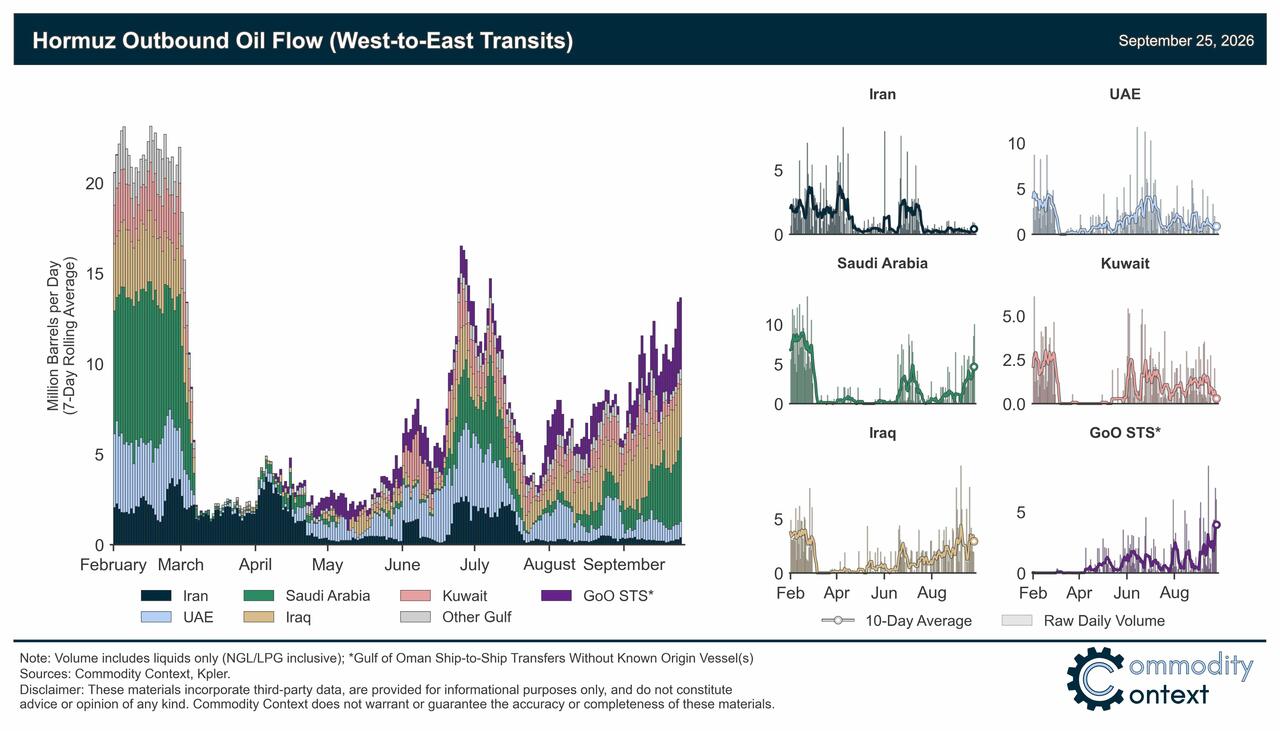
Brent crude futures moved lower to $103.90 a barrel, supported by continued diplomatic efforts and the resumption of flows through Saudi Arabia's East-West pipeline. Kpler data from the weekend showed that oil flows through the Strait of Hormuz reached 13 million barrels a day, about two-thirds of the prewar level.

 Courtesy of Commodity Context ... 

Speaking to reporters at a meeting of EU energy ministers in Dublin, IEA head Fatih Birol said another emergency SPR dump remains on standby should the energy crisis become "much bigger" and more prolonged.

Birol said one-third of the 400 million-barrel release announced in March, shortly after the US-Iran conflict erupted, has yet to hit the market. He said around 80% of overall stocks remain available.

"If there is a need, and if our member countries do agree with it, we are ready to act in order to address current and future market challenges," he said.

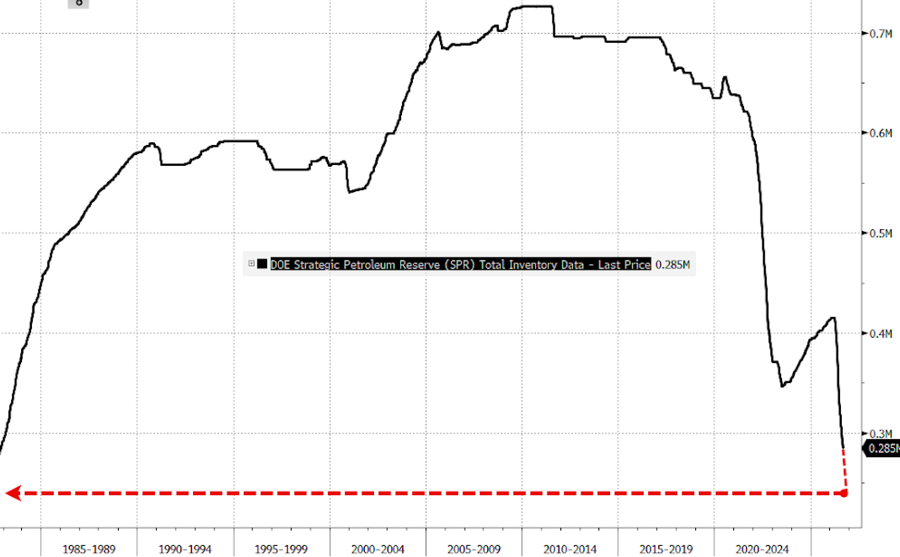
A separate Bloomberg News report said the US Energy Department requested an exchange of up to 40 million barrels of oil from the SPR. The release is part of a much larger plan to dump 172 million barrels of oil from the SPR onto the market to tame crude prices amid supply disruptions at the Hormuz chokepoint.

Such a drawdown would put the SPR at levels not seen since the early 1980s. The current level stands at around 285 million barrels.

Goldman Energy analyst Nikhil Bhandari warned last week that an ongoing global refining crisis could strain the fuel market well into 2027 (read the report). 

EU Eyes Methane Rule Retreat As Energy Crisis Deepens; IEA Floats Another Emergency Oil Dump

The European Union is considering postponing methane emissions requirements for imported oil and gas to help boost energy supplies, with the Northern Hemisphere winter just months away. Energy prices in the bloc are already soaring, and uncomfortably low supplies of diesel and natural gas could push them even higher. The energy-stricken continent faces a difficult balancing act as it fights for its energy security.

Reuters quoted EU Energy Commissioner Dan Jorgensen as saying the bloc could delay the methane emissions provisions by a year, which are scheduled to take effect at the start of next year. The rules require foreign producers supplying Europe to monitor and report methane emissions. 

The big concern is that compliance risks and potential penalties could discourage suppliers from sending fuel to Europe just as governments panic-search to secure winter supplies. Disruptions linked to the war in Ukraine and Iran have disrupted supplies of avaiable crude and crude products. 

"I have instructed my services... to look into possibilities of postponing the part that has to do with imports," Jorgensen told reporters at a meeting of EU energy ministers in Dublin.

The potential withdrawal of the new methane emissions rule comes as the International Energy Agency weighs another strategic oil reserves dump to cap crude oil prices from rising further - just as China re-enters. 

"We are following the markets very closely, especially the product markets, diesel and others. If there is a need, of course, we will discuss with our member governments to take the necessary steps," IEA head Fatih Birol told reporters in Dublin ahead of a meeting of EU energy ministers.

UBS markets analyst Nana Antiedu commented earlier today on the ongoing disruption to the global refining market: 

Since the July update, UBS Evidence Lab's refining project tracker shows disruptions across global refining have intensified, driven by the Strait of Hormuz situation and further attacks on Russian refineries. 

Around 11% of global refining capacity was offline during August, typically the lightest month of the year for maintenance. European refining margins set a new all-time high at $50/bbl. As the industry enters the autumn maintenance season, energy analyst Anna Kishmariya estimates offline capacity should remain above 11Mb/d through at least October, absent a recovery in Middle Eastern product flows. 

She raises the estimate of capacity requiring repairs exceeding two months to about 2.3Mb/d. The key focus remains the potential US product export ban. Given US exports account for over 20% of the global diesel export market, Anna does not believe the market could absorb another major supply disruption. While not her base case, this remains the key upside risk to margins.

Brent prices reversed earlier amid conflicting messaging on US-Iran negotiations, continued flows through the Hormuz chokepoint and renewed flows through Saudi Arabia's East-West pipeline. Recall last week that Goldman warned a global refining nightmare could extend well into 2027 (read report). 

https://www.zerohedge.com/energy/eu-eyes-methane-rule-retreat-energy-crisis-deepens-iea-floats-another-emergency-oil-dump