Search This Blog

Sunday, January 6, 2019

Digital health market ‘frothy, but it doesn’t look like a bubble’


Since Rock Health began researching and tracking funding into the digital health space in 2011, we’ve reported steady growth nearly every year. 2018 was no different, with a massive $7.9 billion in venture filling start-ups’ coffers. But the signals we’re seeing — large, late-stage rounds at high valuations and shorter periods between early rounds — are those of an investment cycle nearing its peak.
Does this peak signal a “bubble?” The so-called b-word has been sneaking into conversations with our fellow investors, so we dedicated our year-end number crunching to measuring the froth.
In our view, digital health is not in a bubble. But we’ve heard opposing views on that from other investors, and so we welcome a healthy debate as this cycle unfolds.

Will investors keep backing digital health?

Digital health funding from 2011 to 2018
Rock Health
Digital health funding from 2011 to 2018
Future venture capital funding for digital health largely rests on two factors: the health of the economy as a whole, and the dynamics driving investment in health care innovation.
First, where the broader venture capital market goes, digital health will go. Digital health’s growth over the past five years mirrors venture investment growth overall: Both hit decade-high deal values in 2018.
But of course, the ongoing public market pullback could trigger investor wariness that spills into venture capital.
For the second factor, we validated a simple framework with fellow investors to assess the current “bubbliness” of digital health against six attributes. We hope this approach moves the bubble discussion to a more data-driven place and helps entrepreneurs identify strategies to weather a potentially tighter capital market.
Is digital health in a bubble? Maybe.
Rock Health
Is digital health in a bubble? Maybe.
  1. Hype supersedes business fundamentals: Technology’s potential to fundamentally transform the $3.5 trillion healthcare market drives excitement for digital health, not irrational hype. While startups must overcome long sales cycles and byzantine reimbursement models, investors and entrepreneurs are actively learning and moving toward sustainable business models: risking payment on clinical outcomes and pursuing strong validation pathways for reimbursement. Verdict: not bubbly.
  1. High cash burn rates: This is perhaps the “bubbliest” attribute of digital health—many well-funded startups are raising cash quickly. A median Series A, or first institutional, round of funding increased by a third in recent years, and since 2011, time to raise between seed and that Series A has been cut roughly in half. Savvy entrepreneurs will find ways to reduce the need for fresh capital while reaching growth milestones. As Kaiser Permanente Ventures’ Liz Rockett pointed out to us, “With sales cycles being as long as they are, you have to burn a fair amount of capital without a known endpoint to figure out where you’re headed. The CEOs who figure out how to do that as efficiently as possible will be able to retain a lot more ownership in their companies and give themselves more flexibility at exit.” Verdict: moderately bubbly.
  1. Unclear exit pathways: M&A for digital health companies has been flat for the past few years, and there hasn’t been an IPO since 2016. Over half of acquirers in 2018 were digital health companies themselves, primarily looking to acquire for scale and to build out their offerings. Incumbent shake-ups and the entry of tech giants will drive more demand for innovation—and opportunities for consolidation. Verdict: moderately bubbly.
  1. Surge of cash from new investors: Our data shows repeat investors have outnumbered new investors for the past four years, and the spread is growing. Commitment from those who know the space well is a good sign—particularly as they encourage companies to pace growth and develop a long-term fundraising plan that doesn’t hinge on an annual influx of cash. Verdict: not bubbly.
  1. High valuations decoupled from fundamentals: With bigger, more frequent rounds, some valuations are soaring. Bessemer Venture Partners’ Steve Kraus cautions, “I’m not a big fan of the obsession with unicorn valuations. The focus should be on building a ‘unicorn product’ in healthcare and then the rest will take care of itself.” He sees startups hiking up valuations via large investments rather than taking a measured approach of raising less cash and selling at a lower, but good, multiple. Fortunately, this isn’t an inevitability—startups can avoid overvaluation by taking smart, not big, money. Verdict: moderately bubbly.
  1. Fraud or misuse of funds: Before it pops, a bubble can tempt market participants with massive returns and lead to fraud. Could Outcome Health and Theranos be indicative of a wider trend in health tech? We don’t think so. There hasn’t been further evidence of fraudulent behavior infecting the sector. Verdict: Not bubbly.
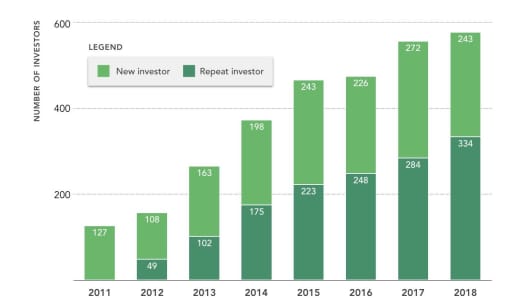
Rock Health's data on the distribution of digital health investors
Rock Health
Rock Health’s data on the distribution of digital health investors
While the future is not yet written, it seems unlikely that capital will continue to flow at the current rate. We anticipate a possible pullback in VC funding for digital health in future periods—not a bubble pop. The next stage will be shaped by how entrepreneurs and investors reset for a tighter market in 2019. Doing so will safeguard against future market corrections—and allow the digital health community to continue making healthcare massively better for every human being.

Newstrike Brands recalls cannabis sold in Alberta over contamination concern


A Toronto-based company has ordered a recall of a cannabis product sold in Alberta due to contamination concerns.
Newstrike Brands and its Up Cannabis subsidiary say the recall is a precaution because tests have found mould and microbial contaminates that exceed acceptable limits.
The recall involves 1,428 units of one lot of Up Cannabis seven gram dried cannabis jars sold to the Alberta Gaming Liquor & Cannabis Commission.
Newstrike says the affected cannabis has a Nov. 28, 2018, packaging date and was sold only in Alberta.
It says to date there have been no complaints or adverse reactions to the pot.
People can return it to where it was sold for replacement or a refund.

Gritstone Oncology Updated Presentation Time at J.P. Morgan


Gritstone Oncology(Nasdaq: GRTS), a clinical-stage biotechnology company developing the next generation of cancer immunotherapies to fight multiple cancer types, today announced that Andrew Allen, M.D., Ph.D., co-founder, president and chief executive officer, will present a company overview on Tuesday, Jan. 8, 2019 at 10:00 a.m. PST during the 37th Annual J.P. Morgan Healthcare Conference in San Francisco. The company will hold a question and answer session immediately following the presentation.
A live audio webcast will be available within the Investors & Media section of the Gritstone Oncology website at https://ir.gritstoneoncology.com/investors/events. An archived replay will be accessible for 30 days following the event.

Zymeworks 2018 Achievements, 2019 Priorities


Zymeworks Inc. (NYSE/TSX: ZYME), a clinical-stage biopharmaceutical company developing multifunctional biotherapeutics, today reviewed its key 2018 accomplishments and outlined the Company’s priorities for 2019.
“With our clinical, preclinical, and business development achievements in 2018, along with a robust balance sheet, we believe we are in a strong position to continue delivering on our corporate objectives in 2019 and beyond,” said Ali Tehrani, Ph.D., President and CEO of Zymeworks. “Our priorities include aggressively advancing our clinical and preclinical programs and continuing the development of our therapeutic platforms, which not only underpin our in-house pipeline but have also served as the basis of eight major pharmaceutical partnerships. We remain committed to our mission of creating novel biotherapeutics that allow patients worldwide to return home to their loved ones, disease free.”
2018 Achievements
  • Presented Expanded ZW25 Data, Underscoring its Anti-Tumor Activity and Tolerability
    Zymeworks reported clinical results for ZW25, a novel Azymetric™ bispecific HER2-targeting antibody, at multiple medical meetings. Data continues to demonstrate ZW25’s robust single-agent anti-tumor activity and tolerability in heavily pretreated patients across a variety of HER2-expressing cancers.
  • ZW49 Investigational New Drug (IND) Application Accepted by the FDA
    ZW49, Zymeworks’ second clinical candidate, is a novel bispecific HER2-targeting antibody drug conjugate. IND-enabling studies demonstrated promising efficacy and tolerability, suggesting a wide therapeutic window.
  • New Corporate Partnerships Established and Existing Ones Expanded
    Zymeworks entered into new collaborations with BeiGene, which includes a licensing agreement in the Asia Pacific region (excluding Japan) for ZW25 and ZW49, and with LEO Pharma, which expands Zymeworks’ pipeline into new disease areas. The Company also expanded its existing collaborations with Daiichi Sankyo and Celgene. Zymeworks currently has eight active collaborations that offer up to US$7.6 billion in potential milestone payments plus royalties.
  • Drug Candidate from First Corporate Partnership Poised to Enter Clinical Studies
    Eli Lilly submitted an IND application for one of its bispecific antibodies enabled by Zymeworks’ Azymetric platform resulting in a milestone payment to the Company.
  • Introduced Robust Immune Oncology (IO) Preclinical Pipeline
    Zymeworks unveiled a number of IO programs showcasing the versatility of its platform technologies. Leveraging the Azymetric platform, Zymeworks showed how optimizing bispecific geometry and formats can maximize activity, potentially creating new classes of precision therapeutics.
  • Expanded Executive Leadership Team
    Tony Polverino, Ph.D., joined Zymeworks as Executive VP of Early Development and CSO. In this newly created role, he oversees the Company’s R&D strategy and advances product candidates from discovery through translational research/early development.
  • Built Strong Balance Sheet
    Zymeworks completed a US$97.8 million public financing and added non-dilutive capital from its corporate partnerships totaling US$89 million in 2018.
2019 Corporate Priorities
Zymeworks will focus on achieving the following in 2019:
  • Initiating multiple Phase 2 studies for ZW25
  • Expanding the global clinical development of ZW25 into Asia and Europe
  • Reporting ZW25 data from combination studies (chemotherapy and/or targeted agents)
  • Reporting data from the Phase 1 trial for ZW49
  • Establishing additional drug development collaborations with a focus on new platforms
In addition, Zymeworks expects its pharmaceutical partners to continue nominating new Azymetric bispecific antibody therapeutic candidates for clinical development in 2019.

Adamas Prelim Q4, 2018 GOCOVRI Sales Results, 2019 Key Priorities


— GOCOVRI preliminary net sales of approximately $13.3 million for the fourth quarter of 2018 and approximately $34 million for the year —
— Preliminary total prescriptions of approximately 5,700 for the fourth quarter of 2018 and  approximately 15,500 for the year —
Adamas Pharmaceuticals, Inc. (Nasdaq: ADMS), a fully-integrated pharmaceutical company pioneering time-dependent medicines for central nervous system (CNS) disorders, today outlined key business priorities for 2019 and provided preliminary 2018 sales results for GOCOVRI™ (amantadine) extended release capsules.  GOCOVRI is the first and only FDA-approved medicine indicated for the treatment of dyskinesia in patients with Parkinson’s disease receiving levodopa-based therapy and only medication clinically proven to reduce both dyskinesia and OFF in that population.
“We are pleased to finish 2018 in a strong position, after the commercial launch of GOCOVRI,” said Gregory T. Went, Ph.D., Chairman and Chief Executive Officer of Adamas Pharmaceuticals, Inc. “GOCOVRI has had a positive and durable impact on Parkinson’s disease patients with dyskinesia, and we look forward in 2019 to continuing to promote and demonstrate the value of GOCOVRI to all stakeholders.  In addition, our development programs have advanced in 2018 with the strong enrollment of our INROADS Phase 3 trial for ADS-5102 in patients with multiple sclerosis walking impairment and the progress in our ADS-4101 program, which will continue in 2019.  Finally, we continue to be confident in breadth and strength of the intellectual property portfolio that we have established to protect our products, programs and other innovations.”
Preliminary Unaudited Fourth Quarter and Full-Year 2018 Sales for GOCOVRI
Based on preliminary unaudited financial information, the company expects net sales of GOCOVRI to be approximately $13.3 million for the fourth quarter ended December 31, 2018.  During the fourth quarter, Adamas fulfilled approximately 5,700 paid prescriptions of GOCOVRI.  Preliminary full-year unaudited net sales of GOCOVRI are expected to be approximately $34 million, with approximately 15,500 paid prescriptions filled.  Adamas ended the year with approximately $211 million of cash, cash equivalents, and available-for-sale securities.
Key Priorities for 2019
GOCOVRI commercialization:
  • Drive adoption and clinical conviction through commercial execution and focused education about the innovation and unique benefits of GOCOVRI
  • Continue to maintain excellent persistence and durable use through positive patient experience
  • Target an approximate doubling of total prescriptions for 2019 over 2018
  • Advance the medical literature regarding GOCOVRI in the Parkinson’s disease treatment journey and time dependent mechanisms of disease and action by continuing to publish data at major scientific and medical meetings, including American Academy of Neurology (AAN) and International Parkinson and Movement Disorder Society (MDS)
Development Pipeline:
  • Expect completion of enrollment for the Phase 3 INROADS study of ADS-5102 (amantadine) extended release capsules for multiple sclerosis walking impairment in the first half of 2019 and release top-line data in the second half of 2019
  • Continue to advance ADS-4101 towards registration studies

Viking Therapeutics to Present at Biotech Showcase 2019


Viking Therapeutics, Inc. (“Viking”) (NASDAQ: VKTX), a clinical-stage biopharmaceutical company focused on the development of novel therapies for metabolic and endocrine disorders, today announced that its chief executive officer, Brian Lian, Ph.D., will deliver a corporate presentation at the 11th Annual Biotech Showcase, being held January 7-9, 2019 at the Hilton San Francisco Union Square in San Francisco.
Details for this presentation are as follows:
  • Biotech Showcase 2019 – webcast availableTime/Date: 11:30 a.m. PT on Monday, January 7, 2019Location: Hilton San Francisco Union SquareRoom: Yosemite C
To access the live webcast of Viking’s presentation, please visit “Webcasts & Presentations” within the News & Events section of Viking’s Investors page at www.vikingtherapeutics.com. Additionally, a replay of the webcast will be available on the Viking website following the conference.

Viking Therapeutics, Inc. is a clinical-stage biopharmaceutical company focused on the development of novel, first-in-class or best-in-class therapies for metabolic and endocrine disorders.  The company’s research and development activities leverage its expertise in metabolism to develop innovative therapeutics designed to improve patients’ lives.  The company’s clinical programs include VK2809, a small molecule selective thyroid hormone receptor beta agonist for the treatment of lipid and metabolic disorders, including non-alcoholic steatohepatitis (NASH).  In a Phase 2 trial for the treatment of non-alcoholic fatty liver disease and elevated LDL-C, patients who received VK2809 demonstrated statistically significant reductions in LDL-C and liver fat content. VK2809 was shown to be safe and well-tolerated in the study.  The company is also developing VK0214, a small molecule selective thyroid hormone receptor beta agonist for the treatment of X-linked adrenoleukodystrophy.  The company’s other programs include VK5211, an orally available, non-steroidal selective androgen receptor modulator.  In a Phase 2 trial in patients recovering from hip fracture, patients who received VK5211 experienced significant improvements in measures of lean body mass compared to patients who received placebo.  Other programs also include VK0612, a first-in-class, orally available drug candidate in Phase 2 development for the treatment of type 2 diabetes as well as two earlier-stage programs targeting metabolic diseases and anemia.  Viking holds exclusive worldwide rights to a portfolio of five therapeutic programs, including those noted above, which are based on small molecules licensed from Ligand Pharmaceuticals Incorporated.

Aptose Biosciences to Present at Biotech Showcase(TM) 2019 Conference


Aptose Biosciences Inc. APTO, +6.25% (APS), a clinical-stage company developing highly differentiated therapeutics that target the underlying mechanisms of cancer, today announced that William G. Rice, Ph.D., Chairman, President and Chief Executive Officer, and Gregory K. Chow, Senior Vice President and Chief Financial Officer, will participate at the upcoming Biotech Showcase(TM) 2019 Conference on Monday, January 7, 2019 at 11:00 a.m. PST in San Francisco, CA.
Conference Presentation Details:
Date: Monday, January 7, 2019
Time: 11:00 a.m. PST
Location: Track Yosemite – C (Ballroom Level)
Hilton San Francisco Union Square, 333 O’Farrell Street, San Francisco, CA 94102
Webcast: https://event.webcasts.com/starthere.jsp?ei=1226323&tp_key=d5803514a3
The audio webcast will be archived shortly after the live event and will be available through the Aptose website at https://ir.aptose.com/events-and-presentations/past-events.
The Company will also be hosting institutional investor and partnering meetings at the LifeSci Advisors Corporate Access Event taking place in San Francisco, on January 8 and 9, 2019.
To schedule a meeting with Aptose, investors can register on the online system managed by the Company’s US investor relations firm LifeSci Advisors, LLC, or make a request via e-mail at Access@LifeSciAdvisors.com.

Aptose Biosciences is a clinical-stage biotechnology company committed to developing personalized therapies addressing unmet medical needs in oncology, with an initial focus on hematology. The company’s small molecule cancer therapeutics pipeline includes products designed to provide single agent efficacy and to enhance the efficacy of other anti-cancer therapies and regimens without overlapping toxicities. APTO-253, the only known clinical stage agent that directly targets the MYC oncogene and inhibits its expression, is in a Phase 1b clinical trial for the treatment of patients with relapsed or refractory acute myeloid leukemia (AML) or high risk MDS. CG-806 is an oral, first-in-class pan-FLT3/pan-BTK multi-cluster kinase inhibitor being developed to treat AML and certain B cell malignancies. For further information, please visit www.aptose.com.