Search This Blog

Sunday, January 13, 2019

FDA shutdown misses Aimmune peanut allergy med; delays egg, other plans


Concerned about a government shutdown, Aimmune took care to file the BLA for its oral immunotherapy for peanut allergy by Dec. 21. That application is under review, said Chief Medical Officer Dan Adelman, but other programs weren’t so lucky. These include its egg allergy treatment and its walnut program, which could potentially become a single treatment targeting multiple nut allergies.
And though the FDA continues to review AR101, the peanut treatment—Aimmune made sure to wire the agency the 2019 PDUFA fee early—the company isn’t sure if that funding will outlast a government shutdown.
“In a perfect world where we weren’t in a government shutdown, our 60-day window would be Feb. 19. But now we will have to see. Nobody knows how long it’s going to last,” Adelman said at the J.P. Morgan Healthcare Conference.
The company is also trying to start phase 2 trials of its egg allergy treatment. It submitted an IND for that program, also in December, but that application is currently in limbo.

“We have been informed that those documents not accompanied by a PDUFA fee are not being reviewed by FDA at this time. It’s normally a 30-day wait and then we hear back, but [the IND] is not being reviewed and we don’t know when we will hear back,” Adelman said.
Aside from programs in peanut and egg, the Brisbane, California-based biotech is also working on treatments for milk allergy and walnut allergy. It’s also partnering with Sanofi and Regeneron on an exploratory phase 2 study combining AR101 with the latter companies’ dupilumab, which is approved for the treatment of atopic dermatitis. Regeneron, which is running that trial, started enrollment in October.

Aimmune has been plugging away at the walnut protein it will eventually use in its immunotherapy, but has turned up a new question. It’s learned that more people are allergic to multiple nuts than are allergic to a single nut, making the pursuit of an allergy treatment for multiple nuts an attractive option, Adelman said. But the company doesn’t know if it can begin working on a multinut program, or if it needs to work serially—that is, get a walnut treatment approved, followed by other single-nut treatments for, say, hazelnut and cashew. It needs to have a conversation with the FDA to figure that out.
“We will be thoughtful and careful about which nuts to choose, and we are very interested in understanding the regulatory path for multinut approval,” Adelman said. The choice of nut is important as some tree nuts cross-react with others—that is, desensitizing patients against one nut could protect it from allergic reactions to another nut because they are immunologically related, he said. This is the case for walnut and pecan.

But the choice of nuts, and other “technical stuff,” as Adelman puts it, is “of secondary importance to the regulatory question.”
“We need to develop the appropriate source material for those other nuts and we’ve gotten quite good at that as far as figuring out how to process proteins and turn them into drugs,” Adelman said.
Aimmune is just waiting for the FDA to reopen so it can get cracking.

PQ Bypass raises $60M to fund peripheral arterial disease Detour graft tech


PQ Bypass has gathered $60 million in equity financing to move forward with its minimally invasive technology for treating long blockages in leg arteries caused by peripheral artery disease.
The round—led by Deerfield Management, with participation from the company’s previous backers Seroba Life Sciences and MedTech Venture Partners—also allowed the Sunnyvale, California-based company to convert about $15 million in outstanding debt and interest to equity.
Extreme blockages in PAD, with segments of plaque as long as 15 to 20 centimeters or more, can be very challenging to treat, and can cause pain, loss of mobility or even amputation of the lower leg and foot.
While procedures such as angioplasty and stenting work on shorter blockages, they have not been as effective on longer ones, often resulting in repeat procedures within one year, the company said in a statement. Instead, patients typically undergo an open bypass surgery in the leg, requiring longer hospital stays and rehabilitation.

PQ Bypass’ Detour procedure, or a percutaneous femoropopliteal bypass, places a stent graft from the femoral artery into the femoral vein, and then back into the popliteal artery, circumventing the blockage and restoring blood flow through a minimally invasive, fluoroscopically guided procedure.
The company currently has a prospective, single-arm clinical trial underway, which aims to enroll up to 292 participants at 40 international centers.
In March 2017, the company received a CE mark for its suite of devices used to perform the Detour procedure: including the Torus stent graft, and a snare and crossing device used to retrieve foreign bodies and place guidewires.
A previous single-arm trial of 59 patients met its primary endpoint with a patency rate of 84.7%, or the proportion of vessels that remained open after six-months, and with a 30-day major adverse event rate of 3.4%.

Amarin: Potential Takeout, Positive Rx Trends Support Positive Thesis – Cantor


Cantor Fitzgerald analyst Louise Chen reiterated an Overweight rating and $35 price target on Amarin Corporation

VAT fat may cause pathogenic obesity


Type-2 (adult-onset) diabetes and other diseases related to the obesity epidemic depend on how the body stores excess energy, according to evolutionary biologist Mary Jane West-Eberhard, emeritus scientist at the Smithsonian Tropical Research Institute. In the Proceedings of the National Academy of Sciences, she describes her theory about fat inside the abdominal cavity—visceral adipose tissue or VAT—the “VAT prioritization hypothesis.”
More than 300 million people are affected by obesity-associated diabetes. Heart disease is a major killer. Both involve .
“Pathogenic obesity is an advantageous process gone awry,” said West-Eberhard. “Very early in life the body makes decisions about where to store fat. It makes sense for poorly nourished fetuses to invest in VAT rather than in fat under the skin because VAT evolved to protect us from infections, but this choice sets us up for disaster if we have access to too many calories later in life.”
Researchers study obesity from different perspectives, but West-Eberhard took a broader look to ask how the body makes decisions about where to deposit fat and why.
“Trying to understand diseases related to obesity without understanding the abdominal structures that become obese is like trying to understand circulatory diseases without knowing the functions of the heart,” West-Eberhard said.
Visceral fat is nature’s super band-aid. Sometimes called “the abdominal policeman,” a VAT-rich structure called the omentum, a loosely hanging fold of the membrane lining the , sticks to wounds, foreign objects such as shrapnel and infection sites like a bandage full of antibiotics. In fact, surgeons sometimes use pieces of omentum to control severe postoperative infections. VAT surrounds the , defending the body from ingested pathogens and toxins.
“The fact that visceral fat tissue evolved to fight visceral infections provides a causal hypothesis for how high fructose sweeteners and saturated fats contribute to chronic diseases such as type 2 diabetes,” West-Eberhard said. “They influence which bacteria grow inside the intestines [called the microbiome], making the intestinal walls more permeable and releasing more toxins into the bloodstream, stimulating the visceral immune system and potentially leading to chronic inflammatory disease.”
In the past, the role of visceral fat as part of the immune system may have been more widely important than it is today because starvation and infections were more common. West-Eberhard proposes that in fetuses subject to nutritional stress, more energy may be stored as fat around the abdominal organs rather than as fat under the skin (subcutaneous fat or SAT). She notes that childhood catch-up growth, a better predictor of obesity-associated disease than , may be a sign of the mistake the body has made as it assigns energy to VAT producing the apple shape of abdominal obesity, rather than the pear shape of lower body fat distributed in the hips, buttocks or thighs or more evenly under the skin.
In , a dangerous feedback loop may develop: increased VAT leads to increased chronic inflammation, which, in turn, leads to increased  leading to further VAT storage and increased susceptibility to disease. Eventually, the ability to produce insulin is reduced and these individuals may need injected insulin to control type-2 (adult onset) diabetes.
“I think the combination of malnutrition early in life coupled with modern diets of saturated and trans-fats and high-fructose foods available on a global scale is leading to a situation that is toxic for individuals in many different cultures.” West-Eberhard said. “People’s  shape—apple versus pear—is based on the way their bodies allocate fat. Even in ancient societies, poor nutrition leading to investment in VAT contributed to apple-shaped bodies, versus more ‘beautiful,’ voluptuous, pear-shaped bodies associated with SAT fat storage by better-nourished babies. Social upheaval (war, conquest and disease) would have favored flexibility in fat allocation because social rank and food availability would occasionally have changed.”
In the future, she hopes to see more research revealing fetal cues that turn on VAT storage, the development of the visceral immune system, the role of the omentum, disease-resistance in obese individuals and the capabilities of people of different geographic and ethnic origins to allocate fat differently.

Explore further
More information: Mary Jane West-Eberhard, Nutrition, the visceral immune system, and the evolutionary origins of pathogenic obesity, Proceedings of the National Academy of Sciences (2019). DOI: 10.1073/pnas.1809046116

Going on a low-information diet


We live in a world of unlimited information. The internet produces 2.5 quintillion bytes of data every single day. Keeping up everything is impossible when we only have 24 hours in a day, and can stand in the way of getting things done and focusing on what really matters.
Anita Williams Woolley, associate professor of organizational behavior and theory at Carnegie Mellon University’s Tepper School of Business, says the biggest problem with information overload is the constant stream of interruptions. “Doing something such as writing an email while being constantly interrupted can lead you to spend at least twice as long writing it, and the quality of the final product will be significantly lower than if it was written without interruptions,” she says.
And switching our focus isn’t the only problem associated with our overconsumption of data. “The more information you consume, the more likely that some of it will be thought-provoking or upsetting and will stay in the back of your mind even as you try to move on to do other things,” says Woolley. This cognitive burden can make you feel more burned out at the end of the day and can harm your ability to concentrate on the task at hand.
Digital detoxes are heralded as the answer to our data consumption woes. Shut everything off, they say. But a digital detox may not be possible for everyone. After all, for many of us, our livelihoods are connected to our devices. Instead, a low-information diet may be the answer.
A low-information diet doesn’t mean cutting out data entirely, but, rather, choosing the information that you need to consume. “Like any other diet, moderation is key to success,” says internet marketing expert Larry Bailin. “Food is not harmful, too much food is harmful. To lose weight, you pick and choose what to eat, when to eat, and why to eat it.” Controlling the data you consume means selecting the data that is critical to your success, while ignoring the data that is not.
Follow these four steps to go on a low-information diet:

DEVELOP A RANKING SYSTEM

Of the hundreds of emails you receive in a day, how many actually demand your attention right away? Probably only a handful, right? Yet so many of us are accustomed to looking at and answering every email as soon as it comes in, removing our focus from the meaningful work we’re doing.
Make use of your email system, marking critical emails with flags or stars. Woolley sorts her emails into four categories:
  1. Important and urgent
  2. Important but not urgent
  3. Urgent but not important
  4. Neither urgent or important
“When I go through my inbox, I put everything into one of those buckets, then I handle the 1s [important and urgent] first,” she says. This ranking system ensures that your brain is not overburdened with unnecessary or irrelevant information.

KEEP SOCIAL MEDIA FEEDS CLEAN

Although it’s often blamed as the biggest time waster on the internet, social media can be a great resource for information, if used correctly. The problem, according to Bailin, is that we seek out to grow a follower base and miss out on the opportunities social media provides to access that relevant information. The more people we’re following that don’t produce content that is relevant to our lives, the less likely we are to see the content we actually want to see.
In order to get the most out of your social media data, avoid feeling obliged to follow people back or playing the numbers game just to grow your followers. Lighten your data load by seeking only the relevant and useful data. “Keep your feed clean so you see the relevant information that will help you stay competitive, instead of overflowing with random cat memes from random followers,” says Bailin.

SCHEDULE YOUR DATA USAGE

“We have unlimited access to food, yet most of us are not constantly eating. We eat at timed intervals,” says Bailin. Rather than answering every buzz or beep the second your hear it, determine when during the day you will reach for your devices to check in on email and social media. To train yourself to overcome this Pavlovian response, try waiting five minutes after a buzz, beep, or ding before reaching for your device. Then increase this to 10 minutes, 15 minutes, and so on.
Woolley advises scheduling your data time into your calendar or using tools such as Freedom to lock down your browser. Let coworkers and collaborators know about your time boxing schedule so you don’t feel that you’re keeping them waiting by not responding within two minutes of their message.

SHUT DOWN AT NIGHT

It can be tempting to spend those last few hours of the evening scrolling through your social media, browsing the web, feeding yourself all sorts of data. Shutting down your data usage an hour before bed will allow you to gain clarity and prepare yourself for the day ahead, rather than clouding your mind with probably irrelevant information.

How to avoid injuries when you start running


If the statistics are correct, many millions of new runners have laced up for the first time in the last few days. If you are one of them, then, as I’ve written elsewhere, you are well on your way to being faster, stronger, more resilient, more intelligent and more empathetic than when you awoke on New Year’s Day nursing little more than a hangover and a firm resolution. So, with such great rewards in the pipeline, why do millions of us fail in those first critical weeks? It’s because, for the body, the first month of new training is so booby-trapped that Lara Croft would find the obstacles tricky to negotiate. Read on and you might just make it safely to February, and beyond.
On your very first run your body will have become suddenly aware that it needs to remodel to match its new training loads. Our muscular system responds to training easily, and can repair and rebuild in a matter of days. And, because the heart and lungs are part of this system they too will improve rapidly. After just a few runs, the cardiorespiratory system will become more efficient making you feel fitter and stronger. And this is at the core of where most new runners get into trouble. The tragedy is that other soft structures, connective tissues like tendons and ligaments, are just as weak as when you stepped out for your very first run. They are slower to repair and remodel than muscles, and about ten days in to your new regime, they will probably have completed the adaptation from only your first run.

The Goldilocks Threshold

For training to work effectively, soft tissues have to be strained and slightly damaged to what I’m going to call a Goldilocks Threshold. If soft tissues are not stressed by training, they will not adapt at all (but this is never the case for new runners). If they are too stressed (almost always the case for new runners) then you will only be as strong as your weakest link, and wherever that is, that will be the first thing to go.
In the first few weeks of a new exercise regime, you need to bear in mind that your tendons and ligaments are at least ten to 14 days behind how strong you might be feeling on any given day.
And if you’ve been careful, and made it through the first fortnight without imposing too many new demands on tendons that are still struggling to adapt, there is another process that is even slower.
Ever since the 19th century, we have had Wolff’s Law to tell us that our bones adapt over time to increased loading. Imposing new demands on bones stimulates them to remodel. Called mechanotransduction, bones convert the physical indicators of the forces and stresses placed upon them into chemical ones that stimulate the bones to repair, first by breaking down their existing structures and then by rebuilding stronger ones. But this is a much slower process than with soft and connective tissues.
While it may be surprising to learn that two weeks into your new training schedule your bones are basically still those of a non-runner, the news is actually worse than this. Bone remodeling requires that some of the structure is destroyed (by a cell called an osteoclast) before it can be rebuilt. So, during your third week of running, feeling fitter and stronger, with some soft tissue adaptation beginning to take place, your bones are for a short period actually weaker than when you first started. By the fourth week, your bones will have succeeded to adapting to your first week’s run and so will be a little stronger. But they are always going to be a few weeks behind because contrary to popular belief running is very good for our bones, but density adaptation is comparatively slow.
With these processes in a constant and unsynchronized cycle, the new jogger has to be vigilant in not running away with their new-found fitness straight into a stress fracture. If you have just taken up running it is worth thinking about the Goldilocks Threshold, and remember that no one has ever given up or got injured because they did too little. The clearest feedback that your body gives you while running is that of your immediate cardiorespiratory experience. And for every run you do, this will improve, but you must avoid entirely the idea that cardiorespiratory ability is an indicator of your overall fitness—it isn’t. It is only the tiniest tip of the iceberg of what is going on in the body.
While you’re just hitting your stride, your body is punishingly hard at work doing some miraculous things under your skin to adapt to your change of lifestyle; so be kind to yourself, take it slow, enjoy it, give your body the time and space that it needs, and you will be much more likely to make it to February.

Ranking vegs by how good they are for you


I’ve said it before, and I’ll say it again: Everyone should eat more vegetables. But if navigating the produce section gives you anxiety, don’t worry: I asked nutritionist David Friedman, author of Food Sanity: How to Eat in a World of Fads and Fiction, to help me rank popular vegetables — from superfood to just plain really healthy.
Before plunging into our ranking, though, Friedman feels the need to debunk some carnivorous propaganda. “The one misconception I hear a lot is that vegetables don’t provide us with enough protein, and therefore, we need to eat meat,” Friedman says. “The truth is that a vegetarian diet can provide sufficient protein requirements for humans. For example, 100 calories of ground beef contain 10 grams of protein, whereas 100 calories of baby spinach contain 12 grams of protein.” Friedman also mentions that beans and nuts — both of which fit into a vegetarian diet — are high in protein.
“This doesn’t only apply to the average person: It also goes for athletes and bodybuilders who are intent on building lean muscle,” Friedman continues. “If this sounds counterintuitive — that bodybuilders can gain enough muscle to compete professionally by eating a diet of only plant-based protein — I ask, ‘How does an elephant grow to 10,000 pounds by eating nothing except plants?’ They couldn’t grow that big if plants weren’t loaded with protein.”
With that, let’s rank some veggies…
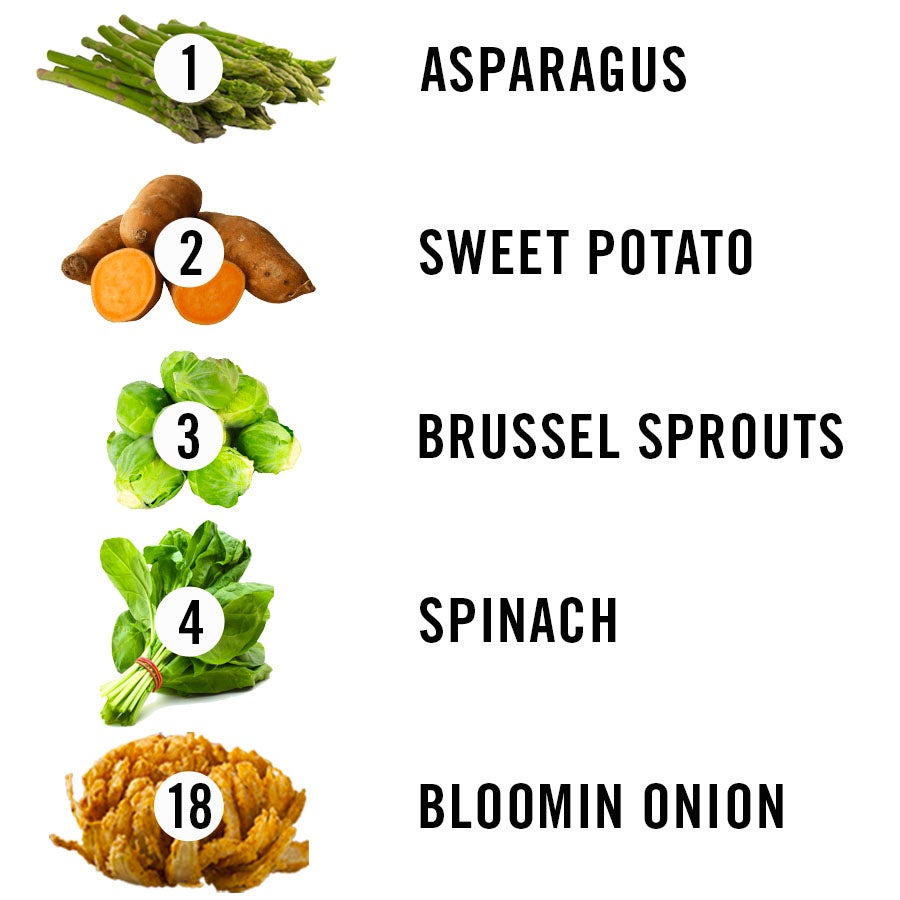
1. Asparagus: “This tasty green stalk comes in first place on my vegetable ranking,” Friedman says. “Asparagus is a great source of vitamin K, which helps with blood clotting and building strong bones.” Friedman also mentions that asparagus provides vitamin A (which prevents heart disease), vitamin C (which supports the immune system), vitamin E (which acts as an antioxidant) and vitamin B6 (which, like vitamin A, also prevents heart disease).
Asparagus is also loaded with minerals, including iron (which supports oxygen-carrying red blood cells), copper (which improves energy production) and calcium (which improves bone health). “Asparagus increases your energy levels, protects your skin from sun damage and helps with weight loss,” Friedman continues. “It’s also an excellent source of inulin, a type of carbohydrate that acts as a prebiotic, supporting the growth of health-promoting bacteria in the colon.”
Lastly, Friedman suggests that asparagus might be something of a natural aphrodisiac. “If you’re on a dinner date, you may want to consider ordering asparagus,” he says, adding that the vitamin B6 and folate it contains can boost feelings of arousal. “It’s high vitamin E content also stimulates sex hormones, including estrogen in women and testosterone in men.” Just be sure to close the bathroom door if you pee afterwards.
2. Sweet Potatoes: “These sweet, starchy tubers are rich in beta-carotene, which helps maintain healthy skin, vision and organ function,” says Friedman. “Beta-carotene consumption has been linked to a decrease in the risk of lung and breast cancer.”
“If you suffer from neck or back pain, sweet potatoes are my top ‘food-is-medicine’ prescription,” Friedman continues. “That’s because one large sweet potato contains more than 850 milligrams of potassium, a nutrient that helps relieve muscle spasms and reduces inflammation.”
Friedman also mentions that one cup of baked sweet potatoes contains approximately 50 percent of your daily vitamin C requirement and lots of manganese, a mineral that “helps produce collagen and promotes skin as well as bone health.” On top of that, Friedman says that sweet potatoes contain anti-inflammatory compounds called anthocyanins.
3. Brussels Sprouts: “These low-calorie miniature cabbages are rich in vitamins and minerals, including vitamin B6, vitamin C, vitamin K, vitamin A, folate, iron and manganese,” Friedman explains. “Their high fiber content also helps support bowel regularity and gut health.”
Friedman also emphasizes that Brussels sprouts contain kaempferol, “an antioxidant that may reduce cancer growth, decrease inflammation and promote a healthy heart.” Additionally, Brussels sprouts keep your blood sugar in check. “Research has linked an increased intake of cruciferous vegetables, including Brussels sprouts, to a decreased risk of diabetes,” Friedman says.
“Brussels sprouts also contain alpha-lipoic acid, an antioxidant that’s been researched extensively for its brain health and anti-aging properties,” Friedman continues. “Lastly, eating Brussels sprouts can also supply the antioxidants your body needs to protect it from cellular damage and promote general good health.”
4. Spinach: “Popeye was right: Spinach is one of the most nutrient-rich foods on the planet,” Friedman emphasizes. “It’s loaded with vitamin C, vitamin K, folic acid [which helps the body produce new cells], iron and calcium. Spinach also contains potassium and magnesium, both of which helps keep blood pressure under control.”
Friedman also mentions that spinach is full of carotenoids, “antioxidants that promote healthy eyes and help prevent macular degeneration, the leading cause of blindness in older adults.”
“Spinach is one of the richest dietary sources of quercetin, a powerful antioxidant that helps ward off infection and inflammation,” Friedman continues. “The antioxidants found in spinach may help fight aging and reduce the risk of cancer as well as diabetes — spinach contains two components, MGDG and SQDG, which have been shown to slow the progression of cancer growth.” Lastly, Friedman says that spinach contains sulforaphane — a compound found in many cruciferous vegetables — which also protects against cancer.
5. Broccoli: “Many people think about orange juice or citrus fruits when it comes to getting their required daily vitamin C, but one cup of broccoli provides more vitamin C than you need in an entire day without causing the blood sugar spike that happens with citrus juice,” Friedman says. “Many health experts consider broccoli to be the healthiest of all the cruciferous vegetables because of its ability to help lower the risk of lung, colorectal, breast, bladder, stomach and prostate cancer.”
Friedman also says that broccoli is a solid source of vitamin K, which again, promotes bone health. Additionally, Friedman points to several studiesshowing that broccoli consumption lowers the risk of cardiovascular disease.
6. Lettuce: You can see our separate ranking of every type of lettuce here, but, “As a general rule of thumb, the nutritional value of lettuce increases as the leafs get darker,” Friedman explains. “Iceberg lettuce is the most widely eaten but has the least nutritional value — the reason being that iceberg lettuce grows in a tighter head, so the inner leaves get less sunlight, remain lighter green and have fewer nutrients. My top pick is Romaine lettuce: It’s the most nutrient-rich of all lettuce varieties and excels in the vitamin and mineral departments. It’s an excellent source of calcium, folate and vitamin K. It also provides 10 times more beta-carotene than iceberg lettuce and almost as much as spinach, making romaine the healthiest of all the lettuces.”
7. Beets: Friedman first explains that beets lower your blood pressure. “Researchers attribute the blood-pressure lowering effects of beets to their high concentration of nitrates,” he says. “When you eat beets, your body converts nitrates to nitric oxide, a molecule that dilates blood vessels, causing your blood pressure to drop.” This increase in circulation, Friedman says, also increases blood flow to the frontal lobe of the cerebrum, “an area associated with higher-level thinking, such as decision making and memory.”
Friedman mentions, too, that beets contain lutein, which protects your eyes, and pigments called betalains, “which may possess numerous anti-inflammatory properties that help combat obesity, heart disease, liver disease and cancer.”
“Beets are often referred to as ‘nature’s Viagra’ due to their high nitrate content,” Friedman continues, adding that the same dilation of blood vessels mentioned above also boosts circulation to the penis. “This leads to better erections for men during sexual intercourse and helps them last longer in bed.”
8. Mushrooms: “These delicious fungi are one of the few natural dietary sources of vitamin D [which helps the body absorb calcium, promoting bone health],” Friedman says. “Countless scientific studies have revealed numerous ways that mushrooms can be useful in preventing and treating many health conditions: Research conducted at the University of Florida’s Department of Food Science and Human Nutrition, for instance, found that eating shiitake mushrooms daily improves immunity better than any pharmaceutical drug currently on the market.”
“If your New Year’s resolution includes losing weight, it’s ‘shrooms to the rescue: They have lots of nutritional value with few calories and very little fat,” Friedman continues. “They also contain two types of dietary fiber, beta-glucans and chitin, which increase satiety and reduce appetite.”
Lastly, Friedman says, “Mushrooms are great for cardiovascular health thanks to their high fiber, potassium and vitamin C content. If you have high cholesterol, eat more shiitake mushrooms: The stem of the shiitake mushroom is a great source of beta-glucans, which have been shown to lower blood cholesterol levels.”
9. Bell Peppers: “Bell Peppers are very high in vitamin C: Just one provides 170 percent of the recommended daily allowance,” Friedman says. “Other vitamins and minerals found in bell peppers include vitamin E, vitamin A, vitamin K, folate and potassium.”
Some bell peppers are healthier than others, though. “Yellow bell peppers contain several phytochemicals and carotenoids, particularly beta-carotene, which has potent antioxidant and anti-inflammatory benefits,” Friedman explains. “Red bell peppers are chock-full of many healthy antioxidants, including violaxanthin, lutein, quercetin and luteolin. These plant compounds are associated with many health benefits, including the prevention of chronic diseases, such as heart disease and cancer. Green peppers, meanwhile, are harvested sooner; they’re cheaper to grow, and not quite as nutritious as their colorful counterparts.”
10. Tomatoes: Okay, okay: Tomatoes are technically a fruit, but since basically everyone considers them at least vegetable-adjacent, we decided to include them in this ranking anyway. “They contain a high amount of lycopene, an antioxidant that’s been linked to many health benefits, including reduced risk of heart disease and cancer,” Friedman says, adding that cooked tomatoes contain four times more lycopene than uncooked tomatoes. “Tomatoes are also a rich source of vitamin C, vitamin K, potassium and folate. Plus, the skin of a tomato contains naringenin, a flavonoid that has been shown to decrease inflammation, and chlorogenic acid, a powerful antioxidant compound that may help lower blood pressure.”
11. Carrots: “One serving [one cup] of carrots supplies 400 percent of the daily value for vitamin A, and a plethora of nutrients, including vitamin B1, vitamin B2, vitamin B3, vitamin B6, vitamin C, vitamin K, potassium and lots of fiber,” Friedman says. B vitamins basically help the body in every way imaginable: “If you want to fight the sands of time, add carrots to your diet — the high levels of beta-carotene in carrots acts as an antioxidant that slows down cellular aging.”
12. Onions: “Onions will make you cry when you cut them, but they make your body smile when you eat them: They supply vital nutrients, including calcium, folate, iron, magnesium, phosphorus [which supports bones and teeth] and potassium,” Friedman says. “They’re also a rich source of quercetin, a plant-based phytochemical with anti-inflammatory properties.” Quercetin, Friedman explains, may help onions combat arthritis, asthma and heart disease. “Research also shows that those who consume onions and other allium vegetables, such as scallions, garlic, leeks, shallots and chives, have a lower risk of stomach, colon and prostate cancers,” he emphasizes.
Onions also contain prebiotic fiber, according to Friedman, which is necessary for a healthy gut and improved digestion.
13. Green Beans (and Snap Peas): “Green beans contain antioxidants similar to those found in green tea, also known as catechins, which can improve heart health and help prevent cancer,” Friedman explains. “Green beans also help to reduce the risk of heart disease due to their high levels of polyphenolic antioxidants, which are flavonoids that have anti-inflammatory properties. Test subjects with high flavonoid levels have shown anti-thrombotic results, meaning they prevent blood clots. They’ve also been shown to reduce the risk of birth defects for pregnant women. Finally, green beans provide calcium, a vital mineral that helps protect the bones from deterioration and osteoporosis.”
14. Cucumber: Similar to tomatoes, cucumbers are actually a fruit, but also like tomatoes, they’re often thought to be a vegetable, which is why we included them in this ranking. “The ‘cuke’ is low in calories and contains a lot of water (96 percent) as well as soluble fiber, making it ideal for promoting hydration and aiding in weight loss,” Friedman says. “It’s also a good source of vitamin K, which may reduce bone loss and decrease risk of bone fractures.”
“Cucumbers contain antioxidants, including flavonoids and tannins, which prevent the accumulation of harmful free radicals and may reduce the risk of chronic disease,” Friedman continues. “Animal studies show that cucumbers may help lower blood sugar and prevent diabetes-related complications.”
Hot tip: “To get their full nutrient content, cucumbers should be eaten unpeeled,” Friedman says. “Peeling cukes reduces the amount of fiber as well as certain vitamins and minerals they contain.”
15. White Potatoes: “White potatoes aren’t as healthy as sweet potatoes, but they still offer a great source of complex carbohydrates, which promote energy and keep you full,” Friedman says. “Studies have shown that white potatoes are among the most filling foods, which is great if you’re trying to lose weight (of course, adding sour cream and butter negates these benefits).”
On a related note, how you prepare your potato seriously affects the health benefits that come with it. “Frying potatoes to make French fries adds more calories and fat than baking them,” Friedman says. “It’s also important to note that the skin of the potatoes contains a great amount of their vitamins and minerals, so peeling potatoes can significantly reduce their nutritional content.” Friedman goes on to mention that a whopping 60 percent of white potatoes in the U.S. are made into French fries.
But when they aren’t fried, white potatoes are fairly healthy, especially for your gut. “White potatoes contain resistant starch, which is a form of starch that isn’t broken down and fully absorbed by the body,” Friedman says. “Instead, it reaches the large intestine, where it becomes a source of nutrients for the beneficial bacteria in your gut. While there, it converts into short-chain fatty acid butyrate, which has been linked to reduced inflammation in the colon, and a lower risk of colorectal cancer.”
16. Celery: “Celery is 95 percent water, which makes it very hydrating,” Friedman says. “It has zero fat and is virtually calorie-free with lots of fiber. While the nutritional content of celery isn’t as plentiful as the other veggies on the list, it still contains vitamin A, vitamin C, vitamin K and folate.”
“Celery is also loaded with polysaccharides and antioxidants, which have the ability to remove free radical damage that contributes to inflammation,” Friedman continues, adding that these can reduce the risk of heart disease, cancer and arthritis. “Try adding some almond butter for a little healthy protein and fat to make you stay fuller longer.”
17. Corn: “Corn is the number one grown crop in the U.S. and currently the second most genetically modified ingredient in the world (second to soy) — approximately 90 percent of all corn grown in the U.S is genetically modified,” Friedman says. “When it comes to the most fattening on the list, corn leads the pack: These starchy grains have a high glycemic load, meaning they cause an intense blood sugar spike after they’re eaten, which can ultimately increase appetite and weight gain.”
“Corn has very little nutritional value and contains a protein called prolamin, which is very difficult for the body to break down (and the reason you often see undigested corn in your poop),” Friedman continues. “This can also lead to a leaky gut and the growth of bad gut bacteria.”
18. Blooming Onions: Bad news, Outback Steakhouse fans: Blooming Onions are terrible for you. “If you dip onions into a flour-based batter and fry them in greasy, fattening oil to make Blooming Onions, the bad outweighs the good and onions fall to the bottom of this ranking list,” Friedman says. I mean… yeah, I guess I asked for this one. But still, booo.
On a final note, remember that variety is important when it comes to food, which means only eating asparagus — the absolute healthiest vegetable, according to Friedman — is a bad idea. Your best bet is to include every single one of the above-mentioned veggies in your diet. Er, except the Blooming Onion.