Search This Blog

Wednesday, January 30, 2019

Anthem will launch in-house PBM in second-quarter 2019

Health insurer Anthem is launching its in-house pharmacy benefit manager IngenioRx nine months earlier than planned in the second quarter of 2019.
Anthem said Wednesday that it will exercise its rights to terminate its current PBM contract with Express Scripts on March 1 before it expires at the end of the year, due to Cigna Corp.’s acquisition of Express Scripts late last year. It will then begin transitioning its plan members to the new PBM over 12 months.
“Since announcing our intent to create IngenioRx, we have been carefully planning the transition, including the possibility of an early launch, and are confident in our ability to execute the transition under the accelerated schedule,” Anthem President and CEO Gail Boudreaux said in a statement. “This will allow us to go to market with better economics earlier and also accelerate our whole person health strategy, which is proven to reduce total cost of care.”
Anthem first announced it would launch its own PBM in collaboration with CVS Health in 2017. The announcement came amid a bitter feud with Express Scripts in which Anthem claimed the pharmacy benefit manager withheld billions in savings and overcharged Anthem $3 billion annually for its services. Anthem sued the PBM for $15 billion last year.
Anthem said it expects IngenioRx, which was initially slated to launch in 2020, to produce gross annual pharmaceutical savings of more than $4 billion, with at least 80% of those savings falling to its customers in the form of lower healthcare costs and 20% falling to shareholders.
“IngenioRx will improve our ability to integrate pharmacy benefits within our already strong medical and specialty platform, driving greater value for the consumer and increasing transparency,” Boudreaux said during a conference call with investment analysts Wednesday morning. She added that Anthem and CVS have completed 15 months of intense preparation for the transition to the new PBM, “giving us confidence in our readiness to launch.”
Boudreaux also said Anthem intends to speed up investments in artificial intelligence, digital capabilities, clinical integration and provider collaboration. In particular, she touted the blockchain collaboration between Anthem, IBM, PNC Bank and other payers announced last week, which is meant to improve interoperability and data-sharing across the healthcare industry.
“We view blockchain as an enabler for establishing trust,” she said. “Timely access to medical information has been a stumbling block for creating a seamless consumer experience. With a trusted foundation based on transparency and cryptography we will provide a faster, safer and more secure way to exchange medical information to transform the delivery of healthcare.”
Anthem also reported its fourth-quarter and full-year 2018 financial results on Wednesday. The Indianapolis-based insurer grew revenue to $23.4 billion in the fourth quarter of 2018, an increase of 3% over the same period a year ago, reflecting premium increases to cover higher medical costs and the return of the health insurer tax.
The higher revenue was also driven by membership growth in Anthem’s Medicare business. Anthem’s Medicare Advantage membership hit 1 million as of Dec. 31, up 34.9% over 2017. Combined with Medicare supplement, Anthem served a total 1.9 million members, an increase of 18% over the previous year. The insurer said it had a strong Medicare open-enrollment period, and expects to end 2019 serving 250,000 to 300,000 additional Medicare members.
Operating revenue in the government business, which includes both Medicare and Medicaid, was up 16.2% over the fourth quarter of 2017 to $14.5 billion. That helped offset lower revenue and membership in its individual and local employer businesses, which led its total membership to slip by 361,000 members to 39.9 million.
Operating revenue from Anthem’s commercial and specialty business fell by 11.6% to $8.8 billion in the fourth quarter.
Meanwhile, Anthem did a better job at controlling medical costs, which helped lower its medical loss ratio to 86.8% in the fourth quarter of 2018 from 88.6% at the same time the year before. The ratio is a figure that reflects the amount of premiums spent on medical claims and quality improvement activities.
Anthem’s net income was $424 million in the fourth quarter, down 65.6% from a year ago.
For the full year, Anthem’s revenue totaled $92.1 billion, up 2.3% year over year, while its net income slipped by 2.4% to $3.8 billion.

Wall Street is betting on health insurance industry

Publicly-traded health insurers are performing better financially than other healthcare industry players, and that’s unlikely to change any time soon, according to a panel of Wall Street analysts at a Nashville Health Care Council event on Wednesday.
Last year, the average managed care stock price was up about 18%, driven by steady medical costs growth and the ability to price higher than those costs, said A.J. Rice, managing director at Credit Suisse.
“That’s been one of the main sources of upside, is the spread widening what their pricing for and what they’re actually realizing,” Rice said.
Health insurers’ bottom lines are benefiting from increased enrollment in government programs, including Medicare Advantage, which is being driven by an aging population that is increasingly choosing privatized Medicare over the traditional program. Although many states have transitioned their Medicaid beneficiaries to a managed care model, there are still a number of states that have not, Rice said.
And while health insurers are enjoying a period where the economy is relatively stable and plan members aren’t over-utilizing healthcare services, the same dynamic is weighing on the earnings of acute-care hospitals.
Hospitals and other provider facilities are seeing fewer patients, as health insurers steer plan members to lower cost settings and more people enroll in high deductible health plans, said Ana Gupte, a managing director at Leerink Partners. But hospitals are raising their prices, which is helping to offset the lower patient volume.
“The pricing growth has been quite surprisingly good all of 2018,” Gupte said. “I think we’re getting pretty comfortable that it’s going to continue into 2019.”
Interestingly, John Ransom, managing director at Raymond James & Associates, said that while big pharma is taking heat from Congress and the public over rising drug prices, per capita drug costs have increased between just 1% and 2% in the last three years.
“The (cost) trend that’s the most behaved in the sector that’s got the most problems is catching the most hell in D.C., which I find to be out of sync,” Ransom said, adding that medical device makers’ prices are also deflating.
Ransom doubted that the Trump administration would accomplish much in the way of reducing drug prices.
Over the course of 2019, analysts expect to see more mergers and acquisitions play out in several sectors. Despite two recent vertical mergers uniting Aetna with CVS Health and Cigna with Express Scripts, Gupte said there’s still limited room for some horizontal deals and “pockets” of vertical consolidation as companies strive to maximize their market share in Medicare Advantage and Medicaid, in particular.
Centene Corp., Wellcare Health Plans and UnitedHealth Group are likely acquirers in the Medicaid space, while Anthem could pick up another Medicare Advantage plan, Gupte said. Health insurers may also attempt to buy a home health or hospice company, which could help them tamp down members’ healthcare costs by keeping patients out of the hospital. Humana, for example, acquired stakes in home health company Kindred Healthcare and hospice company Curo Health Services with that goal in mind. Consolidation among outpatient healthcare providers is also likely to continue, she said.
Rice noted that while antitrust enforcers under the Trump administration haven’t been very tough on big mergers, deals are taking a long time to gain approval from regulators, which raises the costs of doing the deals. UnitedHealth’s proposed acquisition of DaVita Medical Group, first announced in December 2017, still hasn’t closed.
He predicted that health insurers’ earnings growth would increase by low to mid-teen percentages over the next year or two. All the concerns from an equity analyst perspective, including trade and tariffs, rising interest rates and the potential of a economic recession—aren’t like to hurt managed care companies, Rice said. And if anything, rising interest rates will only benefit insurers’ investment portfolios.

Brexit impact?

With two months to go until the UK is due to leave the EU, how are firms and the UK economy faring?
The economy’s “resilience through the turbulence of the Brexit process has been particularly noteworthy”, according to chancellor Philip Hammond.
But some businesses claim to have been put under unprecedented pressure.
What is going on?
It’s impossible to put absolute numbers on how jobs, output and investment have been impacted so far.
No one knows how these will have fared had the outcome to the referendum in 2016 been different.
Other factors have influenced the business environment – not least slower growth in the likes of China and Europe
But there is a range of evidence that can give us an idea of how UK companies are faring.

Have companies cut or moved jobs?

On the face of it: no.
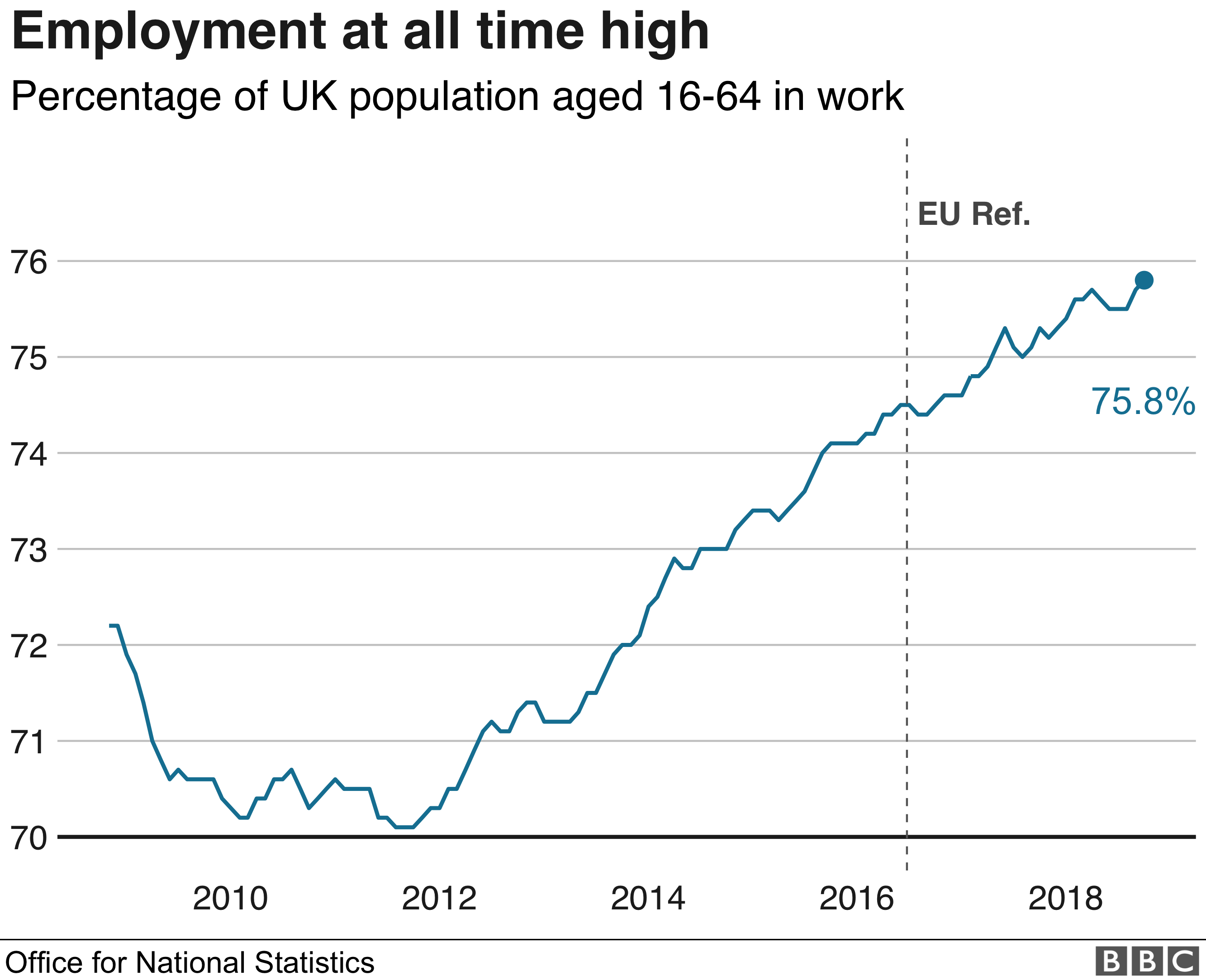
The number of people employed is at an all-time high. But there’s a lot going on under the surface:
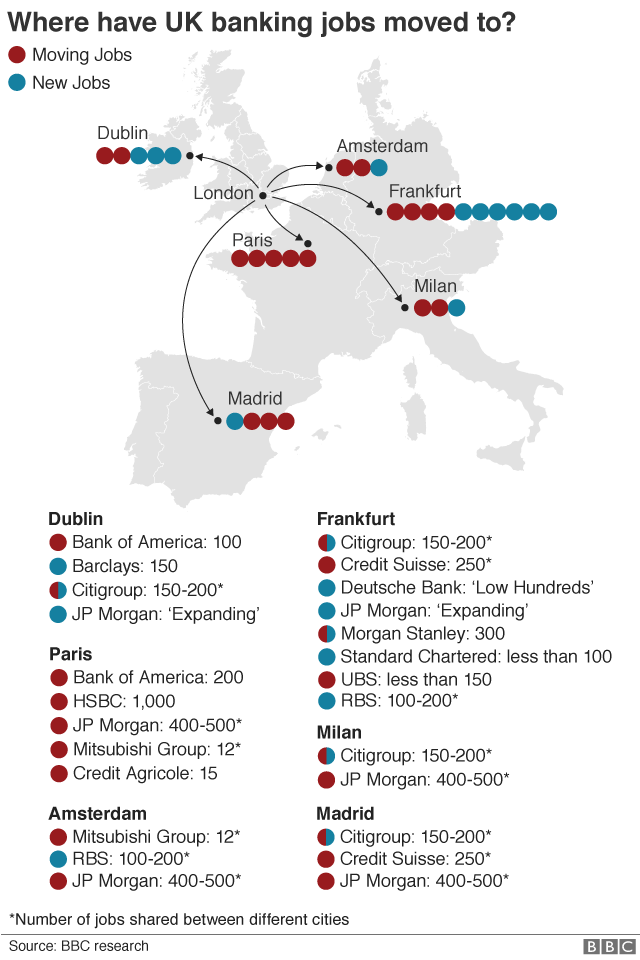
Banks’ contingency plans mean setting up alternative bases in the likes of Frankfurt, Paris or Dublin. Individual banks are coy about revealing too much.
But reports about banks such as Morgan Stanley, Barclays and Bank of America moving, or creating, hundreds rather than thousands of jobs at those sites suggest the total affected in the City is much smaller than the 65,000 or so predicted by some immediately after the referendum.
London’s Lord Mayor has said that the total by 29 March is likely to be below 13,000.
UK banking jobs moe
What we don’t know is if jobs created in European cities such as Paris and Frankfurt are at the expense of potential ones here – or the final implications of the future trading relationship with the EU, whenever that is agreed.
While some – including JLR and Ford – have cited Brexit when cutting jobs – it has been a contributing rather than a deciding factor.
Car companies are facing a seismic shock in the face of slowing global demand, oversupply and the shift away from diesel.

In advance of departure, it is rare for firms to blame Brexit alone for job cuts. Chef and restaurant-owner Jamie Oliver faced derision for doing so within a few months of the referendum, with critics instead blaming his business model
As the uncertainty continues, companies may be putting hiring plans on hold – not least as they ramp up spending on no-deal contingency plans. How that impacts overall employment won’t be known for a while.

Has Brexit created jobs?

There has probably never been a better time to be a trade negotiator – or a business adviser.
Overall employment has continued to rise to record levels since the referendum in June 2016.
Employment graph
In total, £95m worth of contracts were awarded last year to consultancy firms to advise the public sector on Brexit.
And 20,000 more civil servants have been employed since the referendum, in a reversal to earlier trends.
They are concentrated in the departments most affected by Brexit.
And that’s just the public sector.
Some companies continue to hire apace for other reasons. Telecoms giant Openreach, for example, has said that it will hire a further 16,000 engineers to support its rollout of full fibre broadband.

Have companies put plans on hold?

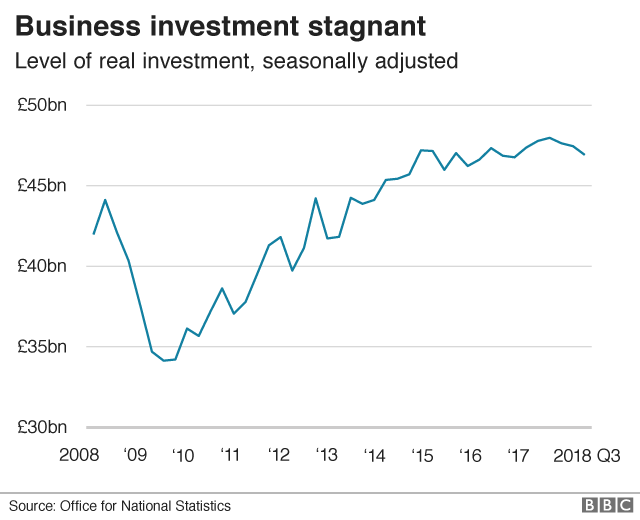
Business investment is stagnant and more than 10% lower than official forecasts had predicted prior to the referendum.
A lifting of the uncertainty could persuade firms to start spending again – a “deal dividend”.
Business investment graph
But investment has been relatively sluggish since the financial crisis.
Firms instead opted to hang on to workers, as they are relatively cheap. They may be continuing this strategy – which could help explain why job creation has remained so resilient.
And as businesses enact contingency plans, money earmarked for investment may have been diverted.
Drugmaker Astra Zeneca has spent £40m building extra testing facilities as it increases its drugs stockpile.
Some are forging ahead with plans for a variety of reasons.
Sony is moving its electronics HQ to the Netherlands, to pre-empt any customs problems.
James Dyson claims he’s moving his company’s base to Singapore to be closer to its fastest growing markets.
But luxury brand Chanel cited the same reason for moving its global business functions to London.

Have companies stockpiled?

A row of wine bottlescopyrightGEORGE BROOKS
Majestic Wine has said it will stockpile more than 1m extra bottles of wine from France, Spain and Italy
Drugmakers aren’t the only ones stockpiling.
Associated British Foods, the company behind Twinings tea and Ryvita, has bought up extra machinery and packaging to prevent disruption to supply chains.
Mondelez, the makers of Cadburys, is stocking up on ingredients and the finished article.
With Majestic Wine buying an extra £8m in drinks, and Nestle investing in more coffee, there is a reduced risk of us having to forego some of life’s luxuries.
Of course, these extra stocks may not be needed – and so the effort and money that’s gone on organising and storing them will have been wasted.
But at this point, many companies feel they have no choice.

What impact has Brexit had on sales ?

L-R: Escada, Sies Marjan, Gabriela Hearst, BosscopyrightGETTY IMAGES
Fashion buyers are concerned about possible disruption
The UK’s exit from the EU may be two months away but for some, Brexit has in effect already happened.
Orders are often put in months in advance.
Those for British malting barley from the EU have dried up.
Barley – which is the UK’s second largest arable export – could attract tariffs of around 50% of the current market price.
It’s not just food. At September’s London Fashion Week, buyers were voicing concerns about placing orders for the spring that might face disruption.
Many of the impacts of the run up to Brexit, as far as business is concerned, are likely temporary – reflecting contingencies or uncertainty.
The overall impact on the economy will become a bit clearer when GDP figures are released in about a week.
And what follows next will depend on Westminster’s actions.
The impact of those, in whatever direction, may dwarf what we’ve seen so far.

Benefits of Breakfast in Weight Loss Don’t Add Up

Despite long-held beliefs and widespread medical recommendations, breakfast does not appear to have an important role in weight loss after all, with a new meta-analysis showing no evidence that eating breakfast reduces daily caloric intake and weight gain is no worse among those who skip the meal.
“While breakfast has been advocated as the most important meal of the day in the media since 1917, there is a paucity of evidence to support breakfast consumption as a strategy to achieve weight loss, including in adults with overweight or obesity,” the authors conclude.
“This systematic review of randomized controlled trials examining weight change in adults consuming or skipping breakfast found no evidence to support the notion that breakfast consumption promotes weight loss or that skipping breakfast leads to weight gain,” they add.
In their meta-analysis, Katherine Sievert and colleagues with the School of Public Health and Preventive Medicine, Monash University, Melbourne, Australia, evaluated data from 13 randomized controlled trials, including seven that examined the effect of eating breakfast on weight change (n = 486) and 10 that examined the effect on energy intake (n = 930).
The study was published today in BMJ.
Although there was some inconsistency between studies, overall there was a very small difference in weight favoring participants who skipped breakfast (mean difference, 0.44 kg).
Meanwhile, studies in which participants were assigned to eat breakfast showed they had a higher total daily energy intake than those allocated to skip breakfast (mean difference, 259.79 kcal/day), contrary to theories that not consuming breakfast leads to over-compensation later in the day.
“There was no evidence that skipping breakfast was associated with an increased total daily caloric intake,” say Sievert and colleagues.
In an accompanying editorial, Tim Spector, MD, professor of genetic epidemiology at Kings College, London, UK, notes that the “disadvantages of skipping breakfast have now been debunked by several randomized trials,” which are examined in the current meta-analysis.
The conclusions were the same as in recent, largely ignored qualitative reviews, he adds, “namely, that no evidence supports the claim that skipping breakfast makes you gain weight or adversely reduces your resting metabolic rate.”
Importantly, the overall data underscore that metabolism may simply be more of an individualized concept than has previously been realized, and a “one size fits all” approach may be futile, he says.

Low Quality Studies Included, Interpret Findings With Caution

In their article, Sievert and colleagues explain that much of the previous research linking consumption of breakfast with healthy weight is based on observational studies, but those studies may have important caveats in terms of participants’ lifestyle.
“There are data to suggest that these findings on regular breakfast consumption in observational studies are reflective of a wider healthy lifestyle, in that individuals who are more health conscious and of higher socioeconomic status are more likely to eat breakfast as part of making healthy food choices,” they explain.
The studies in the current analysis nevertheless had a variety of caveats of their own, including the fact that many either had a high or unclear risk of bias and follow-up periods were generally short, with a mean of 7 weeks for weight and 2 weeks for energy intake.
“As the quality of the included studies was mostly low, the findings should be interpreted with caution,” the authors underscore.
Furthermore, with the analysis focusing on issues of weight management, conclusions cannot be made about the numerous other asserted health benefits of breakfast.
“Although eating breakfast regularly could have other important effects, such as improved concentration and attentiveness levels in childhood, caution is needed when recommending breakfast for weight loss in adults, as it could have the opposite effect.”

Could the Gut Microbiome Play a Role?  

In his editorial, Spector goes on to explain that evidence is increasingly pointing to the potential benefits of fasting intervals in weight loss.
And there may be a connection between the gut microbiome and timing as well as type of meals, he added. “The community of 100 trillion gut microbes have a circadian rhythm and vary in composition and function in fasting and fed states,” he explains.
“Although this is a young discipline, some data suggest that microbial communities could benefit from short periods of fasting.”
He concludes: “While waiting for guidelines to change, no harm can be done in trying out your own personal experiments in skipping breakfast.”
BMJ. Published online January 30, 2019. Abstract, Editorial

SCYNEXIS Positive Interim Results from Phase 3 Fungal Infection Med

SCYNEXIS, Inc., (NASDAQ: SCYX), a biotechnology company delivering innovative therapies for difficult-to-treat and often life-threatening infections, today announced positive results from the first interim efficacy analysis of the ongoing FURI study.
FURI is a Phase 3 open-label study evaluating oral ibrexafungerp as a salvage treatment in patients with difficult-to-treat mucocutaneous and invasive fungal infections that are refractory to or intolerant of currently available standards of care. An independent expert panel (Data Review Committee) assessed the efficacy of ibrexafungerp in the first 20 treated patients. Oral ibrexafungerp showed clinical benefits in 17 out of 20 patients, with 11 patients achieving a complete or partial response and six patients a stable disease response. Only two patients did not respond to ibrexafungerp treatment and the outcome for one patient was considered indeterminate. Along with demonstrating the ability to treat fungal infections in vulnerable patients who failed other therapies, these preliminary results support continued patient enrollment in the FURI study to build toward a future New Drug Application (NDA) submission and potential approval through the Limited Population Pathway for Antibacterial and Antifungal Drugs (LPAD).
“The positive results of this first interim analysis met all of our goals,” said Dr. Marco Taglietti, Chief Executive Officer of SCYNEXIS. “First, we fulfilled our ethical responsibility to justify the testing of oral ibrexafungerp in this patient population. Second, we showed that ibrexafungerp, administered orally, is effective in treating mucocutaneous and invasive fungal infections that do not respond to other therapies, including those administered intravenously. Third, we generated further evidence validating our vision of ibrexafungerp as a transformative antifungal agent able to address significant unmet needs in both outpatient and hospital settings in a variety of indications.”
The 20 patients evaluated in this interim analysis suffered from a variety of severe conditions, including esophageal candidiasis, intra-abdominal abscesses, and oropharyngeal candidiasis, with the most common fungal species being Candidaglabrata and Candida krusei, two highly resistant organisms. Ibrexafungerp treatment ranged from seven to 90 days, with a mean duration of 36.4 days.
Oral ibrexafungerp was well-tolerated, with the most common treatment-related adverse events being gastrointestinal. There were no deaths due to progressive fungal disease and no safety signals warranting changes in the study.
“These preliminary results of oral ibrexafungerp in this salvage therapy setting are very promising,” said Professor Oliver Cornely, M.D., Director of Clinical Trials Centre University of Cologne, Germany. “At my center, we have enrolled five patients in the FURI study, and I am thrilled that the positive responses observed in our patients are consistent with those observed by other investigators. Having an alternative new treatment to add to our current, limited armamentarium of antifungals, especially an oral option, is critical for those patients with resistant, difficult-to-treat or refractory fungal infections. Additionally, an oral option provides the flexibility and convenience of outpatient maintenance treatment. I am glad to see the progress in the development of oral ibrexafungerp and am looking forward to continuing my contribution to the program.”

1976 to 2016 Saw Drop in Firearm Ownership in Families

From 1976 to 2016, there was a decrease in the proportion of families who had young children and owned firearms, although an increase was seen in the proportion who owned handguns, according to a study published online Jan. 28 in Pediatrics.
Kate C. Prickett, Ph.D., from the University of Waikato in Hamilton, New Zealand, and colleagues merged individual-level data from the National Vital Statistics System with household-level data from the General Social Survey to create national-level estimates of firearm-related child mortality and family firearm ownership from 1976 to 2016.
The researchers noted a decrease in the proportion of non-Hispanic white families who had young children and owned firearms, from 50 percent in 1976 to 45 percent in 2016; among non-Hispanic African-American families, the decrease was from 38 to 6 percent. There was an increase in the proportion of white families who had young children and owned handguns, from 25 to 32 percent; 72 percent of families who own firearms now own handguns. The recent increase in firearm-related white child mortality was partially explained by increases in handgun ownership (net of changes in the sociodemographic composition of firearm-owning families).
“In an era in which firearm-related deaths constitute a public health crisis, the rising firearm-related young child mortality rate in the context of declining firearm ownership highlights the importance of understanding the factors that drive firearm-related deaths,” the authors write.

Hand Hygiene Compliance Low Among EMS Providers

Among emergency medical service (EMS) providers, compliance with hand hygiene (HH) is low, according to a study published online Jan. 28 in the Emergency Medical Journal.
Heidi Storm Vikke, Ph.D., from the University of Southern Denmark in Odense, and colleagues conducted a multicenter prospective observational study of ambulance services from Finland, Sweden, Australia, and Denmark from December 2016 to May 2017. Two observers recorded HH compliance according to World Health Organization guidelines.
In each country, 60 hours of observation occurred, with 87 patient encounters. The researchers found that 1,344 indications for HH. Use of hand rub or hand wash was observed in 3, 2, 8, 29, and 38 percent of encounters before patient contact, before clean/aseptic procedures, after the risk of contact with body fluids, after patient contact, and after contact with patient-related surroundings. In 54 percent of all HH indications, gloves were worn. Adherence was 99, 84, and 62 percent to short or up-done hair, short and clean nails without polish, and no jewelry, respectively. HH compliance correlated with wearing gloves and provider level (odds ratios, 45 and 1.7, respectively) but not with gender.
“HH compliance among EMS providers was remarkably low, with higher compliance after patient contacts compared with before patient contacts,” the authors write. “In addition, there was an over-reliance on gloves, indicating a tendency towards self-protection instead of patient protection.”
Falck Denmark and the Danish Innovation Fund both contributed funding for the study.